

While police procedurals, at least in recent years, don’t tend to attract as much publicity as, say, domestic noir (or books with ’Girl’ in the title) they are the solid and dependable backbone of crime fiction. A true cynic might say that the police procedural scene is a roomfull of Detective Inspectors moaning about their desk-bound box-ticking superior officers, but in the hands of writers who are prepared to take a few risks and move away from the norm, a good police novel is hard to beat.
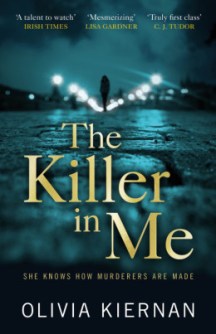 There are some very special Irish crime writers these days. Some mine the uniquely bitter and bleak seam of Belfast, with its raw and recent memories, while further south the city of Dublin, where “the girls are so pretty”, has its fair share of malcontents and evil doers. Olivia Kiernan and her Chief Superintendent Frankie Sheehan were new to me, but The Killer In Me was a beguiling read. I called it “dark, complex, but full of compassion.” and the story of Sheehan’s search for a killer, while trying to decide if a newly released killer is a wrongly convicted media cause célèbre or a murderous con artist, is beautifully told.
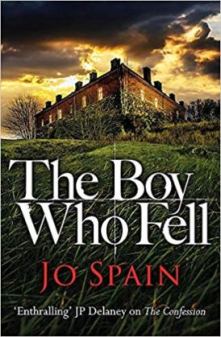 Staying in Ireland, it has to be said that Jo Spain is ridiculously talented. She has created a bankable stock character in the affable Dublin copper Tom Reynolds, but this has not stopped her from writing such brilliant stand-alones as The Confession. In reviewing her books I have used adjectives like ‘bravura’, ‘intense’, ‘breathtaking’ and ‘mesmerising’, so will gather that I am a fan. It was good to welcome back Tom Reynolds this year in The Boy Who Fell. On one level this is a firecracker of a whodunnit, and Spain’s ability to misdirect the reader and lead us – Pied Piper-like – in the wrong direction, is proudly displayed. On a more reflective level her observations on moneyed Dublin society are sharp and salutary, as Reynolds tries to discover why a teenager died while partying with his privileged and privately educated friends.
 Vulnerability as a character trait is perhaps more common in British fictional coppers that their American counterparts, and few fit that bill quite like James Oswald’s Edinburgh detective Tony McLean. Cold As The Grave is his ninth outing, and his quest for the truth behind a series of corpses found in strange locations in the old city brings the frayed edges of his character into focus. He has always had an awareness of the fact that there are “more things in heaven and earth … than are dreamt of in your philosophy.” Oswald never goes full-on supernatural, but McLean is ever more aware that the solution to the Edinburgh deaths may lie beyond the dry pages of the Police Scotland training manual.
 In The Sleepwalker, Joseph Knox reintroduced us to his troubled Manchester Detective Constable, Aidan Waits, who we first met in Sirens (2017) and The Smiling Man (2018). To say that Waits’s Manchester is dystopian is rather like saying that there can be a certain frisson between supporters of City and United. In The Sleepwalker it rarely seems to be daylight as the pallid and pinched faces of drug abusers and petty crimInals are caught in the flickering neon lights of the late night clubs and drinking dens. Waits and his loathsome immediate superior Sergeant Sutcliffe have been tasked with waiting at the bedside of a dying serial killer, in the hope that his final breath will reveal the burial place of one of his victims. Inevitably, everything goes bloodily wrong, and when the dust settles, and the final autopsy is done, Knox asks us – perhaps, maybe, possibly – to bid Waits a fond farewell.



 irst up, read my review of
  can’t make it too random, so here’s a little decider. You can answer by email to


 London copper DI Tom Thorne has been entertaining us since his debut in Sleepyhead (2001). His creator, Mark Billingham, (left) has developed an enviably reliable repertory company of other players who share the stage with the main man. There is his best mate Phil Hendricks, a pathologist who, despite being gay, supporting Arsenal against Thorne’s beloved Spurs and having piercings in places where most folk don’t even have places, is the voice of sanity in Thorne’s often chaotic world. Thorne’s love interest (from whom he is currently living apart) is Helen, another police officer, but one who works in the traumatic world of child protection. Nicola Tanner is Thorne’s professional partner and they have history, but not one that either reflects on with much pleasure. Tanner’s partner Susan was brutally killed in a previous episode, and her death hangs over the pair like a pall.
 In an ostensibly unconnected narrative thread, Billingham introduces us to a Sarah, a vulnerable single mum who is anxious to gain the approval of other mums with whom she waits at the primary school gate twice each day. They seem confident, successful and financially comfortable. Sarah tries to join in with their daily sojourn at a pretentious ‘artisan’ coffee shop after the morning school run, but she still feels like the outsider. Her world is just herself and her son Jamie, and she struggles to compete with the gossip and banter that fly like sparks between Karen, Caroline, Savita and Heather. Until. Until the day when, sitting apart at her own table in HazBeanz, Sarah is chatted up by distinctly fanciable slightly older fellow. Almost instantly, Sarah finds the others anxious to swap phone numbers in return for daily updates about the new romance.


 Leaving aside the morbid musings, there’s no shortage of cruelty in the latest crop of excellent crime reads on the Fully Booked shelf. For me, the highlight has to be the latest Tom Thorne novel, where our man goes head-to-head with a particularly nasty specimen of humanity who bears out the adage that the female is deadlier than the male.
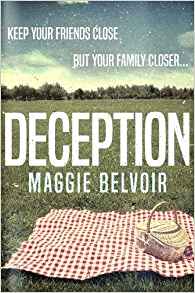 Set in the university town of Cambridge, Deception tells the tale of a how an ostensibly ideal family of perfect children, loving parents and comfortable circumstances is rent asunder when their good deed – adopting a troubled schoolgirl – certainly does not go unpunished. Add to the mix a nasty murder and a conflicted police officer, and we have a witches’ cauldron of dark deeds against the serene background of an ancient seat of learning. Maggie Belvoir has lived in Cambridge for 40 years. She is writing under a pseudonym as members of her social and family circle, may be shocked at some of the scenes depicted in her novel. Published by Matador, Deception is
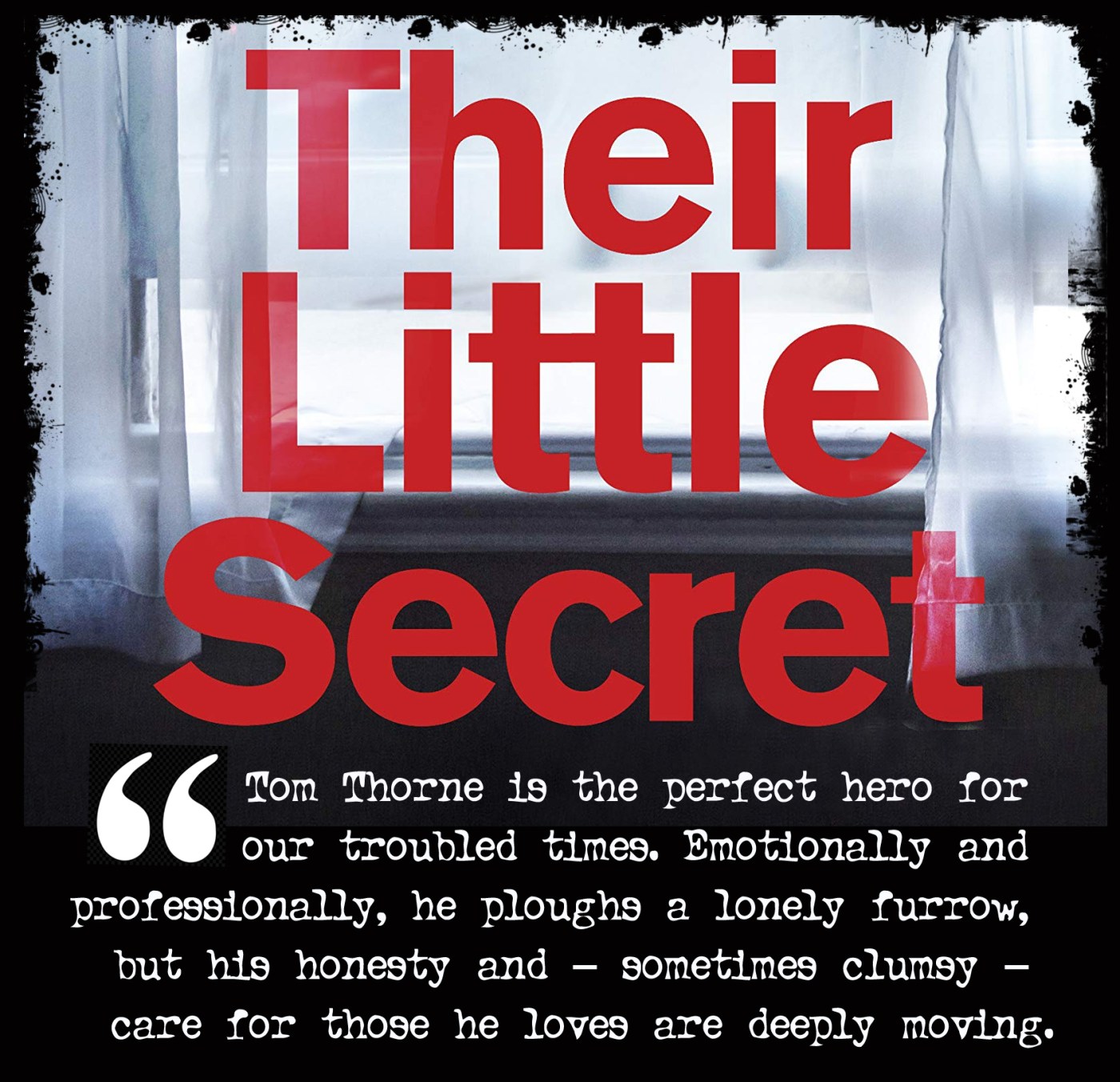
  London copper Tom Thorne has become an institution for those who like a brilliant police procedural with a distinctly individual cast list, a Pandora’s Box of nasty villains and plot twists to confound the best of us. A conman whose set-piece scam is to befriend wealthy women and separate them from their fortune meets his match when he chooses his next victim – only to find that she is a borderline insane psychopath. You can get your copy of Their Little Secret from 2nd May, and it’s published by
 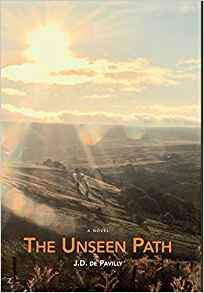 For starters, the copy I received today is a beautifully presented hardback, with that simplest, but most welcome delight – a ribbon bookmark. The novel is centred around the life of a security officer, Andy Bowson whose witnessing of the death of a notorious jihadi draws him down into a vortex of corruption, international subterfuge and political mayhem. As if Bowson hasn’t enough to deal with, his personal life has begun to unravel at an alarming rate, and when his wife disappears on Exmoor while driving to visit her parents, he discovers a sinister link to what appears to be a vigilante campaign against the Islamic community. I normally take publicity blurbs with several sizeable grains of NaCl, but one line intrigued me here:
 I confess a vested interest here in that one of my sons is a professional archaeologist who is employed by a major construction company. He identifies and records ancient traces before they are covered with tons of steel and concrete. In the real world, this commercial work keeps archaeology alive, and so the Nicola Ford’s fictional sleuth Clare Hills and her university colleague Dr David Barbrook know they have to accept, albeit reluctantly the developers’ shilling. Murder, however, is a different matter, and a corpse found on an historical site high on a Cotswold hill leads Hills and Barbrook into dangerous territory. The Lost Shrine is published by Alison &Busby and is
 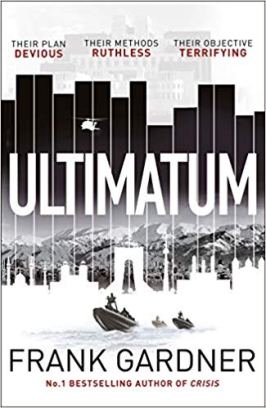 Intelligence agent Luke Carlton is the creation of the celebrated BBC security correspondent Frank Gardner. Carlton made his debut in the 2017 best-seller Crisis, and now he returns for a second adventure set in that apotheosis of anti-Western malice, Iran. The feared Iranian Revolutionary Guard Corps are working on a weapon which will destroy the fragile international balance of power. When a search-and-destroy mission involving Carlton goes disastrously wrong, the clock starts to tick on a potentially devastating military and political time bomb.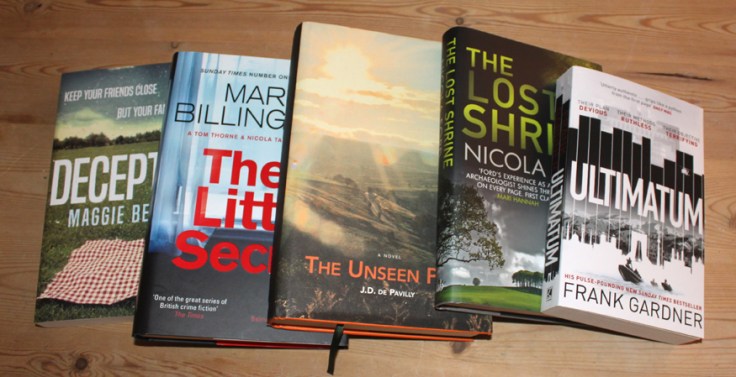


 fullybooked2017