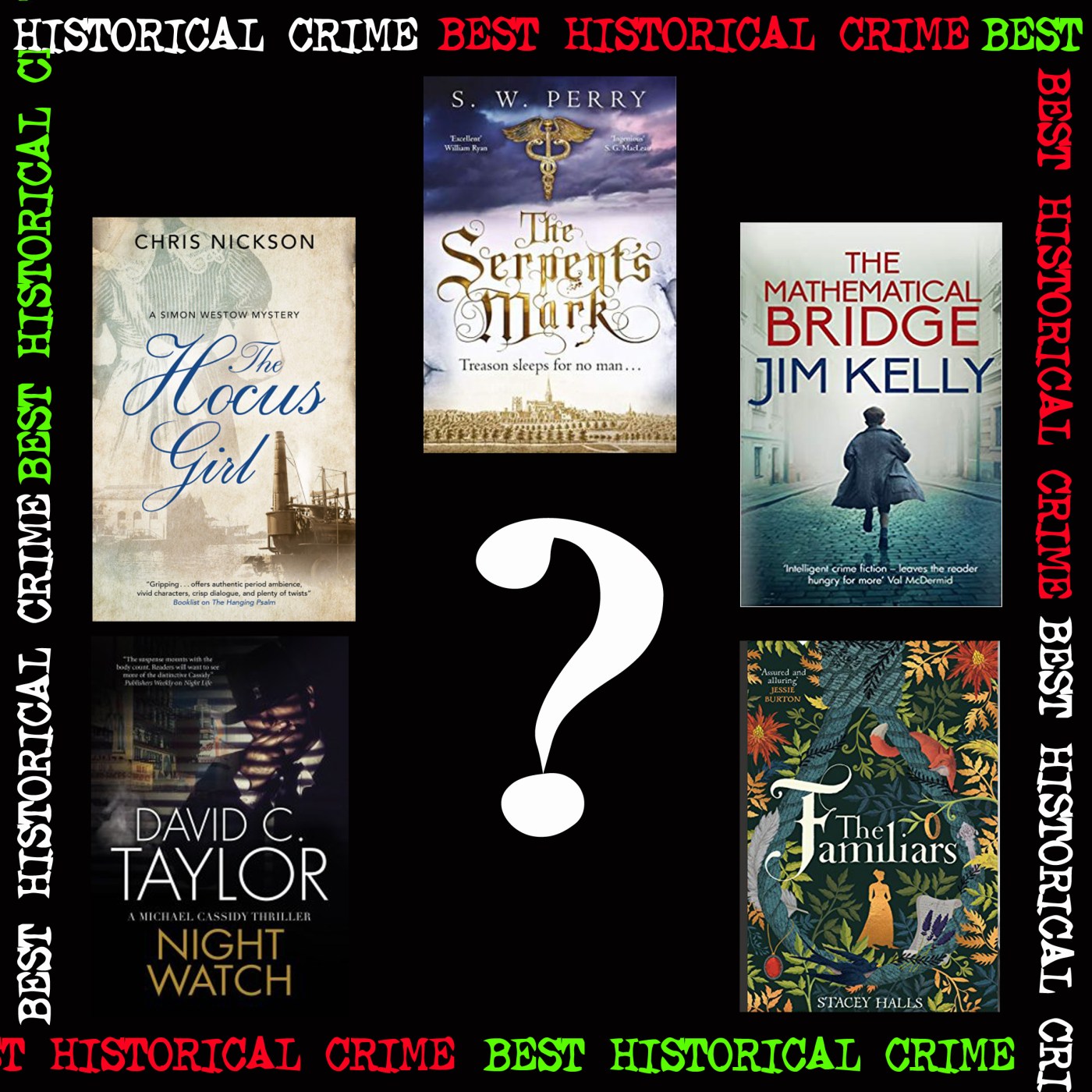

I have always been a fan of historical fiction and, more recently, crime fiction set ‘back in the day’. Sadly, there are those writers whose thirst for period accuracy produces lavish costume drama at the expense of a decent plot and good storytelling. Happily, the five books on my 2019 shortlist don’t fall into that trap – take a look, and if you haven’t read them yet, do so – you won’t be disappointed.
 The Familiars by Stacey Halls was one of the publishing successes of 2019, and rightly so. The evocative visual presentation was matched by superb writing and the conviction of a natural storyteller. The story is not a conventional crime mystery, but involves suspicion, injustice, intrigue, political chicanery and personal bravery. We are in rural Lancashire in the early years of the seventeenth century and young Fleetwood Shuttleworth has been married off to a wealthy landowner. Far away in London, King James is obsessed with a fear of witches and daemons, and those anxious to please His Majesty are falling over themselves to demonstrate their loyalty. Fleetwood’s new home, Gawthorpe Hall, sits under the looming Pendle Hill, and all around the district, harmless old women – and some not so old – are being rounded up as witches. Fleetwood is under pressure from husband Richard to provide a male heir and when, after several miscarriages, she seeks the help of a young peasant midwife, Alice Gray, her actions put her in direct conflict with the King’s men.
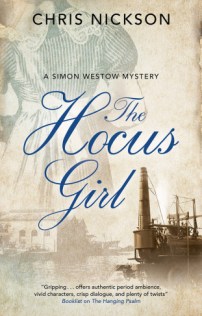 Chris Nickson’s historical novels may be narrow in geographical scope – they are mostly set in Leeds across the centuries – but they are magnificent in their emotional, political and social breadth. In The Hocus Girl, we meet Simon Westow who earns his living as a thieftaker. In America they still have them, after a fashion, but they call them bail skip tracers, or bounty hunters. Leeds in the 1820s had no police force except inept and frequently infirm Parish Constables, and so thieftakers pursued criminals on commission from victims of crime. Westow has a formidable ally in the shape of a teenage girl called Jane. Sexually abused as a youngster, she is ruthless and streetwise, and God help the man who mistakes her for a waif. Westow and Jane have a different kind of fight on their hands here, as they try to prevent a campaigner for social justice being sent to the gallows by political conspirators.
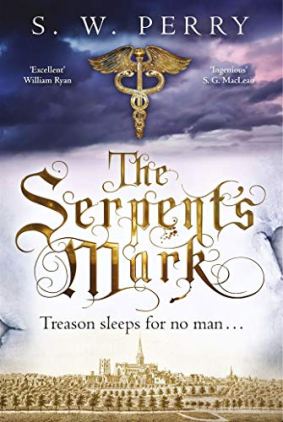
 SW Perry has written an excellent thriller about religious extremism, media manipulation and political treachery. The fact that The Serpent’s Mark is set in Elizabethan London rather than 2019 can only make the reader wonder at how little things have changed. Nicholas Shelby is a physician who, despite his relative youth, has served on the battlefields of Europe and has emerged from a debilitating period of alcoholism caused by the tragic death of his wife and child. With many a real life character – including Robert Cecil and John Evelyn – making an appearance, Shelby becomes involved in a desperate affair which seeks to supplant Queen Elizabeth herself with a hitherto unknown child of Mary Tudor – and return the land of Gloriana to the old faith, Roman Catholicism.
 For all that the era was in my lifetime, the 1950s may just as well be the 1650s given the gulf between then and the modern world. In Nightwatch David C Taylor takes us back to New York in 1954, and we follow a convincingly tough and hard-nosed NYPD cop, Michael Cassidy, who becomes involved in a case which is way, way above his relatively humble pay grade. There were many former Nazis who escaped Nuremburg and had vanished into the ether by 1954 and although many of them were undoubtedly bastards, the sinister folk in American intelligence agencies gave them a lifeline by making sure that they became their bastards. Awkwardly for the CIA, there were also survivors of Hitler’s death camps who had made their way to America, and although they may have been scratching a relatively meagre living, they still had access to information and a burning desire for revenge. Cassidy battles both the indifference of his bosses and the unwanted attention of some very powerful people as he tries to solve a series of murders and make his streets a little less mean.

Click the text image above to link to my review of The Mathematical Bridge.


 odern readers don’t need history degrees to understand the savagery with which followers of different religious views are prepared to torture, maim and kill one another. Sunni against Shia across the Middle East; Roman Catholic against Protestant in Northern Ireland; both are all too recent in memory.
 London, 1591. Queen Elizabeth has ruled England for over three decades, but the religious fires lit by her father and then – literally – stoked by the Catholic zealots driven on her half-sister Mary, may just be glowing embers now, but the mutual fear and bitterness between followers of the Pope and members of the English church are only ever a breath away from igniting more conflict. Just a few short miles from England’s eastern coast, war still rages between the rebels of The Seventeen Provinces of The Low Countries and the armies of King Philip of Spain.
 he arrival of a Venetian ship on Bankside brings not only Bianca’s cousin Bruno Barrani but a violent encounter in The Jackdaw which leaves the Venetian near death with a terrible head wound. Shelby ministers to the grievously wounded Italian, but is then summoned to an unwelcome reunion with the saturnine and deeply dangerous Robert Cecil. Shelby is already aware that Samuel, the young son of his former military commander Sir Joshua Wylde is afflicted with The Falling Sickness (epilepsy) and is being tended in rural Gloucestershire by a controversial Swiss doctor, Arcampora. Shelby has already agreed to give Wylde a second opinion, but when Cecil offers him a large sum of money to do exactly the same thing, he welcomes the opportunity to both repay a favour and line his pockets.
 This is a riveting and convincing political thriller that just happens to be set in the sixteenth century. The smells and bells of Elizabethan England are captured in rich and sometime florid prose, while Nicholas and Bianca are perfect protagonists; she, passionate, instinctive and emotionally sensitive; he, brave, resourceful and honest, but with the true Englishman’s reluctance to seize the romantic moment when he should be squeezing it with all his might. SW Perry (right) has clearly done his history homework and he takes us on a fascinating tour through an Elizabethan physic garden, as well as letting us gaze in horror at some of the superstitious nonsense that passed for medicine five centuries ago.
 is a reference to the Rod of Asclepius, which was a staff around which a serpent entwined itself. This Greek symbol has always been associated with healing and medicine, existing even in our time as the badge of the Royal Army Medical Corps. SW Perry’s novel is published by Corvus and
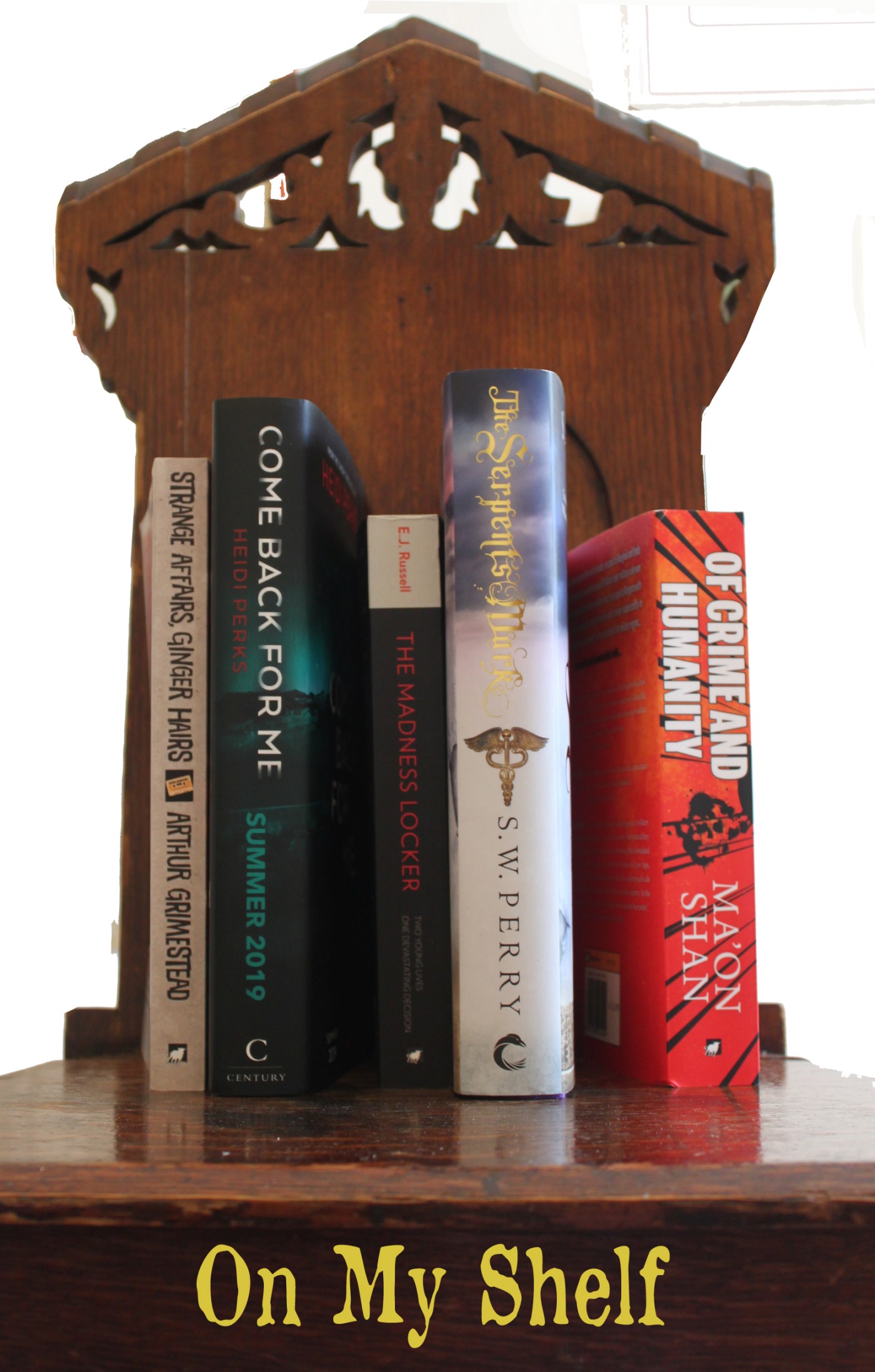
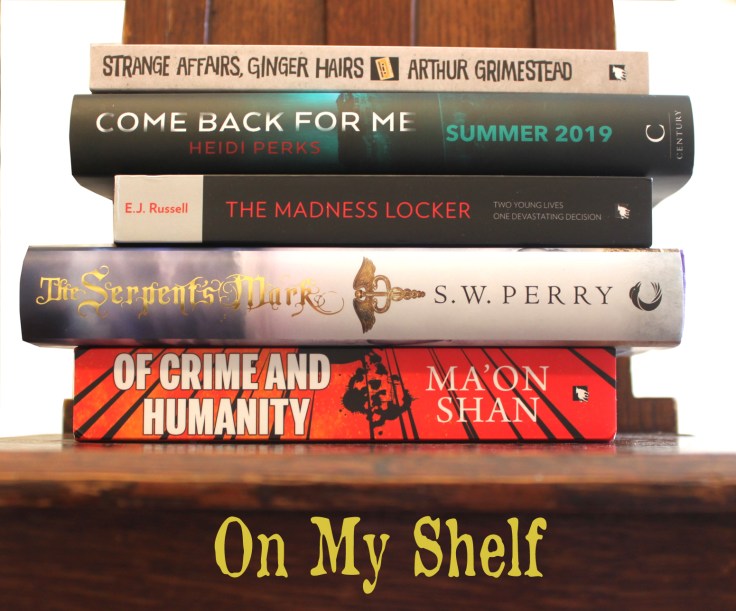
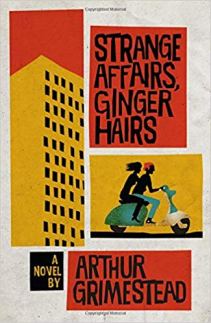 Currently lengths ahead in the Strangest Title of The Year contest, this novel is by an author who describes it, “Like the King James Bible, Strange Affairs, Ginger Hairs is a wedge of enthralling made up shit.” Set in 1990s Hull, it is the tale of an apparently mediocre northern city and an equally mediocre teenage resident, the titular Ginger, whose escape from mundanity, like that of Bilbo Baggins, is afforded by possession of a gold ring. Ginger’s ring, however, doesn’t draw him into an epic battle with Sauron and his Orcs. Rather closer to home, Ginger’s enemies are some of the meanest and most violent men Humberside has to offer. Arthur Grimestead’s novel is published by Matador and
 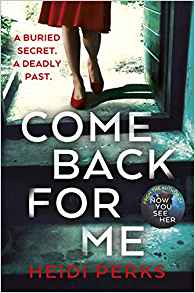 Perks is the best-selling author of Now You See Her (2018) and she follows her debut with this chilling mystery set on an island off the Dorset coast of southern England. Islands and their inhabitants tend to be, well, insular, and prone to strange happenings and dark secrets. Stella Harvey was brought up on Evergreen Island. Her family fled that home a quarter of a century ago, but when a body – long dead – is discovered in the garden of the family home, Stella is compelled to return and solve the grisly mystery. The warm and fondly remembered island atmosphere of her childhood is, however, just that, and she finds that her youthful illusions are shattered by a grim and uncompromising present.
 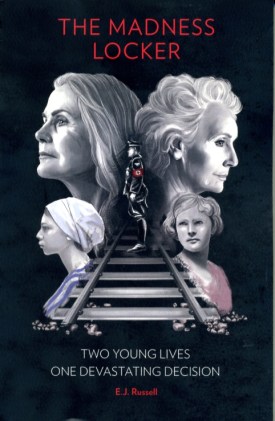 First off, it appears that EJ Russell is no relation to the EJ Russell who writes paranormal romances. This author appears to be a chap, his book is set in Australia, and is as far away from a romance as could be imagined. The story begins with the oft-told but ever horrific account of the Nazi’s attempt to cleanse their Thousand Year Reich of all undesirables, whether they be Jews, the disabled, homosexuals , Roma or those considered as of no worth to the state. A young girl survives Auschwitz – unlike her parents – but decades later seeks to avenge herself on the person she considers individually responsible for her harrowing journey into the jaws of death. Her search takes her to Australia where, in the late 1980s, the body of a widow was found dumped in a wheelie bin. Now, the police have consigned the death to their cold case files, but does the murder hold the key which will unlock Ruth’s search for the truth?
 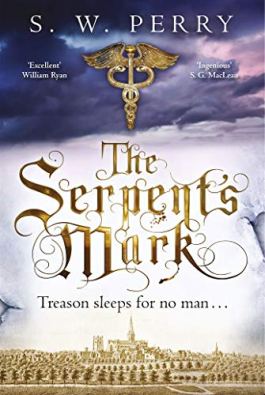 English politics? I write this at a time when the height of public disapproval seems to be typified by throwing eggs or milkshakes over people with apparently disagreeable views. Things were a little more harsh in 1591, however, and in the days of Good Queen Bess, a ‘wrong’ view was likely to result in a spell in The Tower, an unpleasant encounter in a torturer’s workshop or a sword thrust through your vitals. SW Perry returns to the turbulent London of heretics, Catholics, plotters and assorted Thames-side lowlife that he had such success with in The Angel’s Mark (2018), of which one reviewer wrote, “Wonderful! Beautiful writing, and Perry’s Elizabethan London is so skilfully evoked, so real that one can almost smell it”. Perry’s new book, once again features physician and reluctant spy Nicholas Shelby, and the all-too-real figure of the Queen’s devious spymaster Robert Cecil. The Serpent’s Mark is published by Corvus and
  The profile of the Burmese politician Aung San Suu Kyi has taken something of a battering in recent times. From the being the tiny but graceful lady with a will of iron, heroine to all seekers of democracy, her ambivalence over the mistreatment of the Rohinga people has caused some commentators to tone down their eulogies. This book, however, puts ‘The Lady’ back in the context of the Myanmar freedom struggle, and is viewed through the eyes of a young girl who, through no wish of her own, is thrust into the bloody and violent guerilla battle against a brutal military dictatorship. ‘The Lady’ herself, under house arrest, is just too much of a worldwide public figure for the Myanmar generals to do away with, while far away in the jungle, her adherents brutalise others – and themselves – in search of a notional freedom. Ma’on Shan’s novel is


 fullybooked2017