Search

fullybooked2017

Tag

Satire

COGNIZANCE … Between the covers

cognizance SPINE069 copy

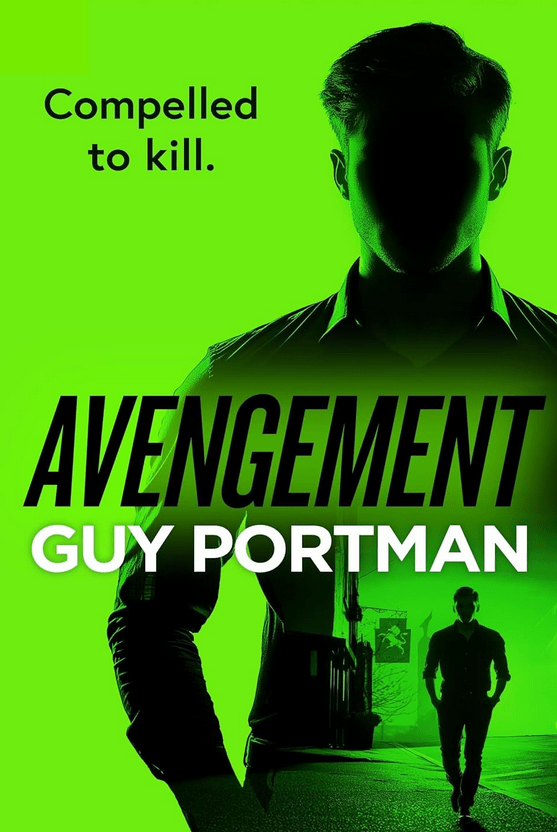
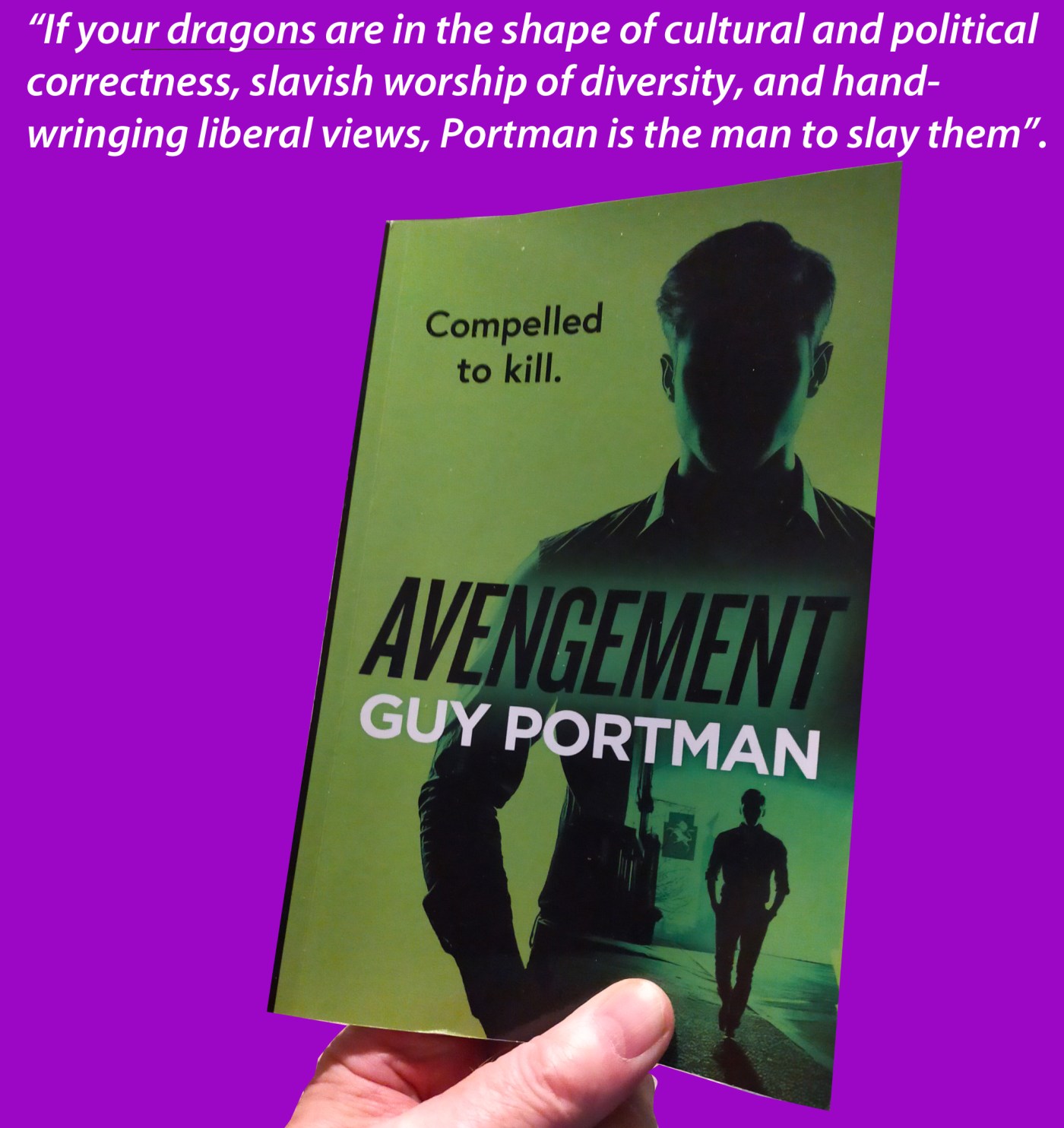
Guy Portman created a brilliantly psychotic serial killer called Dyson Devereux, and over the three books in the series, Necropolis, Sepultura and Golgotha, Portman took aim at every sacred cow in modern British society. Nothing – and no-one – escaped unscathed, from lavishly tasteless funerals, ‘woke’ human resources officials, earnest (and useless) social workers, gender-identity professionals right through to so-called ‘community leaders’. Devereux was killed off in Golgotha, but in Sepultura we learned that Mr D had fathered a son, Horatio, the mother being a borderline hapless Antiguan lady called Rakesha. In Emergence, we discovered that the teenage Horatio is a case of ‘like father, like son’, as he murders his mum’s boyfriend Brendan, a man he calls Fool’s Gold. The murder was cleverly disguised to make it seem that the unfortunate chap died as a result of a sexual experiment gone wrong.

In Arcadia, Horatio enjoys a brief (but violent) sojourn in Antigua, but Cognizance sees him back in London, and attending a particularly awful high school. Horatio is about to upset some of his classmates in his gang-infested school, but he has a much older enemy, the man he nicknames ‘Rat’. ‘Rat’, properly known as Roland Barstow was best mates with the late Brendan, and is convinced (rightly) that Horatio killed him. ‘Rat’ seems to be around every corner, and waiting at every bus stop, but Horatio manages – for a while –  to keep him at arms length.

In school, Horatio makes a serious error when he mocks a very large – and very stupid – fellow pupil. Unfortunately for our hero, this lad is gang-connected, and they take their revenge on Horatio in a rather smelly fashion in the boys’ toilets. Horatio vows revenge, and achieves this after a fashion when two rival gangs have a set-to in a particularly loathsome tower block of flats. Our hero has other worries, though, when he is attacked with a hammer, and left in a life – threatening condition.

Horatio’s sense of humour is suitably disturbed – and disturbing. While at his aunt’s funeral he remembers the fun he had when his mum’s boyfriend was laid to rest:
When the casket was carried in at the start of Fools Gold’s funeral, the music was supposed to be Never Say Goodbye by Bon Jovi. However, I sneaked into the room where the music system was and changed it. Because everyone thought he had died from auto erotic asphyxiation gone wrong, I chose the theme tune for Top Gun. Take My Breath Away. Fools Gold’s father went beserk, as did Rat. It was hilarious.”

The running joke in the series is that literally no-one (with the exception of Rat) sees Horatio for what he is. He fools everyone else, including his mother, his delightful girlfriend Serena, and his teachers. What to make of a teenage killer, obsessed with algebra and trigonometry, a boy whose favourite book is Bleak House, and someone who, as his aunt lies dying of cancer, imagines her in hell, perishing in the flames, suffering the torments of Tantalus as a family size bag of Maltesers is dangled just in front of her, but forever out of reach?

What Guy Portman does is to merge merge domestic disaster with caustic comedy, and he turns our normal, family-orientated sense of decency on its head, and has us cheering for the devious Horatio. The more malign his misdeeds, the more we laugh. Of course, this book will not appeal to everyone, but for those of us with a dark sense of humour it is pure gold. Lovers of dystopian comedy, this is for you – I dare you not to laugh. Cognizance is published by Pugnacious Publishing and is available now.

Screen Shot 2024-07-21 at 19.43.52

ARCADIA . . . Between the covers

Arcadia header

Psychopathy and comedy are not natural companions, but Guy Portman has this strange relationship down to a ‘T’ In his novels Necropolis (2014), Sepultura (2018) and Golgotha (2019) we followed the rise and fall of the elegant, analytical and ruthless killer Dyson Devereux. Then, in Emergence (2023), we learned that he had a love child. Well. let’s rephrase that. He had a child. The mother was a well-meaning but rather naive Antiguan social worker called Rakeesha Robinson and the youngster was christened Horatio.

Although Horatio never met his father he is, as they used to say, a chip off the old block. He is fascinated by trigonometry and algebra and is prone to instant acts of extreme violence, but also capable of meticulous planning to set up his deeds. An example of the latter was the way in which he disposed of mum’s loathsome boyfriend in Emergence. My review of that book described the killing in some detail, but as it caused me to be banned by Amazon, that’s all I will say here. You can find the hilarious details by clicking the link.

Seeking to give Horatio a new start, Rakeesha has taken him to Antigua, where the two of them are to stay with her extended family. Incidentally, as can sometimes happen with genetics, Horatio is as white as his father was, which makes him distinctive among the native Antiguans. He starts school, and soon establishes himself as brighter than average, but his Caribbean idyll is marred by the fact that he has to work weekends and holidays in his grandfather’s laundry centre, piling insanitary bedding from the tourist hotels into the washers, and then ironing the same hotels’ tablecloths with – as you would expect from Horatio – geometric precision.

arc filler017

As you might expect from our lad, he soon finds a way to boost his meagre wages from the laundromat. Antigua is full of low-rent tourists, many of who are anxious to score drugs, and Horatio finds that his innocent demeanour, coupled with his skin colour, enable him to establish a nice little business, buying product from a dissolute and disreputable dealer who lives in a shack just out of town, and then selling it to the European tourists (at a healthy profit).

Horatio, figuratively holding his nose when he goes to the dealer’s house, notices two things: first, a handgun badly hidden underneath a cushion and, second, a tin cash box in which the dealer keeps his cash. Putting these two observations to work allows Horatio to rid Antigua of a parasite and enrich himself to the tune of several thousand XCD (Eastern Caribbean Dollars) He also seizes an opportunity to exact revenge on a dimwitted local youth who has been harassing him.

Guy Portman is a wonderful satirist. He targets the cant, pomposity and box-ticking that have become ever-present backdrops to most people’s lives in Britain. In Horatio Robinson he has created a malevolent hero who continues to disprove Lincoln’s adage, in that – so far – he has managed to fool all of the people, and all of the time. However, like his late father, is his luck due to run out?

THE CHRISTMAS APPEAL . . . Between the covers

Appeal spine

Screen Shot 2023-11-04 at 19.22.52

Janice Hallett (left) invites us to return to the idyllic village of Lower Lockwood, where her book The Appeal (2021) was set. Then, law students Charlotte Holroyd and Femi Hassan solved a particularly nasty murder but, goodness me, murder seems to haunt Lower Lockwood rather as it does the unfortunate community of Midsomer, and so they are back again when another corpse is found, threatening the production of the annual village panto. Was ever a production of Jack and The Beanstalk so fraught with difficulties?

Our two sleuths (now fully qualified) spend little time on their hands and knees with magnifying glasses looking for minute physical traces which may betray the assailant; rather, they sit in front of their smartphones, perusing emails, WhatsApp messages, texts and other communications floating around in the digital ether. The clues are all there and, unlike the ancient trope of detectives trying to read messages from letters hastily burnt in fireplaces, these words can never be totally erased.
Text044

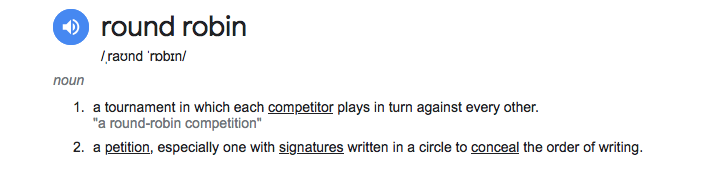
This novella is inventively set up with little or no conventional narrative and makes extensive use of graphics representing WhatsApp messages (above) and emails which are now known as  ’round-robins’. Being an old pedant, I have to say that this is a misuse of the expression, as the dictionary says:
Screen Shot 2023-11-05 at 18.30.05

The term has come to be used to describe emails cc-d to multiple recipients, and those awful little printed slips inside Christmas cards telling  friends (not for much longer, if I get them) all the wonderful things that have been happening to the sender’s family since the last Christmas card. Janice Hallett, by the way, makes fun of these dreadful things from the word go.

spoof2046

But I digress. You will either love the set up of the story, or hate it. I enjoyed it while it lasted – just 187 pages – but I suspect it wouldn’t work in a longer book.

The story begins when Charlotte and Femi receive a massive folder (all digital of course) of evidence from their former mentor, Roderick Tanner KC. The folder contains transcriptions of police interviews and copies of all communications between those involved when a long-dead body in a Santa Suit was found hidden in a giant beanstalk prop – made mostly of wood, papiermâché and, heaven forfend, possible traces of asbestos. The beanstalk was constructed years previously for a production of the play, and so this is the coldest of cold cases. The mystery is solved as Charlotte and Femi pick up the hints from the emails, texts and messages, but along the way, Janice Hallett takes the you-know-what out of some of the more insufferable pretensions in modern society (below).

Spoof

The Christmas Appeal initially deceives as it seems to wear a cloak embroidered with ‘Cosy Crime’, but this is soon shed in favour of some rather sharp satire. It has wit, charm and flair and is published by Viper. It is available now.

THE GENIUS KILLER . . . Between the covers

TGKspine011

The central character of this novel is Karl Jackson. He has survived a brutal upbringing punctuated with savage beatings by his drunken father, and sexual abuse from his uncle Charlie. Karl has a twin, Nathan,  but he never faced the same storm of violent rage. Karl Jackson is described in the cover blurb as a sociopath. I am no psychologist, but Jackson’s steady job as a chemistry teacher and his scrupulous and well-planned crimes make me think he is more psychopathic, but it does not matter. He is a genuinely awful human being. His spree of undetected killings started in his childhood when, merely for the fun of it, he pushed a young boy – fishing in the lake where they played – down into the water, and then watched with amusement as the lad struggled, choked, and then bobbed about on the surface as lifeless as the float attached to his fishing line.

Jackson’s genius (hence the title of the book) is to organise killings in such a way that no possible evidence can link the deaths to him. While Jackson was working as a student in Australia, one of his murders involved the ingenious combination of a sleeping bag, a sedative injection and a deadly Brown Snake on a hiking trail in the Blue Mountain region of New South Wales. Jackson exacts an elaborate – and some may say justified – revenge on his father by causing the old man’s death in hospital with a very clever use of cyanide and the sharpened end of a coat hanger.

The background to this novel is the atmospheric landscape of the English Lake District, where Jackson carries out another long delayed act of retribution on his abusive uncle Charlie by faking an accidental climbing death. When Charlie is found dead at the bottom of a solo climb, his head shattered like a melon hit with a hammer, no one believes it is anything other than an unfortunate error of judgement.

Thus far, Jackson has been clever enough to avoid any attention from the police but, inevitably, he meets his nemesis. Theodore “Tex” Deacon is a late career – but distinguished – detective slowly recovering from the trauma caused by the protracted death of his wife. As is the way with institutions these days, he is temporarily sidelined and identified as a vulnerable person in need of psychological help and treatment by the ubiquitous counselling profession. However, his many successes in tracking down murderers brings him to the attention of Debbie Pilkington, an ambitious young reporter with a local Lakeland newspaper. She alerts him to the many coincidences surrounding deaths in the Jackson family, and so he goes off piste to investigate the case.

Black humour is never very far away in this book, despite the body count. Here, Karl Jackson describes the man who is having an affair with his wife.

“Richard Turkington’s graying Beatle cut had a bald spot on top giving him the appearance of a rock star monk. A fleshy roll wobbled over the top of his chinos. Turkington had clearly ignored warning signs of middle age and had lived a pudgy existence preferring a world of pints and puddings. Quite a contrast to the sleek wire framed fell runners surrounded by them at a function like this. Richard looked like Mr Blobby.”

The Genius Killer rattles along at great pace and is sometimes darkly comic, but in Jackson, the author has created a genuine larger-than-life monster. The book ends rather enigmatically, but as it is described as No.1 in the Tex Deacon series, I suspect the Cumbrian copper will be back soon with another case. Mark Robson is a sports journalist and this is his debut novel. It is published by Orla Kelly Publishing and available now.

EMERGENCE . . . Between the covers

Emergence header

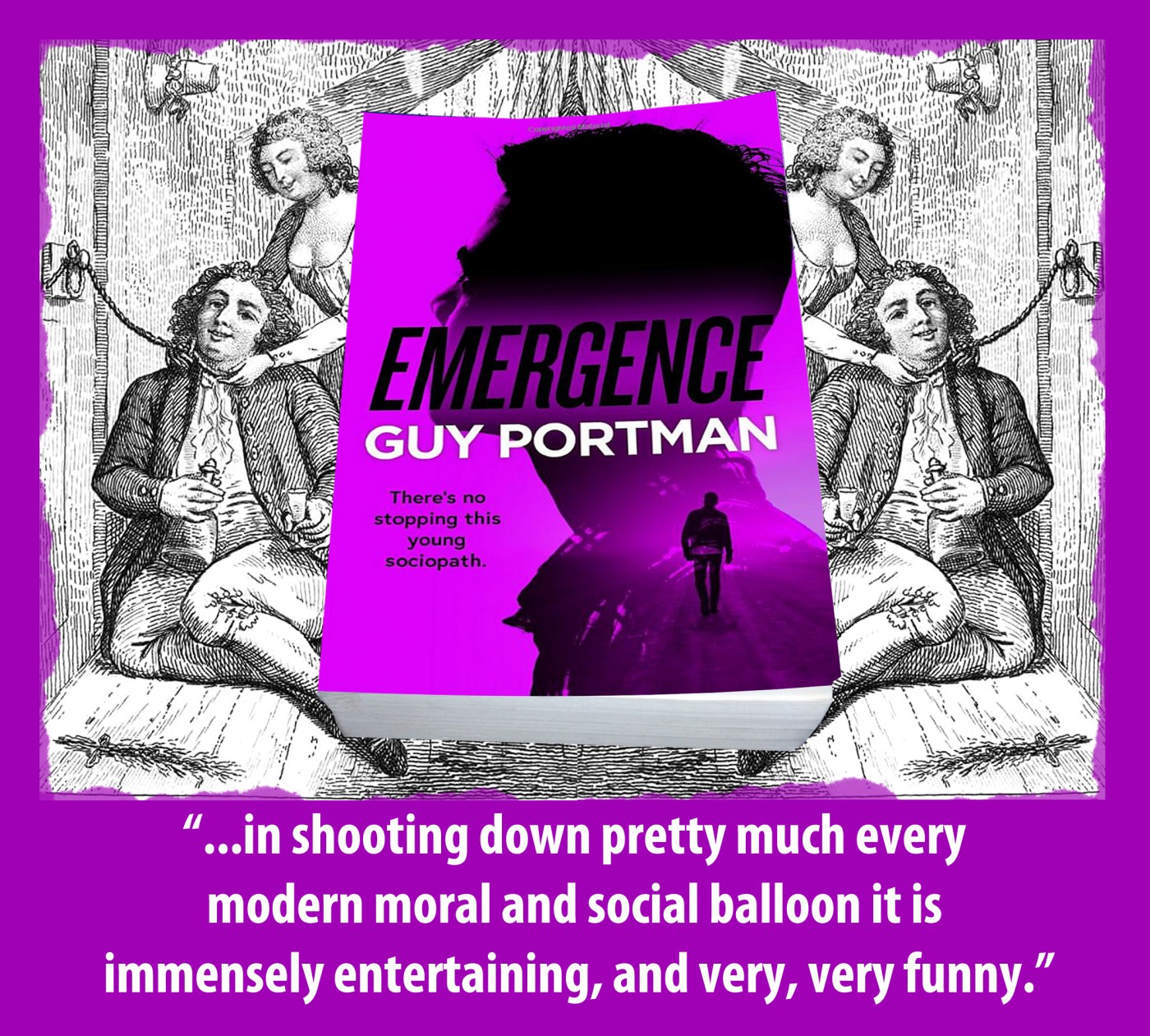
It has been a while since I read a Guy Portman novel. The last one I read was Golgotha, back in 2019, and clicking the link will take you to my review. That saw the demise of his wonderfully incorrect anti-hero Dyson Devereux, but now he introduces us to someone who might be a teenage version of DD. Horatio Robinson is clearly “on the spectrum”, as Special Educational Needs and Disabilities teachers might say. I confess to having Googled that to make sure it was still the ‘correct’ term as, having been out of schools for ten years, I wondered if the terminology had mutated into something more flowery and Californian.

Horatio is fixated with Trigonometry, reads French dictionaries and Dickens to relax, and has a visceral hatred of his mother’s boyfriend – an absolute oik called Brendan. Horatio’s mother – Rakesha – is from Antigua, but his father fled the scene  when Horatio was five. Horatio is busy applying his love of sine, cosine and tangent in an art lesson, after the teacher sets the class the task of producing a completely symmetrical design. When the class bully – Dominic – damages Horatio’s work, Horatio – as you do – picks up a pair of scissors and impales Dominic’s hand to the desk. He is, of course, immediately suspended from school and, as part of the process, has to visit a counsellor. I don’t know what contact Guy Portman has had with these people but, from my experience, his version is chillingly authentic. Horatio, by the way, narrates the story:

“She does more talking, much more. She asks some questions. The spikey hair, grinning and whiny voice is  terrible combination. And she keeps leaning towards me, close enough that I could smack her in the face.

‘I’ve heard about your issue at school. Could you tell me in your own words what happened?’
‘No.’
‘Well, it would be really helpful if you could.’
‘Helpful for whom?’ ‘
‘Well, you, of course.’
She’s grinning again.”

It took me a while to twig that Horatio’s absent father is, of course, none other than than Dyson Devereux himself. Horatio, permanently excluded from his school, now has time on his hands to perfect a way of ridding his world of the loathsome Brendan. After getting chased out his local library for researching (in the interests of science) Erotic Auto-Asphxiation, he concocts a complex plan which he hopes will remove Brendan in a way that will also shame the dead man, while in no way linking the crime to himself.

Portman says:
“I have always been an introverted creature with an insatiable appetite for knowledge, and a sardonic sense of humour. Throughout a childhood in London spent watching cold war propaganda gems such as He Man, an adolescence confined in various institutions, and a career that has encompassed stints in academic research and the sports industry, I have been a keen if somewhat cynical social observer.”

This cynicism is a sheer delight, especially to readers who, like me,  cast a jaundiced eye over our descent into a progressive madness, typified by those in ‘public service’ who thoughtlessly espouse every insane social fad imported from America. Portman chooses his targets well in this novel. ‘Woke’ teachers, failed psychologists masquerading as counsellors, and the frequently dystopian world of mothers deserted by fathers, and the often calamitous consequences for the children of that disunion, all come under fire. Portman turns over a heavy stone, and all kinds of nasty creatures scuttle away to avoid the light of day. Emergence may be a polemic, but in shooting down pretty much every modern moral and social balloon it is immensely entertaining, and very, very funny. It is out now.

SHAKING HANDS WITH THE DEVIL . . . Between the covers

shwtd header014

There is an interesting debate which raises its head periodically, and it involves the tricky subject of what can – or should not – become the subject of comedy. Jimmy Carr was in the news only the other day, because he made a joke about the deaths of Roma people in The Holocaust. There are numerous TV sitcoms from back in the day which are fondly remembered by us older folks, but would not survive the heightened sensibilities of modern publicists and producers. This preamble is by way of a warning that Bryan J Mason’s novel, Shaking Hands With The Devil, will not be for everyone. There are jokes and themes in here which, as they say, push boundaries, so if you are someone who takes offence at words on a page, then I think it’s probably ‘Goodnight Vienna‘. For those made of sterner stuff, here’s the story.

We are in late 1980s London – the autumnal years of Thatcher’s Britain – beset by strikes and endless assaults by the IRA. A predatory killer called Clifton Gentle – think Denis Nilsen – is enticing young homosexuals to come back to his home, where they have sex, but the post coital routine is that he kills them and chops them up into pieces. Sometimes the pieces stay in his flat, but when they become too noxious, he leaves them spread about the capital, in skips, under bushes or in Biffa bins.

SHWTD coverOn his trail is a grotesque cartoon of a copper – DCI Dave Hicks. He lives at home with his dear old mum, has a prodigious appetite for her home-cooked food, is something of a media whore (he does love his press conferences) and has a shaky grasp of English usage, mangling idioms  like a 1980s version of Mrs Malaprop.

The other gags come thick and fast. We have three new police cadets – Oldfield, Abberline and Slipper –  working on the case (Google if you’re not sure}, while the editor of The Herald Review (one of the newspapers covering the case) is a certain Mr Charles Manson.

Mason’s final audacious name-check is when he reveals that there is a second killer on the loose, a young man who has won all the glittering prizes, but has been diagnosed with terminal cancer. Peter Kurten is determined to make the most of his final six months by a bit of casual ‘triple D’ – Date, Death, Dismember. A confession. Suspecting that this was another joke, I Googled the name (so you don’t have to) and found that Peter Kurten a.k.a The Vampire of Düsseldorf was a notorious German serial killer who went to the guillotine on 2nd July 1931.

When he learns that he has a rival, Clifton Gentle is most aggrieved. That is not his only problem, however, because a young rent boy called Jimmy is Clifton’s only failure. Not only did Jimmy escape before fulfilling his date with the cleaver and hacksaw, he has now located his would-be assassin and is blackmailing him.

Hackney’s finest, Dave Hicks or, as he prefers to be known, ‘The Dick from The Sticks’ is also up against it. As clueless as ever, he unwisely announces in a news conference that he had set himself just fourteen days to bring the killer to justice. The days and hours tick by, without Hicks having any genuine leads. Then, on the eve of the expiry of his deadline, he decides to save his reputation. In a a bizarre attempt to blend in with the crowds in London’s gay clubs, Hicks sets out to attract the killer (he is unaware that there are two) and is dressed to kill, decked out in:

BJM“A fuchsia -pink shirt with outsize wing collar, over-tight lime green denim jeans, a brand new squeaky-clean leather jacket and, just for good measure, a black beret with white trim.”

The finale of Dave Hicks’s  quest to catch his man is set in an old fashioned Soho of seedy clubs, touts and pimps that would be unrecognisable to the trendsetters who frequent it today. Bryan Mason (right) has written a dystopian novel which is, in turn, ghastly, eyebrow-raising and hilarious, but is also a must for those who like their satire as black as night.

Shaking Hands With The Devil is published by Vanguard Press/Pegasus Publishing, and is available now.

FOUR ENGLISH POETS . . . A personal choice (3)

poets header

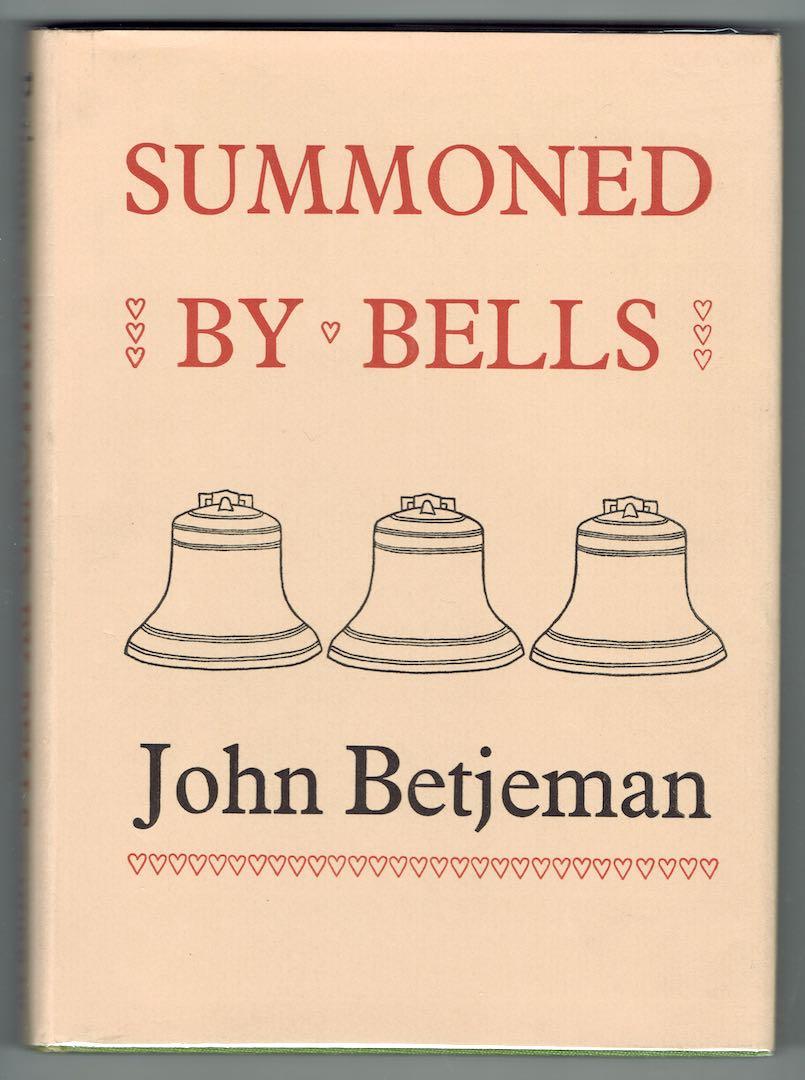
SBBI have spent longer on the biographical details of John Betjeman because, in what was his longest and most profound poem, Summoned By Bells (1960), he writes his autobiography in blank verse. 

He was born in London in 1906, the only child of a prosperous middle class family. The family firm made what we might call ‘Knick-knacks’ from silver and fine woods, destined to grace houses that boasted parlour maids, cooks and nannies. The family were originally Dutch, but at prep school during The Great War John was bullied because the name had a Germanic ring to it. “Betjeman’s a German spy – shoot him down and let him die!” was the cruel chant.

His senior schooling was at Marlborough. He hated games and was too bookish for his more muscular Christian school chums, but managed to survive by being clever. He began to write poetry, obsessively, and it was here that he developed a lifelong passion for an England dotted with rarely-visited churches, cross-crossed with sleepy country railway lines, with dusty trunk roads punctuated by mock Tudor pubs serving the Bona Fide traveller.

By the time he went up to Oxford, tensions were already well developed at home. His father had begun to suspect that his son had no intention of succeeding him as head of the business, and he saw this as a betrayal not only of himself, but the dozens of craftsmen who relied on the firm for their livelihood. This bitter division was to haunt Betjeman in later life, but was inevitable. Throughout this his mother – a rather fragile hypochondriac – tried to act as conciliator, with little success.

Oxford

Oxford was a time of church-crawling, endless sherry lunches with fellow disciples of Maurice Bowra, but little academic success. After being sent down he briefly followed the time-honoured route of failed undergraduates and became a teacher at a prep school – in his case an obscure establishment called Heddon Court in East Barnet where, bizarrely, he was in charge of cricket. This was in 1929, but by 1933 the school folded and has long since been demolished. Gradually, he made his way in the literary world, while being paid as the assistant editor of The Architectural Review. His later career, when his poetry flourished, is well documented elsewhere. He was a natural for television and broadcasting, and became something of a national treasure. He died in Cornwall, at the age of 77, in May 1984.

John-Betjeman-225x300So what are we to make of Betjeman’s poetry today, the age of cancel culture, triggered university graduates, and the most virulent class war that I can remember in my seventy-odd years of being sentient? He has been described – by lesser writers –  as mediocre. His  prevailing themes included  the foibles and rituals of the English middle class, churches, railways, Victorian buildings and London. Hardly the stuff to bring him to the cutting edge of the literary razor in 2022, admittedly. But his detractors – or those who see him as an anachronistic bumbler, mugging it up for TV cameras and radio microphones – miss the point, big time. Time and space forced me to ignore the sheer joy found in his description of railway stations, gymkhanas, Edwardian suburbs and churches  and look at his compassion. In Sun and Fun, he begins by gently mocking the ‘morning after’ scene in a tawdry London nightclub where, in a corner, is an elderly socialite, lamenting the passing of youth and recalling her heady days as a debutante. But the mockery turns on its head in the last verse:

There was sun enough for lazing upon beaches,
There was fun enough for far into the night.
But I’m dying now and done for,
What on earth was all the fun for?
For I’m old and ill and terrified and tight.

That scared old woman confronting her mortality tugs at my heart every time I read those words. Another elderly lady, probably long widowed, perhaps sent to a nursing home by her family, features in Death In Leamington Spa. Verse one speaks for itself:

She died in the upstairs bedroom
By the light of the ev’ning star
That shone through the plate glass window
From over Leamington Spa

But then the nurse, oblivious, comes into the room:

And Nurse came in with the tea-things
Breast high ‘mid the stands and chairs-
But Nurse was alone with her own little soul,
And the things were alone with theirs.

Again, the final two verses need no commentary from me:

Nurse looked at the silent bedstead,
At the gray, decaying face,
As the calm of a Leamington ev’ning
Drifted into the place.

She moved the table of bottles
Away from the bed to the wall;
And tiptoeing gently over the stairs
Turned down the gas in the hall.

Betjeman was Poet Laureate from 1972 until his death, but this beautiful elegy on a national event was written long before those years. What never fails to amaze me is the sheer craftsmanship of the poem. He wrote his poems to be spoken out loud, and worked them over and over, and said them to himself endlessly until he was satisfied. King George V died at Sandringham on 20 January 1936. The ‘young man’ in the final line is, of course, the future Edward VIII.

Spirits of well-shot woodcock, partridge, snipe
Flutter and bear him up the Norfolk sky:
In that red house in a red mahogany book-case
The stamp collection waits with mounts long dry.

The big blue eyes are shut which saw wrong clothing
And favourite fields and coverts from a horse;
Old men in country houses hear clocks ticking
Over thick carpets with a deadened force;

Old men who never doubted, never cheated,
Communicated monthly, sit and stare
At the new suburb stretched beyond the run-way
Where a young man lands hatless from the air

Ladies and gentleman, I rest my case.

IN PART FOUR
THE UNIVERSITY LIBRARIAN WHO
CAPTURED HIS ENGLAND IN VERSE

TO ALL THE LIVING . . . Between the covers

TAOTL

This is the latest in the series of excellent reprints from the Imperial War Museum. They have ‘rediscovered’ novels written about WW2, mostly by people who experienced the conflict either home or away. Previous books can be referenced by clicking this link.

MonicaAuthor Monica Felton (1906 – 1970) was certainly an unusual woman and, to borrow a modern phrase, somewhat to the left of Lenin. In 1951, she visited North Korea as part of the Women’s International Democratic Federation commission and outlined her impressions in the book That’s Why I Went (1954), adhering to an anti-war position. In the same year, she was awarded a dubious and deeply ironic honour – the International Stalin Prize “for peace between peoples”

We are, then, immediately into the dangerous territory of judging creative artists because of their politics, which never ends well, whether it involves the Nazis ‘cancelling’ Mahler because he was Jewish or more recent critics shying away from Wagner because he was anti-semitic and, allegedly, admired by senior figures in the Third Reich. The longer debate is for another time and another place, but it is an inescapable fact that many great creative people, if not downright bastards, were deeply unpleasant and misguided. To name but a few, I don’t think I would have wanted to list Caravaggio, Paul Gauguin, Evelyn Waugh, Eric Gill or Patricia Highsmith among my best friends, but I would be mortified not to be able to experience the art they made.
To All The Living
So, could Monica Felton write a good story, away from hymning the praises of KIm Il Sung and his murderous regime? To All The Living (1945) is a lengthy account of life in a British munitions factory during WW2, and is principally centred around Griselda Green, a well educated young woman who has decided to do her bit for the country. To quickly answer my own question, the answer is a simple, “Yes, she could.”

Another question could be, Does she preach? That, to my mind, is the unforgivable sin of any novelist with strong political convictions. Writers such as Dickens and Hardy had an agenda, certainly, but they subtly inserted this between the lines of great story-telling. Felton is no Dickens or Hardy, but she casts a wry glance at the preposterous bureaucracy that ran through the British war effort like the veins in blue cheese. She highlights the endless paperwork, the countless minions who supervised the completion of the bumf, and the men and women – usually elevated from being section heads in the equivalent of a provincial department store – who ruled over the whole thing in a ruthlessly delineated hierarchy.

Amid the satire and exaggerated portraits of provincial ‘jobsworths’ there are darker moments, such as the descriptions of rampant misogyny, genuine poverty among the working classes, and the very real chance that the women who filled shells and crafted munitions – day in, day out – were in danger of being poisoned by the substances they handled. The determination of the factory managers to keep these problems hidden is chillingly described. These were rotten times for many people in Britain, but if Monica Felton believed that things were being done differently in North Korea or the USSR, then I am afraid she was sadly deluded.

The social observation and political polemic is shot through with several touches or romance, some tragedy, and the mystery of who Griselda Green really is. What is a poised, educated and well-spoken young woman doing among the down-to-earth working class girls filling shells and priming fuzes?

My only major criticism of this book is that it’s perhaps 100 pages too long. The many acerbic, perceptive and quotable passages – mostly Felton’s views on the more nonsensical aspects of British society – tend to fizz around like shooting stars in an otherwise dull grey sky.

Is it worth reading? Yes, of course, but you must be prepared for many pages of Ms Felton being on communist party message interspersed with passages of genuinely fine writing. To All The Living is published by the Imperial War Museum, and is out now.

HAMMER TO FALL . . .Between the covers

HTF header

English author and screenwriter John Lawton has long been a favourite of those readers who like literary crime fiction, and his eight Frederick Troy novels have become classics. Set over a long time-frame from the early years of WW2 to the 1960s, the books feature many real-life figures or, as in A Little White Death (1998), characters based on real people, in this case the principals in the Profumo Affair. In Then We Take Berlin (2013) Lawton introduced a new character, an amoral chancer whose real surname – Holderness – has morphed into Wilderness. Joe Wilderness is a clever, corrupt and calculating individual whose contribution to WW2 was minimal, but his career trajectory has widened from being a Schieber (spiv, racketeer) in the chaos of post-war Berlin to being in the employ of the British Intelligence services.

HTFHe is no James Bond figure, however. His dark arts are practised in corners, and with as little overt violence as possible. Hammer To Fall begins with a flashback scene,establishing Joe’s credentials as someone who would have felt at home in the company of Harry Lime, but we move then to the 1960s, and Joe is in a spot of bother. He is thought to have mishandled one of those classic prisoner exchanges which are the staple of spy thrillers, and he is sent by his bosses to weather the storm as a cultural attaché in Finland. His ‘mission’ is to promote British culture by traveling around the frozen north promoting visiting artists, or showing British films. His accommodation is spartan, to say the least. In his apartment:

The dining table looked less likely to be the scene of a convivial meal than an autopsy.”

Some of the worthies sent to Finland to wave the British flag are not to Joe’s liking:

“For two days Wilderness drove the poet Prudence Latymer to readings. She was devoutly Christian – not an f-word passed her lips – and seemed dedicated to simple rhyming couplets celebrating dance, spring, renewal, the natural world and the smaller breeds of English and Scottish dog.It was though TS Eliot had never lived. By the third day Wilderness was considering shooting her.”

Before he left England, his wife Judy offered him these words of advice:

“If you want a grant to stage Twelfth Night in your local village hall in South Bumpstead, Hampshire, the Arts Council will likely as not tell you to fuck off …. So, if you want to visit Lapland, I reckon your best bet is to suggest putting on a nude ballet featuring the over-seventies, atonal score by Schoenberg, sets by Mark Rothko ….. Ken Russell can direct … all the easy accessible stuff …. and you’ll probably pick up a whopping great grant and an OBE as well.”

JohnLawton.-Credit-Nick-Lockett-318x318So far, so funny – and Lawton (right) is in full-on Evelyn Waugh mode as he sends up pretty much everything and anyone. The final act of farce in Finland is when Joe earns his keep by sending back to London, via the diplomatic bag, several plane loads of …. well, state secrets, as one of Joe’s Russian contacts explains:

The Soviet Union has run out of bog roll. The soft stuff you used to sell to us in Berlin is now as highly prized as fresh fruit or Scotch whisky. We wipe our arses on documents marked Classified, Secret and sometimes even Top Secret. and the damned stuff won’t flush. So once a week a surly corporal lights a bonfire of Soviet secrets and Russian shit.”

But, as in all good satires – like Waugh’s Sword of Honour trilogy, and Catch 22 – the laughter stops and things take a turn to the dark side. Joe’s Finnish idyll comes to an end, and he is sent to Prague to impersonate a tractor salesman. By now, this is 1968, and those of us who are longer in the tooth know what happened in Czechoslavakia in 1968. Prague has a new British Ambassador, and one very familiar to John Lawton fans, as it is none other than Frederick Troy. As the Russians lose patience with Alexander Dubček and the tanks roll in, Joe is caught up in a desperate gamble to save an old flame, a woman whose decency has, over the years, been a constant reproach to him:

“Nell Burkhardt was probably the most moral creature he’d ever met. Raised by thieves and whores back in London’s East End, he had come to regard honesty as aberrant. Nell had never stolen anything, never lied …led a blameless life, and steered a course through it with the unwavering compass of her selfless altruism.”

Hammer To Fall is a masterly novel, bitingly funny and heartbreaking by turns. I think A Lily Of The Field is Lawton’s masterpiece, but this runs it pretty damned close. It is published by Grove Press, and is out today, 2nd April 2020.


For more about John Lawton click this link

Blog at WordPress.com.

Up ↑