Search

fullybooked2017

Tag

revenge

BYE BYE BABY . . . Between the covers

bbb spine012 copy

DI Jack Hawksworth is a rising star in the Metropolitan Police. He is clever, charismatic, and very good looking. His life has not been without tragedy. His parents died in a dreadful road accident, but thanks to a family bequest, he is able to live in an otherwise unaffordable apartment in London’s much sought-after Hampstead. When a man in Lincolnshire is found dead with his hands apparently clutching the remains of his genitals – and his lips – local police soon realise that this is too big for them to handle, and Hawksworth and his team are called in.

The killing is soon repeated in almost identical circumstances, but in Sussex, and it becomes obvious that there is a serial killer at work. The two dead men are linked by where they went to school – an unremarkable High School near Brighton, but what happened back in the day that someone should want to enact such terrible vengeance? Meanwhile, Hawksworth has become romantically involved with a young woman called Sophie who lives in the apartment above his. She suffers from a wasting disease and is mostly wheelchair bound, but she is funny, intelligent, vivacious – and very attractive.

One of Hawksworth’s team, DS Kate Carter is – despite being engaged to an IT expert called Dan – becoming increasingly smitten with her boss, but is trying (and mostly failing) to keep things as professional as possible. Fiona McIntosh invites readers to fall into the same traps as her investigating coppers, and those traps involve us making assumptions, which she delights in overturning. The plot is labyrinthine in its twists and turns, and McIntosh achieves the difficult task of making both the police officers – and us readers – have more than a sneaking sympathy for the killer.

As good as this novel is, in publishing terms it is unusual, in that it was first published in Australia in 2007. It is mildly frustrating that it ends enigmatically, at least in terms of Hawksworth and the serial killer. The follow up novel was Beautiful Death, which is, according to Amazon UK, a steal at just under £60, due to the strange price protocols of the world of publishing! Presumably, Australian readers know what happened next. The author was born in England, but seems to spend much of her time in the beautiful city of Adelaide. I can only say that Bye Bye Baby is a complex and sometimes gruesome read, but a brilliant police thriller. As I mentioned earlier, this is the first in an established series, but UK publishing rights are now with No Exit Press, and this edition is available now.

Screen Shot 2024-12-26 at 17.55.56

FLOWERS FROM THE BLACK SEA . . . Between the covers

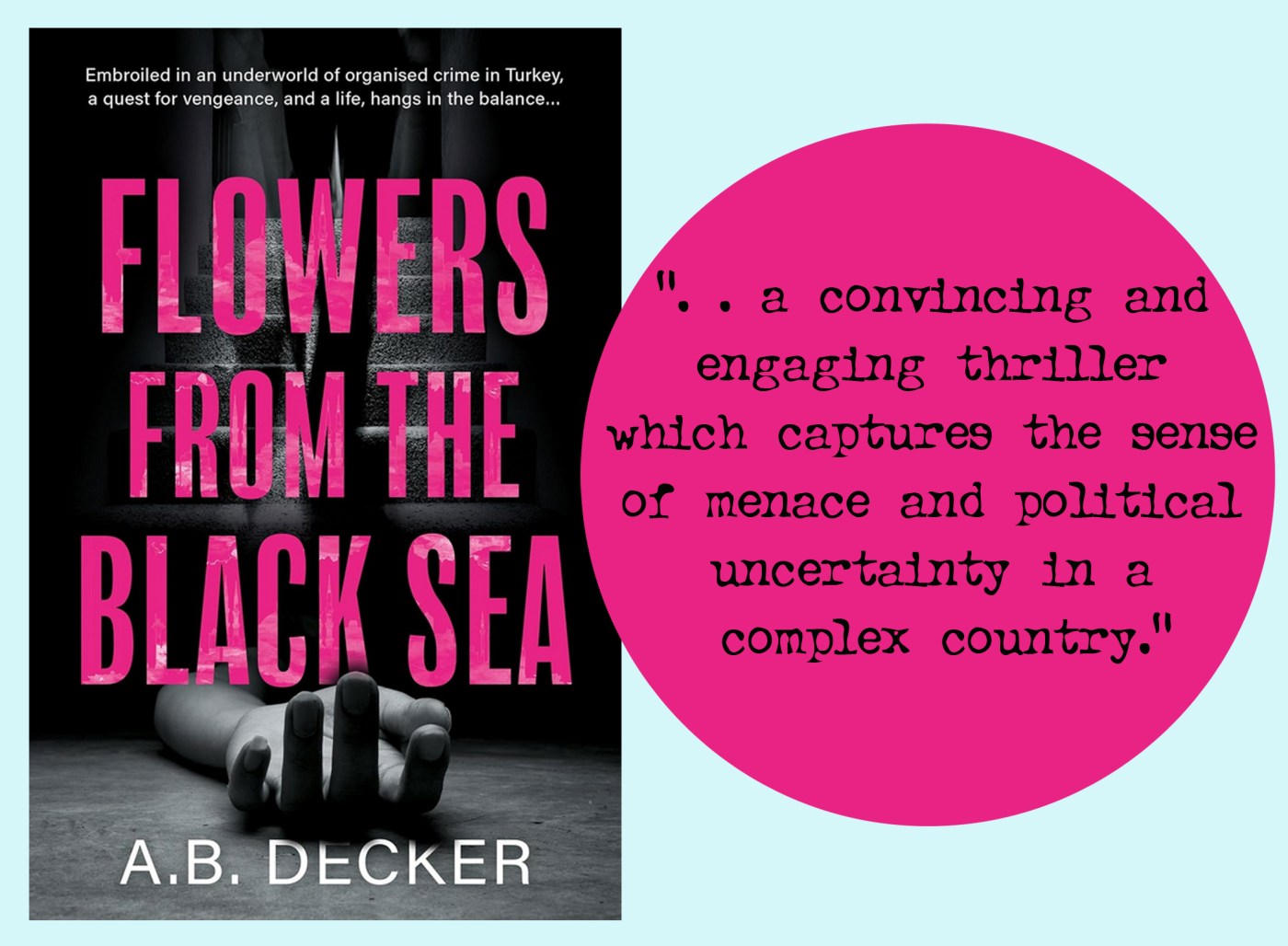
Screen Shot 2024-11-02 at 17.44.31Revenge thrillers come in many shapes and sizes, and Flowers From The Black Sea by AB Decker (left) begins with the main character, a barely competent English security consultant called Matt Quillan travelling to end-of-season Turkey on an all-expenses-paid favour for his old university chum Ben Braithwaite. Quillan’s task appears relatively simple, and it is to locate the whereabouts of a man called Ahmet Karadeniz, last known of in the vicinity of Karakent, a small town on the south coast. Any job is a job as far as Quillan is concerned, and so he fetches up in Karakent and starts to ask questions. However, on his bus journey from Istanbul he meets a mysterious stranger called Rekan, who gives him a USB flash drive for sage keeping. Anyone with a grain of sense would probably have refused, but Quillan takes it, and when the bus is stopped by the police, and Rekan is taken into custody, our man begins to wonder.
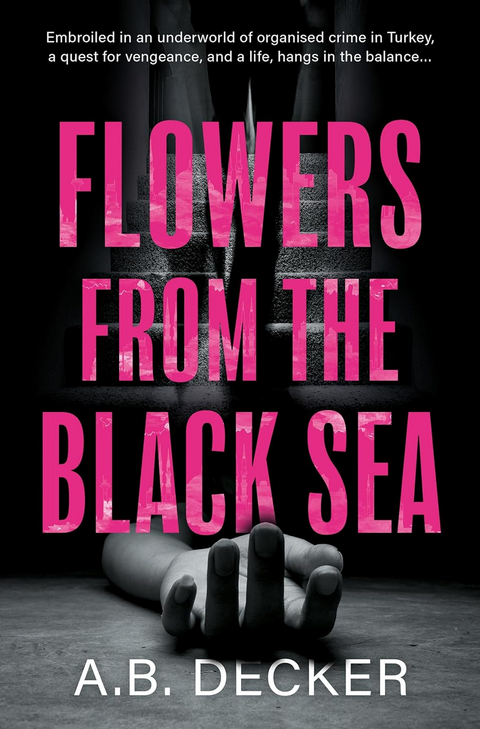

After being questioned by the police Quillan is allowed to continue his journey, and soon makes the acquaintance of a local English estate agent, Pearl, and then her sister Amber, who is in town for her annual holiday. Eventually Quillan learns why he has been sent to Turkey. Ben’s sister Peggy married Karadeniz but died in circumstances which were, from a distance, highly suspicious although, according to Muslim custom, Peggy was interred very quickly, and autopsy was ever carried out.

Having reported back to Ben via phone, Quillan is surprised when his wealthy friend arrives in Karakent, aboard his luxury yacht. Quillan is, perhaps, not the sharpest knife in the drawer, and he is persuaded to stay around while Ben exacts revenge for the untimely death of his sister.

The matter of the flash drive and what it contains is central to the plot. I haven’t been to Turkey since the 1970s, and I won’t pretend that it was an altogether pleasant experience. Yes, countless British holidaymakers go to tourist resorts these days and experience nothing but enjoyment, but these places are pretty much gated off from the real Turkey. Back in the day, we were ‘hippy’ travellers with little cash and, shall we say, we had our moments. Today, Turkey is pretty much an autocracy, and its treatment of minorities such as Kurds and Armenians is often in the news.

This novel is not a sermon about the shortcomings of Muslim societies, but it reference the mistreatment of women in what is predominantly a patriarchal society, by any Western standards. I suppose, aside of the dramatic plot, Decker is simply reasserting what we have known for centuries. Turkey is very much a ‘twixt and between’ place, never sure if it belongs to the urbane West or the visceral certainties of the East.

Long story short, Ben and Matt are captured by gangsters, Ben’s yacht is seized and run aground but, thanks to an intrepid Kurdish nationalist called Leila, the mysterious contents of Rekan’s USB drive, all’s well that ends well. Except it isn’t. Literally in the last paragraph, we have an act of violence that redefines the nature of revenge. Decker has written a convincing and engaging thriller which captures the sense of menace and political uncertainty in a complex country. Published by The Book Guild, it is available now.

Screen Shot 2024-11-02 at 17.49.27

REDEMPTION . . . Between the covers

Redemption header

Young Joshua Moore loved rabbits and hares. He had pestered his mom and dad – Evelyn and Tobias – for a pet, and so they bought him a white rabbit. The family had only just moved from London to San Diego, and the rabbit in its hutch mesmerised the nine year old boy. Reluctantly, because they were only just finding their USA feet, Evelyn and Tobias allowed Joshua to go away on a school camp in the nearby desert. On arriving, Joshua had seen a desert hare and, as darkness fell, it appeared again in the moonlight. Chasing it to get a closer look, and running across the highway, Joshua was struck by a car and killed instantly. The driver of the car didn’t stop.

Evelyn spends the next eleven years brooding over her son’s death, and plotting revenge. We get an early indicator which reveals her mindset:

“I spent a whole month in bed after the funeral, listening to the rabbit we’d bought for him hopping around in its hutch on the other side of the window. The rustling of the sawdust. The chomping and crunching of the vegetables. I lay there for a month loathing it, it’s mere existence feeding my rage until it was a living, breathing thing, for bigger and stronger than me. When I finally got out of bed, the first the thing I did was stride towards that hutch and snap the rabbits neck. It never did get a name.”

Driving the car was Aaron Alexander. a young, gay, drug-addicted drifter. He was traced, tried, and jailed. Now, eleven years later, he is out of prison, and scratching a living as a pump attendant at a gas station in Beatty, Nevada. Evelyn, with Tobias a reluctant passenger, gets in the car and heads for Nevada. Among minimal clothes changes and toiletries in her bag are a handgun, boxes of ammunition, rope, duct tape and a black canvas roll containing every variety of butchers’ knife. The relationship between Evelyn and Tobias has long since soured. She cannot bear his touch, and yet he clings on desperately, hoping she will someday emerge from her frozen state.

At the motel where they rest up for that first night, Evelyn does what she had obviously been planning for ages. While Tobias sleeps, she takes his wallet, cards, phone and shoes, and drives off into the early dawn. The remainder of the book is a hypnotic dance of death that plays out in cockroach infested motels, desolate gas stations miles from anywhere and the endless Nevada desert, where rapidly encroaching wildfires make the air sting. Very simply, Tobias is trying to get to Aaron before Evelyn can kill him, and it becomes a very bloody affair. Fans of dentist torture à la Laurence Olivier in Marathon Man mustn’t miss the scene where Evelyn, driven mad with toothache, removes the offending molar herself, with the help of a hammer, chisel and pair of pliers.

There is an ironic problem with the premise that Tobias’s main aim is to save Evelyn from herself, by stopping her from killing Aaron, because by the time they are grimly reunited,in a desolate former auto repair shop, she has already done enough damage to ensure that – always assuming that she survives – she will be put away for a very long time.

Redemption – noun, the action of saving or being saved from sin, error, or evil.

How apposite, then, is the book’s title for the three main characters? Perhaps it is for Aaron and Tobias. For sure, Aaron’s upbringing was tough, but his brother Chris survived, and it was Aaron being open about his sexual preferences which precipitated a slide into self pity and woeful lifestyle choices. By the end of the book, he has come through the firestorm of events with something akin to self-respect and moral courage. Tobias is more complex. He is the Hamlet of the piece, beset by doubt, a reluctance to act decisively and timidity in the face of Evelyn’s white hot anger. But he survives, and no-one comes out the other side of the horrific violence towards the end of the story a weaker person. Evelyn? For me, her ever increasing derangement puts her beyond any sense of redemption, but you must make up your own minds.

There was a termGrand Guignol – applied, retrospectively, to the blood-stained stage dramas of the Jacobean period and, in the twentieth century there was, in Paris, Le Théâtre du Grand-Guignol, which specialised in acting out scenes of horrific violence with spectacular special effects. Redemption certainly has elements of Grand Guignol, but it is a powerful novel which lays bare the dreadful things people will do to each other when they are – physically and emotionally – pushed beyond the limit. Published by Simon and Schuster, it is out today, 20th June.

SMOKE KINGS . . . Between the covers

sk spine010 copy

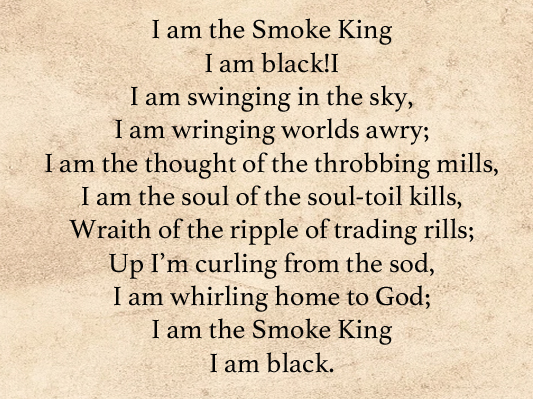
Titles of books and movies can be meaningless word pairings dreamed up by twenty-something publicists. Remember the scene in one of the Naked Gun movies at the Oscars? In the Best Picture shortlist were spoof films like Naked Attraction, Violent Lunch, Fatal Affair, Final Proposal, Basic Analysis..? So, what to make of Smoke Kings? A few moments spent on Google rewarded me with a poem written in 1905 by W.E.B. Du Bois.

Poem

The writer was an activist years ahead of his time, and by adapting his words, Jahmal Mayfield nails his colours to the mast, although his Amazon bio declares that Smoke Kings was inspired by Kimberly Jones’ passionate viral video, “How can we win?” After his cousin, Darius, has been been beaten to death by white teenagers, Nate plots his revenge. Rather than taking out the boys who killed his cousin, Nate targets the descendants of white men and women who, he argues, are responsible for lynchings, racist beatings and murders committed by their grandparents decades previously. Nate and three friends – Rachel, Isiah and Joshua – exact a kind of third party vengeance on a succession of targeted individuals. Most escape death only because they commit to paying sums of money every month to deserving causes in the black community.

Inevitably, the quartet bite off more than they can chew. One of their reprieved victims hires a former cop – Mason Farmer- on a ‘seek and destroy’ mission. He is freshly sacked from a private security firm after he fails to tick the right number of boxes on their Inclusion and Diversity check list, and he sets out to nail the quartet of avengers.

Nate  and  his buddies make another serious strategic error when they kill a random redneck called Chipper, and bury him in a remote grave. Sadly for them, Chipper’s brother Samuel is the charismatic leader of  a violently racist gang, and they are determined to avenge Chipper’s death.

Mayfield is at his most assured when describing the complex relationships between the four would-be avengers, and how they sometimes bicker about how black they actually are. Mason Farmer, too, has his preconceptions about race and identity tested when, while searching for Nate and company, he meets a mixed race woman – a campaigner for justice – called Elizabeth, and falls for her, despite her antipathy towards him. Farmer’s attitudes towards race and identity are already complicated, as his estranged daughter has a son by a black father.

The racist gang term themselves The Righteous Boys: they are deeply unpleasant, and live even worse lives:
“He drove on into the night, past fields of wild grass, old farmhouse buildings slumping like stacks of damp cardboard boxes, useless tractor equipment rusted the colour of dirty bricks. A forgotten and desolate wasteland. No wonder The Righteous Boys had chosen to call the area home.”

I read the novel pretty much back to back with re-reading a couple of Harlem Detectives novels by Chester Himes, and it left me wondering if someone had written A Rage In Harlem or The Real Cool Killers today, whether or not anyone would publish them, such is the glee with which Himes portrays the eccentricities and sometimes deeply venal nature of some of the characters. Smoke Kings is very different, as there is little ambiguity about where good and evil reside. The narrative of the book raises all kinds of very contemporary questions about ancestral guilt, both on an individual and national level. Smoke Kings is a breathless journey down the bumpy track that leads to revenge, and is published by Melville House, available now.

HUNTS . . . Between the covers

HUNTS HEADER

The first thing to say is that the title won’t make much sense if you just randomly saw it on a shelf, but pick it up and you will see it is the first part of a trilogy, the two following novels being Skins and Kills. We meet Arran Cunningham, a young Scot. He is a Metropolitan Police officer working in Hackney, East London. Not being a Londoner, I have no idea what Hackney is like these days. I suspect it may have become more gentrified than it was in the spring of 1988. What Cunningham sees when he is walking his beat is something of a warzone. There is a large black population, mostly of Jamaican origin, and the lid is only just holding its own on a pot of simmering racial tensions, turf wars between drug gangs and a general air of despair and degeneration.

The pivotal event in the novel is a mugging (for expensive trainers) that turns into rape. The victim is a black teenager called Nadia Carrick. The attackers are a trio of young white men, led by a boy nicknamed Spider. They are unemployed, drug addicted, and live in a squat. Nadia tries to conceal the attack from her father, Stanton, but eventually he learns the true extent of her nightmare, and he seeks retribution. Stanton Carrick is an accountant, but a rather special one. His sole employer is Eldine Campbell, ostensibly a club and café owner, but actually the main drugs boss in the borough, and someone who needs his obscene profits legitimised.

Carrick is also a great friend of Arran Cunningham, who learns what has happened to Nadia. Purely by luck he saw Spider and his two chums on the night of the incident, but was unaware at the time of what had happened. Rather than use his own men to avenge Nadia’s rape, Eldine Campbell has a rather interesting solution. He has what could be called a “special relationship’ with a group of police officers, led by Detective Chief Inspector Vince Girvan, and he assigns them the task of dealing with with the perpetrators.

Meanwhile, Girvan has taken a special interest in Arran Cunningham, and assigns him to plain clothes duties, the first of which is to be a part of the crew eliminating Spider and his cronies. In at the deep end, he is not involved with their abduction, but is brought in as the trio are executed in a particularly grisly – but some might say appropriate – fashion. There is problem, though, and it is a big one. He recognises Spider’s two accomplices, but the third man is just someone random, and totally innocent of anything involving Nadia.

The three bodies are disposed of in the traditional fashion via a scrapyard crushing machine, but Cunningham is in a corner. His dilemma is intensified when his immediate boss, DI Kat Skeldon, aware that there is a police force within a police force operating, enrols him to be ‘on the side of the angels.’ As if things couldn’t become more complex, Cunningham learns that Stanton Carrick is dying of cancer.

JLDDurnie’s plot trajectory which, thus far, had seemed on a fairly steady arc, spins violently away from its course when he reveals a totally unexpected relationship between two of the principle players in this drama, and this forces Cunningham into drastic action.
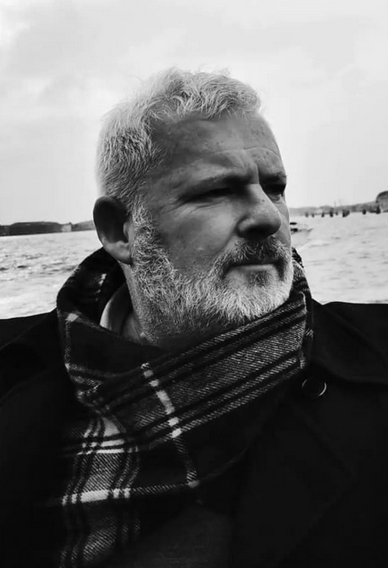
The author (left) was a long-serving officer in the Met, and so we can take it as read that his descriptions of their day-to-day procedures are authentic. In Arran Cunningham, he has created a perfectly credible anti-hero. I am not entirely sure that he is someone I would trust with my life, but I eagerly await the next instalment of his career. Hunts is published by Caprington Press and will be available on 8th January.

THE WATER DOESN’T LIE . . . Between the covers

twdl spine022 copy

The story begins back in the day, in grisly fashion. A lad, in the so-called ‘care’ of a Roman Catholic children’s home in Scotland has been sexually abused to the extent that his self esteem is shattered and he sees no  reason to live. He hangs himself from a beam, using torn up bed-sheets. The police are eventually called, but the patriarchal attitude of the priests (and a handy golf club connection with a top copper) means that the death is just written off for what it was, a suicide, but the cause goes uninvestigated.

Cut to the present day and we are in the cathedral city of Lincoln. The location gave me a huge amount of pleasure, as one half of my ancestry is as Lincolnshire as haslet, Sincil Bank, Mablethorpe, the wonderful Wolds – and Lincoln’s imp itself. When a body is fished out of a local lake and eventually identified as a former Roman Catholic priest (and child abuser), DI Dalton and his oppo, DS Gibb, are drawn into a murder investigation that will take them away from their bailiwick to Glasgow, and the less than salubrious visitors’ rooms of HMP Barlinnie. Someone – maybe with an accomplice – scarred by their brutal days in church care has decided to take revenge, and the body count increases.

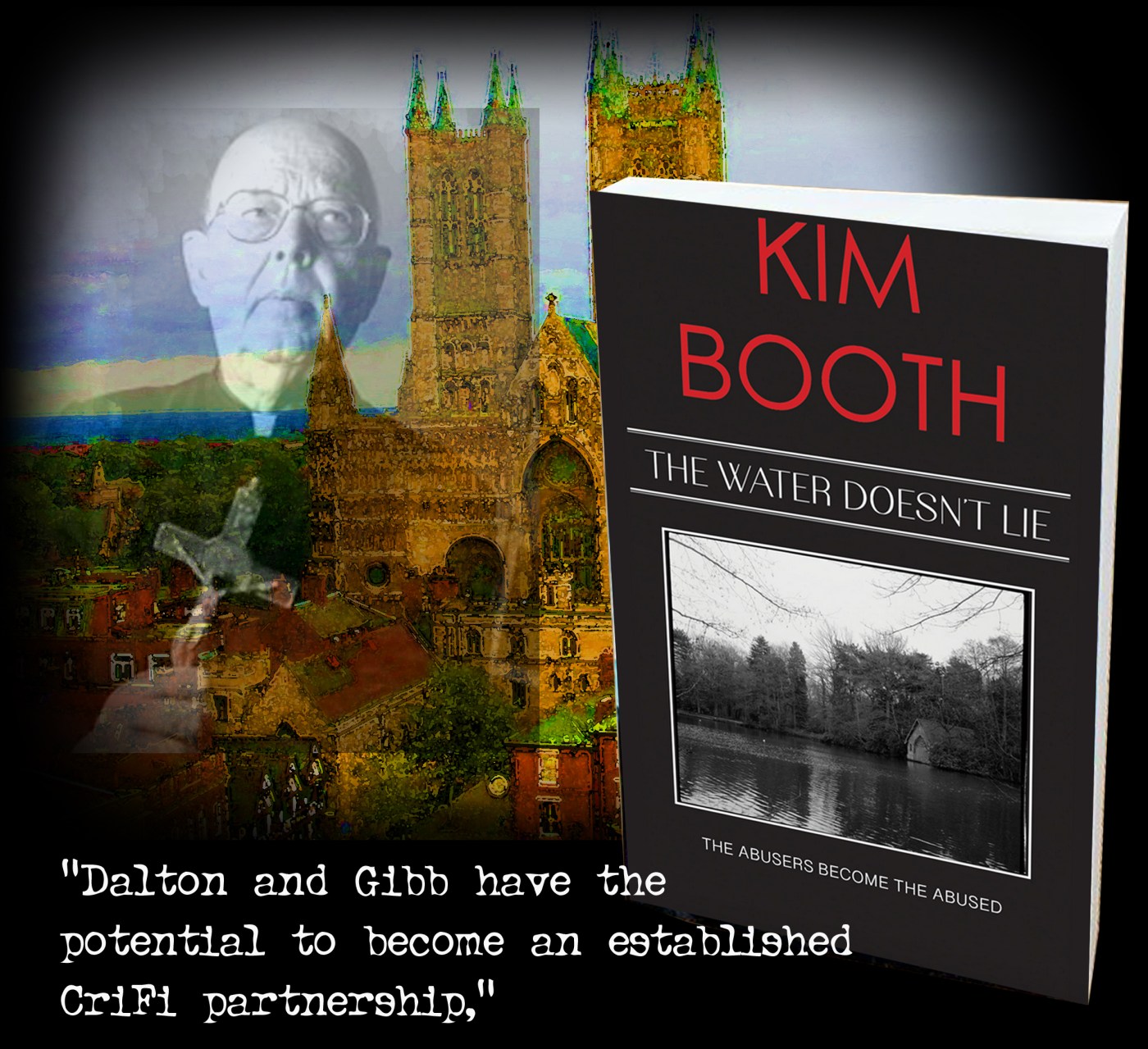
Dalton and Gibb follow one or two false trails before they are forced to face the fact that not only is their quarry extremely adept using modern technology, and suspiciously familiar with the way modern police work is done, but they are also something of a weapons expert. As a keen target shooter myself, I can vouch for the fact that a 7.62mm rifle with a decent scope is a formidable weapon in the hands of a sniper. I am not sure if KIm Booth has had the misfortune to fall foul of the deeply secretive and self-protective world of the Roman Catholic church, but the crimes he describes here sound grimly authentic.

The procedural aspects of the story are totally convincing as one might expect from a former police officer – after several jobs and a brush with the law Booth decided to join the Lincolnshire Police, where he served 35 years mainly in investigative roles. The attention to crime-scene detail, the awareness of sharp-eyed defence lawyers for any slight slip-up in the chain of evidence and the debilitating effect form-filling and box-ticking can have on investigators is described in detail. Perhaps the author (in my view) has taken something of a risk in the way he chooses to end the search for the children’s home avenger, but Dalton and Gibb have the potential to become an established CriFi partnership, and I hope that future books will let us know a little more about the men and what makes them tick as people.

Kim Booth was born in Lincolnshire. After leaving the police he worked as a Corporate Security Manager for a well know international holiday company for a number of years. Currently he has started to fulfill a long standing intention to write true crime and crime fiction books. He lives in the city of Lincoln. The Water Doesn’t Lie is available now.

STAY BURIED . . . Between the covers

SB header

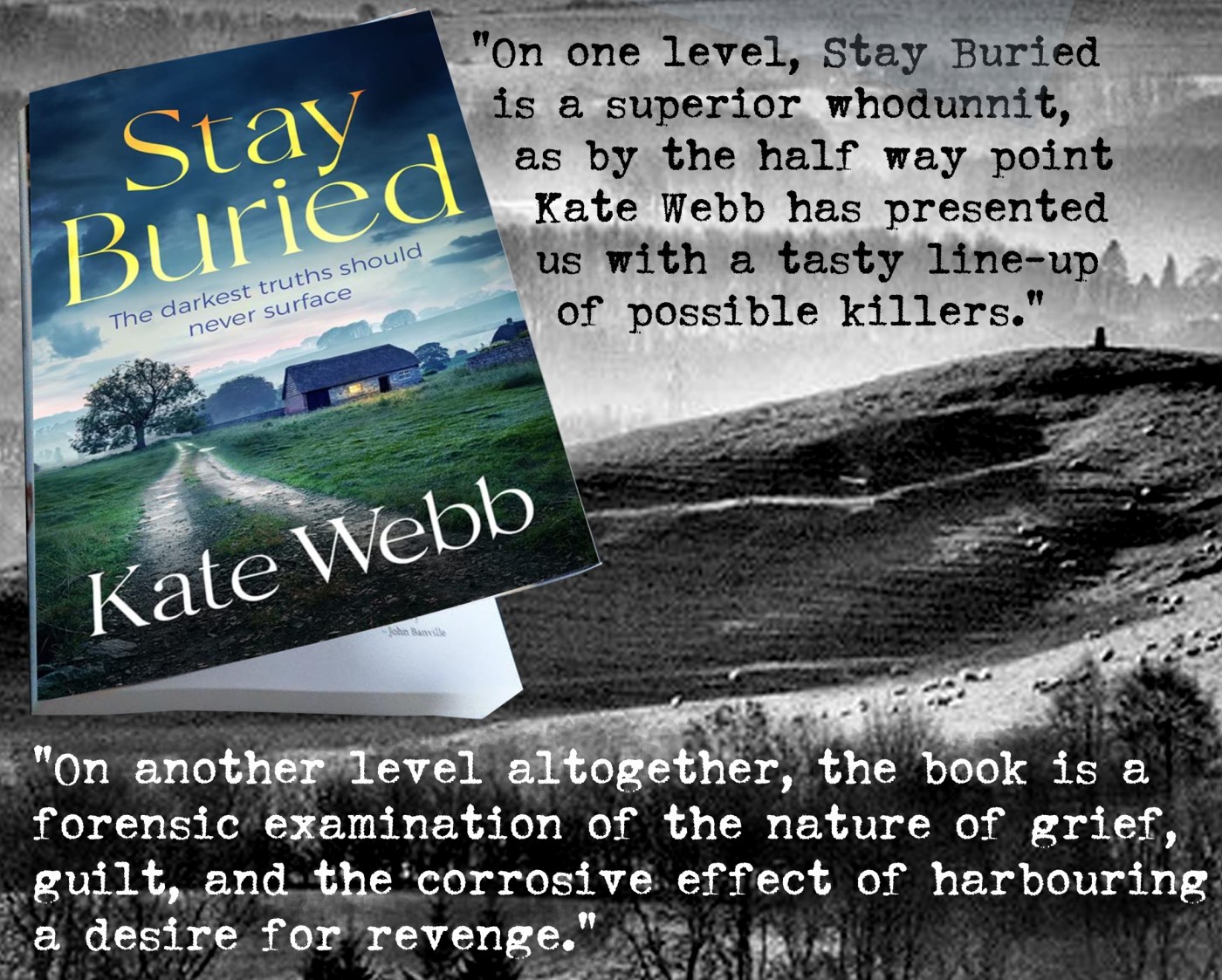
Screen Shot 2022-10-01 at 19.38.56Writing as Katherine Webb, the author (left) is a well established writer of several books which seem to be in the romantic/historical/mystery genre, but I believe this is her first novel with both feet firmly planted on the  terra firma  of crime fiction. Wiltshire copper DI Matthew Lockyer, after a professional error of judgment, has been sidelined into a Cold Case unit, consisting of himself and Constable Gemma Broad.
He receives a telephone call from a most unexpected source. His caller is Hedy Lambert, a woman he helped convict of murder fourteen years earlier. The case was full of unexpected twists and turns, none more bizarre than the identity of the victim.  Harry, son of Emeritus Professor Roland Ferris had left home as a teenager and, seemingly, vanished from the face of the earth. Then he returns home to the Wiltshire village where his father lives. This variation on the tale of The Prodigal Son, takes a turn for the worse, however, when Harry’s dead body is discovered, and standing over it, clutching the murder weapon, is Ferris’s housekeeper Hedy Lambert. Problem is, it’s not Harry Ferris.

After a few days it transpires the the murder victim is actually Mickey Brown, a Traveller, who superficially resembles Harry. Despite the absence of any plausible motive Hedy Lambert is convicted of murder and found guilty, condemned almost entirely by  convincing forensic evidence. Now, Lambert has telephoned Lockyer from her prison to tell him that the real Harry Ferris has returned to his father’s house. Lockyer visits Longacres, Ferris’s house in the village of Stoke Lavington, to find the old man at death’s door with cancer of the blood and Harry Ferris totally unwilling to co-operate with the re-opening of the murder case.

As the story develops, we learn more about Lockyer and his background. His parents are what Americans call hardscrabble farmers, elderly and increasingly unable to make a living out of the farm or see any fruits for their lifetime of hard work. The obvious person to take over the farm was Lockyer’s brother Chris, but he is long dead, having been stabbed in a fracas outside a local pub. His killer has never been brought to justice.

One of the many admirable qualities of this book is that Kate Webb doesn’t take any prisoners in her portrayal of rural Wiltshire. Yes, there are obviously some beautiful places, but there are also farms which are bleak, wind-swept and run-down; there are villages and small towns with rough and tumble pubs which are no strangers to violence. Please don’t expect the sun-kissed limestone cottages and trim thatched roofs of Midsomer; this is Wiltshire in winter from a literal point of view, and metaphorically it is darker territory altogether.

On one level, Stay Buried is a superior whodunnit, as by the half way point Kate Webb has presented us with a tasty line-up of possible killers. There is Paul Rifkin, Ferris’s factotum, the real Harry Ferris, Tor Gravich, the young research assistant who was in Longacres at the time of the murder, Sean Hannington, a violent Traveller thug with a grudge against Mickey Brown, Serena Godwin, and even Roland Ferris himself. Or are we being led up the garden path, and is the killer Hedy Lambert after all? The eventual solution is elegant, complex and unexpected. On another level altogether, the book is a forensic examination of the nature of grief, guilt, and the corrosive effect of harbouring a desire for revenge.

This is excellent crime fiction, with a central character who has the quirks and flaws to make him totally credible. The geographical backdrop against which DI Matt Lockyer does his job is painted ‘warts and all’, lending a psychological darkness to proceedings. Stay Buried is published by Quercus and will available as listed below:

Kindle – 27th October 2022
Audiobook – 27th October 2022
Hardcover – 19th January 2023
Paperback – 29th July 2023

Quercus-Logo-reverseout1

THE BURNING . . . Between the covers

Burning027 copy

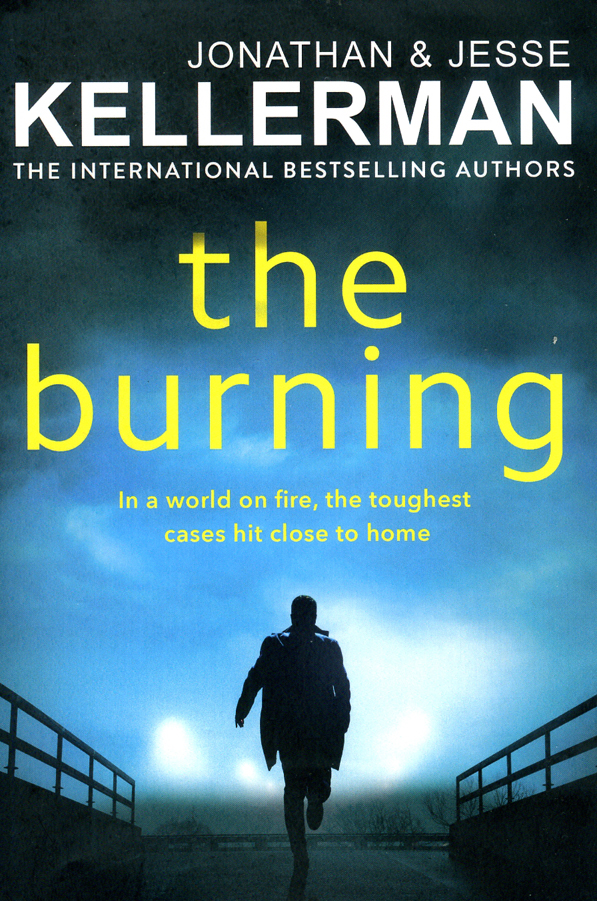
The Kellerman family – Jonathan, Faye and now Jesse – seem to be able to turn out highly readable thrillers at the flick of a switch. My personal favourites are the Alex Delaware novels, but this is the second Clay Edison book I’ve read, and it’s excellent. The Burning is billed as 4 of 4, so the series will come nowhere near the astonishing 36 books books of the Delaware series (with the 37th due next year) You can read my review of the 36th, Serpentine, by clicking the link. My review of the third Clay Edison book, Lost Souls is here.

Burning028But back to Clay Edison. He is a Deputy US Coroner in Berkeley, California, and The Burning begins, quite topically, with a destructive bush fire that has knocked out power supplies for everyone except those with their own generators. When Edison and his partner are summoned to retrieve a corpse from a mansion up in the hills, they find that Rory Vandervelde – a multi millionaire – has died from gunshot wounds. He was an avid collector. Rare baseball and basketball memorabilia, Swiss watches, antique knives – you name it, and Vandervelde had bought it. It is when Edison is inspecting the dead man’s astonishing collection of classic cars, stored in a huge garage, that he discovers something that sends a shiver down his spine, and not in a pleasant way.

“I’d missed the Camaro on my way in. So much to gawk at. Eyes not yet adjusted. I saw it now. It was, to be specific, a 1969 SS/Z28. V8 engine, concealed headlights, black racing stripes, custom leather upholstery.

A hell of a car. One that I recognised specifically. I had seen it before. Not once, but many times.

It was my brother’s.”

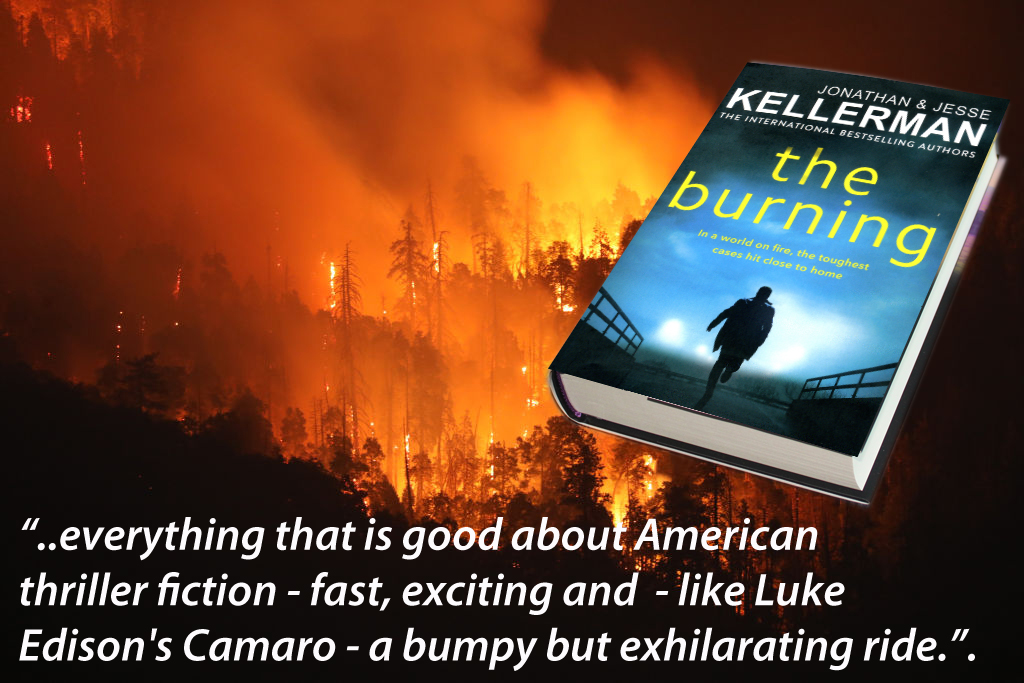
Edison muses that there has to be an innocent explanation why his brother’s prize possession – a car he had restored from near junk – is in the murdered man’s garage. He surely wouldn’t have sold it to him? Luke Edison is a reformed addict who has done jail time for killing two women in a drug fuelled car theft, but he has rebuilt not only the car, but his life. Simple solution – call Luke on his cell phone. No answer. Repeated calls just go to voice mail. Clay Edison has the black feeling that something is very, very wrong, but in an instinct for family protection, he tries to prevent any of his law enforcement colleagues from identifying the vehicle’s owner and linking him with the murder.

No-one – Luke’s neurotic hippy partner, his parents, his boss at a marijuana-based therapy start-up – has seen or heard of Luke for several days. Working off the record, explaining to no-one what he is doing, and sensing that his brother is a victim rather than a perpetrator, Clay Edison finally discovers that his brother is being used as bait by some seriously evil characters who – as payback for deaths in their family for which they hold him, Clay, responsible – are prepared to stop at nothing to exact their revenge.

I finished this book during a return train journey and a quick hour before bedtime. It is ridiculously readable. Yes, it’s slick, unmistakably American, and probably formulaic but, as the late, great British film reviewer Barry Norman used to say, “And why not?” Just shy of 300 pages, it is everything that is good about American thriller fiction – fast, exciting and  – like Luke Edison’s Camaro – a bumpy but exhilarating ride. I have no idea who wrote what in the Jonathan and Jesse Kellerman partnership, but who cares? Published by Century, The Burning is out on 21st September in Kindle and hardback, and will be available next year in paperback.

Camaro

THE NAMELESS ONES . . . Between the covers

nameless045

Fans of the series can skip this paragraph. Charlie Parker is private eye based in Portland, Maine. His life has been shaped by the savage murder of his wife and daughter some years earlier, and he is – literally – haunted by the spirit of the dead daughter Jennifer. His cases frequently involve contact with people who are not actually spirits but although they have human shape, they are not entirely of this world. Long standing members of the dramatis personnae of the novels include Louis – an African American assassin, very loyal to Parker, and his personal and professional partner Angel, a skillful thief and locksmith who is recovering slowly from cancer. For more on Charlie Parker, click this link.

nameless046Parker takes something of a back seat in this novel (which is the 20th in a magnificent series) as Louis & Angel take centre stage. The first backdrop to this stage is Amsterdam, where a criminal ‘fixer’ called De Jaager goes to an address he uses as a safe house to meet three of his colleagues. He finds one of them, a man called Paulus, shot dead, while the two women, Anouk and Liesl, have been tied up. In control of the house are two Serbian gangsters, Radovan and Spiridon Vuksan. They have come to avenge the death – in which De Jaager was complicit – of one of their acquaintances, who was nicknamed Timmerman (Timber Man) for his love of crucifying his victims on wooden beams. What follows is not for the faint of heart, but sets up a terrific revenge plot.

At this point it is essential to replay what author John Connolly tells us about modern Serbia. Those with a strong stomach can find plenty on the internet and in books about the atrocities committed by Serbians against Bosnian Muslims – and others – in the brutal wars which erupted after the death of President Tito, the communist strongman who had kept the historical enemies – Croatia, Bosnia, Kosovo, Montenegro, Serbia and Macedonia – from each others’ throats between 1945 and 1980. Connolly paints a picture of a state where, despite former leaders like Milošević, Karadžić and Mladić being brought to justice by war crimes courts, Serbia is still largely run by career criminals who, while they may wear suits rather than Kevlar vests, are at the centre of a huge web of international crime which ranges from human trafficking to the drug trade.

I am guessing that John Connolly might not be on the top table of any future festival of crime fiction in Belgrade, but no matter – we have a seriously good story on our hands. Louis, for a variety of reasons, owes De Jaager, and when news reaches him of the Dutchman’s death he prepares to fly to Europe with the physically fragile Angel, but he is also aware that key USA figures inside The White House and the CIA would not be too dismayed were the Vuksan brothers to come to a sticky end.

With Parker otherwise engaged back in Maine, the supernatural element is largely absent here, as Louis and Angel don’t operate on the same psychic wavelength as their buddy. Largely absent, but not totally. Spiridon Vuksan has a murderous little friend called Zorya. She looks, at first glance, like a little girl, but on closer inspection she is a woman, and not a young one. She reminded me of the malevolent red-hooded little figure in Don’t Look Now – and we all know how that ended. Zorya is, as far as her human form goes, one of the Vlachs people, an ethnic group from the southern Balkans. She is also a strigoi.  in Romanian mythology they are troubled spirits that are said to have risen from the grave. They are attributed with the abilities to transform into an animal, become invisible, and to gain vitality from the blood of their victims. Her fate is not in the hands of Louis and Angel, however, but governed by the spirit of Jennifer Parker who, once a victim, is now distinctly menacing.

John Connolly is an inspired storyteller, and if this novel doesn’t play merry hell with your heartbeat, then you may need medical attention. The Nameless Ones is published by Hodder & Stoughton and is out now.

Blog at WordPress.com.

Up ↑