
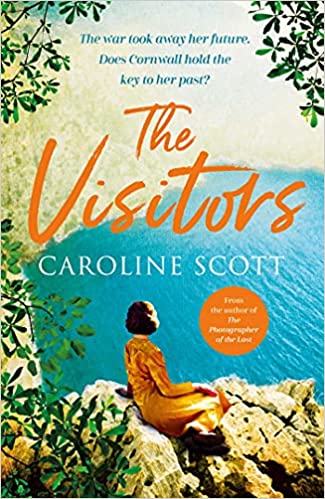
 England, 1923. Like thousands upon thousands of other young women, Esme Nicholls is a widow. Husband Alec lies in a functional grave in a military cemetery in Flanders. His face remains in a few photographs, and in her memories. Left penniless, she ekes out a living by writing a nature-notes feature for a northern provincial newspaper, and serving as a personal assistant to an older widow, Mrs Pickering. Mrs P has the advantage of being able to visit her husband’s grave whenever she wants, as he was not a victim of the war.
Mrs P decides she would like to visit her brother in Cornwall. and sends Esme on ahead. Gilbert Stanedge, funded by his sister, presides over a community of damaged young men he once commanded during the war. They live in a rambling old house they have renamed Espérance. Each man has been scarred – physically and mentally – by the horrors they faced in the trenches. Sebastian, Hal, Clarence and Rory contribute as best they can – paintings, pottery, husbandry – to the upkeep of the house.
Esme’s initial reluctance to go to Cornwall is tempered by the fact that it was where Alec grew up. Could a visit to the street where he lived, or a stroll along the beaches he played on as a child keep the flame of remembrance burning a little brighter, for a little longer?
 Caroline Scott (right) treats us to a high summer in Cornwall, where every flower, rustle of leaves in the breeze and flit of insect is described with almost intoxicating detail. Readers who remember her previous novel When I Come Home Again will be unsurprised by this detail. In the novel, she references that greatest of all poet of England’s nature, John Clare, but I also sense something of Matthew Arnold’s poems The Scholar Gypsy and Thyrsis, so memorably set to music by Ralph Vaughan Williams.
Another clever plot device brings us face to face with the horrors that the men faced in the trenches of Flanders. Rory has written a book detailing what happened. It is still unpublished but, as Esme grows closer to him, he lets her read it. She is still, of course searching for something – anything – of Alec.
Half way through the novel, Caroline Scott employs a vertiginous plot twist. Readers must decide for themselves if it is plausible. Further detail from me would be a spoiler, but yes, after a few raised eyebrows it did work. The Visitors is an astonishing tale of love, betrayal, heartache and – finally – redemption. With its two predecessors (click on the images below for more information) it makes a remarkable trilogy of novels about the men and women who survived the carnage of 1914 – 1918, but came away with scars and damage that sometimes never healed. Published by Simon & Schuster, The Visitors is out now.


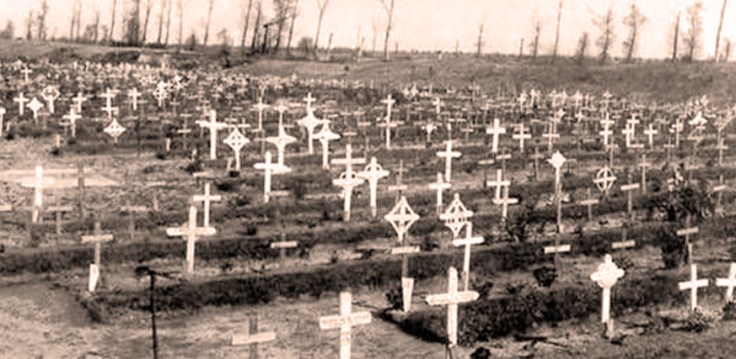

 It is 1921. In Britain, dignified war memorials, paid for by public subscription, are beginning to be dedicated. In France and Belgium most cities and towns within artillery range of the Old Front Line stand in ruins, while villages are usually reduced to random piles of shattered bricks. The dead are everywhere. In places where the living have yet to re-establish themselves there are crosses. Thousands upon thousands of simple wooden crosses, distinguished one from the other with a basic aluminium strip, letters stamped on it and pinned to the wood. A former officer, now a worker for what would become the Commonwealth War Graves Commission explains his mission:
 arry Blythe makes his living meeting a macabre but necessary demand. He travels the shattered countryside, on commission from relatives, taking photographs of the crosses, or the places of which dead men spoke in their letters home. There were three Blythe brothers, Will, Harry and Francis. Only Harry has survived the conflict. As in other silent houses across the country, mothers did what mothers always do – adjust and try to get on with things:
 y 1921, pilgrimages to The Old Front Line have become big business. Visitors are everywhere, armed with commercially printed guide books; some search for graves, others visit their old haunts. Caroline Scott lets us shadow Harry and Edie on their heartbreaking journey from the Houthulst Forest and Ypres in the north, via Arras and down further south to the point where the French manned the front line trenches of a line that ran from the Belgian coast to Switzerland.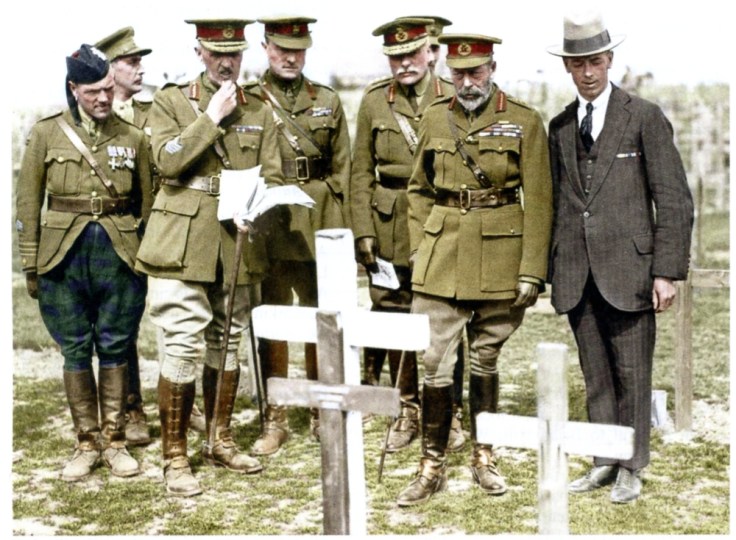
 ilfred Owen wrote, concerning his work, “The Poetry is in the pity.” Caroline Scott echoes this message. Such was the disconnect between life in the trenches and home that, for many men, returning on leave was not the joyous temporary reprieve from hell that we might imagine:


 fullybooked2017