 If there is a league table which ranks ‘Every Parent’s Worst Nightmare’ events in terms of trauma, torment and terror, having a child kidnapped must come near the top. It could be argued that death is at least final and offers – however bleak a prospect that may be – a sense of closure and a chance for the living to rebuild their lives. But kidnap? Uh-uh; cue uncertainty, recrimination, the anxious waiting for that ‘phone call, the wondering, the sheer agony of not knowing. That is the fate of Tony and Yvonne Richards in the latest novel from Rachel Amphlett (left) when they return to their Kent home from a trip to Milan to find that their daughter Melanie has been taken. Neither Tony nor Yvonne is cut out to be Bryan Mills /Liam Neeson, and so they scrape together the ransom, make the drop, and frantically drive to the derelict industrial estate where Melanie, they hope, will be waiting for them. What they actually find delivers a killer blow – literally.
Now, it is inevitable that the police become involved. The investigating officer, Kay Hunter, has endured that most bitter visitation that a young woman can suffer – a miscarriage. Was it the result of workplace stress? No-one will know for sure, but there can be few workplaces as stressful as a police incident room during a major enquiry. Not only was the Detective Sergeant up to her eyes in the action, but she ended up the subject of a professional standards investigation. Now, despite having been exonerated, the experience has scarred her physically and psychologically and left her with a powerful enemy in the shape of DCI Angus Larch. In spite of all this, she must put personal matters to the back of her mind, and do everything in her power to find the killer of Melanie Richards.
 Hunter tugs away at the few available frayed threads of the investigation until she has enough twine to weave a recognisable tapestry that shows a victim and those culpable for the crime. Larch does his best to belittle her efforts, but she has a strong supporter in her immediate boss, DI Devon Sharp. There is a very clever twist in the final third of the story when it becomes apparent that the latest kidnap victim is the estranged daughter of a member of the investigating team. It has become commonplace for fictional coppers to have chaotic personal lives, but there is a feelgood corner of this novel where the reader can take comfort in the warm relationship between Kay Hunter and her veterinarian husband, Adam.
Some crime novels are very location-dependent and none the worse for that, but Rachel Amphlett doesn’t waste much time on the setting. We know we are in Kent, somewhere near Maidstone, but beyond that all the focus is on the people and the action. Regular readers of police procedurals will be at home with the whiteboards, the frustrated peering at indistinct CCTV footage, the tension of the team briefings and the ingrained sweaty ambience of the interview rooms. One of the strong points of this novel is the way Amphlett handles the pace. She takes a calculated risk by letting us know early in the piece who the bad guys are, but shows her narrative skills by ratcheting up the tension in a nicely judged upward curve of anxiety. In the end we know who did what to whom, and have a working knowledge of their motivation. This novel doesn’t break new ground, but is thoroughly readable and is an enjoyable journey through a familiar landscape.


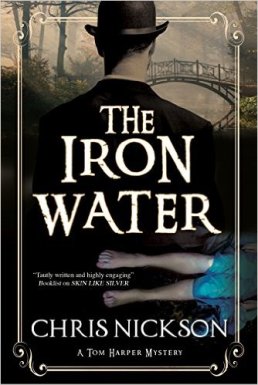 Two gang bosses, one of Irish heritage and the other local, are engaged in a tense truce. They will hold off attacking each other while Harper and his fellow officers track down the mysterious copper-headed man who appears to be connected to the deaths. Time is running out, however, and there is an even more calamitous threat hanging over the heads of the police. The powers-that-be want answers, and as Harper runs around in ever decreasing circles, he is told that if he doesn’t find the killer, then men from Scotland Yard will travel north and take over the case. This, for Harper and his boss Superintendent Kendall, will be the ultimate disgrace.
 and Selena’s qualifications as a psychologist made them the go-to people for corporations and wealthy families who had fallen foul of the highly lucrative business of international kidnapping. But then, on a blisteringly hot morning in Brasilia, it all went badly wrong. Selena went shopping for children’s toys prior to her addressing a meeting of fellow professionals in the afternoon. While she was selecting gifts for their little daughters, the bad guys attacked the hotel and conference centre, shooting, bombing and delivering a stark message. “You may think you are smarter than us, but look at the body count, and then tell us how clever you are.”
 One of the many delights of this excellent novel is that Finna Hale and Leah Mackay are brother and sister. Finn has leap-frogged his sister in the promotion stakes, despite her evident superiority – evident, that is, to us readers, but not the local constabulary personnel department. Kavanagh plays the relationship between the siblings with the touch of a concert violinist. There are all manner of clever nuances and deft little touches which enhance the narrative.
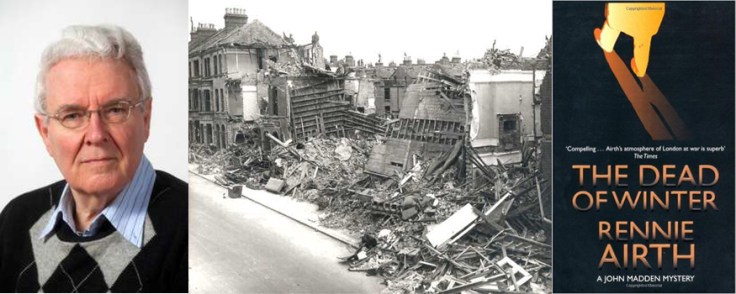
 We are in the weeks leading up to Christmas 1944, deep in what would prove to be the last winter of a war which, thanks to the Luftwaffe, had brought death and destruction to the doorsteps of ordinary people in towns and cities up and down the country. German aircraft no longer drone over the streets of London; instead, the Dorniers and Heinkels have been replaced by an even more demoralising menace – the seemingly random strikes by V1 and V2 rockets. Despite the fact that the rockets need no visible target to aim at, the ubiquitous blackout is still in force. An Air Raid Precaution Warden, whose job has become as redundant as that of those manning anti-aircraft batteries, makes a chilling discovery. He stumbles – literally – on the body of a young woman. Her neck has been broken by someone clearly well-versed in killing, and the only clue is a number of spent matches lying by the body.
 There is more than a touch of The Golden Age about this novel, but it is much more than a pastiche. Although the killing of Rosa Nowak is eventually solved, with a regulation dramatic climax in a snow-bound country house, Rennie Airth allows us to breathe, smell and taste the air of an England almost – but not quite – beaten down by the privations of war. Many of the characters have menfolk away at the war, including Madden himself and his wife Helen. Their son is in the Royal Navy, on the rough winter seas escorting convoys. The contrast between life in the city and in the country is etched deep. In the city, restaurant meals are frequently inedible, the black market thrives unchecked due to depleted police manpower, and even the newsprint bearing cheering propaganda from the government is subject to rationing. Travelling anywhere, unless you are fiddling your petrol coupons, is arduous and unpleasant.


 The van skids to a halt on the lonely hill top lane. Occasional distant lights from isolated farms and cottages are all that pierce the darkness. The young men inside the van giggle as they open the rear doors and throw the girl from the dirty mattress on which she has been sprawled. She hits the roadside with a body-jarring crunch.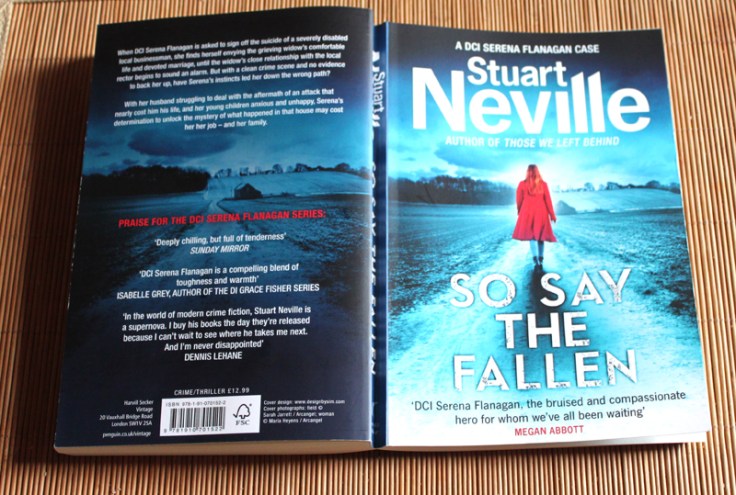
 Stuart Neville (left) returns with another hard-bitten and edgy tale of life and crimes in Northern Ireland. Set in a fictional village on the edge of Belfast, we are reunited with DCI Serena Flanagan, who first appeared in Those We Left Behind. Like much of life in Ulster, fictional and real, religion and the stresses and strains it places on secular life is never far from the surface. The sacred influence in this case is provided by the Reverend Peter McKay. The clergyman is a widower, but we find that he has been taking his parochial duties above and beyond what is normally expected. The recipient of his pastoral care is Roberta, the attractive wife of Henry Garrick.


