Search

fullybooked2017

Tag

murder

HUNTS . . . Between the covers

HUNTS HEADER

The first thing to say is that the title won’t make much sense if you just randomly saw it on a shelf, but pick it up and you will see it is the first part of a trilogy, the two following novels being Skins and Kills. We meet Arran Cunningham, a young Scot. He is a Metropolitan Police officer working in Hackney, East London. Not being a Londoner, I have no idea what Hackney is like these days. I suspect it may have become more gentrified than it was in the spring of 1988. What Cunningham sees when he is walking his beat is something of a warzone. There is a large black population, mostly of Jamaican origin, and the lid is only just holding its own on a pot of simmering racial tensions, turf wars between drug gangs and a general air of despair and degeneration.

The pivotal event in the novel is a mugging (for expensive trainers) that turns into rape. The victim is a black teenager called Nadia Carrick. The attackers are a trio of young white men, led by a boy nicknamed Spider. They are unemployed, drug addicted, and live in a squat. Nadia tries to conceal the attack from her father, Stanton, but eventually he learns the true extent of her nightmare, and he seeks retribution. Stanton Carrick is an accountant, but a rather special one. His sole employer is Eldine Campbell, ostensibly a club and café owner, but actually the main drugs boss in the borough, and someone who needs his obscene profits legitimised.

Carrick is also a great friend of Arran Cunningham, who learns what has happened to Nadia. Purely by luck he saw Spider and his two chums on the night of the incident, but was unaware at the time of what had happened. Rather than use his own men to avenge Nadia’s rape, Eldine Campbell has a rather interesting solution. He has what could be called a “special relationship’ with a group of police officers, led by Detective Chief Inspector Vince Girvan, and he assigns them the task of dealing with with the perpetrators.

Meanwhile, Girvan has taken a special interest in Arran Cunningham, and assigns him to plain clothes duties, the first of which is to be a part of the crew eliminating Spider and his cronies. In at the deep end, he is not involved with their abduction, but is brought in as the trio are executed in a particularly grisly – but some might say appropriate – fashion. There is problem, though, and it is a big one. He recognises Spider’s two accomplices, but the third man is just someone random, and totally innocent of anything involving Nadia.

The three bodies are disposed of in the traditional fashion via a scrapyard crushing machine, but Cunningham is in a corner. His dilemma is intensified when his immediate boss, DI Kat Skeldon, aware that there is a police force within a police force operating, enrols him to be ‘on the side of the angels.’ As if things couldn’t become more complex, Cunningham learns that Stanton Carrick is dying of cancer.

JLDDurnie’s plot trajectory which, thus far, had seemed on a fairly steady arc, spins violently away from its course when he reveals a totally unexpected relationship between two of the principle players in this drama, and this forces Cunningham into drastic action.


The author (left) was a long-serving officer in the Met, and so we can take it as read that his descriptions of their day-to-day procedures are authentic. In Arran Cunningham, he has created a perfectly credible anti-hero. I am not entirely sure that he is someone I would trust with my life, but I eagerly await the next instalment of his career. Hunts is published by Caprington Press and will be available on 8th January.

THE BURNING TIME . . . Between the covers

TBT header

After David Mark starts his latest novel with a nod to the celebrated first three words of Herman Melville’s masterpiece, the first chapter of The Burning Time made me wonder if I had slipped off the page and fallen into a visceral nightmare straight out of the Derek Raymond playbook displayed in I Was Dora Suarez – there was blood, pain, death, distortion, madness, fire – and human disintegration.

Chapter two reminds readers that we are accompanying Inspector Aector McAvoy on his latest murder investigation. Bear-like McAvoy – based in Hull –  and his beguiling gypsy wife Roisin, have been invited to an all-expenses-paid stay at a luxury hotel in Northumbria  to celebrate the seventieth birthday of McAvoy’s mother. Mater and filius have become somewhat estranged over the years, mainly due to mum dispensing with Aector’s dad when her son was young, and opting for a newer, richer husband – who insisted on Aector being sent away to boarding school, causing mental scars which have not healed over the years. Aector, via this arrangement, has a step brother called Felix, older than he, and a person who subjected his younger step sibling to all kinds of mental and physical bullying back in the day. It is Felix who has organised the family gathering.

Part of the carnage in chapter one involves  Ishmael Piper – a middle-aged hippy living with a twin curse, the first part being that he was the son of the late and legendary rock guitarist Moose Piper, and the second being that he is suffering from Huntington’s Chorea, the degenerative disease whose most famous victim was the American musician Woody Guthrie. Ishmael inherited much of his father’s wealth, guitars and memorabilia, but his life has become a protracted car crash. His life comes to an end when his remote cottage on the Northumberland moors is gutted by fire. He is found dead outside, his daughter Delilah clutching his hand, while one of his female companions, asleep in an upstairs room, is the second fatality. Delilah has been badly burned. Later, McAvoy sees her:

He wants to look away; to jerk back – to not have to see what the flame has done on half of her face. He thinks of wormholes at low tide. He can’t help himself: his imagination floods with memories; so many twisted worm-casts in the soft grainy sand.’

McAvoy is an intriguing creation. He is physically massive, but suffers from debilitating shyness and a chronic lack of social confidence. He is, however, formidably intelligent and a very, very good policeman. Crime fiction buffs will know that there is a certain trope in police novels, where the newly promoted detective becomes frustrated with paper work, and longs to be out on the street catching villains. McAvoy is more nuanced:

‘It always surprises his colleagues to realise that, in a perfect world, McAvoy would never leave the safety of his little office cubicle at Clough Road Police Station.’

The Puccini aria from Tosca, Recondita Armonia, can be translated as ‘strange harmony’, and no harmony is stranger than that between McAvoy and his wife Roisin. They share a fierce intelligence, but David Mark portrays her as slender, captivatingly beautiful and blessed – or cursed – with an intuition and silver tongue inherited from her Irish gypsy ancestors, and a dramatic contrast to her physically imposing but socially gauche husband.

McAvoy realises that he has been invited to the family gathering, not out of any desire for reconciliation, but because Felix wants him to find out the truth behind Ishmael’s death, a task at which the local police have failed. McAvoy, of course – after bouts of epic violence involving various bit-players in the drama – does find the killer, but in doing so illustrates that the birthday party was nothing other than a bitter charade. The Burning Time – a powerful and sometimes disturbing read –  is published by Severn House and is available now. For more reviews of David Mark novels, click the image below.

Screen Shot 2023-12-09 at 19.36.32

THE SCOTSMAN . . . Between the covers

scotsman spine049 copy

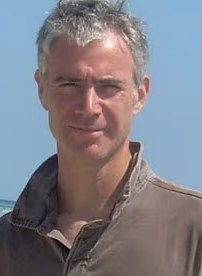
Screen Shot 2023-11-27 at 19.53.03The trope of a police officer investigating a crime “off patch” or in an unfamiliar mileu is not new, especially in film. At its corniest, we had John Wayne in Brannigan (1975) as the Chicago cop sent to London to help extradite a criminal, and in Coogan’s Bluff (1968), Clint Eastwood’s Arizona policeman, complete with Stetson, is sent to New York on another extradition mission. Black Rain (1989) has Michael Douglas locking horns with the Yakuza in Japan, and who can forget Liam Neeson’s unkindness towards Parisian Albanians in Taken (2018), but apart from 9 Dragons (2009), where Michael Connolly’s Harry Bosch goes to war with the Triads in Hong Kong, I can’t recall many crime novels in the same vein. Rob McClure (left) balances this out with his debut novel, The Scotsman, which was edited by Luca Veste.

Charles ‘Chic’ Cowan is a Glasgow cop, and his daughter, Catriona, was studying at an Washington DC university when she was shot dead on the Metro. CCTV footage shows that her assailants were two black men, one of whom later ends up dead as a result of feuding between drug gangs. The local police remain mystified as to who the other shooter was, and they are also baffled by an apparent lack of motive, and the fact that the shooting – at close range with a small calibre pistol – has all the hallmarks of a contract killing. Cowan travels to DC in an attempt to discover the truth.

Our man is a synthesis of every Scottish copper we have ever read about. He is undoubtedly intelligent, but abrasive in his speech and manner. He used to like a drink or six but is now ‘on the wagon’, and has a jaundiced view of humanity, hence a nice collection of one-line gags. He recalls a fracas he was involved in at a family wedding  in an insalubrious district of Glasgow:

“Easterhouse was the kind of place Ethiopia held rock concerts for.”

Cowan has long since separated from Catriona’s mother, and the more he investigates her life in the American capital, the more he realises how little he knew her. To start with, she was a lesbian, and it is when he discovers her relationship with a political journalist that he realises her murder is connected to something rotten in the state of American politics.

The closer he gets to the reason for his daughter’s murder, the more dangerous the men who are sent after him, but one by one, they come to rue the fact that the back streets of Glasgow make the sidewalks of Washington Highlands/Bellevue look like a Disney theme park by comparison. It is in places like Possilpark and Govan that Cowan learned every dirty trick in the book, and one involves a very inventive use of a piece of plywood, a razor blade, a length of duct tape and some knicker elastic. As for inducing a pursuer to ‘fall off’ a Metro platform thus making the acquaintance of the third rail, it is straight out of Cowan’s Glasgow playbook.

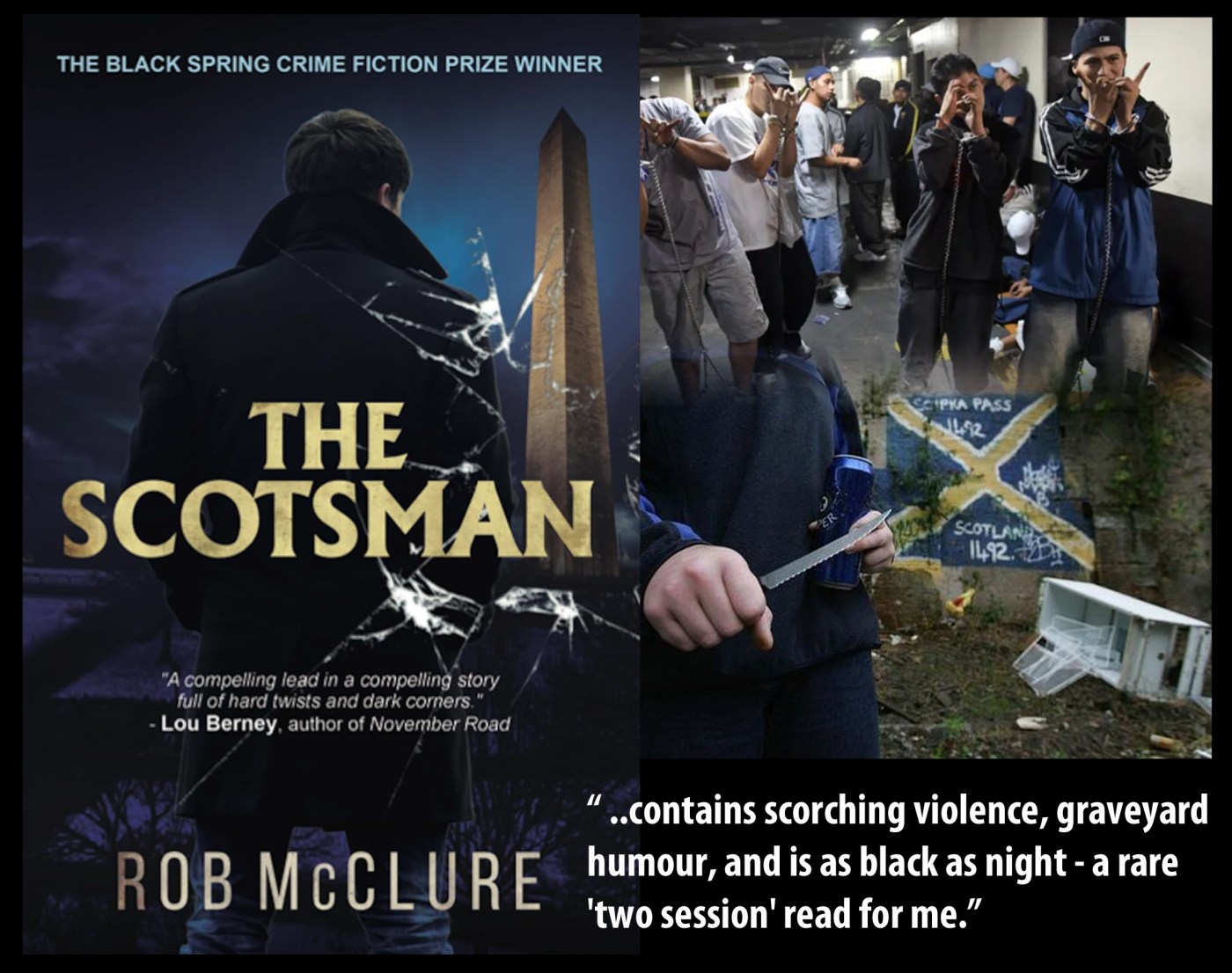
The Scotsman contains scorching violence, graveyard humour, and is as black as night – a rare ‘two session’ read for me. I don’t do star ratings, but if I did, it would be a five. I wasn’t fussed about the romantic interlude, but if it gives Cowan an excuse to return and cull a few more DC lowlife, then I’ll give his moments of passion a thumbs-up. The book is published by Black Spring and is available now.

THREE WEEKS-BLACK CAP-ROPE-HANGED BY THE NECK-FINISHED . . . The murder of Annie Coulbeck, Caistor 1919 (2)

Annie Header

SO FAR: Caistor, North Lincolnshire, October 1919. William Wright (39), a former soldier, is now working in a sawmill in nearby Moortown. He has a reputation as a ne’er-do-well and sometime vagrant, with a long criminal record. He has been in a relationship with Annie Coulbeck, (34). She is carrying his child.

Annie, who lives in a cottage at Pigeon Spring on Horsemarket. has been working as a nanny, looking after the children of Mrs Plummer.  On the morning of Wednesday 29th October, Annie has not turned up for work, so Mrs Plummer sends one of her children to Annie’s cottage to see if she was unwell.

Child's ordeal

Annie Coulbeck had been strangled, and had been dead for some hours, and it goes without saying that her unborn child – some seven months in her womb – had shared its mother’s fate. At the coroner’s inquest, the doctor gave his report:

Strangulated

It was no secret that Annie Coulbeck and William Wright were lovers, and when police visited him at his home in South Dale, Caistor, his admission was astonishingly matter-of-fact:

“Last night, a little after 10 o’clock, I left the Talbot public house. I had a lot of drink and went down to Annie Coulbecks house. I asked her where she had got the brooch from which she was wearing. She said it was her mothers. I told her I did not think it was. I told her I thought it was one of her fancy men’s. She said, “I’m sure it is not, Bill.” I told her I would finish her if she did not tell me whose it was. I strangled her with my hands and left her dead. I put the lamp out and went home.”

Talbot

The Talbot in Caistor (above) is no longer a pub, but if its walls could talk, they might bear witness to a chilling conversation William Wright had with a fellow drinker, a local chimney sweep.

Strange Statement

The umbilical cord is often used as a metaphor for two things being inextricably joined, but it also has a presence in the British legal system, particularly in the case of murdered babies. Criminal history, particularly back in the day, is full of young women being tried for murder after they have killed an unwanted new-born baby. For it to be murder, it has to be established that the  infant had an independent existence, and it is clear that the child Annie Coulbeck was carrying had no such thing. However, in my book, William Wright was as guilty of murdering that child – his child –  as he was of killing its mother.

Screen Shot 2023-11-22 at 19.02.01

Wright, in his drunken estimation that it would take just three weeks from the death of Annie Coulbeck to his appointment on the gallows, was as ignorant of the legal system as he was of the way decent human beings should behave. The law took its rather ponderous course, and after the Coroner’s Inquest and then Magistrate Court, William Wright finally appeared at Lincoln Assizes, before Mr Justice Horridge (left) on Monday 2nd February 1920. It was a perfunctory affair. Wright’s defence lawyers, as they were bound to do, came up with the only possible plea – that Wright was insane. They cited his war experience, and the fact that members of his family had been committed to institutions. Neither judge nor jury were impressed and, as Wright had predicted, hunched over his beer in The Talbot, the judge donned the Black Cap. An appeal was lodged, but failed.

Appeal

Throughout the legal process, Wright had shown not one iota of remorse, nor did he betray any concern about what awaited him.

Black Cap
Screen Shot 2023-11-22 at 19.17.49

Wright was executed at Lincoln Castle on 10th March 1920. He had refused the ministrations of the prison chaplain, and the last face he would have focused on before the hood was placed over his head and he dropped to his death was the grim visage of executioner Thomas Pierrepoint (right), uncle of the more celebrated hangman Albert Pierrepoint, subject of the excellent film (2005) featuring Timothy Spall as the man who hanged, among others, Ruth Ellis and dozens of Nazi war criminals. The corpses of executed criminals at Lincoln Castle were interred in a little graveyard situated on the Lucy Tower. If ever a soul deserved to rot in hell, it is that of William Wright.

FOR MORE HISTORIC MURDERS IN LINCOLNSHIRE
CLICK THE IMAGE BELOW

Screen Shot 2023-11-25 at 20.25.19

THREE WEEKS-BLACK CAP-ROPE-HANGED BY THE NECK-FINISHED . . . The murder of Annie Coulbeck, Caistor 1919 (1)

Annie Header

There is an aphorism attributed to George Orwell which goes:

“We sleep safe in our beds because rough men stand ready in the night to visit violence on those who would do us harm.

It echoes Rudyard Kipling’s famous poem, ‘Tommy”, where he says:

“For it’s Tommy this, an’ Tommy that, an` Chuck him out, the brute! ”
But it’s ” Saviour of ‘is country ” when the guns begin to shoot”

In a nutshell, we want our soldiers to be savages when they face the enemy, but except them to revert to civilised and urbane when they walk our peaceful streets, far away from conflict.

This prelude is in no way an excuse for the  murder of a woman in the Lincolnshire village of Caistor in the autumn of 1919, but it points to the problems that some former soldiers have when they leave the world of government-endorsed killing, and walk again down peacetime streets.

William Wright was certainly not from an impoverished or brutal background. He was born in 1880, and the 1881 census shows that he was the youngest of three children to Charles Wright, a tailor, and his wife Jamima. He worked for his father for a while in his teens but it is recorded that he joined the army in 1898, and fought in the Boer War. Peacetime clearly didn’t suit him, as between 1907 to 1914 he received 32 convictions, mostly for theft, vagrancy and drunkenness.

Convictions

1914 came, and with it the chance to turn whatever demons plagued him in the direction of the Boche. His military record was to be no better than his civilian one, however, as In 1916 he was sentenced to death for striking his superior officer. The sentence was commuted to one of five years penal servitude and then further reduced to two years hard labour.

The army was clearly glad to be rid of Wright, and when he returned to Caistor in 1918, he struck up a relationship with Annie Coulbeck. We know relatively little of Annie. We know that she was 34 at the time of her death, was probably born in the nearby village of Stallingborough, and some sources suggest that she was simple minded. More pertinent to this story is that she had the misfortune to meet William Wright, and was pregnant with his child. In October 1919, her daily employment was to look after the children of a Mrs Plummer at her cottage near Pigeon Spring on Caistor’s Horsemarket. The picture below dates from 1908.

Horsemarket

This is an extract from a short video about the Horsemarket, and  is well worth watching, as it places Pigeon Spring on the photograph.

On the afternoon of 28th October 1919, William Wright came to visit Annie Coulbeck at Pigeon Spring. On the morning of the 29th, Annie Coulbeck had not arrived to look after the children, so Mrs Plumer sent one of her daughters to see if Annie had slept in. What the child found sent shock waves through the peaceful rural community.

TO FOLLOW
A DREADFUL DISCOVERY
AN INNOCENT BROOCH
A SMILING PRISONER
MORE WORK FOR MR PIERREPOINT

THE MURDER OF ROSA ARMSTRONG . . . Sutton in Ashfield 1924 (1)

ROSA HEADER

Rosa Armstrong was born in 1915, the daughter of Frederick Armstrong and his wife Maria. Her father died just three years later, but her mother remarried – to Edward Buttery – in 1920. June 1924 saw them living at 78 Alfreton Road, Sutton in Ashfield. Nine year-old Rosa attended the Huthwaite Road Council School, just ten minutes’ walk away along Douglas Road. Rosa’s older sister, Ethel (31), had not been lucky in her marriages. She had married William Parnham in August 1912, but on 18th June 1916, he died of wounds in France. Ethel married again, to Edward Mordan, a year later. An Edward Mordan is recorded as being killed in September 1918. At some point after the war, Ethel married again, to Arthur Simms, a miner, and in 1924 they were living in Phoenix Street, Sutton in Ashfield.

At this point, it is worth mentioning that Arthur Simms was reported as having served in the army – in both India and France – during the Great War, and that he had been taken prisoner by the Germans. He was born in 1899, so – unless he had lied about his age – the earliest he could have entered the war was 1917. Keep this in the back of your mind, because I will return to it later.

I am fairly ancient, and when I was at school, lunchtimes were long enough to allow children to go home for lunch. In the 1950s and 1960s, with just a few exceptions, I always walked or cycled home for lunch. Rosa Armstrong’s journey was less than a mile, and on Friday 27th June, she came home for lunch as usual, and as she prepared to go back to school, she asked her mother for sixpence to pay for her school photograph. Her mother, Maria, said that she would come to the school herself and pay for the photograph. Rosa never made it back to school for the afternoon’s lessons.

Fulwood no longer exists as a separate place, but back in the day it had its own identity as a small community south-west of Sutton and south of what is now the A38. In 1924, there was a sweet shop. Its owner was later to testify.

Sweets

When Rosa didn’t return home at the end of the afternoon, her mother was horrified to learn that Rosa hadn’t said “Yes, Sir” at afternoon registration. Deeply worried, she tried asking everywhere, even making it to the home of her daughter Ethel, but she drew blanks everywhere.

Police Constable Cheeseman was bored, tired and foot-sore, as he did his nocturnal rounds in Mansfield, four miles or so up the road from Rosa’s home. At 2.00 am, the early hours of 29th June, he was leaning against a wall in the Market Place, thinking about bed, supper, and sleep, when he was  startled to see a young man, apparently sober, making his way towards him. The newspapers later carried this report:

PC Cheeseman recounted the story of how Simms gave himself up to him in Mansfield Market Place in the early hours of the morning. As he was standing at the bottom of Stockwell Gate, he said he saw the prisoner approaching from the direction of Sutton The man came up to him and said,
“Policeman, I want to give myself up.” He asked what for and Simms replied,
“For murder. It’s my wife’s little sister at Sutton. I have done it at Sutton this afternoon.”
The constable took him to the police station and there said,
“Do you realise the seriousness of your statement?” Simms replied,
“Yes, I do.”
“When I next cautioned him that anything he said would be used as evidence against him,” continued PC Cheeseman. Simms said,
“You will find her under the hedge in the second field of mowing grass near Saint Marks Church Fulwood. I strangled her with my hands. I will put it on paper if you like.”

IN PART TWO

A HORRIFYING DISCOVERY
A FUNERAL
RETRIBUTION
AN UNSOLVED MYSTERY

MURDER ON THE CHRISTMAS EXPRESS . . . Between the covers

motce spine040 copy

Screen Shot 2023-11-03 at 18.54.48

Alexandra Benedict (left) has confected a seasonal version of the traditional locked room mystery. Our locked room is actually a train, heading from Euston to Fort William just a few hours before the big day, but forced to stop in the middle of nowhere because of deep snow. Former Metropolitan Police copper Roz Parker is heading north on the train, not particularly for Christmas, but to be with her daughter who is about to give birth.

Her immediate fellow passengers are not people she would have chosen to be her traveling companions. There is Meg, a brittle, vacuous, Instagram-joined-at-birth, reality TV star and ‘influencer’, who live streams every moment of her life to her adoring followers. She was my odds on favourite to be bumped off, even before the Amazon publicity page for the book confirmed that it was she whose demise Roz would be investigating. Her boyfriend, Grant, is what they used to call ‘a nasty piece of work.’ By complete contrast we have Sally and Phil. Sally is stressed, jealous, and the mum-of-four, while husband Phil is a devoted dad and former teacher of Meg, the soon-to-be victim of the unknown killer.

Benedict sets out her list of suspects in the traditional way. Beck is a rather self-obsessed student and a passionate pub quizzer, while red parka-wearing Ember is an unhappy woman in her thirties with a dark past. A train steward, nicknamed ‘Beefy’, appears avuncular and honest, but it turns out he had a fixation with Meg – as did the mysterious Iain, who has no ticket for the the journey, therefore is keen not to be discovered by Beefy. He has gone one further than Beefy’s doe-eyed worship of Meg, and has stalked her to the extent of having a restraining order slapped on him. How about Craig, who Roz has taken a shine to? But he works for the Crown Prosecution Service so, surely, it can’t be him, can it?

The mechanics of ‘whodunnits’ are not particularly complex for writers, but for readers (who don’t cheat and skip to the last chapter) things can be be more complex. In this case, do we say that it couldn’t be Grant, because that would be too obvious? Or, do we think that the author is double bluffing us, and that it is the self-centred narcissist after all? It couldn’t be Phil, could it? Or did something happen back in the day when Meg was his pupil?

Needless to say, Roz Parker has to put aside her anxieties about her soon-to-be grandchild, and find out who killed Meg, a woman who may have been the most insubstantial of role-models, but was still a human being who deserves justice. Murder on the Christmas Express casts a sardonic eye over the way we live now, throwing in a conception-by-sperm donor for Roz’s daughter, and a sapiosexual love affair (look it up – I had to) while retaining its connection to the skillfully plotted murder mysteries of The Golden Age. For good measure, the author throws in some additional quiz attractions such as embedding the titles of Kate Bush songs in the narrative, and sprinkling some anagrams of her favourite poems and stories within the text. This entertaining novel is published by Simon and Schuster and is available now.


THE CHRISTMAS APPEAL . . . Between the covers

Appeal spine

Screen Shot 2023-11-04 at 19.22.52

Janice Hallett (left) invites us to return to the idyllic village of Lower Lockwood, where her book The Appeal (2021) was set. Then, law students Charlotte Holroyd and Femi Hassan solved a particularly nasty murder but, goodness me, murder seems to haunt Lower Lockwood rather as it does the unfortunate community of Midsomer, and so they are back again when another corpse is found, threatening the production of the annual village panto. Was ever a production of Jack and The Beanstalk so fraught with difficulties?

Our two sleuths (now fully qualified) spend little time on their hands and knees with magnifying glasses looking for minute physical traces which may betray the assailant; rather, they sit in front of their smartphones, perusing emails, WhatsApp messages, texts and other communications floating around in the digital ether. The clues are all there and, unlike the ancient trope of detectives trying to read messages from letters hastily burnt in fireplaces, these words can never be totally erased.
Text044

This novella is inventively set up with little or no conventional narrative and makes extensive use of graphics representing WhatsApp messages (above) and emails which are now known as  ’round-robins’. Being an old pedant, I have to say that this is a misuse of the expression, as the dictionary says:
Screen Shot 2023-11-05 at 18.30.05

The term has come to be used to describe emails cc-d to multiple recipients, and those awful little printed slips inside Christmas cards telling  friends (not for much longer, if I get them) all the wonderful things that have been happening to the sender’s family since the last Christmas card. Janice Hallett, by the way, makes fun of these dreadful things from the word go.

spoof2046

But I digress. You will either love the set up of the story, or hate it. I enjoyed it while it lasted – just 187 pages – but I suspect it wouldn’t work in a longer book.

The story begins when Charlotte and Femi receive a massive folder (all digital of course) of evidence from their former mentor, Roderick Tanner KC. The folder contains transcriptions of police interviews and copies of all communications between those involved when a long-dead body in a Santa Suit was found hidden in a giant beanstalk prop – made mostly of wood, papiermâché and, heaven forfend, possible traces of asbestos. The beanstalk was constructed years previously for a production of the play, and so this is the coldest of cold cases. The mystery is solved as Charlotte and Femi pick up the hints from the emails, texts and messages, but along the way, Janice Hallett takes the you-know-what out of some of the more insufferable pretensions in modern society (below).

Spoof

The Christmas Appeal initially deceives as it seems to wear a cloak embroidered with ‘Cosy Crime’, but this is soon shed in favour of some rather sharp satire. It has wit, charm and flair and is published by Viper. It is available now.

BRAT FARRAR . . . Between the covers

BF spine

I imagine that anyone who calls themselves a crime fiction fan will have read Josephine Tey’s The Daughter of Time (1951) which, justifiably, regularly takes its place in the charts whenever anyone produces a list of the top crime novels ever written. I had vaguely heard of her earlier novel Brat Farrar (1949), but until I was sent a copy – by Penguin – as one of their reissued ‘Green’ classics, I had never got round to reading it. Within the first few ages I knew I was in for a treat, at least in terms of style and humour, when I read these lines:

“At this same table had eaten Ashbys who had died of fever in India, of wounds in the Crimea, of starvation in Queensland, of typhoid at the Cape, and of cirrhosis of the liver in the Straits settlements.”

“‘What became of cousin Walter?
‘Oh, he died.’
‘In an odour of sanctity?’
‘No. Carbolic. A workhouse ward, I think.'”

Rather like TDOT, the plot idea of Brat Farrar is very clever, if rather more complex. In the un-named English county where Tey sets the story, there are two neighbouring families, both formerly rather grand. In Clare House the Ledinghams “had been prodigal of their talents and their riches”. Now, the family has more or less destroyed itself and Clare is now a boarding school. The Ashbys still live at Latchetts. The male heir (the parents had been killed in an air crash) was Patrick, but he mysteriously disappeared, believed to have committed suicide by drowning, and now his marginally younger twin brother Simon stands to inherit the family fortunes when he comes of age. A member of the Ledingham family, a struggling actor called Alec Loding, has fortuitously spotted a young man – Brat Farrar –  who is the living image of the late Patrick Ashby. He grooms him, and persuades him to assume Patrick’s persona, and reappear on the scene (with a plausible explanation for the false suicide) and claim the Ashby inheritance. Loding’s terms are simple:

“All I want is a cosy little weekly allowance for the rest of my life, so that I can thumb my nose at Equity, and management, and producers who say that I’m always late for rehearsal. And landladies.”

Screen Shot 2023-10-26 at 19.42.08

Yes, of course the plot is breathtaking in its implausibility, but that it its design – to make us gasp, and also entertain us with dazzling use of language and sharp social observation. It is also escapist in the best possible way, and for readers in the impoverished and dour times of post-war Britain, a glimpse of a different world. Perhaps a world that, even then, no longer existed, but a world away from austerity flavoured with NHS orange juice and dried milk.

Screen Shot 2023-10-26 at 19.44.16Brat Farrar is an ingenious invention. He is an orphan, and even his name is the result of administrative errors and poor spelling. He has been around the world trying to earn a living in such exotic locations as New Mexico, but has ended up in London, virtually penniless and becomes an easy mark for a chancer like Alec Loding. He is initially reluctant to take art in the scheme, but with Loding’s meticulous coaching – and his own uncanny resemblance to the late Patrick – he convinces the Ashbys that he is the real thing. But – and it is a very large ‘but’ – Brat senses that Simon Ashby has his doubts, and they soon reach a disturbing kind of equanimity. Each knows the truth about the other, but dare not say. The author’s solution to the conundrum is elegant, and the endgame is both gripping and has a sense of natural justice about it.

Screen Shot 2023-10-26 at 19.47.05Josephine Tey was one of the pseudonyms of Elizabeth MacKintosh (1896-1952) Her play, Richard of Bordeaux (written as Gordon Daviot) was celebrated in its day, and was produced by – and starred – John Gielgud. She never married, but a dear friend – perhaps an early romantic attachment – was killed on the Somme in 1916. She remained an enigma – even to friends who thought themselves close – throughout her life. Her funeral was reported thus:

“A small party of mourners, including Gielgud and the actress Dame Edith Evans, gathered at Streatham crematorium in South London on a cold, dreary day to say their farewells. “We talked to Gordon’s sister, whom we were all meeting for the first time,” *Caroline Ramsden recorded, “and she told us that Gordon had only come south from Scotland about a fortnight before, when she had stayed at her Club in Cavendish Square, on her way through London. What she did or thought about during that period was her own affair, never to be shared with anyone…. All her close friends were within easy reach, but she made no contacts—left no messages.”

*Writer, sculptor and racehorse owner, Caroline Ramsden was one of the oldest residents of London’s Primrose Hill ‘village’. Her abiding passions were horse racing and the theatre. Her memoirs encompass over 60 years of English social and cultural life, being a font of pleasure and information not only for racing and theatre enthusiasts, but for anyone who simply enjoys a glimpse of the past.

Brat Farrar is a wonderful book which simply does not date, despite the very different world in which we live. Tey’s prose is often sublime:

“She turned in at on the south porch of the church and found the great oak door still unlocked. The light of the sunset flooded the grey vault with warmth and the whole building held peace as a cup holds water.”

This edition
is part of Penguin’s reissue of their ‘Green’ Modern Classics and is available now.

Blog at WordPress.com.

Up ↑