
Search

fullybooked2017

Tag

murder

BACK TO THE FLOOD . . . Between the covers

flood SPINE071 copy

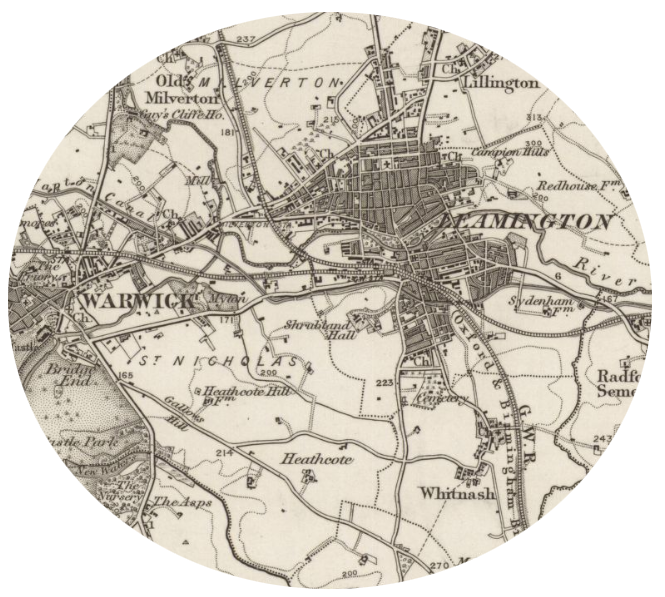
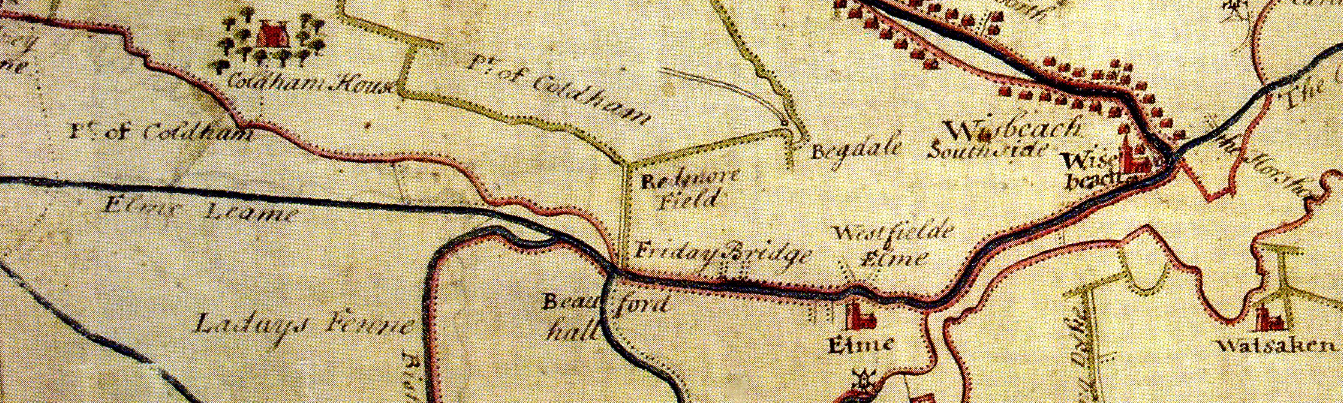
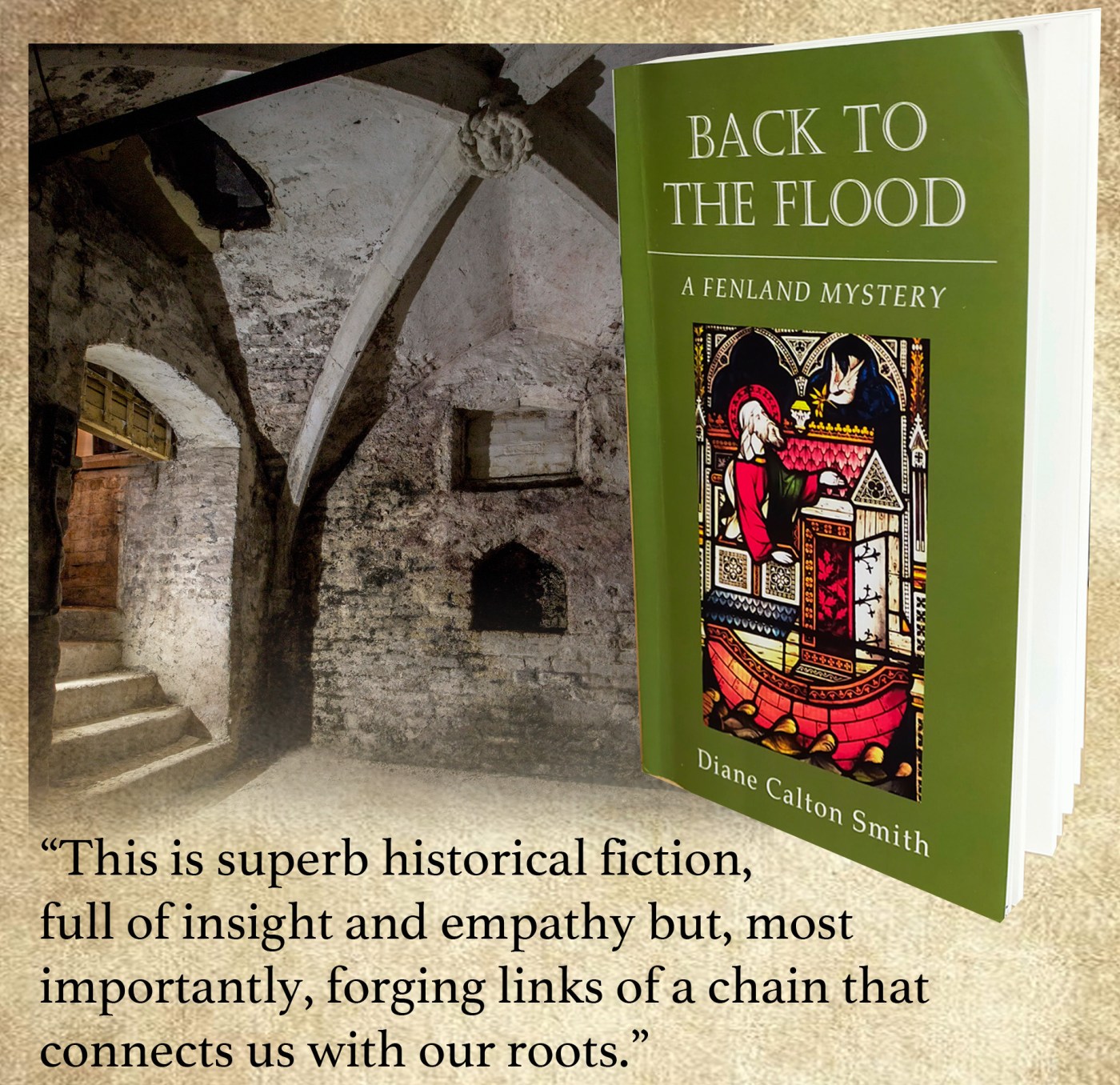
It is March 1249, and England is ruled by Henry Plantagenet (Henry III) son of the unfortunate KIng John, who featured in an early tale of medieval Wisbech by this author, In The Wash (click to read the review). For Wisbech people, the King and his court are far away and unknown. Their immediate overlord is Hugh of Northwold, Bishop of Ely, for who much of Wisbech is his manorial property, meaning that residents must pay him annual rent. In November 1236, however, a disastrous tide (what we would now call a North Sea Surge), devastated the flimsier properties of the town, and when, thirteen years later, the Bishop’s Seneschal*. Roger of Abynton arrives to make an audit of rents and repairs, he finds that many of the Bishop’s buildings have not been rebuilt and remain unoccupied, thus providing no income stream.

*Seneschalan agent or steward in charge of a lord’s estate in feudal times.

When Alured, a local baker, is found dead in the reeds at the edge of The Wysbeck (then a sluggish stream, but now the tidal River Nene) most people assume that he drunkenly fell into the water after one two many ales in one of the inns he frequented. Sir Roger, after examining the body, is not so sure. Scratches on the torso suggest that the man was dragged to the river bank. Finding people with a motive to kill Alured is the easy part. He was a cheat, drunk, foul of mouth and temper and seemed to live his life with one aim only – to antagonise and goad everyone he meets.

Sir Roger is, by modern standards, a decent detective. He comes to realise that Alured was not murdered because he baked contaminated bread, or because he was an argumentative drunk who enjoyed starting fights in pubs. The book’s title is completely apposite. Everything that happens is a result of what happened – or didn’t happen – on that fateful night when the North Sea surge crashed through the banks and defences of Wisbech and changed lives for ever.

So deeply does Diane Calton Smith immerse us in 13th century England that we are not in the least surprised to learn that the New Year began on 25th March, or that there was an extensive calendar of Saints’ Days, very few of which would be celebrated by feasts, at least in the modern sense of the word. There is also a sense of how big the world was in those days. A journey from Wisbech to Leverington, two minutes in the car these days, took hours on treacherous and often impassable tracks. We are also reminded of the sanctity of Lent. Meat was seldom a regular item on the tables of most poor townspeople, but during the Holy observance, the daily ‘pottage’ would contain only root vegetables, perhaps made more palatable with ‘ransom’ – not a criminal demand for payment, but something akin to what we call Wild Garlic. Ale was ubiquitous, because there was little or no safe drinking water. It would have tasted very different to modern beer, as the use of hops in the brew would not come for another three hundred years.

Hand in hand with the astonishing historical detail we have a very clever whodunnit. Wisbech these days is not much of a place, but at least we have our history. I am acutely aware, thanks to this superb novel (and its predecessors) that every time I walk into town, there is a palimpsest beneath my feet, a resonant reminder that these very streets were walked on by our ancestors, and that we tread in their footsteps. This is superb historical fiction, full of insight and empathy but, most importantly, forging links of a chain that connects us with our roots. Back To The Flood is published by New Generation Publishing and is available now.

PREY . . . Between the covers

prey SPINE070 copy

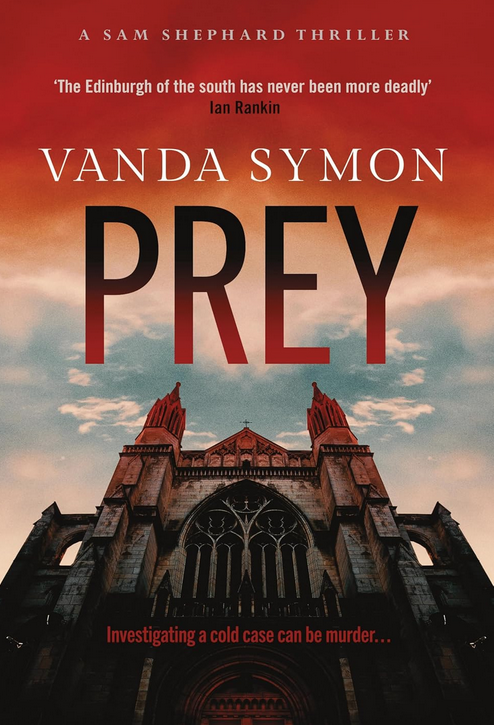
I have to confess that I haven’t read a crime novel written by a New Zealand writer since, years ago, I blitzed the Inspector Alleyn stories by Ngaio Marsh. Although she was born and died in Christchurch, those stories are quintessentially English. Vanda Symon, by contrast, has written a successful series featuring Dunedin cop Sam Shephard, and Prey is the latest of these. Sam has returned from maternity leave, and almost immediately  the state of open war between herself and boss, DI Greg Johns, resumes. He immediately gives her a cold case to work on. Twenty five years earlier, a priest at St Paul’s Cathedral, was found dead at the foot of some stone stairs. He had been stabbed, but also had a broken neck. Despite every best effort, no-one was ever arrested for the murder. And there is a problem. The Reverend Mark Freeman had a teenage daughter, Felicity. And now she is married to DI Johns.

As Sam  struggles to adjust being back at work, and worries about ‘abandoning’ baby daughter Amelia (for those who like that sort of thing the author spares us no detail of the baby’s rather spectacular digestive system) she realises she has been handed a poison chalice. The crime scene has since been walked over by tens of thousands of pairs of feet, and there are a mere handful of people alive now who were connected to the case at the time. These are, in no particular order:
Yvonne Freeman, the murdered man’s widow. She has terminal cancer.
Felicity Johns, née Freeman, now married to DI Greg Johns.
DI Johns himself was on the investigating team as a young police constable.
Brendan Freeman, Felicity’s brother.
Mel Smythe, a young youth worker at the time of the killing. She has since become estranged from the church, and has fallen on hard times.
Aaron Cox, of Maori origin, and a former criminal. Mark Freeman had worked hard to put him on the straight and narrow path.

When Sam goes to interview Mel Smythe (for the second time) she finds her dead – stabbed with a kitchen knife, which makes the case very much a current murder investigation. But is it – and if so, how – connected to the death of Mark Freeman? It has to be said that in the first few pages of the book, a female witness watches, from behind a church pillar, a struggle between two people, one of whom is the Reverend Mark Freeman. Make of that what you will.

Sam Shephard is a very human creation with none of the foibles and weaknesses that many British writers love to give their police detectives. She is a proud mum and loyal partner to little Amelia’s father, fellow copper Paul Frost. She has a keen brain and a healthy sense of humour, and it is her intuition that allows her to finally realise she has been lied to, and thus crack the case open. This only happens, however, in the final pages of the novel, and not before we are led up many a garden path. The connections to the case of DI Johns and his wife only make more hot coals for Sam to walk over, and she faces an unenviable task of doing her job without becoming badly burned.

Vanda Symon creates a convincingly clammy picture of a wet and wintry Dunedin, and at the centre of it all, glowering over the wrongdoings of its congregation, is the  menacing Victorian Gothic bulk of St Paul’s Cathedral. In addition to the gripping plot, Symon explores those eternal ingredients of all good crime novels – money, greed, shame, blackmail, hypocrisy and family secrets. Prey is published by Orenda Books and is available now.

Screen Shot 2024-07-28 at 20.20.53

WHISPERS OF THE DEAD . . . Between the covers

WOTD SPINE067

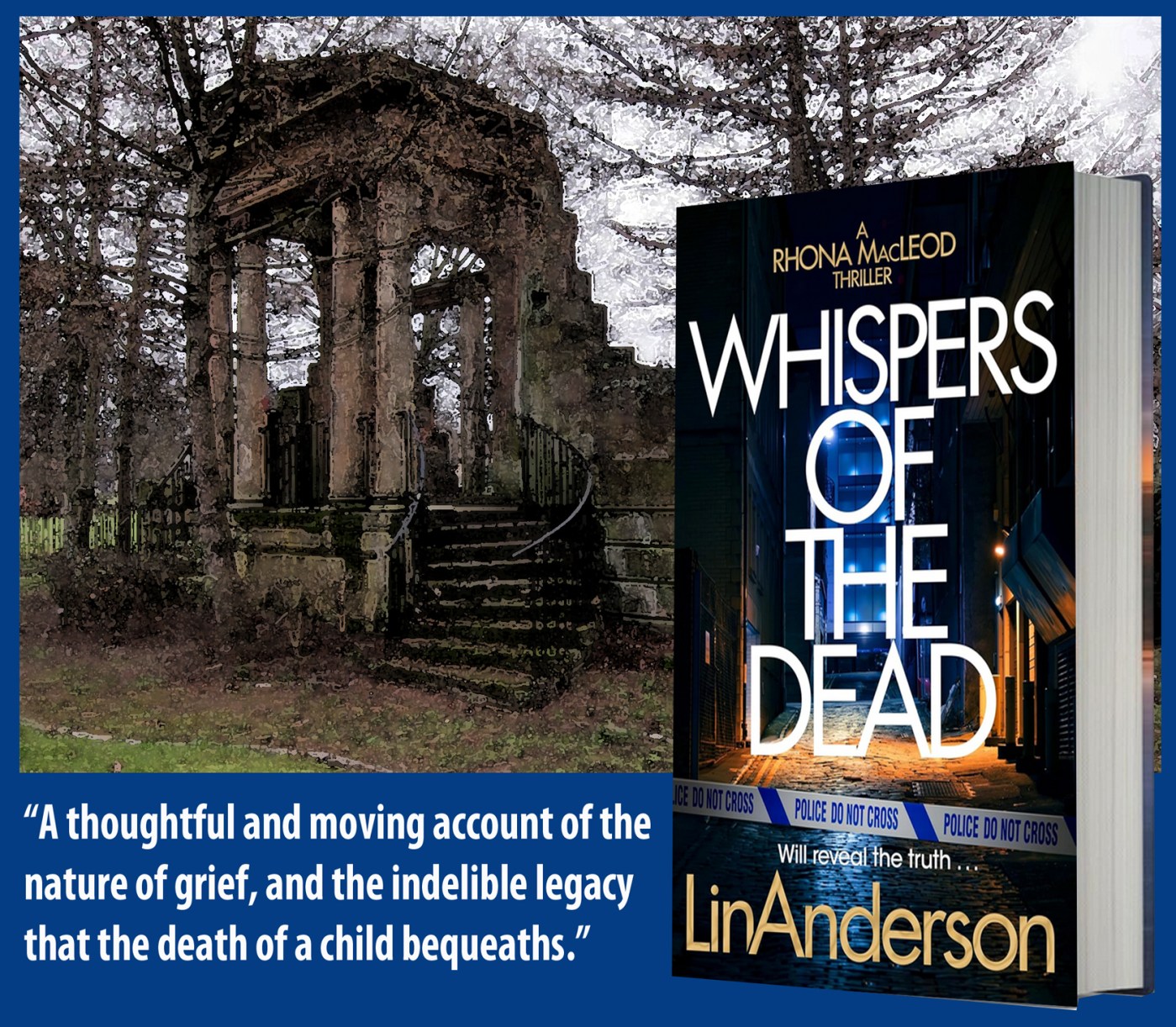
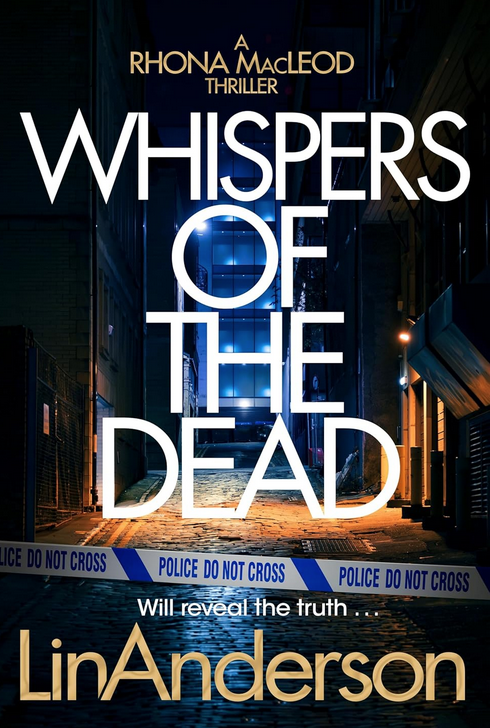
Lin Anderson’s battle-hardened forensic investigator Dr Rhona MacLeod returns to make another journey through the grisly physical mayhem that some human beings inflict on others. In a disused and vandalised farmhouse in Glasgow’s Elder Park, a man’s body has been found. His eyes and mouth have been sewn shut and, strapped to a metal chair, he has been thrown through an upstairs window. A trio of teenage scallies have been using the old building as a base for their minor law-breaking, and they are the first people to see the body,

In another part of the city, an American film crew have informed the police that their leading man is missing. With the assistance of DS McNab, who has interviewed the movie-makers, Rhona MacLeod becomes involved, and wonders if the missing actor is the mutilated corpse found in the park.

At the very beginning of the book Lin Anderson introduces what develops into a parallel plot thread. A woman called Marnie Aitken has served six years in prison for the murder of her four year-old daughter, Tizzy, despite the fact that no trace of Tizzy, dead or alive, has ever been found. Marnie is known to Rhona MacLeod, and to her colleague, psychiatrist Professor Magnus Pirie. On her release, Marnie – abused as a child and as a young woman – is placed in sheltered accommodation. She goes missing. but not before sending a bizarre gift to Rhona. It is a beautifully sewn and knitted doll, in the likeness of a young Highland dancer. Rhona realises its significance, as Tizzy Aitken was a promising dancer, but she is also appalled to see that the doll’s lips have been sewn shut with black thread. What message is Marnie sending?

Marnie is located at her old cottage on the Rosneath Peninsula, and but she returns to Glasgow, where the police find that she is linked – albeit at a tangent – the the killing of the man in Elder Park. Meanwhile, DS McNab – who was involved in the original investigation into Tizzy’s disappearance, but kicked off the case – has realised that the script and screenplay of the film – now abandoned after the disappearance of its star – is inextricably tangled up with the murder.

Right from the beginning of the novel, we know that Marnie still talks to Tizzy, and Tizzy still talks to her. Is this merely, as Magnus Pirie suggests, a grieving woman’s way of coping with her loss? Or is it something else? On the first page of the book, Marnie looks out of the window:

“It was at that moment the figure of a girl, dressed in a kilt and blue velvet jacket, arrived to tramp across the snow in front of the main gate. As though sensing someone watching, the girl stopped and turned to look over at her. Marnie stood transfixed, then shut her eyes, her heart hammering. ‘She’s not real. It’s a waking nightmare. When I look again, she won’t be there.’
And she was right.
When Marnie forced her eyes open, the figure had gone, or more likely, it had never been there in the first place except there were footprints in the snow to prove otherwise.”

When Rhona visits Marnie’s seaside cottage, she walks down to the beach where Tizzy used to go with her mother:

“The snow at sea level had gone and the muddy ruts were studded with puddles and the shape of footsteps leading both ways. Her forensic eye noted three in particular, ranging in size: a small childlike print, a medium one and a large one, going in both directions.”

Lin Anderson doesn’t resolve this for us. She leaves us to draw our conclusions, and I suppose it depends on how feel about Hamlet’s oft-quoted words to Horatio in Act 1 Scene 5 of the celebrated play. The police procedural part of this novel plays out in the favour of the good guys, but aside from this, Lin Anderson has written a thoughtful and moving account of the nature of grief, and the indelible legacy that the death of a child bequeaths. Whispers of The Dead was published by Macmillan on 1st August.

Screen Shot 2024-07-17 at 20.19.00

FIRE AND BONES . . . Between the covers

FAB SPINE066 copy

Screen Shot 2024-07-13 at 20.24.17To use a cricketing term, the Dr Temperance Brennan book series by Kathy Reichs (left) is 24 not out, and still looking good. The series featuring the forensic anthropologist began with Déjà Dead in 1997. For anyone new to the novels, I’ll just direct you here for background information. Tempe (her preferred nickname) is in her Charlotte NC autopsy room and has just finished one of her trademark investigations into long-dead human remains. She is planning a few days away with her long-time boyfriend, Quebec cop Andrew Ryan, but when she gets home, she has a series of ‘phone calls  which persuade her to drive to Washington DC to help with the investigation of a fatal fire in an old house in Foggy Bottom.

The Victorian property had been most recently used as a low rent boarding house, and amid the devastation, there are four dead bodies, all victims of the fire. When part of the ground floor gives way under the weight of one of the fire officers, a hidden cellar full of alcoves and passages is revealed, and it is in one of the chambers that Tempe discovers another corpse tied inside a burlap sack. While the charred remains of the four fire victims are quickly identified, the corpse in the burlap bag is more mysterious. The body is that of a woman, small and slender, but how long she had been in that bag, in that cellar is more problematic. Via one of those nerdish experts who specialise in arcane knowledge, Tempe learns that the sack in which the victim was confined probably dates from the late 1940s.

Screen Shot 2024-07-13 at 19.53.48

Tempe, with the help of a TV reporter called Ivy Doyle, learns that the reason for the fire may be connected to a group of hoodlums back in the prohibition era. The Foggy Bottom Gang. The ringleaders were Leo, Emmitt, and Charles “Rags” Warring, who had worked as laborers in their father’s barrel shop. When the (illegal) booze started flowing, all three quickly got caught up in the wild and sometimes violent underworld of Washington, D.C. But what is the connection between events decades ago and modern day Washington DC? Eventually, Tempe finds out the truth, and it reinforces the old adage about revenge being a dish best served cold and, in this case, slow.

The book rattles along at breakneck speed, and Tempe Brennan is her usual sassy, quick-thinking self, a persona that Kathy Reich’s millions of readers have come to know and love over the 27 years since Tempe first appeared. Thy narrative style is unmistakably and uniquely American – slick, witty, and sharp as a tack. It won’t appeal to readers who like gentle cosy crime mysteries set in idyllic British locations, but it is a testament to its style and commercial appeal that a TV series based on the books ran from September 13, 2005, concluding on March 28, 2017, airing for 246 episodes over 12 seasons. 

Fire and Bones is gripping and addictively readable, despite the fact that  – like books in other long-running American series by writers like Jonathan Kellerman, James Patterson and Harlan Coben – it is formulaic. The formula works, readers love it, so you will hear no complaints from me. It is published by Simon & Schuster, and is out today, 1st August.

Screen Shot 2024-07-13 at 20.20.13

INTO THE FLAMES . . . Between the covers

itf spine061 copy

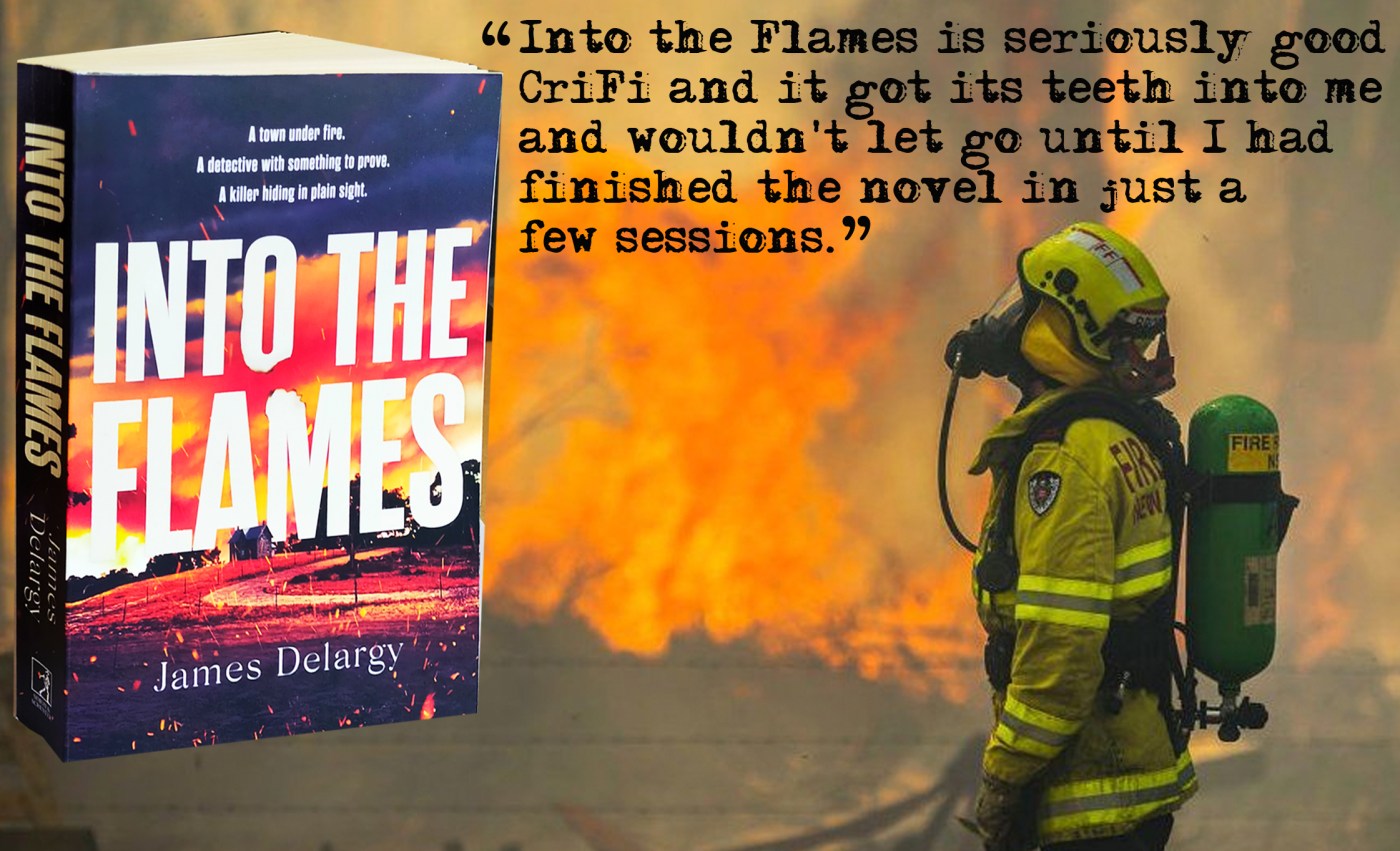
I lived and worked in Australia for a while, but being a city lad, I never came close to a bush fire. From speaking to people who had, and reading about them, they seem to be the very worst kind of natural disaster. Perhaps it is invidious to compare tornadoes, tsunamis, landslips and volcanlc eruptions, but bush fires seem to have an almost animal intensity. They devour people, buildings and forests like some kind of raging beast. Here, Aussie cop Alex Kennard has been bounced out of his job in a Sydney suburb for, as his bosses saw it, making the wrong call when he was forced to deal with a hostage situation. He is now more or less twiddling his thumbs dealing with drunks, petty thieving and the odd traffic incident in the town of Katoomba, in the heart of The Blue Mountains.

The little nearby town of Rislake is threatened by a serious bush fire, and Kennard drives across to help with crowd management in the event of a major evacuation. The local cops and fire service are basically taking a roll call, and it is soon apparent that one woman is missing. Tracey Hilmeyer is the wife of one of the firefighters and, against orders, Kennard and the woman’s husband, Russell, head out to the Hilmeyer property which is in danger of being engulfed. They find Tracey, but she is dead at the foot of the stairs, battered with a heavy implement. Russell Hilmeyer is distraught and wants to move the body of his wife, but Kennard insists that she stay in place and he attempts to preserve and record the crime scene as best he can.

Russell Hilmeyer is a local lad who didn’t quite make the big time on the football field, due to a career-ending injury. It has no bearing on the plot, but I am pretty sure Hilmeyer played Aussie Rules rather than what Americans call Soccer, or the major Sydney code of Rugby League. His wife Tracey was a glamorous prom-queen type in her teens, and had ambitions to be an artist. The gallery she ran in town has had to close, and she had become depressed, and only got through her days and nights with the help of prescription items like co-codomol. She had an abrasive relationship with her sister Karen who, with her husband, runs the farm that used to belong to their late parents. It is hard scrabble land, and they barely make ends meet. Did Karen and her Pacific Islander husband Alvin hate Tracey enough to kill her? The post mortem reveals that Tracey Hilmeyer was pregnant. Given that the couple had been trying for years to have children, does this add yet another dimension to the search for the killer and their possible motive?

The author has great fun making Kennard and his temporary partner DS Layton jump to one false assumption after another, while the fire grows steadily worse, a little like Satan as described in the office of Compline:

“Be sober, be vigilant, because your adversary the devil, as a roaring lion, walketh about, seeking whom he may devour:”

The conclusion comes with Layton temporarily out of action due to the fire having triggered her asthma, and we have Kennard, almost immobilised by the weight of his protective clothing, pursuing the killer in a Dante’s Inferno of blazing eucalyptus trees and showering sparks. Only one small problem. The person he is following isn’t the killer of Tracey Hilmayer. To say any more would clearly spoil your fun, but this is as exciting an end to a crime novel as I have read in many moons.

We lost the two modern giants of Australian crime fiction, the two Peters – Corris and Temple – within six months of each other in 2018 but, along with Jane Harper, James Delargy – although he now lives in England – taps into to the great tradition established by those writers. Into the Flames is seriously good CriFi and it got its teeth into me and wouldn’t let go until I had finished the novel in just a few sessions. Published by Simon and Schuster, it is available now.

ONE FALSE STEP . . . Between the covers

OFS SPINE060 copy

We haven’t had a resounding cad in popular fiction since George MacDonald Fraser took Harry Flashman, a relatively minor character in a little-read Victorian school novel, and had him bestride the 19th century like a colossus, meeting (and cheating) pretty much everyone from Abraham Lincoln to Otto von Bismarck. Now, Clive Woolliscroft introduces Lieutenant William Dunbar, an impoverished younger son of a Scottish nobleman – and utter bounder*.

* Bounder (noun, archaic): a man who behaves badly or in a way that is not moral, especially in his relationships with women.

Unlike Flashman, Dunbar doesn’t lack physical courage, and he fights with his regiment against Bonnie Prince Charlie’s highlanders at Culloden, so this places the events of the novel somewhere in the years after 1746. Dunbar, however, has neither the skills nor the family fortune to lead the rich man’s life he so desperately craves, and so he is on the look-out for wealth  by marriage. Can he find a suitable young woman, with a sizeable *tocher and generous annual allowance from her wealthy parents?

* Tocher (Scots, archaic): A dowry: a marriage settlement given to the groom by the bride or her family.

For the first 120 pages or so, we view events through the eyes of William Dunbar. Thereafter, the narrative switches between that of Mercy Grundy and Dunbar. Quite early in the book, Dunbar had secretly married a Scottish heiress, Ann Macclesfield, (for her money of course) and she had borne him a daughter. The financial part of his plan had collapsed, due to religious complications after the battle of Culloden, but Anne now refuses to dissolve the marriage, thus putting a major impediment in the way of Dunbar’s plans to marry Mercy, and get his hands on her family’s wealth.

Dunbar leaves the army, and begins to make something of a living in the world of finance, managing to build up cash reserves, thus lessening the necessity of marriage. He then sees a chance to become very rich indeed by buying a share in a ship engaged in what was known, euphemistically, as the African Trade. This worked in a brutally simple fashion. The ship leaves Britain loaded with manufactured goods which could range from bolts of cloth to firearms and anything in between. These were then bartered for human cargo – slaves – on the coast of West Africa, which were then taken and sold in the slave markets of the Americas. In theory, the ship would then return to Britain, laden with cash.

Unfortunately for him, Dunbar’s ship, The Archer, is destroyed by fire after a mutiny of the slaves and he is, once again, left with nothing. He decides to try his luck once more with Mercy Grundy, but finding her father totally in opposition to his plans, he dupes Mercy into a course of action which will end disastrously for her. This mirrors the real life tragedy the book is based on – the case of Mary Blandy who, in 1752, was put on trial for poisoning her father.

The author served as an Army Officer in Germany, worked as an international money market trader in London, was a Management Consultant in Prague and Riga and practised as a solicitor in London, Hertfordshire, and Staffordshire. This is his second novel. ‘Less Dreadful With Every Step’ was published in May 2023.

Clive Woolliscroft’s attention to period detail is immaculate, and the mid-eighteenth century England of the wealthy middle class is beautifully recreated. William Dunbar is an out and out villain, with none of the dubious charm possessed by Harry Flashman.  The book’s title is extremely apposite for poor Mercy Grundy. One False Step is published by The Book Guild, and is available now.

THE TRIAL . . . Between the covers

TRIAL HEADER

First up, this novel isn’t a courtroom drama. Literally, it is about a big pharma multinational testing out what could be a game-changing drug to combat the effects of dementia. Metaphorically, though, Jo Spain’s latest thriller sees the lives of several individuals put under intense scrutiny, as if being questioned by a hard-nosed barrister in a court of law. Serious questions are asked, and some people fall after being challenged.

I am not normally a fan of split-time narratives, as they are all too often distracting short cuts, but Jo Spain is too good a writer to be accused of that, and in her hands it works well. There are three time zones. In 2014 we are in a prestigious Irish university college, St Edmunds, and we meet Dani. She is asleep, but her lover – Theo Laurent, French, and a fellow student – is about to make a very serious decision. He carefully climbs down from their shared bed and leaves. Not ‘leaves’ as in just going back to his own room, but ‘leaves’ as in disappears. Totally. Completely. From the face of the earth. Anxious and baffled hours for Dani turn into days and weeks. The police are not interested. Theo’s estranged and autocratic father reluctantly tells Dani over the ‘phone that he has received an email from his son stating that he has left the academic world to go travelling.

The two other time frames are 2023 and the present day. More so than in her excellent Tom Reynolds police procedural series, Jo Spain, in her standalone novels, likes to sucker punch her readers with astonishing plot twists, none more breathtaking than in The Perfect Lie ( click the link to read my review) These literary magic tricks are usually saved until the final pages of the novel, but here she does her stuff about half way through, when she lets us know that Dani is not who or what we think she is. To say more would be to spoil the fun. Suffice it to say that Jo Spain simply encourages us to make assumptions, which she then delights in shattering.

We learn that Dani, as far as the new ‘wonder drug’ is concerned, certainly has a dog in this particular fight. Her widowed mother is slowly succumbing to the inexorable death sentence known as Alzheimer’s. What if the new wonder drug could arrest her mother’s decline, and restore her memory, and make her sit up in bed with delight when her daughter comes to visit?

Academic impartiality seems to be a things of the past, certainly in the United Kingdom, and in Ireland, where this novel is set. In England, many universities – and even some independent school – have been bought and sold with Chinese money, but in the case of St Edmunds, it is not Xi’s millions that is paying the salaries of lecturers and professors, but the big dollars of the pharmaceutical industry. A convincing report from the medical researchers at St Edmunds, stating that the new drug poses no side-effect risks means that Turner Pharma can go ahead and mass produce the tablets, and ensuring massive world-wide profits. In trying to solve the mystery of Theo’s disappearance, Dani learns that pharmaceutical companies, just like their illegal counterparts in Mexico and Columbia, employ clever but crooked lawyers, use physical enforcers, and have limitless budgets to buy off politicians and law enforcement

The Trial works brilliantly on many different levels. There is the human anguish as Dani attempts to come to terms with Theo’s inexplicable departure. Jo Spain then invites us to be disgusted at the many ways in which academic institutions can become a simple market place commodity, and sold to the highest bidder. Above all, though, is the satisfaction derived from reading something written by a natural born story teller. There is not a word out of place, not a scene that wouldn’t work as a TV screenplay and – best of all – human characters of whom we might say, “Yes – I know someone like that.” The Trial is published by Quercus and is available now.

WHEN THE BOUGH BREAKS . . . Between the covers

WTBB header

David Mark has taken a temporary break from his excellent Aector McAvoy series (click the link to find out more) and his latest novel has a prologue that is as violent and visceral as any of the disturbing scenes in Derek Raymond’s I Was Dora Suarez. If you have read that masterpiece, you will know what I am talking about. If you haven’t, then you should. Here, copper Wulfric Hagman wakes up in a charnel house, apparently of his own creation. His former lover, Trina Delany lies butchered on the bed, while he seems to have tried to hang himself with a length of baler twine.

That was then, but now, Hagman has served a prison sentence, been released, and is now living in a moorland farmhouse he gifted by Jarod, one of Trina’s children. His twin sister, Salome is also living there. She is a traffic cop, formally known,in today’s jargon, as Collision Investigation Officer. At Hagman’s original trial, both Sal and Jarod gave chilling evidence testifying to the abuse they – and the other children – received at Trina’s hands.

Against this unusual human background and with the Northumbrian hills carpeted in deep snow, David Mark weaves his magic. The plot is complex, but this is a breakdown of the main characters.

Salome Delaney, police officer.
Jarod Delaney, Sal’s twin. Now a farmer, living in a house signed over to him by …
Wulfric Hagman, former policeman, served a long prison term for the murder of Trina Delaney. He now lodges with the Delaneys.
Dagmara Scrowther, charismatic Children’s Services officer. Worked with the Delaney family.
Lewis Beecher, senior police officer, divorced. Has recently ended a long term relationship with Sal Delaney.
Barry Ford. Once a child tearaway, now relatively respectable. Former lover of Trina Delaney.
Detective Superintendent Magda Quinn. Has re-opened the Hagman case, believing him to be guilty of more murders.

With transport paralysed by deep snow, Salome – although on leave – receives a call from a fellow officer asking her to go and investigate a car that has come off the road just a couple of miles away. She clings on grimly as Jarod’s quad-bike makes light work of the snow drifts. She finds the wrecked car, but the macabre feeding habits of local crows lead her to a man’s body. Some of the crows who have fed on the corpse are collapsing and dying. The reason? The body has had acid poured into his throat.

This grim discovery sets off a train of events that are as violent and disturbing as anything I have read in recent crime fiction. I am a great admirer of David Mark’s writing, and I make no apology for frequently comparing his style to that of Derek Raymond. Like Raymond, Mark takes us into dark places where monsters – in human form – ply their trade. Like Raymond’s nameless Sergeant in the five Factory novels, Mark’s heroes are often gravely damaged, but have a depth of compassion that always brings about a sense of redemption at the end of the journey, no matter how hellish the road.

The body in the snow is eventually identified as being that of Barry Ford, a man who was a troubled youngster but, thanks to the perseverance of Dagmara Scrowther, seems to have turned himself into something of a decent citizen. However, when Salome, hastily drafted back to work as a Family Liaison Officer, has to break the news of Ford’s demise to his current girlfriend, she opens a Pandora’s Box from which fly demons of cruelty and bestial abuse. Also in the mix is the fate of Lewis Beecher’s divorced wife. She and her two daughters – Nola and Lottie – have a new ‘dad’. He seems jolly and full of jokes, but is he genuine?

In this superb novel we cross paths with many human monsters. Trina Delaney is one, certainly, and Barry Ford is not far behind. But a third monster lurks in plain sight. Its identity is known to me, but you will have to find out for yourselves. When The Bough Breaks is published by Severn House and is available now.

LITANY OF LIES . . . Between the covers

LOL header

We are back in 12th Century Worcestershire, with Undersheriff Hugh Bradecote and Serjeant Catchpoll. Together with Underserjeant Walkelin, they are sent to Evesham to investigate a body found at the bottom of deep shaft being dug for a new well. Evesham sits partly within a deep curve of the River Avon. Its most notable building is the Benedictine Abbey, but on the other side of the river, built to protect the bridge, is Bengeworth Castle. It is not a grand place. Built by the Beauchamp family, High Sheriffs of the county, on an earthen mound and surrounded by a palisade of wooden stakes, it is damp and insanitary.

The man at the bottom of the well pit is discovered to be Walter, Steward of the Abbot of Evesham. The main part of his job was to collect rents on behalf of the religious order, as they own most of land in the town. We know, as readers, that Walter was involved in a scuffle with another townsman, who bested him by cracking his head open with a rock, before rolling his body into the pit. Bradecote soon reaches the correct answer to the question, “how?” But, although learning the “why?”, of Walter’s death, it  some time before “who?” becomes apparent.

Relations between the Abbey authorities and the Bengeworth castellan and his soldiers are anything but cordial, and soldiers from the castle are suspected of stealing barrels of wine from the Abbey cellars, as well as illegally demanding a toll from everyone who enters the town via the bridge. When Bradecote examines documents at the Abbey, they show that Walter has been reporting several tradesman around the town as coming up short with the quarterly rent. This gives Sarah Hawkswood to tell us a little about the tradesmen in the town, and also serve a reminder of the occupational origins of some English surnames. We meet Aelred the Tailor, Baldwin the Dyer, Hubert the Mason and Martin the Fuller. The work of a Fuller was to take rolls of woven wool cloth and – by using some fairly unpleasant substances – remove all traces of grease, dirt (and worse) that remained in the cloth since it was wool on the sheep’s fleece.

Between them, Bradecote, Catchpoll and Walkelin interview the tradesmen, and find that each had paid their rents in full, and on time, to Steward Walter, leading to one conclusion only, and that was that Walter was ‘skimming off’ the rents, and taking a cut for himself. But it seems that none of the tenants knew that they were being cheated, so how could any of them have a motive for murder?

As the investigation seems to be going round in circles, another body is found. It is that of Old Cuthbert a bitter and lonely man. Years ago, he had been a Coppersmith, but found himself accused of murdering a local woman as a result of a love triangle. Taken before the justices, there was little evidence either for against him, and so he was subject to the barbaric Trial by Hot Iron. The accused had to hold a red hot iron bar in his hand and walk nine feet. If, after a few days, the wound healed, it was a sign that God pronounced him ‘not guilty’. If it festered, he was guilty, and would be hanged. Cuthbert was ‘not guilty’, but thereafter, his hand remained clenched as a fist, and so he was unable to carry on his skilled trade. Just about the only occupation left to him was that of a Walker in the fulling process, whereby he walked up and down all day in troughs of urine, treading – and therefore cleansing – the cloth in the liquid.

Of course, Bradecote and Catchpoll solve both murders, as we know they will. What lifts this book above the ordinary is Sarah Hawkswood’s magical recreation of a long lost world. Yes, it was a hard living by modern standards. Yes, medical interventions were scarce and mostly misguided. Yes, justice was rough and frequently random. But the description of the wonderful Worcestershire landscape, now mostly covered in concrete, car parks and convenience stores is sublime. The Avon is still unpolluted, and the Evesham Abbey bees still harvest pollen free of toxic chemicals. How the people in those days spoke to each other, or in what tongue or accent, neither the author nor I can have any real idea, but to me what Sarah Hawkswood has them saying sounds just about right.

A new Bradecote and Catchpoll mystery is a highlight in my reading calendar, and I always turn the first page with a sense of comfort. I am comfortable only in the sense that I know I am in for a few hundred pages of sublime writing. ‘ Comfort’ does not mean ‘ Cosy’, and Sarah Hawkswood continues to show us that greed, malice, vindictiveness and subterfuge were just as common in mid-12thC England as they would prove to be in 1930’s LA, or modern day London. Litany of Lies is published by Allison & Busby and is available now.

Blog at WordPress.com.

Up ↑