The Biggest Murder Mystery Case of the Century
by Robert K. Tanenbaum
Author of Infamy: A Butch Karp-Marlene Ciampi Thriller
If I were asked to select one case in the history of our justice system that epitomized the essentials and professionalism of a ministry of justice in terms of tempestuous drama, personal anguish, garish confrontation, and, yes, divine intervention, unhesitatingly, I would answer: the Wylie-Hoffert rape murders. Here’s why: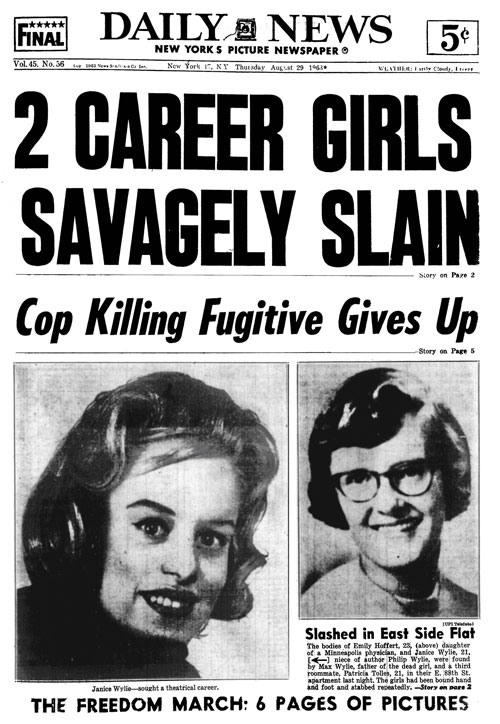
August 28, 1963, was a muggy summer day in New York City when Janice Wylie and Emily Hoffert were brutally raped and murdered in their apartment on Manhattan’s fashionable Upper East Side. Months passed as their families grieved the nightmarish unthinkable and a shaken city awaited answers. Finally, eight months later, the Brooklyn Police arrested George Whitmore, Jr., a nineteen-year-old with an I.Q. south of 70. His incarceration would ultimately entail a host of shocking law-enforcement missteps and cover-ups.
At the time of his arrest for the Wylie-Hoffert murders, the Brooklyn Police and the Kings County District Attorney’s Office (Brooklyn) also charged Whitmore with attempted rape and the murder of Minnie Edmonds, both of which occurred in Brooklyn one week apart.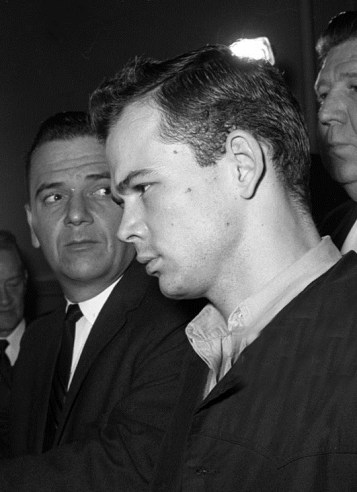 Yet, Mel Glass, a young Assistant District Attorney in Manhattan, not even assigned to the Homicide Bureau, was troubled by the investigation. With the blessing from legendary District Attorney, Frank Hogan, Glass tirelessly immersed himself in the case. So began an epic quest for justice, culminating in a courtroom showdown in which the Brooklyn arresting and interrogating cops refused to admit their flagrant missteps, providing a complete defense to the actual career criminal, vicious predator, murderer, Richard Robles.(pictured right)
The outcome would reach far beyond the individuals involved. Not only does the case reveal the extraordinary details of an enormously intense manhunt but it is also a classic and brilliant courtroom prosecution. The unjustly accused was exonerated and the depraved killer convicted. Ultimately, the U.S. Supreme Court memorialized this case’s significance by citing it in the noteworthy Miranda decision, a monumental Fifth Amendment due process, fundamental fairness decision designed to safeguard a suspect’s rights against self-incrimination.
I served in the Manhattan District Attorney’s Office during the tenure of District Attorney Frank Hogan, and was mentored by Mel Glass who asked me to write Echoes of My Soul which is a non-fiction account of the Wylie-Hoffert case.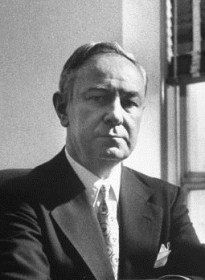 Important to note that District Attorney Hogan (left) was truly a legend long before Wylie-Hoffert occurred. Once convinced that Mel Glass’ gut-instincts and subsequent investigation was legitimate and that George Whitmore, Jr., was wrongfully indicted for the most gruesome and sensationalized double-rape murders in the media’s radar, Mr. Hogan was prepared to admit his mistake, possibly fracture his career’s reputation, and exonerate an impoverished young man with a very low I.Q. And why? Simply and manifestly because it was right, justice demanded it.
Robert K. Tanenbaum ( pictured below) is the author of Infamy: A Butch Karp-Marlene Ciampi Thriller (Gallery Books / Simon & Schuster). He has authored thirty-one books—twenty-eight novels and three nonfiction books: The Piano Teacher: The True Story of a Psychotic Killer, Badge of the Assassin, and Echoes of My Soul. He is one of the most successful prosecuting attorneys, having never lost a felony trial and convicting hundreds of violent criminals. He was a special prosecution consultant on the Hillside strangler case in Los
 Angeles and defended Amy Grossberg in her sensationalized baby death case. He was Assistant District Attorney in New York County in the office of legendary District Attorney Frank Hogan, where he ran the Homicide Bureau, served as Chief of the Criminal Courts, and was in charge of the DA’s legal staff training program. He served as Deputy Chief counsel for the Congressional Committee investigation into the assassinations of President John F. Kennedy and the Rev. Dr. Martin Luther King, Jr. He also served two terms as mayor of Beverly Hills and taught Advanced Criminal Procedure for four years at Boalt Hall School of Law, University of California, Berkeley, and has conducted continuing legal education (CLE) seminars for practicing lawyers in California, New York, and Pennsylvania. Born in Brooklyn, New York, Tanenbaum attended the University of California at Berkeley on a basketball scholarship, where he earned a B.A. He received his law degree (J.D.) from Boalt Hall School of Law at the University of California, Berkeley. For more information, please visit http://www.RobertKTanenbaumBooks.com

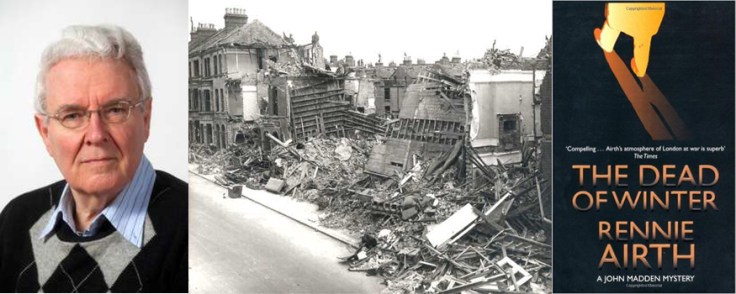
 We are in the weeks leading up to Christmas 1944, deep in what would prove to be the last winter of a war which, thanks to the Luftwaffe, had brought death and destruction to the doorsteps of ordinary people in towns and cities up and down the country. German aircraft no longer drone over the streets of London; instead, the Dorniers and Heinkels have been replaced by an even more demoralising menace – the seemingly random strikes by V1 and V2 rockets. Despite the fact that the rockets need no visible target to aim at, the ubiquitous blackout is still in force. An Air Raid Precaution Warden, whose job has become as redundant as that of those manning anti-aircraft batteries, makes a chilling discovery. He stumbles – literally – on the body of a young woman. Her neck has been broken by someone clearly well-versed in killing, and the only clue is a number of spent matches lying by the body.
 There is more than a touch of The Golden Age about this novel, but it is much more than a pastiche. Although the killing of Rosa Nowak is eventually solved, with a regulation dramatic climax in a snow-bound country house, Rennie Airth allows us to breathe, smell and taste the air of an England almost – but not quite – beaten down by the privations of war. Many of the characters have menfolk away at the war, including Madden himself and his wife Helen. Their son is in the Royal Navy, on the rough winter seas escorting convoys. The contrast between life in the city and in the country is etched deep. In the city, restaurant meals are frequently inedible, the black market thrives unchecked due to depleted police manpower, and even the newsprint bearing cheering propaganda from the government is subject to rationing. Travelling anywhere, unless you are fiddling your petrol coupons, is arduous and unpleasant.

 The Book of Mirrors by E O Chirovici looks to be Penguin’s big promotion for the early autumn. There’s an excellent cover with peep-through perforations, and the promo pack includes a very tasty spiral bound notepad/sketchbook. The author, Eugen Ovidu Chirovici, was born in Transylvania, which all fans of the lethal Count Dracula will know is in modern-day Romania. The story? It’s one part literary novel, in that Chirovici examines the nature of memory and recollection; a second part aims to be stylish, and the author openly admires Raymond Chandler and Mario Vargas Llosa for their flawless technique. The third part, perhaps most importantly, is that we have a cracking CriFi story about a cold-case crime and a lost manuscript which contains clues to the identity of a killer.
 The Vanishing Year by Kate Moretti certainly wins title of the month award, as those of us in the UK cling on desperately to every vestige of summer, while preparing ourselves stoically for yet another northern winter of rain, diminishing days, and media hysteria over football results. Moretti’s novel focuses on Zoe Whittaker, a woman whose life has metamorphosed from desperation and danger into one of luxury, love and positive vibes. But the past is never very far away, and when Zoe’s life comes under threat from those she thought had been cast aside, just as a dream dies at the dawn of day, she must make a decision which will either bring salvation – or damnation.
 Get Lucky by Paul Eagles is one of those confessional ‘Jack The Lad’ stories about someone who has lived his life at the sharp end. It is, I suppose, True Crime, but aficionados of the genre will know that they will need several pinches of salt in order to separate the fact from the fantasy. Basically, Eagles tells his life story thus far. It is as far removed from anything you and I have experienced as is Tennyson from E J Thribb. But, I suppose, there lies the charm. We are invited to gasp and gawp at the goings on, charmed by the fact that we could never, ever have got away with things in the way that Mr Eagles describes.
 The Child Garden by Catriona McPherson tells the story of one of those ‘special’ schools set up in the 1970s, when people still believed that Hippy peace and love was a viable and cogent philosophy. Conventional schools were simply prisons for young minds, Bob Dylan reminded us of “the mongrel dogs that teach”, and, just for a nanosecond, in someone’s mind, there seemed to be a way forward. The school in question was called – clearly with the irony meter turned off – ‘Eden’. Inevitably, it folded, with its alumni and teaching staff scattered to the four winds. But a sinister suicide during the school’s heyday returns to haunt former pupils, and they learn that the dead have ingenious ways of speaking to the living.


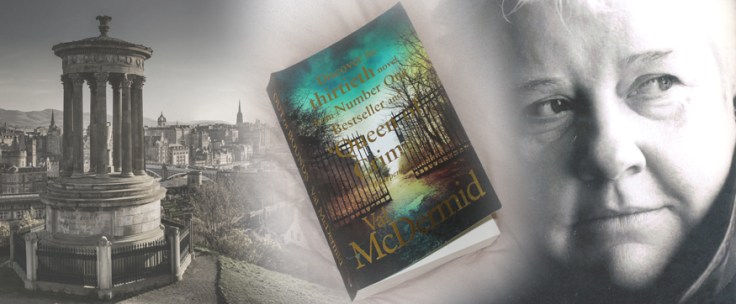 There’s an old expression that describes someone as “having a way with words’. There can’t be any contemporary writer who has a better “way with words” than Val McDermid. There are no dramatic flourishes, no histrionics and no scatter-gun blasts of redundant adjectives. What we have is simplicity, purity, and a command of language that is almost minimalist. She describes DCI Karen Pirie, thus:
 Some historical crime fiction takes us back to times way, way before our own memories could have any validity. Then there are stories set in periods that many of us could reasonably have experienced at first hand. With the former, it is simply the author’s research versus the depth – or lack of – our own historical knowledge. The latter is a much more tricky enterprise, as someone who sets their book in the 1960s, for example, can be exposed to a more searching light – that of readers who actually lived through the years in question.


 fullybooked2017