

Lone mother. Single parent. Solo carer. Whatever the politically correct term currently favoured by The Taking-Offence Police, Kristy Tucker is it. Not only is she bringing up her teenage son Ryan, she is caring for her debilitated father. ‘Pops’ is paying the price for a lifetime of heavy smoking, and two things keep him alive. One is physical – the cannula connecting him to his oxygen tank – and the other is psychological – the faint hope that he can still be a father to his daughter and someone his grandson can look up to.
 Kristy puts food on the table and tries to make sure that Ryan isn’t disadvantaged. She has a job, and it is one that demands every ounce of her compassion and every droplet of her sang froid. Her official title? Public Information Officer for the Texas Department of Criminal Justice. If that sounds like some bureaucratic walk-in-the-park, think again. Acting as mediator between inmates, the press and the prison system is one thing, but remember that The Lone Star State is one of the thirty one American states which retains the death penalty. Consequently, Kristy not only has to manage the fraught liaison between prisoners on death row and the media, but she is also required to be an official witness at executions.
Despite the stresses and strains of her professional and family life, Kristy is still young enough to hanker after a personal life, and when Ryan introduces his martial arts teacher, Lance Dobson, she is taken aback by his kindness and his humility. It doesn’t hurt that he is ruggedly handsome and totally charming. Dobson becomes more and more a part of the Tucker household and, despite Dobson’s “aw, shucks..” modesty, Kristy finds herself falling in love with him. She is dazzled by the man, and cannot believe her luck when her affection is returned, with interest, and he asks her to marry him.
Back at the prison, Kristy Tucker has become involved with a condemned prisoner, Clifton Harris. He has been sentenced to death for starting a fire which killed his two children. There have been frequent appeals and stays of execution, but Harris’s last ride on the gurney of death is imminent. Kristy becomes convinced that Harris is innocent, but her profession inhibits her from offering anything but sympathy and a kindly voice.
All too soon, Kristy becomes Mrs Dobson, and both Ryan and Pops think all their Christmases have come at once. For Ryan, Lance Dobson becomes the father he never had, and Pops takes on a new lease of life, knowing that at long last there is an alpha male in the house to take on the duty of care which his illness has prevented him from fulfilling. Gold at the end of the rainbow? Not quite. Within a matter of weeks a fatal chasm begins to open up between Dobson’s public persona and the man he has become when alone with Kristy. He is insanely jealous, sexually demanding, domineering – and brutal with his fists. Despite Ryan and Pops still worshipping the ground that Lance Dobson walks on, Kristy has finally had enough. Using her unique insight into the mistakes made both by criminals and police, she plans a route which will take her out of her misery.
 It will come as no surprise to learn that Hollie Overton (right) is an experienced writer for TV. In The Walls every set-piece, every scene is intensely visual and immediate. With consummate cleverness she sets up two story lines which at first run parallel, but then converge. Two men. One is definitely guilty. One possibly innocent. Both are condemned to death. One by the State of Texas. The other by his battered wife.
The Walls is a sheer joy to read. The pace of the narrative is breathtaking, the characters are beautifully drawn and utterly convincing. Of course Hollie Overton takes sides, and she expects us to do the same, but we can still hold our breath and chew our nails until the final pages. This is domestic drama at its very best. The Walls is out on 10th August in the UK, published by Century, and is available here.



 Many people in their sixties – particularly those who are comfortably off – plan ahead for their own funerals. Daytime television programmes are interspersed with advertisements featuring either be-cardiganed senior citizens smugly telling us that they have taken insurance with Coffins ‘R’ Us, or rueful widows plaintively wishing that they had been better prepared for the demise of poor Jack, Barry or Derek. However, it would be unusual to hear that the be-cardiganed senior citizen had died only hours after planning and paying for their own send-off from the world of the living.
 During the story, Horowitz (right) drops plenty of names but, to be fair, the real AH has plenty of names to drop. His CV as a writer is, to say the least, impressive. But just when you might be thinking that he is banging his own drum or blowing his own trumpet – select your favourite musical metaphor – he plays a tremendous practical joke on himself. He is summoned to Soho for a vital pre-production meeting with Steven and Peter (that will be Mr Spielberg and Mr Jackson to you and me), but his star gazing is rudely interrupted by none other than the totally unembarrassable person of Daniel Hawthorne, who barges his way into the meeting to collect Horowitz so that the pair can attend the funeral of Diana Cowper.
 If the South London suburb of Menham could be described as unremarkable, then we might call the down-at-heel terraced houses of Barley Street positively nondescript. Except, that is, for number 29. For a while, the home of Mary Wasson and her daughters became as notorious as 112 Ocean Avenue, Amityville. But the British tabloid press being what it is, there are always new horrors, fresh outrages and riper scandals, and so the focus moved on. The facts, however, were this. After a spell of unexplained poltergeist phenomena turned the house (almost literally) upside down, the body of nine year-old Holly Wasson was found – by her older sister Rachel – hanging from a beam in her bedroom.
 Laws (right) takes a leaf out of the book of the master of atmospheric and haunted landscapes, M R James. The drab suburban topography of Menham comes alive with all manner of dark interventions; we jump as a wayward tree branch scrapes like a dead hand across a gazebo roof; we recoil in fear as a white muslin curtain forms itself into something unspeakable; dead things scuttle and scrabble about in dark corners while, in our peripheral vision, shapes form themselves into dreadful spectres. When we turn our heads, however, there is nothing there but our own imagination.
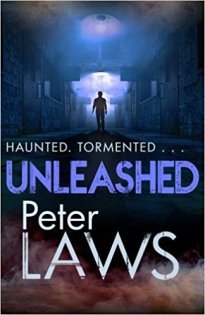 In Unleashed, his scepticism is shaken by events at an otherwise unremarkable terraced house in South London where, several years ago, a troubled nine-year-old girl committed suicide in the midst of a troubling sequence of poltergeist phenomena.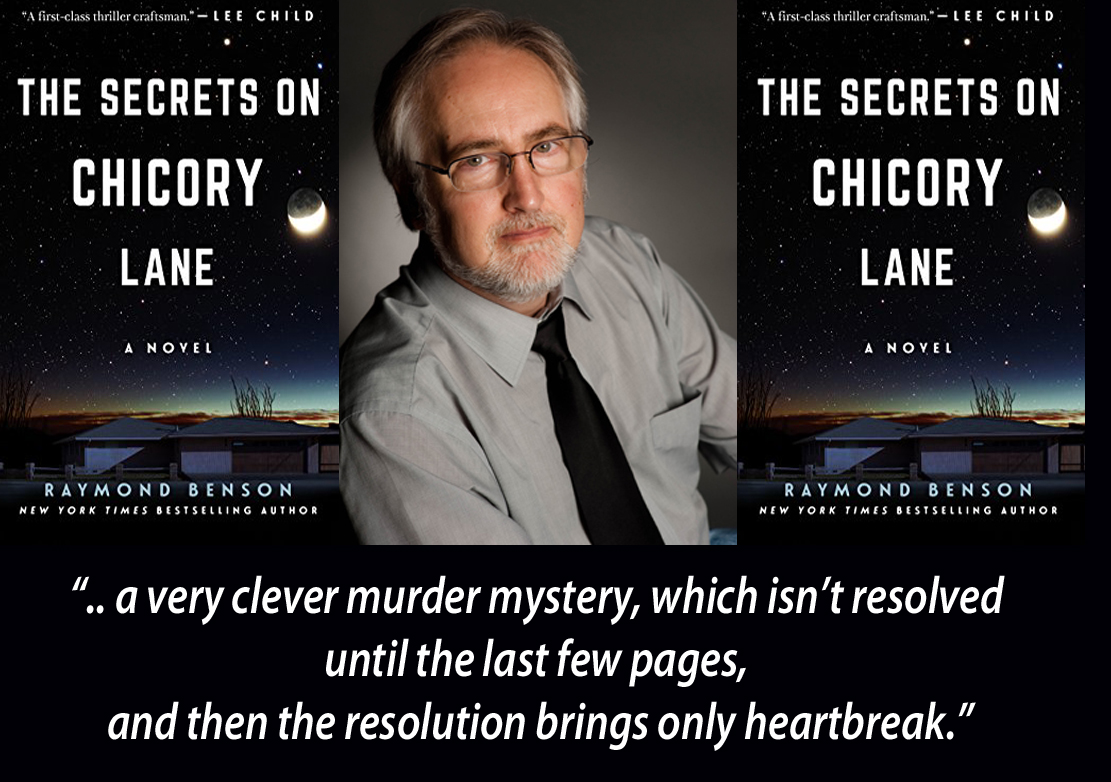

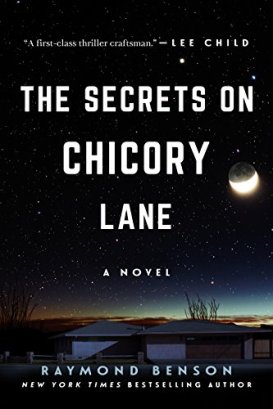 Eddie is Eddie Newcott, the boy who used to live across the street in Chicory Lane, Limite. The boy who was just a bit different from all the other kids at school. The kid whose dad was a rough and abusive oilfield mechanic. The kid whose mom turned to the bottle to escape her violent husband and the beatings he handed out to their only child. But that was then. Now sees Eddie fallen on hard times. Times so hard that he achieved brief notoriety in the tabloid press, and has now been sentenced to death by lethal injection for murdering his pregnant girlfriend, slashing her open, dragging the foetus out and then arranging the two corpses on his front lawn, posed in an obscene mockery of a Nativity tableau. And it was Christmas Eve.
 Like Shelby Truman, Raymond Benson (right) is a highly successful writer. He has written thrillers under his own name, most notably his Black Stiletto Saga, and has also written novels based on video games. He has taken up the baton from authors who are no longer with us, like Tom Clancy, and has written several James Bond stories which have either been based on established screenplays – like Die Another Day – or standalone original stories such as The Man With The Red Tattoo.

 When the battered body of teenager Melanie Cooke is found amid the garbage bins in a seedy Bristol alleyway, it is obvious that she has been murdered. Only fourteen, she is dressed in the kind of clothes which would be considered provocative on a woman twice her age. Vogel goes to make the dreaded ‘death call’, but he only has to appear on the doorstep of the girl’s home for her mother and father to sense the worst. Like many rebellious teenagers before her, Melanie has told her parents that she is going round to a mate’s house to do some homework. When she failed to come home, their first ‘phone call confirmed Melanie’s lie, and thereafter, the long dark hours of the night are spent in increasing anxiety and then terror, as they realise that something awful has happened.
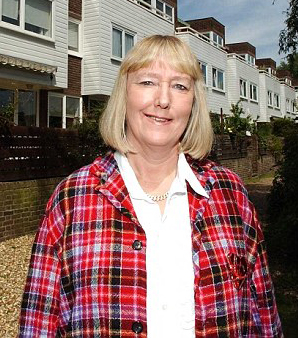 The book actually starts with a prologue which at first glance appears to be nothing to do with Melanie’s death. It is only later – much later – that we learn its true significance. Bonner (right) is determined not to give us a straightforward narrative. The progress of Vogel’s attempts to find Melanie’s killer are sandwiched between accounts from three different men, each of whom is living a life where all is not as it seems.


 I do love Operas, though – at least those written up to the death of Giacomo Antonio Domenico Michele Secondo Maria Puccini (who would be just as wonderful even if he didn’t have six christian names.) I would add the personal caveat that for me it is sometimes better heard than seen, as stage productions can sometimes demand too much suspension of disbelief. Our chosen book, then, is Spur Of The Moment by David Linzee, and it is set around the St Louis Opera company as they prepare a performance of Bizet’s wonderful, preposterous, exhilarating four-act classic, Carmen.
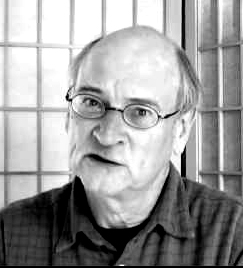 David Linzee has himself been a ‘supernumary’ – basically the opera equivalent of a spear carrier – and he enjoys several digs at the way an opera company in a mid-sized city is run. I particularly enjoyed his jibes at the ubiquitous need for sponsorship. Linzee (right) explains that the SLO has to make sure that literally every brick in the building has corporate support. Thus we have the Peter J Calvocoressi Administration Building, the Charles Macnamara III Auditorium and – best of all – the Endeavour Rent-a-Car Endowed Artist. In this case it’s Amy Song, the woman playing Carmen.



 Now, Thorne becomes involved in another kind of hell on earth, and one where all absent devils have been called home, all leave cancelled, and any recently retired fallen angels pressed back into duty. The fires stoked in this particular hellish pit illuminate the ghastly world inhabited by some British Asian communities who sanction murder in the name of their warped concept of family honour. Among the ghosts which inhabit the darker parts of Thorne’s memory is that of Meena Athwal. She was killed, he is certain, at the behest of her family, but her death remains unavenged in a court of justice.

 The Urban Dictionary tells me that a “keeper” is
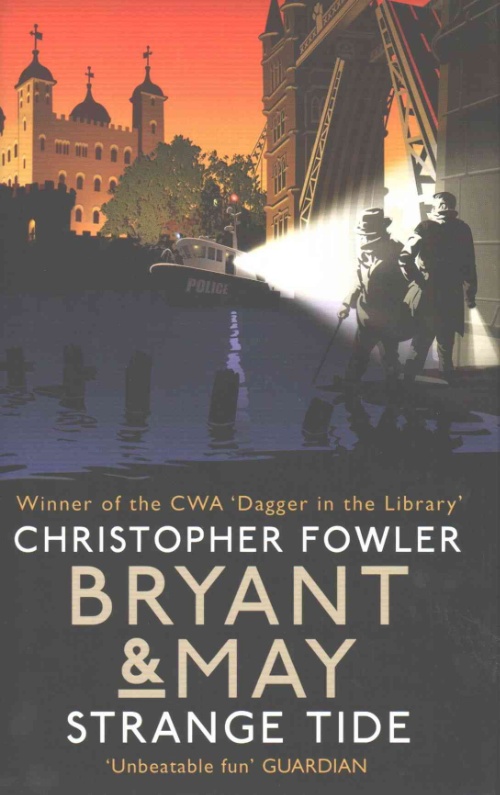
 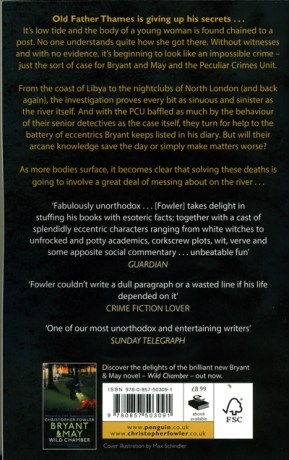 STRANGE TIDE is set, as you may expect, in London, but it’s a London few of us will ever see. It’s a world of forgotten alleyways, strange histories, abandoned amusement arcades, inexplicable legends and murder – always murder. Strange Tide was my book of the year for 2016, and you can read my review of it by following


 fullybooked2017