
 London copper DI Tom Thorne has been entertaining us since his debut in Sleepyhead (2001). His creator, Mark Billingham, (left) has developed an enviably reliable repertory company of other players who share the stage with the main man. There is his best mate Phil Hendricks, a pathologist who, despite being gay, supporting Arsenal against Thorne’s beloved Spurs and having piercings in places where most folk don’t even have places, is the voice of sanity in Thorne’s often chaotic world. Thorne’s love interest (from whom he is currently living apart) is Helen, another police officer, but one who works in the traumatic world of child protection. Nicola Tanner is Thorne’s professional partner and they have history, but not one that either reflects on with much pleasure. Tanner’s partner Susan was brutally killed in a previous episode, and her death hangs over the pair like a pall.
Their Little Secret begins with the much-loved trope of an apparent suicide which is viewed with suspicion by the central character. This time, however, it is slightly different. When a woman goes fatally head-to-head with an underground train, there is no suspicion that she was physically pushed, but Thorne believes that something traumatic – and criminal – tipped her over the edge in both sense of the phrase. He discovers that she had been targeted by a conman who had relieved her of a large sum of money and then disappeared, leaving her heartbroken, ashamed of her own gullibility and with her self-respect shredded. Despite the reluctance of his boss to spend any more time (and money) on the case, Thorne discovers that Philippa Goodwin is not the first victim of the conman.
 In an ostensibly unconnected narrative thread, Billingham introduces us to a Sarah, a vulnerable single mum who is anxious to gain the approval of other mums with whom she waits at the primary school gate twice each day. They seem confident, successful and financially comfortable. Sarah tries to join in with their daily sojourn at a pretentious ‘artisan’ coffee shop after the morning school run, but she still feels like the outsider. Her world is just herself and her son Jamie, and she struggles to compete with the gossip and banter that fly like sparks between Karen, Caroline, Savita and Heather. Until. Until the day when, sitting apart at her own table in HazBeanz, Sarah is chatted up by distinctly fanciable slightly older fellow. Almost instantly, Sarah finds the others anxious to swap phone numbers in return for daily updates about the new romance.
So, we can all see where this is going, yes? Sarah is about to become the latest victim of the romantic predator who Thorne and Tanner will eventually track down and bring to justice? At this point, I will disengage from the plot so as not to spoil things. Suffice it to say that Billingham plays the Pied Piper, and we are the innocent children of Hamelin.
If you are new to the world of Tom Thorne, don’t dismiss this book as just another police procedural. Yes, the atmosphere of the Incident Room, the evidence gathering, the financial pressures and the grim fare of the police canteen – everything is just as it should be, authentic and convincing. But Billingham gives us so much more. Thorne is, in some ways, unlovely. He can be insensitive, self-centred and, it has to be said, something of a slob. His impulsiveness has got him – and others – into bother on more than one occasion, and as for his musical obsession with the lonesome highway world of Hank Williams, you must be your own judge. Earlier novels in the series told of Thorne’s impotent distress at the decline of his father as dementia took hold and turned a fine mind into mush. As middle age peaks and ‘the other side’ beckons, he still dreams of his mum and dad. He is not alone.
There is poetry within the pages of any Tom Thorne novel. It may be brutally comic, and it may be poignant and stark. Thorne recalls the first suicide he had to attend:
“It had been a teenage girl, that first one. A slip of a thing dangling from the branch of an oak tree in Victoria Park. A ripped blue dress and legs like sticks and the muddy heels of her trainers kissing.”
On a grimly humorous note, Thorne/Billingham has a sour take on the pretentiousness of the middle class London enclave of Shoreditch:
“ It was all a little ….full of itself for his liking. ‘Dirty’ burgers, whatever they were, and shops knocking out overpriced tat that was probably meant to be ironic. A few too many gastropubs serving parsnip dust or garlic foam and more artisan bakeries than you could shake a shiitake mushroom at.”
Their Little Secret is a masterpiece of misdirection, suspense and contains as convincing a portrayal of insanity as I have read in many a long year. Tom Thorne is the perfect hero for our troubled times. Emotionally and professionally, he ploughs a lonely furrow, but his honesty and – sometimes clumsy – care for those he loves are deeply moving. Their Little Secret is published by Little, Brown and will be available from 2nd May.
More of Tom Thorne and Mark Billingham here.


 Note:
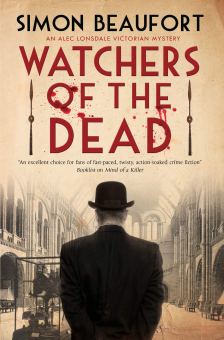
Note: 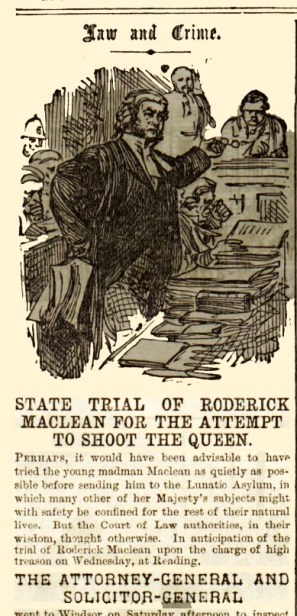 Also on the run is a man convicted of attempting to assassinate Queen Victoria. Sentenced to life imprisonment on the grounds that he was mad,

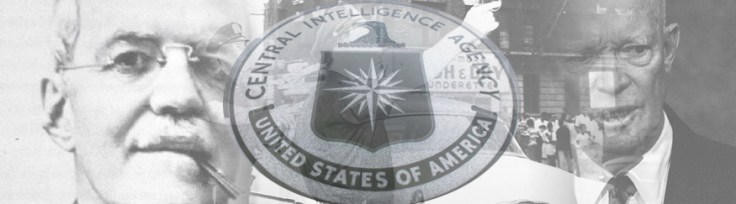
 Cassidy is an ex-serviceman, and in Night Watch he becomes involved in an issue which is way, way above his pay-grade. The initial reaction of the USA to former Nazis in the months immediately following May 1945 was simple – Hang ‘Em High. But as the government realised that highly trained German scientists and engineers were being harvested by the new enemy – Soviet Russia – the bar was significantly lowered, with the philosophy that these men and women might be bastards, but at least they’re our bastards.
 concentration camp survivor, ostensibly just an old guy driving tourists around Central Park in his horse cab, but secretly hunting down those who imprisoned him and killed his family, is found dead with strange puncture wounds in his neck. A businessman dives through the high window of his hotel – without bothering to open it first – and no-one saw anything. Not the concierge, and especially not the dead man’s co-workers, who were in an adjacent room. Two deaths. Two cases which Cassidy’s boss wants put to bed as quickly as possible. Two lives snuffed out, and Cassidy senses a connection. A connection leading to money, national security, powerful people – and big, big trouble for a humble NYPD cop.
 here are one or two significant name drops which help boost authenticity, amongst them a guest appearance by the sinister head of the CIA, Allen Dulles. Cassidy himself doesn’t do wisecracks, but there is plenty of snappy dialogue and verbal slaps in the face to keep us awake. This, after a post mortem:



 nspector Shan Tao Yun is a Chinese policeman whose honesty and integrity has discomforted the faceless members of whatever dreadful committee deals with public employees who don’t toe the line. Considered too valuable to be dispatched with a 9mm Parabellum round, he is exiled to the wilds of Tibet to be the constable for the settlement of Yangkar. As an extra insurance, his son is arrested and kept in a prison camp; if Shan’s independent streak becomes too troublesome, then his son will simply become collateral damage.
 In Bones Of The Earth (the tenth and final book in the series) Shan becomes involved in a complex murder mystery involving a massive civil engineering project and a dead American.archaeology student, whose father has come to Tibet to investigate if his daughter’s death was, as the authorities declare, an unfortunate accident or something more sinister. As ever in the series, Shan’s complex relationship with Colonel Tan, the governor of Lhadrung county, is central to the narrative. Tan is as brutal and ruthless as his party masters need him to be, but there is a tiny spark of something – perhaps not integrity, but something close – which enables him to do business with Shan.
 he sheer intensity of the detail Pattison adds to the narrative is astonishing, particularly when he is describing the humdrum world of Yangkar. As eavesdroppers, flies on the wall or what you will, it seems a grey kind of place; the ubiquitous breeze block is everywhere, naked light bulbs swing from the ceilings and even the food – rice, noodles, vegetables, dumplings – is functional and plain. Yangkar is, of course, dwarfed by the sheer immensity of the mountain peaks and snow fields. When colour emerges it is not chromatic in a visual sense, but in the indomitable spirituality and humanity of the Tibetans themselves. Try as they might, the Chinese rarely come close to understanding or even identifying the primal bond the people of Tibet have with their religion. It is a bond partly forged in fear, but also made of a oneness with the caves, the rocks and the wild peaks where the gods – and devils – dwell.
 I doubt that Pattison (right) is on the diplomatic Christmas Card list of President Xi Jinping and, were the author to fly into Lhasa, he is unlikely to be greeted with open arms. His disdain for the charmless and monolithic mindset of The People’s Republic is obvious, but Inspector Shan has to stay alive and keep himself on the outside of the Re-education Camps. Shan reminds me of another great fictional detective who has to do business with monsters: the late Philip Kerr’s Bernie Gunther sits down with minsters such as Goebbels and Heydrich; he will even smoke a cigar with them and accept a snifter of Schnapps while, metaphorically, holding his nose. Such is Shan’s relationship with his Chinese masters. He is a realist. If he says the wrong thing he (or his imprisoned son) is dead. Raymond Chandler’s immortal words fit the Inspector very well:


 Later that year, with Brixton quieter, despite other English towns and cities erupting in copycat anger, Hobbes has become embroiled in a bitter internal dispute. A fellow copper, Charlie Jenkes (who rescued Hobbs from the mob on that fateful April night) after being indicted for savagely beating a black suspect, has taken his own life. And the officer who testified to Jenkes’s violence? Henry Hobbes, who, with that single act of honesty, is branded as a Judas by his own colleagues.
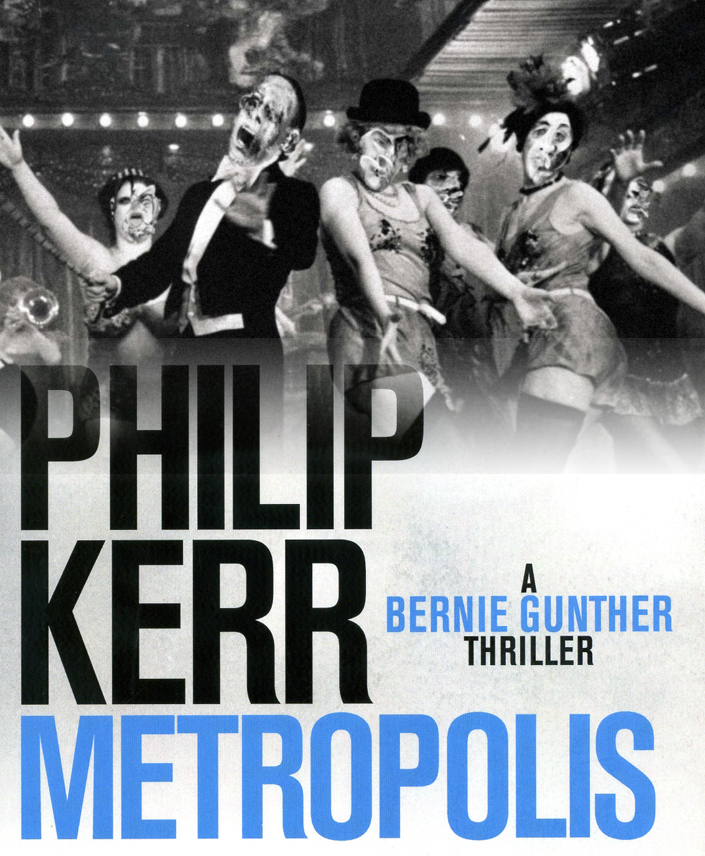

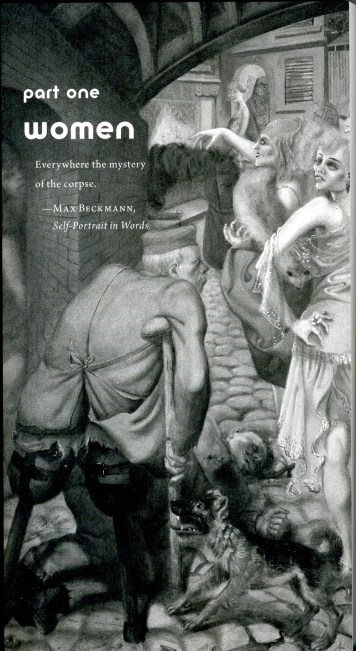 First up, Metropolis is a bloody good detective story. Philip Kerr gives us a credible copper, he lets us see the same clues and evidence that the central character sees and, like all the best writers do, he throws a few false trails in our path and encourages us to follow them. We are in Berlin in the late 1920s. A decade after the German army was defeated on the battlefield and its political leaders presided over a disintegrating home front, some things are beginning to return to normal. Yes, there are crippled ex-soldiers on the streets selling bootlaces and matches, and there are clubs in the city where the determined thrill-seeker can indulge every sexual vice known to man – and a few practices that surely have their origin in hell. The bars, restaurants and cafes of Berlin are buzzing with talk of a new political party, but this is Berlin, and Berliners are much too sophisticated and cynical to do anything other than mock the ridiculous rhetoric coming from the National Socialists. Besides, most of them are Bavarians and since when did a Bavarian have either wit, word or worth?
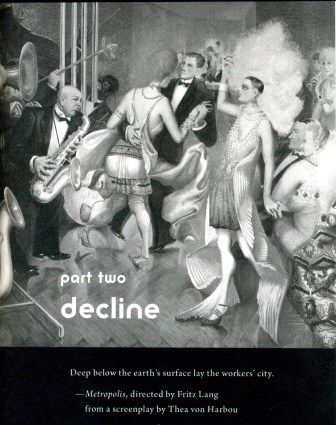 Metropolis sees Gunther in pursuit of a Berlin Jack The Ripper who is certainly “down on whores.” Four prostitutes are killed and scalped, but when the fifth girl to die is the daughter of a well-connected city mobster, her death is a game-changer, and Gunther suddenly has a whole new world of information and inside knowledge at his fingertips. He is drawn into another series of killings, this time the shooting of disabled war veterans. Are the two sets of murders connected? When the police receive gloating letters, apparently from the perpetrator, does it mean that someone from the emergent extreme right wing of politics is, as they might put it, “cleaning up the streets”?
 Mölbling helps Gunther disguise himself as one of the disabled ex-soldiers, as he reluctantly accepts the role in order to attract the killer who, in his letters to the cops, signs himself Dr. Gnadenschuss. Gunther’s trap eventually draws forth the predator, but not in the way either he or his bosses might have anticipated.
 Harper lives above a city pub, the Victoria. His wife, Annabelle, is the landlady, but she is also a fiercely determined advocate of women’s rights, and she has made waves by being elected to the local Board of Guardians, a largely male-dominated organisation which is tasked with administering what, in the dying years of Queen Victoria’s reign, passed for social care. When the brother of Harper’s one-time colleague, Billy Reed, commits suicide the death is dismissed, albeit sadly, as commonplace, but Reed believes that his brother’s death is due to something more sinister, and he asks Harper to investigate.


 Forced to play cherchez-la-femme, the detectives stumble down one blind alley after another, but as they do so they learn a few home truths about the fate of the young men who went to fight in the war-to-end-all-wars, and returned home to find that their birthplace was not the ‘land fit for heroes’ glibly promised by politicians. There is a peacetime army with no place for young officers whose courage was welcome in the trenches, but whose humble upbringing is now seen as an embarrassment as the cigars are lit, and the port passed in the correct direction at mess dinners. Such young men, not all heroes, but men nevertheless, are forced to find civilian employment which is neither honest, decent nor lawful.
 Graham Ison is a master story-teller. The Hardcastle books contain no literary flourishes or stylistic tricks – just credible characters, excellent period detail and an engaging plot. Cosy? Perhaps, in the sense that we know how Hardcastle and his officers are going to react to any given situation, and their habits and small prejudices remain unchanged. Comfortable? Only because novels don’t always need to shock or challenge; neither do they always benefit from graphic descriptions of the damage humans can sometimes inflict on one another. Ison (right) credits his readers with having imaginations; he never gilded the lily of English life in the earlier Hardcastle cases which took place during The Great War, and he doesn’t start now, nearly a decade after the final shots were fired. The suffering and trauma of those four terrible years didn’t end at the eleventh hour on that eleventh day; they cast a long and sometimes baleful shadow which frames much of the action of this novel.


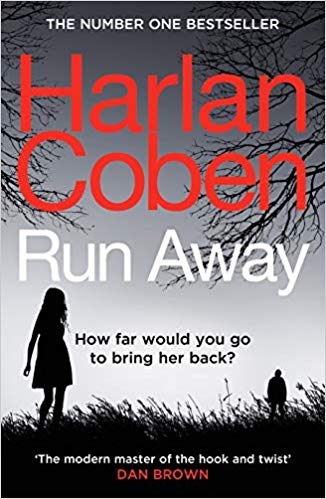 Start a 366 page book like that, and you might be making a rod for your own back, one that will whack you squarely between the shoulder blades if you don’t keep up the poetic intensity. Does Coben manage it? Of course he does – and with the stylish flourishes and narrative élan we have come to expect from one of the great crime writers of out time.
 Harlan Coben (right) has thirty or so best selling crime thrillers behind him, but we must never, ever, take him for granted. There is no formula, no template, and no literary flat-pack easy-to-assemble ‘give-the-audience-what-it-wants’ sameness. He takes us to uncomfortable places and introduces us to people who are not stereotype heroes or villains. He is unafraid to give us a rough ride along roads traveled by complicated people who frequently confound our perceptions. Runaway is, quite simply, a brilliant read. It is published by Century and will be out in


 fullybooked2017