Search

fullybooked2017

Tag

murder

THE MUSEUM OF DESIRE . . . Between the covers

MOD coverThe strange-looking empty mansion in the dry hills above Los Angeles is rented out as a venue for everything from cancer charity fundraisers to wild parties. As the much put-upon guy from the agency wearily pushes his cart of cleaning materials up the hill, he is expecting the usual joyless cocktail of spilled food, used needles and condoms. What he actually finds causes him to part company with his breakfast burrito.

In a stretch limo parked in front of the house, he finds four people, each very, very dead, and with the floor of the car swimming in blood. Cue another case for LAPD Detective Milo Sturgis and psychologist Dr Alex Delaware. Veterans of the long-running series (this is book number 35 since When The Bough Breaks in 1985) will know the basic set-up. Delaware’s day job is in child psychology, while Sturgis is, in now particular order, gay, unkempt, a brilliant cop and eternally hungry.

The four corpses in the limo seem to have nothing at all in common aprt from being dead; a thirty-something professional bachelor with an insatiable – but perfectly legal – love life, and elderly chauffeur, a gentle and harmless man with mental problems who lives in sheltered accommodation, and a rather unprepossessing middle-aged woman who, it transpires, had drink and drug issues, and lived mostly on the streets. To add to the mystery, the forensic team analyses the blood on the floor of the car – and it is canine.

Delaware and Sturgis are convinced that the killings took place elsewhere, and the interior of the limo was an elaborate stage set. But who is the director of this hellish drama, what is the message of the play, and who was the intended audience?

jonathan-kellermanBit by bit, one slender thread at a time, the tangle of the mystery is unpicked. As per usual Kellerman (right) gives us a spectacularly complex solution to the quadruple murder. It’s almost as if we are passengers on a train journey, and some of the sights that flash by the window before we reach our destination include erotic Renaissance paintings, a chillingly damaged autistic teenager and a brief glimpse of Herman Göring’s fabled collection of looted art.

There will be, no doubt, some people who will look down their noses at this book – and others like it – while dismissing it as formulaic. Of course it is written on a certain template, but that’s what makes it readable. That’s why readers turn, again and again, to books that are part of long running series. We don’t want John Rebus to start behaving like Jack Reacher, any more than we will be happy for Carol Jordan to turn into Jane Marple. The Museum of Desire is slickly written, for sure, but I think a better word is ‘polished’. Both the dialogue and interaction between Delaware and Sturgis crackle with their usual intensity, and we are not short-changed in any respect in terms of plot twists and deeply unpleasant villains.

The Museum of Desire is published by Century/Arrow/Cornerstone Digital, came out in hardback  and Kindle earlier this year, but this paperback edition will be available from 12th November.
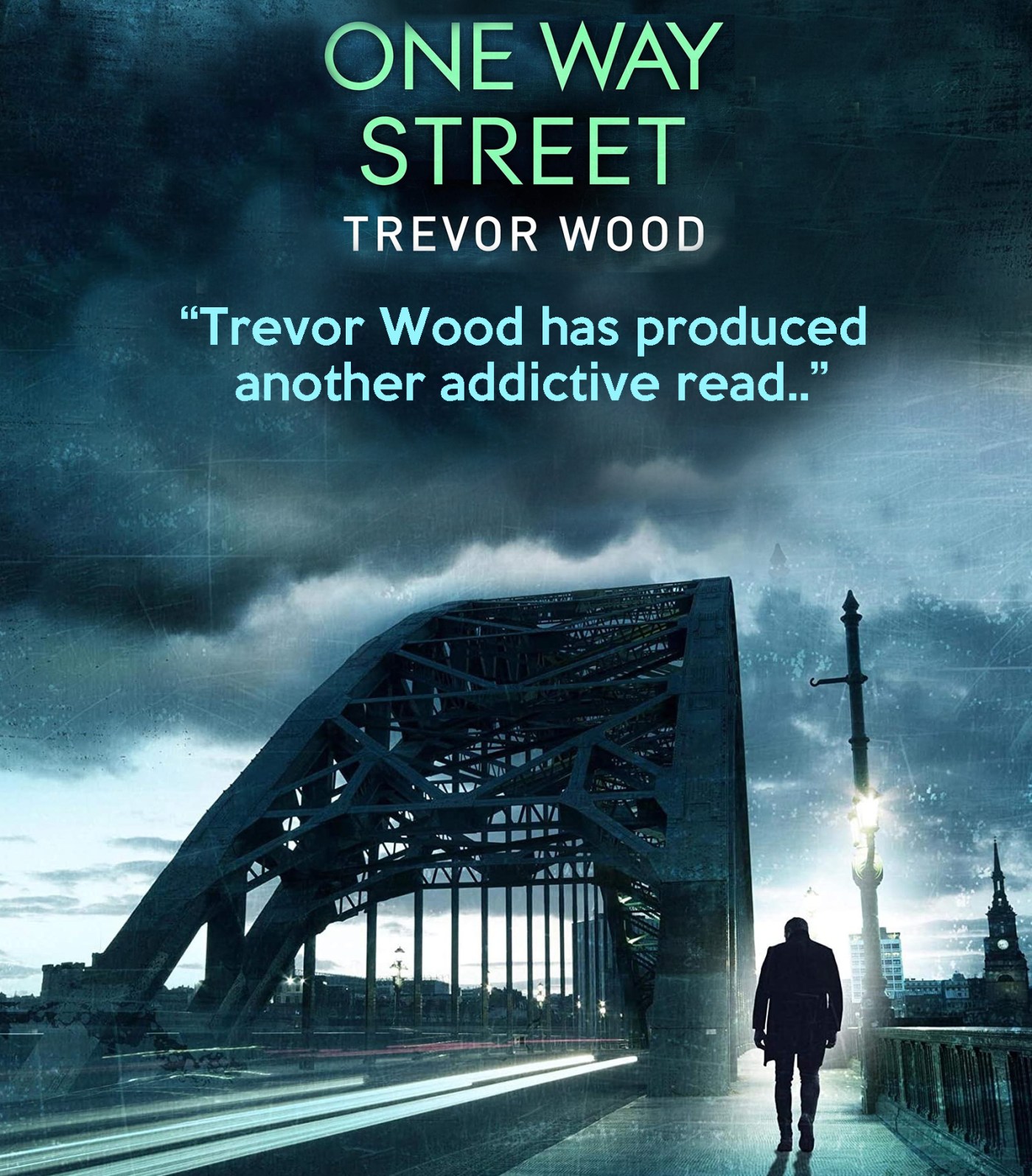
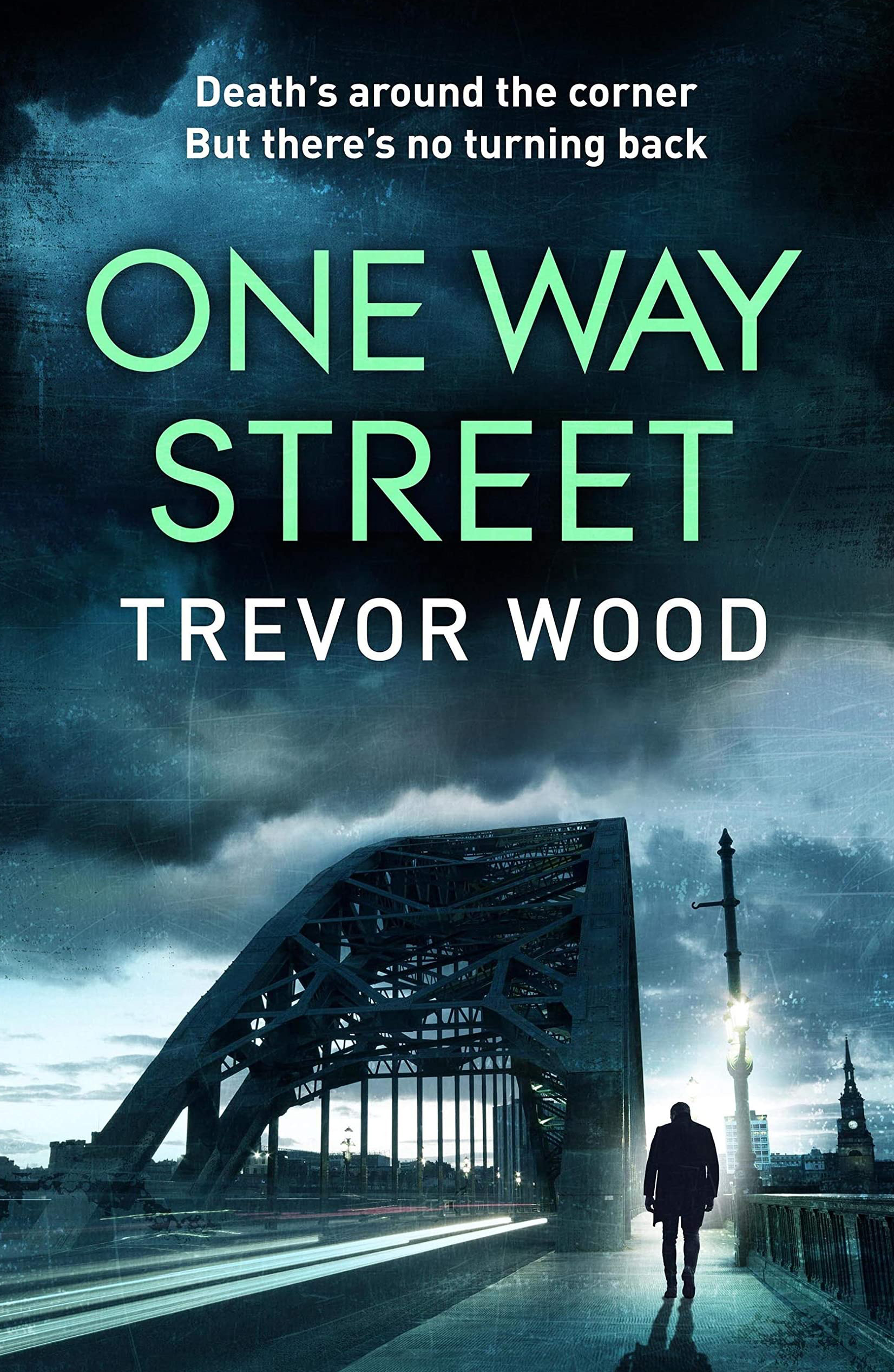
ONE WAY STREET . . . Between the covers

OWS feature

TrevorWood-600x600Trevor Wood (left) introduced us to Jimmy Mullen in The Man On The Street (click to read my review) in October last year. Mullen is a Royal Navy veteran who has fallen on hard times. Not the first man to struggle after a military career ends, he has served time for manslaughter, lost his wife and daughter, and lives in a Newcastle hostel for homeless men. His PTSD means that his dreams are often invaded by visions of the several hells he went through in his service career. In the previous book he gained a certain temporary celebrity as the ‘Homeless Private Eye’ when he tracked down a murderer, but now life has returned to its drab normality. He still lives in the hostel, dines at The Pit Stop, a drop-in centre that feeds the homeless, goes everywhere with his dog (called ‘Dog’) and has a precarious friendship with a man called Gadge who is also homeless, but is a regular user of the computers in the local library, and has a grasp of modern technology that is often useful to Mullen.

Into Mullen’s life comes a young man called Deano. Deano is a wreck of a boy with a stack of criminal convictions, addicted to whatever can ease the pain of the next couple of hours, traumatised by being pimped out as a male prostitute, and forever searching for his missing mother and brother. Deano’s brother Ash has turned up dead in nearby Sunderland, and Deano convinces Mullen to take a look at the case, as several other youngsters have turned up dead in a variety of unpleasant ways, apparently out of their heads on Spice – a cheap and potent chemical version of cannabis.

OWS coverThe search for answers takes Mullen not just into the grimy underworld of the Newcastle drug scene, but brings him face to face with a prominent local politician, a clergyman whose teenage daughter has been leading a double life and – more painfully – the wreckage of his relationship with his ex-wife and their daughter.

On the way to resolving the mystery of the murdered children, Mullen survives attempts on his life and struggles hard to subjugate his own violent and retaliatory instincts as he encounters some seriously depraved individuals.

As you may gather, this book is not a bundle of laughs. Mullen is convincing, likeable even, but his world is full of human shipwrecks. To extend the analogy, Mullen appears at low tide, but some of the other characters are many leagues down at the bottom of the human ocean. I cannot imagine what personal research has gone into this, but Trevor Wood has produced another addictive read. One Way Street is published in Kindle by Quercus, and will be available on October 29th. It will be out in hardback in March next year.


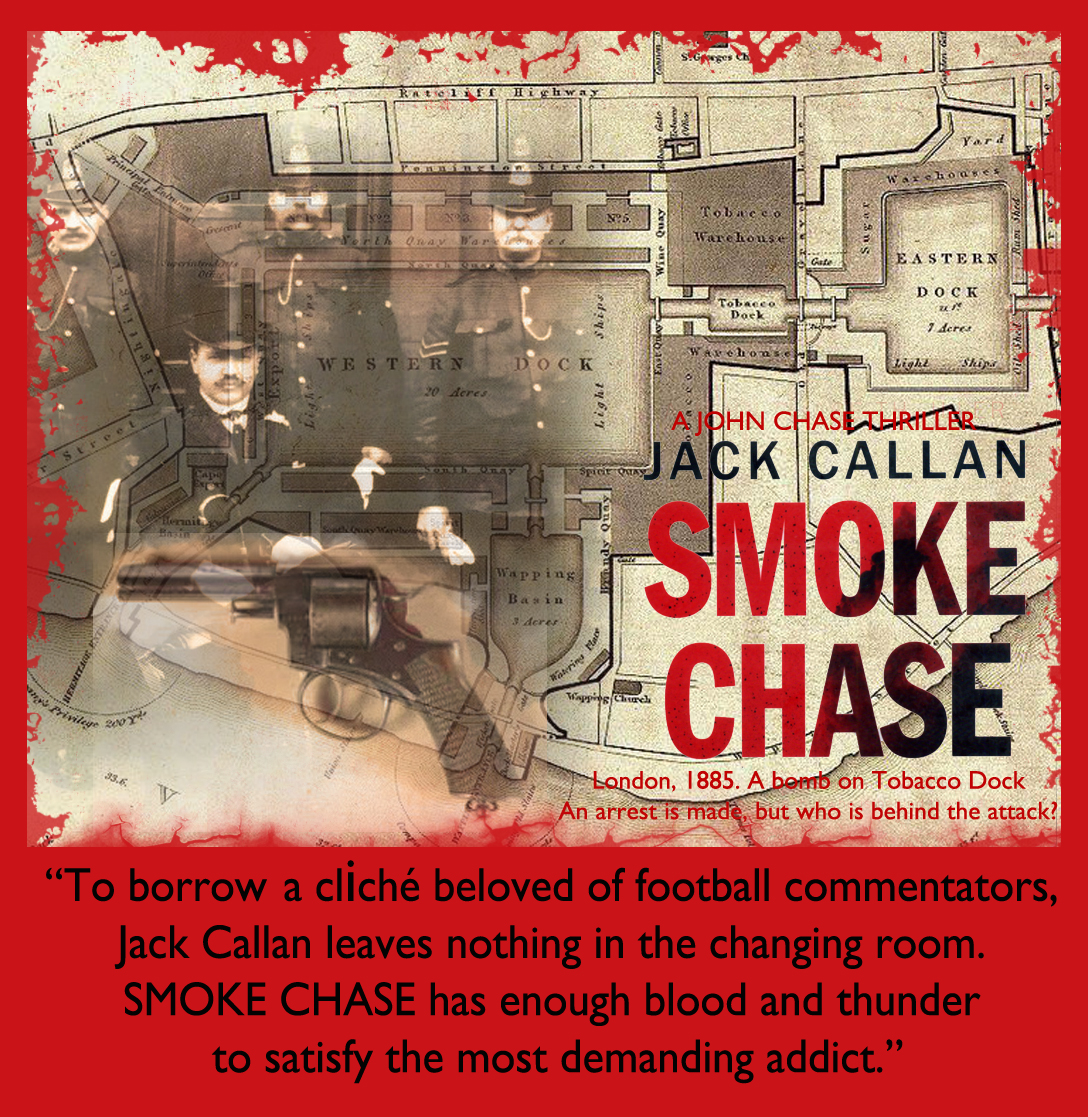
SMOKE CHASE . . . Between the covers

Jack Callan’s debut novel Smoke Chase introduces John Chase, a six foot, sixteen stone army veteran of colonial wars, now working with the embryonic Special Branch, a police department set up to combat the violent threat of Fenian revolutionaries in late 19th century London. It is the winter of 1885 and, as always, Chase is operating very much undercover, dressed as a working man.

smoke001After a long night shift, Chase is having his breakfast in a cafe when he is alerted to a bomb going off in the vicinity of nearby Tobacco Dock. When he arrives on the scene he finds a dead man – or, at least, what remains of him – but in what is clearly a set-up he is pounced on by a number of police officers, and hustled off in manacles to 26 Old Jewry, the HQ of The City of London Police.

Despite providing his warrant card, Chase – and a union official called Burns are taken to a rotting prison hulk moored in the Thames. Chase soon worked out that he and Burns are being targeted because they have come too close to a huge web of corruption involving a gang of bent import-export fraudsters aided and abetted by senior police officers.

Chase overpowers his guards and escapes to the shore where he begins to plot the downfall of Mordecai and Elisha Smithson, the gangsters who are in charge of the smuggling ring. We have pretty much everything served up from this point on including, in no particular order, rape, torture, Russian thugs, suicide, enough stabbings and shootings to fill a morgue, families being kidnapped and depraved assassins. Participants fall like flies, even unto the last paragraph of the last page

John Chase is rather like a modern-day Bulldog Drummond, and the novel, despite the gore, harks back to a more innocent time when characters like Dick Barton overcame even the most beastly assailant – “with one bound he was free!”

Jack Callan has certainly done his homework, however. The topographical background – London’s dockland when it was it was a rough and tumble working environment, the Lea Valley and the sordid nooks and crannies of East London – is enthusiastically painted,and we even have fleeting acquaintance with the music hall singer Bessie Bellwood and the women’s rights campaigners Annie Besant and Elizabeth Garrett Anderson.

women

To borrow a cliché beloved of football commentators, Jack Callan leaves nothing in the changing room. Smoke Chase has enough blood and thunder to satisfy the most demanding addict. Callan’s debut novel is published by Matador and is out now.

For more novels set in Victorian England,
just click on the image of Her Majesty.

editrs571723_2105800-lpr


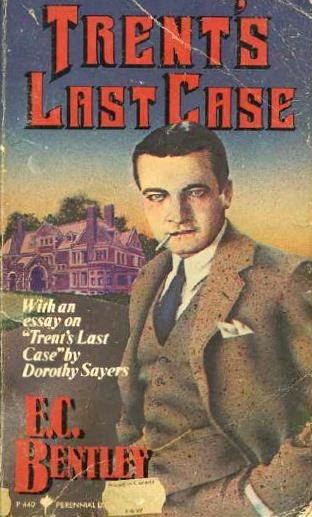
BASED ON THE BOOK BY . . . Trent’s Last Case

TLC header

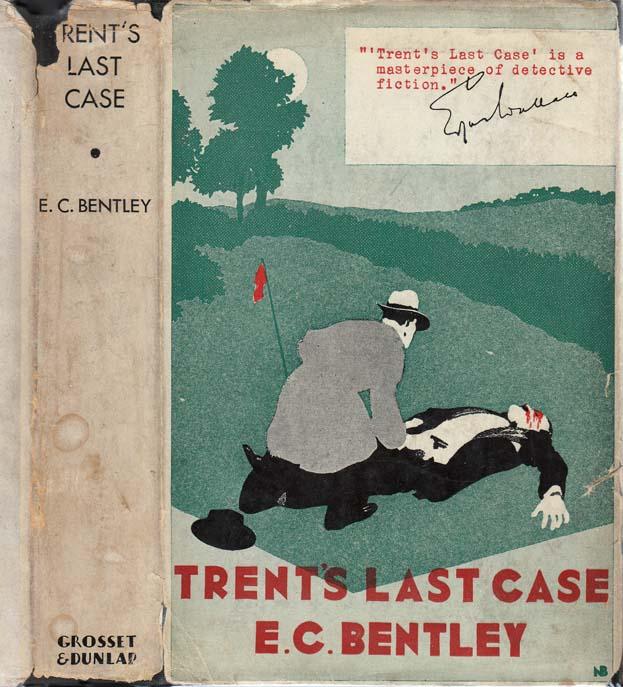
A journalist and author best remembered for inventing a form of four-line droll poetic biography that bears his middle name is an unlikely author, you might think, of one of the classic crime novels in English literature. Edmund Clerihew Bentley (1875-1956) wrote Trent’s Last Case, which was first published in 1913. It has been filmed three times, first as a silent film in 1920, again (directed by Howard Hawks) with both a silent and talkie version in 1929, and – the version I will refer to – in 1952, directed by Michael Wilcox.

The book’s title is misleading, as it was actually the first time the character of Philip Trent had appeared. The novel is regarded as a classic, and was widely admired by such fellow writers as Dorothy L Sayers, but it seems odd that Trent only featured in two more books and then only after a gap of many years.

Trent's Last Case.2-1Philip Trent is a successful painter, journalist – and amateur detective. He is summoned by his sometime employer, newspaper boss  Sir James Molloy, to investigate the shooting of American businessman Sigsbee Manderson, at his country house in the south west of England. Manderson was a ruthless plutocrat who had made many enemies in his pursuit of riches, but even discounting those, the house itself offers a hatful of suspects, including the butler, Mabel (Manderson’s wife) and two male secretaries who dealt, respectively, with his social and business affairs.

Check the date of publication. 1913. I am not sure if The Moonstone (Wilkie Collins, 1868) is exactly a Country House Mystery, but I can’t think of anything else that comes before Trent’s Last Case that includes elements we have come to regard as staples of the genre – the grand house, the butler, the maids, the examination of movements and motives among the house residents. Remember that it was to be another seven years before Agatha Christie’s The Mysterious Affair at Styles, and the subsequent flowering of such companion talents as Dorothy L Sayers and Margery Allingham. To put Bentley’s novel into sharper context, bear in mind that His Last Bow and The Casebook of Sherlock Holmes were still be published, in 1917 and 1927 respectively.

OrsonSo, to the book, the film and how they relate to each other. Readers of the book may have to keep pinching themselves so that they remember this takes place in 1913. We are still, despite ‘Bertie’ dying three years earlier, in Edwardian England. The ravages of The Great War were still to come. The film sets the action pretty much contemporary with the production, that is to say, post-war England. In the novel, we only see Sigsbee Manderson through Trent’s examination of his personal possessions, and the testimonies of the other inhabitants of White Gables. The box office potential of having Orson Welles play the odious businessman, however, was obviously too much for the producers to resist, and the big man (right, complete with strange prosthetic nose) puts in a characteristically bravura performance in a flashback cameo towards the end of the film.

The film is workmanlike and sticks fairly closely to the narrative of the book, including the eventual solution to Manderson’s death. Although the film ends with Margaret Lockwood (Mabel Manderson) and Michael Wilding (Trent) having a fairly chaste snog, the screenplay doesn’t come close to the intensity of Trent’s infatuation – although he behaves like a perfect gentleman – with Mabel. The film Trent is matinee-idol suave – as indeed Wilding was at this stage of his career – but is much tougher than Bentley’s Trent. Not that the Trent in the book is flabby. In between the initial investigation and the denouement, Trent goes away and acts as a war correspondent in a blood-soaked civil war somewhere in Central Europe. It is more that the literary detective is much more loquacious and passionate, and is given to quoting Shelley and Swinburne.

12728084854

Again, I say remember the date. 1913. Some critics have even suggested that Bentley had his tongue discreetly in his cheek when he wrote the novel, but by the time the film was made, almost forty years and two world wars later, huge swathes of the novel would never have got into the script, and the social and emotional nuances would have bemused 1950s cinema audiences.

To sum up, Trent investigates, gets it almost right, falls in love with the widow, sets out his solution on paper and then, unwilling to disclose his solution for fear of the hurt it will cause, goes off to a frightful war to seek oblivion. When he returns, he presents his version of events, only to find he was correct in all but the crucial detail of whose finger was on the trigger when Manderson was shot. The book is spirited, and full of entertainment as Bentley harmlessly shows off how clever he is. The film does an adequate job and is worth watching, if only for Orson Welles hamming it up for dear life, and a brief appearance by Kenneth Williams (even then as camp as a row of tents) as the gardener (below) who discovers the body.

Kenneth

PEOPLE OF ABANDONED CHARACTER . . . Between the covers

There can be no historical event – save, perhaps, the assassination of John F Kennedy – which has attracted more theories, speculation and books, both fiction and non-fiction, as the killings attributed to Jack The Ripper in the autumn of 1888. My feature JACK THE RIPPER . . . In fiction, from the early days of this website, looks at just a few novels which have retold the tale.

People001

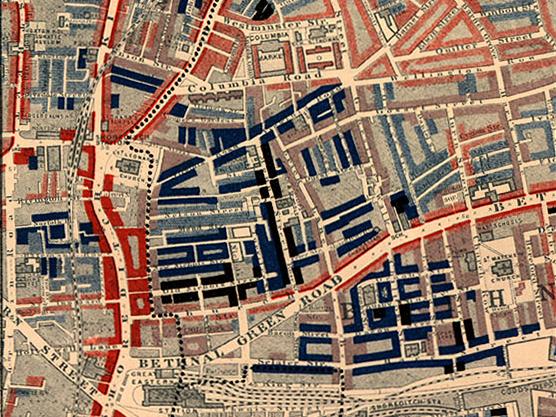
Now, debut novelist Clare Whitfield has her moment on the stage with People Of Abandoned Character. Susannah Chapman is a rather unusual woman, in her early thirties, who has known at first hand the dreadful deprivation of that part of the east End of London known as The Nichol. The contemporary map of the area (below) grades streets with colours according to the level of poverty, with red indicating relatively comfortable residents through blue to black – the depths of squalor.

Poverty_map_old_nichol_18891

Susannah has no recollection of her father, and a memory of her mother so horrifying that she only turns to it in her nightmares. She is eventually rescued by her grandparents who take her to live with them in Reading. She chooses to become a nurse, and is accepted as a trainee at The London Hospital on Whitechapel Road, seen below in a 19thC photograph.

london-hospital-exterior

When Susannah attracts the attention of a young doctor, Thomas Lancaster and, after a whirlwind romance, she leaves The London as Mrs Lancaster to become the mistress of a delightful riverside home in Chelsea. Mistress? Not quite. The first sign that all may not be well is that Thomas Lancaster has a housekeeper named Mrs Wiggs, and the lady is a graduate of the Mrs Danvers school of domestic management. Yes, I know that’s an anachronism, but fans of Judith Anderson and Rebecca will know what I mean.

The early passion and harmony of the marriage soon dissipates, and Susannah begins to be disturbed both by her husband’s violent sexual demands and his frequent nocturnal absences, from which he returns feverish and dishevelled. Soon, the narrative of the novel begins to synchronise with what we know about the actual Ripper murders. Ripperologists can take the roll call of well-known characters safe in the knowledge that The Gang’s All Here. We meet the victims themselves, of course, but also the walk-on parts such as the actor Richard Mansfield, John Pizer, the Police Surgeon Dr Phillips and dear old Fred Abberline put in an appearance.

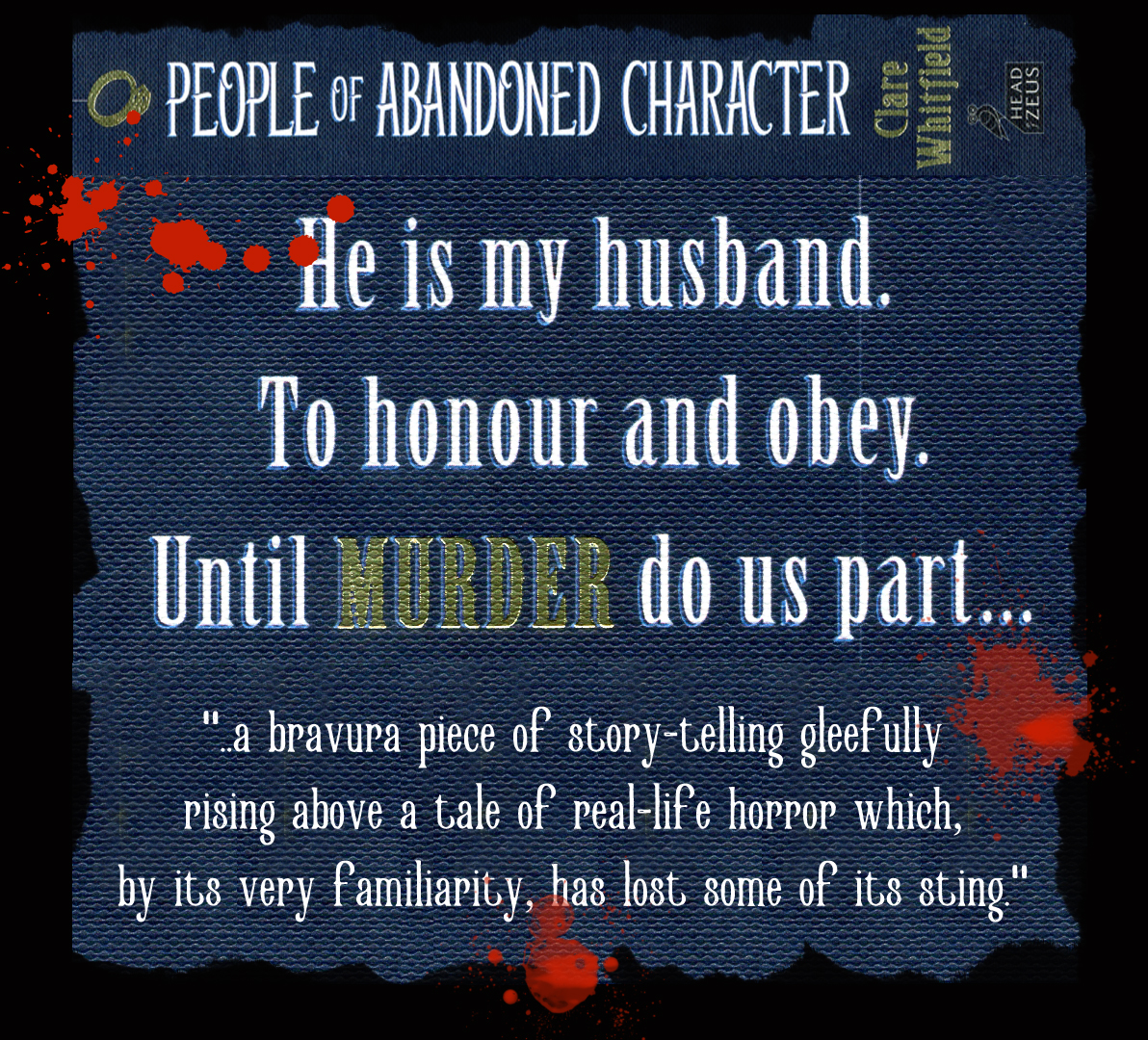
People Of Abandoned Character is a bravura piece of story-telling which gleefully rises above a tale of real-life horror which, by its very familiarity, has lost some of its sting. We eventually learn that Susannah is not quite the put-upon damsel in distress she might want us to believe in. The conclusion of the story is as astonishing and enterprising a solution to the eternal Ripper mystery as I have ever read, and fans of Gothick gore and melodrama will certainly not be disappointed. It is published by Head of Zeus and is out now.

THE MEON HILL MURDER . . . Part three

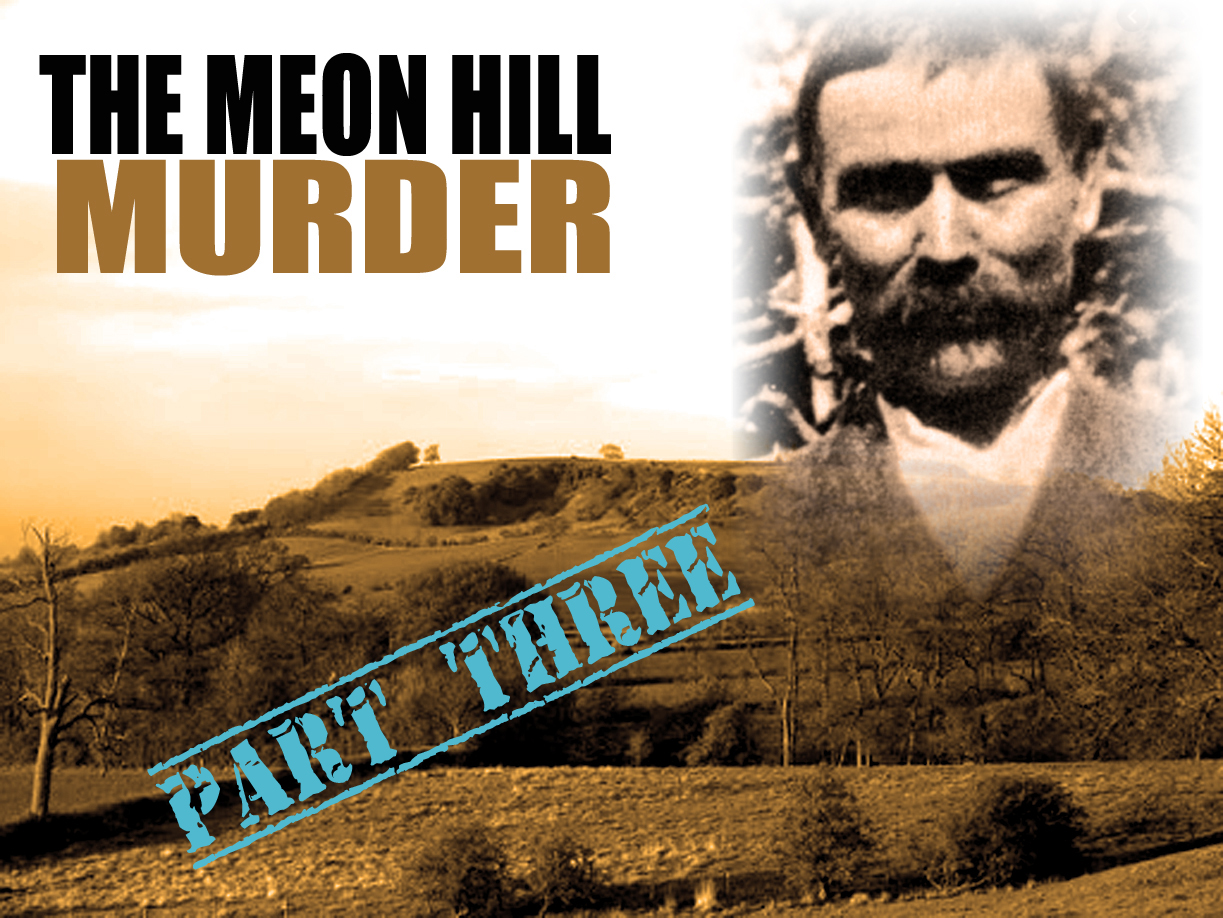
The Spring of 1945 turned into summer in Lower Quinton. The barren hedges that Charles Walton had tended bore green buds. The war in Europe finally ended, and the wives, daughters, mothers and sisters who had not lost their men in the struggle against Hitler began to dream of the day when “We’ll Meet Again” would be a joyful reality rather than a sentimental song. More mundanely, the Warwickshire police were none the wiser as to who had hacked an old man to death on that fateful St Valentine’s Day. Robert Fabian had returned to London, and Alec Spooner had other cases to solve (although the Walton murder remained an obsession with him).

Just as the identity of Jack the Ripper will never be known, we will never know who killed Charles Walton, or why. As recently as 2014, the local BBC team for Coventry and Warwickshire examined the case, and sent some unfortunate trainee out there to quiz the locals. As you will see from the feature (click here) no-one was very keen to talk, any more than they were in the weeks and months after the murder.

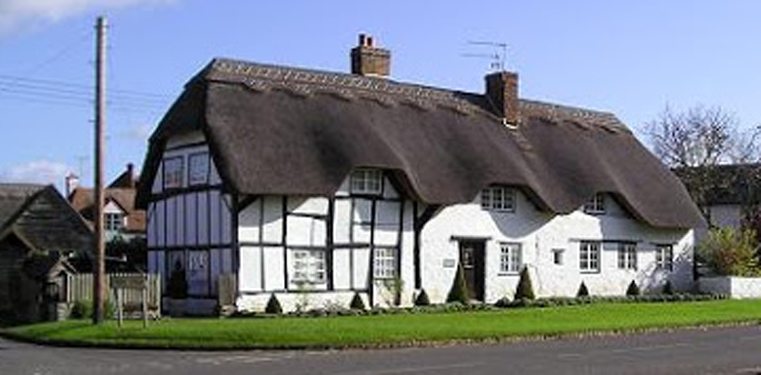
Alfred Potter died in 1961, and whatever secrets he had went into the grave with him. The Firs farm was later demolished and was replaced by an expensive housing development. Talking of graves, the researcher will look in vain for the last resting place of Charles Walton, in St Swithin’s churchyard. It has been said that the headstone was removed to deter ghoulish sightseers, but like so much of this story, there is no hard evidence that this is the case. Walton’s meagre cottage has now been knocked through with two other adjoining properties to make a rural residence which, no doubt, is worth an eye-watering amount (below)

Cottages

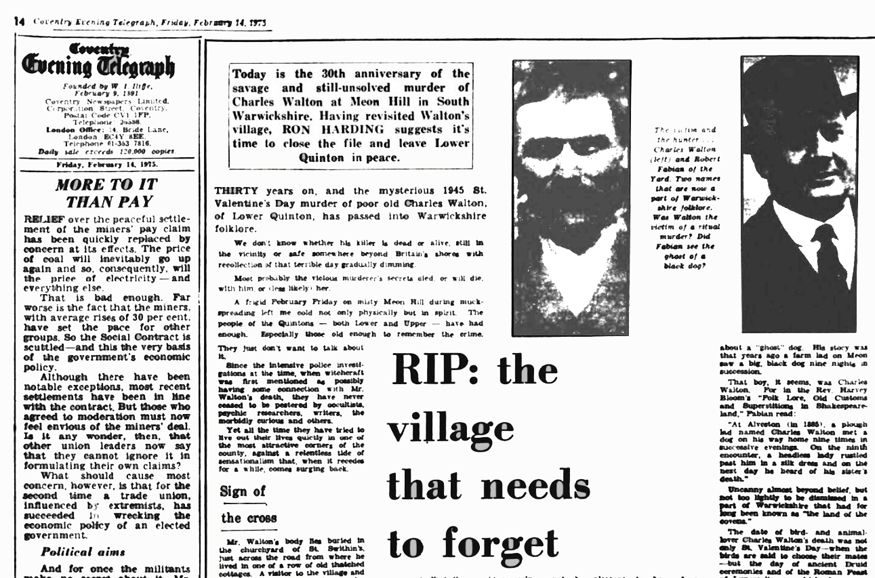
My view? The only thing that stands out like the proverbial sore thumb is the total collective silence – both contemporary and future – of the villagers of Lower Quinton. 1945 was not a time of continual distraction from electronic or digital media. Lower Quinton was not a bustling place, a transport hub, or somewhere used to endless strangers coming and going. Someone – and then by definition others in their circle – knew something, and the resultant omertà is almost as chilling as the murder itself. Thirty years later, Walton’s death was still providing copy for regional journalists and, although I have no evidence that Ron Harding – who penned this piece – was in any way involved with the murder, it still sounds as certain people – or their sons and daughters – at the heart of whatever made Lower Quinton tick, were still anxious for the world to move on and leave them to their secrets.

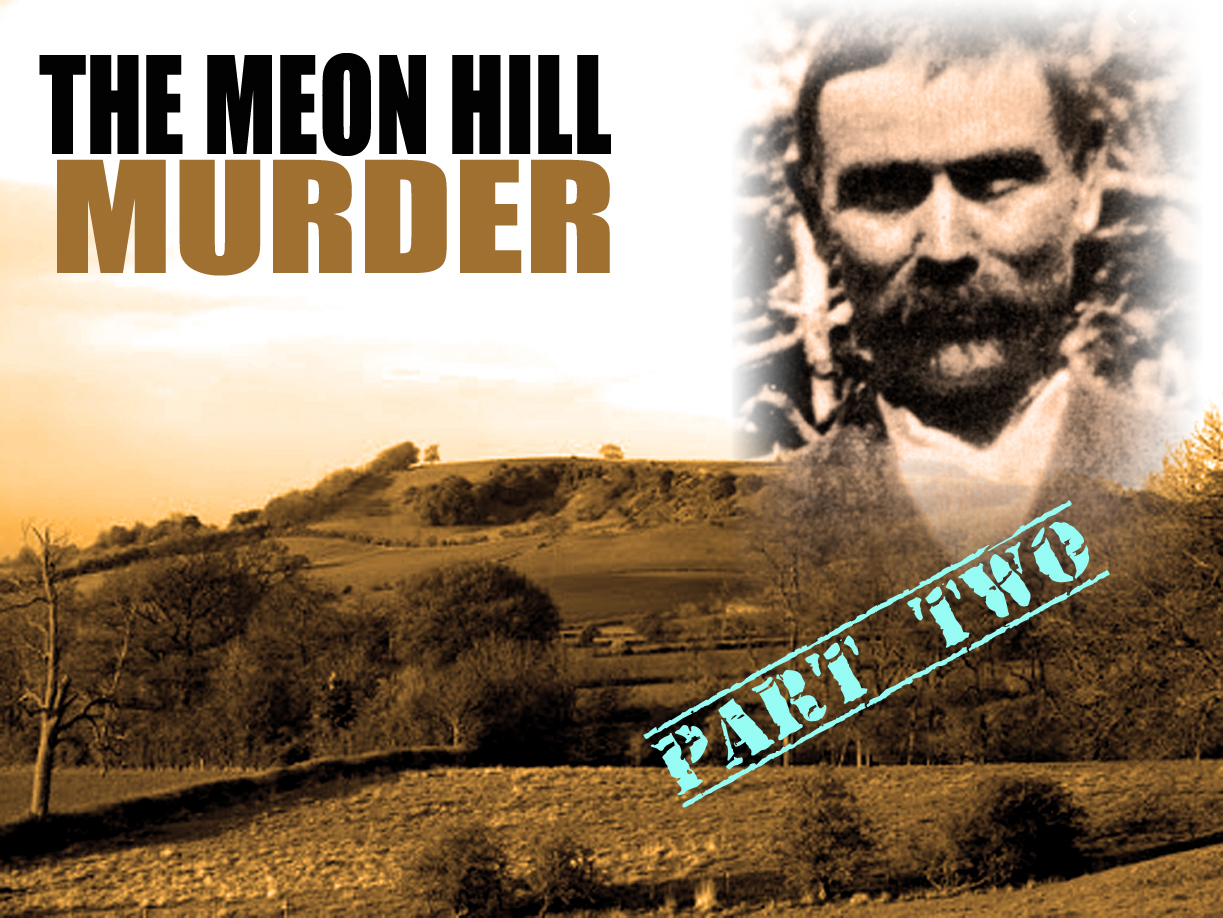
THE MEON HILL MURDER . . . Part two

Header

It wasn’t long after the discovery of Walton’s body, and the arrival of PC Lomasney from Long Marston, that the police involvement escalated upwards. Detective Superintendent Alec Spooner of Warwickshire Police soon realised that this was above his pay grade, and a request was made for outside help, which soon came in the celebrated form of none other than Chief Inspector Robert Fabian of Scotland Yard.

PART2 BODY TEXT

The investigations continued for several weeks. Every single household in Lower and Upper Quinton was visited. No-one had seen anything. No-one knew anything. No-one had any idea why Charles Walton had been killed. Clutching at straws, the police remembered that at Long Marston, a couple of miles to the north, there was a camp housing Italian prisoners of war. Perhaps it was a crazed foreigner who had hacked Charles Walton to death? The POWs were considered so peaceable and harmless that they were allowed to wander around the countryside, pretty much at will. That investigative spark petered out almost as quickly as it had burst into brief flame.

Potter remained the only viable suspect. His financial probity was examined. He didn’t own the farm, but just managed it for the family business. He had apparently claimed more staff wages than he had actually paid out, and there was a suspicion that he may have borrowed money from Walton, but the amounts were trifling, even if it were true.

The police investigations, despite every inch of the fatal fields being searched, came up with a big fat nothing. Fabian returned to London, defeated by a case that would feature in his memoirs in later years. DS Alec Spooner wore the case like an itch he couldn’t scratch, and it was the proverbial irritating pea underneath his mattress. For many years he returned to the village on the anniversary of the murder, hoping that someone, somehow would yield up a secret that would solve the mystery of Charles Walton’s death.

FINALLY, in THE MEON HILL MURDER
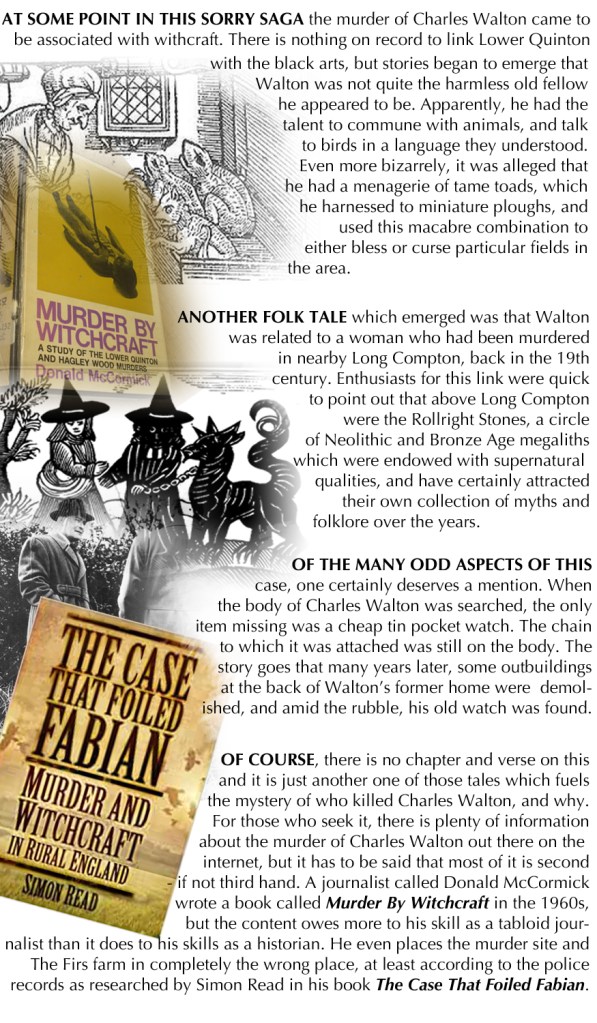
Witchcraft and A Village of Secrets

PART THREE OF THIS FEATURE WILL BE PUBLISHED
ON THURSDAY 24th SEPTEMBER

CHAOS . . . Between the covers

Chaos header

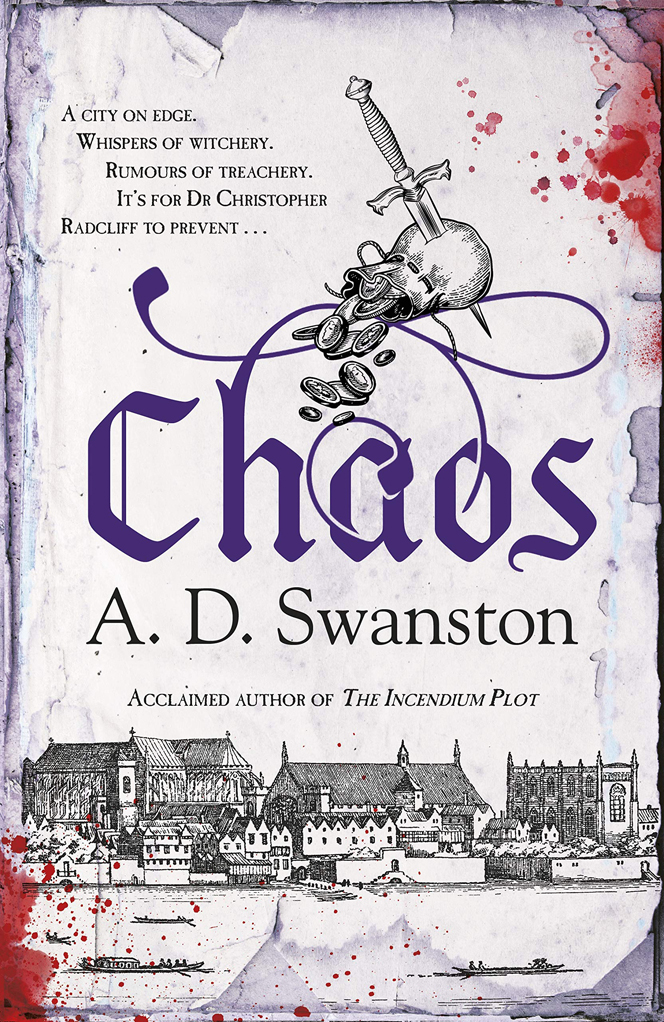
Christopher Radcliff is a Doctor of Law and he is also what  sixteenth century England called an ‘intelligencer’. We might say ‘spy’, ‘secret agent’ or, at a pinch, ‘private eye.’ He is employed by two of the most powerful men in Queen Elizabeth’s service – the brothers Dudley. Robert is the Earl of Leicester and Ambrose the Earl of Warwick.

91c5yMTPQkLRadcliff, the creation of author AD Swanston, made his literary debut in The Incendium Plot (2018). The blurb for that book said that the country was “a powder keg of rumour, fanaticism, treachery and dissent.” Well, a few years on, and things haven’t changed a great deal. The big threat to Good Queen Bess still comes from those devious and malignant Papists, but the adherents of ‘the old religion’ have changed tack. Military conquest by Spain or France has proved ineffectual, so has a more subtle method has been chosen?

Pretty much every one of us is too young to remember a time when our currency was suspect. Yes, there have been periods of inflation (I can remember PM Harold Wilson and ‘The pound in your pocket.”) but we have never doubted that the coins in our pockets or the notes in our wallet were suspect. In February 1574, however, someone has been minting fake testons. They were, in old money, shillings, and the most common coin in circulation for everyday transactions.

BearThe fake testons also bear the image of the bear and ragged staff (right), the emblem of the Earl of Warwick. Clearly, the forgers have a double headed plan. They intend to paralyze normal day to day trade by making shop-keepers wary of accepting coins, but they also seek to diminish the status and power of the Dudley brothers by linking them to worthless coins.

When Radcliff eventually tracks down the person behind the counterfeit coins he discovers not a Papist plot, but a personal search for revenge, fired by a dreadful betrayal and a bitterness so deep that only death can sweeten it. Without giving any more away, I can say that part of this vengeance involves, strange to relate, that most delicate and ethereal of Renaissance instruments, the lute.

Pagano1

Swanston has great fun immersing us in all the contrasting glory and squalor of Elizabethan England. We are led through the magnificent Holbein Gate into the Palace of Whitehall with its tapestries, panelled chambers and priceless paintings, but we also have to tread gingerly amid the horse muck (and worse) as we walk along Cheapside, and try to avoid the grasping hands of its whores and beggars.

Chaos is as authentic and swashbuckling as anyone could wish for – a must for lovers of period drama. It is published by Bantam in hardback, and by Transworld Digital as a Kindle. Both formats are available now.

THE MEON HILL MURDER . . . Part one

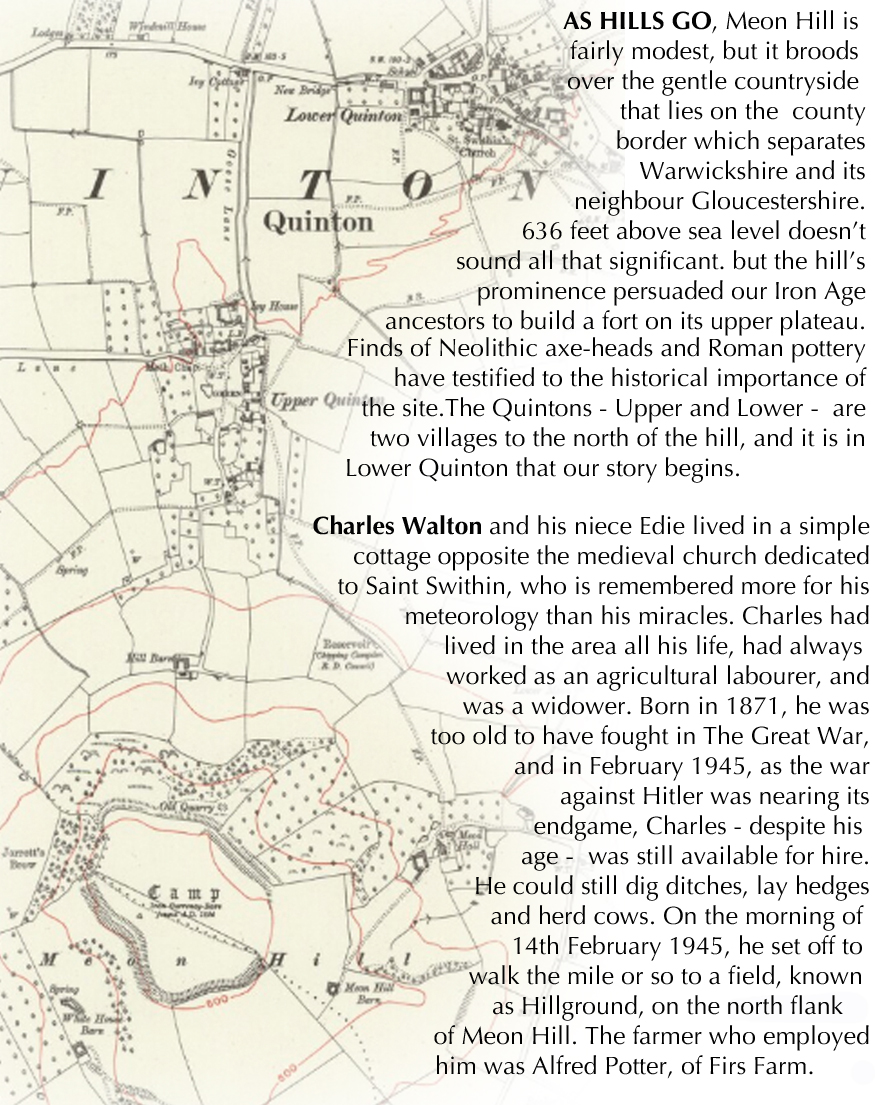
Body Text revised

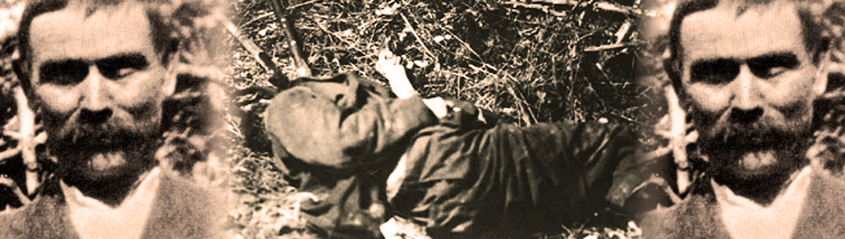
Walton was due to return home just after dark, but when there was still no sign of him at 6.00pm, Edie set out with a neighbour – Harry Beasley – to look for her uncle, calling in at Firs Farm to see if Potter knew where Charles was. Potter joined the search, and with the aid of a torch and a lantern, picked their way between the hedges and ditches of the dark fields. Before too long, they found the old man and, in the flickering light, saw a sight that would haunt them for the rest of their days.

The mutilated body of Charles Walton lay against the hedge he had been working on. Harry Beasley and Alfred Potter tried to shield Edie Walton from the terrible sight, but she had seen enough to tip her into hysteria. Beasley ran to a villager with a telephone, and the nearest police officer – PC Lomasney from Long Marston – was on the scene within fifteen minutes.

Charles Walton had met his death in the most horrific manner. He had been savagely beaten about the head with, it was proved later, his own walking stick. His throat had been slashed so savagely that his head was close to being parted from the body, and a pitchfork had been driven into the ground, its prongs either side of what was left of his neck. The old man had not gone down without a struggle, however, as the post-mortem revealed defensive wounds on his hands. These were the findings of the pathologist, as reported in the Tewksbury Register and Gazette:

“Walton had serious injuries received from a hedging hook and from both prongs of a hay fork. A blood-stained walking stick was nearby Some of Walton’s clothing was undone and part of it torn. The hay fork had been plunged into his body for three-quarters of its length. Several ribs on the left side were broken. There were bruises as well as cuts on the man’s head, and an injury to the back of the left hand such as might be received when defending himself against a cutting instrument.

The main wound was in the neck and was obviously made by more than one blow with the slashing hook; in fact, three separate and distinct blows had been delivered by a cutting instrument. All the main vessels of the neck were severed. Other wounds in the neck were caused by the prongs of the hayfork. One prong of the hayfork had punctured a lung.”

NEXT IN THE MEON HILL MURDER
Suspects, the search for a motive,
and Fabian of The Yard.

PART TWO OF THIS FEATURE WILL BE PUBLISHED
ON TUESDAY 22nd SEPTEMBER


Blog at WordPress.com.

Up ↑