
 I have been researching and writing about true crimes for many years now and, by their very nature, the events I have described rarely make easy reading. On display is a journey through the very worst of human character, from weakness, via jealousy and insanity, through to pure and simple evil. I can say, however, that the story I am about to tell has been hard to write. It contains descriptions of madness and physical violence which may not be to everyone’s taste, so, if you are squeamish, then maybe this is not for you. Every word of this story is taken from contemporary newspaper reports and transcriptions from a criminal trial that horrified readers in the early summer of 1890.
We are not quite in Louth, but just a few miles south east, in the gentle landscape on the edge of The Wolds, and bordering the former marshland which stretches out to the coastal settlements of Mablethorpe, Trusthorpe and Sutton. South Reston is a modest village now, as it was then. In 1870-72, John Marius Wilson’s Imperial Gazetteer of England and Wales described South Reston like this:
RESTON (South), a parish, with a village, in Louth district, Lincoln; 2 miles N N E of Authorpe railway station, and 6 S E of Louth. Post-town, Louth. Acres, 710. Real property, £1, 312. Pop., 235. Houses, 51. The property is divided among a few. S. R. Hall is the seat of W. Hay, Esq. There is a brick and tile manufactory. The living is a rectory in the diocese of Lincoln. Value, £180. Patron, the Duchy of Lancaster. The church was rebuilt in 1865; and is in the early English style. There are chapels for Wesleyans and Free Methodists, a parochial school, and charities £7.
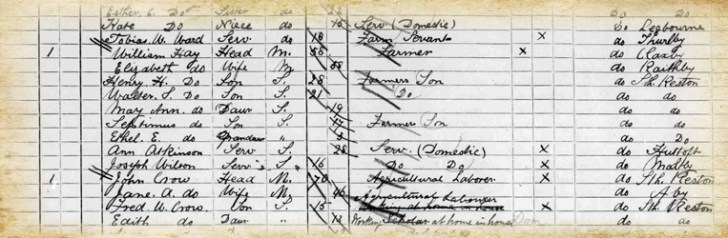
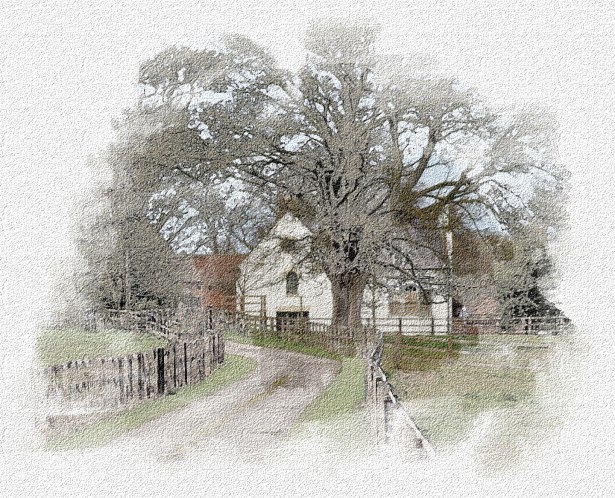
It is the family of William Hay of South Reston Hall (pictured below) that concerns us in this story. The Hays were a landed family spread across the county as far north as Scunthorpe and Brigg. The Hall itself is on an ancient site that dates back to pre-Domesday times. Strangely, in the 1881 census, the inhabitants of the Hall are listed as Lizzie Hay, aged 20, as Head of House, with her younger siblings Walter and Mary. You will notice the name of John Crow living close by. He was to be a witness to the dreadful events about to be described. In 1891, a few months after the dreadful crime about to be described, the Hay family seem to have been all together again.
Although it is not illegal, we are, nowadays, justifiably squeamish about first cousin marriages. Where it does occur – mostly in immigrant families – it is a proven cause of child deformities and mental health problems. The Hay family, however in the second half of the 19th century, had no qualms. George Dawson Hay, elder son of William and Elizabeth had married his first cousin, Louisa Hay. The 1881 census has her, aged 14, living with her farming family in Humberston, just south of Cleethorpes. Also named is Thomas W Hay, aged 13.
George Hay had been gifted a house and land on which to farm. South Reston Grange sits near the junction of Willoughby Lane and Scrub Lane, a little way south west of the village. The household comprised George Dawson Hay junior, just a year old, his two year-old sister Ethel, and – strangely – Louisa’s brother, Thomas.
It seems that mental illness was not uncommon in the Hay family. A Thomas Hay, of Yarborough, had died eighteen months earlier in Bracebridge Asylum, Lincoln; George Hay’s older brother, William, had died at the Hall in 1886, while his younger brother, Sidney, was undergoing treatment for what was termed ‘melancholia’. George Hay himself had spent some time in New Zealand, and had confessed to trying to do away with himself there.

On the early morning of 24th May, the staff of South Reston Hall were astonished to see George Hay enter the building. He had apparently been sleeping in a stable. but his clothes were soaking wet, and he was covered in mud from head to foot. His mother came to his aid, and he told her that he had been to the nearby village of Withern, where he had tried to drown himself in the Great Eau (pictured left), a narrow but swift flowing stream which eventually dissipates into the marshes near Saltfleet. Mrs Hay packed him off to bed with a glass of whisky, realising that this was the latest manifestation of mental troubles of which George had been complaining for some weeks. When she went up to see him, a little later that morning, he was still awake, but barely coherent. He asked her just one thing:
“I think you had better go down to The Grange, and see how they are getting on there.”
A simple request from a concerned husband? What the visitors to The Grange found would scar them for the rest of their lives.
IN PART TWO – A TRUE CHAPTER OF HORRORS

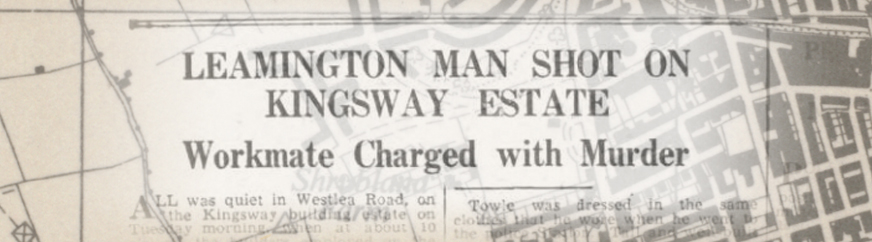


 Swadling Street in Leamington is an unassuming thoroughfare, with houses which were built on the old Shrubland Estate between the wars. It was named after a Leamington councillor of the 1920s, and in 1931 it boasted twenty addresses. In January 1949, number 6 was occupied by Edward Sullivan. A 49 year-old Irishman and father of six children – three sons and three daughters – he worked as a builder’s labourer. Known to his mates – inevitably – as Paddy – he was working on a council house building project on Westlea Road, which was another between-wars development on what had been the Shrubland Estate.


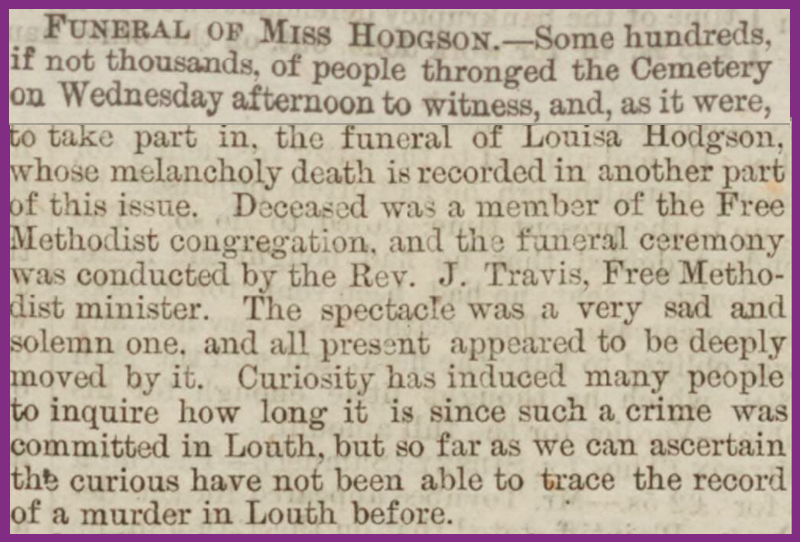
 Sadly for Peter Blanchard and his family, the Home Secretary, Richard Blanchard Cross (left), was not inclined to be merciful, and Peter Blanchard was executed on Monday 9th August 1875. This newspaper report tells the melancholy story:


![Photograph of Free Methodist Church, Eastgate, Louth, Lincolnshire [c.1930s-1980s] by John Piper 1903-1992](https://fullybooked2017.com/wp-content/uploads/2021/03/chapel-copy.jpg)


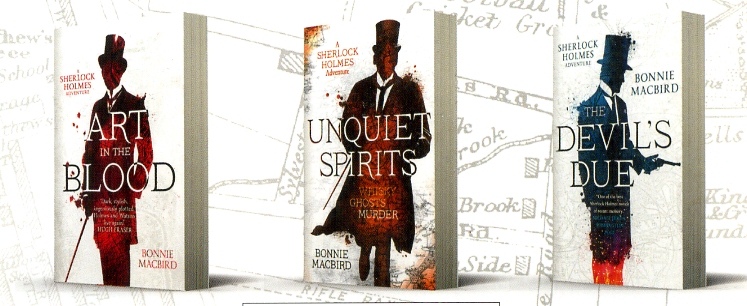
 In a sappingly hot Indian Summer in central London, Dr John Watson is sent – by a relative he hardly remembers – a mysterious tin box which has no key, and no apparent means by which it can be opened. Watson and his companion Sherlock Holmes have become temporarily estranged, not because of any particular antipathy, but more because the investigations which have brought them so memorably together have dwindled to a big fat zero.
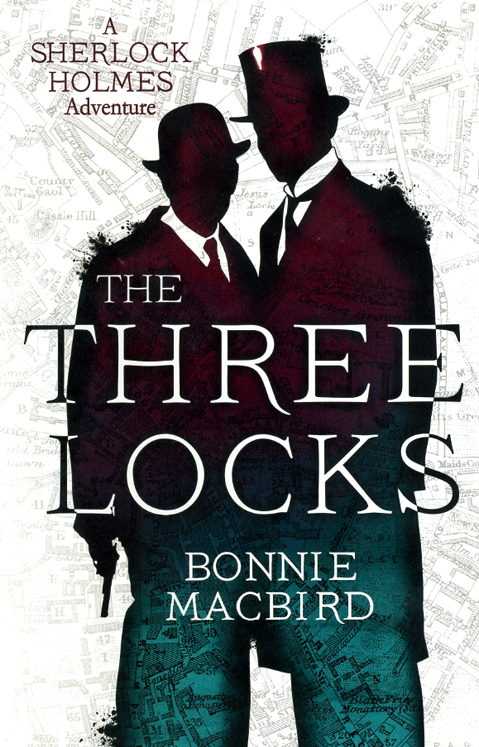 But then, in the space of a few hours, Watson shows his mysterious box to his house-mate, and the door of 221B Baker Street opens to admit two very different visitors. One is a young Roman Catholic novice priest from Cambridge who is worried about the disappearance of a young woman he has an interest in, and the second is a voluptuous conjuror’s assistant with a very intriguing tale to tell. The conjuror’s assistant, Madam Ilaria Borelli is married to one stage magician, Dario ‘The Great’ Borelli, but is the former lover of his bitter rival, Santo Colangelo. Are the two showmen trying to kill each other for the love of Ilaria? Have they doctored each other’s stage apparatus to bring about disastrous conclusions to their separate performances?


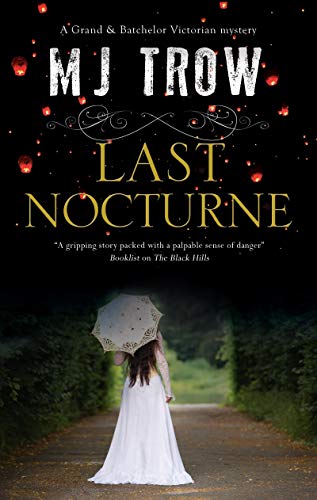 Grand & Batchelor are private investigators based in 1870s London and – much to the relief of James Batchelor, who is a terrible traveller – Last Nocturne has its feet securely on home soil. Grand is from a wealthy New England family, and fought bravely for the Union in The War Between The States, while Batchelor is a journalist by trade. Murder – what else? – is the name of the game in this book, and the victims are, you might say ‘on the game’. Cremorne Gardens were popular pleasure gardens beside the River Thames in Chelsea, but after dark, the ‘pleasure’ sought by its denizens was not of the innocent kind. ‘Ladies of the Night’ are being murdered – poisoned with arsenic – but the killer doesn’t interfere with them, as the saying goes, but instead leaves books by their dead bodies.


 fullybooked2017