Perhaps there’s a PhD to be written on the character of Madame Maigret, and none of the TV or film versions have made much of her, but here, at least for a while, she takes centre stage, in rather an unfortunate fashion. A young man, terribly nervous and ill-at-ease, arrives at their apartment, 132 Boulevard Richard Lenoir, asking to speak to the great man. Perhaps because he seems shy and inoffensive, she lets him in to wait while she finishes cooking lunch. A little while later, she breaks with their normal convention and telephones her husband at work. Hesitantly, she explains what has happened and, shamefaced, saying that the young man has now left, but she believes he has taken a revolver – presented to Maigret by the FBI – some years earlier. The revolver may seem to be ceremonial, as it is engraved with Maigret’s name, but it is far from a museum piece. It is a Smith and Wesson .45 and a very powerful agent of death in the wrong hands.
In what appears to be a separate strand of the plot, we learn that the Maigrets have recently dined with a long-standing friend, Dr Pardon, and that another guest – Lagrange – who was apparently very anxious to meet the celebrated policeman, failed to show up. When they visit Lagrange at his home, they find a man who appears to be extremely ill. Pardon confides in Maigret that Lagrange is something of a problem patient. Bedridden though he may appear to be, it transpires that he had enough strength to hire a taxi late the previous evening and, with the driver’s help, convey a heavy trunk to the left luggage office of the Gare du Nord. There is a very satisfying ‘click-clunk’ when it emerges that the young man who took Maigret’s revolver is none other than Alain, the sick man’s son. And in the trunk? A dead body, naturally, and it is that of André Delteil, a prominent – and controversial – politician, shot dead with a small calibre handgun.
Lagrange, when questioned, descends into a state of paranoia and behaves like a feverish child. Maigret cannot decide if this is genuine, or an attempt to defer the inevitable investigation into the corpse in the trunk. Playing safe, he sends the man to hospital. But what links the murdered politician, the babbling Lagrange – and his fugitive son? Simenon comes up with a very elegant – and deadly – connection in the shape of a wealthy socialite called Jeanne Debul who collects rich men like some people collect stamps. He uncovers a deeply unpleasant melange of blackmail, obsession and greed and concludes that Alain Lagrange is convinced that his father’s downfall can be laid at the door of Madame Debul. And he is at large, with Maigret’s revolver and a box of recently bought ammunition.
Maigret is not best pleased to learn that Jeanne Debul has flown to London, followed – on the next flight – by Alain Lagrange. It’s a rotten job, but someone has to do it, and Maigret follows the socialite and her would-be assassin to London, where he books into the same hotel as Madame Debul – The Savoy, no less. Helped – and hindered – by his Scotland Yard counterparts, our man awaits the collision of hunter and hunted, and this section of the story is a delightful flourish by Simenon where, via his great creation, he describes every little irritation and frustration that an urbane Frenchman could possibly encounter in the buttoned-up world of 1950s London.
As ever with Simenon, this story is a masterpiece of brevity – just 150 pages – and where lesser writers might take a page or more to describe a person, an atmosphere or a situation, he does the job in a paragraph. This edition of Maigret’s Revolver (first published in 1952), translated by Siân Reynolds, is one of the new Penguin Modern Classics and will be available on 5th October



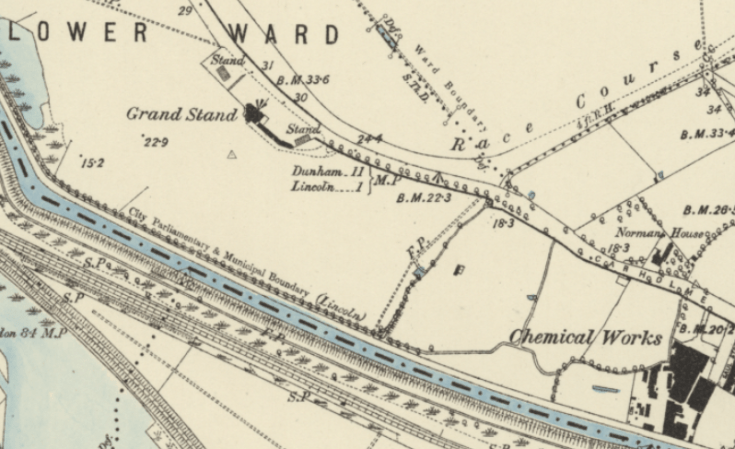

 James Fenton had contacted the police with his suspicions, and the discovery of the body confirmed the police’s worst fears. It is not entirely clear how the police knew exactly where to find the mystery woman, but on the Tuesday, they paid several visits to the house at 25 Alexandra Terrace. Hannah Wright, however, was nowhere to be found. She had left that morning, telling her sister-in-law that she was going to visit friends. She did not return until the Wednesday morning, by which time the police had instituted a full scale murder investigation. Hannah confessed to Jane Wright, and a neighbour, Mrs Sarah Close. It was Mrs Close who accompanied Hannah to the police station, but the girl seemed to be under the bizarre misapprehension that if she told the truth she would get away with a ‘telling off’ or, at worst, a fine. She was not to be so fortunate:
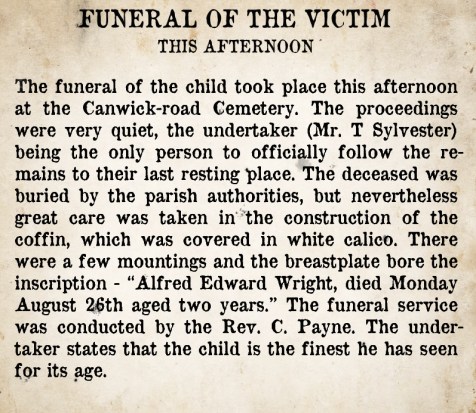 The law took its inevitable course. There was a coroner’s inquest, then a magistrate’s hearing, both of which judged that Hannah Wright had murdered her little boy. As was customary, the magistrate passed the case on to be heard at next Assizes. Meanwhile Alfie’s body was laid to rest in a lonely ceremony at Canwick Road cemetery. It is pointless speculating about Hannah’s state of mind, but it is worth reminding ourselves that Alfie had known no father and had seen very little of his mother during his brief sojourn – fewer than 300 days – on earth. If ever there were a case of ‘Suffer the little children’ this must be it.


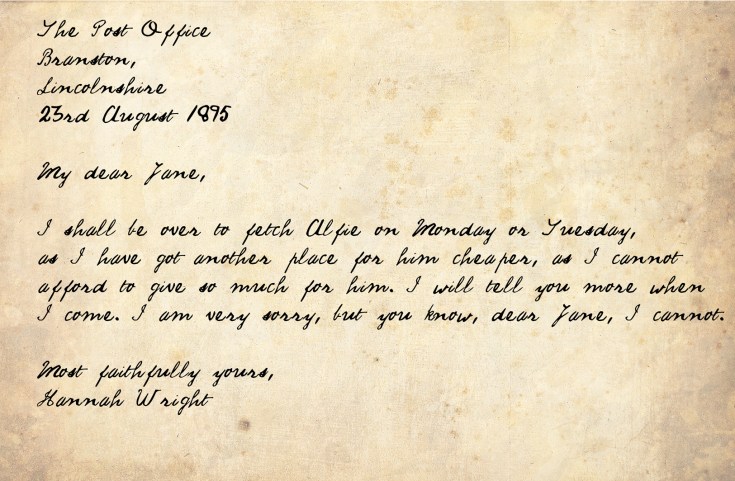
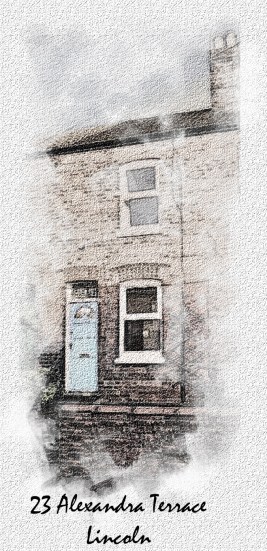 Having traveled to Lincoln on the afternoon of 23rd August, Hannah visited her brother and his wife at their house, 23 Alexandra Terrace. All appeared to well, and on the Sunday evening Hannah even brought her young man, William Spurr, round for tea.

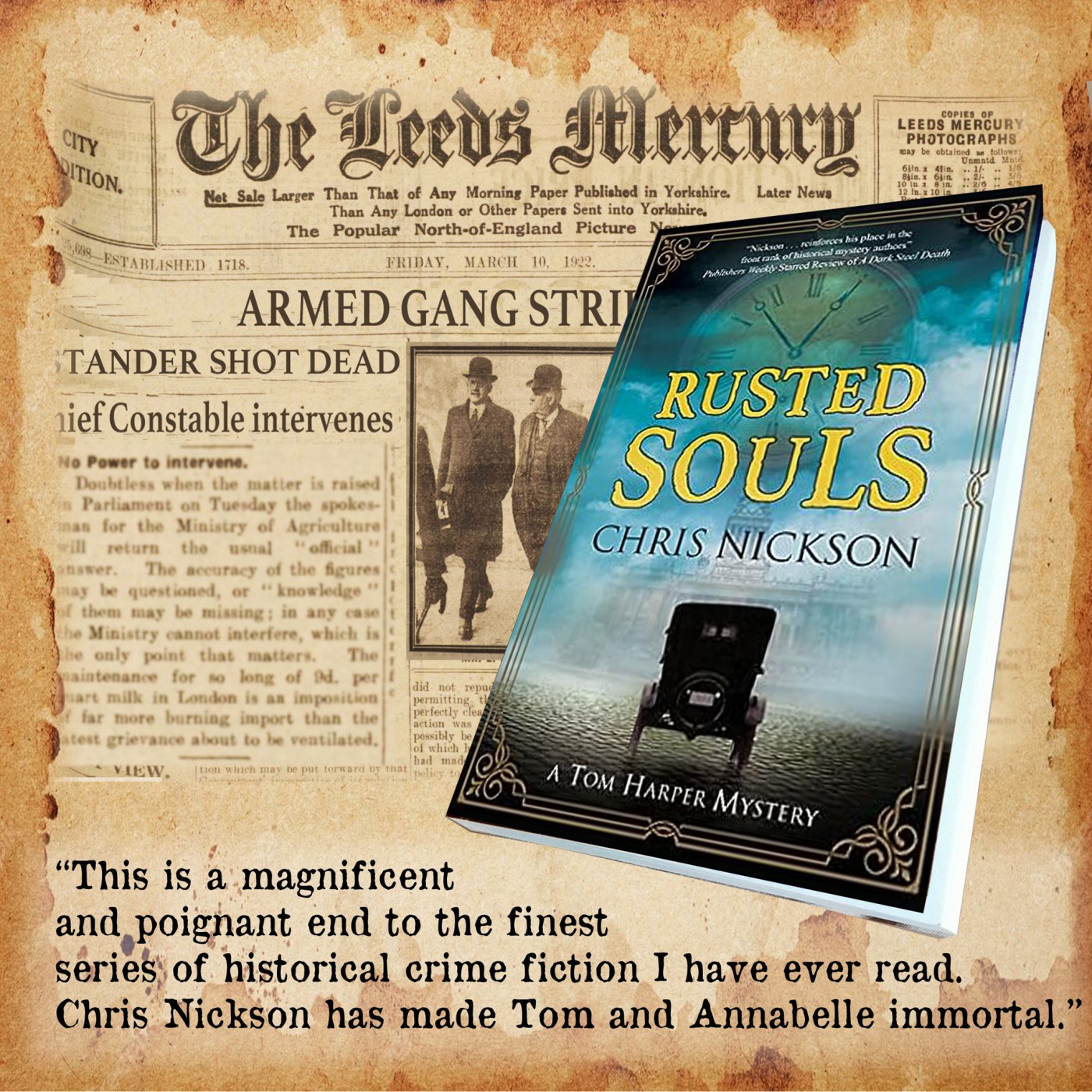
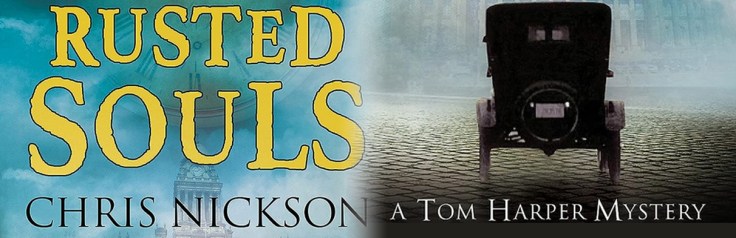
 Leeds, March 1920. Tom Harper is Chief Constable of the City force and, with just six weeks until his retirement, he is dearly hoping for a quiet ride home for the final furlong of what has been a long and distinguished career. His hopes are dashed, however, when he is summoned to the office of Alderman Ernest Thompson, the combative, blustering – but very powerful – leader of the City Council. Thompson has one last task for Harper, and it is a very delicate one. The politician has fallen a trap that is all too familiar to many elderly men of influence down the years. He has, shall we say, been indiscreet with a beautiful but much younger woman, Charlotte Radcliffe. Letters that he foolishly wrote to her have “gone missing” and now he has an anonymous note demanding money – or else his reputation will be ruined. He wants Harper to solve the case, but keep everything completely off the record. Grim-faced, Harper has little choice but to agree. It is due to Thompson’s support and encouragement that he is ending his career as Chief Constable, with a comfortable pension and an untarnished reputation. He chooses a small group of trusted colleagues, swears them to secrecy, and sets about the investigation.