Search

fullybooked2017

Tag

London

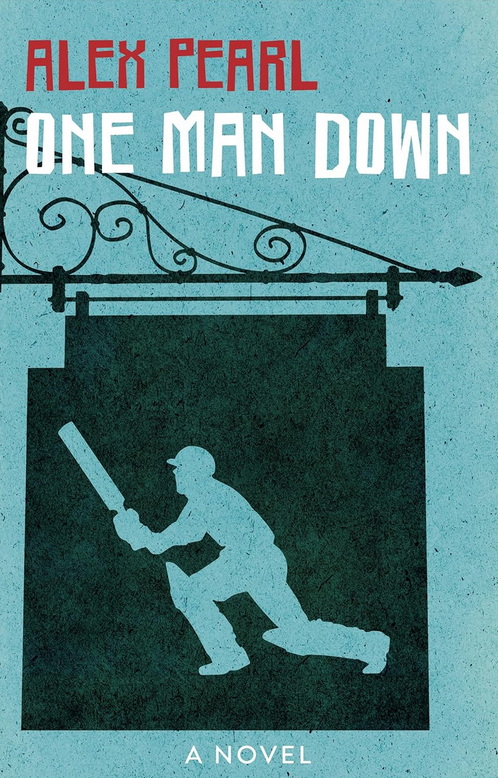
ONE MAN DOWN . . . Between the covers

Crime fiction and comedy can sometimes make strange bedfellows, but in the right hands it can be beguiling. Back in time, The Big Bow Mystery by Israel Zangwill shared the same kind of subtle social comedy employed by George and Weedon Grossmith, while the Bryant and May novels by the late Christopher Fowler were full of excellent gags. So, how does One Man Down by Alex Pearl measure up?

For starters, this has to be tagged as historical crime fiction, as it is set in a 1984 London, in the strange (to me) world of advertising copywriters and their attempts to secure contracts to sell various products. It may only be forty years ago, but we are in the world of Filofaxes, Psion personal organisers and IBM golfball typewriters. The main thread of the plot involves two lads who are connoisseurs of the catch phrase and sorcerers of the strap-line. Brian and Angus become involved in a complex affair which includes a depressive photographer who is arrested for exposing himself to an elderly former GP on the seafront at Margate, and the attempt to blackmail a gay vicar. Incidentally, the Margate reference is interesting because in recent times the seaside town has been somewhat rehabilitated thanks to the patronage of Tracey Emin, but at the time when the book is set, it was certainly a very seedy place. Along with other decaying resorts like Deal, this part of the Kent coast was prominently featured in David Seabrook’s All The Devils Are Here.

When Brian and Angus find the photographer – Ben Bartlett – involved in blackmailing the vicar, dead in his studio, things take a macabre turn. This thread runs parallel to events that have a distinctly Evelyn Waugh flavour. The two ad-men are speculating about just how dire some of the industry’s efforts are, and Angus takes just four and a half minutes to dash off a spoof commercial for a chocolate bar campaign they know the agency has been booked to handle. Angus makes it as dreadful as he can. The pair go out for a drink, leaving the parody on the desk, forgetting they were due to meet one of the firm’s top men to talk about the real campaign. Annoyed to find them absent, the manager finds the sheet of A4, thinks it wonderful, and promptly takes it to the Cadbury top brass, who share his enthusiasm.

Alex Pearl (left) isn’t a reluctant name-dropper, and walk on parts for Julian Clary and Kenneth Clarke (in Ronnie Scott’s, naturally) set the period tone nicely. 1984 was certainly a memorable year. I remember driving through the August night to be at my dying dad’s bedside, and hearing on the radio that Richard Burton had died. Just a few weeks earlier we had been blown away by Farrokh Bulsara at Wembley, while Clive Lloyd and his men were doing something rather similar to the English cricket team.

Back to One Man Down. All’s well that ends well, and we have another murder, but one that saves the career and reputation of the blackmailed vicar. This is not a long book – just 183 pages – but I thoroughly enjoyed it. I am a sucker for anything that mentions cricket, and here the story more or less begins and ends on the cricket pitch. The solution to the murder(s) is elegant and subtle. The book is published by Roundfire Books and is available now.
THE BETRAYAL OF THOMAS TRUE . . . Between the covers

Thomas True is the son of the Rector of Highgate. Now a sought after London suburb, in the early 18th century, at the time in which this novel is set, it was a country village. The young man has, for some years, been aware of his homosexuality and, unfortunately, so has his fire and brimstone father, who has done his best to beat out of his son what he sees as ‘the Devil’. Thomas has saved up his allowance and is determined to escape the misery.

Unknown to his parents, Thomas has been writing to his cousin Amelia in London, with a view to living with her and her parents. Within minutes of jumping down from the mail coach into the mire of a London street, he has been drawn into a world that is both breathlessly exciting and profoundly dangerous. The world of the molly houses in London was already well established, and would continue as a forbidden attraction well beyond the scandal of the Cleveland Street raid in 1889 in which Queen Victoria’s grandson, Prince Albert Victor was implicated, although there has never been any conclusive evidence that he was a customer of this male brothel. A molly? There is a lengthy explanation here.

Thomas meets a young man called Jack Huffins who is quick to recognise the lad as a kindred spirit, and he introduces him to Mother Clap’s which is, I suppose, the eighteenth century equivalent of a gay nightclub. We also meet a significant figure in the story, a burly stonemason called Gabriel Griffin. Working on the recently completed St Paul’s cathedral is his day job, but by night he is the bouncer at Mother Clap”s. He is also a man in perpetual mourning, haunted by his wife and child who died together three years earlier.

Hovering in the background to the revelry at Mother Clap’s is The Society for the Reformation of Manners. They actually existed, as did Mother Clap’s. The Society was, collectively, a kind of Mary Whitehouse (remember her?) of the day, and they existed to root out what they saw as moral decay, particularly of a sexual nature. They were far more sinister than the Warwickshire-born Christian campaigner however, as back then, men convicted of sodomy, buggery and ‘unnatural behaviour’ could be – and often were – hanged. The Society has inserted ‘ a rat’ into  Mother Clap’s community. Quite simply, he is paid by his masters to identify participants, and give their names to two particularly repugnant officers of The Society, Justice Grimp and Justice Myre (Grimpen Mire, anyone?) The main  plot centres on the search for the identity of ‘the rat’.

At times, the picture that AJ West (his website is here) paints of London is as foetid, grotesque and full of nightmarish creatures as that seen when zooming in to a detail in one of Hieronymus Bosch’s apocalyptic paintings. West’s London is largely based on history, but there are moments, such as when Thomas and Gabriel are captured by a tribe of street urchins in their dazzlingly strange lair, that the reader slips off the real world and drifts somewhere else altogether.

What the author does well is to show up the anguish and insecurity of the men who feel compelled to posture and pose as mollies, in an attempt to nullify the boredom of their respectable family lives. The bond of love that develops between Thomas and Gabriel is genuine, and certainly more powerful than the silly nicknames and grotesque flouncing at Mother Clap’s. The book ends with heartbreak. Or does it? Given that Gabriel is susceptible to ghosts, he is perhaps not a reliable narrator, and AJ West’s last few paragraphs suggest that the Society has, like the President of the Immortals at the end of Tess of the d’Urbervilles, ended its sport with Thomas and Gabriel. This paperback edition is out today, 3rd July, from Orenda Books.

KING DIDO . . . Past times, old crimes

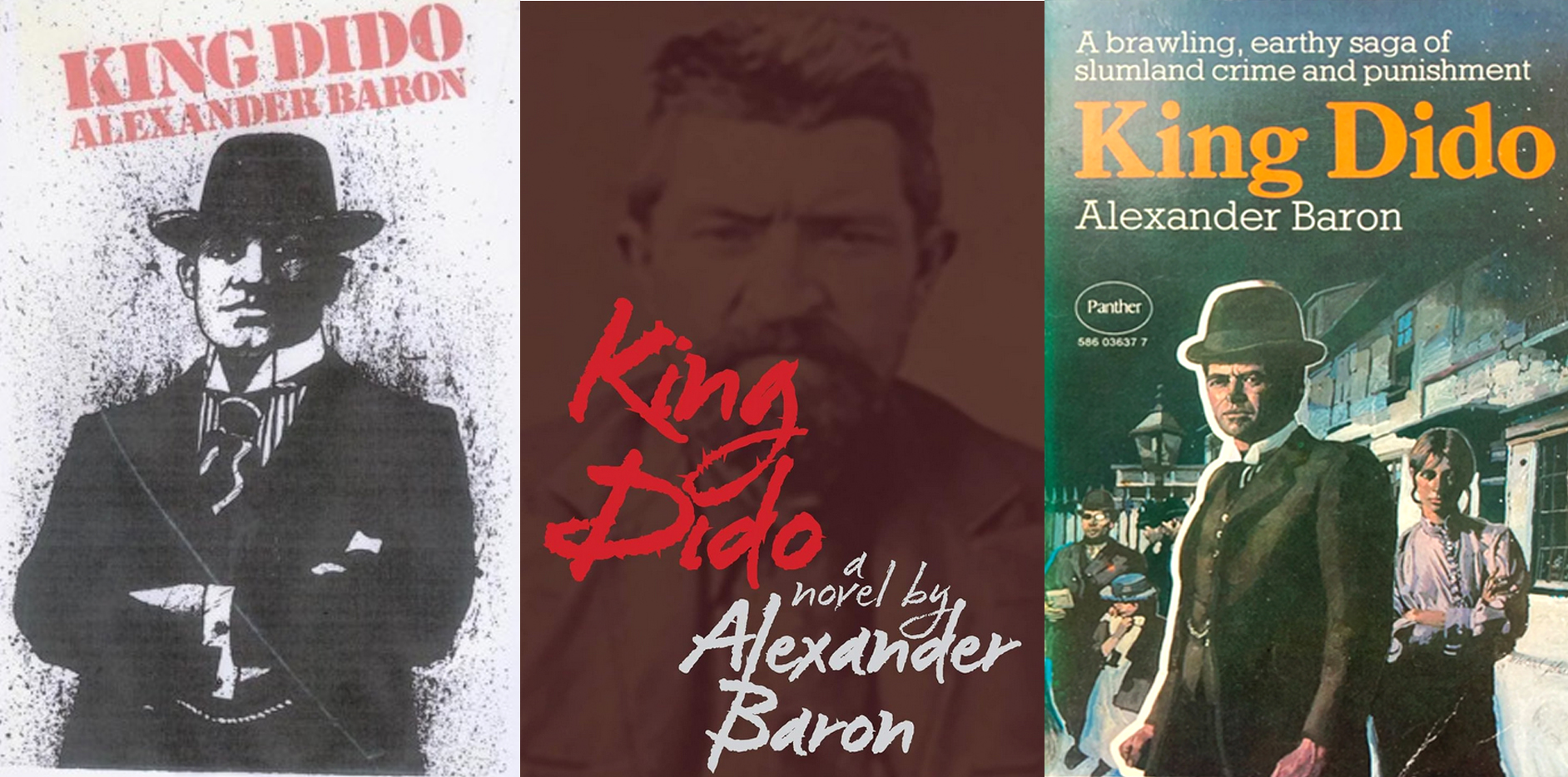
Alexander Baron (1917 – 1999) is a writer who has returned to the consciousness of the reading public in recent times because the Imperial War Museum have republished his two classic WW2 novels From The City, From The Plough, There’s No Home, and the third in the trilogy, the collection of short stories The Human KInd. His compassion and his acute awareness of the highs and lows of men and women at war have embedded the trilogy into the culture of WW2,  just as the poems of Owen, Sassoon and Gurney are inescapably linked with The Great War. King Dido (1969) is a book of a very different kind.

We are in the East End of London, and it is the summer of 1911, not long after the coronation of King George V and Queen Mary. Dido is, by trade, a dock worker but, after a violent encounter with the district’s 1911 version of the Krays, he takes over the streets and becomes  a kind of Reg. Not Ron, because Dido is not a psychopath, but the ‘tributes’ he collects make him a decent living. After a turbulent back alley encounter with a young waitress called Grace, Dido does ‘right thing’ and marries her. They live in redecorated rooms above the rag recovery business Dido’s mother runs. There has been a trend in crime fiction in recent years, which I call ‘anxiety porn’, but it is nothing new. More politely, these are known as ‘domestic thrillers.’ Mostly, they describe perfectly ordinary people whose lives gradually disintegrate, not through epic events, but because normal social tensions, misunderstandings, misplaced ambitions and tricks of fate turn their lives upside down. So it is here. Grace, blissfully unaware of how Dido earns his money, tries to put her feet on the next series of rungs in the ladder that leads to gentrification. However, the family’s journey on the board game of life becomes, via the snakes, a downward one, and it is a painful descent.

Baron grew up as Joseph Alexander Bernstein in Hackney, but he was actually born In Maidenhead, his mother having been evacuated there as a result of Zeppelin raids on London. His father was a master furrier, so it is clear that there is nothing autobiographical about his characterisation of Dido Peach. What is evident in the book is that Baron was aware of the existence of subtle strata within the East End poor. By 1911 the Huguenots had long since moved away, leaving such places as Christ Church Spitalfields and the elegant houses in Fournier Street as their memorials. There remained what could be called the ‘dirt’ poor, and then the ‘genteel’ poor – such as Mrs Peach and her family. What doesn’t feature in the novel, but was exactly contemporaneous, was the upsurge in activity by Eastern European activists, mostly exiles from Russia. The Houndsditch Murders and the resultant Siege of Sidney Street was that same year, while The Tottenham Outrage had been two years earlier. Both events remain writ large in East End history.

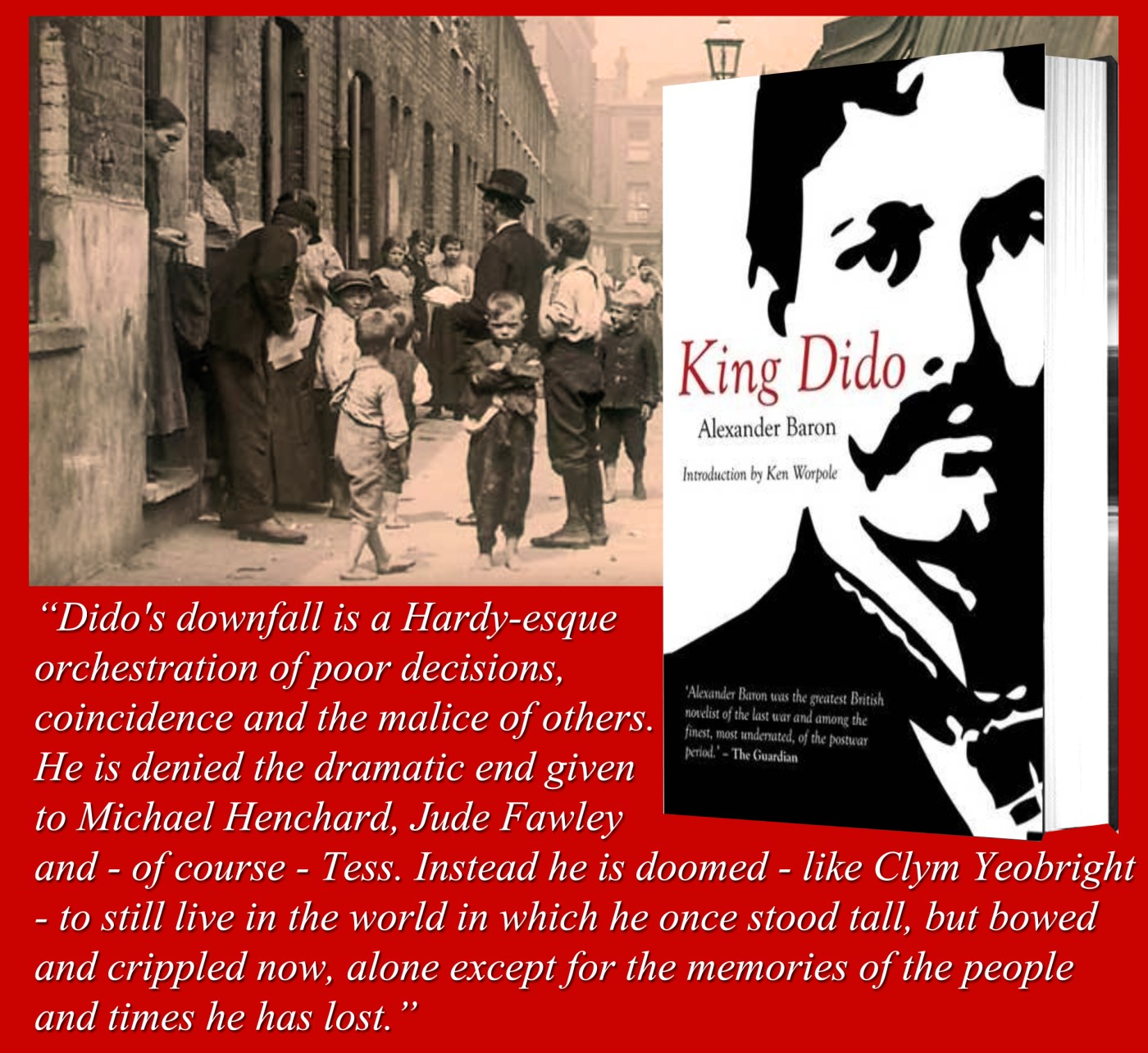
In the end, Dido’s downfall is a Hardy-esque orchestration of poor decisions, coincidence and the malice of others. He is denied the dramatic end given to Michael Henchard, Jude Fawley and – of course – Tess. Instead he is doomed – like Clym Yeobright – to still live in the world in which he once stood tall, but bowed and crippled now, alone except for the memories of the people and times he has lost. Baron’s prose here, just as in his better known books, is vivid, clear and full of insights.

DEATH OF AN OFFICER . . . Between the covers

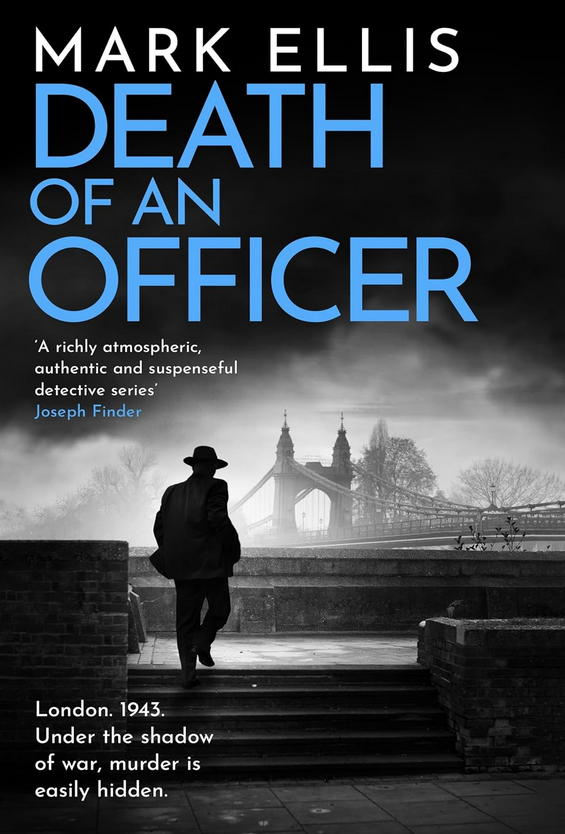
Detective Chief Inspector Frank (christened Francisco) Merlin is a thoroughly likeable and convincing central character in this murder mystery, set in 1943 London. As in all good police novels, there is more than one murder. The first we are privy to is that of a seemingly inoffensive consultant surgeon, Mr Dev Sinha, found dead in his bedroom, apparently bludgeoned with a hefty statue of Ganesha, the Hindu elephant god. Sinha’s wife has been diagnosed with a serious mental illness, and has been packed off to an institution near Coventry ( no jokes please) but when she is interviewed she is more lucid than those around her have been led to believe.

Added to Merlin’s list of corpses is that of south London scrap dealer called  Reg Mayhew, apparently victim of the delayed detonation of a German bomb. Unfortunately for the investigators, the word ‘corpse’, suggesting an intact body, is misleading. Mayhew’s proximity to the blast has given the lie to the old adage about someone’s inability to be in two places at once.

Clumsily concealed beneath bomb site rubble in the East End is the well-dressed (evening attire and dress shirt) remains of Andrew Corrigan, a Major in the US army. It seems he was a ‘friend’ of a rich and influential MP, Malcolm Trenton. 

Merlin’s investigations take him towards the contentious issue of Indian independence, and it seems that the murdered consultant was a member of a committee comprising prominent British Indians who support Subhas Chandra Bose, a firebrand nationalist who is seeking support from Nazi Germany and Japan, in the belief that they would win the war, and then look favourably on an independent India.

Like all good historical novelists, Mark Ellis has done his homework to make sure we feel we are in the London of spring 1943. We are aware of the recent Bethnal Green Tube disaster, that Mr Attlee is a key member of Churchill’s coalition government, and that a Dulwich College alumni has just had his latest novel, The Lady in the Lake, published. We also know that the Americans are in town. As Caruso sang in 1917, the boys are definitely ‘Over There!‘Among the 1943 intake is Bernie Goldberg, a grizzled American cop, now attached to Eisenhower’s London staff.

I am old, but not so ancient that I can remember WW2 London. Many fine writers, including Evelyn Waugh in his Sword of Honour trilogy, and John Lawton with his Fred Troy novels, have set the scene and established the atmosphere of those times, and Mark Ellis treads in very worthy footsteps. There is the dismal food, the ever present danger of air raids, the sheer density of the evening darkness and the constant reminder of sons, brothers and husbands risking their lives hundreds of miles away. Ellis also reminds us that for most decent people, the war was a time to pull together, tighten the belt, shrug the shoulders and get on with things. Others, the petty and not so petty criminals, saw the chance to exploit the situation, and get rich quickly.

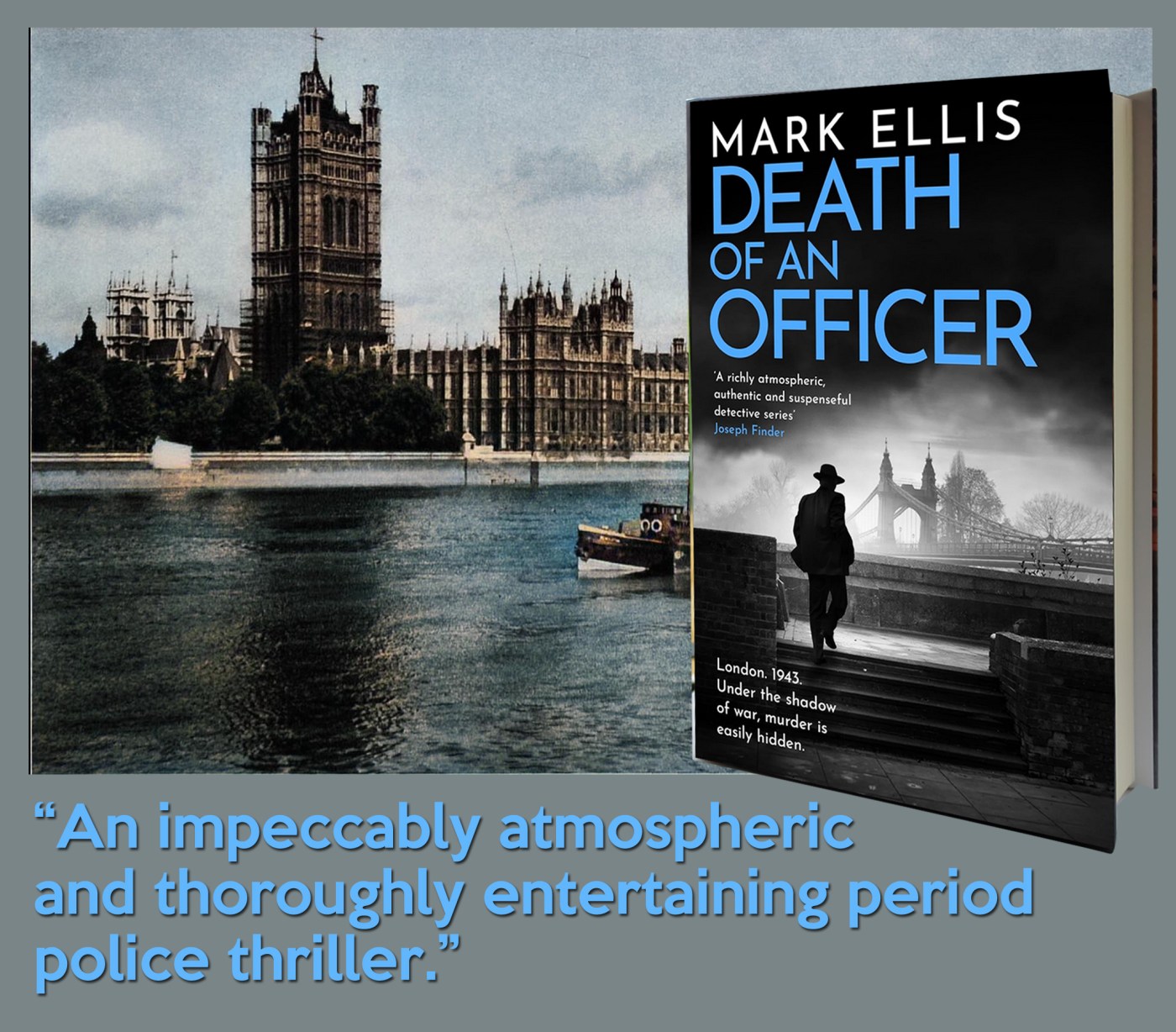
Central to the plot is ‘the love that dare not speak its name‘ in the shape of an exclusive club organised by Maltese gangsters. Mark Ellis reminds us that there were no rainbow pedestrian crossings or Pride flags flying over public buildings in 1943, and that there was an ever-present danger that men in public life were susceptible to blackmail on account of their sexual preferences. With a mixture of good detective work and a bit of Lady Luck, Merlin and his team solve the murders. The book’s title is ambiguous, in that Major Andrew Corrigan certainly fits the bill, but there is one other officer casualty – I will leave you to find out for yourself his identity by reading this impeccably atmospheric and thoroughly entertaining period police thriller. It will be published by Headline Accent on 29th May.

INNOCENT GUILT . . . Between the covers

The book begins with one of those ‘impossible’ events beloved of crime writers since the 19th century. It is a mystery involving not a locked room but a locked mind. A woman, later identified as Fiona Garvey, presents herself at a London police station covered in blood. Carrying a baseball bat. She is catatonic. Silent. Somewhere else altogether. Then, a body is found, battered to death in a London Park. It appears to be the mortal remains of Alistair Cowan, Fiona Garvey’s employer.

Investigating detective Leah Hutch has problems of her own. The woman who brought her up, Margaretta, has just died. Margaretta solicitor reveals to Leah that her actual father, who she neither knew nor ever met, was Eli Carson, Margaretta’s son and a former police officer. And Eli is serving two life terms for murdering his wife and the man he suspected was cuckolding him. The author then  deepens the mystery with two further revelations. First, the blood on the baseball bat isn’t that of Alistair Cowan, but that on Garvey’s hands and body is. Just to set our minds spinning yet more feverishly, DNA tests on the body in the park do not match that of Alistair Cowan. But hang on … Chapter Four is a description of Alistair Cowan, lying somewhere, grievously injured, fighting for life so, as some people say, “what the actual ….?”

As if things were not complicated enough for DI Hutch, we have Odie Reid muddying the waters. She is – or was – an top investigative journalist for a tabloid newspaper. As print newspaper sales plummet, Odie’s career takes a parallel course. She knows Leah Hutch, as they were once both aspiring news hounds. Now, Leah bats for the opposition, and Odie needs to create the story that will save her career. The man police assumed was Alistair Cowan is identified, Cowan is found – just about –  alive and after the forensic evidence leads the police to accuse Fiona Garvey of his murder she is remanded in custody.

Then, a third man, Jake Munro is attacked, this time fatally. He was a successful businessman who had bought up several firms, with consequent redundancies, so was he killed by a vengeful former employee? One such man, Eddie Adeola, had committed suicide after failing to get another job, and his wife – a strange and violent woman called Temi, after attacking police sent to interview her, has gone into hiding. Leah Hutch discovers a strange link between Temi and Fiona Garvey, and it is their attendance at events put on by a man called Brendan Klee. When Hutch and her sergeant Ben Randle interview him they are unsure if he is a fraud, a mentalist, a lifestyle guru, a shaman – or a blend of all four.

The denouement reflects a phenomenon which runs through the book like a spine, albeit one warped by scoliosis; this phenomenon is the endless – and almost unsolvable –  mystery of what causes apparently decent people to commit acts of terrible evil, and whether or not those acts can be excused (or at least explained) by horrors inflicted on the perpetrators when they were much younger. Leah Hutch is a flawed – but credible heroine – with a past as steeped in horror as the worst of the crimes she has to investigate. Remi Kone is a British Nigerian Emmy-nominated producer; she has worked on a number of well-known television dramas, such as Killing Eve, Spooks and Lewis. She lives in London, and this is her first novel. Innocent Guilt is published by Quercus and will be on the shelves on 15th May.

MISS BURNHAM AND THE LOOSE THREAD . . . Between the covers

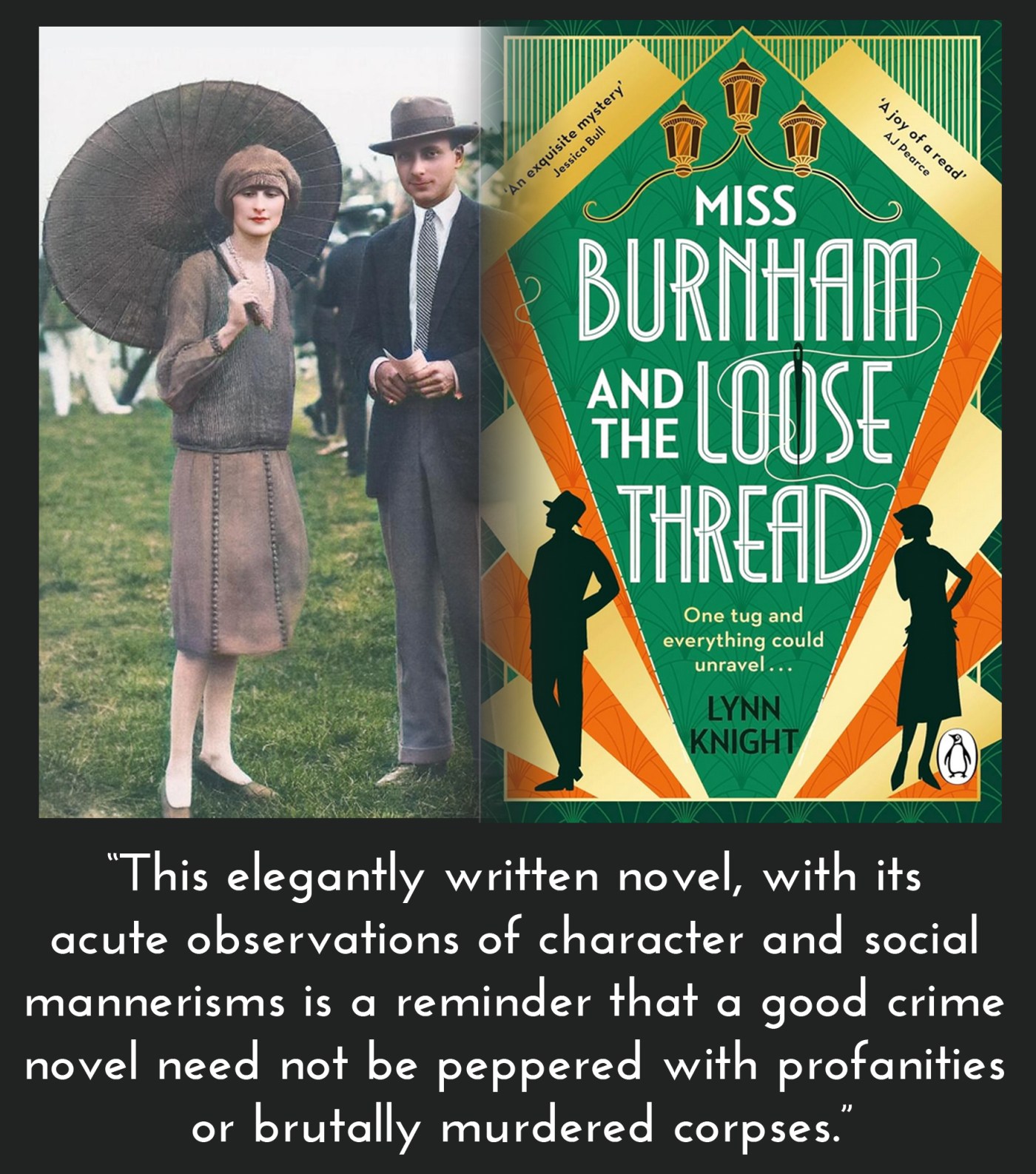
It is the spring of 1925 and we are in suburban London. Rose Burnham is a talented designer-dressmaker, and has set herself up in business with her sisters. She isn’t making a fortune, but she hopes that the improving weather will bring in new orders. One of her regular customers is Phyllis Holmes, whose late father has left her relatively well off, even though she is basically a handmaiden to her demanding mother. In an attempt to broaden her social life, the shy and sheltered Phyllis has fallen into the clutches of a man – recommended by Cupid’s Arrows, a matrimonial agency  –  who is, to use the epithets of the time, both a bounder and a cad. Lynn Knight may have had these wonderful lines by Sir John Betjeman in mind:

“Let us not speak, for the love we bear one another—
Let us hold hands and look.”
She such a very ordinary little woman;
He such a thumping crook;
But both, for a moment, little lower than the angels
In the teashop’s ingle-nook.”

The so-called War To End All Wars has been over, at least in Europe, for seven years, but it casts a long shadow:

“Here was Mrs. Carlton, an optimistic bride when Rose first saw her at Webb and Maskry in the spring of 1914. But now a desperate wife seeking refuge in clothes. If she could fill her days with dress fittings and like distractions, she would be able to spend less time looking at her husband’s disfigured face.”

When Miss Holmes visits Rose’s workshop and tearfully confesses that she can neither pay her existing bills nor commission any new dresses because she has been swindled, Rose must act. Yes, she is sympathetic to her client’s dilemma, but if she cannot track down the man who has appropriated Phyllis’s fortune – around £40,000 in today’s money – she knows that she and her sisters will be unemployed, and probably be forced to return to their previous lives as shop assistants. Rose decides to present herself at Cupid’s Arrows as an anxious spinster, in the hope that she will be pointed in the direction of the man who stole the heart of Phyllis Holmes – not to mention her money. Lynn Knight has a wonderful eye – and ear – for the 1920s. Invited to a soirée, Rose observes her fellow guests: “

“Three men in their own larger circle, feet spread firmly apart, like a Gilbert and Sullivan chorus, were broadcasting their views to the room. Single emphatic words; coal – taxes – prices – punctuated their talk. Except for a side parting, a watch chain and a Ramsay McDonald mustache, there was little to distinguish one man from the next.”

This elegantly written novel, with its acute observations of character and social mannerisms is a reminder that a good crime novel need not be peppered with profanities or brutally murdered corpses. Finally, a word to readers whose interests tend to lie in the dark streets and lurid neon of Noir, or those who like their crime novels red in tooth and claw, with a high corpse count. Yes, this story may seem soufflé light and lacking in high drama, but it is a beautifully observed study of social mores and expectations in a society that was still trying to find its feet after an international cataclysm. The focus is almost entirely on the female characters, and the underlying theme is that of women – tens of thousands of whom took on men’s roles during the war – who are determined not to return to pre-1914 status quo.

Parallel to this world of emerging female emancipation, Lynn Knight also highlights a society where men over the age of 25 are shaped by – and judged on – what they did and where they were between 1914 and 1919. Some (literally) limped back into their pre-war world. Some struggled to survive in a land Lloyd George egregiously promised would be “fit for heroes to live in.” Others, like the tricksters of Cupid’s Arrow, turned to more reprehensible methods to make a living. This novel is published by Bantam, and is available now.

THE MASKED BAND . . . Between the covers

Two things immediately endeared me to the the main character in the book (a.k.a. the author, I imagine) First, he is a fan of country music, and was quick to reference the divine trio of Emmylou, Dolly and Linda. Second, he is no fan of the more self indulgent excesses of modern jazz. But there’s a good story here, too.

The Okay Boomers are a celebrity amateur rock band. In two ways. Confused? The five-piece outfit are actually media celebs themselves, but they wear masks on stage. Masks of Bob Dylan, Mick Jagger, Paul McCartney, Debbie Harry and David Bowie. They play a pub gig in the affluent London district of Barnes, and have an ‘after party’ at the mansion owned by one of the band members. When a body is discovered the next morning, dead as can be on the gravel underneath a balcony,  DI Garibaldi hops on his bike (literally, as he doesn’t drive) and joins the investigators at the crime scene. The dead body is eventually revealed to be that of Frankie Dunne, an unremarkable young man who – apparently – was completely unknown to any of the Okay Boomers.

Bernard O’Keefe has some sly fun with a couple of the celebrities. There’s Larry Benton, a former footballer turned presenter who sees himself as the champion of middle class liberal sentiments, and Charlie Brougham, the handsome, floppy-haired toff whose boyish charm once graced many a British comedy drama. Hmm. Let me ponder. Who could he have been thinking of?

As you might expect, beneath the veneer of showbiz cameradie, the members of The Masked Band have, in private, little good to think or say about each other. In a rather neat bit of technical business Bernard O’Keeffe has five of the band masks go missing from the crime scene, with the  only surviving mask – that of Mick Jagger – placed on the face of the defenestrated corpse, thus placing the latex Bowie, Dylan, Harry and McCartney faces out there in the community and ready to be used and abused.

We know from the brief and enigmatic prologue, that a young man who has drunk well rather than wisely heads of in search of his girlfriend and his missing ‘phone. He arrives at the house where he thinks both are and ….. end of prologue.

Were you to organise a convention of fictional Detective Inspectors you would need something larger than the average town hall. So how does DI Jim Garibaldi measure up? Italian heritage, obviously; lapsed Roman Catholic, parents died together in a road accident – hence his refusal to learn to drive; his marriage broke down, but he has a bond with his son, renewed every time they go to Loftus Road to watch QPR; he is widely read but wears his learning lightly.

Garibaldi is an engaging central character. Like all the best fictional DIs, he is prepared to think outside the box. The quirky copper resolving cases that baffle his senior officers is an oft repeated trope in police procedural novels, but it works well here. The identity of the person responsible for Frankie Dunne’s death does not exactly come out of the blue, but it is cleverly hidden until the final pages. This is a thoroughly engaging police procedural tale with just the right blend of mystery, dry humour and credible characters. The Masked Band is published by the Muswell Press and is out now.

THE QUEEN OF FIVES . . . Between the covers

qo5005 copy

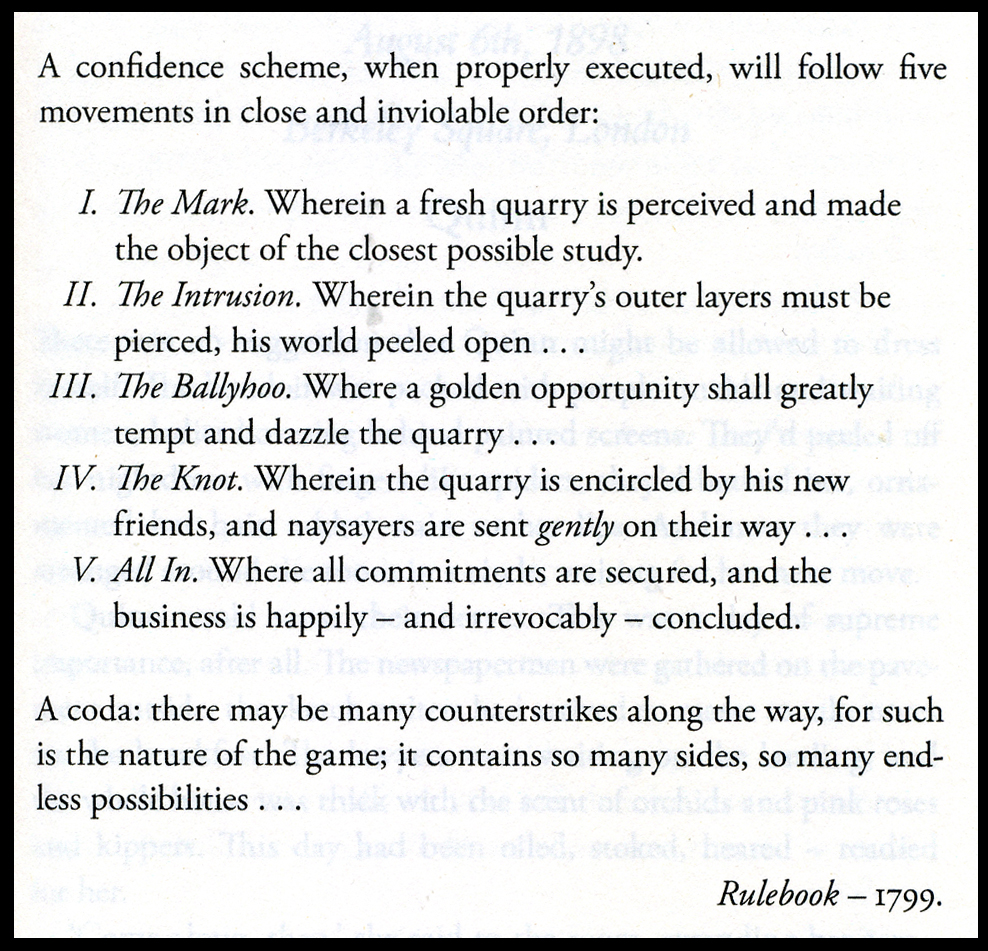
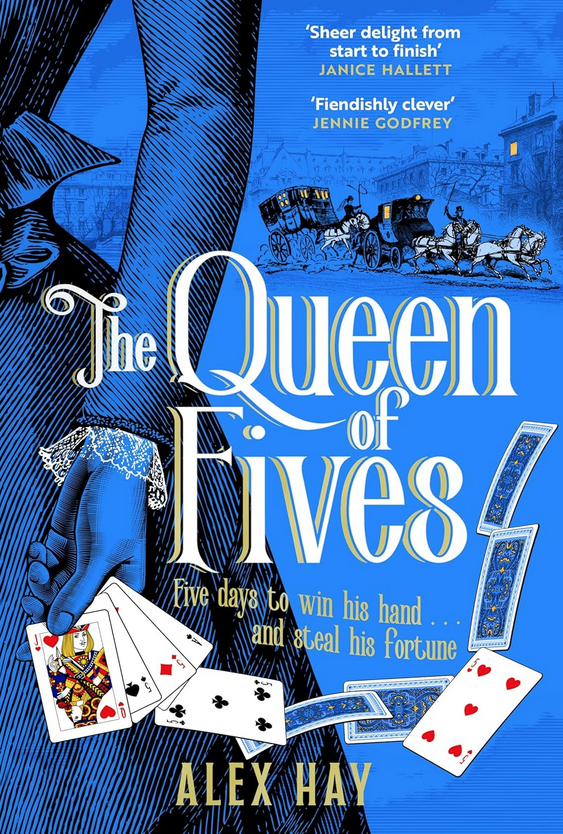
Alex Hay spins a yarn that is a preposterous as they come, but the more audacious the schemes of Quinn le Blanc become, the more entertainment the book provides. Quinn is a confidence trickster, dedicated to separating fools and their fortunes. Her home is a house in Spitalfields, and we are in the last years of Queen Victoria’s reign, a full ten years since the streets and alleys near le Blanc’s house echoed with the cries of “murder!” as yet another lady of the night was struck down by Britain’s most infamous serial killer. I may be be wrong, but the author may be giving a nod to Victorian theatre techniques, and the ability of its writers and directors to fool audiences with special effects. These, superbly described in The Fascination, by Essie Fox, are from a time long before CGI and earlier studio fakery. Le Blanc has one task. In five days, she has to meet and snare one of London’s most eligible bachelors, Max Kendal. He is alleged to be improbably wealthy, but possibly a case of ‘asset rich,  cash poor.’ With the aid of Mrs Airlie, a refined former fraudster, she prepares to set her trap. The ‘Fives’ in the book’s title refers to a kind of protocol which has five separate stages to guide the potential fraudster.

Gospel

Quinn receives a surprise invitation to the Duke’s ball, but she is suspicious:

“Quinn could smell it: the scent of the game, sweet and rotten. She didn’t trust the Duke, didn’t trust this card. She needed to find out what exactly he was concealing. The serpent was uncoiling in her heart.”

Being a high class female confidence trickster is not just a matter of desire, deception and decolletage. Quinn has to be able to do the kind of small talk the woman she was impersonating would be comfortable with. At the Duke’s ball:

“Yes, she was entranced by hunting, shooting, fishing, riding, stalking, hymns, cows,, dogs, lakes, children, her dear- departed parents, embroidery, automobiles and English beef.”

By the time Quinn has worked her way to the third stage of the scheme – The Ballyhoo – Alex Hay has made us aware that there is at least one other player in the game who intends nothing but malice and and disruption to Quinn’s plans. This mysterious person is introduced as The Man in the Blue Silk Waistcoat, but they clearly have shape shifting powers when they metamorphose into The Woman in the Cream Silk Gown. This person is not the only challenge facing Quinn. Victoria – Tor- Kendal, Max’s sister, is a force of nature. She is unconventional and a sexual predator, but her main concern is for her own fortunes should Max marry. The siblings’ stepmother, Lady Kendal is deceptively demure, but beneath her lightweight airs and graces is a formidable intelligence and steely self-will.

“There was something impenetrable about Lady Kendall. Something opaque, as if her roots had been dug deep, deep into the ground. She gave the outward impression of perfect, doll-like refinement, but there was absolute strength there.”

Alex Hay eventually lets us know the identity of the mysterious shape-shifter who is determined to sabotage Quinn’s attempt to snare the Duke and his fortune. Then, in a delicious twist, we learn that the Duke’s apparent sincerity regarding a marriage is just as insubstantial as that of Quinn. Not to spoil the fun, but I can’t resist a little teaser. If you recognise these lines, then you will know what is going on.

“He sipped at a weak hock and seltzer
As he gazed at the London skies”

Throughout the novel, the prose is rich, florid, and decidedly decadent – totally appropriate to what cultural historians have termed the ‘fin de siècle’, a period of dramatic contrasts between rich and poor, morally indulgent and haunted by the ghosts of Swinburne, Wilde, Beardsley, Verlaine and Sickert. The wedding breakfast prior to the marriage of Quinn and Max is wonderfully grotesque. Hieronymus Bosch had been dead for nearly four centuries, while it would be twenty more years before Otto Dix and George Grosz assaulted bourgeois sensibilities with their savage cartoons. Alex Hay trumps them all:

“Around them, the footmen were placing mountains of food upon the table. Collared eels, roast fowl, slabs of tongue, joints of beef, biscuits, wafers, ices, cream and water. The mayonnaise shuddered, glutinous and sick-making. Everything smelled taut, stewed, drenched in vinegar.”

This is a wonderful example of how a spectacularly good novel does not have to feature characters with whom we claim moral kinship. Quinn is simply awful – an unscrupulous predator with the moral compass of a centipede. Tor Kendal is a narcissistic ‘problem child’ with zero awareness of social or human sensibilities. Perhaps the closest to being a ‘good chap’ is Duke Maximilian, but it is not easy to decide if he is “nice but dim” or just another player in the brutal chess game played by the minor nobility in late Victorian England. This is a terrific read which assaults our senses with descriptions of the more bizarre aspects of English social life in the dying years of the 19th century. Best of all, it has gyroscopic plot which spins on its own axis innumerable times before Alex Hay persuades us that it all makes sense. Published by Headline Review The Queen of Fives is available now.

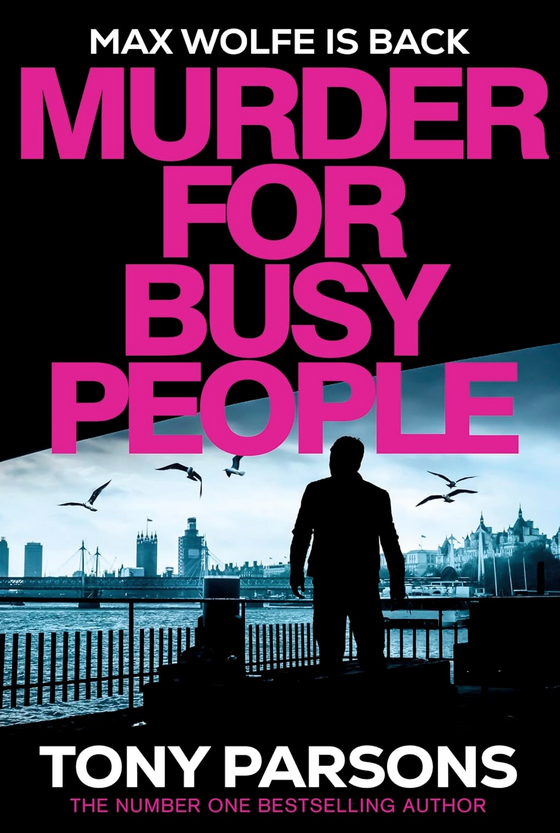
MURDER FOR BUSY PEOPLE . . . Between the covers

MFBPspine010 copy

The good news is that DS Max Wolfe is back, and the even better news is that, after a long absence, our man is in very good form. As a young uniformed copper, only days out of Hendon Police College, Wolfe was first on the scene at a safe heist in a palatial London villa. All he found was a gaping hole in the wall, two corpses – and a young woman called Emma Moon, a girlfriend of the mobsters who committed the heist. Wolfe put the cuffs on her, she was tried, convicted, and served a long jail term, during which her troubled son committed suicide. Never once, during the whole process, did she utter a word about those who profited from the robbery. Now, she is out, suffering with terminal cancer, but on a ice cold revenge mission to kill as many of her former associates as she can in the brief time she has left.

Old Max Wolfe hands will know that there is an autobiographical strand running through the novels. Parsons’ breakthrough book was Man and Boy, an account of a male single parent. Here, Wolfe brings up his daughter Scout, rather than a son. Both Wolfe and Parsons are lovers of a dog called Stan, and it was sad to see an RIP notice to the real Stan in the frontispiece of this novel.  Max Wolfe lives within sight, sound and smell of the historic meat market known as Smithfield, for centuries the beating heart of a country that loves beef, pork and lamb. Parsons may not have known, when this book was signed off to the printers, that the death knell would be sounded on this historic site. It will, no doubt, be demolished and something trite and anodyne built in its place. This is a purely personal paragraph, as Parsons doesn’t preach, but I think London is gone for us now: pubs are closing at an alarming rate, institutions like the iconic chop house Simpsons of Cornhill lie empty, derelict and vandalised. Philip Larkin was right when he wrote, “And that will be England gone.”

Wolfe juggles several criminal – and personal – issues. He knows that a group of Jack-The-Lad firearms officers have a flat where they abuse young women, wrongly arrested when they flash their warrant cards. The murder of a young woman of the streets, Suzanne, seems unsolvable. On a personal level, he struggles to keep tabs on Scout, his twelve-year-old daughter. She is wilful, disobedient, but highly intelligent. Every single second while he is working, he is worried about where she is, and what she is doing. One by one, the foot soldiers of the  heist succumb, each apparently, to natural causes. Wolfe does, in the end, unmask the killer, but more by accident that intention.

Apart from being a gripping read from the first page to the last, this novel is remarkably prescient. I believe that there are many months between the final edition of a book being sent to the printers, and its appearance on bookshop shelves. Parsons weaves two very recent issues into the warp and wedt of his novel. One is a subtle and reflective elegy on Smithfield and its sanguinary history. Just weeks ago, an enquiry released its findings into the killing of a London criminal at the hands of firearms officers. Parsons lets us know, in excruciating detail, the hell that descends on any officer who fires a fatal shot.

Max Wolfe is both convincing and endearing. He doesn’t always get things right. Here, his judgment of Sarah Moon veers from spot-on to plain-wrong (and back again) several times. For all that certain critics and reviewers turn up their noses at Tony Parsons because of his political views, and the newspapers he has written for, the last pages of this book reveal what I have known ever since I met the man at a publishers’ party. He is observant, fiercely honest, and a deeply sensitive writer. Max Wolfe may be only marginally autobiographical but, like his creator, he only dances to the tunes he hears in his own head, and not those streamed in from elsewhere. Murder For Busy People will be published by Century on 2nd January.

Screen Shot 2024-12-19 at 17.29.08

Blog at WordPress.com.

Up ↑