

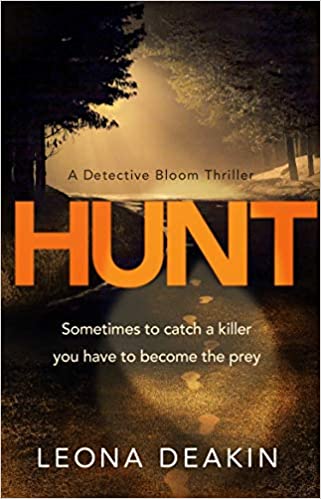
Author Leona Deakin
 Dr Augusta Bloom is a psychologist who specialises in the criminal mind. Her business partner is Marcus Jameson, a former British intelligence agent. Bloom is often employed by the police as a consultant when a particular case demands her particular skill-set. The killers Bloom is requested to track down have struck twice, leaving only burnt matches as a clue. I use the plural ‘killers’ advisedly, as we know they are a team, but Bloom and the police have yet to discover this.
As with the previous novels, there are two parallel plots in The Imposter. One involves Seraphine Walker who is, if you will, Moriarty to Bloom’s Holmes. Walker, despite being clinically psychopathic, is not overtly criminal, but has recruited all kinds of people who most certainly are. She heads up an organisation which, to those who enjoy a good conspiracy theory, is rather like a fictional World Economic Forum, peopled by shadowy but powerful influencers from across the globe, united by a hidden agenda The relationship between Bloom and Walker has an added piquancy because they were once doctor and patient. The backstory also involves someone we met in a previous novel – the disgraced former Foreign Secretary Gerald Porter, a ruthless man who is now happily bent on evil, unimpeded by the constraints of being a government minister with the eyes of the world on him.
 Augusta Bloom is an interesting creation. She is a loner, and not someone who finds personal relationships easy, not with Marcus Jameson nor with her notional boss, DCI Mirza, who is deeply sceptical about Bloom’s insights. When the police finally join all the dots, they realise that rather than two killings, there have probably been as many as eleven, which ramps up the pressure on Bloom and Jameson. Leona Deakin, (right) as one might expect from a professional psychologist, has constructed an complex relationship between Bloom, Walker and Jameson. As readers, we are not spoon-fed any moral certainties about the trio. Rather, we infer that their boundaries are, perhaps, elastic. As John Huston (as Noah Cross) said in Chinatown:
“You see, Mr. Gittes, most people never have to face the fact that at the right time and the right place, they’re capable of anything.”
Each of the trio – Bloom, Jameson and Walker – has a certain dependence on the two others, but Deakin keeps it open and enigmatic, leaving all plot options open to her. This symbiotic relationship has led to Augusta Bloom taking an industry – standard test to discover if she is herself a *psychopath. To her relief, although she is marking her own paper, she doesn’t tick enough boxes.
*Psychopathy, sometimes considered synonymous with sociopathy, is characterized by persistent antisocial behavior, impaired empathy and remorse, and bold, disinhibited, and egotistical traits.
Finally, Bloom cracks the mystery, Mirza and Jameson see the light, and we readers realise that Leona Deakin has been pulling the wool over our eyes for nearly 300 pages. There is a tense and violent finale, and this clever and engaging novel ends with us looking forward to the next episode in this excellent series.
The Imposter is published by Penguin and is available in paperback and Kindle now. For reviews of the three previous novels in the series, click the links below.



 The answer to that conundrum forms the central premise of the book. Porter’s niece Scarlett has been drawn into the orbit of a feminist organisation called Artemis led by a charismatic woman called Paula Kunis. Porter will only answer police questions about his activities if Bloom undertakes to track down Scarlett and extract her from the clutches of Artemis. Bloom is smart enough to realise that Porter is up to something, but cannot work out why he is so worried about his niece, when every other aspect of his behaviour suggests that he is a cold and devious man, with psychopathological elements to his character.
 century Professor Moriarty, who has crossed swords with Bloom and Jameson before. Thirdly, Gerald Porter has inexplicably disappeared from police custody and, almost immediately, a huge social media campaign vilifying Paula Kunis and Artemis has been launched, with the result that scores of husbands and fathers of women “poached” by Artemis have headed to the Scottish retreat and are angrily congregating at its gates.











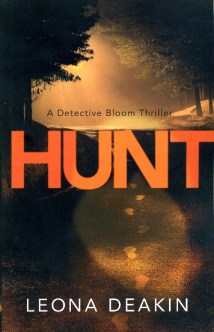 Enough of such morbid musings. There are books to look at! Leona Deakin’s character Dr Augusta Bloom first appeared in
  Vera Kurian’s book, according to the publicity, couldn’t be more different and, if I can be permitted to invent a triple-barreled genre, sounds as if it’s domestic-psycho-noir. Kurian, who is based in Washington DC, has penned a tale of a first year university student named Chloe. The blurb is very effective:



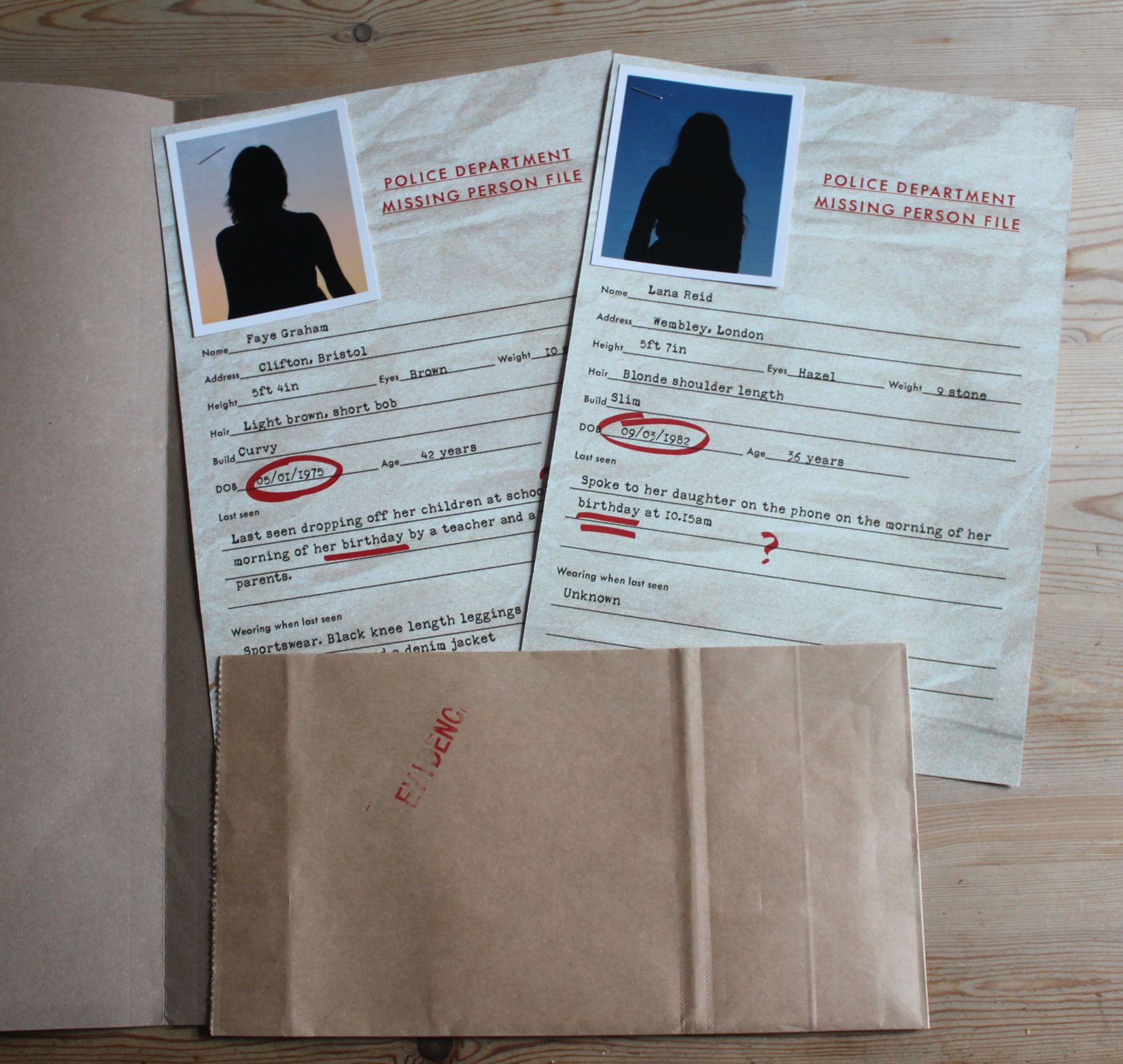
 Jameson’s sister Claire has, for some time, fulfilled a mixed role of aunt, mother and babysitter to a teenage girl called Jane. Jane’s mother Lana, is a single mum, loving but chaotic, perhaps suffering from PTSD after several tours in conflict zones when she was a soldier in the army. Now she has disappeared, leaving Jane with no money for food or rent. Knowing of her mum’s fragile mental state. Jane was not initially alarmed, but when she began to investigate, after receiving no help from the police, she made several disturbing discoveries.
Lana disappeared on her birthday. Immediately before her disappearance she had received a mysterious card inviting her to play a game. The beautifully presented card bore the words, elegantly embossed in silver on cream:
Jameson’s sister Claire has, for some time, fulfilled a mixed role of aunt, mother and babysitter to a teenage girl called Jane. Jane’s mother Lana, is a single mum, loving but chaotic, perhaps suffering from PTSD after several tours in conflict zones when she was a soldier in the army. Now she has disappeared, leaving Jane with no money for food or rent. Knowing of her mum’s fragile mental state. Jane was not initially alarmed, but when she began to investigate, after receiving no help from the police, she made several disturbing discoveries.
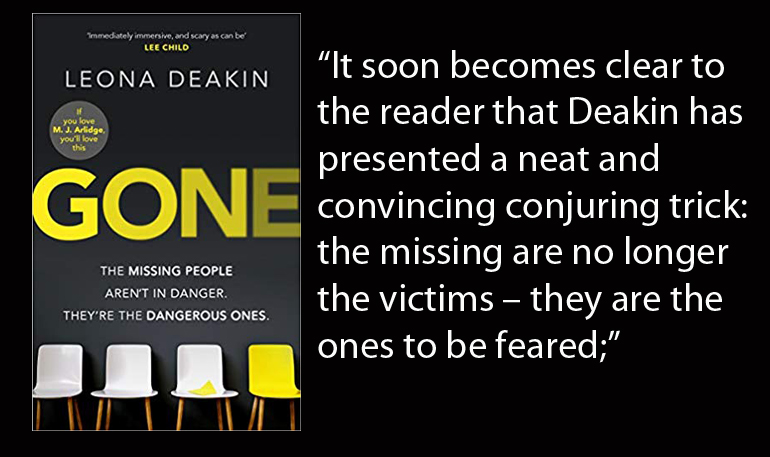
Lana disappeared on her birthday. Immediately before her disappearance she had received a mysterious card inviting her to play a game. The beautifully presented card bore the words, elegantly embossed in silver on cream: Leona Deakin’s own experience and training in psychology gives this novel a framework of authenticity to which the more fanciful parts of the narrative can cling. It soon becomes clear to the reader that Deakin has presented a neat and convincing conjuring trick: the missing are no longer the victims – they are the ones to be feared; those left behind have become the prey.
The relationship between Bloom and Jameson is intriguing. It reminded me of the unresolved tension and undeclared love between Val McDermid’s doomed lovers Tony Hill and Carol Jordan. We are left to decide for ourselves what Augusta Bloom looks like; Deakin (right) suggests that she might be rather dowdy, an academic in flat shoes. She is certainly razor sharp mentally, however, and she plays a devastating human chess game with the organisation behind the birthday card disappearances.
Leona Deakin’s own experience and training in psychology gives this novel a framework of authenticity to which the more fanciful parts of the narrative can cling. It soon becomes clear to the reader that Deakin has presented a neat and convincing conjuring trick: the missing are no longer the victims – they are the ones to be feared; those left behind have become the prey.
The relationship between Bloom and Jameson is intriguing. It reminded me of the unresolved tension and undeclared love between Val McDermid’s doomed lovers Tony Hill and Carol Jordan. We are left to decide for ourselves what Augusta Bloom looks like; Deakin (right) suggests that she might be rather dowdy, an academic in flat shoes. She is certainly razor sharp mentally, however, and she plays a devastating human chess game with the organisation behind the birthday card disappearances.

 There is a definite autobiographical seam in the character of Dr Augusta Bloom, who combines the careers of PI and psychologist. The author worked as a psychologist for West Yorkshire Police before writing this, her debut novel. She turns the serial abductor/victim trope on its head as Dr Bloom tries to convince a complacent constabulary that the alleged victims may be more to be feared that the perpetrator. This will be published by Black Swan
  As the enthusiasm for the recent film The Favourite shows, the life of Queen Anne, thought by history to be hitherto unremarkable, has become something of ‘a thing’. Professor David Fairer of Leeds University is an acknowledged expert on the 18th century and, in, particular, its poetry. How fitting then, that his novel is set in the London of 1708 where The Queen herself is subject to scathing sexual innuendo in the gutter press, and the capital seethes with political and criminal unrest. There are, inevitably, casualties and an unlikely trio of investigators seek to solve two murders and prevent a third. This enthralling historical mystery is available now, and is
  We could, once upon a time, refer to Africa as The Dark Continent without invoking the fury of The Woke. Working on the assumption that Africa was ‘darker’ the further you went into it, then the Congo was blacker than black. Conrad’s Heart of Darkness and Greene’s A Burnt-Out Case feasted royally on the remoteness of the Congo, and the consequent imaginings of a land where the moral code was either abandoned or perverted. David Fletcher’s Dan Worthington has suffered loss, heartbreak, and the almost surgical removal of his life spirit. A chance encounter offers him a renaissance and a reawakening, but there is a price to be paid. A flight to Brazzaville takes him to the divided modern Congo, and a sequence of events which will test his resolve to its core. Darkness is also a Matador title and came out in
  Sue and Jeff work in a grocery store that is something of a throwback. Old fashioned service, the personal touch, quality products – what could possibly go wrong? The pair are amiable, kind-hearted and loved by customers. This apparent Garden of Eden turns inexorably into a wasteland when the pair become involved in a grim criminal conspiracy which is none of their own making. Published by Matador, Good Question is
 Fans of comforting and anguish-free crime novels should probably look away now. This debut psychological thriller gnaws away at our anxieties and its mission statement seems to be that no fingernail should remain unbitten. Ostensibly privileged and happily married, Naomi falls both victim of – and pregnant by – an elusive and unscrupulous charmer. His disappearance is one thing, but the threat and menace hanging over her domesticity is something else altogether. Harvill Secker are the publishers here, but you will have to wait until
  Eve Hunter elbows her way into the crowded room containing fictional British Detective Inspectors, but she has a reputation to save, and a serial killer to catch. Deborah Masson (left) comes from The Granite City of Aberdeen, which is totally fitting as this, her debut novel, is as dark, flint-hard and gritty as her home town. Hold Your Tongue is due on the shelves on
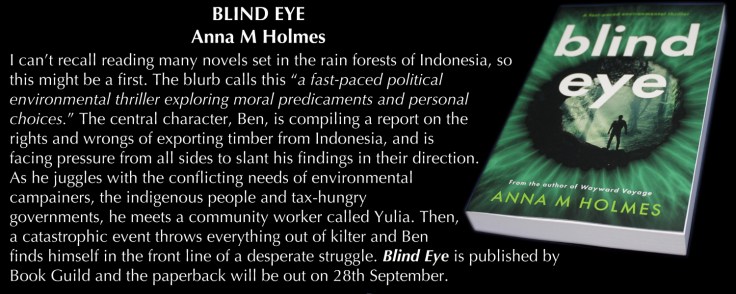
  Randall Forbes has a powerful gift – or is it a curse? He is endowed with telepathy, which gives him formidable abilities as well as huge responsibilities. Set against the warm limestone and dreaming spires of Oxford, Jan Raya’s novel is a breathtaking account of how Randall Forbes challenges and frustrates the police, while sticking to his own code of conduct – slightly warpd though it may be. Musician and writer? Jan Raya is not alone, as fans of the band Fun Loving Crime Writers will testify! Fran Raya’s novel is out on 28th September and is published by
  The only obvious crime here is the disastrous waste of a generation of young lives on the killing fields of France and Flanders, but Caroline Scott’s novel explores the emotional wasteland of England in the 1920s, where countless women sought some kind of solace after the death of their fathers, husbands and brothers. The photographing of grave-sites and cemeteries was something of a huge commercial opportunity, as so many relatives were ill-equipped to make the journey across the channel to be reunited with their lost loved ones. Widowed Edie has resigned herself to mourning for husband Francis, but a random photograph sparks a search which may end in joyful reunion or shattered hopes. This book is an elegy to loss, heartbreak and the death of a generation. Out on 31st October,
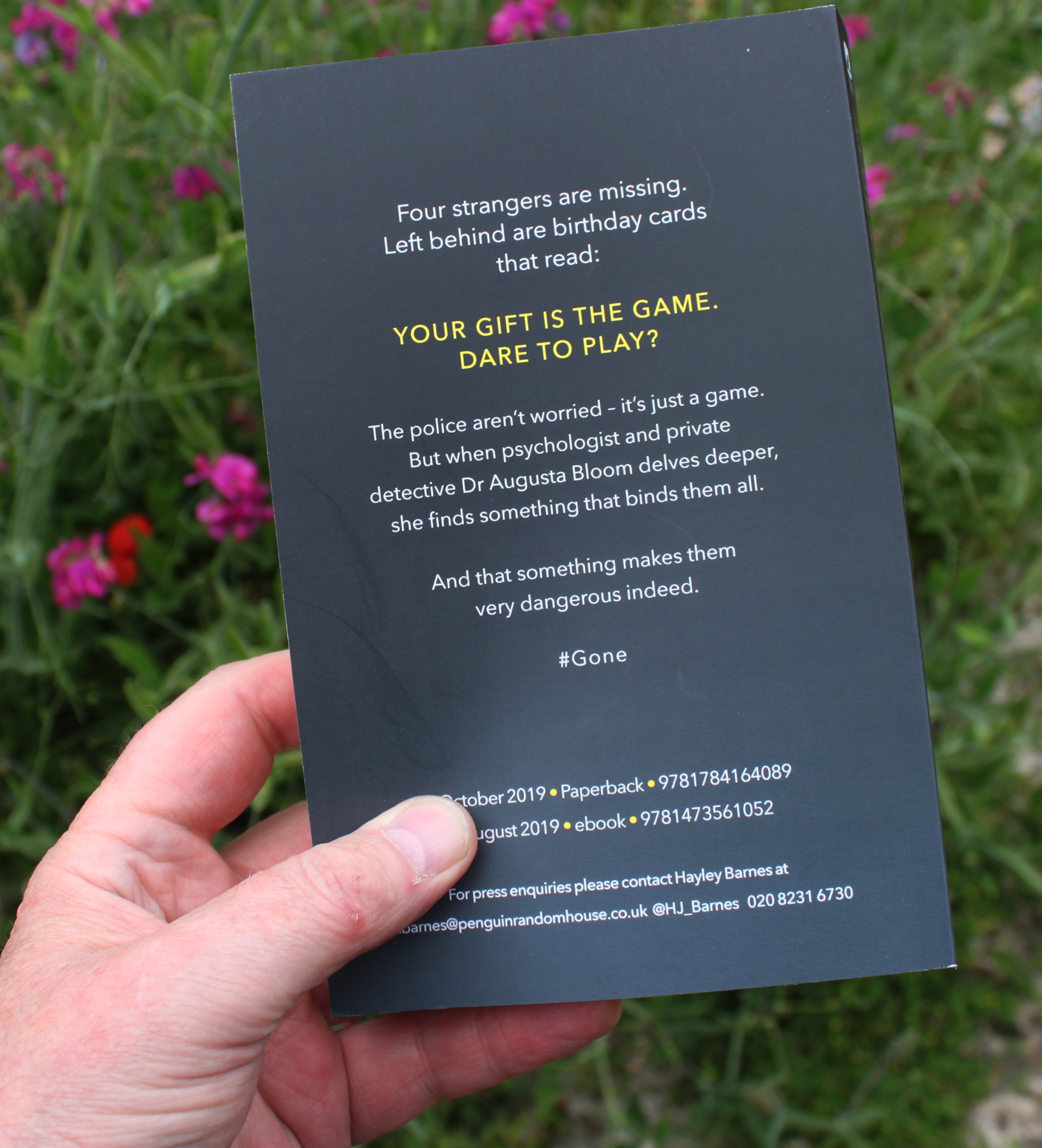

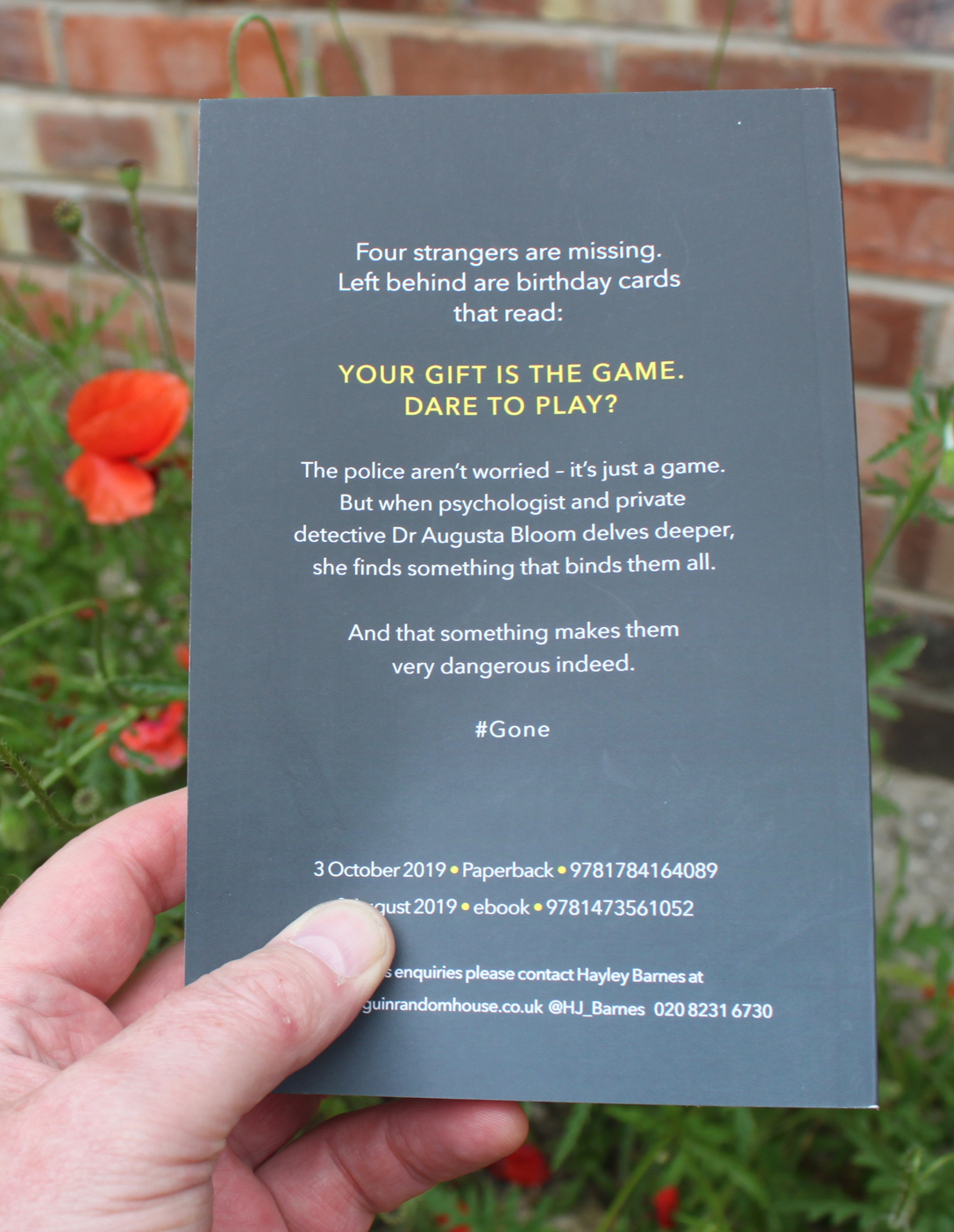
 he creative folk at Penguin Random House are certainly pushing the boat out in support of Gone, a new psychological thriller and the debut novel by former police psychologist Leona Deakin.




 fullybooked2017