

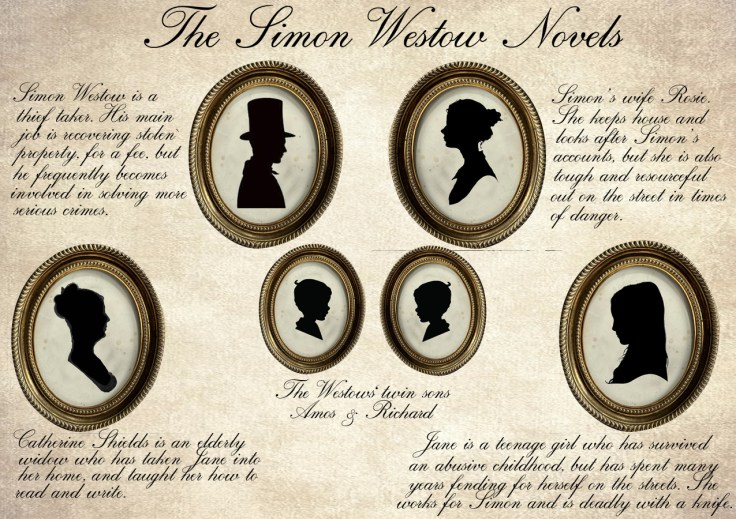
This begins as one of the most baffling and impenetrable of Simon Westow’s cases. We are in Leeds, 1826. He solves a case of fraud, the fraudster is sentence to hang, but reprieved. He then returns with his wife to shadow the man he originally tried to defraud. The man, who calls himself Fox, seems connected to his victim, a Mr Barton, via Barton’s wayward son, Andrew. Westow, like Ulysses in Tennyson’s great poem, no longer has “that strength which in old days Moved earth and heaven,” due to a serious wound sustained in a previous case, but his eyes, ears – and legs on the street are provided by his lethal young assistants Jane and Sally.
One of Nickson’s many skills as a writer is to point out the dramatic contrast between the industrial stink of Leeds and the uncorrupted countryside not many miles outside the city. Andrew Barton goes missing, so Jane and the boy’s anxious father make the journey in a chaise towards Tadcaster. Jane investigates the ancient church of St Mary, Lead, solitary and empty in a lonely field. Near the church runs the Cock Beck, which was reported to have run red with blood during the nearby Battle of Towton in 1461, and as she crosses the stream , she makes a terrible discovery.
Quietly, Nickson references the timeless joy of reading. Jane, once an illiterate street urchin, has been taught to read by Mrs Shields, the old lady who has become the mother she never had. Now, Jane spends her spare hours immersed in the novels of Sir Walter Scott and James Fenimore Cooper, borrowed from the circulating library. The printed words take Jane away from the perils and drudgery of her own existence to a world of daring, adventure and hope. In his own way. Nickson does precisely the same thing.
There is a deep sense of poetry in the book, not just in the words, but in the juxtaposition of images. The book begins with Jane witnessing the result of a horrifying industrial accident. A young girl is being roughly carried to the surgeon, her leg mangled beyond repair. This haunts Jane throughout the book, but then, near the end, there is a kind of redemption. One of the regular characters who ekes out a living on Westow’s streets is Davy, the blind fiddler. Jane’s trauma is redeemed:
“Up by the market cross, Davy Cassidy was playing a sprightly tune that ended as she drew close. He gazed around with his sightless eyes and a girl appeared whispering a word into his ear. He lifted his bow and began to play again, low, mournful. Then the girl stepped forward and began to sing. Jane knew her face. She’d lived with it for months. She’d seen it contorted with pain as the girl was carried from the mill, her leg in shreds. Then when it returned night after night in her dreams. Now she was here, one-legged, supported by a crutch, a voice as unearthly sweet as a visitation as she sang about a girl who moved through the fair. She stood transfixed as a disbelief fragmented and disappeared. The pain she’d heard in the girl that day in February had become beauty. The small crowd was silent, caught in the words, the singing while the world receded around them. The last note ended, a stunned silence, then applause and people pushing forward to put coins into the hat on the ground.”
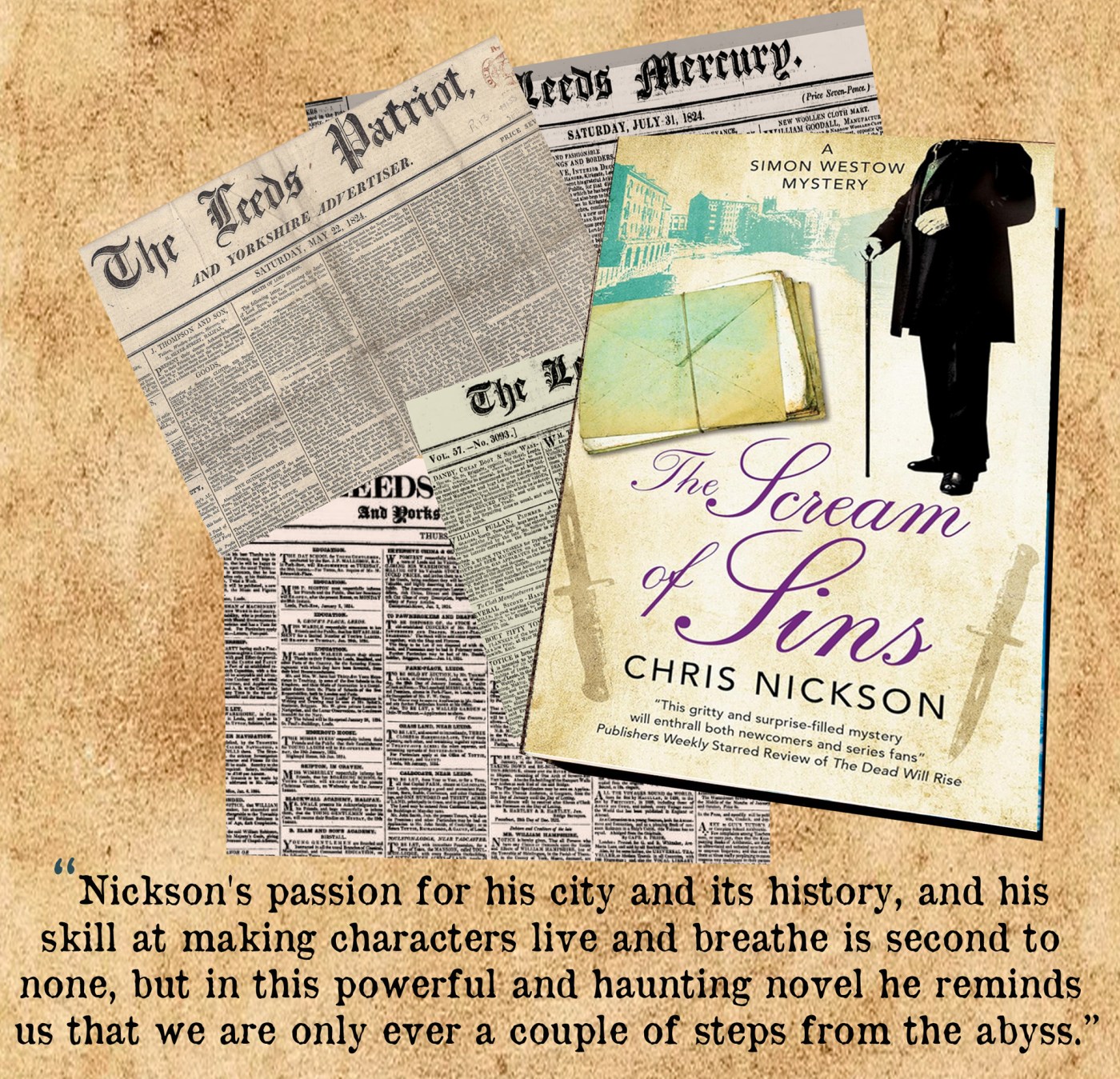
Eventually, by a mixture of judgment perseverance and good fortune, the mysterious Fox is run to ground in a bloodthirsty finale. A Rage of Souls is Chris Nickson at his best – complex, compelling and, above all. compassionate. It will be published by Severn House on 7th October. You can take a look at earlier Simon Westow books here.







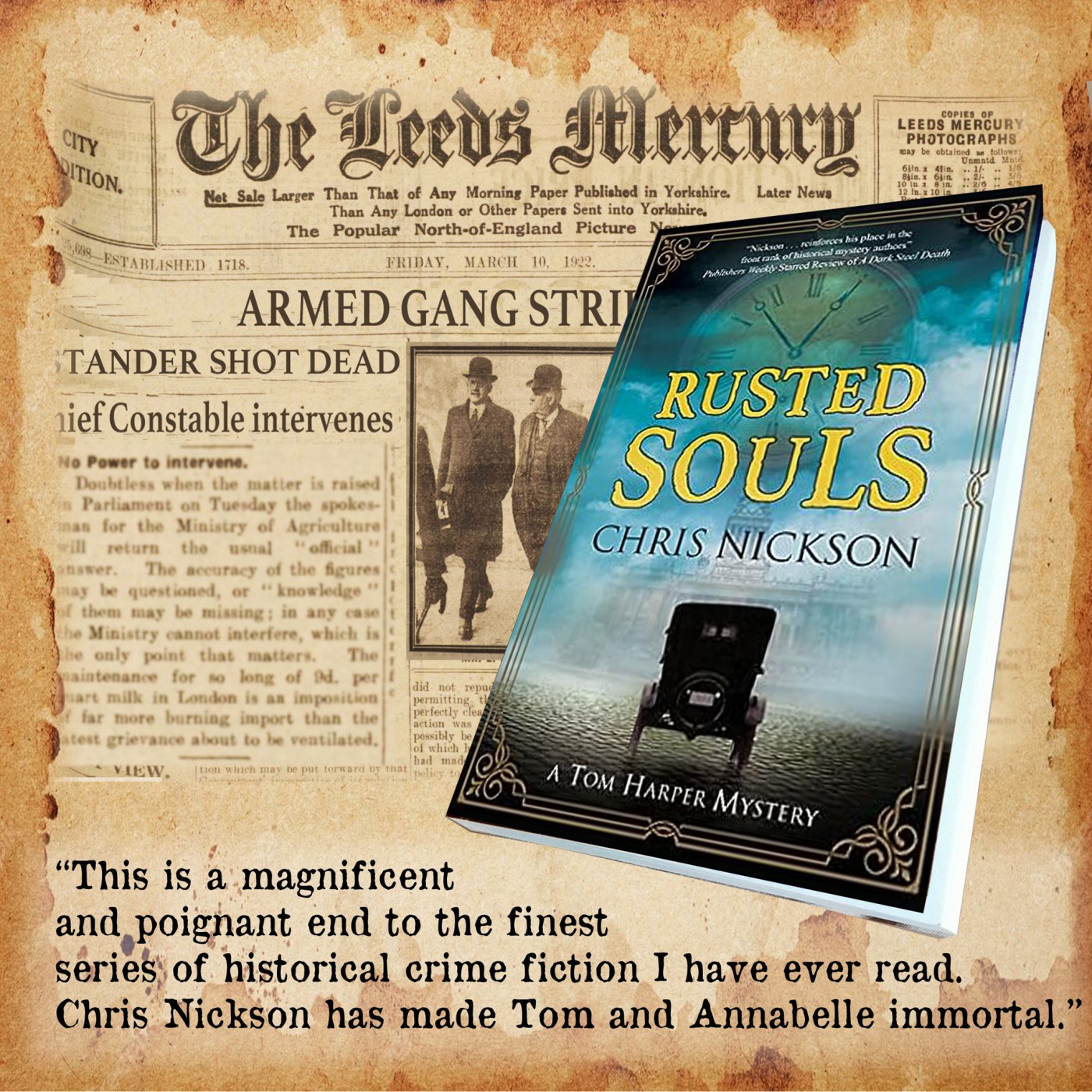
 Leeds, March 1920. Tom Harper is Chief Constable of the City force and, with just six weeks until his retirement, he is dearly hoping for a quiet ride home for the final furlong of what has been a long and distinguished career. His hopes are dashed, however, when he is summoned to the office of Alderman Ernest Thompson, the combative, blustering – but very powerful – leader of the City Council. Thompson has one last task for Harper, and it is a very delicate one. The politician has fallen a trap that is all too familiar to many elderly men of influence down the years. He has, shall we say, been indiscreet with a beautiful but much younger woman, Charlotte Radcliffe. Letters that he foolishly wrote to her have “gone missing” and now he has an anonymous note demanding money – or else his reputation will be ruined. He wants Harper to solve the case, but keep everything completely off the record. Grim-faced, Harper has little choice but to agree. It is due to Thompson’s support and encouragement that he is ending his career as Chief Constable, with a comfortable pension and an untarnished reputation. He chooses a small group of trusted colleagues, swears them to secrecy, and sets about the investigation.
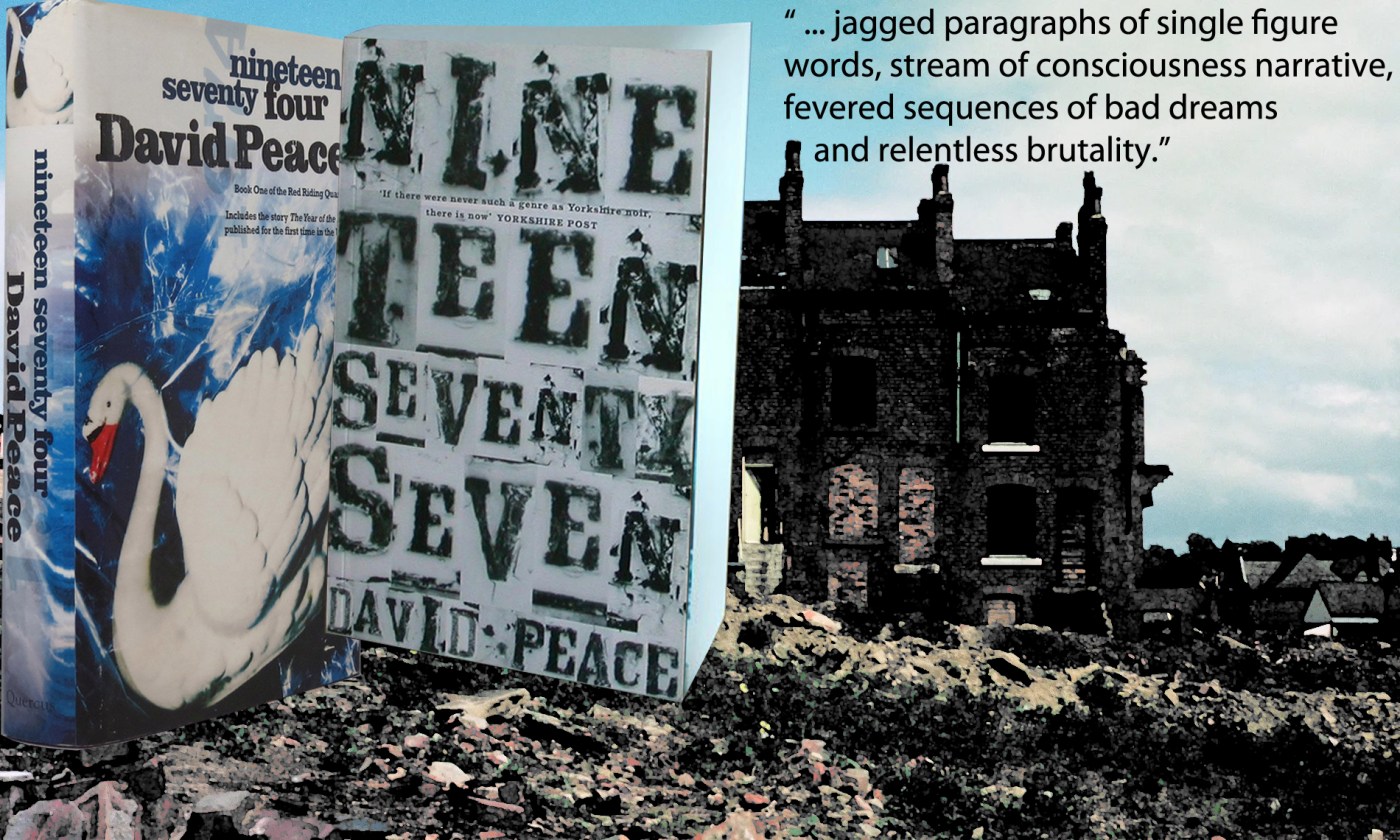


 1974 was praised at the time – and still is – for its coruscating honesty and brutal depiction of a corrupt police force, bent businessmen who have, via brown envelopes, local councillors at their beck and call in a city riven by prostitution, racism and casual violence.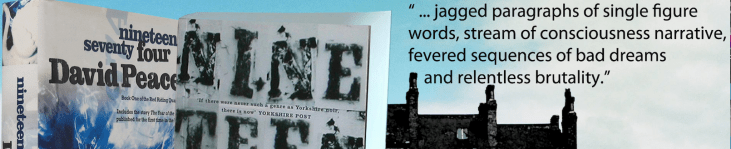




 fullybooked2017