

In the dear, dead days beyond recall, when I was still working as a teacher – casting (as a friend once memorably said) artificial pearls before real swine – someone suggested we apply the WILF principle when explaining to sullen teenagers how to improve their work. WILF stood for What I’m Looking For. Applying the WILF principle to what constitutes a thriller, I would suggest a mixture of the following: severe personal stress, violence, unexplained events, evil masquerading as benevolence, mysterious threats – feel free to add your own criteria, but those will do for me. Click the links to read a full review of each novel.
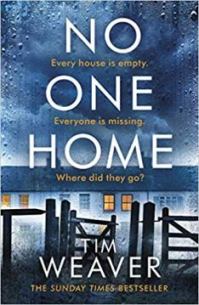 Tim Weaver’s intrepid searcher for the physically lost, David Raker, faced his hardest challenge yet in No One Home when he was hired to find not merely a missing husband or a disappeared friend, but an entire community, albeit a tiny moorland hamlet. As ever Tim Weaver provided a plausible solution to what seemed an impossible conundrum.
 Clergymen writing crime novels? That can only mean cosy village mysteries centred around tweedy villages and eccentric old ladies, surely? Not if Peter Laws has his way. He is a minister in the Baptist Church in Bedforshire, but his Matthew Hunter novels are dark, scary and blood-spattered. In Severed, Hunter encounters a reclusive sect whose primitive and baleful version of Christianity has left a trail of death and disruption.
 Ben Bracken is a Jack Reacher do-alike transported to contemporary England. Much as I have enjoyed the invincible Reacher over the years, Rob Parker has created a more thoughtful and vulnerable – at least psychologically – version in Ben Bracken, a former soldier who exists in the shady hinterland which lies between law enforcement, special services and officially-sanctioned skullduggery. Till Morning Is Nigh is the fourth in the series and is, by some way, the best yet. Our man infiltrates an extremist far-right group and contributes to a spectacular shootout at a school nativity play.
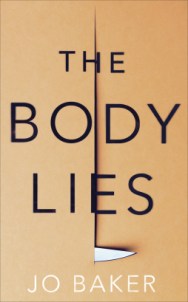 Sad to say, there is no-one more vulnerable in modern society – at least in novels – than a single mother trying to bring up her child. In The Body Lies Jo Baker takes a look at the dichotomy between fictional tropes and reality. Her unnamed protagonist is a lecturer at a minor university, separated from her husband and trying to juggle a job and childcare. Baker spins a delightfully elaborate yarn which begins when the woman is targeted by a stalker.
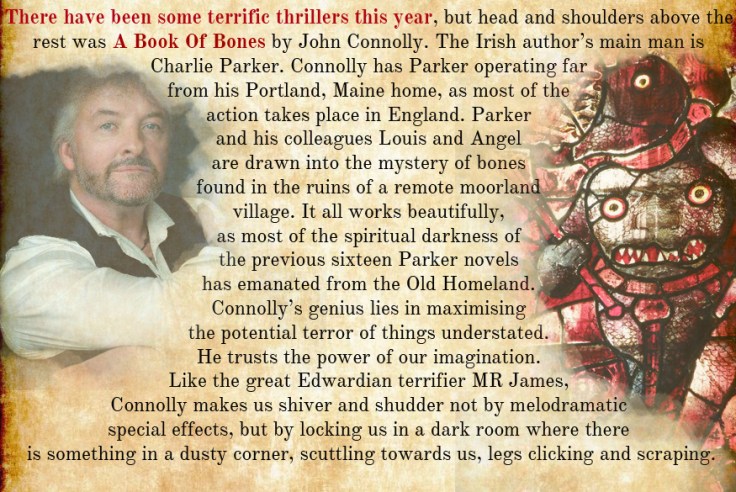


 s the immortal Juliet once asked, “What’s in a name?” To her, not very much, as I recall, but it takes a brave novelist – such as Daphne Du Maurier in Rebecca – to keep the narrator and central character anonymous. Jo Baker uses this literary ploy in her latest novel, The Body Lies. Even the title is ambiguous, but the young woman at the centre of this dark domestic thriller is anything but anonymous or sketchily drawn.
 In the absence of a name, what do we know of her? She is a writer who, like so many others in real life, has been published but needs a day job to stay afloat. She is married to a rather dull but worthy London schoolteacher. They have a young son, Sammy and, in an effort to re-establish her identity she makes a successful application for a lecturing job at a university in the north of England. Husband Mark is unwilling to leave his post, and so they agree to live separately but meet up at weekends. At the very beginning of the novel the woman is assaulted by a stranger while she is out jogging: the attack is not physically serious but leaves deep mental scars.
 hen Nicholas and his tutor go beyond the accepted boundaries of student-teacher relationships, the story moves from a wry and sardonic satire on the political and social politics of schools and universities, and takes on a much darker hue. Nicholas disappears, but sends in the weekly updates to his work-in-progress via email – and they are nothing more or less than a blow-by-blow account of his most recent sexual encounter.
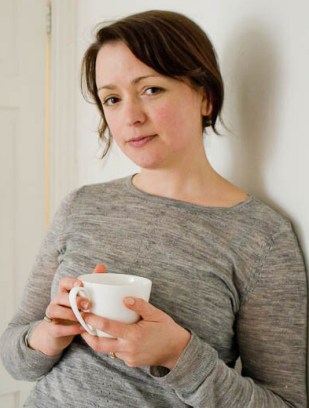 All the familiar tropes of modern British domestic noir kick in, to good effect. We have a stalker, marital infidelity, a woman alone in a remote cottage, the debilitating after effects of recreational drug use, a murder disguised as a suicide and, tellingly, a very scary confrontation on a Wuthering Heights-style moor.


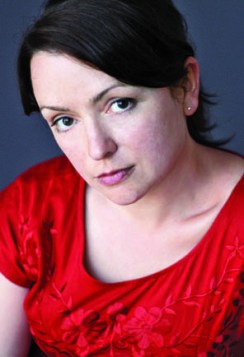 JO BAKER was born and raised in Lancashire, and was educated at Queen Elizabeth School, Kirkby Lonsdale, and Somerville College, Oxford. The Body Lies is her seventh novel, and her best-seller Longbourn is a highly individual reshaping of Pride and Prejudice as seen through the eyes of the “below stairs” staff in the Bennet house. Jo Baker has
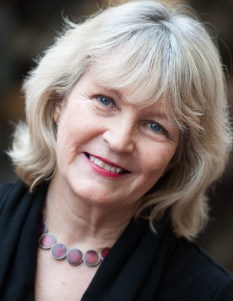 TINA BEATTIE was born in 1955 in Lusaka, Zambia. Her parents were economic migrants from post-war Scotland. She is now Professor of Catholic Studies at the University of Roehampton in London, and has written widely on theology and the Roman Catholic faith. Her writing, particularly with regard to women’s rights and feminism have often brought her into conflict with the more conservative wing of her church. Her Amazon page is
 MP MILES is from a small town in Dorset.


 fullybooked2017