
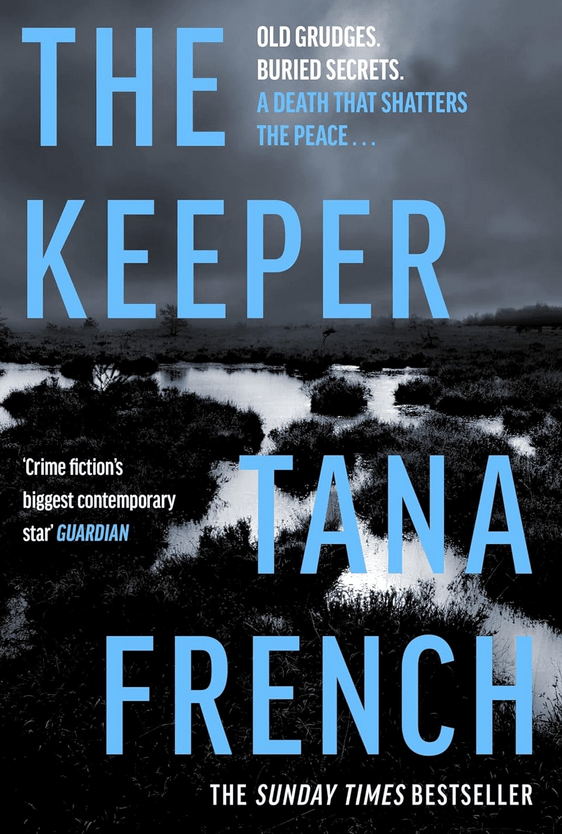
Former Chicago cop Cal Hooper has fetched up in the Irish village of Ardnakelty, where he supplements his pension with woodworking and carpentry. This is the third novel in the series, but for newcomers, the cast list comprises:
Lena, his kind-of fiancée. She is a widow.
Noreen, her sister. She runs the village shop and is a one woman Greek chorus and general busybody.
Tommy Moynihan, a would-be big shot, manager of a local factory, rich but widely disliked.
His son Eugene, something in Dublin finance circles.
Rachel Holohan, his long time girlfriend.
Trey, a teenage girl, something of a wild child, informally adopted by Cal, whose natural daughter Alyssa still lives in America.
The drinkers at the Seán Óg pub. They are a diverse mix of farmers and strugglers, but unequivocally wedded to Ardnakelty and its heritage, for good or bad.
We learn that all is not well between Rachel and Eugene. She is reported missing one night, and then Cal and other searchers find her body in the local river. Weeks pass before the authorities declare her death a suicide, through drinking antifreeze. Meanwhile, the village has become polarised with gossip and speculation, the fault line being suspicion of – or support for – the Moynihans.In the long dead days between Rachel Holohan’s death and her body being released for burial, Ardnakelty begins to twitch.
A better snapshot of a rural Irish wake you will not find:
“I’m starving, “Bobby says dolefully.
At a long table at the end of the room, a scrawny kid with an unconvincing mustache is ladling soup from a tureen into bowls for a line of the kind of old women who can’t be killed by anything short of a lightning strike.
Bobby eyes him wistfully.
‘I’d eat the hind leg off the lamb of God.”
At a hefty 400 plus pages this is no crime caper throwaway. Tana French uses the time and space to plant a seed of suspicion beneath the turf of Ardnakelty. The seed germinates, puts out roots, and then produces the flowers which Baudelaire called Fleurs de Mal. As Rachel is laid to rest, the parish priest cannot resist a biblical reference to the evil of suicide, while the Moynihans and Rachel’s family sit, pointedly, on opposite sides of the church.
The enigmatic Trey thinks that the antifreeze suicide makes no sense; Lena has told no-one about the night Rachel visited her, ostensibly to ask for Lena’s veterinary advice about her cat, but actually – and tearfully – wanting someone to talk to. In an effort to find out what is going on, as tensions increase, Lena goes to see Noreen”s mother in law, who seems to know all and see all, despite never leaving the house:
“At the heart of it all is Mrs. Duggan, vast and formless, in a magenta dress, coated with swirls of tiny magenta beads, like one of those underwater creatures that lie wide-mouthed on the seabed, waiting to receive anyone and anything that comes their way.”
As opinions in Ardnakelty polarise between the pro and anti Moynihan camps, Tana French gives us a magnificent pub brawl which (old movie buffs, pay attention) might have been orchestrated by John Ford, with John Wayne and Victor McLaglen in full flight.
Despite his being an outsider and a former Chicago cop, Cal feels connected:
“Cal doesn’t know how to find words for what he means.The things he’s come to prize in this place are not, mostly, the ones he moved here in search of.The beauty is all there and more, but he was also picturing simplicity and peace, maybe even innocence, none of which showed up in any noticeable quantity.Instead, he’s found the intricate webs constructed over centuries that bind people to one another, to their land and to their past.He’s under no illusion that these bindings are simple or innocent either.They’ve sliced people to the bone, scourged them out of town, choked them to death. But alongside all that, they’ve held the place together, steadfast in the face of time, dark happenings, rifts, attacks, and sieges.”
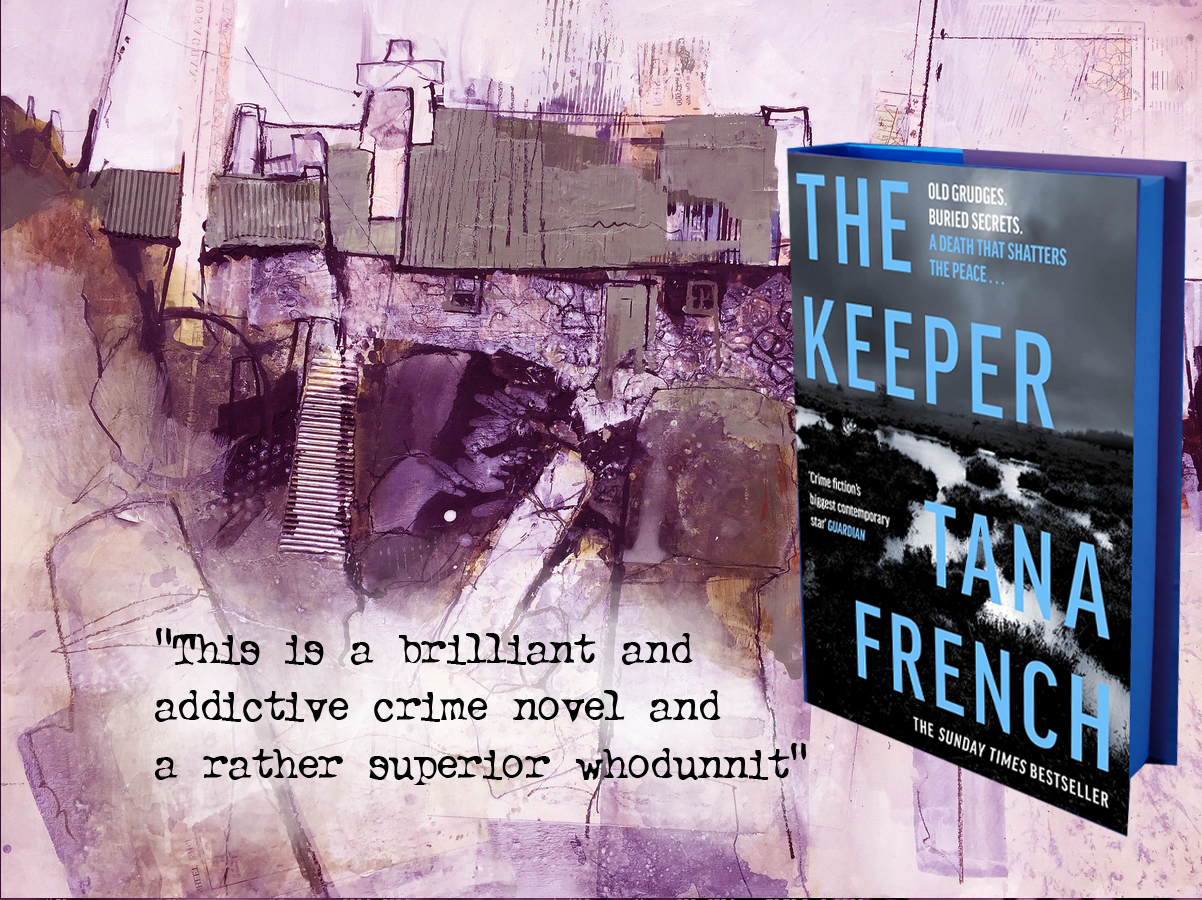
This is a brilliant and addictive crime novel and a rather superior whodunnit, but it is so much more. Tana French’s portrait of small town rural Ireland, with its gossip, linguistic quirks, petty jealousies, long-held grudges and its ambiguous relationship with the land and its climate reveals in words what Rembrandt brought to life with brush strokes. I have never set foot in Ireland, so I cannot say if her version is accurate. What I do know is that no contemporary English writer does the same thing for our villages and small towns. We are, of course, a very crowded and compact country and much more in thrall to globalist media influence, so perhaps the comparison is unfair. In the end, good triumphs – after a fashion. Tommy Moynihan is stopped in his tracks, but not before a good man dies. The Keeper will be published by Viking on 2nd April.




 Catherine Ryan Howard shines an unforgiving light on the way in which the media treats the parents and family of women or children who have been abducted or murdered. Jennifer Gold was the youngest of the three missing women. She was conventionally beautiful, a scholar, high achiever and photogenic. Likewise her mother Margaret is polished, well groomed and an assured media performer. By contrast, Tana Meehan – the first woman to be abducted – was overweight and something of a wreck of a person, having left her husband to go home to live with her elderly and ill parents. Nicki O’Sullivan, or so it was reported, had been last seen staggering around on the pavement after drinking too much at a party.

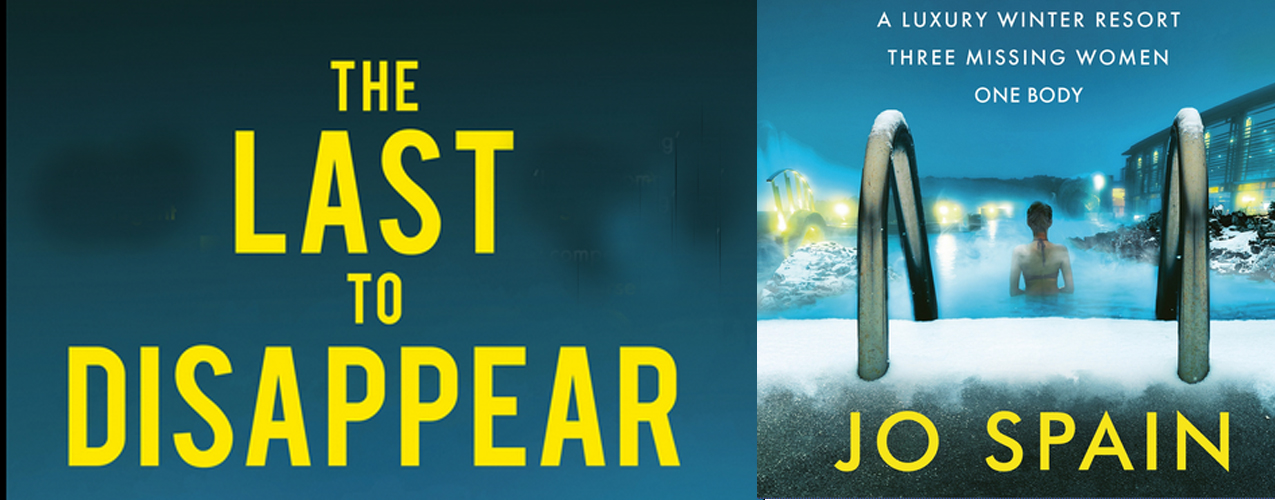

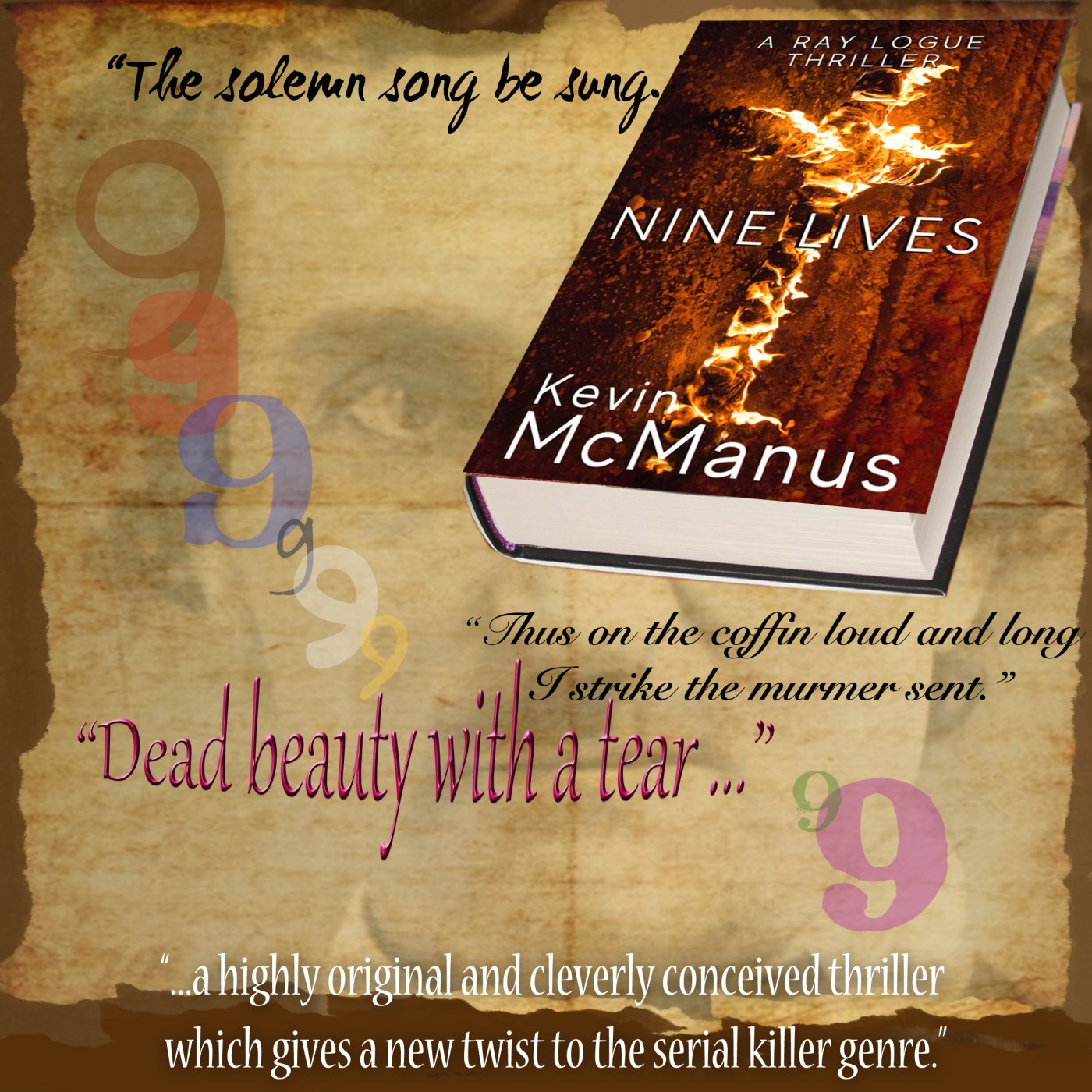
 The action skips thirty years, and Jim Mulcahy who was the rookie detective covering the girl’s disappearance is now Superintendent, and heading for retirement. When recreational scuba divers find the rusting remains of a car at the bottom of a local lough with a skeleton on the back seat – which turns out to be the headless remains of Frank Rudden – the case is reopened. It was Rudden who drove off in his VW Beetle that fateful night three decades earlier, with Hazel Devereaux as his passenger. We are now, of course, in the age of smartphones and internet search engines, and it doesn’t take the Irish coppers long to link this cold case to several similar murders in that Irish home-from-home, Boston Massachusetts. Detective Ray Logue is sent to liaise with the Boston PD, in particular Officers Sam Harper and Olivia Callaghan.
 As Logue, Callaghan and Harper close in on who they think is the killer, Kevin McManus bowls us a couple of googlies – or perhaps I should say, since we are in Boston, throws down some curve balls – and all is not what it seems to be.


 Such is the case in The Perfect Lie. Erin Kennedy – an Irish lass – works in publishing in New York, is married to American cop Danny Ryan, and they live in Newport, Rhode Island. No, Danny is not a fellow Celt, despite his surname, but beautifully black, at least in Erin’s eyes. One morning, she answers the doorbell to their apartment and admits Danny’s cop colleague Ben – stern of face – and a couple of fellow officers. Within seconds Danny, freshly showered and shaved for the day’s shift has walked to the balcony and jumped to his death on the concrete four floors below.


 artre insisted that the celebrated line from his 1944 play Huis Clos (No Exit), “L’enfer, c’est les autres.” was forever misinterpreted, but the idea that hell is other people has stuck, despite the protestations of the Great Existentialist. Some, like Jo Spain in her latest novel Six Wicked Reasons, would suggest – to mix and match poets – that Dante’s Nine Circles of Hell could be condensed into an overpowering tenth – Family.
 The Lattimer family, patriarch Frazer, sons James, Adam and Ryan, daughters Ellen, Kate and Clíodhna – Clio – have assembled at the family home in south east Ireland overlooking the waters of Spanish Cove in the Irish Sea, so called because of its earliest recorded casualties – sailors from a Spanish galleon blown adrift from the Armada and then shattered on the hidden rocks.
 eaders new to Jo Spain’s novels will welcome the apparently straightforward back-stories of Frazer Lattimer’s children, and their motives for wanting him dead. Those who know that the author is The Mistress of Misdirection will suspect, correctly, that this is only the start. But, for the record, I give you the Lattimer children. James is a big media name, with TV screenwriting and production credits on his CV. Lives in Dublin, of course with ex-model wife and step daughter. Adam – now there’s a tale. He now lives abroad, making money for fun, but he disappeared ten years earlier, broke the heart of his late mother Kathleen, and has now re-appeared, equally mysteriously, and it is his return ‘from the dead’ which has prompted the reunion. Ryan, alas poor Ryan. Drug addicted as a teenager, he has somehow survived industrial intakes of pharmaceuticals, and now lives in Italy, just about getting by as an odd-job man.
 llen Lattimer is the female equivalent of the Prodigal Son’s brother. Remember, the bloke who stayed at home while his brother was out on the town, giving it all away? Ellen has stayed at home, cleaning, cooking, dusting – and paying for the upkeep of the house. She is prim, joyless, and what Private Eye used to call “tight-lipped and ashen-faced.” Kate, on the other hand, has spread her wings and learned to fly. Having overcome a teenage weight problem which caused her to be known locally as King Kong, she is now svelte, lean and lovely. Also, married to a filthy rich Chinese businessman with a chain of luxury hotels. Clio, though has been in the wars. Summoned from a dingy bedsit in downtown New York to attend the family gathering, she is the most volatile of the children, the antithesis of the line from the old hymn which described Our Lord as “slow to chide and swift to bless.”
 s an amateur wordsmith I can only guess at Jo Spain’s writing technique; her prose is so assured, so fluent and has that sense of flair that cannot, surely, be the result only of endless hours of editing. No matter how long you spend polishing a piece of coal, you will never transform it into a gem stone. Six Wicked Reasons is a diamond, multi-faceted and reflecting both the light and the darkness of the human soul. It is


 fullybooked2017