
We rejoin our not-so-friendly neighbourhood sociopath Dyson Devereux in a London pub, where he is celebrating the end of his university exams with fellow undergraduates. He is miles away in his head, however:
“I left Tollington nearly eight years ago and have only been back twice. Aunt didn’t want me there after I pushed her daughter, Beatrice, off a cliff. It was considered to be an accident, but Aunt was suspicious. In my mind’s eye, I see Beatrice plummeting into the mist. This is my favorite memory.
“Ha, haha.”
Dyson needs to get a job, but before that rather tedious necessity, there are three more names on his to-kill list, and they are all in the Dorset town of Tollington. Top Trumps is the lecherous Dr Trenton who, years earlier had seduced Mrs Devereaux (while her husband was dying of AIDS) and filled her so full of tranquilisers that she lapsed into a fatal coma. Two elderly twins – Virulent Veronica and Conniving Clementine – who run a tea-shop must also die because of their persistent taunting of the younger Dyson, publicly stigmatising him for his father’s alleged sins. After eventually passing his driving test, Dyson tours local used car yards for his first set of wheels. He has one main criterion. The car’s boot must be wide enough to accommodate the Samurai sword – honed to razor sharpness – which hangs on he bedroom wall of his student digs.
Dyson is devastated to learn that one of the malignant twins has thwarted his vengeance by dying of old age. Undaunted, he executes her sister and returns to London where, after befriending the daughter of an Indian billionaire. he is invited to an the launch party of an art exhibition by a young man called Sebastian
‘A grim-faced waiter, wearing a bright green tail coat, materializes next to me.He is holding out a plate.
“Tuna balls with cream cheese and red onion.”
I help myself to one. It tastes piquant. The exhibition’s art is being put to shame by the seafood Hors d’Oevre. Sebastian is devoid of artistic talent. However, he has one thing going for him. His German mother is an heiress to a pharmaceutical fortune.’
After a few false starts, Dyson finally puts the Samurai sword to use in the manner for which it was designed, and his trilogy of vengeance seems to be over. Despite some interest from the police, he has covered his tracks so carefully that the two most recent crimes cannot be pinned on him, and he begins his working career in the less-than-exotic offices of a London borough council in their Green Spaces Department. This segues fairly neatly into the first book – in publishing chronology – of the series, Necropolis, which I reviewed in 2014 (click here to read)
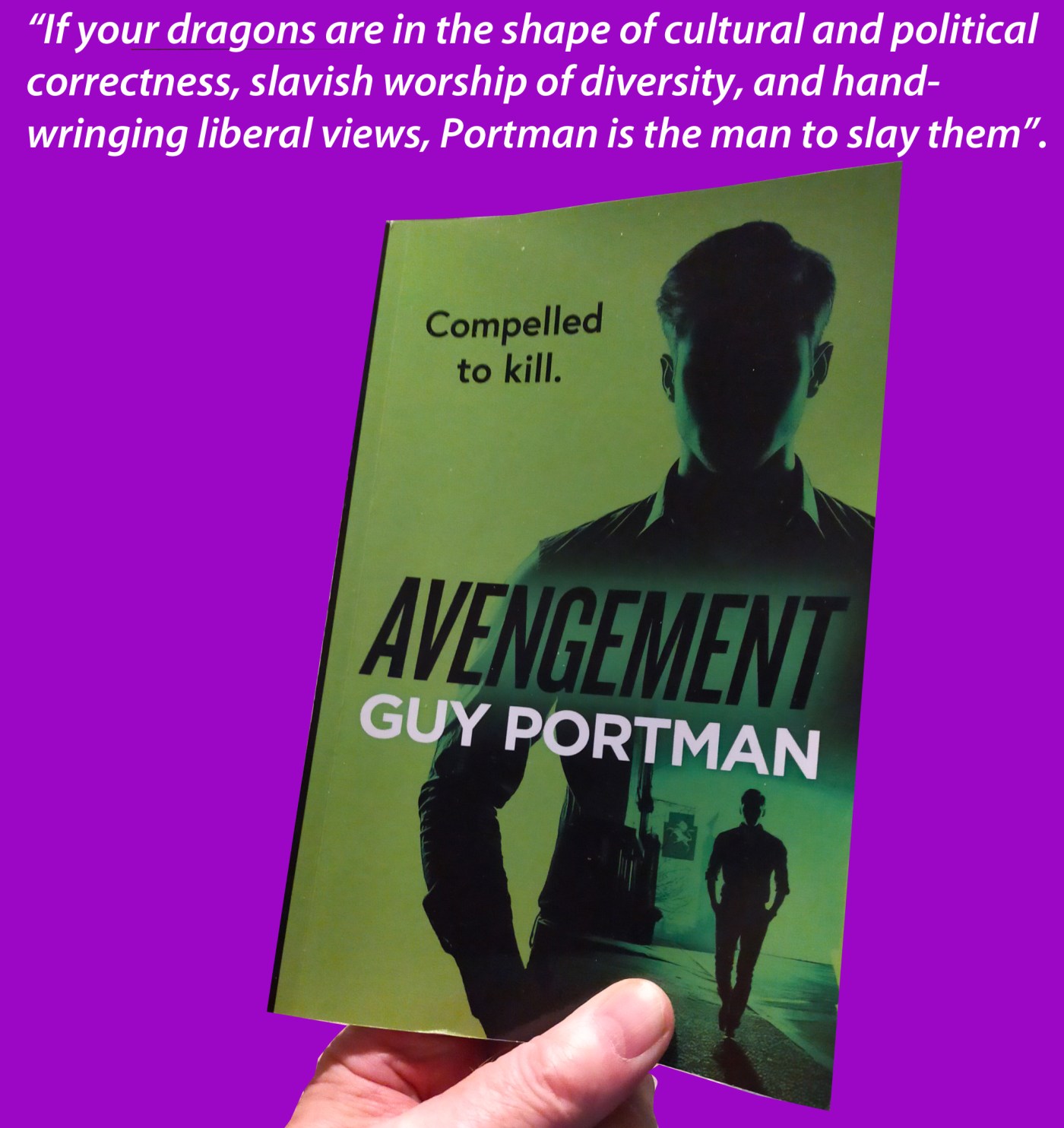
Satire in Britain is, in my view, in a fairly bad way at the moment. Like comedy, it seems to have just been absorbed into the prevailing metropolitan liberal mindset, which only considers the political right as a legitimate target. Private Eye is a shadow of its former self, and I gave up on HIGNFY years ago. Rare is the journalist who challenges the prevailing Islingtonian doctrines through comedy, Rod Liddle being perhaps one exception. I can’t think of anyone who writes quite like Guy Portman. Jonathan Meades is similarly trenchant and iconoclastic, but even his last novel had to be crowd-funded, as no publisher would touch it. If your dragons are in the shape of cultural and political correctness, slavish worship of diversity, and hand-wringing liberal views, Portman is your St George. Avengement is available now.




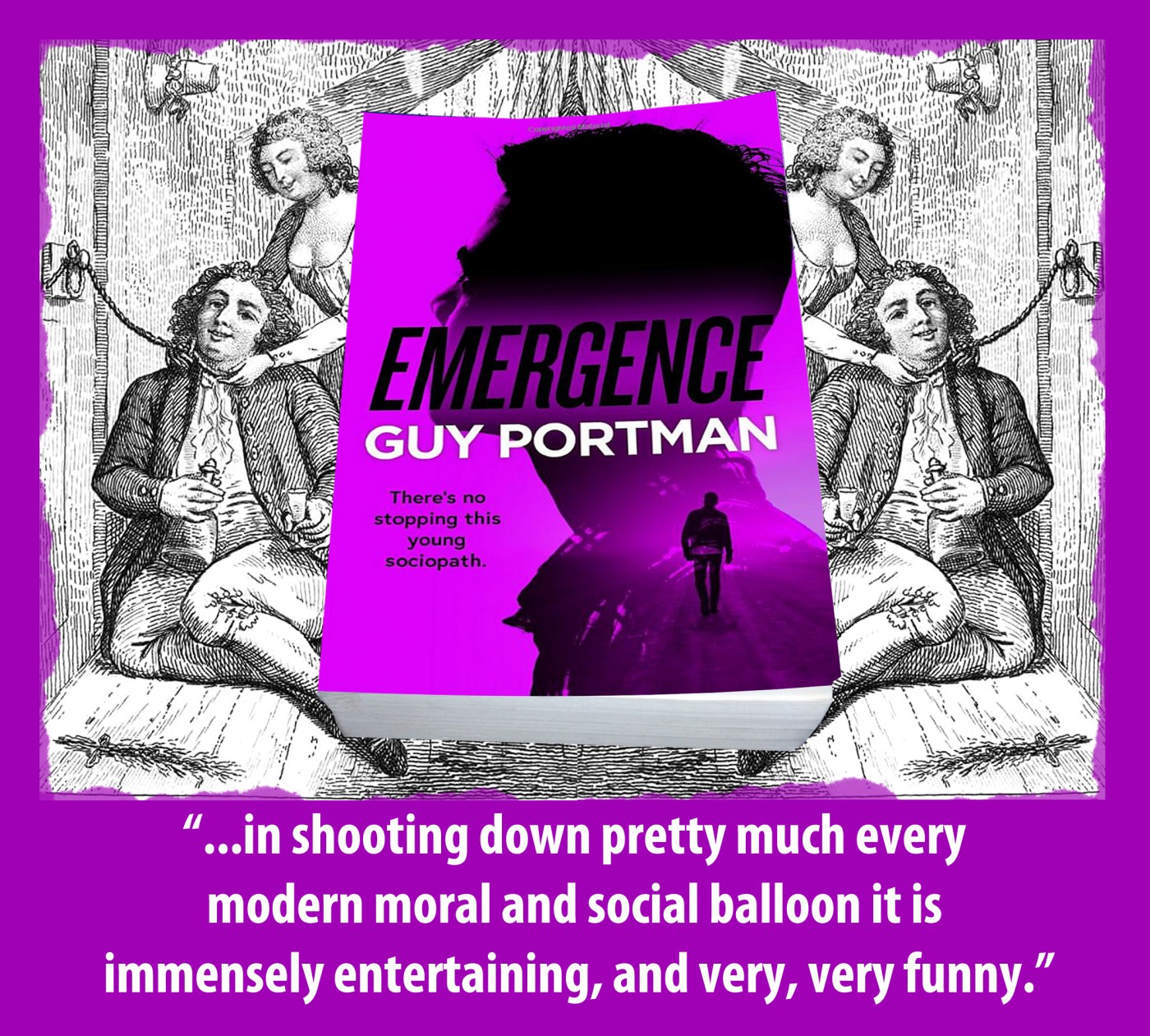


 Guy Portman (left) introduced us to Dyson Devereux in Necropolis (2014). I gave it 5* when writing for another review site, and I’ll include a link to that at the end of this post. Dyson was Head of Burials and Cemeteries in a fictional Essex town, and a rather individual young man. He is narcissistic, punctilious, cultured and, outwardly polite and thoughtful, but with an anarchic mind and a terrible propensity for extreme violence. The book both horrified and fascinated me but made me laugh out loud. Dyson Devereux was a Home Counties version of Patrick Bateman and his antics allowed Portman to poke savage fun at all kinds of modern social idiocies.
 When he finally has his day in court, Dyson scorns the efforts of his lack-lustre lawyer and relies on his own charm and nobility of bearing to convince the court that he is an innocent man. He escapes the clinging arms of Alegra and returns to England without delay, anxious to be reunited with something from which separation has become a cruel burden. A loving family? A childhood sweetheart? The clear skies and careless rapture of an English summer day? No. A tin box containing several memento mori of his previous victims. Little oddments that he can sniff, fondle and treasure. Little bits of people who have had the temerity to upset him, and have paid the price.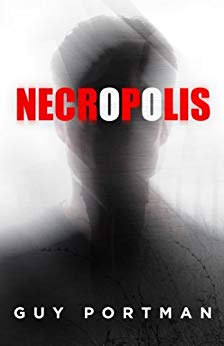




 I must explain the apparent digression before you lose interest. Use your imagination. Conjure up a dreadful genetic experiment which breeds a being who, especially in his diarist’s style of first person narrative, shows very Pooteresque tendencies. But – and it is a ‘but’ the size of a third world country – the mad scientist has added Norman Bates and Hannibal Lecter into the mixing bowl, and then seasoned it with an eye-watering pinch of Patrick Bateman. What do you get? You get Dyson Devereux, Head of Cemeteries and Burials with Paleham Council.
 The trip to Italy temporarily removes Dyson from the cross-hairs of the local police, and also the relatives of the late lamented Jeremiah, who are out for vengeance. What follows is brilliantly inventive, murderous and breathtakingly funny. Guy Portman doesn’t reveal too much about himself, even on
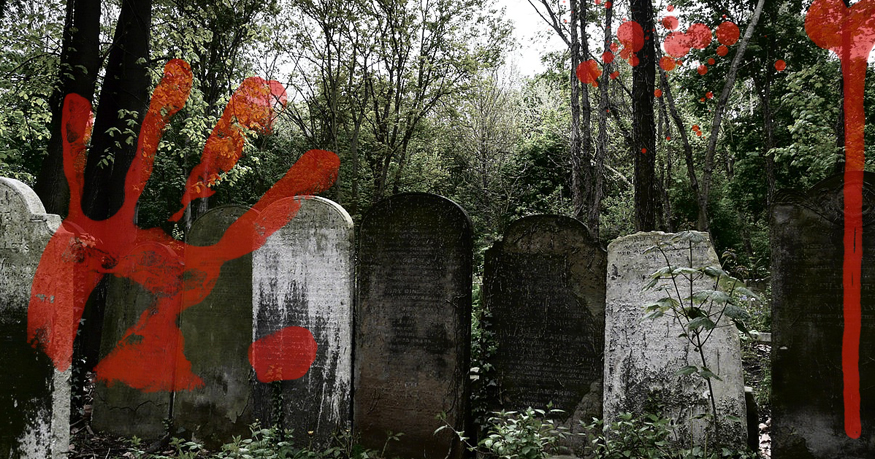
 Necropolis has a surreal plot involving, amongst other characters, an African drug dealer, a fugitive from the genocide of the 1990s Balkan wars – now working as a gravedigger – and a sadly deceased local resident for whom the undertakers have abandoned any pretence of good taste:
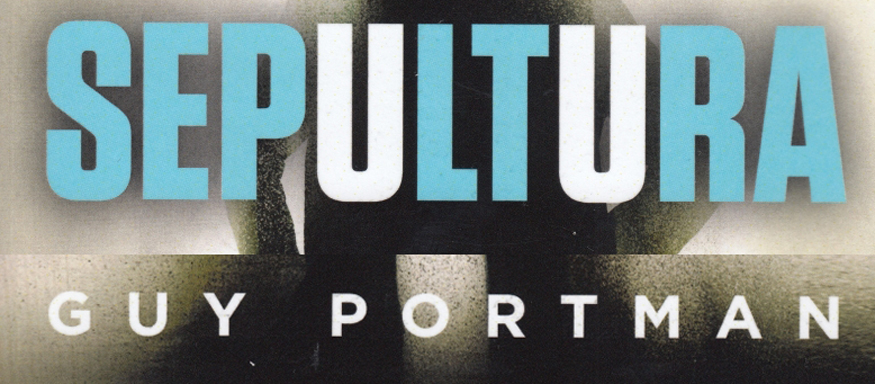
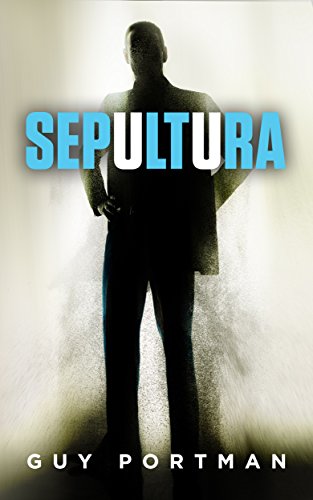 After a pause of three years, Dyson Devereux returns in Sepultura, to be published on 11th January. I have yet to get my hands on a copy, but it seems that Dyson has both a new job and a new son, but his cold rage and venomous disgust at his work colleagues and the world in general appears not to have abated one little bit. I can only guarantee that there will be death, cruelty, abrasive satire – and brilliant writing.


 fullybooked2017