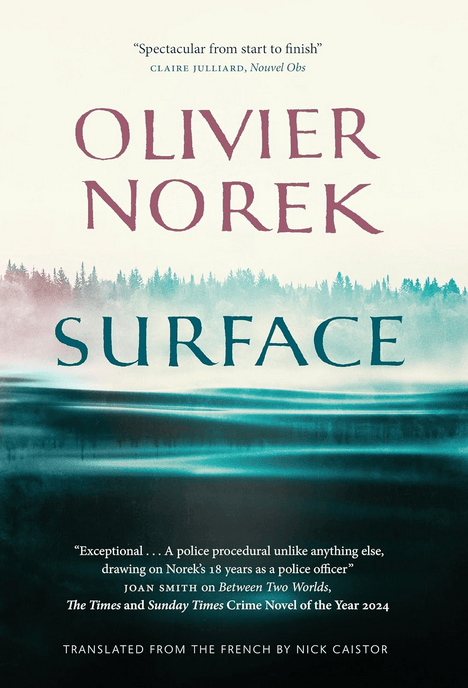

Norek’s powerful and unflinching account of the Finnish sniper Simo Häyhä, The Winter Warriors, was graphic and brutal, so I was not expecting a gentle pastoral stroll, but when I opened Surface, his latest novel, the words were devastating. Noémie Chastain, a Paris cop, has led a dawn raid on the apartment of a ruthless drug dealer. And she takes a shotgun blast. Right in the face. The damage is not fatal, but it is ruinous.
She recovers in hospital but when she returns to work a month later, she finds that her bosses have decided that her shattered face is too potent a reminder to her colleagues of how vulnerable they are, and she is sent to France’s deep south, the Aveyron Department, ostensibly to work with the local police force in the commune of Avalone but, she is told, secretly to observe how inefficient they are and prepare a report recommending reorganisation.
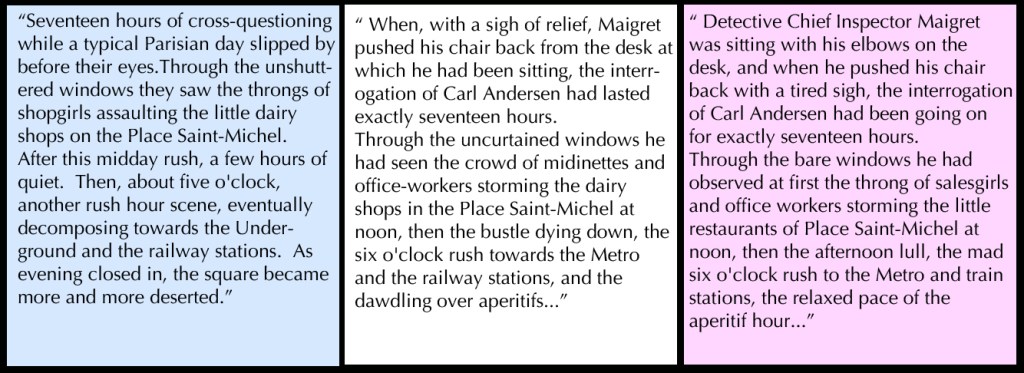
Francophile that I am, this book taught me something of which I had been previously unaware, and that is the difference between French police and the Gendarmerie. The latter is a military organisation in both training and practice, while the police, typified in fiction by the immortal Jules Maigret, is regarded as a civilian unit. The Gendarmerie’s main responsibility is for rural areas, and here they will take over if the Avalone police department is disbanded.
With her report recommending this on a memory stick ready to send to Paris, Noémie receives an early morning visit from the amiable and sensitive Lieutenant Romain Valant. Human remains have been found, tightly sealed in an oil drum, floating in a local lake. All of a sudden, everything changes for Noémie. Twenty five years earlier, three children, two boys and a girl, had disappeared, and she puts her report on the police department to one side, and resolves to solve the case of the missing children.
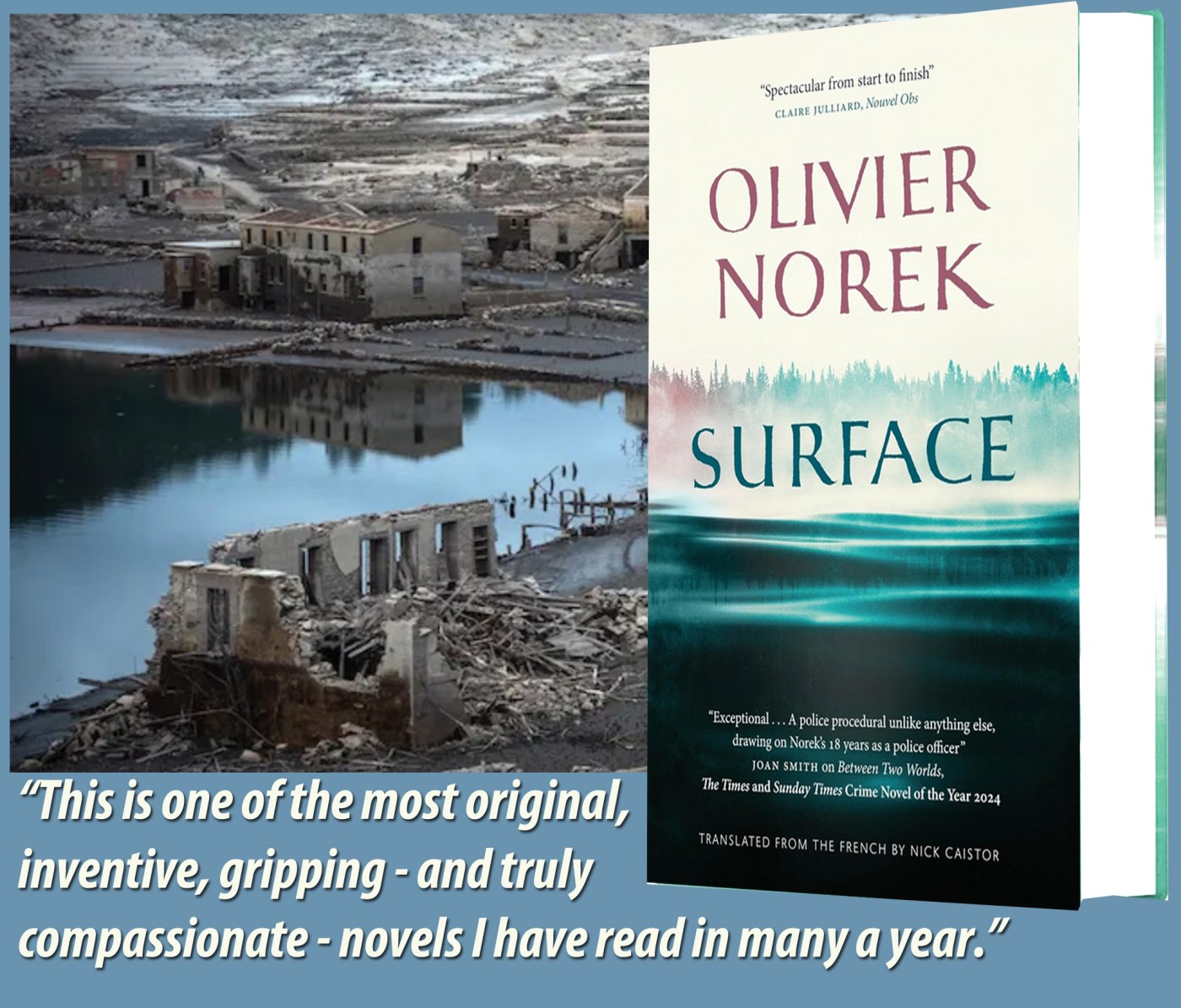
The lake is man made, created for a hydro electric project and beneath its surface is every fiction writer’s dream trope – a ruined and abandoned village.The remains in the barrel are identified as those of one of three missing children, who vanished just before the old village drowned beneath the dark waters. A diving team is sent for and, in a truly terrifying passage, the senior diver discovers another barrel, lodged in the ruins of the old community centre.
Unwilling to risk any more lives Noémie persuades the regional préfet to issue orders to drain the lake. Whatever secrets surround the three missing children, it becomes slowly clear that they are to be found not in the fate of the career criminal, a violent drifter called Fortin, who disappeared without trace after being linked to the case, but closer to home, in Avalone itself. First, part of the farm belonging to Roman Valant’s father, the long-time Mayor of the commune, is destroyed in an arson attack, and then Noémie and her borrowed Land Rover are shunted of the parapet of the dam by a mysterious white van. She escapes with cuts and bruises, and is able to complete the most macabre strand of her investigation. She has learned that all the coffins from the old village were disinterred before the deluge, and reburied in the new cemetery on dry land.
It is another well-used CriFi trope that the best place to bury a missing body is in a cemetery and, with the help of the small-but-willing team of local officers, she determines that there is one grave too many. Who – or what – will it contain? The answer adds only more mystery to the case but then, in a brilliant plot twist Noémie, is summoned to a village a few hours’ drive away, just over the Spanish border and, in an instant, the case is turned on its head. By this time, the lake has been drained, and old Avalone has surrendered yet another grisly secret. There is one final devastating twist before Noémie closes the case and exorcises Avalone’s ghosts.
I always wonder, when reading novels in translation, just how much of the original intent is conveyed, and how accurately. All I can say is that if Nick Caistor has come anywhere near Olivier Norek’s original narrative, then he has done a brilliant job. This is one of the most original, inventive, gripping – and truly compassionate – novels I have read in many a year. Surface is published by Open Borders Press and is available now.