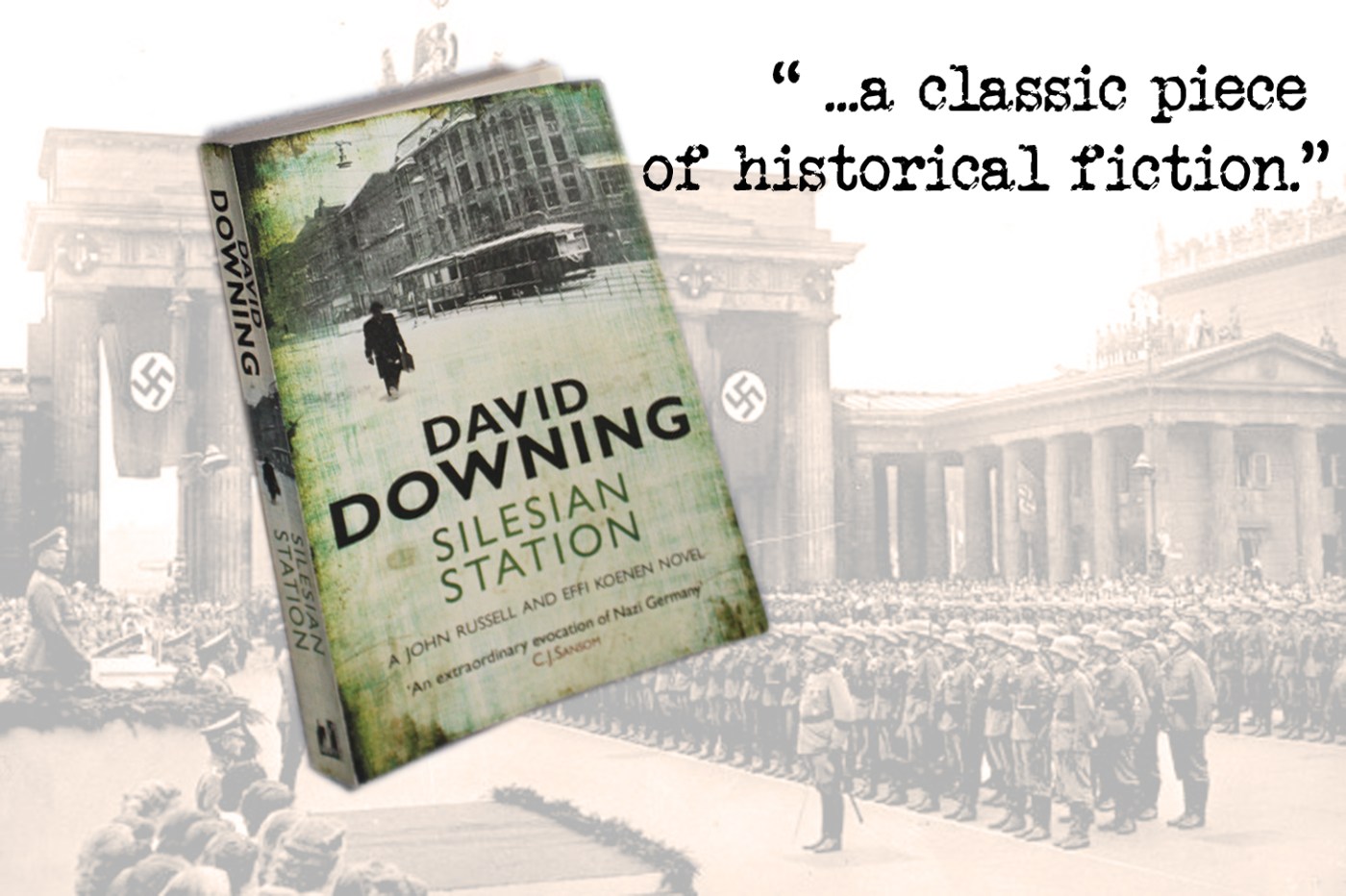

Followers of this website will, hopefully, have read my 1st May review of David Downing’s Wedding Station (click link to visit). It is actually the seventh book in the series, but is a prequel, being set in 1933. I was so impressed by it that I have raided my piggy bank and bought several others. This review, then, is of a book I have bought for pleasure, rather than a freebie from a publisher. Silesian Station was first published in 2008, and is the second in the series. The central character is John Russell, an Anglo-American political journalist. He married (but later divorced) a German woman, and as their son Paul is a German citizen, Russell is allowed to make his home in Berlin. We are in the late summer of 1939. Six years into the Thousand Year Reich. Six months since Hitler invaded Czechoslovakia. Just days away, maybe, from an invasion of Poland?
 Russell is a survivor, a man who can usually talk his way out of trouble. Multilingual, and with that all-important American passport, he keeps a wary eye on the features he wires back to his newspaper in the states, but has – more or less – managed to stay out of trouble with the various arms of the Nazi state – principally the Gestapo, the SS and their nasty little brother the Sicherheitsdienst. Russell fought in the British Army in The Great War, but in its wake became a committed Communist. Although he has now ‘left the faith’ he still maintains discreet contacts with the remaining ‘comrades’ in Berlin. With that in mind, it is unsurprising, perhaps, that he has been manoeuvred into the sticky position where both the German and Russian intelligence services believe that he is working uniquely for them, and he is being used to pass on false information from one to the other.
It’s probably not a bad idea at this stage to do a brief political and strategic summary of how the land lay in the late summer of 1939. Germany and the Soviet Union were – in theory – the best of friends, but divided both geographically and in terms of future intent by Poland. Hitler still smarted from the loss of previously German territory after the Treaty of Versailles, while both he and Stalin had eyes on encroachment, to the east in Hitler’s case and to the west for Stalin. Hitler knows that Britain and France are treaty-bound to protect Poland, but is more worried about the reaction from the Kremlin should he try to retake the former German lands of Prussia.
Back to the more human and personal elements of Silesia Station. Russell has agreed to do a favour for his brother-in-law, and investigate the disappearance of a Jewish girl, Miriam Rosenfeld, who has been sent by her parents – who own a small farm near Breslau (modern day Wrocław) to live with her uncle in Berlin, for the chillingly ironic reason that the family are among the few Jews left in the area, and they feel threatened. Russell – aided by his film star girlfriend Effie Koenen – start their search, but Miriam seems to have vanished into thin air. Effie is integral to the story. Very beautiful, and a fine actress, it doesn’t hurt that Hitler’s minister for propaganda, Joseph Goebbels, is an avid film buff, and has rubbed shoulders with Effie at premieres of her films, and is apparently a great admirer.
Months later, of course, all these ambiguities were wiped out by the fury of war, but John Russell has one other contradiction to deal with. Another acquaintance, Sarah Grostein is ‘walking out’ with a prominent SS officer who is – clearly – unaware that she is Jewish. When their relationship goes disastrously wrong, Russell feels obliged to pick up the pieces.
Aside from the human dramas, Downing describes with great clarity the fateful days before the Soviets and the Nazis – via the short-lived Molotov-Ribbentrop Pact – agreed to allow each other to live and let live, and how that fateful decision gave Hitler the green light to invade Poland, thus triggering six years of death, terror and mayhem.
Is Miriam Rosenfeld found? Where did she go? Can John Russell and Effie Koenen keep one step ahead of both the SS and the NKVD? Well, the fact that they appear in later books will answer the last question, at least, but you will have a few hours of tense reading a classic piece of historical fiction while you find out how. Silesian Station is published by Old Street Publishing Ltd and is available now.


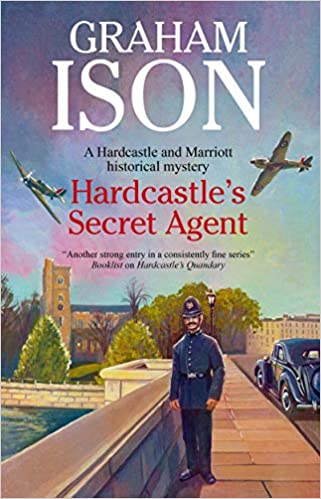 We are, as ever, in London, but it is 1940. The Phony War is over, and the Luftwaffe are targetting industrial sites they believe to be involved in making parts for military aircraft. When several important employees of one such factory are burgled – clearly by an expert – but with nothing other than trinkets stolen, Hardcastle believes he may be on the track of a German spy on the look-out for plans, blueprints or important military information. Hardcastle has to deal with The Special Branch, but finds them about as co-operative as they were with his father a couple of decades earlier. This has a certain tinge of irony, as part of the author’s distinguished police career was spent as a Special Branch Operative.
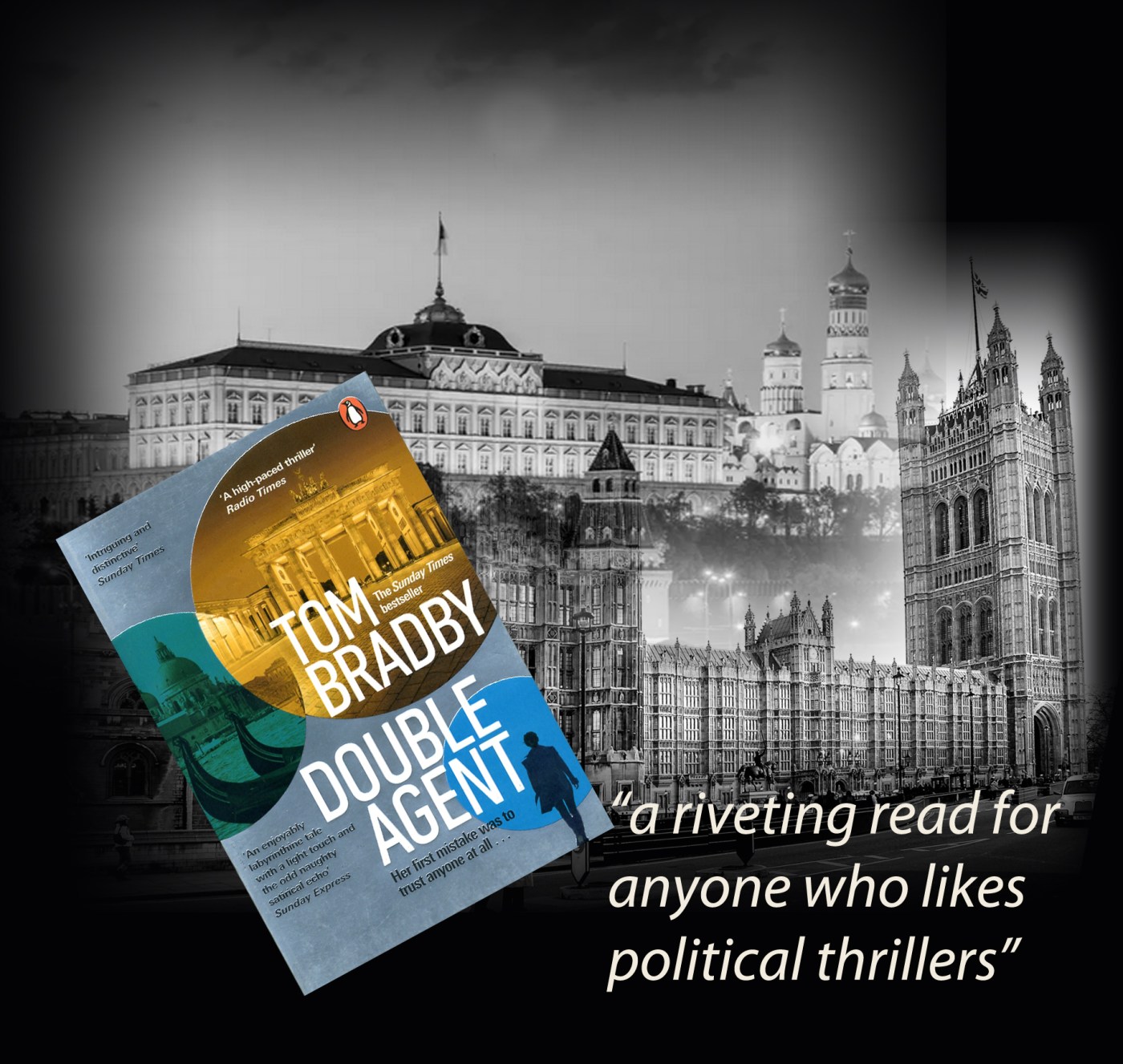











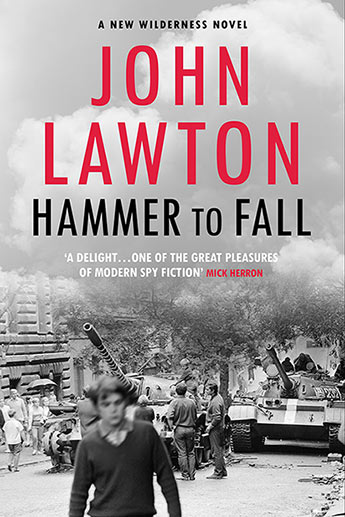 He is no James Bond figure, however. His dark arts are practised in corners, and with as little overt violence as possible. Hammer To Fall begins with a flashback scene,establishing Joe’s credentials as someone who would have felt at home in the company of Harry Lime, but we move then to the 1960s, and Joe is in a spot of bother. He is thought to have mishandled one of those classic prisoner exchanges which are the staple of spy thrillers, and he is sent by his bosses to weather the storm as a cultural attaché in Finland. His ‘mission’ is to promote British culture by traveling around the frozen north promoting visiting artists, or showing British films. His accommodation is spartan, to say the least. In his apartment:
 So far, so funny – and Lawton (right) is in full-on Evelyn Waugh mode as he sends up pretty much everything and anyone. The final act of farce in Finland is when Joe earns his keep by sending back to London, via the diplomatic bag, several plane loads of …. well, state secrets, as one of Joe’s Russian contacts explains:

 The idea of the female spy has attracted writers and dramatists over the years with its unbeatable combination of danger and sexual allure. Pete Langman comes to the party with his enjoyable new novel, Killing Beauties set in the England of 1655. Remember those old historical movies that began with a dramatic piece of text scrolling over the opening titles, giving us a lurid and enticing potted background to whatever we were about to watch? The blurb for Killing Beauties might say something like,
  he beautiful woman is Susan Hyde, whose brother Sir Edward Hyde, Earl of Clarendon is principle advisor to the King in exile. With the aid of another young woman, Diane Jennings, Susan – and other members of the secret society known as Les Filles d’Ophelie – work with The Sealed Knot, coordinating underground Royalist activity in England and preparing for a general uprising against the Protectorate. Readers may be aware that the modern version of The Sealed Knot is a popular organisation of English Civil War re-enactors, but their historical namesakes were in deadly earnest, and organised two major rebellions before Charles II was finally crowned in 1661.
 In order to succeed in her mission, Susan must use the deadliest weapon at her disposal – her sexuality. The beneficiary of her attention is none other than John Thurloe himself. Thurloe is a fascinating historical figure, and has featured in several other novels, most notably in the Thomas Challoner series by Susanna Gregory, and in the SG MacLean’s Seeker stories. I reviewed MacLean’s
  ne of the problems facing writers of historical fiction is how to handle dialogue. We know how they wrote to each other in letters, but what were conversations like? Despite one or two of his characters occasionally lapsing into more recent vernacular, Langman negotiates this particular minefield successfully. Killing Beauties is an engaging and well researched piece of costume drama acted out on a turbulent and dangerous stage. It is published by Unbound

 he dramatic events of The Rooks Die Screaming take place in the spring of 1921 in the Cornish market town of Bodmin. The bare bones of the story are that Detective Inspector Cyril Edwards of Scotland Yard has come to Bodmin to investigate murder and treachery involving a group of spies known as The Four Rooks. This book is a sequel to The Woman With The Red Hair, and to say there is a back-story is something of an understatement. The eponymous young woman is called Morag and, amongst other things, is Edwards’ sister-in-law. Elisha Edwards was one of the millions of unfortunates taken by an agent even deadlier than high explosives and machine gun bullets – Spanish Influenza.
 Morag is now Lady Frobisher. Her husband Harry, heir to The Fobisher Estate on the outskirts of Bodmin, is blind, victim of a grenade in the Flanders trenches. In the previous novel, Frobisher Hall was the scene of great torment for Morag, as she fell into the clutches of Morgan Treaves, an insane asylum keeper and his evil nurse. Treaves has disappeared after being disfigured with a broken bottle, wielded my Morag in a life or death struggle.
 That said, The Rooks Die Screaming is inspired escapist reading. It would be unfair to say that Tuckett (right) writes in an anachronistic style. This is much, much better than pastiche, even though there are elements of Conan Doyle, the Golden Age, John Buchan and even touches of Sapper and MR James. So, eventually, to the plot, but we need to know a little more about Cyril Edwards. Like many a fictional detective inspector he is his own man. In another nice cultural reference Tuckett adds a touch of Charters and Caldicott as Edwards explains to the bumptious Standish, a mysterious officer from Military Intelligence;
 tandish orders Edwards to investigate the possibility that Harry Frobisher is one of the Rooks, but one who has betrayed his country. Arriving in Bodmin his first task is to explain to the local police how a corpse found on a train is that of a notorious London contract killer. Tuckett’s Bodmin is full of stock characters, including a stolid police sergeant, an apparently tremulous clergyman and a punctilious but respected solicitor who is privy to all the secrets of the local gentry, but is oh, so discreet. To add to the fun, Frobisher Hall also has its requisite roll call of faithful retainers.


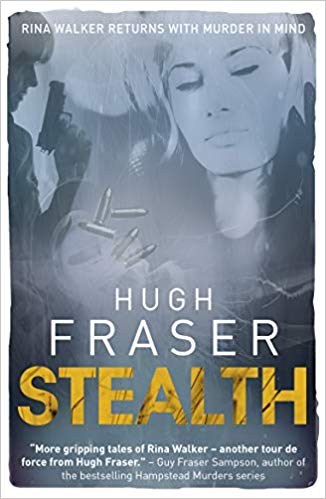 London in 1967 seems to have been an exciting place to live. A play by a budding writer called Alan Aykbourne received its West End premier, Jimi Hendrix was setting fire to perfectly serviceable Fender Strats, The House of Commons passed the Sexual Offences Act decriminalising male homosexuality and Joe Orton and Kenneth Halliwell featured in a murder-suicide in their Islington flat. This is the backdrop as Hugh Fraser’s violent anti-heroine Rina Walker returns to her murderous ways in Stealth, the fourth novel of a successful series.


 fullybooked2017