
Search

fullybooked2017

Tag

English ceime fiction

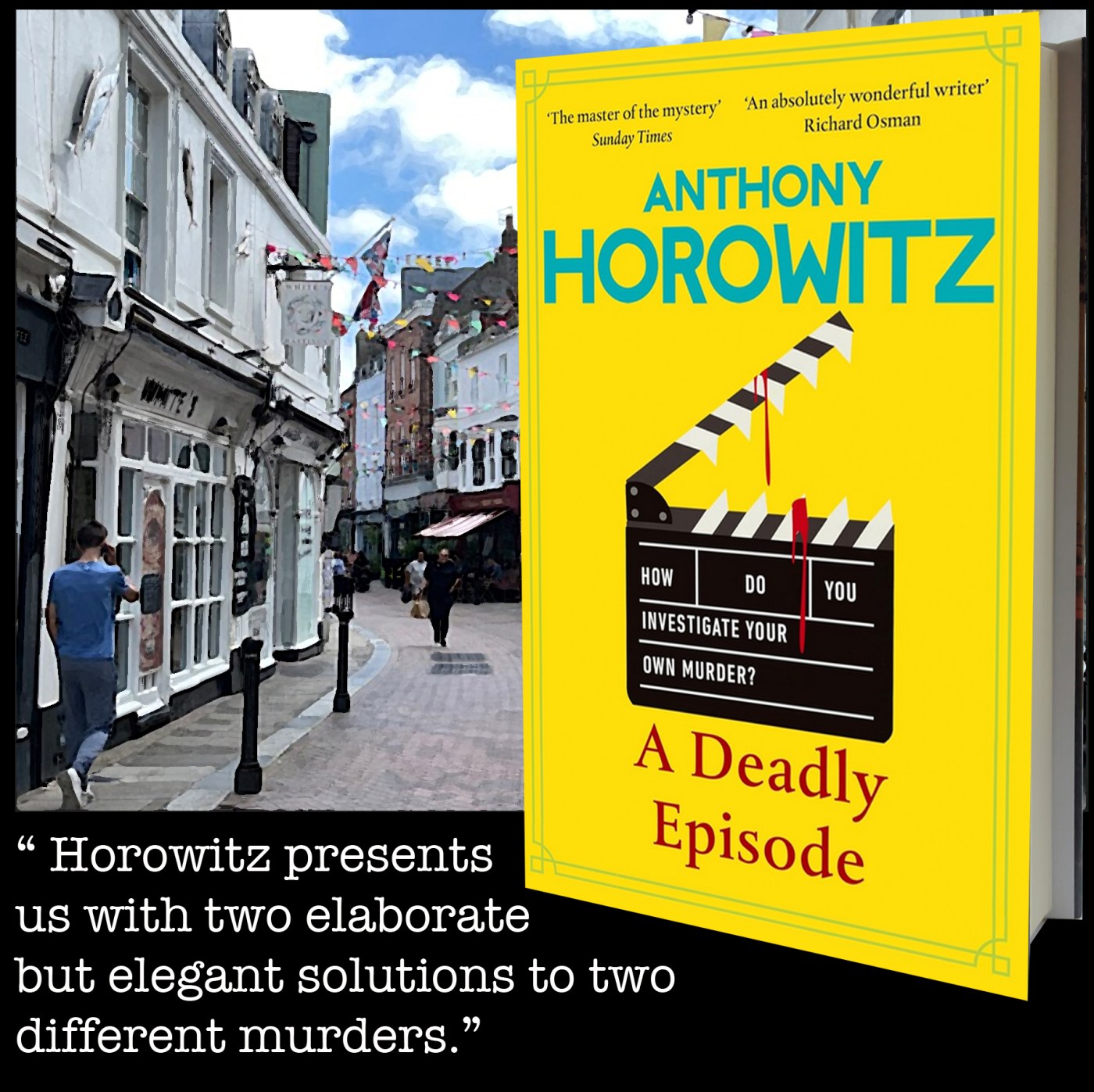
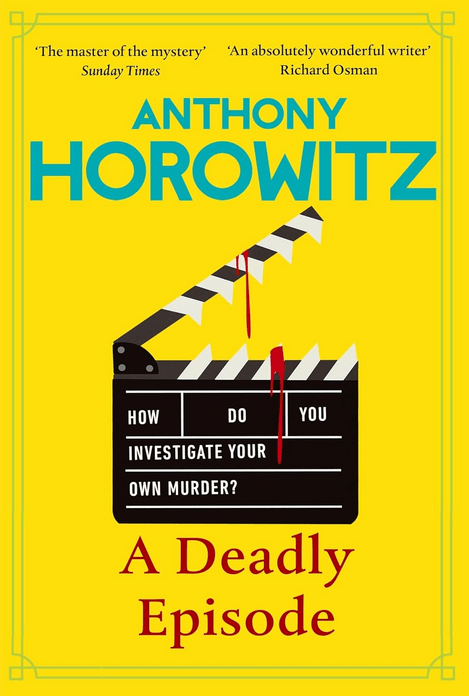
A DEADLY EPISODE . . . Between the covers

For those unfamiliar with the series, the concept is simple, if unusual. Central to the story, and narrator, is Horowitz himself in his real life persona of author and TV screenwriter. The fiction begins with the presence of a former police officer called Hawthorne who now works as a private investigator. The pair originally teamed up when Horowitz hired Hawthorne to provide him with real life mysteries that could be turned into CriFi plots.

Here, things become even more self-referential, as the first book in the series, The Word is Murder, is being turned into a major feature film, but the production, filmed in Hastings, the setting for Horowitz’s finest creation, Foyle’s War, is beset by problems.The screenwriter, producer and director are at each other’s throats, the project is way over budget already and the killer comes – literally – when the actor playing Hawthorne, David Caine, is found dead in his Winnebago, an expensive Japanese kitchen knife embedded in his throat.

Both Horowitz and Hawthorne are quickly called in by the Sussex police to help with the investigation. There are some tasty suspects. James Aubrey is Caine’s agent, but was about to be sacked, despite having played a huge part in the actor’s rise to fame. Teresa de Leon, the producer, having just been filleted for cash by a family dispute, knows that her only salvation is an insurance claim on the abandoned film. Next in the queue is director Cy (Cyril) Truman. He is, as they say, as camp as a row of tents, and admits that he fancied David Craig with a vengeance, and had done all in his power to boost the actor’s career. But was his largely unrequited passion enough to provoke him into a savage knife attack? Then we have the screenwriter. Horowitz is rather naughty in giving us a complete disconnect between her Christian name and her surname. Shanika Harris speaks in a studied Estuary English, and is as woke as a dawn chorus blackbird. She met Caine when she was a student, and was seduced by both his dynamic good looks and his Thunbergian zeal for the the environment and his hatred for those who enjoy a decent steak. Could the revelation that Caine occasionally ‘batted for the other side’ have provoked a frenzied attack?

Just over half way through the book, there is a dramatic shift in the narrative. Horowitz, knowing the stars’ Winnebagos bear the characters’ names, not than those of the actors, wonders if Hawthorne himself may have been the target, rather than the actor. Hawthorne reveals that there is, indeed, someone in Hastings who hates him with a vengeance. We then learn the story of the Murder at Foss Hall, which was Hawthorne’s first case as private detective. In a (rather large) nutshell, Rupert, the son of the Foss Hall owners, was involved in a fatal road accident. Duncan McClintock, the estate factotum, covered up Rupert’s culpability, but blackmailed the young man. When McClintock went missing, presumed dead, his blood was found in Rupert’s car. Hawthorne, a local man, was hired by the family to extricate Rupert from the mess. The result was that Harry Morgan, another estate employee, was convicted of the crime, and it is his widow – a barmaid in a Hastings pub – who has nursed a visceral hatred of Hawthorne since her husband’s death.

The detecting partnership between Horowitz and Hawthorne is Holmesian in one sense. Hawthorne is much the sharper of the two and frequently has to point out clues to his more affable and conciliatory partner. They aren’t even friends, let alone companions, Hawthorne never having had to bother with the drinks party social choreography that writers have to learn in order to pitch stories to agents and sell TV projects to programme commissioners.

Despite one or two interesting discoveries by the fictional Horowitz, it is Hawthorne’s attention to detail that closes the case, and the real Horowitz presents us with two elaborate but elegant solutions to two different murders. You can read my reviews of previous books in the series – The Word is Murder, The Sentence is Death and Close to Death – by clicking the titles. A Deadly Episode will be published by Century on 23rd April.

THE BARRAGE BODY . . . Between the covers

It is December, 1944, and we are in the Birmingham suburb of Erdington. Further afield, and quite unknown to both the residents of Erdington and the American soldiers shivering in their foxholes in the Ardennes Forest, Hitler is about to launch his last desperate gamble in what would come to be known as the Battle of The Bulge. In Erdington, war-wise, things are relatively quiet, but a barrage balloon unit, staffed by young women of that WAAF, is parked up at the Dunlop rubber factory, commonly known as Fort Dunlop.

It is here that Detective Chief Inspector Sam Mason is summoned, initially to investigate what appears to be a case of malicious communications, but things escalate rapidly. First it seems that someone has stolen vital blueprints for new and improved tyres for Lancaster bombers, and then, a body is discovered tethered to a barrage balloon which has unaccountably broken free.

Mason has a veritable 2000 piece jigsaw to put together. So many questions. Who was the man found dead in the barrage balloon cables? Why was jack-the-lad teenager Simon Samuels found in a similar position? What is the connection to Samuels’ father, a guard at a Staffordshire POW camp. Painstakingly, Mason and his redoubtable Sergeant O’Rourke have to move the pieces one by one until they begin to make a recognisable picture.

Sam Mason is quite unlike most British coppers in contemporary CriFi, partly because of the era in which was working. Because it is the 1940s we are quite content for him to rather stolid, happily married, prone to the aches and pains of late middle age. His deceptively gentle and slow-moving approach masks a sharp mind and a critical eye for detail. Here, he patiently absorbs the facts of a strange case, and delivers the goods.

This is the fourth Erdington Mystery. I enjoyed and reviewed the first of them, The Custard Corpses. The series couldn’t be more different from the books for which Porter is, perhaps, better known – dramatic swords, shields and helmets dramas from Saxon and Norman times. The books have one thing in common, however, and that is the setting – Mercia, the ancient kingdom we would now call The Midlands where, incidentally, Porter was born and brought up. The Barrage Body is original, inventive, nostalgic, absorbing, and I loved it. Published by MJ Publishing, it is available now.

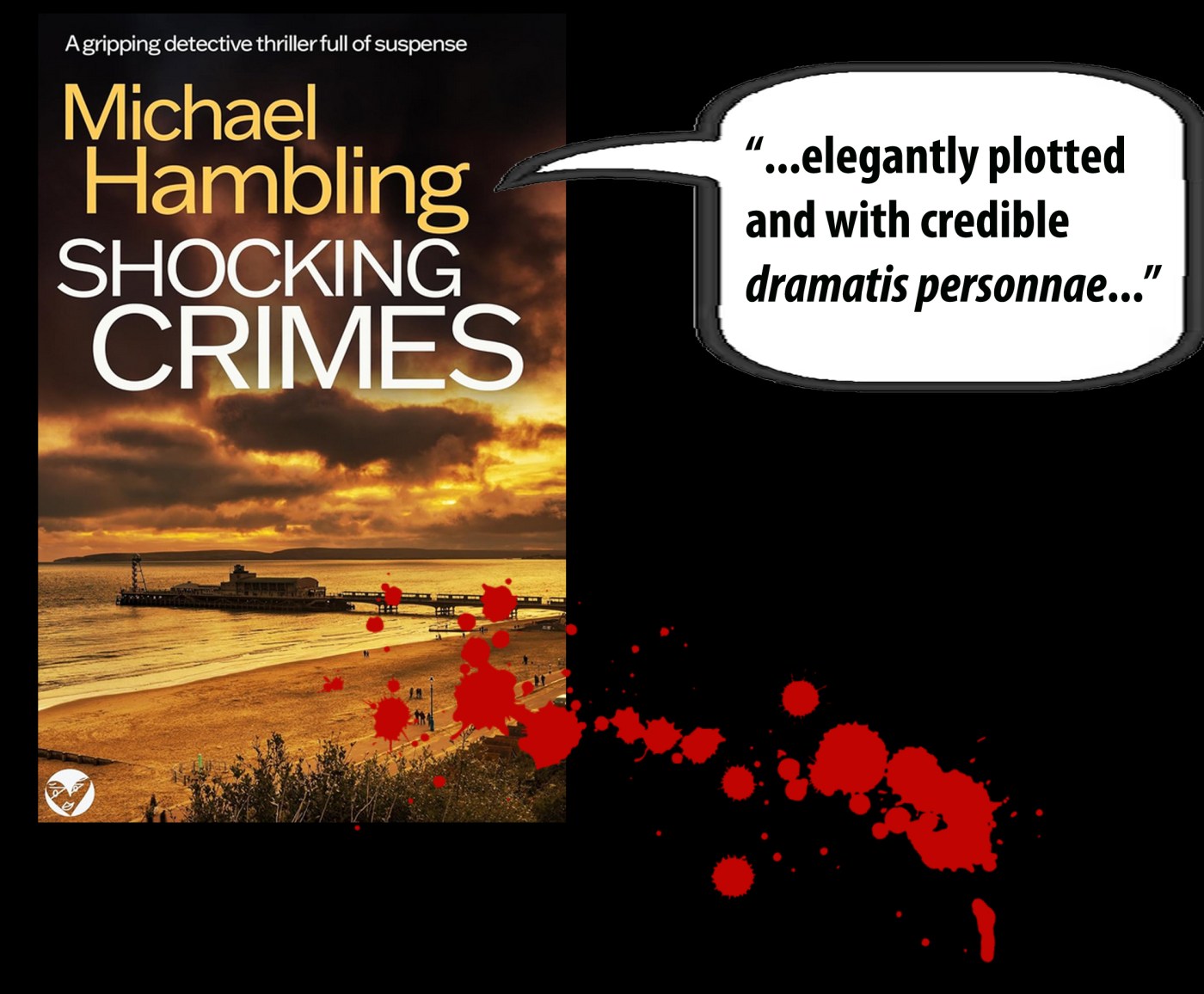
SHOCKING CRIMES . . . Between the covers

We are in Dorset. Bournemouth, to be exact. But this is not the genteel Budmouth, Regency watering place of Thomas Hardy’s novels, but a much more hard-edged kind of place. The cast of coppers includes Detective Chief Superintendent Sophie Allen, Detective Chief Inspector Barry Marsh and Detective Inspector Lydia Pillay, Bournemouth CID, newly appointed to the role of DI.

Thirty eight year-old Pippa Chandler has been arrested for the murder of her disabled boyfriend Joshua Quick. She had recently inherited a house from her uncle and, while searching the property, police find a scrap of yellowing paper on which appears to be written a cry for help from a ten year-old child. A slapdash search of the house has revealed nothing of interest, but then a more assiduous crime technician discovers a false panel in the roof space. And behind the panel is a battered suitcase containing a grisly find – the dessicated remains of a child, later revealed to the corpse of a little girl.

Meanwhile, a seemingly unrelated investigation into a more recent tragedy is in focus. In a Bournemouth nightclub, a student called Holly collapses on the dance floor. She is rushed to hospital, where she lies between life and death. This wasn’t drink spiking, but ‘jabbing’ –  a surreptitious injection with a throwaway hypodermic syringe, and Holly had an existing heart condition. In a dramatic and significant twist, Holly’s mother admits her historic links to the house where the child’s remains were found.

In general, there are two kinds of police/private investigator thrillers – the ones where the author keeps the perpetrator/s hidden from both us readers and the forces of law and order until the last few pages and those where we learn who the bad guys are early in the piece, with the entertainment coming from watching the police untangle the knots. Shocking Crimes largely falls into the latter category but Michael Hambling actually gives us the best of both worlds here. Yes, we learn early doors that Bruce Greenfield is a wrong ‘un, and we also know who his criminal associates were, but exactly who did what – and to whom – we discover through the eyes of the detectives.

Although elegantly plotted and with credible dramatis personnae, Shocking Crimes makes for uncomfortable reading at times as it delves into the fraught world of child protection, now known as Safeguarding. Having worked in this area myself, I am aware of the dark litany of historic failures laid at the door of professional adults charged with keeping young people from harm. In the end, as this novel shows, there are human beings so depraved and devoid of decency that no foolproof system to combat them has ever been devised. The novel will be published by Joffe Books on 13th November.

Blog at WordPress.com.

Up ↑