Search

fullybooked2017

Tag

Dyson Devereux

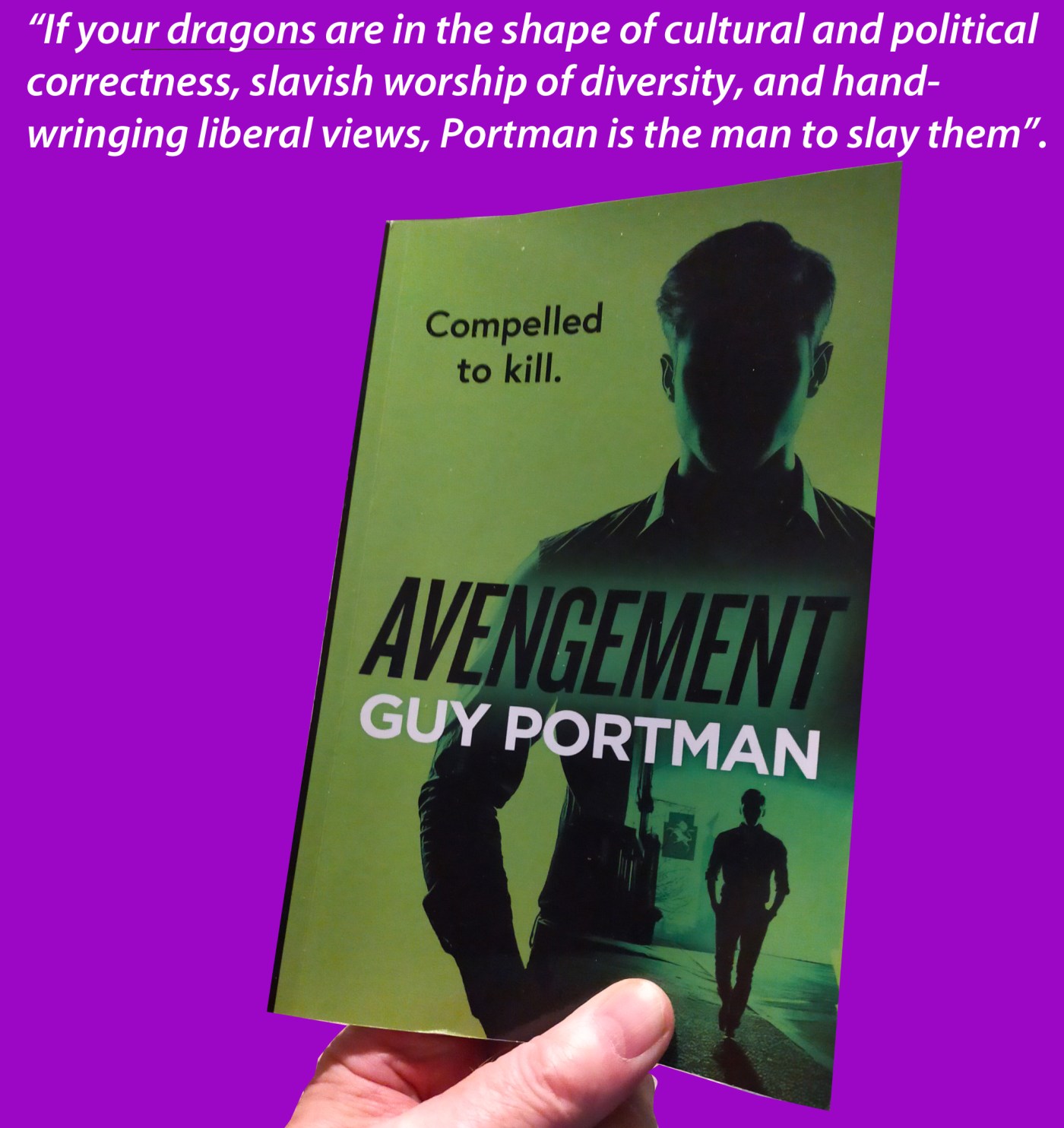
AVENGEMENT. . . Between the covers

We rejoin our not-so-friendly neighbourhood sociopath Dyson Devereux in a London pub, where he is celebrating the end of his university exams with fellow undergraduates. He is miles away in his head, however:

“I left Tollington nearly eight years ago and have only been back twice. Aunt didn’t want me there after I pushed her daughter, Beatrice, off a cliff. It was considered to be an accident, but Aunt was suspicious. In my mind’s eye, I see Beatrice plummeting into the mist. This is my favorite memory.
“Ha, haha.”

Dyson needs to get a job, but before that rather tedious necessity, there are three more names on his to-kill list, and they are all in the Dorset town of Tollington. Top Trumps is the lecherous Dr Trenton who, years earlier had seduced Mrs Devereaux (while her husband was dying of AIDS) and filled her so full of tranquilisers that she lapsed into a fatal coma. Two elderly twins – Virulent Veronica and Conniving Clementine – who run a tea-shop must also die because of their persistent taunting of the younger Dyson, publicly stigmatising him for his father’s alleged sins. After eventually passing his driving test, Dyson tours local used car yards for his first set of wheels. He has one main criterion. The car’s boot must be wide enough to accommodate the Samurai sword – honed to razor sharpness – which hangs on he bedroom wall of his student digs.

Dyson is devastated to learn that one of the malignant twins has thwarted his vengeance by dying of old age. Undaunted, he executes her sister and returns to London where, after befriending the daughter of an Indian billionaire. he is invited to an the launch party of an art exhibition by a young man called Sebastian

‘A grim-faced waiter, wearing a bright green tail coat, materializes next to me.He is holding out a plate.
“Tuna balls with cream cheese and red onion.”
I help myself to one. It tastes piquant. The exhibition’s art is being put to shame by the seafood Hors d’Oevre. Sebastian is devoid of artistic talent. However, he has one thing going for him. His German mother is an heiress to a pharmaceutical fortune.’

After a few false starts, Dyson finally puts the Samurai sword to use in the manner for which it was designed, and his trilogy of vengeance seems to be over. Despite some interest from the police, he has covered his tracks so carefully that the two most recent crimes cannot be pinned on him, and he begins his working career in the less-than-exotic offices of a London borough council in their Green Spaces Department. This segues fairly neatly into the first book – in publishing chronology – of the series, Necropolis, which I reviewed in 2014 (click here to read)

Satire in Britain is, in my view, in a fairly bad way at the moment. Like comedy, it seems to have just been absorbed into the prevailing metropolitan liberal mindset, which only considers the political right as a legitimate target. Private Eye is a shadow of its former self, and I gave up on HIGNFY years ago. Rare is the journalist who challenges the prevailing Islingtonian doctrines through comedy, Rod Liddle being perhaps one exception. I can’t think of anyone who writes quite like Guy Portman. Jonathan Meades is similarly trenchant and iconoclastic, but even his last novel had to be crowd-funded, as no publisher would touch it. If your dragons are in the shape of cultural and political correctness, slavish worship of diversity, and hand-wringing liberal views, Portman is your St George. Avengement is available now.
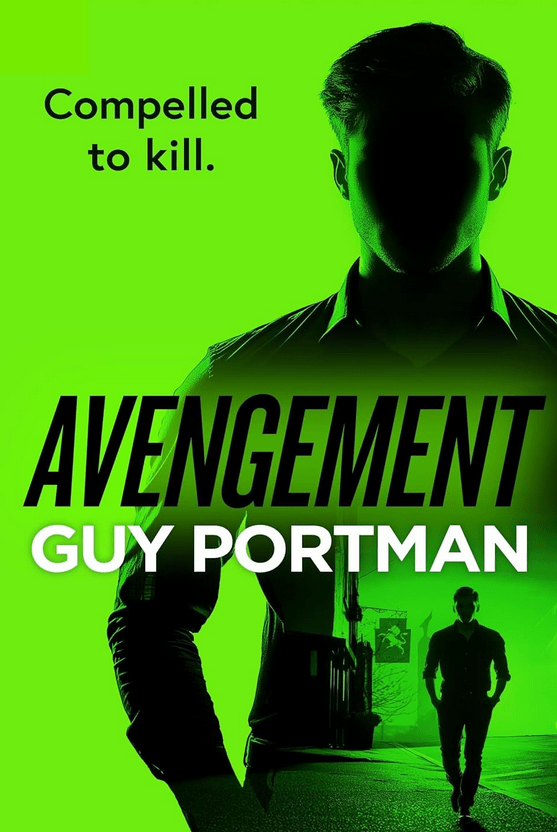
GENESIS . . . Between the covers

Guy Portman has written a splendid series of dystopian satires centred around a sociopathic killer called Dyson Devereux and, after his demise, his son Horatio, who has inherited his father’s rather peculiar intelligence. Now, in the first of two prequels, Genesis gives us a glimpse into the life of the eleven year-old Dyson. It is 1985, and Dyson’s father, long since separated from his mother, has died of what we  would coyly come to describe as ‘an AIDS-related illness.’ Portman’s black humour kicks in early when, at Devereaux senior’s funeral, there is a grotesque spat between a rather fey young man (presumably the partner of the deceased) and Dyson’s aunt.

Within weeks, Dyson is an orphan. His mother never recovers from a coma induced by the prescription drugs provided by her lover, the predatory Dr Trenton. Dyson vows revenge, but shares his maximum venom for his hateful cousin Beatrice, who has taunted him relentlessly over his father’s death. After living with her and his Aunt for a while, he is sent away to boarding school. Intellectually he thrives. His rapid grasp of Latin singles him out, but his status among his peers – minor foreign royalty, sons of the landed gentry and dimwits who happen to be good at rugby – is less certain. His heroic status among (most of) his fellow pupils is cemented, however,  after he engineers a memorable encounter with a boy’s glamorous mother in her Mercedes, with half the members of Upper Four B watching from behind the bushes. This memorable feat is also his downfall, as it leads to his expulsion.

Dyson’s main obsession is his cousin Beatrice. He daydreams of ways he could cause her demise. In his most exotic and Byzantine vision, he has written to Jimmy Savile (this is the 1980s, remember) asking for Beatrice to be guillotined live on TV, as the climax to that week’s Jim’ll Fix It. The unfortunate girl’s actual demise is, however, marginally less less spectacular, and it involves a parish church outing to visit Beachy Head.

Readers who are familiar with Portman’s books will know what to expect, but for novitiates, here’s a brief primer. The author has a high powered literary rifle, and in its cross-hairs are Britain’s ‘lanyard class’, metropolitan socialists, indoctrinated social workers, people whose social consciences overlook all manner of atrocities, Guardianistas, bumbling teachers and so-called ‘community leaders’. Portman’s aim is unerring. Just like Finland’s fabled White Death, Simo Hayha, every time he squeezes the trigger, the target falls. Yes, this is satire, and fiction, but his writing carries a salutary message.

Guy Portman pushes the boundaries of humour up to – and occasionally beyond – the limits that some people might find acceptable, but  he provides me, for, one, with laugh-out-loud moments. He is also a great literary stylist with a vast amoury of cultural references, and is one of our funniest living writers. Genesis is out now, and I will be reading and reviewing the next episode – Avengement – very soon.

ARCADIA . . . Between the covers

Arcadia header

Psychopathy and comedy are not natural companions, but Guy Portman has this strange relationship down to a ‘T’ In his novels Necropolis (2014), Sepultura (2018) and Golgotha (2019) we followed the rise and fall of the elegant, analytical and ruthless killer Dyson Devereux. Then, in Emergence (2023), we learned that he had a love child. Well. let’s rephrase that. He had a child. The mother was a well-meaning but rather naive Antiguan social worker called Rakeesha Robinson and the youngster was christened Horatio.

Although Horatio never met his father he is, as they used to say, a chip off the old block. He is fascinated by trigonometry and algebra and is prone to instant acts of extreme violence, but also capable of meticulous planning to set up his deeds. An example of the latter was the way in which he disposed of mum’s loathsome boyfriend in Emergence. My review of that book described the killing in some detail, but as it caused me to be banned by Amazon, that’s all I will say here. You can find the hilarious details by clicking the link.

Seeking to give Horatio a new start, Rakeesha has taken him to Antigua, where the two of them are to stay with her extended family. Incidentally, as can sometimes happen with genetics, Horatio is as white as his father was, which makes him distinctive among the native Antiguans. He starts school, and soon establishes himself as brighter than average, but his Caribbean idyll is marred by the fact that he has to work weekends and holidays in his grandfather’s laundry centre, piling insanitary bedding from the tourist hotels into the washers, and then ironing the same hotels’ tablecloths with – as you would expect from Horatio – geometric precision.

arc filler017

As you might expect from our lad, he soon finds a way to boost his meagre wages from the laundromat. Antigua is full of low-rent tourists, many of who are anxious to score drugs, and Horatio finds that his innocent demeanour, coupled with his skin colour, enable him to establish a nice little business, buying product from a dissolute and disreputable dealer who lives in a shack just out of town, and then selling it to the European tourists (at a healthy profit).

Horatio, figuratively holding his nose when he goes to the dealer’s house, notices two things: first, a handgun badly hidden underneath a cushion and, second, a tin cash box in which the dealer keeps his cash. Putting these two observations to work allows Horatio to rid Antigua of a parasite and enrich himself to the tune of several thousand XCD (Eastern Caribbean Dollars) He also seizes an opportunity to exact revenge on a dimwitted local youth who has been harassing him.

Guy Portman is a wonderful satirist. He targets the cant, pomposity and box-ticking that have become ever-present backdrops to most people’s lives in Britain. In Horatio Robinson he has created a malevolent hero who continues to disprove Lincoln’s adage, in that – so far – he has managed to fool all of the people, and all of the time. However, like his late father, is his luck due to run out?

GOLGOTHA . . . between the covers

Dyson017

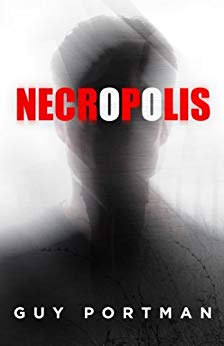
guy-portman2Guy Portman (left) introduced us to Dyson Devereux in Necropolis (2014). I gave it 5* when writing for another review site, and I’ll include a link to that at the end of this post. Dyson was Head of Burials and Cemeteries in a fictional Essex town, and a rather individual young man. He is narcissistic, punctilious, cultured and, outwardly polite and thoughtful, but with an anarchic mind and a terrible propensity for extreme violence. The book both horrified and fascinated me but made me laugh out loud. Dyson Devereux was a Home Counties version of Patrick Bateman and his antics allowed Portman to poke savage fun at all kinds of modern social idiocies.
Dyson returned in Sepultura (2018) and he has moved to another town to do more or less the same day job. His main recreation is still killing people who upset him, either personally, or because of their unpleasant manners or appearance. He has fathered a son and takes but a passing interest in his upbringing. He is, however, appalled that Latin isn’t on the curriculum at young Horatio’s infant school. Having stayed just one step ahead of the English police Dyson comes a cropper when he commits murder while on a municipal exchange visit to Paleham’s twin town in Italy, and ends up in the hands of the Carabinieri.

Golgotha begins with Dyson a treasured guest at San Vittore Prison, Milan, awaiting his trial for murder. It is no place for someone of his refinement:

“ Tottering in this direction is a posterior-wiggling transexual. When he passes by, he winks at me and smiles, revealing a mouth crammed with chipped, rodent-like teeth. Up ahead a prisoner steadies himself against the wall with an emaciated, needle-track-ridden arm.”

Dyson views the prison as something like an amateur drama company acting out Dante’s Nine Circles of Hell, but he holds his poise thanks to frequent visits by his Italian girlfriend Alegra, who supplements the meagre prison fare with Amaretti biscuits and cremini al pistacchio chocolates. Neither is his taste for fine wine neglected, as his weekly sessions teaching English to the convicted gangster – who effectively, rules the prison – are enlivened with glasses of Amarone Classico Costasera 2012.

GolgothaWhen he finally has his day in court, Dyson scorns the efforts of his lack-lustre lawyer and relies on his own charm and nobility of bearing to convince the court that he is an innocent man. He escapes the clinging arms of Alegra and returns to England without delay, anxious to be reunited with something from which separation has become a cruel burden. A loving family? A childhood sweetheart? The clear skies and careless rapture of an English summer day? No. A tin box containing several memento mori of his previous victims. Little oddments that he can sniff, fondle and treasure. Little bits of people who have had the temerity to upset him, and have paid the price.
Dyson has a new job in what he calls the Death Industry. “Good morning. Raven & Co. funeral directors. How may I help you?” Back where he is most comfortable, among the cadavers and embalming fluid, Dyson seems to be settled. Until Horatio is excluded from school for not being sufficiently ‘woke’. What happens next is a bloodstained and visceral orgy of revenge and death. Our man is not only going to war against the police, but also against losers who play their music too loud in the next flat and school teachers who parrot politically correct gobbledygook.

The best satire is supported by strong girders of anger, and there is much on display here, most of it righteous. Horatio has been given the heave-ho for having the temerity to mock a fellow five year-old who has decided to change gender. The school’s reply to Dyson’s query throws a lighted match into a pile of dry tinder:

I would hope that in today’s world, gender dysphoria wouldn’t cause confusion to a grown adult. As for children, yes, it can be confusing. But here at Burton Finch we have a proven track record of educating our charges in gender identity related issues.”

Dyson Devereux has a jaundiced view of the delights that decades of multiculturalism, diversity, and pandering to the lowest common denominator have bestowed on English suburbs:

“I pass a Sports Direct, a betting shop and a halal butcher, from which a disorderly line of veiled women protrude, chattering animatedly in several Maghreb-hailing languages. Iceland supermarket is followed by a pound shop, a halal chicken establishment and a Congolese social club.”

Sad to say, Dyson pushes his luck once too often after underestimating the collective momentum of a spurned Italian beauty and a seven feet tall Hungarian embalmer known as The Grim Reaper. If you are a sensitive soul who mistakes words for actual misdeeds then, please, go and read something else. If you share the view that life is essentially a grotesque comedy, acted out by individuals so preposterous that it is only satire that exposes them, then grab a copy of Golgotha. It is wicked, outrageous, and scandalously funny.

Golgotha will be available from 3rd December.

417WI3CBBtL._SY346_


SEPULTURA . . . Between the covers

Sep top and bottom

Is there anyone out there who is an admirer of Charles Pooter? For the uninitiated, Mr Pooter was the fictional author of the The Diary of A Nobody. It is set in 1890s London, and was actually written by George Grossmith and illustrated by his brother Weedon. Mr Pooter is totally ‘above himself’, full of his own self-importance, but regarded with ill-concealed mirth by those he believes to be beneath him. Mr Pooter is a character upon whom many later comedy characters – for example Anthony Aloysius Hancock and Basil Fawlty – are based.

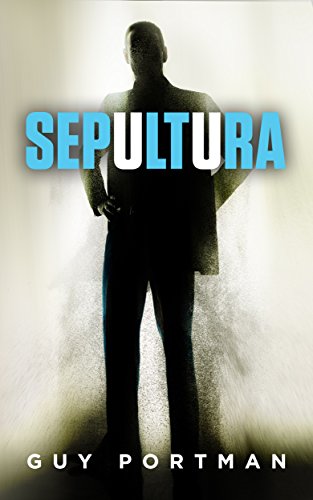
SepulturaI must explain the apparent digression before you lose interest. Use your imagination. Conjure up a dreadful genetic experiment which breeds a being who, especially in his diarist’s style of first person narrative, shows very Pooteresque tendencies. But – and it is a ‘but’ the size of a third world country – the mad scientist has added Norman Bates and Hannibal Lecter into the mixing bowl, and then seasoned it with an eye-watering pinch of Patrick Bateman. What do you get? You get Dyson Devereux, Head of Cemeteries and Burials with Paleham Council.

Dyson first burst into view in Portman’s novel Necropolis, rather like the nasty homunculus which disturbed John Hurt’s dinner in Alien. Like that creature, Dyson Devereux was implacable, cunning – and utterly malevolent. In Necropolis he went about his day job with an almost autistic attention to detail – while managing to commit several violent murders. He was smart enough to outwit the police, but has, wisely, decided to move from one council district to another.

Now in Paleham, he has sired a child, Horatio. He has fallen out, however, with Horatio’s mother Rakesha who, in turn, has taken up with a fairly revolting specimen (by Dyson’s very high standards) called Jeremiah. Most of the people in Dyson’s life who he dislikes – and like the biblical unclean spirit they are legion – are given disparaging nicknames, and Rakesha’s new love is called Free Lunch. Dyson’s colleagues within the bureaucratic hub of Paleham Borough Council include Inappropriate Short Skirt, Sullen Goth and, most despised of all,Ludicrous Tie (aka Bryan).

Improbably, Paleham is twinned with the Italian town of Rovito, and after their funzionari del consiglio comunale have paid a visit to their English counterparts, it is the turn of the Paleham officers to travel to Italy. Dyson, by the way, speaks fluent Italian. His linguistic talents are considerable. He is very concerned that Horatio’s nursery school doesn’t offer Latin, and so he is determined to teach the little chap himself. Before the Italian trip departs, however, Dyson has finally lost patience with Free Lunch and murdered him. He methodically dismembers the offending individual and disposes of the bits. Unfortunately for him, Free Lunch’s head breaks free from the stones which were meant to keep it at the bottom of the local canal, and after its discovery, Dyson becomes a person of interest to the local constabulary.

guyThe trip to Italy temporarily removes Dyson from the cross-hairs of the local police, and also the relatives of the late lamented Jeremiah, who are out for vengeance. What follows is brilliantly inventive, murderous and breathtakingly funny. Guy Portman doesn’t reveal too much about himself, even on his website, but he must, at some point, have worked in some kind of public services environment. All the devils are here – the pomposity, the endless Powerpoint presentations (complete with printout), the daily genuflection at the the altar of Health and Safety, the woeful political correctness, the corruption of the English language, the cheap suits and – for ever and ever amen – the second-rate minds doing second-rate jobs.

I don’t often issue health warnings, but if you are easily offended and believe that some things should never be satirised, then don’t go near Sepultra. If on the other hand, you think, “what the hell, one dance with the Devil won’t hurt..” or if you love brilliant writing and vengeful black humour that up-ends modern society and kicks it in the head – then Sepultura should be the next book on your bedside table. It is out now, and published by CreateSpace Independent Publishing.

Sep top and bottom

BRILLIANT NEWS … Dyson Devereux returns!

Cemetery

It’s not often that an item of book news from Fully Booked Towers comes with a warning, but this one definitely does. Back in 2014, I read and reviewed a startling tale centred around a young man called Dyson Devereux who is Head of Burials and Cemeteries for the local council of a fictional town in Essex. Necropolis is one of the funniest – and most disturbing books – I have ever read. The warning? Please don’t go near Necropolis – or its successor, Sepultura – if you are a sensitive soul whose idea of risqué humour is a re-run of Dad’s Army. Dyson Devereux’s creator is Guy Portman, and he writes – excuse the pun – graveyard humour of the blackest sort. You will find yourself in Catch 22 territory, where no socially-aware virtue goes un-targeted.

NecropolisNecropolis has a surreal plot involving, amongst other characters, an African drug dealer, a fugitive from the genocide of the 1990s Balkan wars – now working as a gravedigger – and a sadly deceased local resident for whom the undertakers have abandoned any pretence of good taste:
A hearse pulled by two horses is approaching. The horses’ coats have been sprinkled with glitter, and their manes dyed pink. They look like colossal My Little Ponies,”

SepulturaAfter a pause of three years, Dyson Devereux returns in Sepultura, to be published on 11th January. I have yet to get my hands on a copy, but it seems that Dyson has both a new job and a new son, but his cold rage and venomous disgust at his work colleagues and the world in general appears not to have abated one little bit. I can only guarantee that there will be death, cruelty, abrasive satire – and brilliant writing.


Guy Portman’s web page is here

Check out Necropolis and Sepultura here.

Blog at WordPress.com.

Up ↑