
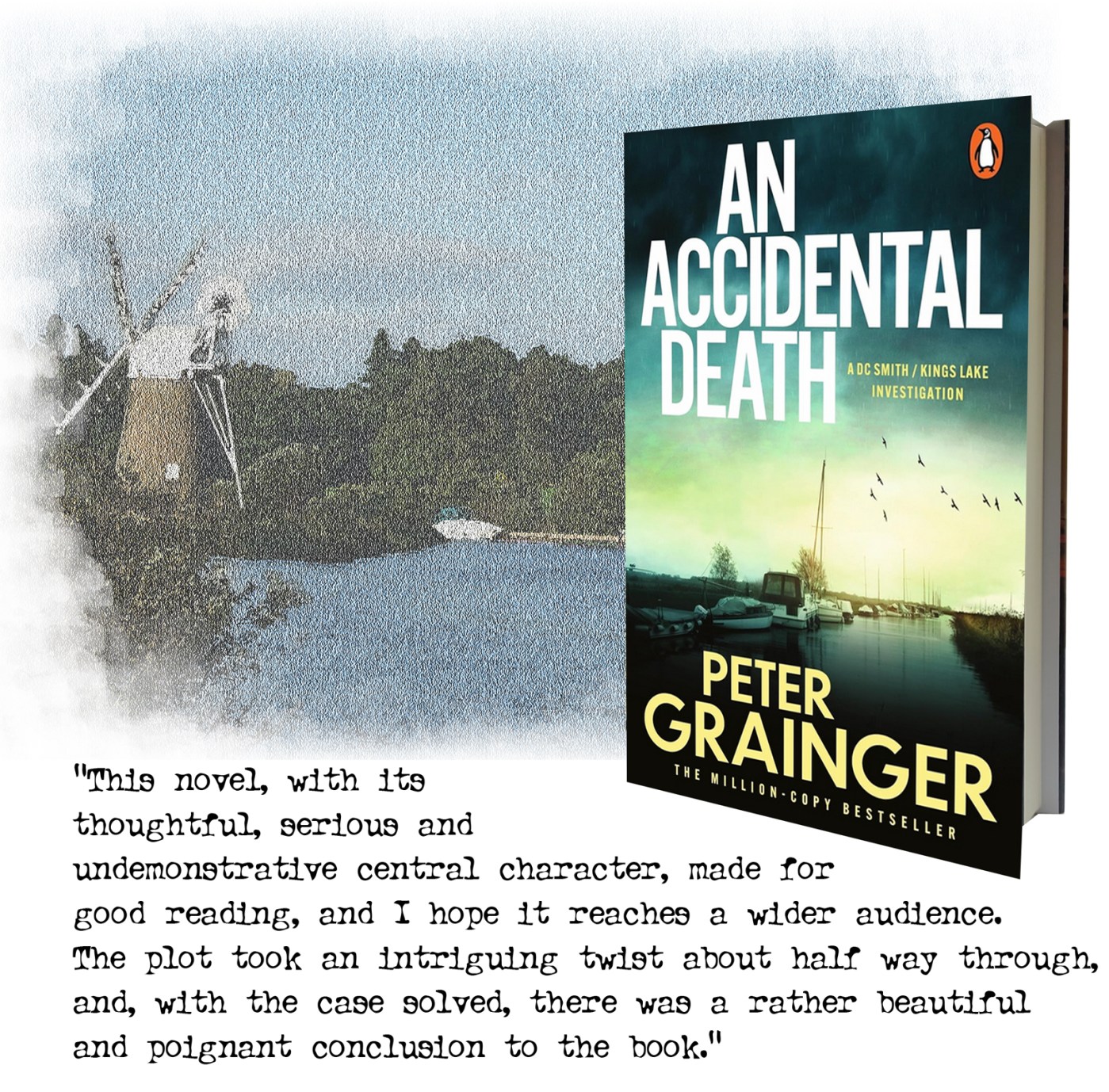
I recently reviewed An Accidental Death, the first of the Peter Grainger novels to be republished by Hutchinson Heinemann. This is a longer and more complex book and the central character, Detective Sergeant David ‘DC’ Smith has now left Norfolk Constabulary, and has been working for Diver and Diver Associates, a firm of private investigators in the Norfolk town of Kings Lake.
The book begins with Kings Lake copper DCI Cara Freeman being asked to handle a re-investigation into the death of Lord Frederick Thorpe, a young peer who drowned in the swimming pool of wealthy Norfolk businessman eighteen months earlier. The investigation into his death had been carried out by another team and, to put it plainly, it has now proved to have been error strewn. Lord Thorpe’s sister, unhappy with how things had been handled, hired Diver and Diver to investigate, and what they found now threatens to become a very public scandal. Freeman must now discover the truth, but with Thorpe long since cremated, will she find conspiracy or cock-up?
Crime writing, from my observations, isn’t like Lego or Meccano (younger readers will have to Google that) in that it is not just a matter of putting the bits together to make the final model.Writers have a series of structural options to involve the reader. Some I hate with a vengeance, such as the split time narrative which uses chapter headings like ‘Two years earlier’ or ‘Six weeks later’. Then there is the ominous prologue, where something apparently unrelated to the main narrative occurs, leaving us wondering how it will resolve.
Grainger uses a variant of that here. A woman is nursing her dying father, Charles McAllister, a retired financial advisor. He dies, peacefully. She organises his funeral, and subsequently learns that she has inherited a large sum of money. How this parallel line will converge with the investigation into the death of Frederick Thorpe is, 120 pages in, anyone’s guess.
As the case unfolds, it appears that what DDA discovered was a plan by Freddie and some of his politically active friends to put pressure on an MP over his support for military equipment sales to Israel. After Freddie’s demise these youngsters had been approached by a man and a woman and warned that they were involved in a very serious business, and that they had upset some dangerous people. Mossad agents operating in bucolic Norfolk? That seems to be the only explanation, implausible though it may sound.
Peter Grainger drip-feeds us clues about who Ms McAllister is, and how she is relevant to the Thorpe affair. She works for the intelligence service, but has been on extended leave. She meets up with a colleague, Ricketts:
“There’s trouble with a previous job. A bit of smoke, as if it’s still burning somewhere underground. I don’t know all the details.”
When Ricketts looked at her directly, she said,
“Which job?”
And he said,
“Norfolk.”
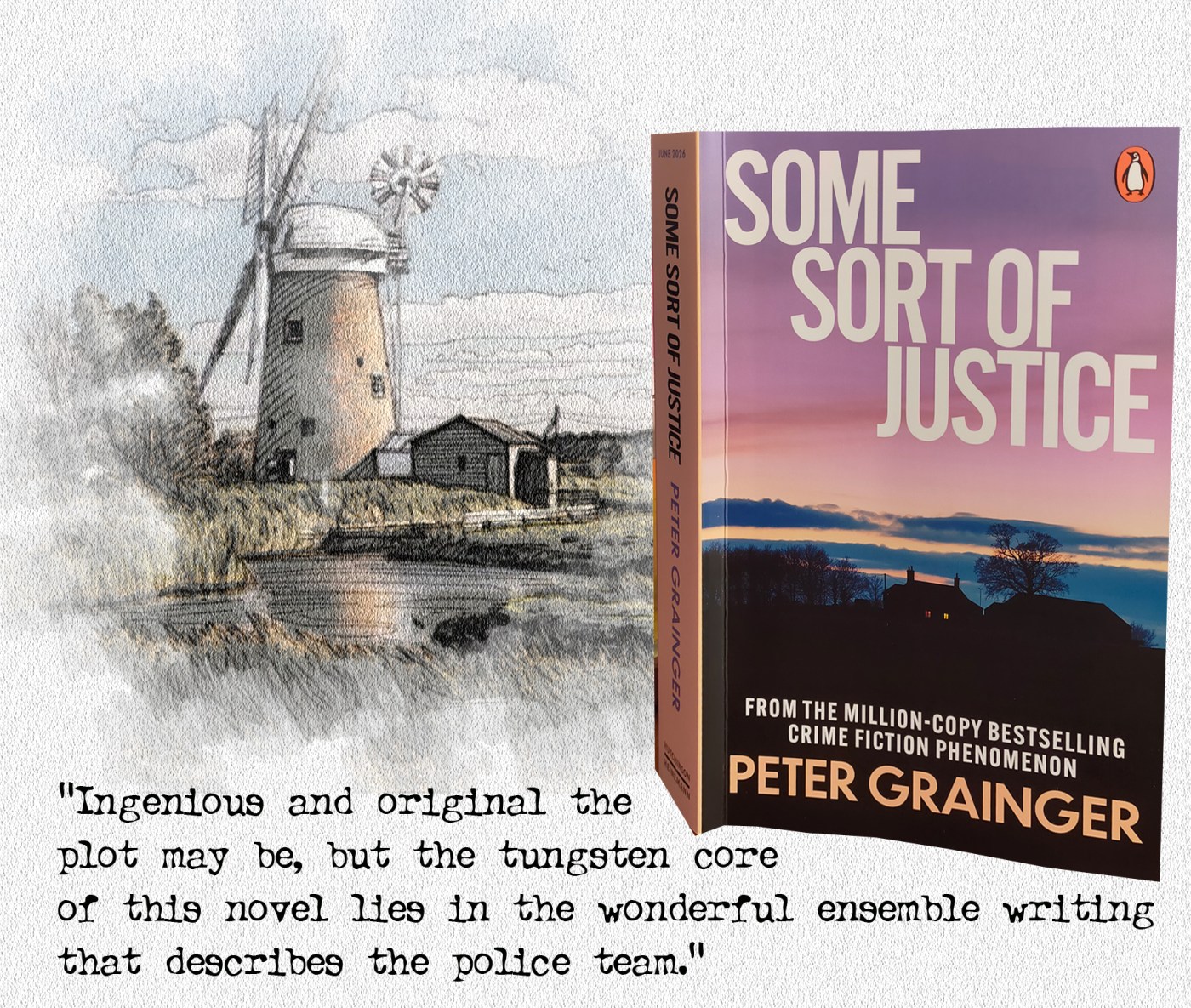
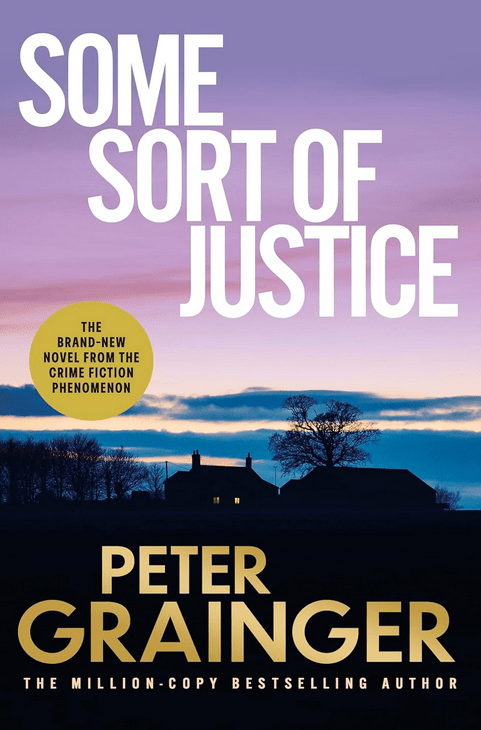
Ingenious and original the plot may be, but the tungsten core of this novel lies in the wonderful ensemble writing that describes the police team. DCI Cara Freeman, at its head may be small in stature but she has a steel will, and suffers fools not at all. At her side is the imperturbable and ruthlessly methodical DI Tom Greene, while DS Chris Waters may be the relatively new ‘boy’ but, he served a long and fruitful apprenticeship with former Sergeant David Smith who, of course, is observing the proceedings with the detachment of an outsider – with the wisdom and savvy of someone with inside knowledge. Some Sort of Justice will be published by Hutchinson Heinemann on 4th June.



 fullybooked2017