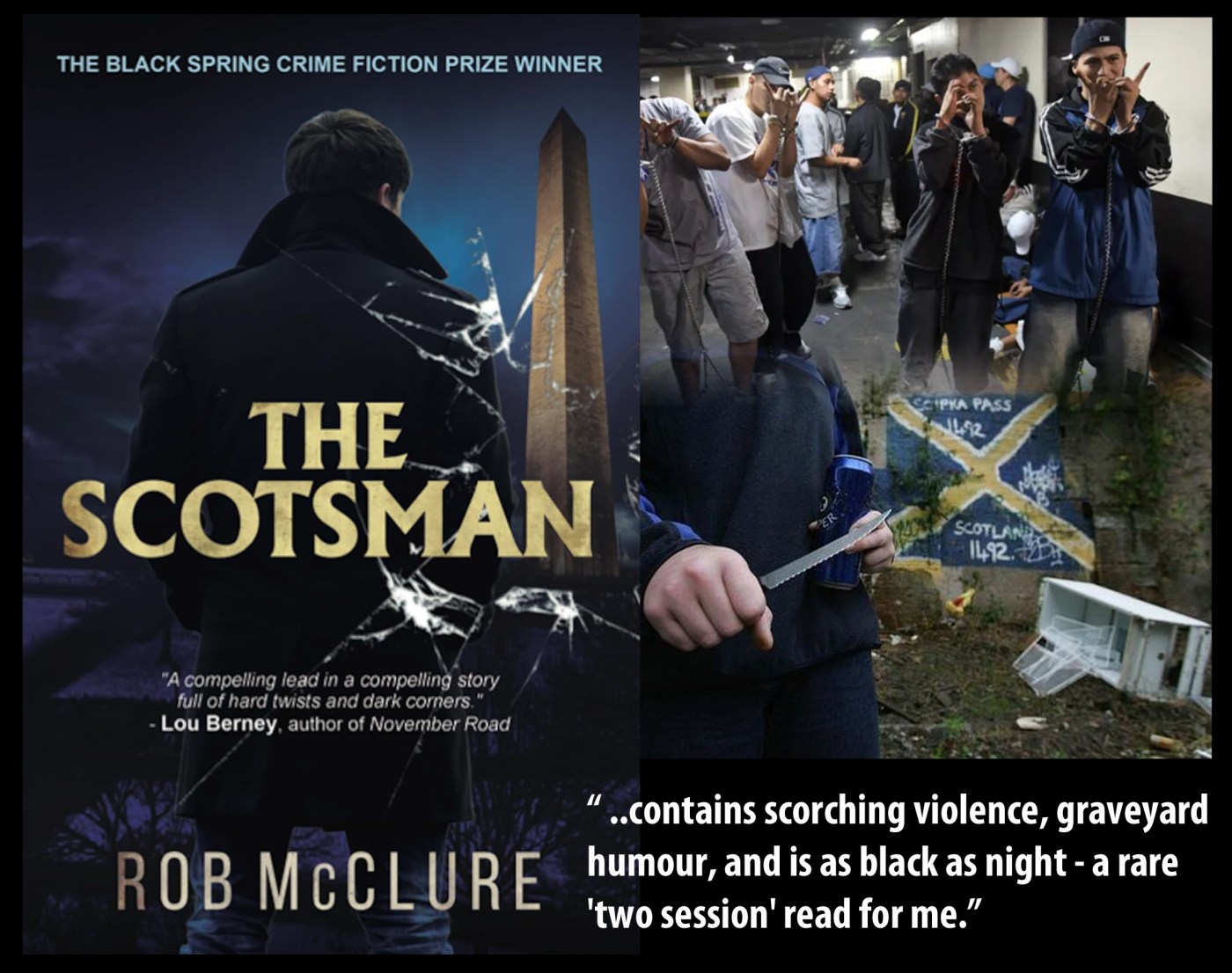

 The trope of a police officer investigating a crime “off patch” or in an unfamiliar mileu is not new, especially in film. At its corniest, we had John Wayne in Brannigan (1975) as the Chicago cop sent to London to help extradite a criminal, and in Coogan’s Bluff (1968), Clint Eastwood’s Arizona policeman, complete with Stetson, is sent to New York on another extradition mission. Black Rain (1989) has Michael Douglas locking horns with the Yakuza in Japan, and who can forget Liam Neeson’s unkindness towards Parisian Albanians in Taken (2018), but apart from 9 Dragons (2009), where Michael Connolly’s Harry Bosch goes to war with the Triads in Hong Kong, I can’t recall many crime novels in the same vein. Rob McClure (left) balances this out with his debut novel, The Scotsman, which was edited by Luca Veste.
Charles ‘Chic’ Cowan is a Glasgow cop, and his daughter, Catriona, was studying at an Washington DC university when she was shot dead on the Metro. CCTV footage shows that her assailants were two black men, one of whom later ends up dead as a result of feuding between drug gangs. The local police remain mystified as to who the other shooter was, and they are also baffled by an apparent lack of motive, and the fact that the shooting – at close range with a small calibre pistol – has all the hallmarks of a contract killing. Cowan travels to DC in an attempt to discover the truth.
Our man is a synthesis of every Scottish copper we have ever read about. He is undoubtedly intelligent, but abrasive in his speech and manner. He used to like a drink or six but is now ‘on the wagon’, and has a jaundiced view of humanity, hence a nice collection of one-line gags. He recalls a fracas he was involved in at a family wedding in an insalubrious district of Glasgow:
“Easterhouse was the kind of place Ethiopia held rock concerts for.”
Cowan has long since separated from Catriona’s mother, and the more he investigates her life in the American capital, the more he realises how little he knew her. To start with, she was a lesbian, and it is when he discovers her relationship with a political journalist that he realises her murder is connected to something rotten in the state of American politics.
The closer he gets to the reason for his daughter’s murder, the more dangerous the men who are sent after him, but one by one, they come to rue the fact that the back streets of Glasgow make the sidewalks of Washington Highlands/Bellevue look like a Disney theme park by comparison. It is in places like Possilpark and Govan that Cowan learned every dirty trick in the book, and one involves a very inventive use of a piece of plywood, a razor blade, a length of duct tape and some knicker elastic. As for inducing a pursuer to ‘fall off’ a Metro platform thus making the acquaintance of the third rail, it is straight out of Cowan’s Glasgow playbook.
The Scotsman contains scorching violence, graveyard humour, and is as black as night – a rare ‘two session’ read for me. I don’t do star ratings, but if I did, it would be a five. I wasn’t fussed about the romantic interlude, but if it gives Cowan an excuse to return and cull a few more DC lowlife, then I’ll give his moments of passion a thumbs-up. The book is published by Black Spring and is available now.


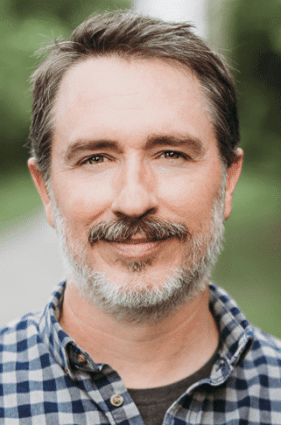 Wiley Cash is at his best when describing the complex social history of his home state, and the ways in which it affects families and relationships, and he is on good form here. Where the book didn’t work so well, for me at least, was in the ending. In literally two and a half pages, everything we thought we knew about what was happening on Oak Island is turned violently on its head. Abrupt? Yes. Enigmatic? Certainly. There’s no rule that says every plot has to end neatly tied up like a parcel with every question answered, and many readers may enjoy the ambiguity at the end of this book. You could say that Cash (right) gives us the dots and leaves it up to us how we join them up. When Ghosts Come Home is published by Faber and Faber, and is

 The Steiners are also well-connected. Politicians great and small, financiers, socialites, fund-raisers – mostly anyone who is anyone in Boston and further afield – all tip their hats to the Steiners. Neither does it hurt that the Steiners’ clout enables them to hire serious muscle from the criminal underworld and, as most of the child rape is conducted on a private island somewhere in the vicinity of the Bahamas, neither the Boston Police Department nor the FBI can do anything to intervene.

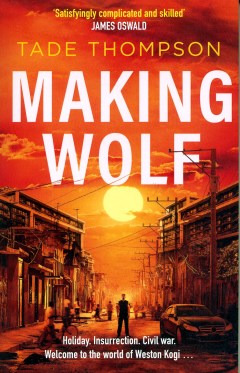 At his aunt’s funeral he meets Churchill “Church” Okuta. Church is a nightmare from Kogi’s schooldays, and the meanest person he has ever met. When asked what he does in London, Kogi, on impulse says that he is a homicide detective. Bad move. Church orchestrates the drugging and abduction of Kogi, and when he wakes up he finds that he is in the camp of the Liberation Front of Alcacia, one of two warring rebel groups trying to overthrow the government. Their leader, Enoch ‘Papa’ Olubusi has been assassinated, and the LFA, in the mistaken belief that Kogi is a crack British detective, want him to prove that the killing was the work of their bitter rivals – the People’s Christian Army.

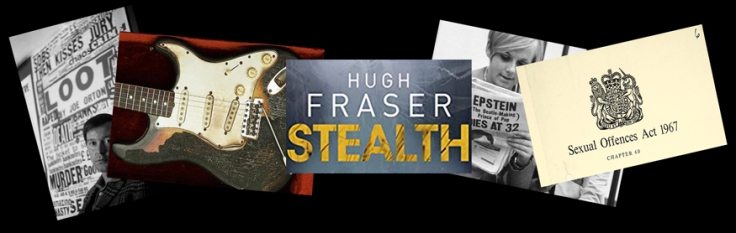
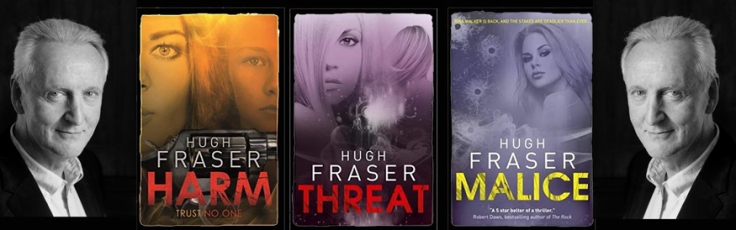
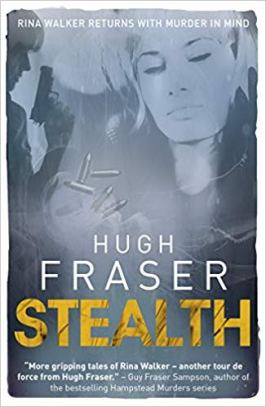 London in 1967 seems to have been an exciting place to live. A play by a budding writer called Alan Aykbourne received its West End premier, Jimi Hendrix was setting fire to perfectly serviceable Fender Strats, The House of Commons passed the Sexual Offences Act decriminalising male homosexuality and Joe Orton and Kenneth Halliwell featured in a murder-suicide in their Islington flat. This is the backdrop as Hugh Fraser’s violent anti-heroine Rina Walker returns to her murderous ways in Stealth, the fourth novel of a successful series.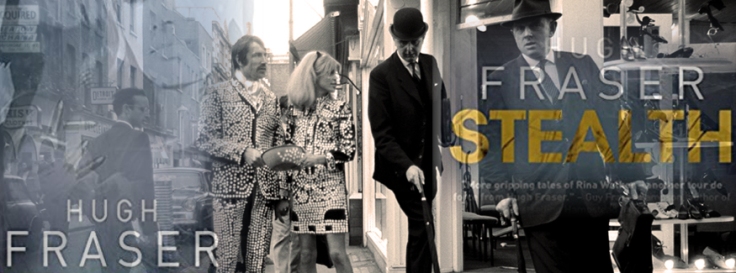


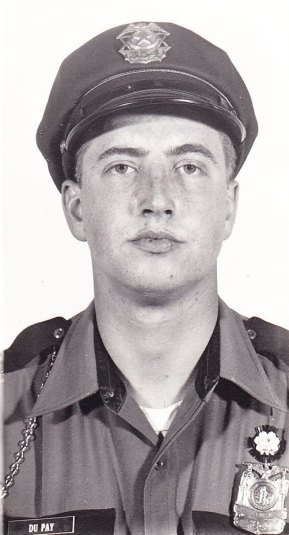 “April 6, 1961, I was sworn in as a brand new police officer in a ceremony held in the office of Ray Smith, the city auditor, in City Hall. I was nervous, proud of myself for passing all the tests, not least of all surviving an interview with the shrink, and now I stood with my hand up, swearing to serve the citizens in an honorable manner.”
 Dupay was convinced that Manning had been killed for some infraction or a bad debt in the violent and ruthless world of those who deal in narcotics. But why were senior officers of the Portland Police Bureau determined to bury the case? Why did Dupay arrive at the office the day after the body had been found, and found that all the details had been wiped from the status board listing ongoing and unsolved cases?
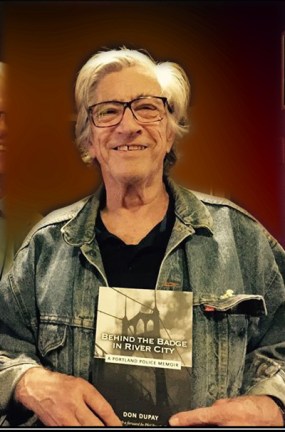 “I tossed my badge on the Captain’s desk, telling him that I was sick of the job and tired of the hypocrisy of people like him. I told him my health had been suffering and I hated the work, only because I hated some of the people I was forced to work with. I also hated being told that I could not investigate a particular 1975 ‘suicide’ that I knew to be a murder.”


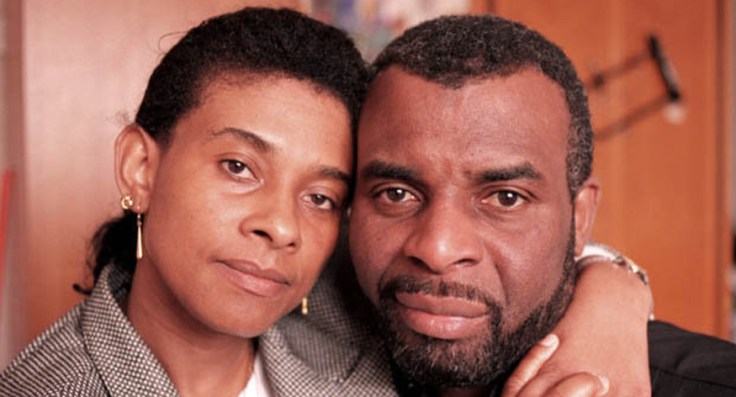
 In 1997, at the long-delayed inquest into the murder, the five men suspected of the killing refused to co-operate and maintained strict silence. Despite direction to the contrary by the Coroner, the jury returned the verdict that Stephen Lawrence was killed “in a completely unprovoked racist attack by five white youths.” Later that year, The Daily Mail named the five as Stephen’s killers, and invited them to sue for defamation. Needless to say, none of the five took up the challenge. Below, the five suspects run the gauntlet of a furious crowd after the inquest.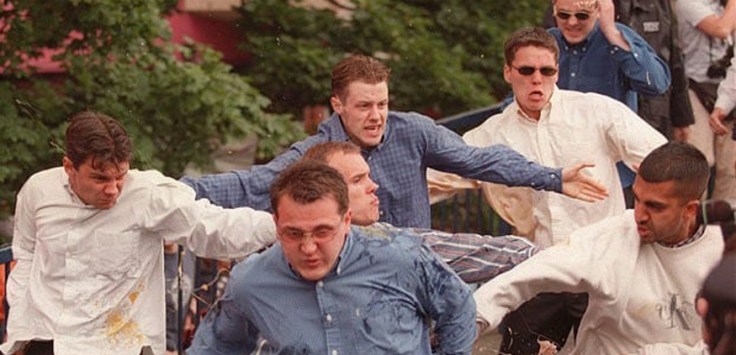



 fullybooked2017