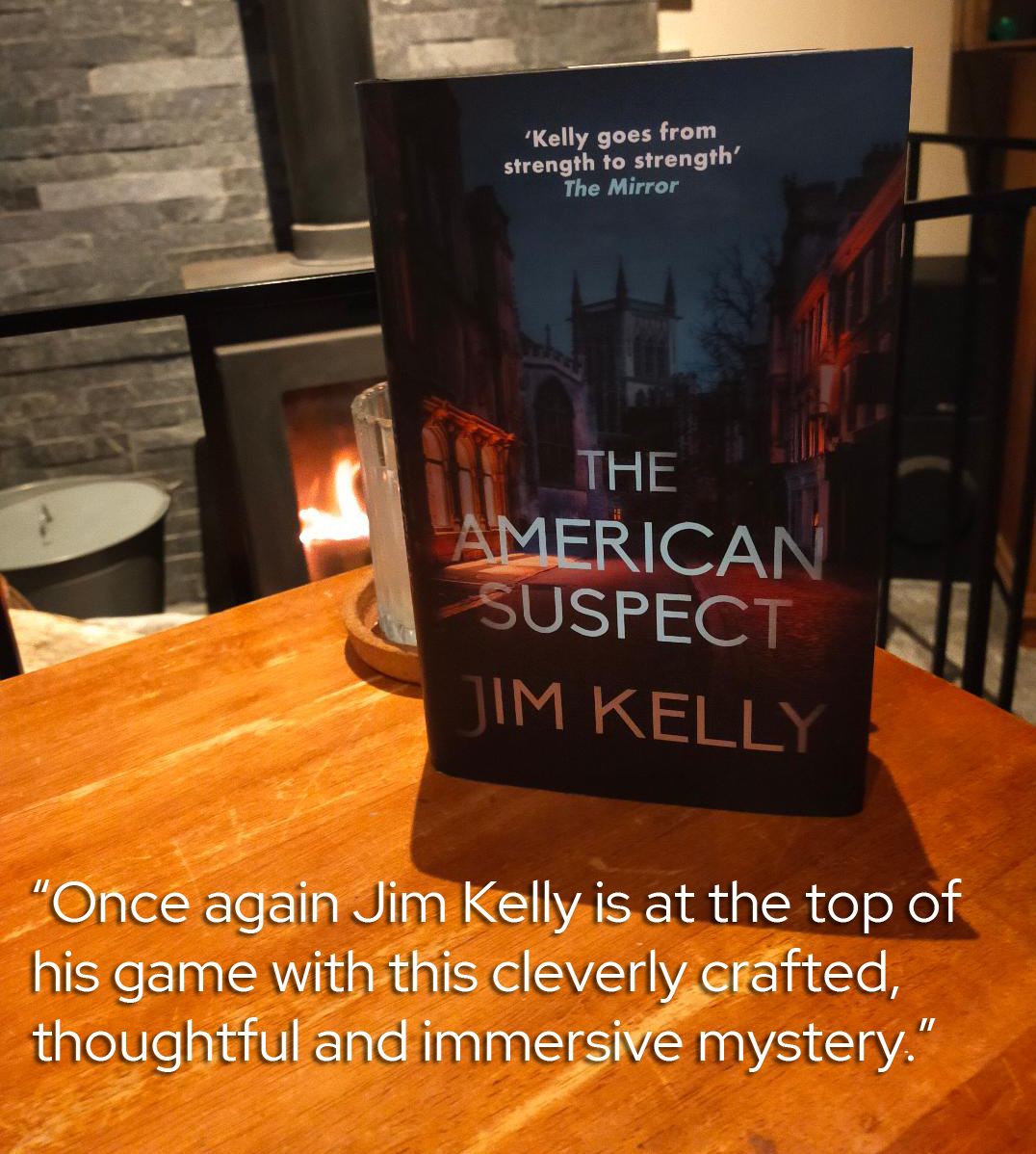

Jim Kelly’s wartime detective DI Eden Brooke returns in this elegant Cambridge mystery. It is autumn 1942, and the Americans are, once again, ‘Over There’. ‘There’, in this case, is the former British airfield of Dodswell, which is being extended to cope with a new batch of P51 Mustang fighter-bombers. The reconstruction has been briefly paused by the discovery of a human skeleton, which turns out to be that of an RFC pilot, believed to have been killed in a crash in 1917. But what were his remains doing casually buried beside the runway when he appears to have a proper grave, with headstone, in a nearby churchyard?
When an elderly woman, Ede Curtin, living in the village of Dodswell, dies in suspicious circumstances, a macabre coincidence emerges. Beside the dead woman’s bedside is a framed photograph of the pilots of RFC Dodswell, 1917. And there, fifteenth from the left, on the second row, is the man whose remains were disturbed by the excavations on the present day airfield. When Molly Curtin, daughter of the dead woman is herself found lifeless in Dodswell church, suspicion falls on Eliga, her boyfriend, a black soldier working with a US construction battalion. The evidence against him persuades a military court to sentence himself to death, and he he is sent to the prison in Shepton Mallet, to await the ministrations of Albert Pierrepoint (who enters the narrative as himself).
Brooke has other distractions. The apparently random and aimless disappearance of cats from one of Cambridge’s poorest areas triggers an investigation into a hugely lucrative smuggling operation involving crooked London dockers and corrupt US service personnel. One of the most vivid parts of the book is when Brooke, in pursuit of the catkillers, experiences a terrifying air-raid involving incendiary bombs.
Jim Kelly is a diamond of an author, and his gem has many facets, all of which sparkle. He has a deep sense of the past, and how it lives on. To quote William Faulkner, “The past is never dead. It isn’t even past.” Here, the mysterious death of the WW1 airman resonates powerfully in 1942 Cambridge. Kelly’s awareness of the power and importance of place is ever present. With Phil Rickman dead and gone, Kelly is now the unrivaled master of making suburban streets, bleak fens, misty fields and deeply flowing rivers potent elements within the overall narrative. Above all, perhaps, is his compassion for ordinary people, and his perceptive portrayal of the daily grind, the small struggles, the petty sleights and the tiny triumphs that characterise their lives.
Jim Kelly lives relatively local to me, and he once gave a talk at our town library, He revealed that his father had been a London police officer involved in the investigation into the awful events that occurred at 10 Rillington Place. In this book, Brooke is clearly no admirer of Albert Pierrepoint nor of the job he was paid to do. I wonder if this was because of the execution of Timothy Evans, for the murder of his duaghter? Some accounts say that Evans was innocent, and that his hanging is a potent argument against capital punishment. More recent books, such as Kate Summerscale’s The Peepshow, suggest that Evans was not the wide-eyed simpleton portrayed in popular media. Pierrepoint pulled the lever that sent both Evans and the undoubted killer John Reginald Halliday Christie to their deaths, but was he the heartless functionary portrayed in this book? I am not sure.
Eden Brooke has his own crosses to bear. His WW1 war wounds still cause him grief, and the young men in his family are all away ‘doing their bit’ and in imminent danger. I will not spoil your enjoyment of this superb novel by giving too much away, but once again Jim Kelly is at the top of his game with this cleverly crafted, thoughtful and immersive mystery. The novel is published by Allison and Busby, and is out now. For further details on American servicemen executed at Shepton Mallet, click this link.
My reviews of the earlier books in the series are here.

 We are left to imagine what he looks like. He never uses violence as a matter of habit, but his inner rage fuels a temper which can destroy those who are unwise enough to provoke him. Why is he so bitter, so angry, so disgusted? Of himself, he says: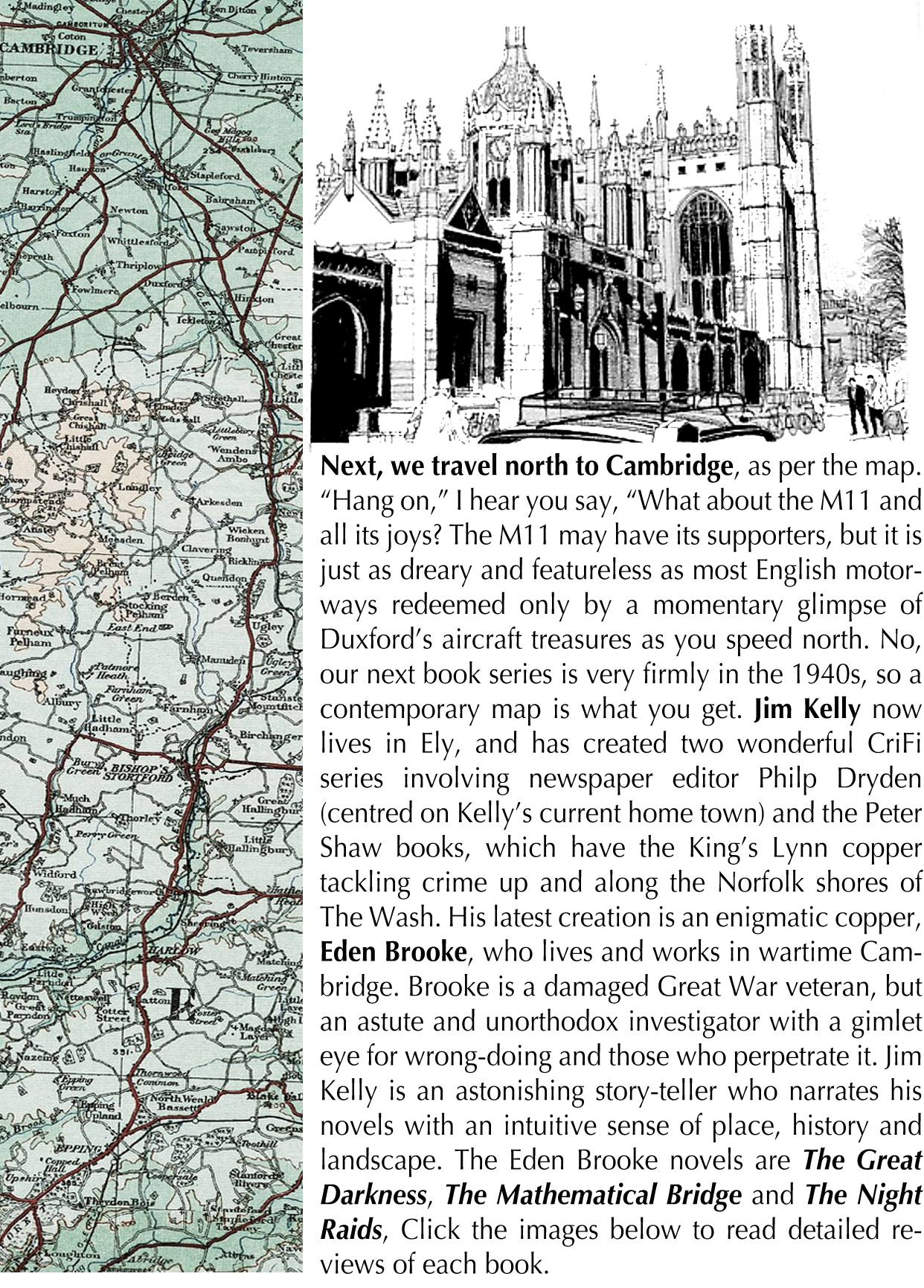


 In a sappingly hot Indian Summer in central London, Dr John Watson is sent – by a relative he hardly remembers – a mysterious tin box which has no key, and no apparent means by which it can be opened. Watson and his companion Sherlock Holmes have become temporarily estranged, not because of any particular antipathy, but more because the investigations which have brought them so memorably together have dwindled to a big fat zero.
 But then, in the space of a few hours, Watson shows his mysterious box to his house-mate, and the door of 221B Baker Street opens to admit two very different visitors. One is a young Roman Catholic novice priest from Cambridge who is worried about the disappearance of a young woman he has an interest in, and the second is a voluptuous conjuror’s assistant with a very intriguing tale to tell. The conjuror’s assistant, Madam Ilaria Borelli is married to one stage magician, Dario ‘The Great’ Borelli, but is the former lover of his bitter rival, Santo Colangelo. Are the two showmen trying to kill each other for the love of Ilaria? Have they doctored each other’s stage apparatus to bring about disastrous conclusions to their separate performances?
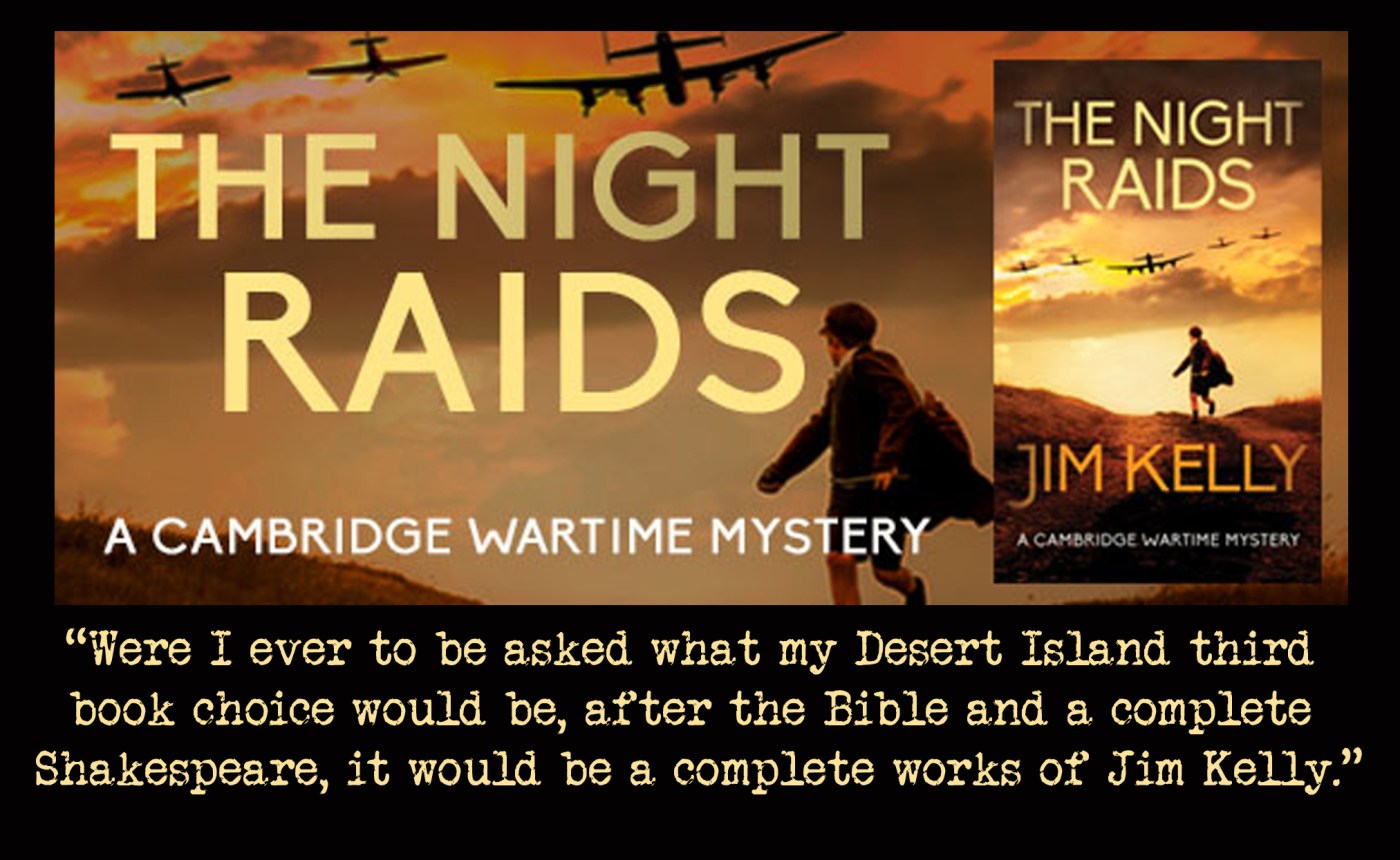
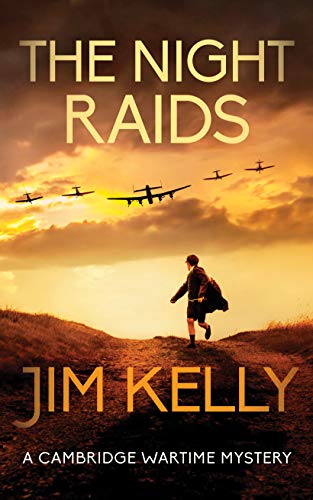 In Night Raids we see some of the story through the eyes of a crew of a German Heinkel bomber. Their mission is to destroy an essential bridge over the river; the bridge, crucially, carries the railway taking vital men and munitions to the east coast, where invasion is a daily expectation.The bombers come over at night, and have so far failed to destroy the bridge. What they have done, however, is unload some of their bombs on residential areas of the town, and inside one of the terraced houses wrecked by the raid, Brooke finds the body of an elderly woman. Her death is clearly attributable to Hermann Goering’s Luftwaffe, but the fact that her left ring finger and middle finger have been removed with a hacksaw cannot, sadly be laid at the door of the Reichsmarschall.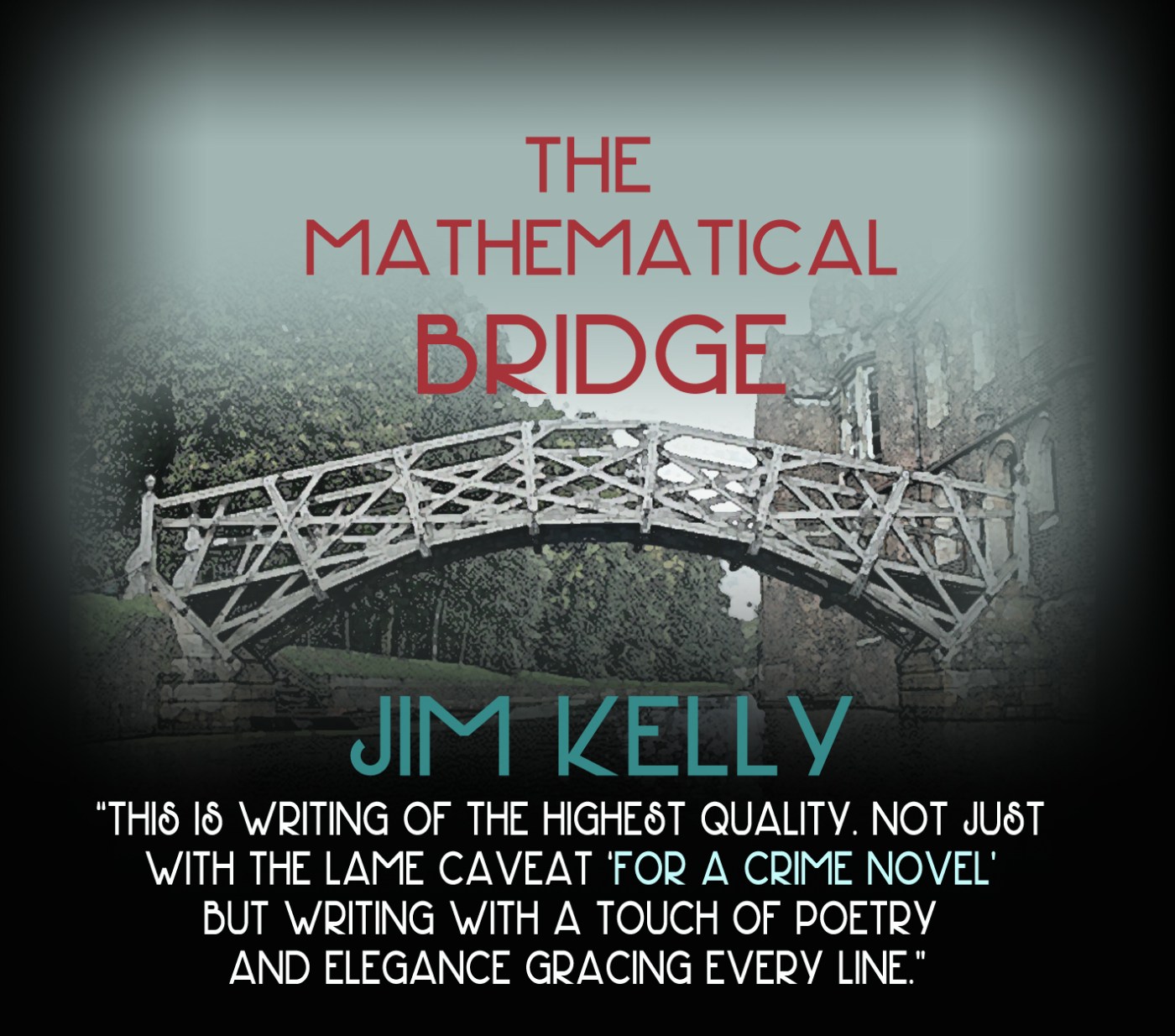

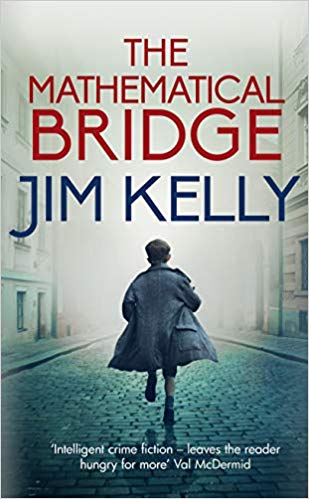 “Begin as you mean to go on” says the old adage, and Jim Kelly sets himself a hard task with the brilliant and evocative first paragraph of The Mathematical Bridge. The beautiful use of language aside, Kelly’s first 126 words convey a wealth of information. A country at war. Midwinter. A city preparing for an attack from the air. A policeman out and about when honest men are abed.
 This is writing of the highest quality. Not just with the lame caveat ‘for a crime novel’ but writing with a touch of poetry and elegance gracing every line. Even when the crime is solved, the perpetrators are behind bars, and the delightfully complex contradictions of the plot have been explained, Kelly (right) still has the emotional energy to give us a last scene which manages to be poignant but, at the same time, life-affirming.


 In this febrile atmosphere are many men and women who have memories of “the last lot”. One such is the latest creation from Jim Kelly, (left) Detective Inspector Eden Brooke. He saw service in The Great War, but were someone to wonder if his war had been ‘a good war’, they would soon discover that he had suffered dreadful privations and abuse as a prisoner of the Turks, and that the most physical legacy of his experiences is that his eyesight has been permanently damaged. He wears a selection of spectacles with lenses tinted to block out different kinds of light which cause him excruciating pain. For him, therefore, the nightly blackout is more of a blessing than a hindrance.


 When it comes to creating a sense of place in their novels, there are two living British writers who tower above their contemporaries. Phil Rickman, (left) in his Merrily Watkins books, has recreated an English – Welsh borderland which is, by turn, magical, mysterious – and menacing. The past – usually the darker aspects of recent history – seeps like a pervasive damp from every beam of the region’s black and white cottages, and from every weathered stone of its derelict Methodist chapels. Jim Kelly’s world is different altogether. Kelly was born in what we used to call The Home Counties, north of London, and after studying in Sheffield and spending his working life between London and York, he settled in the Cambridgeshire cathedral city of Ely.
 It is there that we became acquainted with Philip Dryden, a newspaperman like his creator but someone who frequently finds murder on his doorstep (except he lives on a houseboat, which may not have doorsteps). While modern Ely has made the most of its wonderful architecture (and relative proximity to London) and is now a very chic place to live, visit, or work in, very little of the Dryden novels takes place in Ely itself. Instead, Kelly, has shone his torch on the bleak and vast former fens surrounding the city. Visitors will be well aware that much of Ely sits on a rare hill overlooking fenland in every direction. Those who like a metaphor might well say that, as well as in terms of height and space, Ely looks down on the fens in a haughty fashion, probably accompanying its haughty glance with a disdainful sniff. Kelly (above) is much more interested in the hard-scrabble fenland settlements, sometimes – literally – dust blown, and its reclusive, suspicious criminal types with hearts as black as the soil they used to work on. Dryden usually finds that the murder cases he becomes involved with are usually the result of old grievances gone bad, but as a resident in the area I can reassure you that in the fens, grudges and family feuds very rarely last more than ninety years
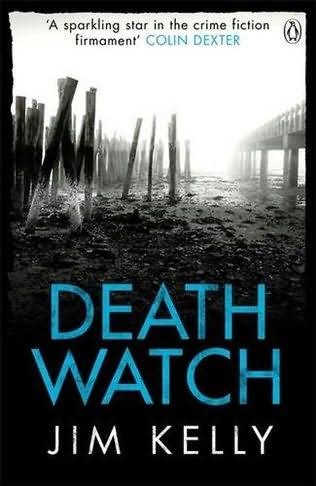 In the Peter Shaw novels, Kelly moved north. Very often in non-literal speech, going north can mean a move to darker, colder and less forgiving climates of both the spiritual and geographical kind, but the reverse is true here. Shaw is a police officer in King’s Lynn, but he lives up the coast near the resort town of Hunstanton. Either by accident or design, Kelly turns the Philip Dryden template on its head. King’s Lynn is a hard town, full of tough men, some of whom are descendants of the old fishing families. There is a smattering of gentility in the town centre, but the rough-as-boots housing estates that surround the town to the west and the south provide plenty of work for Shaw and his gruff sergeant George Valentine. By contrast, it is in the rural areas to the north-east of Lynn where Shaw’s patch includes expensive retirement homes, holiday-rental flint cottages, bird reserves for the twitchers to twitch in, and second homes bought by Londoners which have earned places like Brancaster the epithet “Chelsea-on-Sea.”


 fullybooked2017