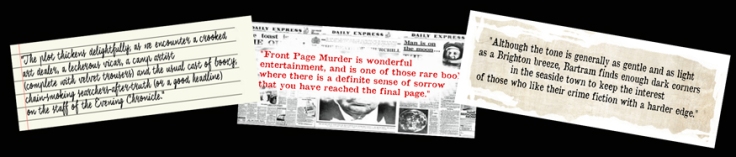
 Peter Bartram (left) is an old school journalist who has turned his life’s work into an engaging crime series set in 1960s Brighton, featuring the resourceful reporter on the local paper, Colin Crampton. Peter now reveals how he came to invent his alter ego. You can read reviews of three Crampton of The Chronicle novels by clicking the title links below.
The Tango School Mystery
Front Page Murder
Stop Press Murder
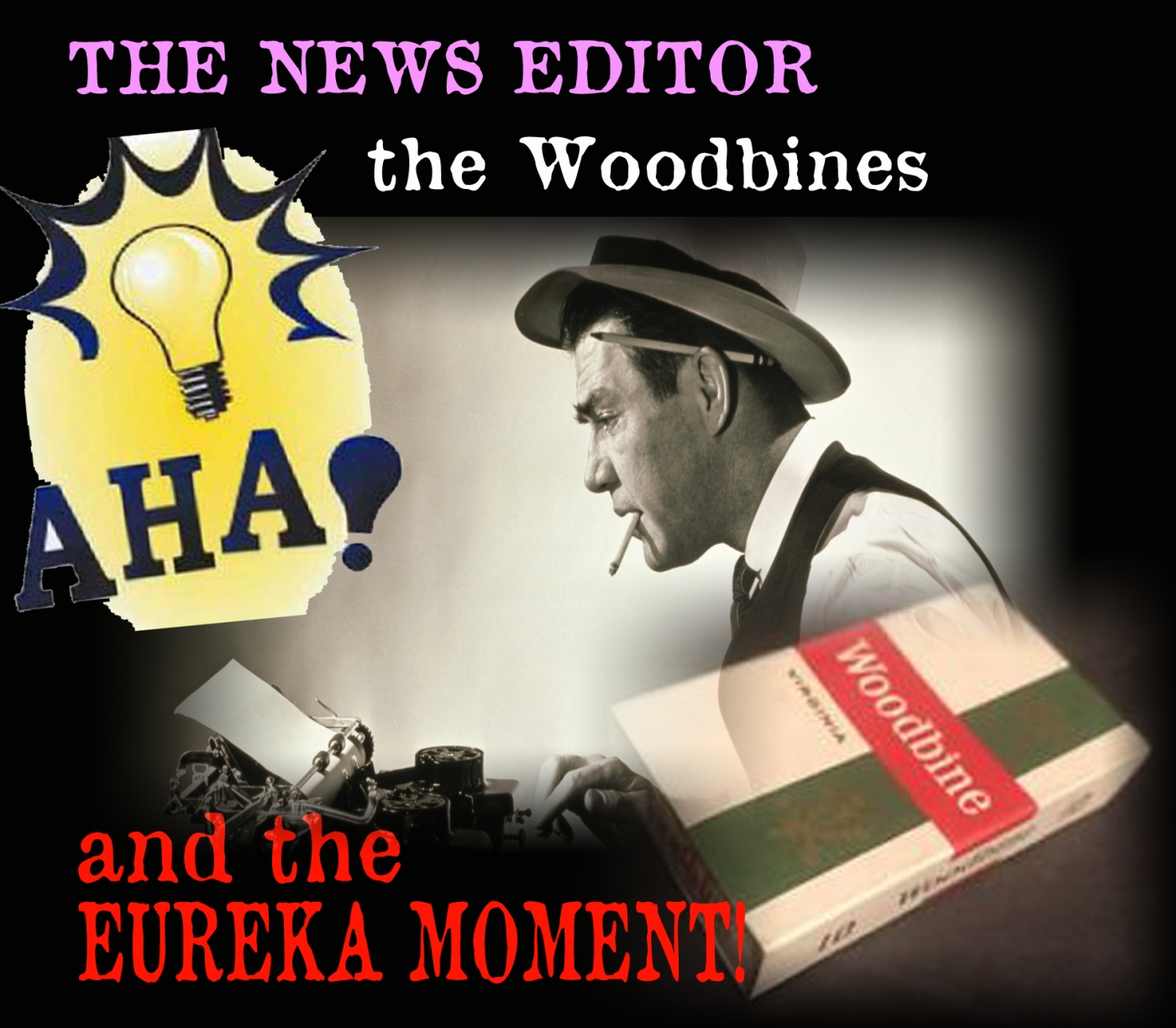
THE NEWS EDITOR, THE WOODBINES AND A EUREKA MOMENT by Peter Bartram
Two hours into my first day as a newspaper reporter, aged 18, my news editor called me into his office and said: “I’ve got a job for you.” I thought: “This is great. I’m going to be sent out on a big story.” He gave me half a crown – twelve and half pence if you’re two young to remember the old currency – and said: “Just pop across the road to the shop and buy me 20 Woodbines.”
Well, it was a start in newspapers that turned out to be surprisingly useful a good many years later when I was thinking about writing a crime mystery series. My original idea had been to base the series around two ill-matched characters – a formula that has served well in thousands of crime books from Holmes and Watson, through Poirot and Hastings, to Dalziel and Pascoe. The trouble was I couldn’t think of any way to make my pair original.
Whenever I thought of an idea, it turned out that something similar had already been done. And then I had a Eureka moment. The answer to my problem was staring me in the face. I was a journalist. I would make my protagonist a journalist. My reporter hero would be a young journalist starting his first job, aged 18, just as I had done. He’d be given some dull jobs to do – just as I’d been – but he’d also stumble across crimes to solve.
On my paper, the chief reporter had started me off covering batches, matches and despatches – better known as births, marriages and deaths. As it happened, there weren’t many batches to write about. The trick with writing the matches was to avoid double-entendres. Never write, “the bride carried a sheath of flowers,” the chief reporter warned me.
But the despatches carried different perils. I turned up at one house to discover the deceased had been laid out on the dining room table. I’m not sure what the rest of the household were doing for dinner that night.
I soon found there were perils in newspaper work I hadn’t fully appreciated. One of them occurred in my first week. One of the sports reporters had covered a football match. He’d started his report: “This was a scrappy game of football.” Except that the compositors – the mischievous guys who set the paper in hot metal type in those days – had dropped the “s” off the word “scrappy”.
That morning, you could see people all over town sniggering at the piece. Later, you could hear the editor yelling at the proof readers. Anyway, I was so taken with the idea of having a rookie reporter as a crime-busting hero, I rushed to my laptop and batted out the first chapter. A couple of hours later, I realised I’d made a big mistake. A rookie simply wouldn’t have the experience to tackle the challenges a crime buster would face.
I sat down and thought about it some more. I decided that my protagonist would be a crime reporter who’d have regular contact with the police – one of my early newspaper jobs was to attend the local cops’ daily press briefing. But I also realised he’d need realistic newspaper characters around him.
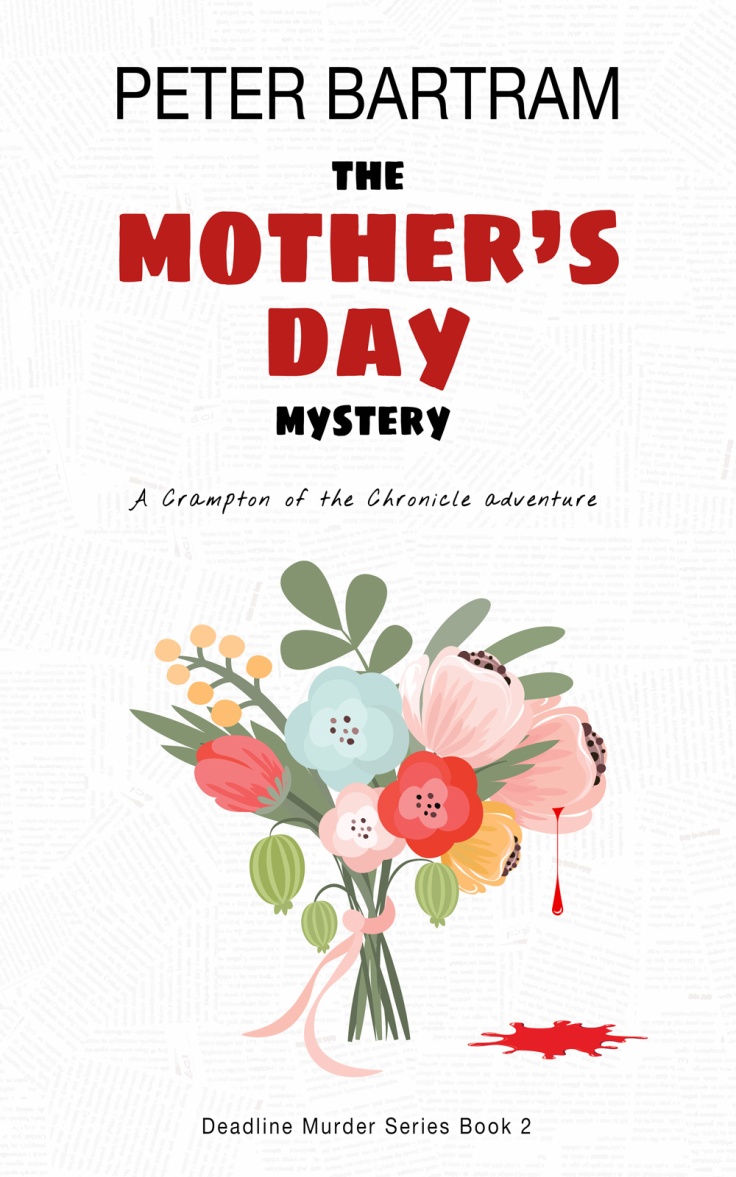
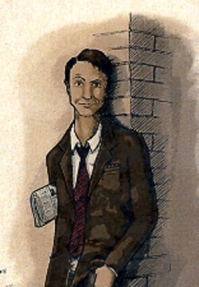 And that was when I remembered my first news editor. I never saw him without a Woodbine hanging off his lower lip. And so Frank Figgis, news editor of the Evening Chronicle, was born. Of course, there was still lots to think about – especially more regular characters. But with Colin (right) and Frank I felt I was on my way. Both of them have big roles to play – along with other regulars, especially Colin’s girlfriend Shirley Goldsmith – in the latest tale The Mother’s Day Mystery.

 Hal Westaway is no crook. She is not an opportunist. She has a conscience. She instinctively understands the difference between meum and teum. And yet. And yet. The gangster from whom she unwisely took out a desperation loan is angry and anxious for his 300%. Hal’s Brighton flat has already been turned over, and she knows that broken bones are next on the agenda. So, she accepts the invitation from the late Mrs Westaway’s solicitor to travel down to Cornwall to meet the family she never knew she had.
 Ruth Ware (right) is not the first writer – nor will she be the last – to explore the lurid charms of a decaying mansion, its ghosts both real and imagined, and the dusty terrors of death, but she makes a bloody good job of it in The Death of Mrs Westaway. Hal Westaway is a delightful character, and you would require a heart of the hardest granite not to sympathise with her and the exquisite dilemma she faces. The plot is a dazzling mix of twists, surprises, and just the right amount of improbability. The Death of Mrs Westaway is a thriller which makes you keep the bedroom light on, and long for the safety of daylight. It looks like being another bestseller for Ruth Ware, and you can judge for yourselves on June 28th, when the book will be published by
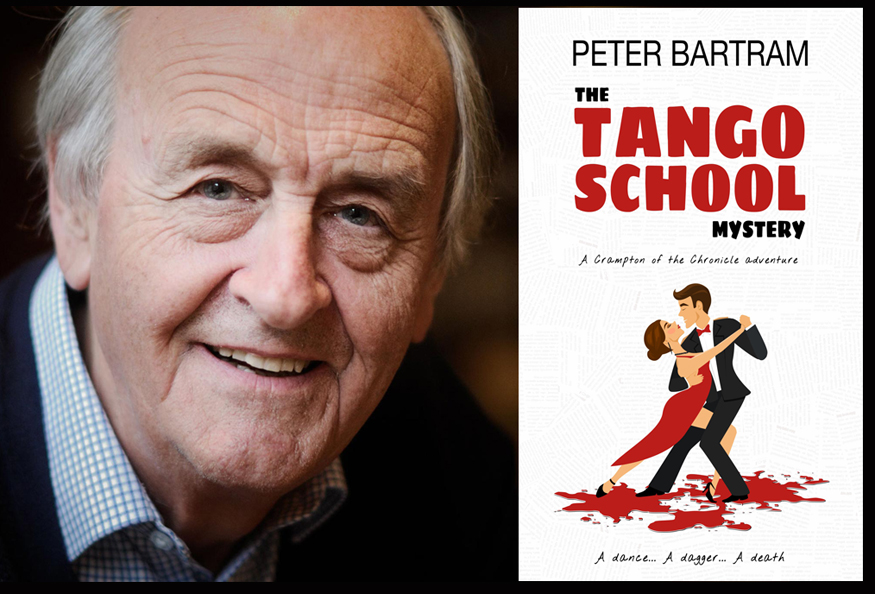
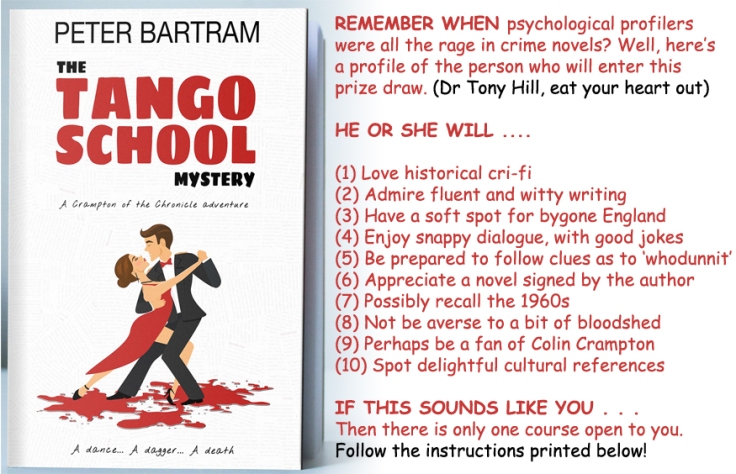

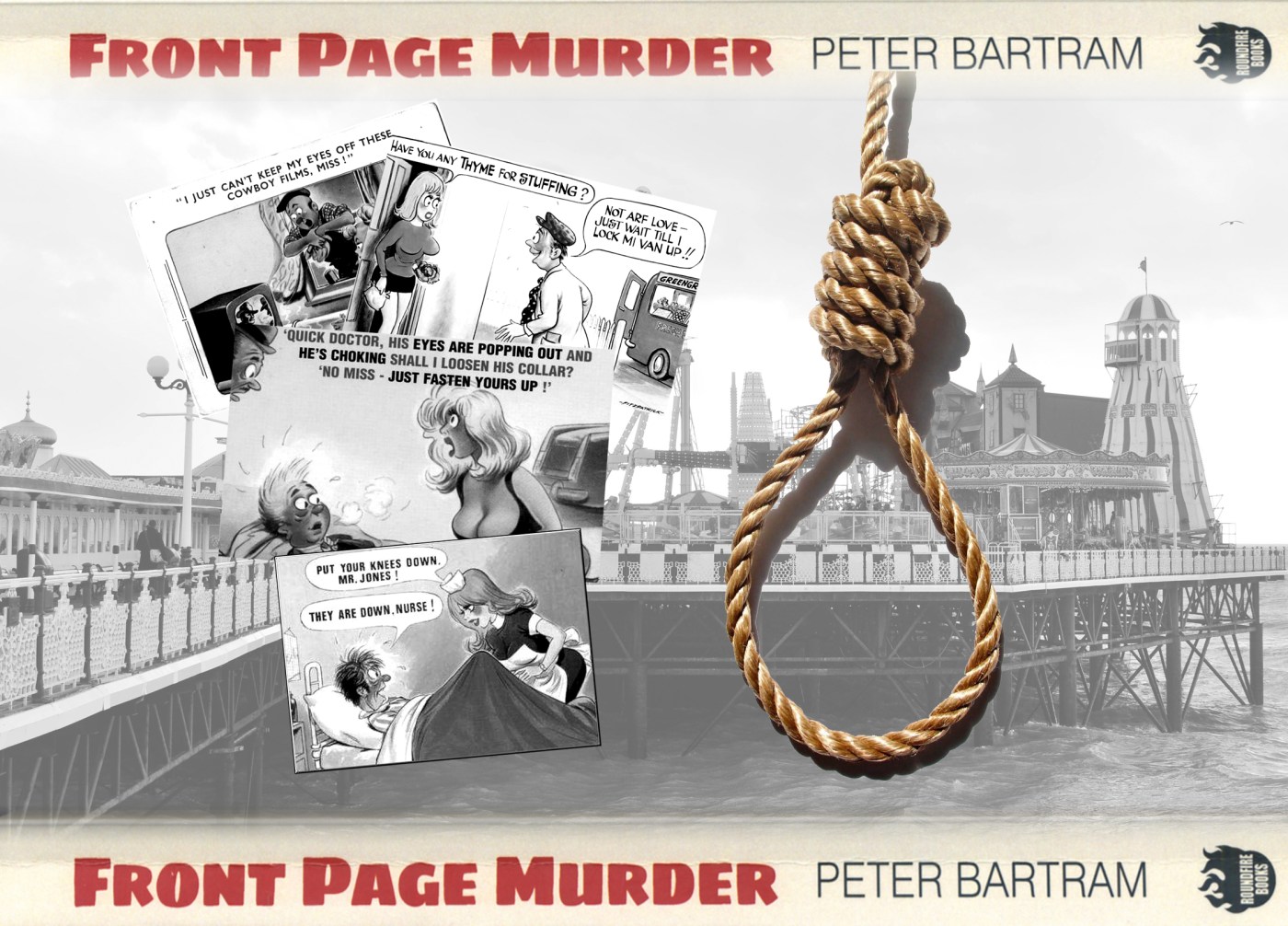

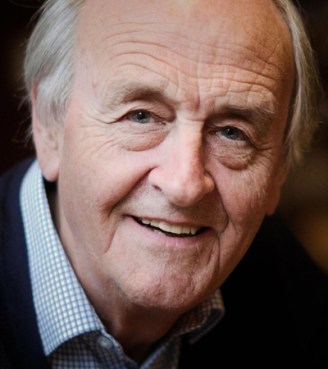 In the latest novel from Peter Bartram (left) his alter ego Colin Crampton, a reporter for the Evening Chronicle in 1960s Brighton, faces his toughest challenge yet. Local artist Archie Flowerdew is due to be hanged on Christmas Eve unless Crampton and his intrepid Australian girlfriend Shirley can stop this affront to Christmas cheer by proving that Flowerdew did not murder a rival artist.
 Persuaded by the condemned man’s niece, Tammy, Crampton gets to work, and finds no shortage of other Brighton folk who would have clapped their hands in glee upon hearing of Despart’s demise. The plot thickens delightfully, as we encounter a crooked art dealer, a lecherous vicar, a camp artist (complete with velvet trousers) and the usual cast of boozy, chain-smoking searchers-after-truth (or a good headline) on the staff of the Evening Chronicle.
 Bartram introduces a fascinating contemporary note by featuring the Home Secretary at the time, Henry Brooke. He was appointed by Harold Macmillan after the Prime Minister’s infamous ‘Night of The Long Knives in 1962. Brooke (left) was to prove one of the least distinguished holders of the post, however, and he was pilloried without mercy by the BBC’s satirical show That Was The Week That Was. They dubbed the hapless Brooke ‘The most hated man in Britain’, and Bartram recalls their mocking phrase, “If you’re Home Secretary, you can get away with murder.”

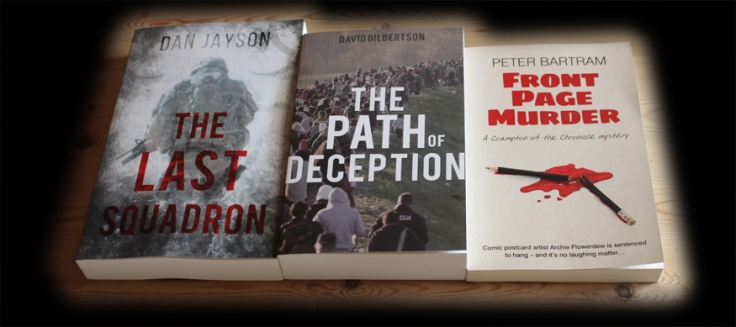
 The Last Squadron is a military thriller from debut author Dan Jayson, and it is set fifteen years from now, and the most pessimistic soothsayers have been proved right. The ethnic and religious schisms which had been festering for decades have bloomed into an apocalyptic hell of different wars across the globe. Nowhere is safe, and unlikely political alliances have been forged. A squadron of mountain troops has been serving on the inhospitable Northern Front, but as they fly home for much needed rest, their aircraft is shot down – and they realise that their nightmare is only just beginning. Dan Jayson’s bio tells us that he is the co-founder of an underwater search and salvage company. He is a Fellow of the Institute of Marine Engineers and served in the British Territorial Army. He is based in south-west London.The Last Squadron is published by Matador, and is
 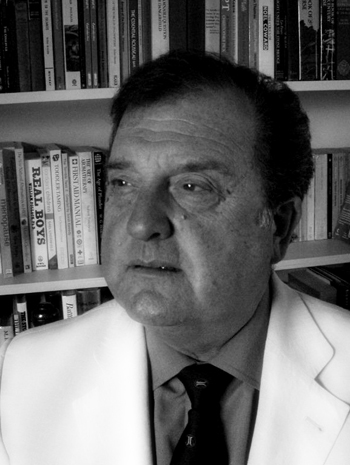 David Gilbertson (right) is a writer whose knowledge of policing and counter-terrorism is second to none. He had a long and varied career as a police officer. He served in uniform and CID in the UK and abroad, (attached to the New York City Police Department in 1988 and seconded to South Africa in 1994 as the Director of Peace Monitors for the first post-Apartheid elections). His latest novel, The Path of Deception, is set in a Britain devastated by a terrorist atrocity of hitherto unimagined scale. The police and security services are faced with the very real possibility that their attempts to prevent the outrage have been sabotaged from within. Suddenly, the task of making safe the imminent coronation of King Charles III is thrown into a very different focus. You can read more on the
 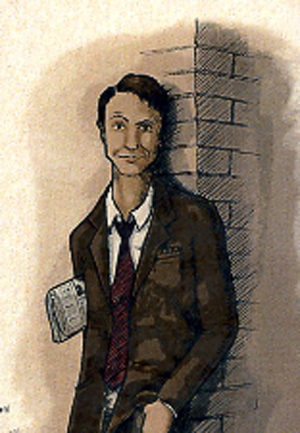 Crime reporter Colin Crampton (as imagined by Frank Duffy, left) is a delightful invention by journalist and author Peter Bartram. Only he could verify the extent to which Colin is autobiographical, but suffice it to say that Bartram has spent in his working life in journalism, and knows Brighton in and out, top to bottom, and backwards and forwards. In Front Page Murder, Crampton once again becomes involved in a very literal matter of life and death. Set in the 1960s before the abolition of the death penalty, Crampton is persuaded to establish the innocence of Archie Flowerdew – awaiting the hangman’s noose for the murder of a rival artist. Peter Bartram wrote an excellent piece for Fully Booked on the peculiarly English attraction known as What The Butler Saw machines, and you can read the entertaining feature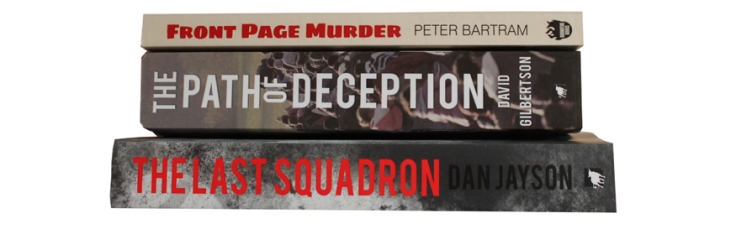
 Some historical crime fiction takes us back to times way, way before our own memories could have any validity. Then there are stories set in periods that many of us could reasonably have experienced at first hand. With the former, it is simply the author’s research versus the depth – or lack of – our own historical knowledge. The latter is a much more tricky enterprise, as someone who sets their book in the 1960s, for example, can be exposed to a more searching light – that of readers who actually lived through the years in question.


 fullybooked2017