

Guy Portman has written a splendid series of dystopian satires centred around a sociopathic killer called Dyson Devereux and, after his demise, his son Horatio, who has inherited his father’s rather peculiar intelligence. Now, in the first of two prequels, Genesis gives us a glimpse into the life of the eleven year-old Dyson. It is 1985, and Dyson’s father, long since separated from his mother, has died of what we would coyly come to describe as ‘an AIDS-related illness.’ Portman’s black humour kicks in early when, at Devereaux senior’s funeral, there is a grotesque spat between a rather fey young man (presumably the partner of the deceased) and Dyson’s aunt.
Within weeks, Dyson is an orphan. His mother never recovers from a coma induced by the prescription drugs provided by her lover, the predatory Dr Trenton. Dyson vows revenge, but shares his maximum venom for his hateful cousin Beatrice, who has taunted him relentlessly over his father’s death. After living with her and his Aunt for a while, he is sent away to boarding school. Intellectually he thrives. His rapid grasp of Latin singles him out, but his status among his peers – minor foreign royalty, sons of the landed gentry and dimwits who happen to be good at rugby – is less certain. His heroic status among (most of) his fellow pupils is cemented, however, after he engineers a memorable encounter with a boy’s glamorous mother in her Mercedes, with half the members of Upper Four B watching from behind the bushes. This memorable feat is also his downfall, as it leads to his expulsion.
Dyson’s main obsession is his cousin Beatrice. He daydreams of ways he could cause her demise. In his most exotic and Byzantine vision, he has written to Jimmy Savile (this is the 1980s, remember) asking for Beatrice to be guillotined live on TV, as the climax to that week’s Jim’ll Fix It. The unfortunate girl’s actual demise is, however, marginally less less spectacular, and it involves a parish church outing to visit Beachy Head.
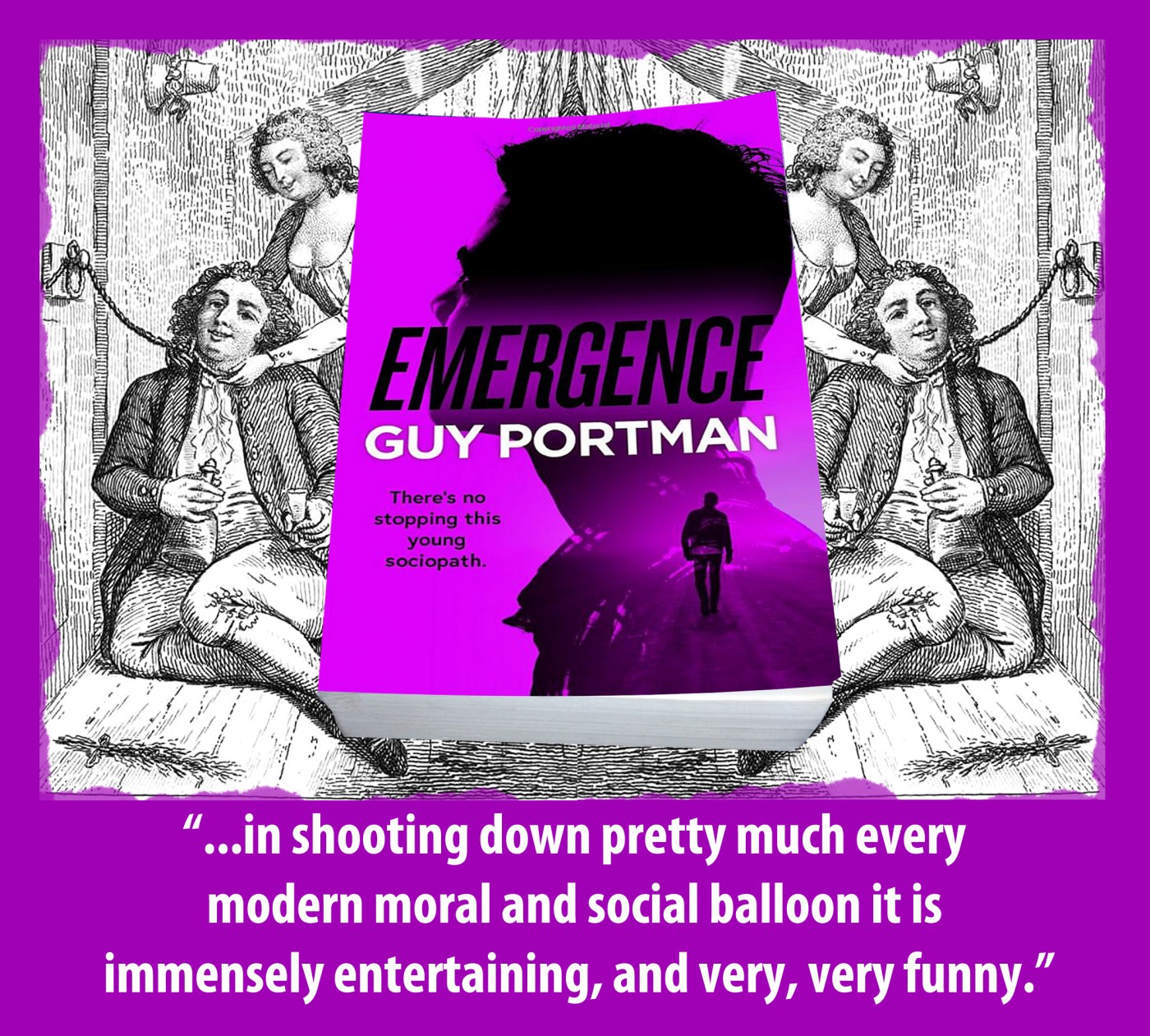
Readers who are familiar with Portman’s books will know what to expect, but for novitiates, here’s a brief primer. The author has a high powered literary rifle, and in its cross-hairs are Britain’s ‘lanyard class’, metropolitan socialists, indoctrinated social workers, people whose social consciences overlook all manner of atrocities, Guardianistas, bumbling teachers and so-called ‘community leaders’. Portman’s aim is unerring. Just like Finland’s fabled White Death, Simo Hayha, every time he squeezes the trigger, the target falls. Yes, this is satire, and fiction, but his writing carries a salutary message.
Guy Portman pushes the boundaries of humour up to – and occasionally beyond – the limits that some people might find acceptable, but he provides me, for, one, with laugh-out-loud moments. He is also a great literary stylist with a vast amoury of cultural references, and is one of our funniest living writers. Genesis is out now, and I will be reading and reviewing the next episode – Avengement – very soon.









 On his trail is a grotesque cartoon of a copper – DCI Dave Hicks. He lives at home with his dear old mum, has a prodigious appetite for her home-cooked food, is something of a media whore (he does love his press conferences) and has a shaky grasp of English usage, mangling idioms like a 1980s version of Mrs Malaprop.
 “A fuchsia -pink shirt with outsize wing collar, over-tight lime green denim jeans, a brand new squeaky-clean leather jacket and, just for good measure, a black beret with white trim.”

 Guy Portman (left) introduced us to Dyson Devereux in Necropolis (2014). I gave it 5* when writing for another review site, and I’ll include a link to that at the end of this post. Dyson was Head of Burials and Cemeteries in a fictional Essex town, and a rather individual young man. He is narcissistic, punctilious, cultured and, outwardly polite and thoughtful, but with an anarchic mind and a terrible propensity for extreme violence. The book both horrified and fascinated me but made me laugh out loud. Dyson Devereux was a Home Counties version of Patrick Bateman and his antics allowed Portman to poke savage fun at all kinds of modern social idiocies.
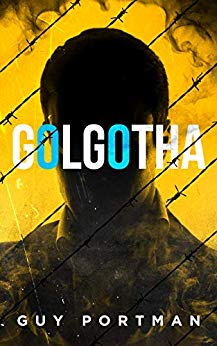 When he finally has his day in court, Dyson scorns the efforts of his lack-lustre lawyer and relies on his own charm and nobility of bearing to convince the court that he is an innocent man. He escapes the clinging arms of Alegra and returns to England without delay, anxious to be reunited with something from which separation has become a cruel burden. A loving family? A childhood sweetheart? The clear skies and careless rapture of an English summer day? No. A tin box containing several memento mori of his previous victims. Little oddments that he can sniff, fondle and treasure. Little bits of people who have had the temerity to upset him, and have paid the price.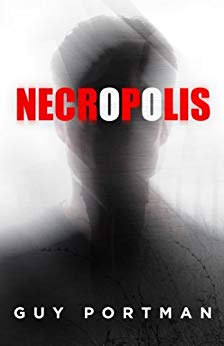

 I must explain the apparent digression before you lose interest. Use your imagination. Conjure up a dreadful genetic experiment which breeds a being who, especially in his diarist’s style of first person narrative, shows very Pooteresque tendencies. But – and it is a ‘but’ the size of a third world country – the mad scientist has added Norman Bates and Hannibal Lecter into the mixing bowl, and then seasoned it with an eye-watering pinch of Patrick Bateman. What do you get? You get Dyson Devereux, Head of Cemeteries and Burials with Paleham Council.
 The trip to Italy temporarily removes Dyson from the cross-hairs of the local police, and also the relatives of the late lamented Jeremiah, who are out for vengeance. What follows is brilliantly inventive, murderous and breathtakingly funny. Guy Portman doesn’t reveal too much about himself, even on

 Necropolis has a surreal plot involving, amongst other characters, an African drug dealer, a fugitive from the genocide of the 1990s Balkan wars – now working as a gravedigger – and a sadly deceased local resident for whom the undertakers have abandoned any pretence of good taste:
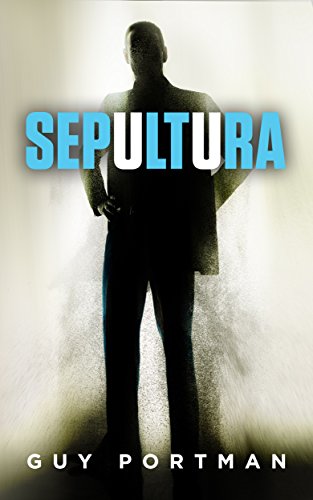 After a pause of three years, Dyson Devereux returns in Sepultura, to be published on 11th January. I have yet to get my hands on a copy, but it seems that Dyson has both a new job and a new son, but his cold rage and venomous disgust at his work colleagues and the world in general appears not to have abated one little bit. I can only guarantee that there will be death, cruelty, abrasive satire – and brilliant writing.


 fullybooked2017