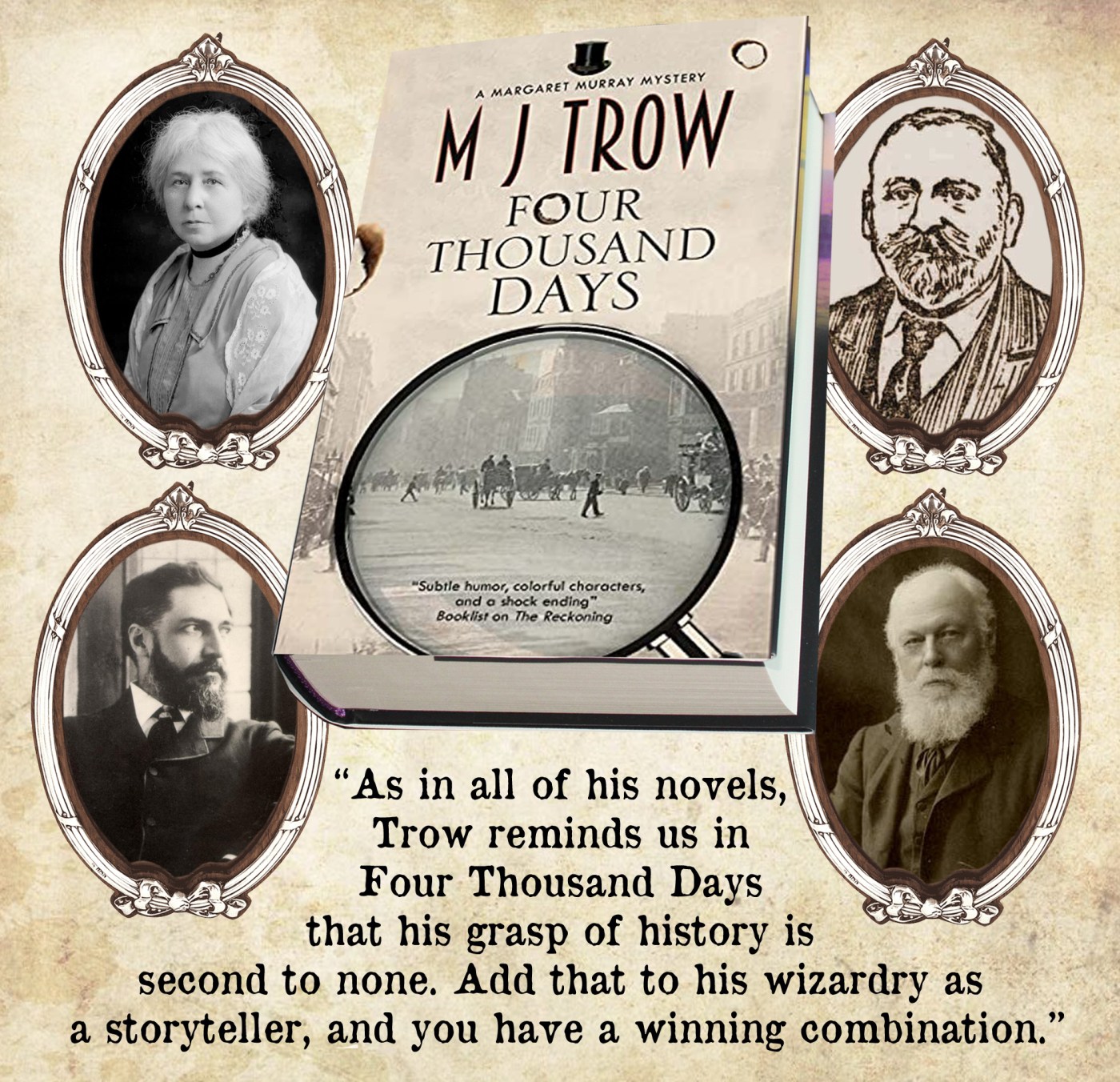

I am pushed to think of another modern writer who is more prolific, but yet so consistently readable as MJ Trow. Not only that, until a few years ago he actually ‘worked for a living’ outside of his writing career. He and I walked along one or two shared paths. We went to the same school, but I was a couple of years ahead of him, and neither of us noticed one another’s presence. We both took up a career in teaching, and shared a deep contempt for the corporate management styles in English comprehensive schools. He exploited that in his superb series centred on the world of Peter ‘Mad’ Maxwell, Head of History at a fictional school in the Isle of Wight. I say fictional, but Maxwell was, to all intents and purposes, the author himself. One imagines (and hopes) that the murders in the books were purely imaginary ones, but the troubled and often complex teenagers and preposterous members of the Senior Leadership Team were all too true to life.
Before Maxwell came Trow’s homage to Conan Doyle’s Inspector Lestrade. Bumbling and incompetent in the original books, Lestrade is portrayed by Trow as a decent copper, nobody’s fool, and doing his best, but frequently upstaged by his flashier nemesis from Baker Street. There are also series featuring Kit Marlowe, the Elizabethan dramatist, here recast as one of Gloriana’s secret agents. I have also enjoyed the Grand and Batchelor Victorian mysteries. Trow is a great humorist and punster. mixing comedy and word play with superb plotting and – the real pull, for me – the introduction of real historical characters in to the narrative. In addition he has written extensively in other genres, including True Crime.
Having just realised I am over 200 words into the review without mentioning the book in question, I must get back on task. Margaret Murray was the first celebrated woman archaeologist, and in Four Thousand Days she is at the centre of an intriguing mystery. We are in London, October 1900, and while the Boer War is still very much alive, the Boer leader Paul Kruger has fled to Europe, the ‘game’ is pretty much over, and the first British troops are returning from South Africa.
A young woman is found dead, apparently by her own hand, in a sleazy tenement bedroom. Further investigation reveals that she led at least two different lives, one as a prostitute, but another as a modest and attentive student, a regular attendee at Margaret Murray’s free Friday afternoon lectures at University College London. Another student of Em-Em, (Margaret Murray) Angela Friend, is drawn into the case by her soon-to-be boyfriend, Police Constable Andrew Crawford.
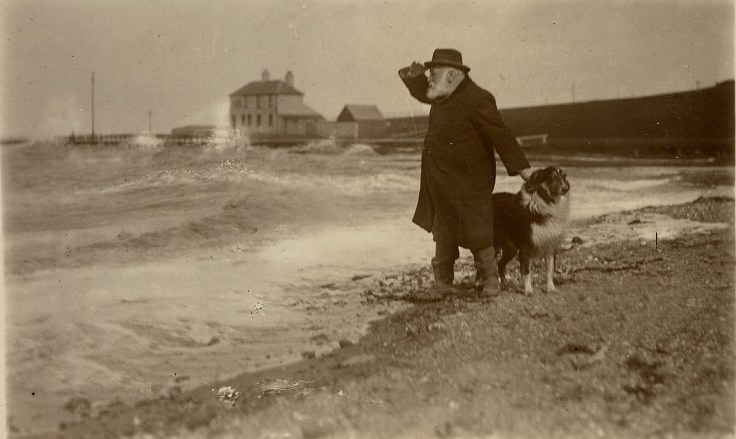
Enter another real-life character in the shape of retired copper, Edmund Reid (above). Troubled by the recent death of his wife and his conspicuous failure a dozen years earlier to catch Jack the Ripper, he has resigned himself to a solitary existence down in Hampton on Sea, a village near Herne Bay in Kent. Hampton would eventually be obliterated by erosion and the force of the waves, but an early part of this process – the collapse of a sand dune – reveals to Reid the body of another woman, dead for some time. The fact she was another archaeologist, is too much of a coincidence. It transpires that she was attempting to excavate a Roman coastal fort. What she found – and was murdered for – has the potential to turn Christian history on its head. He teams up with Margaret Murray to solve the mystery. The book’s enigmatic title? All is revealed in the final pages, but I will not spoil it for you.
Trow introduces other historical characters, and one of his many skills is to make us believe that how they behave in his book is just how they were in real life. As in all of his novels, Trow reminds us in Four Thousand Days that his grasp of history is second to none. Add that to his wizardry as a storyteller, and you have a winning combination. Four Thousand Days is published by Severn House and is available now.
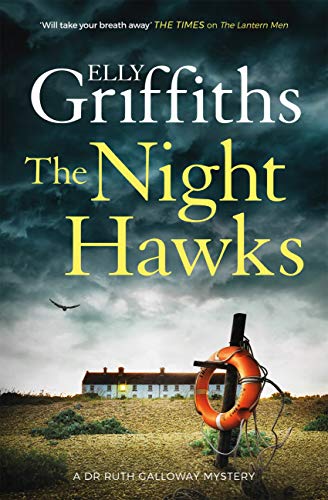
For more on the novels of MJ Trow, click the image below.




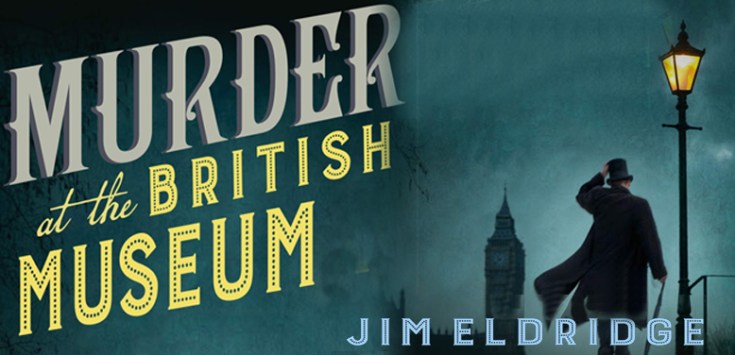
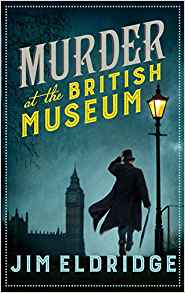 London. 1894. The British Museum has become a crime scene. A distinguished academic and author has been brutally stabbed to death. Not in the hushed corridors, not in the dusty silence of The Reading Room, and not even in one of the stately exhibition halls, under the stony gaze of Assyrian gods and Greek athletes. No, Professor Lance Pickering has been found in the distinctly less grand cubicle of one of the museum’s … ahem …. conveniences, the door locked from inside, and the unfortunate professor slumped over the porcelain.
 This is a highly readable mystery with two engaging central characters, a convincing late Victorian London setting, and a plot which takes us this way and that before Daniel and Abigail uncover the tragic truth behind the murders. Jim Eldridge (right) is a veteran writer for radio, television and film as well as being the author of historical fiction, children’s novels and educational books. Murder At The British Museum is published by Allison & Busby,
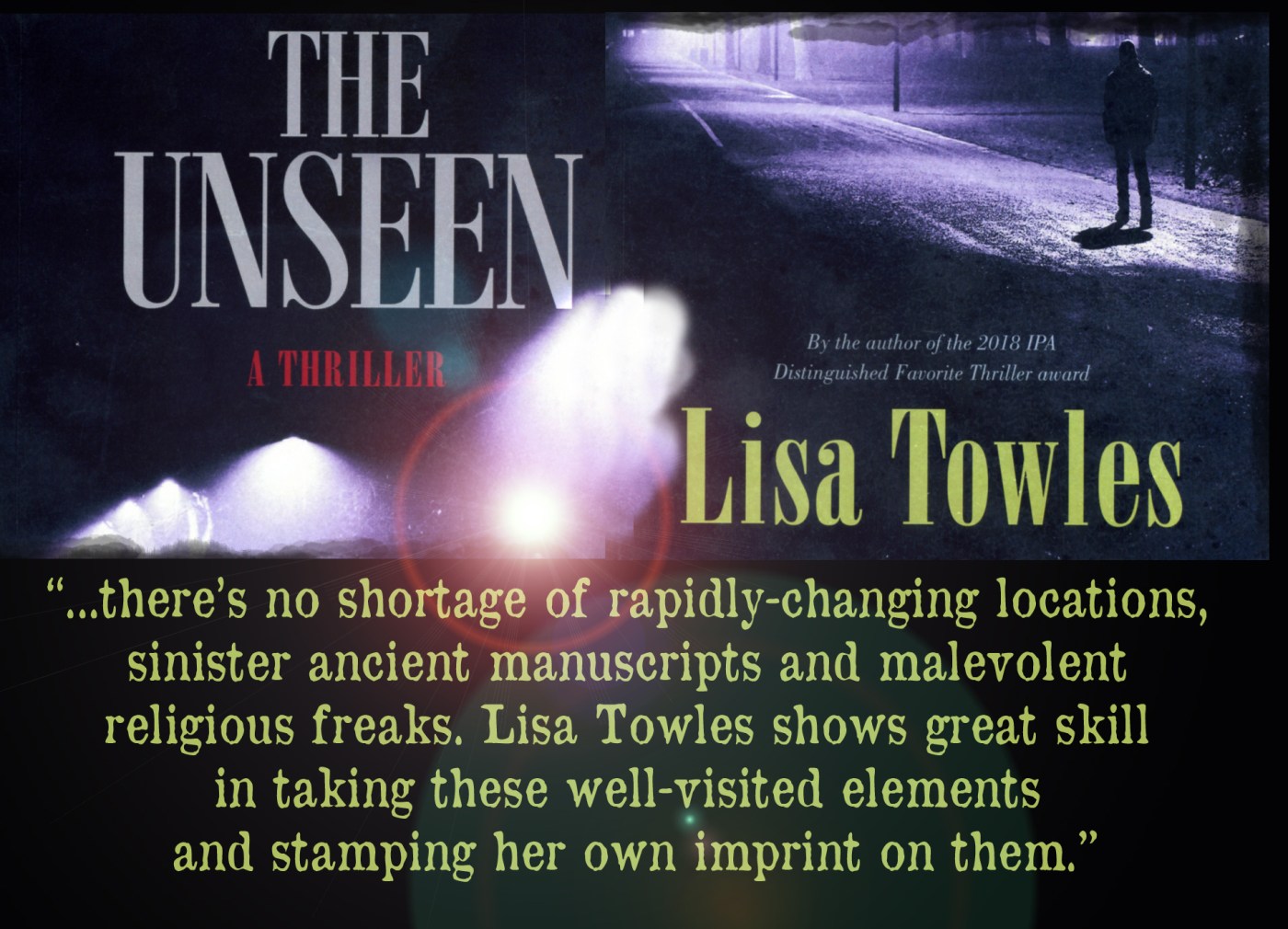

 isa Towles is a California Girl by residence, but she hails from New England. She writes crime novels when she isn’t putting her IT Management MBA to good use in The Sunshine State’s tech industry. Long time followers of Fully Booked will recall my enthusiastic review of her earlier book Choke (2017) and will remember that I began that review with the words:
 She is back with a vengeance – and that same imaginative flair – with her new mystery thriller The Unseen and the action is just as breathless. We have a story that spans five decades and whirls us between Dublin, the Egyptian desert, Boston Massachusetts, London and Rome. With a cast of larger-than-life characters including archaeologists, journalists, hit men – and a direct descendant of an Eastern Orthodox Pope – the story is never short of surprises and dramatic twists.
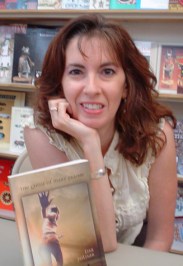
 hat starts off in a rather Indiana Jones vein quickly morphs into Robert Langdon territory and there’s no shortage of rapidly-changing locations, sinister ancient manuscripts and malevolent religious freaks. Lisa Towles shows great skill in taking these well-visited elements and stamping her own imprint on them. The Unseen is published by 9mm Press

 On a lonely and ancient hill in south western England, a group of amiable but earnest hippy cranks prepare to celebrate a pagan festival. What their leader finds when he climbs the hill to consummate the ritual sends him reeling and retching to his knees. There, strung up from the trees is a grisly collection of local wildlife, butchered and bloody. That is bad enough, but the centrepiece of this obscene display is – or was – human.
 he corpse is that of Beth Kinsella, an intense and controversial archaeologist who has been excavating Bailsgrove Hill prior to much of it being consumed by a building development. She was convinced that the site contained the remains of a rare Bronze Age shrine, much to the frustration of Paul Marshall who, although paying the wages of the dig team has his JCBs and concrete mixers massing on the horizon waiting for the academics with their trowels, sieves and brushes to be gone.
 ore corpses – both ancient and modern – are discovered, while Clare Hills is run ragged by a combination of unsettling discoveries about her late husband’s business affairs, and a bizarre conspiracy centred on the site, involving the dark and devious word of online antiquity sales.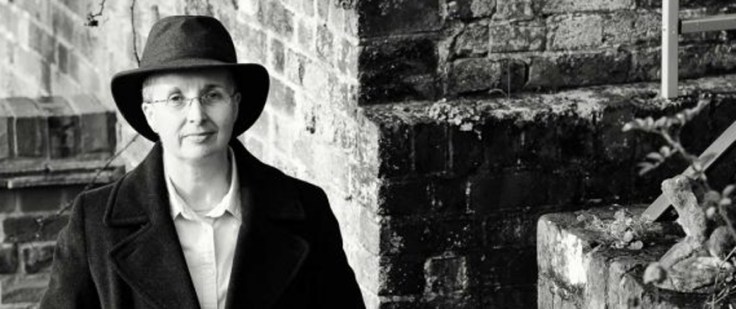


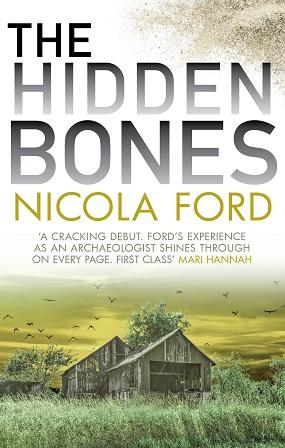 Clare Hills is an archaeologist who is struggling to hold her life together after the death of her husband. Her grief at his passing is tempered by the fact that he has left her virtually penniless. When she is invited by her former tutor, Dr David Barbrook, to help explore and archive the papers of Gerald Hart, she welcomes the chance to use her expertise. Hart was a gentleman archaeologist whose Palladian villa, Hungerbourne Manor, was the centre of his life’s work – investigating the Hungerbourne Barrows. The Bronze Age burial sites were Hart’s obsession, but whatever secrets they held, he seems to have taken them with him to his grave.
 I have many guilty pleasures, and one of them is being a sucker for a crime novel where the landscape plays a vital part in the plot. My two particular favourite writers in this regard are Phil Rickman and Jim Kelly, but with this excellent debut novel, Nicola Ford (right) has elbowed herself into their company.

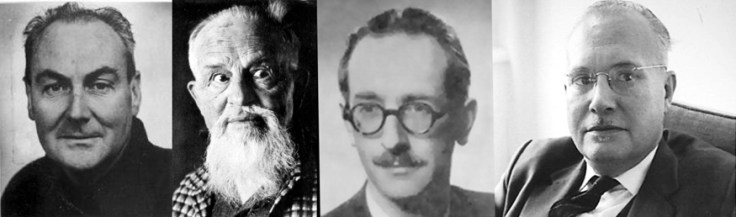
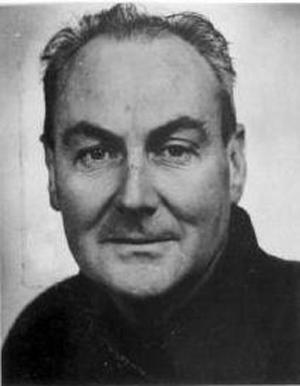 One of my favourite contemporary writers, Phil Rickman, pointed me in the direction of PM Hubbard (left) who wrote English crime novels with just a hint of supernatural menace about them. After a career in public service, he became a full time writer, and contributing to the magazine Punch as well as writing verse, both of which activities contrast strongly with his dark novels. Although Hubbard died in 1980 his books are still available, and although I have come late to the feast, I can still savour the meat. This is the first of a two part examination of Hubbard’s writing.
 Flush As May (1963) takes its title from a soliloquy by Hamlet, and Hubbard sets the piece in an ostensibly idyllic rural England, contemporary with the time of the novel’s publication. Margaret Canting is an Oxford undergraduate staying in the nearby village of Lodstone She takes it upon herself to see in May Morning, not by carolling from the top of a church tower, but with a dawn stroll. Her idyll is interrupted when she finds the corpse of a man, sleeping his final sleep against the grassy bank at the edge of a field.
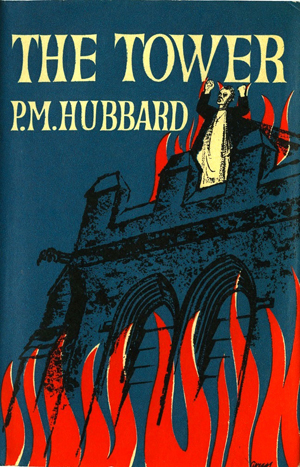 The Tower (1968) begins with Hubbard tipping his hat in a gentlemanly fashion in the direction of a lady. The lady is none other than Dorothy L Sayers. Her masterpiece (other opinions are available), The Nine Tailors, begins with Bunter and Lord Peter abandoning their car in a snowy ditch outside a remote Fenland village. So it is that John Smith, the central character in The Tower, finds his car refusing to travel an inch further on an inky black night, a mile or so outside the village of Coyle. That, however is pretty much where the homage ends. Coyle is a far more sinister place that Fenchurch St Peter, and its vicar, Father Freeman, is infinitely less benevolent than dear old Reverend Venables.


 fullybooked2017