Search

fullybooked2017

Tag

Anthony Horowitz

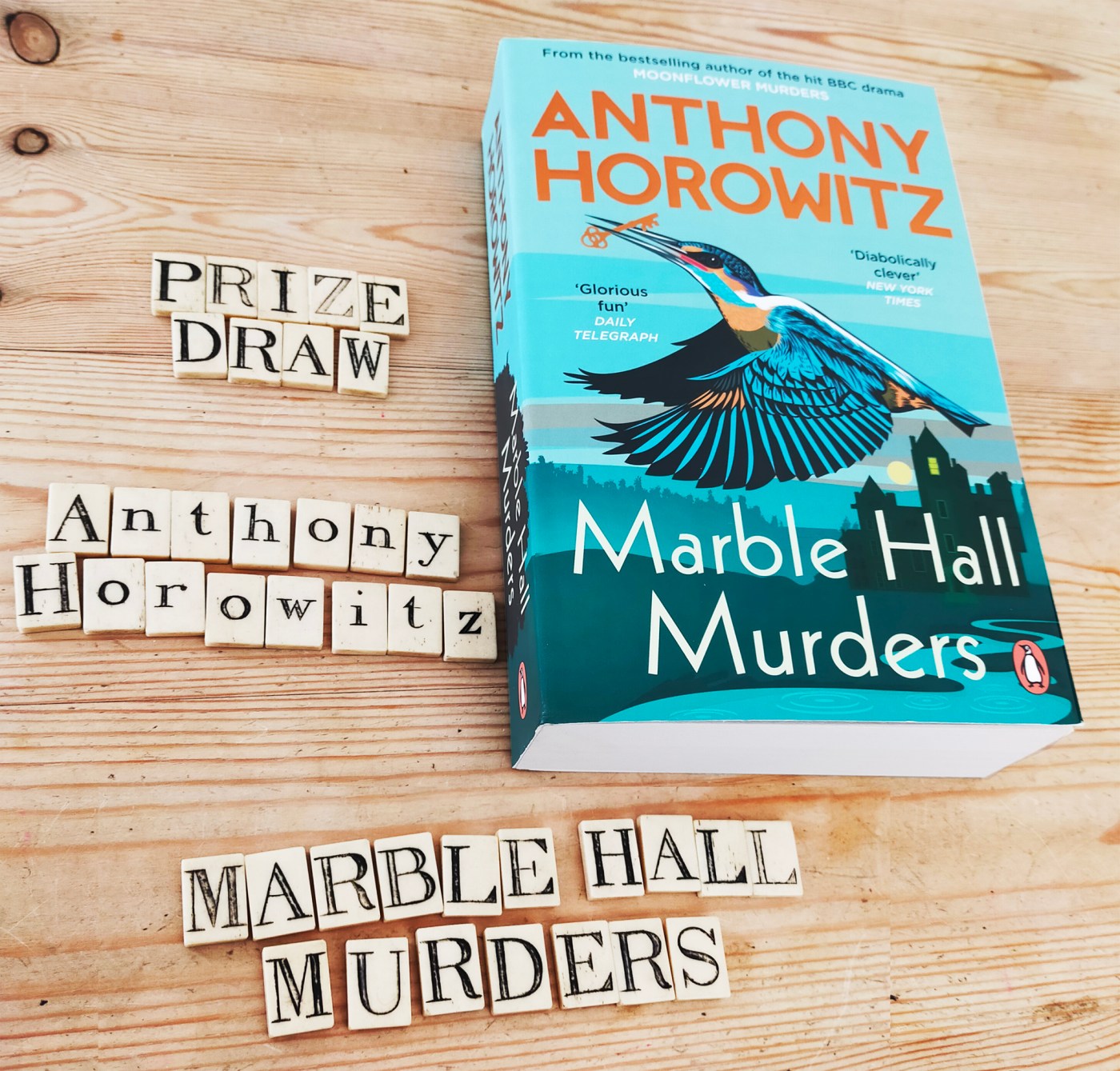
PRIZE DRAW . . . Win a copy of Marble Hall Murders

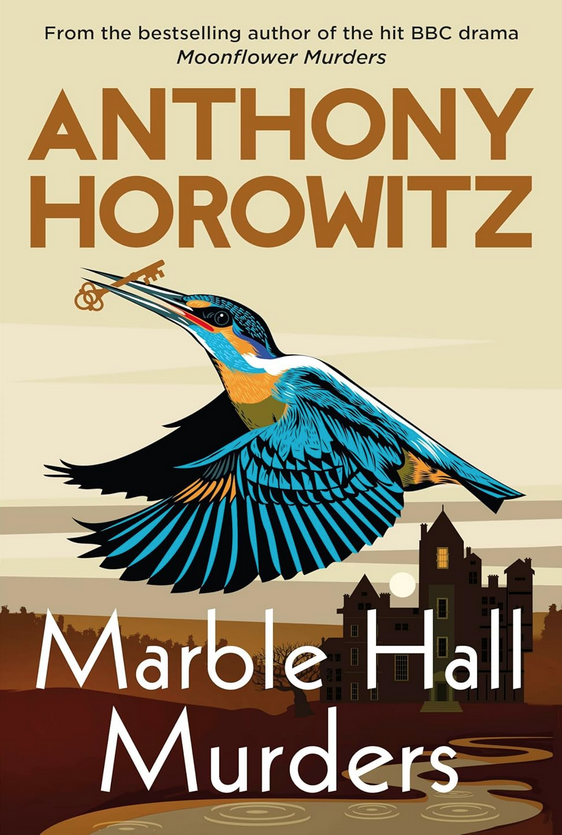
Back in April I reviewed the hardback edition of this excellent mystery from one of our most gifted and well loved writers. You can read that review by clicking on the graphic below. Now, Penguin are publishing a paperback edition, and I have a copy to give away. To get your name in the digital hat, go to my feed on X https://x.com/MaliceAfore You will need to follow me. I will then follow you back. Next, simply message me the code printed at the bottom of this post. Make sure your reply is in the form of a message, and not an open comment. Best of luck! I will do the draw on September 26th and notify the winner directly. UK entries only, please.

AH2509

MARBLE HALL MURDERS . . . Between the covers

Anthony Horowitz is – deservedly – celebrated as an author and screenwriter. In the Daniel Hawthorne novels he plays himself, and there are frequent allusions to the world of publishing and TV production. In this novel the central character is Susan Ryeland, a freelance literary editor. She has just returned from a spell living in Crete with her hotelier boyfriend, but the charms of the sun, blue sea, olives and tsikoudia lifestyle have worn thin and she is back in London.

Her first commission on returning to England is to read through a manuscript of what is politely known as a continuation novel. Atticus Pünd was the central character in a highly successful series written by Alan Conway, and Susan had edited the books, despite having a fractious relationship with the author. Conway died in dramatic circumstances, but now a writer called Eliot Crace – himself the grandson of widely venerated author of children’s fiction – has resurrected Pünd. Susan is no fan of continuation novels, but this is Mr H having a little joke at his own expense, as among his own novels are ‘continuations’ of Sherlock Holmes and James Bond.

Make no mistake, the structure of this book is more complex than any of Horowitz’s books that I have read previously, but perhaps it is similar in the two books – Magpie Murders and Moonflower Murders  – which preceded this title. I do not watch much mainstream television, and I was unaware that these novels had also been filmed for the small screen.

Not long after Susan has offered to read through the first part of Eliot Crace’s reimagining of Atticus Pünd, we get to read it with her, and it tells of Pūnd, aware that he is terminally ill, investigating the death by poison of an English aristocrat in her villa in the south of France. We have, then, a novel within a novel. it must be one of the greatest challenges for a writer to make readers of a sequential novel aware of what has happened in previous books without labouring the point. Horowitz doers it well here, so I won’t waste paragraphs explaining what happened to Susan in the previous two books. Here, she learns from Eliot Crace that his grandmother, far from being the sainted creator of million-selling children’s books, adored by countless fans, was actually a vindictive, intolerant and spiteful old woman. Anthony Horowitz has set up a delightful conceit – and I use the term in its positive sense.

There is added piquancy in the fact that Susan Ryeland, the narrator of the ‘outer’ novel, is being paid to edit/criticise the content of the ‘inner’ novel, penned by Eliot Crace who, at first glance, appears to be mad, bad and dangerous to know. Anthony Horowitz is, like it or not, deeply embedded in the world of TV drama. There are many of us who think that Foyle’s War was the best show we ever watched. AH retains a keen eye for the best and worst of prime time TV drama and, using the voice of Susan Ryeland, he sneaks in a mention of ‘one that got away’, a thoughtful and intelligent series called Boon, starring Michael Elphick.

This is a complex novel containing layers within layers, but the nub is that Eliot Crace, although just a child, witnessed (or believed he had) his grandmother’s murder. Having lived with this secret for decades, he now decides to reveal the identity of the killer in his Atticus Pünd pastiche. When he himself dies in suspicious circumstances, we must assume that his killer is not someone from a novel, but a real person, still living, and someone who cannot afford the truth behind the death of Miriam Crace to become public knowledge. I hope this is not a spoiler, but astute readers will be alerted by the  beautiful cover image of Alcedo Atthis.

A long read, this, not far short of 600 pages, and Anthony Horowitz has cooked up an intriguing blend of elements. We have Golden Age Crime, complete with incriminating anagrams, arcane use of poison, the glittering world of wealthy people and, naturally, the ‘in the library’ denouement where the killer’s identity is revealed. Throw into the mix a candid view of the rather bitchy world of publishing, a rather engaging police officer, and  we have something for everyone. The television version of this novel, with Lesley Manville playing Susan. will be on your screens soon. Meanwhile, the book comes out in hardback, published by Century, on 10th April.

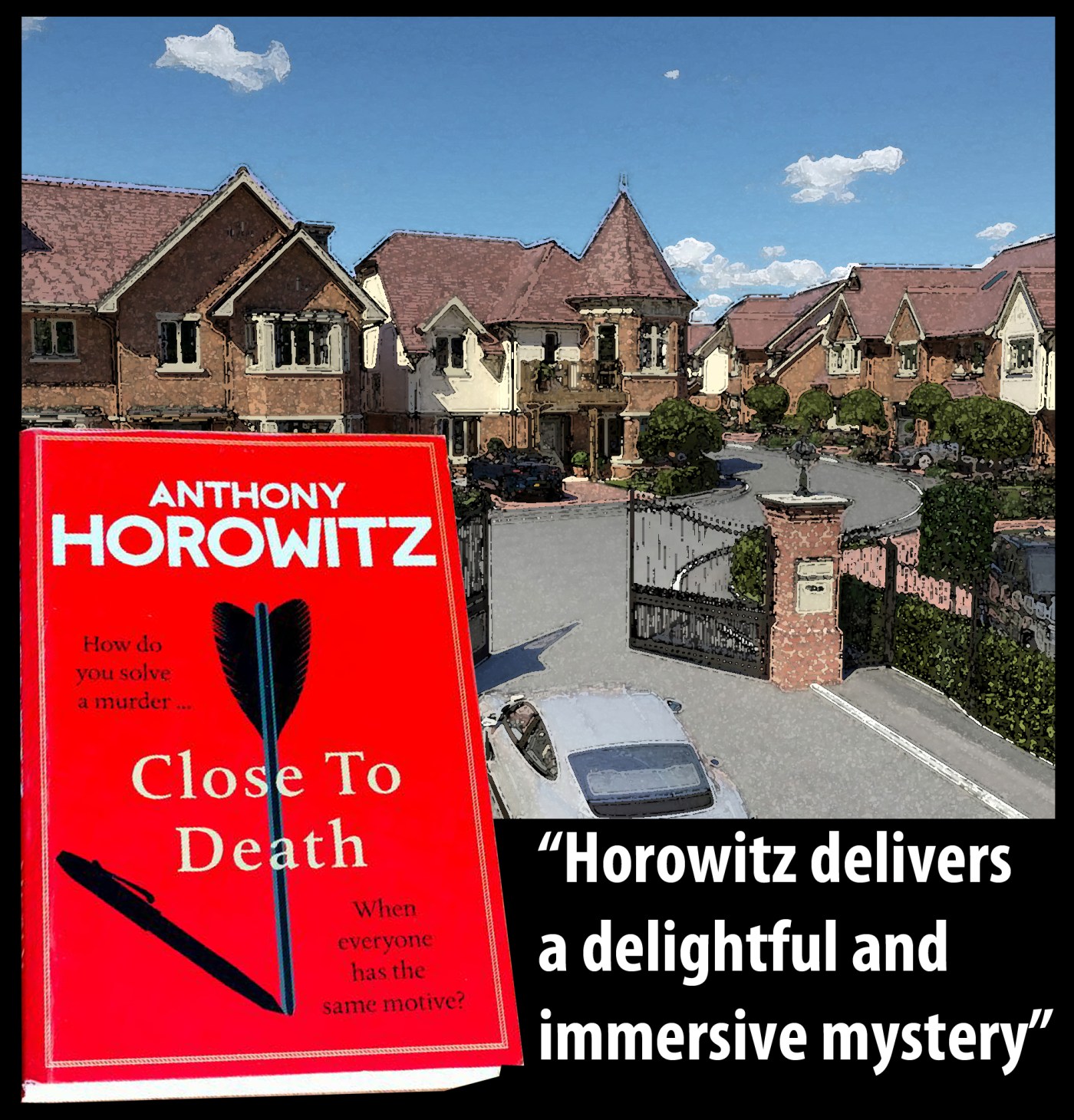
CLOSE TO DEATH . . . Between the covers

ctd spine021 copy

This series of novels has a unique concept. The author appears, more or less, as himself. We briefly meet his agent, his wife and his editor, while we learn about his hits and misses, both as a screenwriter, playwright and with his re-imagining of James Bond. When fiction appears, it is in the shape of an enigmatic former Metropolitan Police officer, Daniel Hawthorne. He was dismissed from the force after an ‘unfortunate accident’ happened to a deeply malevolent paedophile who was in police custody. Since then he has gone freelance, and has been instrumental in solving several high profile murder cases, working as an ‘advisor’ to the police. The four previous books in the series have Hawthorne investigating crimes, with Horowitz chronicling the events. I reviewed The Sentence is Death, and The Word Is Murder.  Click the links to read what I thought.

This time things are slightly different. Horowitz has a deadline for a fifth book, is all out of ideas, and he hasn’t seen Hawthorne for ages. When he does find him, the former copper will only play ball by allowing a past case to be used, and he will co-operate by giving Horowitz the case notes – but just one packet at a time.

The murder was that of a hedge fund manager who was found dead in his house with a crossbow bolt through his throat. The house was one of six in Riverview Close (hence the novel’s title) in Richmond, South London. The little estate is self contained and with just the one security gate, so what we have here is not a locked room mystery, but a locked estate mystery. The residents are:

Adam Strauss and his wife Teri. Strauss is a former TV personality, but is now a professional chess player. Their house is called The Stables.

In Well House lives Andrew Pennington. He is retires, a widower and was once a well respected barrister.

May Winslow and Phyllis Moore are elderly ladies who share The Gables. They were both once nuns, and they run a little bookshop that specialises in Golden Age crime fiction.

Woodlands is the home of Roderick and Felicity Browne. He is a wealthy dentist, known as ‘dentist to the stars’ for his clientele of showbiz celebrities. Felicity has a degenerative disease and is mostly housebound.

Tom and Gemma Beresford live in Gardener’s Cottage. He is a local GP, while she has a high profile business making designer jewellery.

Finally, at Riverview Lodge we have the man on whose death this book centres. Giles Kenworthy is an old Etonian who, apparently makes a great deal of money in the city. He met his wife Lynda when she was an flight attendant on one of his overseas trips. They have two very boisterous boys, and several cars, which they tend to park with little consideration for the other people in the Close.

Kenworthy has also put in for planning position for a swimming pool and changing facility which the other residents believe will completely devalue the Close. Quiet words, along the lines of, “I say old chap, would you mind ….?” have had no effect whatever, and so a ‘clear the air’ meeting is called for everyone, but the Kenworthys don’t show up.

When Kenworthy is found murdered, it is quickly established by the Metropolitan Police, led by Detective Superintendent Tariq Khan, that the murder weapon was a crossbow belonging to Roderick Browne who, however, is mystified by how anyone could have broken into his garage and stolen the weapon. Khan is persuaded to engage the services of Hawthorne and his assistant, a man called John Dudley.

At this point, I should step away slightly and explain the complex structure of the story. It operates with different time frames and narrators. There is the author’s ‘now’ (actually 2019) where he describes his increasingly difficult relationship with Hawthorne, and the pressure he is under to complete the book. The main events in Riverview Close take place in the summer of 2014, and we observe these through the eyes of the inhabitants, but we are also a fly on the wall during the police investigation, and some of the subsequent work, independently, of Hawthorne and Dudley.

If this sounds complicated, it’s because it is. One of the little ironies is that at one point during the book Horowitz describes how he is not drawn to the fantastical nature of many classic locked room mysteries, but he has Hawthorn deliver a splendid speech when he, Dudley and Khan believe they are about the unmask the killer:

What I’ve realised, since I arrived at Riverview close, is that nothing here is what it seems. Nothing! Every clue, every suspect, every question, every answer … It’s all been carefully worked out. Everyone who lives here has been manipulated too. So have you. So have. Something happens and you think that it somehow connects with the murder – but you’re wrong. it’s been designed to trick you. Smoke and bloody mirrors. I’ve never seen anything like it.”

Bottom line. For all its complexity and elaborate narrative framework, does Close to Death work? Yes, of course. Horowitz is too good a writer to trip up, and – as ever – he delivers a delightful and immersive mystery. The book is published by Century and will be out on 11th April.
THE SENTENCE IS DEATH . . . Between the covers


TSID coverFor those of you who are unfamiliar with the first book in this series
, The Word Is Murder (and you can read my review here) you need to know that Anthony Horowitz has created a quite delightful literary conceit, and it is this: the story is narrated by Anthony Horowitz, as himself, and along the way we get to meet other real people in his life, such as his wife, his literary agent, and even some of the actors in his Foyle’s War series. The principal fictional character is an ex Met Police officer called Daniel Hawthorne, who was drummed out of the service for misconduct, but now operates as a private investigator, paid by the day by his former employers to work on difficult cases. Hawthorne has persuaded Horowitz to be Boswell to his Johnson and to write up the investigations as crime fiction.

Hawthorne is an intriguing character. He is probably somewhere on the autistic spectrum, lives alone, and has few social graces, His powers of deduction and observation are, however, remarkably sound. He immediately sees through the statement one witness has just given:

“The MG was right in front of us. Hawthorn pointed with the hand holding the cigarette.

‘There’s no way that’s just driven down from Essex of Suffolk, or anywhere near the coast.’
‘How do you know?’
‘The house he showed us in that photograph didn’t have a garage and there’s no way this car has been sitting by the seaside for three days. There’s no seagull shit. And there’s no dead insects on the windscreen either. Your telling me he’s driven a hundred miles down the A12 and he hasn’t hit a single midge or fly?’”

The case which has forced the police to seek Hawthorne’s help concerns a rich divorce lawyer who has been found battered to death in his luxurious house on the edge of London’s Hampstead Heath. For a decade or more Richard Pryce has been the go-to man for wealthy people who have had enough of their wives or husbands and want a divorce, but more particularly a divorce which will leave Pryce’s clients with as much of the family loot as possible. So, it is inevitable that while Pryce is adored by some, he is bitterly hated by others, and thus there are one or two obvious initial suspects. First among these is a rather aloof literary author whose determination to conflate America’s 1940s nuclear strategy with gender politics has won her many admirers of a certain sort. Her expensively produced collection of pretentiously profound haikus (is there any other kind?) has also made her much in demand at soirées in upmarket bookshops.

Then there is Pryce’s art dealer husband who, Hawthorne soon discovers, has been ‘playing away’ with the svelte young Iranian man who is front-of-house in his so, so discreet gallery. Has his affair been rumbled? Was Pryce about to cut him out of his will? The most unlikely connection, however, relates to Pryce’s younger self when he and two university buddies were enthusiastic cavers. Did a tragedy years earlier, 80 metres beneath the Yorkshire Dales, set in train a slow but remorseless search for revenge?

AHThe abundance of questions will give away the fact that this is a tremendous whodunnit. Horowitz (right) tugs his forelock in the direction of the great masters of the genre and, while we don’t quite have the denouement in the library, we have a bewildering trail of red herrings before the dazzling final exposition. But there is more. Much, much more. Horowitz’s portrayal of himself is beautifully done. I have only once brushed shoulders with the gentleman at a publisher’s bash, so I don’t know if the self-effacing tone is accurate, but it is warm and convincing. More than once he finds himself the earnest but dull Watson to Hawthorne’s ridiculously clever Holmes.
Horowitz is, I suspect, too polite to be cruel to fellow writers, but he cannot resist a dig at earnest feminist authors who treat every moment of history as if it were a glaring example of man’s inhumanity to women. Trash fiction does not escape, either, and when his fictional self reads a page from the latest sub-Game of Thrones swords and sorcery shocker, it is horribly accurate. Above all, though, this is a classic 24 hour novel. You start reading, you dart off to do something like pick up the kids, or turn on the oven. Back you come to the book, and before you know it, you are 200 pages in. Time flies by, and then bang! It’s finished. You know who the killer is, but you just wish you could start the book all over again. It really is that good. Published by Century, The Sentence Is Death is out on 1st November.

Long Lee031

THE POSTMAN DELIVERS . . .Freedman, Horowitz & Stoddart

Header
British Summer Time ends on Sunday 28th October, but let’s not treat the event with dismay. We should welcome longer and colder nights which give us the chance to get more reading done. Three excellent books have landed in a timely fashion on my doormat this week so, if you’ll excuse my smug tone,  that’s me sorted!

LITTLE HONOUR by Penny Freedman

PFPenny Freedman (left) has been many things; a teacher, theatre critic, actor, director, counsellor and mother, but she also writes intriguing crime fiction. Her heroine Gina Gray has appeared in previous novels including Weep A While Longer and Drown My Books, but now we learn more about her granddaughter Freda, in a murder mystery which encompasses hate crime in a post-referendum London, the arcane world of legal chambers in Grey’s Inn and – for good measure – a missing dog. Available now, Little Honour is published by Matador/Troubador.

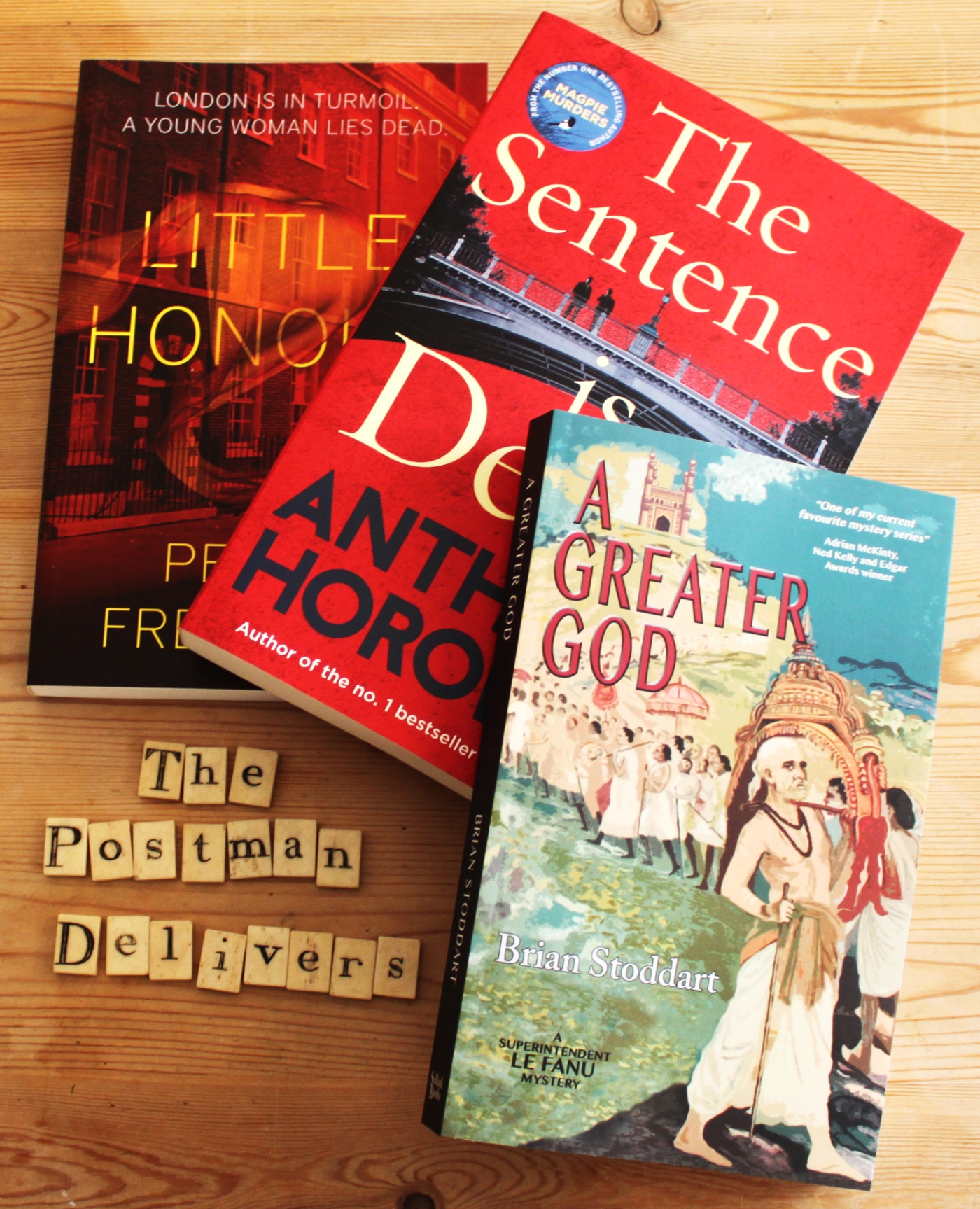
THE SENTENCE IS DEATH by Anthony Horowitz

AHAnthony Horowitz has a glittering array of successes on his CV, including reincarnations of both Sherlock Holmes and James Bond , Foyle’s War, and the Alex Rider series.  This is the latest book in a more recent series centred on a London private investigator, Daniel Hawthorne. When a high profile lawyer best-known for handling celebrity divorces is found dead in his luxury home overlooking Hampstead Heath, the police investigation gets nowhere, and they reluctantly bring in former copper Hawthorne. Hawthorne’s usual cool detachment from the case is disturbed when he becomes personally involved, with his own life very much on the line. The Sentence Is Death will be on the shelves on 1st November and is a Century publication. Click this link to read a review of The Word Is Murder, the previous Daniel Hawthorne mystery.

A GREATER GOD by Brian Stoddart

BSOne of my favourite historical policemen returns in the latest episode in the eventful life of Superintendent Chris Le Fanu. We are in Madras (Chennai) in the 1920s, and while the British grip on India is becoming weaker and weaker, there is still police work to be done. The city is blighted by a wave of violent clashes between Muslims, revolutionaries, and the blundering attempts by Le Fanu’s boss to restore order. Expect a brilliant narrative, impeccable historical background and authentic dialogue. A Greater God is published by Selkirk Books and will be available on 30th November.

There is more about Brian Stoddart and Christian Le Fanu elsewhere on the Fully Booked site.

Footer

CORNERSTONE CELEBRITIES (and a cracker of a competition!)

Cornerstone

I was lucky enough to receive an invite to Crimenight, an event hosted by Cornerstone, which is part of the Penguin group and one of the most successful commercial imprints in the UK. It was a chance to rub shoulders and swap yarns with some of the biggest names in crime fiction – and a couple of people who have a foot on the first rungs of the ladder.

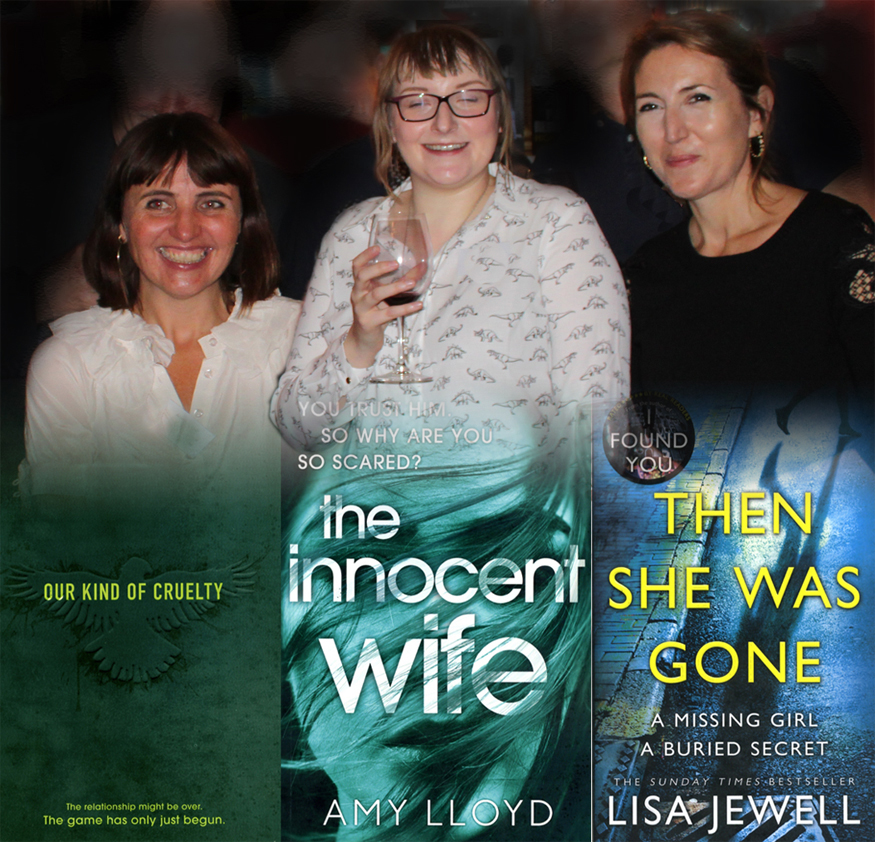
Back L-R: John Harvey, Phil Redmond, Anthony Horowitz, Tony Parsons, Simon Kernick
Front L-R: Araminta Hall, Selina Walker (Publisher, Century and Arrow), Amy Lloyd, Lisa Jewell

Group

Getting the celebrity name-drop out of the way first, it was brilliant to be able to shake hands and chat with Tony Parsons, one of my favourite current UK crime writers – check out the review of his most recent Max Wolfe novel Die Last, and you can see why. He is a genuinely nice guy and right up at the top of my list. Was I starstruck? Well, yes, just a little, because in addition to Tony, John Harvey, the creator of Charlie Resnick and Frank Elder, was in attendance, as was thriller specialist Simon Kernick, award-winning producer and screenwriter Phil Redmond (Grange Hill, Brookside and Hollyoaks look pretty good on his CV),and Lisa Jewell, who has a string of best-selling domestic thrillers like The Third Wife and  I Found You under her belt. You can win a copy of her latest, Then She Was Gone, at the end of this feature.

The amazingly versatile Anthony Horowitz was another of the guests who has featured on Fully Booked before. Horowitz, as well as having millions of us glued to the small screen on Sunday nights with his brilliant Foyle’s War series, and writing the best selling Alex Rider novels aimed at young adults, has also written Sherlock Holmes adventures and stand-alone CriFi. Take at a look at our review of The Word Is Murder, his most recent novel.

OKOC007It was a privilege to talk to two authors who represent the next generation of fine crime writers. Amy Lloyd is from Cardiff, but her debut novel is set far, far away in the badlands of Florida. The Innocent Wife tells the story of a convicted killer whose claims to innocence attract the attentions of the worldwide media – and those of Samantha, a young woman from England. She is obsessed with his case and, after an intense relationship based on letters, she leaves home and marries him. It is only when the campaign for his release is successful that Samantha’s problems begin in a deadly fashion. Amy, by the way, has already won the Daily Mail and Penguin Random House First Novel Competition with The Innocent Wife.
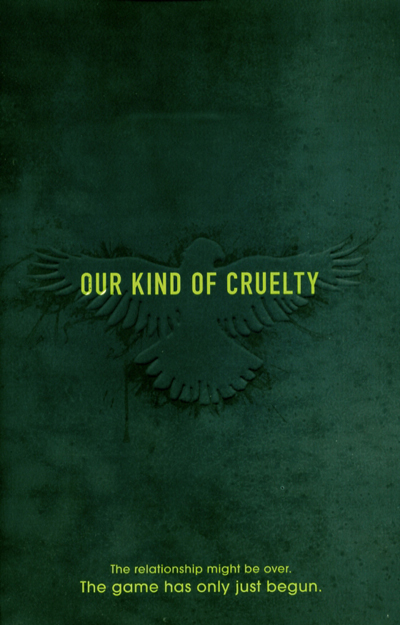
OKOC006Araminta Hall is no novice author, as she has written successful psychological thrillers such as Everything and Nothing. Her latest novel Our Kind Of Cruelty is due to be published in 2018, and it concerns a couple, Mike and Verity, whose relationship features a deadly game called the Crave. Mike describes the rules:
“The rules of the Crave were very simple. V and I went to a nightclub in a pre-determined place a good way from where we lived, but entered separately. We made our way to the bar and stood far enough apart to seem that we weren’t together, but close enough that I could always keep her in vision.”

Verity basically makes herself very visible, catching the eyes of any lone male who might be interested, and then drawing him into her web with her stunning looks and overt sexuality. Then, the game kicks in:

“We have a signal: as soon as she raises her hand and pulls on the silver eagle she always wears around her neck I must act. In those dark throbbing rooms I would push through the mass of people, pulling at the useless man drooling over her, and ask him what he was doing talking to my girlfriend.”

When the relationship eventually sours, and Verity needs to move, she finds to her cost that the perverse twist in her relationship with Mike cannot be simply cast off like an unwanted piece of clothing.

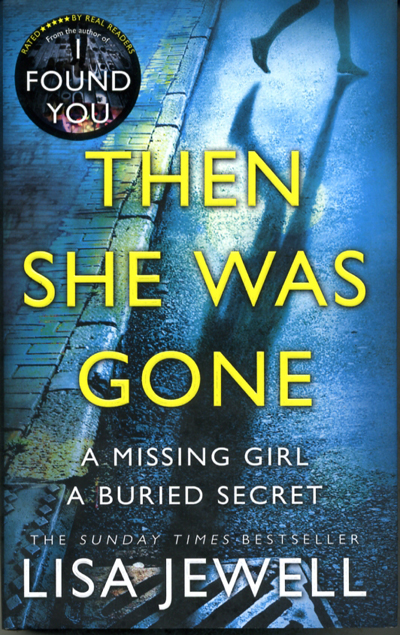
TSWGLisa Jewell knows a thing or three about locating the strings that pull on a reader’s senses, particularly those of anxiety, sympathy and tension. In Then She Was Gone she tweaks these strings to maximum effect with the story of a woman whose life is shattered when her fifteen year-old daughter disappears without trace or reason. Ten years pass and, while Laurel will never come to terms with Ellie’s disappearance, she has learned to live with the numbness. Her life seems to be taking a turn for the better when she is begins a relationship with an intriguing man called Floyd. The intrigue, however, turns to shock when she meets his young daughter – who is the spitting image of the her missing Ellie.

To win a hardback copy of Then She Was Gone, simply email us at the address below, putting Lisa Jewell in the subject box, or go to the Fully Booked Facebook page and ‘like’ the post. The winner will be drawn from all entries received. The competition closes at 10.00pm GMT on Sunday 8th October. On this occasion, we will be unable to send the prize to the USA due to postal costs.

https://www.facebook.com/Fully-Booked-1636117530014098/

fullybooked2016@yahoo.com


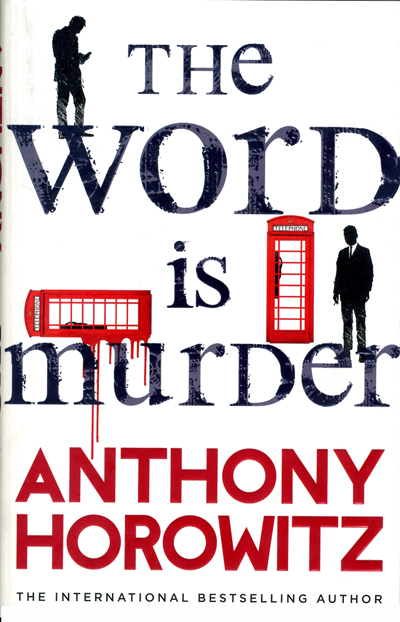
THE WORD IS MURDER … Between the covers

TWIM060

Diana Cowper crosses the Fulham Road, and walks into a funeral parlour. We are told that she is:

“… a short, very business-like woman: there was a sense of determination in her eyes, her sharply cut hair, the very way she walked. She was in her sixties, with a pleasant, round face. There were plenty of women like her in the streets of Fulham and South Kensington. She might have been on her way to lunch or to an art gallery.”

TWIM058Many people in their sixties – particularly those who are comfortably off – plan ahead for their own funerals. Daytime television programmes are interspersed with advertisements featuring either be-cardiganed senior citizens smugly telling us that they have taken insurance with Coffins ‘R’ Us, or rueful widows plaintively wishing that they had been better prepared for the demise of poor Jack, Barry or Derek. However, it would be unusual to hear that the be-cardiganed senior citizen had died only hours after planning and paying for their own send-off from the world of the living.

But that is precisely what happens to Diana Cowper. She is found murdered in her smart Chelsea terraced house. It is at this point that we are introduced to the two main characters in the story. One is Daniel Hawthorne, a former police detective sacked for unprofessional conduct, but with such an uncanny ability to solve murders that he is retained as a consultant by his former employers. The other is also involved in murder, but of a fictitious kind. He is a successful author and screenwriter with a string of hit TV shows and book bestsellers to his credit. His name? None other than Anthony Horowitz.

Plot-wise, the semi-fictional Horowitz is approached by Hawthorne, who wants him to write a crime story detailing his skill as a solver of murder mysteries. Where better to start than with the mysterious death of Diana Cowper? The back-story to her murder includes her complicity in the death of a young boy in a road accident ten years earlier, her son – now one of the best known young actors between the West End and Hollywood – the shattered family of the dead boy, and the judge who let Diana Cowper walk away a free woman from her trial for causing the boy’s death.

AHDuring the story, Horowitz (right) drops plenty of names but, to be fair, the real AH has plenty of names to drop. His CV as a writer is, to say the least, impressive. But just when you might be thinking that he is banging his own drum or blowing his own trumpet – select your favourite musical metaphor – he plays a tremendous practical joke on himself. He is summoned to Soho for a vital pre-production meeting with Steven and Peter (that will be Mr Spielberg and Mr Jackson to you and me), but his star gazing is rudely interrupted by none other than the totally unembarrassable person of Daniel Hawthorne, who barges his way into the meeting to collect Horowitz so that the pair can attend the funeral of Diana Cowper.
To write a novel with yourself as one of the main characters takes a certain amount of chutzpah and a great deal of narrative skill. Does Horowitz get away with it? Yes, yes, yes – and yes again. This is a gloriously complex whodunnit and a sly dig at the bizarre intensity of the worlds of both film-making and publishing. It is one of those books where the pages are turned all too quickly. The best books draw you into their world, make you part of it, make you care about what happens to the characters and force a sigh of regret when you reach the end papers. The Word Is Murder is one such book. It is full of intrigue, enjoyment, dark humour and superb characterisation.

I genuinely hope that this is not the last of Daniel Hawthorn. Horowitz has created an intriguing anti-hero who is, at times, almost autistic, but also capable of a chameleon-like transformation into an empathetic and sensitive listener. Hawthorne can switch between figuratively holding someone’s hand but then, in the blink of an eye, stabbing them with a bodkin. We learn just enough about Hawthorne to answer a few basic questions, but Horwowitz leaves us so much more to discover. Let us hope that he delivers. The Word Is Murder will be published by Century on 24th August, and is available for pre-order here.

Blog at WordPress.com.

Up ↑