
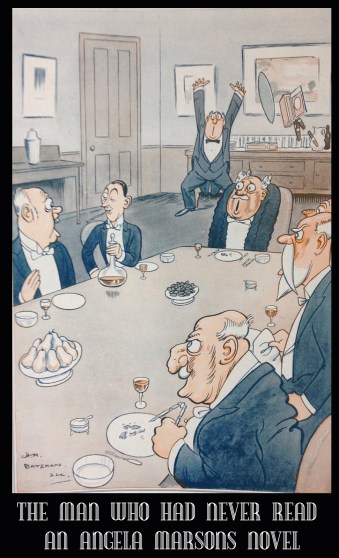
 I’m new to the Angela Marsons Kim Stone series, which is good a cue as any to adapt a cartoon by one of my favourite illustrators, HM Bateman. It is clear that the Kim Stone novels, which began in 2015 with Silent Scream are hugely popular and although her millions of existing readers will not give a hoot what I think, I can now see why.
The author hails from the Black Country, that wildly unfashionable area west of Birmingham, which takes its name from the prodigious amounts of soot generated by its heavy industries in times past. Geographically it includes parts of Staffordshire and Worcestershire. Beyond place names, Marsons doesn’t make the region a dominant character in Child’s Play, at least not in the same way that, say Chris Nickson uses Leeds or Phil Rickman uses the Welsh Marches.
Kim Stone, like the great majority of popular fictional British police officers, has issues. Marsons is too good a writer to include Stone’s complete biography, but we learn that she had a wretched childhood. In both fiction and real life I am never really sure about people who relate better to dogs than they do to fellow humans, but such folk exist in both spheres. Kim Stone is one such, but her general misanthropy probably makes her a better copper. She is a fascinating and complex character who is at home the random chaos of modern life, perhaps because she can escape, maybe from herself:
“She drew comfort from the familarity of town noise, even the late-night noise of occasional sirens, doors slamming, loud music through open windows, drunks singing on the way home from the pub, wives giving them what for once they got there.”
 Unsurprisingly, her chosen mode of transport is a powerful Kawasaki motorbike, the ultimate solo kick where all that exists is the rushing road, the wind and the scream of the engine:
“Her only interest in the countryside was tearing through it on the Ninja to blow the cobwebs from her mind.”
Child’s Play begins with the bizarre and apparently motiveless murder of a woman in her sixties. Belinda Evans is found in a children’s playground, bound to a swing with strips of barbed wire. Belinda – and apologies to people who have never watched Coronation Street – is no Emily Nugent, however, as Stone’s team soon discover that the late woman had a taste for rough sex and bondage.
As the title suggests, there is a theme of childhood running through this intriguing police procedural. All kinds of childhoods. The ones where youngsters are sufficiently traumatised by events that they become mute and withdrawn, living in their own personal hell. The ones where parents seek to live out their own inadequacies through desperate and damaging over-encouragement of a child’s talent. Not just those screaming abuse at the world from the touchlines of a junior football game, but those who believe their children are gifted and talented above the norm, and push, push, push for more certificates, more acclaim and more vicarious satisfaction.
In a fascinating parallel story, one of Stone’s team, Penn, has to absent himself for the hunt for the killer of Belinda vans as he is a key witness in the trial of a man accused of killing a convenience store server. Minutes away from the jury retiring to deliver a nailed-on guilty verdict, the wife of the accused man changes her story and the prosecution case unravels at a frightening pace.
 Marsons (left) takes us down and dirty into the visceral world of police work:
“It was the pungent, unholy smell that could only be compared to a room full of rotting meat with the added smell of faeces. It was an odour that could live in a house for years despite deep cleaning, and was unmistakeable as anything else other than a dead body.”
The drama finally plays out in the intense, other-worldly – and distinctly disturbing – world of a weekend event for Gifted and Talented children and their parents. Bryant, one of Stone’s team comes face to face with the scary world of youngsters who are on the Aspergers Autism spectrum:
“ ‘This seat taken, buddy?’ he asked a boy sitting alone with a book.
‘Taken where?’ he asked, peering over his reading glasses. ‘Do you mean occupied?’
‘I’m gonna take that as a no,’ he said, pulling the chair towards him.
The boy regarded him seriously and Bryant guessed him to be ten or eleven years old with fair hair and clear hazel eyes, enlarged by the thick spectacles.”
‘Is it appropriate for a middle-aged man to seek the company of an unattended child?’ the boy asked, seriously.”
Gripping, unusual and fast-paced, Child’s Play is, by turns, unsettling and cleverly plotted. It is published by Bookouture and is out now.







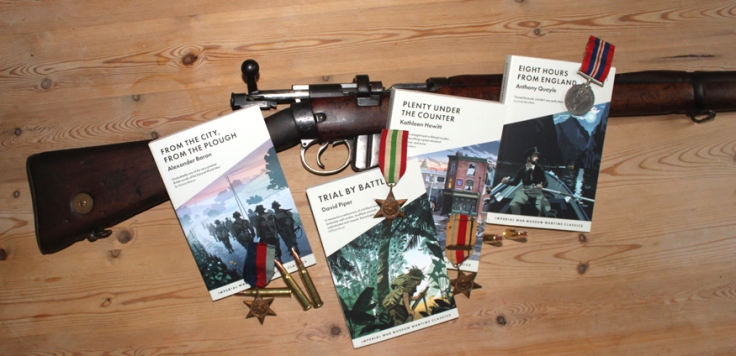
 This is a vivid and moving account of preparations for D- Day and the advance into Normandy. Published in the 75th anniversary year of the D-Day landings, this is based on the author’s first-hand experience of D-Day and has been described by Antony Beevor as:
 This quietly shattering and searingly authentic depiction of the claustrophobia of jungle warfare in Malaya was described by William Boyd as:
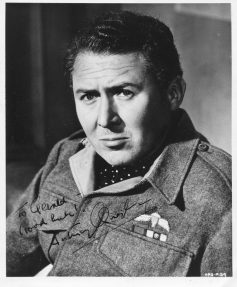 Anthony Quayle was a renowned Shakespearean actor, director and film star and this is his candid account of SOE operations in occupied Europe. Historian and journalist Andrew Roberts said:
 This murder mystery about opportunism and the black market is set against the backdrop of London during the Blitz.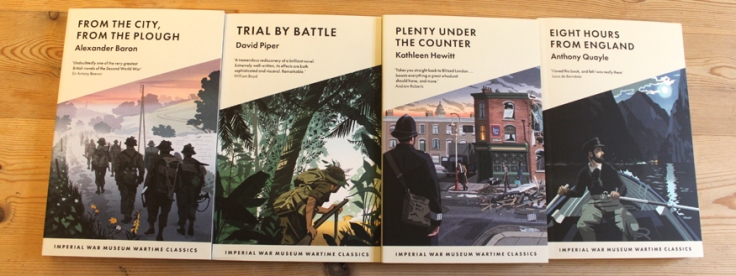


 al McDermid was anxious that over-enthusiastic reviewers and fans might give away the ending of her previous Carol Jordan and Tony Hill novel,
 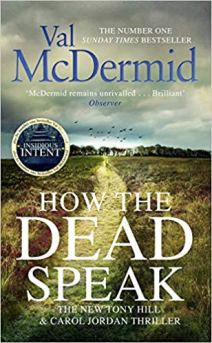 After the events of which we will not speak, Jordan’s Regional Major Incident Team has been disbanded while the woman who was its beating heart and soul keeps her fragile psyche from harm by continuing to renovate her home, a former barn on a heather covered northern hillside. Visitors are few and usually unwelcome, but none more so than Tony Hill’s vindictive and manipulative mother Vanessa who, after inflicting her abrasive personality on her son in a prison visit, coerces Jordan into using her investigative skills to track down a fraudster who has conned her out of a small fortune. Only slightly less welcome is Bronwen Scott, Tony Hill’s solicitor. She also has a job for Jordan, but this time it is to establish grounds for an appeal against a murder conviction handed down to a gay man who, the jury believes, has murdered a rent boy.
 eanwhile, back in the fictional city of Bradfield (which I have always assumed to be Leeds/Bradford) Jordan’s old ReMIT has been given the kiss of life. Its first post-resuscitation job, under the ambitious but box-ticking leadership of DCI Ian Rutherford, is to investigate the gruesome discovery of dozens of human remains in the grounds of a former Roman Catholic children’s home. I am not privy to Val McDermid’s religious beliefs, if she has them, but she certainly gets stuck into the darker side of Roman Catholicism’s social policy. OK, perhaps it’s something of an open goal these days, but as the RMIT try to discover the why and when of the St Margaret Clitherow Refuge skeletons, we learn some dark and unpalatable truths about the ‘Brides of Christ’ whose singular duty is to obey, no matter what the command.
 nd there is a bonus. McDermid – who, as fans of her band will know, is no mean singer – might just be performing a cover version of one of my favourite songs Save The Best For Last (below). If any potential readers are sentimental old (or young) sods like me, you will be permitted a little sniffle and a dab at a moist eye when you read the final pages.

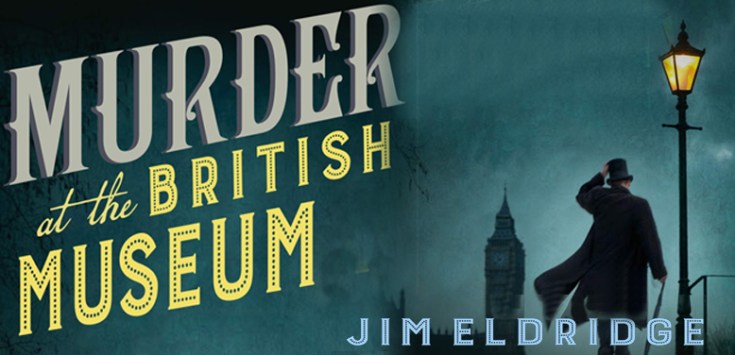
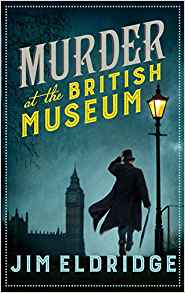 London. 1894. The British Museum has become a crime scene. A distinguished academic and author has been brutally stabbed to death. Not in the hushed corridors, not in the dusty silence of The Reading Room, and not even in one of the stately exhibition halls, under the stony gaze of Assyrian gods and Greek athletes. No, Professor Lance Pickering has been found in the distinctly less grand cubicle of one of the museum’s … ahem …. conveniences, the door locked from inside, and the unfortunate professor slumped over the porcelain.
 This is a highly readable mystery with two engaging central characters, a convincing late Victorian London setting, and a plot which takes us this way and that before Daniel and Abigail uncover the tragic truth behind the murders. Jim Eldridge (right) is a veteran writer for radio, television and film as well as being the author of historical fiction, children’s novels and educational books. Murder At The British Museum is published by Allison & Busby,


 ince she first appeared, sixteen years ago, in Driftnet, forensic scientist Dr Rhona MacLeod has lived out the words of her infamous Scottish compatriot, the former Thane of Glamis:
 Indeed, her creator Lin Anderson has included the fatal ‘D’ word in the titles of each successive novel from number eight, Picture Her Dead (2012) to this latest novel, the thirteenth in the series. For readers new to the novels, and I am one such, Anderson wastes no time in letting us know that Dr MacLeod is recovering physically and mentally from a terrible ordeal. She is on enforced sick leave, has taken herself away from her Glasgow base and rather than endure a spell in the official police rehabilitation unit at Castlebrae, has decided to revisit her teenage summer holiday haunts on the Isle of Skye.
 t is now winter on Skye, and it is a very different place from the sunlit island Rhona knew as a teenager. As ever, the Black Cuillin broods over Glen Brittle and Sligachan, but now the crests of the peaks are white with the first snows. Rhona is reunited with Jamie McColl, a summer holiday friend and, through him, she meets the proprietors of A.C.E Target Sports, an outdoor adventure facility – and their dog, Blaze. Rhona takes Blaze for a walk – or vice versa – but as the December light begins to fail:
 We are now on page 29 of 425, but Lin Anderson (right) has already established an intriguing parallel narrative, the significance of which we can only guess at this stage. As the novel unfolds, however the mists begin to clear, although the full significance of this sub-plot, and how it converges, horrifically, with Rhona MacLeod’s supposed recuperation, only becomes clear in the last few pages.
 ithout, I hope, giving away any of the beautiful intricacies of this novel, I can say that a group of serving RAMC medics, on leave, have decided to visit Skye to see if the resilience and courage they showed in the face of the implacable brutality of Helmand Province and the Taliban will be, in any way, tested by the wintry glens and screes of Skye. What befell them in Afghanistan, and how those events play out on Eilean a’ Cheo, the Misty Isle, is for you to discover.


 olitical disagreement in modern mainland Britain is largely non-violent, with the dishonorable exceptions of Islamic extremists and – further back – Irish Republican terror. For sure, tempers fray, abuse is hurled and fists are shaken. Just occasionally an egg, or maybe a milkshake, is thrown. You mightn’t think it, given the paroxysms of fury displayed on social media, but sticks and stones are rarely seen. Scottish writer SG MacLean in her series featuring the Cromwellian enforcer Damian Seeker reminds us that we have a violent history.
 In the last of England’s civil wars, forces opposed to King Charles 1st and his belief in the divine right of kings have won the day. 1656. Charles has been dead these seven years and his son, another Charles, has escaped by the skin of his teeth after an abortive military campaign in 1651. He has been given sanctuary ‘across the water’, but his agents still believe they can stir up the population against his father’s nemesis – Oliver Cromwell, The Lord Protector.
 tells us that Seeker succeeds, but along the way SG MacLean (right) makes sure we have a bumpy ride through the mixture of squalor and magnificence that is 17th century London.
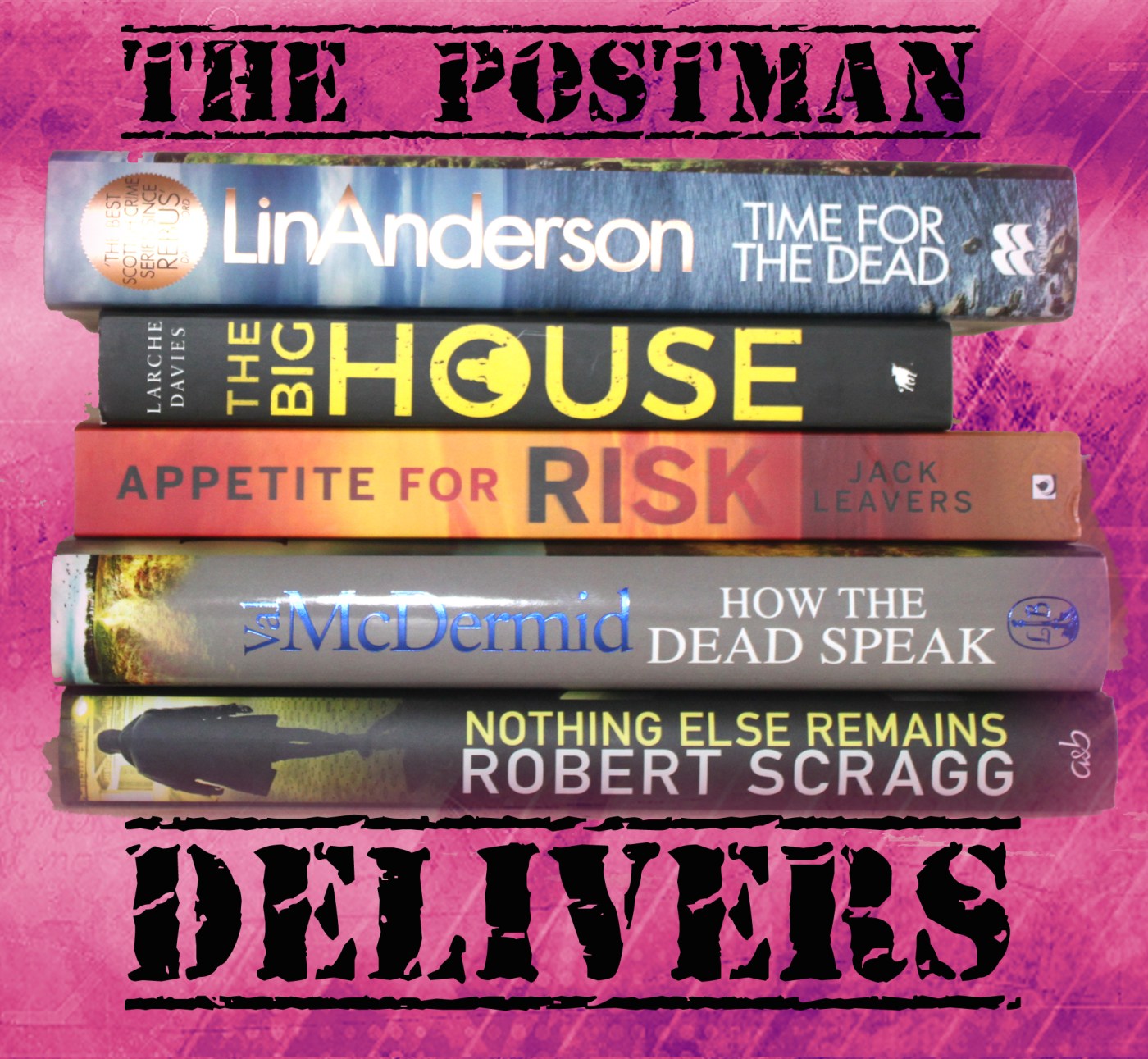

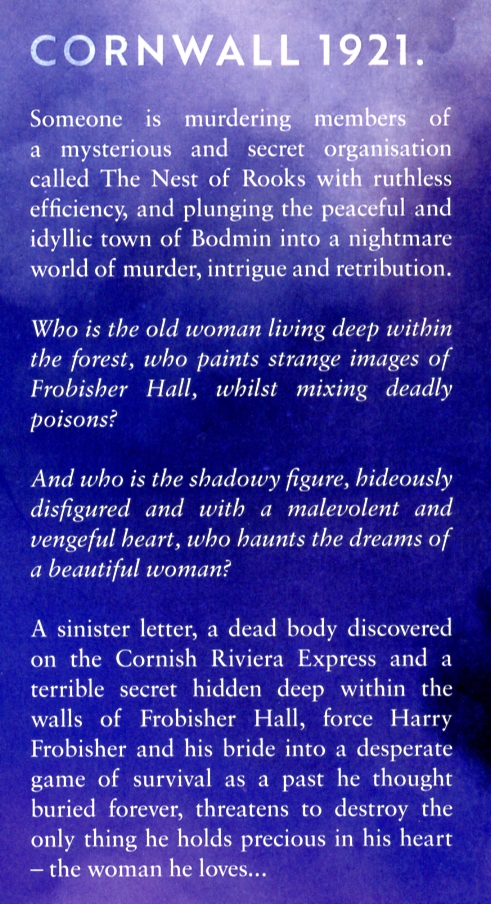
 o, it’s not the headed notepaper of a firm of dodgy solicitors, but the names of five authors whose latest books have been brought to FullyBooked Towers just in time for the holidays. OK, I’m only kidding, I’m always on holiday, but the books look pretty special.
 Never forget that the ability to get pleasure from books is a tremendous gift. In the world of CriFi and thrillers some like nothing better than a gritty police procedural which could be happening right on their doorstep, while others yearn for something which takes them away from the daily grind into a world which they can only imagine. Jack Leavers does just that in his tale of a former Royal Marine who has found that his particular skill-set is not much in demand at home. Instead, he goes back to the blood-soaked sands of Iraq and becomes involved in a fight to the death. This is nothing new to the battle-hardened John Pierce, but his world is turned on its head when he realises exactly who his enemies are. If you fancy this, you only have a day to wait as Book Guild Publishing will be putting it on sale
  I hope we don’t take Val McDermid for granted. She has millions of fans worldwide and has the gift of writing novel after novel, each one of which unfailingly hits the spot. This may be genius, but it’s also the result of bloody hard work and a refusal to accept second best. Like many other readers, I first came to her work via the edgy and distinctly discordant partnership of Tony Hill and Carol Jordan. Both are damaged, and both need something more than each other, but together they make a compelling CriFi partnership. This is the eleventh in the series, and begins when human remains are found in the grounds of a former convent. Apologies in advance to devout Catholics, but for me, Convents are always deeply sinister places, even without dead bodies. In order to find the truth about what appears to be a vile series of murders, Hill and Jordan are left with no alternative but to interrogate and give voice to the dead themselves. This will be available
  Scragg’s debut novel What Falls Beneath The Cracks introduced us to Detective Inspector Jake Porter and Sergeant Nick Styles. You can click on

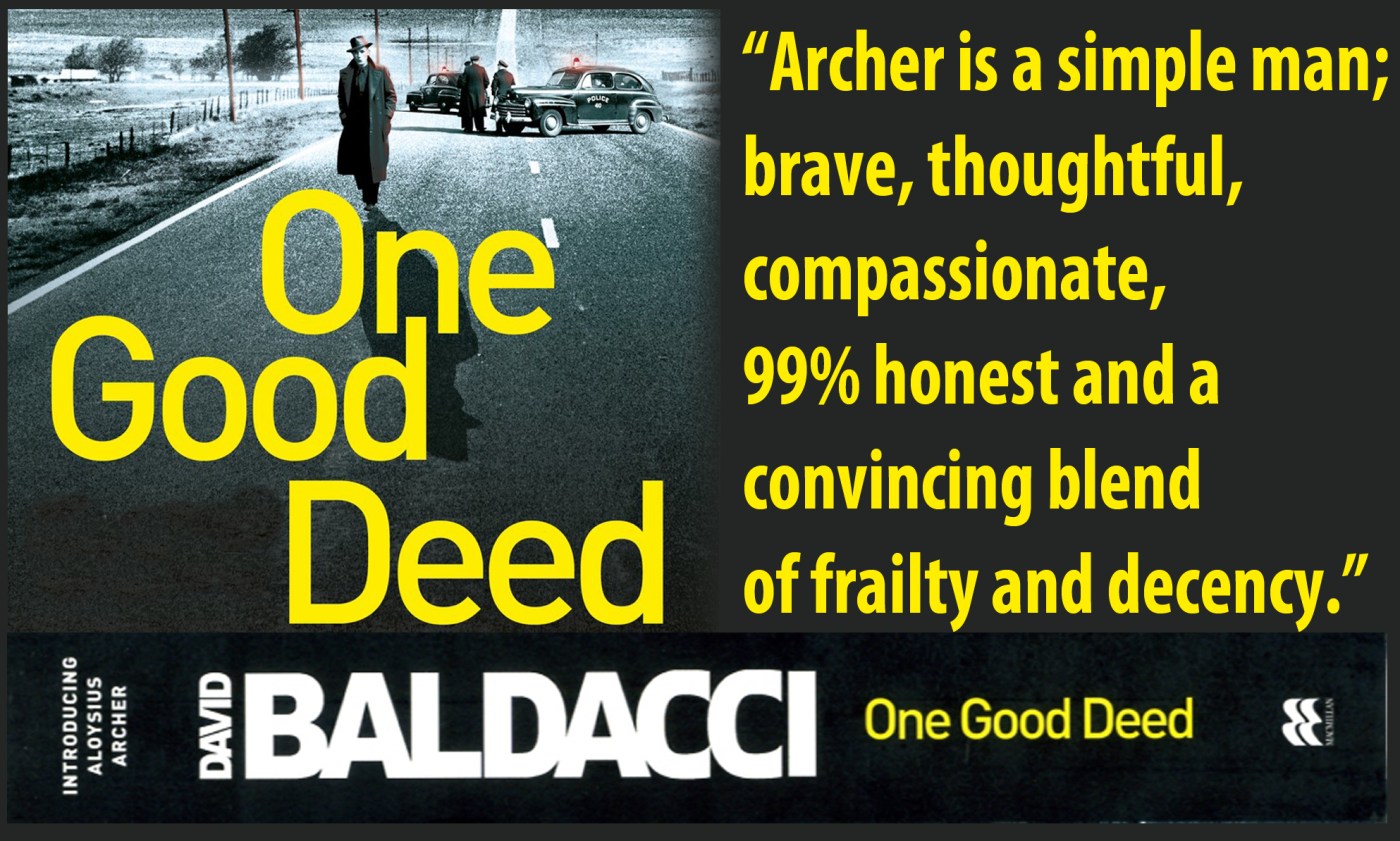

 Wearing a cheap suit, regarded as trash by the local people, and with every cause to feel bitter, Archer checks into the Derby Hotel and contemplates the future. His immediate task is to check in with his Probation Officer, Ernestine Crabtree. Quietly impressed by her demeanour – and her physical charm – Archer goes, in spite of his parole restrictions, for a drink in a local bar, The Cat’s Meow
 ven before Lucas Tuttle answers the door to Archer’s knock by pointing a cocked Remington shotgun at his unwelcome visitor, Archer has learned that the floozie on Pittleman’s arm in the bar is none other than Jackie, Tuttle’s estranged daughter. Archer finds the coveted motor car hidden away on Tuttle’s ranch, but it has been deliberately torched. Cursing his involvement in this blood feud, Archer’s equilibrium and freedom both take a severe knock when Pittleman’s body is found in a bedroom just along the floor from Archer’s room in The Derby. Thrown into the cells as the obvious suspect, Archer is released when he meets up with Irving Shaw – a serious and competent detective – and convinces him of his innocence.
 Pretty much left on his own to solve the case after a violent attempt to silence Jackie, Archer has to summon up very ounce of his military experience and his innate common sense to put himself beyond the reach of the hangman’s noose.


