Search

fullybooked2017

THE NOVELISTS WHO WENT TO WAR 4

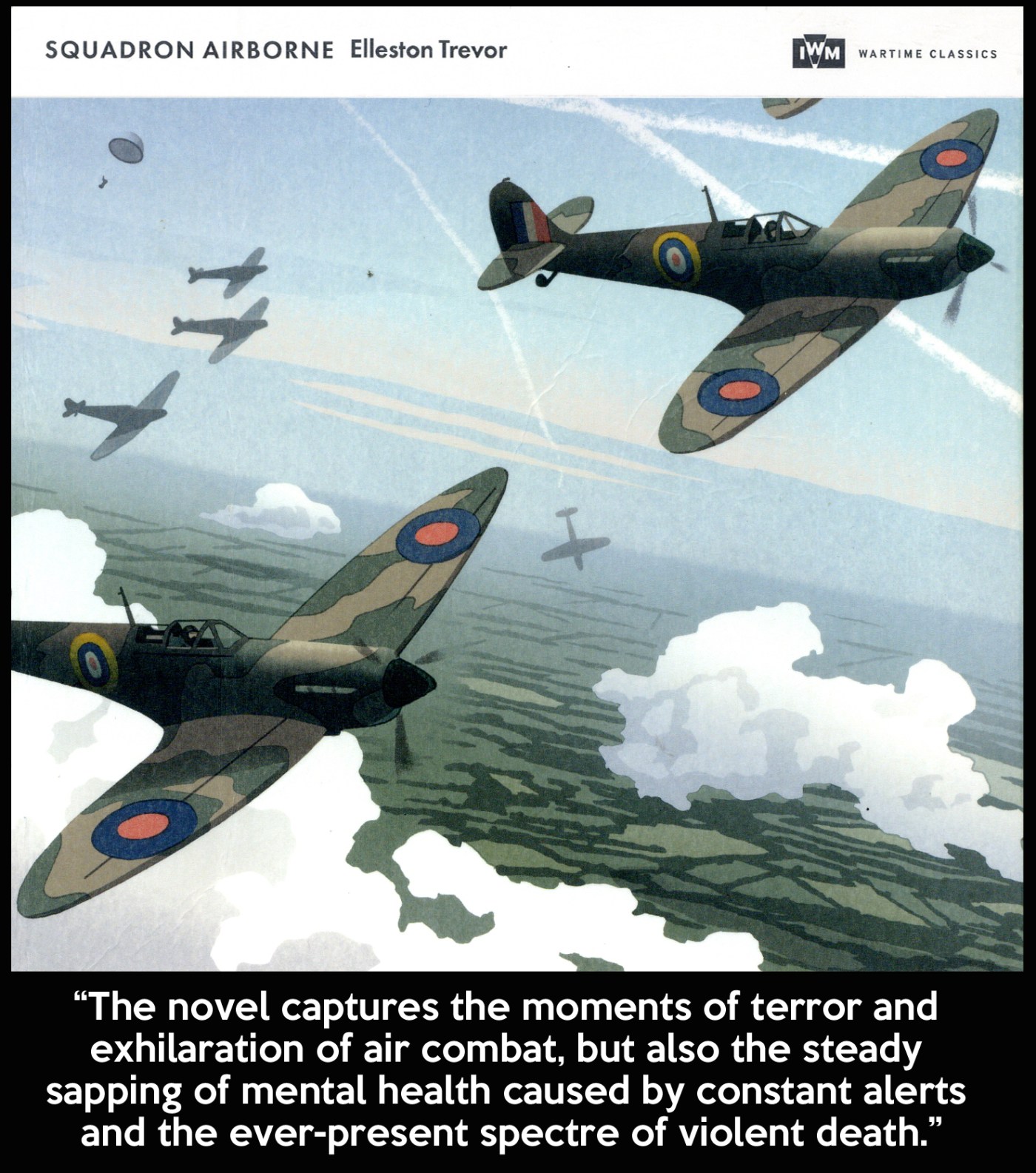
This is the last of four podcasts about novelists who saw action in various wars. Some were already published authors, while others were young men whose literary careers blossomed in later years.

PART THREE – THE SECOND WORLD WAR

Click on the image below. This will take you to my Soundcloud page where you can listen to the podcast.

PODCAST TITLE4

THE NOVELISTS WHO WENT TO WAR 3

This is a series of four podcasts about novelists who saw action in various wars. Some were already published authors, while others were young men whose literary careers blossomed in later years.

PART THREE – THE GREAT WAR

Click on the image below. This will take you to my Soundcloud page where you can listen to the podcast.

PODCAST TITLE 3

Part three of the series – WORLD WAR TWO

 will go live on Thursday 21st May

THE SARACEN’S MARK . . . Between the covers (click for full screen)

TSM spine010

SW-Perry-photo-1-2-300x482SW Perry (left) whisks us away from our disease ridden present misery to – with almost supernatural prescience – the streets of London in 1593, where plague is also keeping the gravediggers and the parsons working around the clock! The late sixteenth century versions of  plucky NHS employees come in the shape of Bianca Merton, a young Anglo-Italian woman who keeps The Jackdaw, a Bankside tavern (and who is also much in demand as a herbalist – a purveyor of what we now call alternative medicine) and her close friend Dr Nicholas Shelby, whose medical knowledge is more conventional.

The disease has, so far, gone about its malevolent business north of the River Thames, but with no daily calls for social distancing, it finds its way south:

“Her name is Ruth. She is returning to the lodgings on Pocket Lane that she shares with her husband. Ruth feels uncomfortable hot. By the time she reaches home, she will have a fever. She will awake the next morning to find painful swellings in her armpits. Young and strong, she is in the habit of thanking God for a strong constitution. But in a few days she will be dead. The pestilence has crossed the river.”

Bianca is much in demand among the worried residents of Bankside for her concoctions:

“Pomanders of rose leaves, tragacanth gum and camphor to hang around the neck … clove and lemon to mix in a posset . . . also a tincture of bezoar and sorrel. Mix that in water or small beer every morning.”

TSM coverNicholas, however, has been sent on a mission by one of the most powerful men in Queen Elizabeth’s kingdom – her spymaster Sir Robert Cecil. England has a complex relationship with what we now call Morocco, and in particular with the ruler of Marrakesh, but the death of Adolfo Sykes:

“..a small, somewhat bow-legged half-English, half-Portuguese merchant with a threadbare curtain of prematurely white hair that clung to the sides of his otherwise- unsown pate.”

… needs to be investigated, as Sykes is a key strand in Cecil’s silken – but deadly – web of spies and agents. When Nicholas finally arrives in Marrakesh, he discovers that Sykes had uncovered a slavery ring involving, among others a brutal and violent sea captain called Cathal Connell. Now that Nicholas is aware of the secret, it is only a matter of time before Connell and his accomplices come looking for him. While the unpredictable world of Moorish politics find him alternating between foul prison cells and  a life of luxury surrounded by servants, back in London ….

“The pestilence has returned with a vengeance. The Savoy hospital has closed its doors to new patients and posted guards on the water stairs to deter visitors. The chapel’s death-bell tolls with increasing frequency.”

This is a richly rewarding novel, full of fascinating historical detail, but Perry never allows the authenticity of  his main characters to be hidden beneath a superfluity of information about what they are wearing, or the contents of their dinner plate, or elaborate architectural descriptions. Bianca and Nicholas are separate from each other for most of the narrative, but each drives the story forward relentlessly. As we are only too well aware just now, plague knows no historical boundaries, but Perry’s skill as a storyteller is equally timeless – and magical. The Saracen’s Mark is published by Corvus, and is out now.

If you like the sound of what the author calls The Jackdaw series,
then read my review of The Serpent’s Mark.

BORROWED TIME . . . Between the covers (click for full screen)

BT header

The latest novel from David Mark, Borrowed Time, is seriously dark stuff. There were times when I felt I had entered the nightmare world of distorted humanity, shocking violence and suffering that was distilled into a kind of bleak poetry by Derek Raymond in such masterpieces as I Was Dora Suarez and The Devil’s Home On Leave.

BT coverAdam Nunn is a decent enough fellow, but like all of us, he has made his mistakes. He lives with Zara, a struggling restaurant owner, but has a child of his own, Tilly, who lives with Grace, her mother. Adam has discovered that he is adopted, and has employed a fairly seedy private investigator to try to trace his birth parents.

When the investigator is found dismembered in a spot notorious for being the burial ground of many victims of old Essex gang wars, Adam is about to have an unpleasant surprise. On the (severed) hand of Larry Paris was a scrawled National Insurance number – and it is Adam’s. The police think they have an instant suspect, but after a bruising initial encounter, they realise they have nothing with which to tie Adam to the killing

Adam Nunn lives in Portsmouth. And it is not a particularly fragrant place:

” A city drawn in charcoals and dirt: a place of suet-faced pensioners, of teenagers in baby clothes; of egg-shaped women and puddled men, big middles and conical legs.”

His search for the truth about his identity leads him inexorably to an Essex gangster family, the Jardines. Alison is the daughter of ailing patriarch, Francis. She runs the firm and is not a woman much given to empathy with some of her Essex contemporaries:

“She likes to imagine all those golden-blond, size eight bitches, sobbing as they inject Botox into their foreheads and splurge their life savings on surgeries and rejuvination procedures; their skin puckering, spines beginning to curve, veins rising like lugworms on their shins and the backs of their age-mottled hands.”

Neither is Alison’s son Timmy someone for whom she has a great deal of conventional maternal affection.:

“He’s an ugly, rat-faced little specimen who, at twenty years old, has yet to master the art of having a conversation without thrusting both hands down his jogging trousers and cupping his gonads. She loves him, but not in a way that makes her want to touch him, look at him, or spend time breathing him in.”

Eventually Adam learns who his mother was, but the nature of his conception and the fate of his mother is just the start of the nightmare. The identity of his father is only revealed after a journey through the inferno, the flames of which threaten to consume him along with everyone else he holds close.

David markAlong the way, Mark (right) introduces us to some loathsome individuals who have all played their part in Adam Nunn’s terrible back story. There’s local politician Leo Riley, for example:

“He knows that cash is an aphrodisiac. Power enough to loosen any pair of knickers. And fear a crowbar to stubborn legs.”

Alison’s fearsome minder, Irons, is a creature from hell:

“His face is a butcher’s window, all pink and red, meat and offal: a rag-rug of ruined flesh. he still has to apply lotions five times a day to stop his cheeks tearing open when he laughs. Not that he laughs often. He’s a quiet man. Hasn’t engaged in much chit-chat since the brothers went to work on him with a bayonet, a blowtorch and a claw hammer.”

There is compassion within the pages of Borrowed Time, but it is in short supply.  We don’t just glimpse the worst of people, we come face to face with them, and close enough to smell their rancid graveyard breath. This is a brilliant and sometimes moving piece of storytelling, but within its pages the only redemption comes in death. Borrowed Time is published by Severn House and is out now.

THE NOVELISTS WHO WENT TO WAR 2

This is a series of four podcasts about novelists who saw action in various wars. Some were already published authors, while others were young men whose literary careers blossomed in later years.

PART TWO – THE YEARS BEFORE 1914

Click on the image below. This will take you to my Soundcloud page where you can listen to the podcast.

PODCAST TITLE 2

Part two of the series – THE GREAT WAR 

will go live on Monday 18th May

THE NOVELISTS WHO WENT TO WAR

This is a series of four podcasts about novelists who saw action in various wars. Some were already published authors, while others were young men whose literary careers blossomed in later years.

PART ONE – INTRODUCTION

Click on the image below. This will take you to my Soundcloud page where you can listen to the podcast.

PODCAST TITLE one

Part two of the series – THE YEARS BEFORE THE GREAT WAR 

will go live on Thursday 14th May

MAKING WOLF . . . Between the covers (click for full screen)

MW3018

Weston Kogi is a security guard in a London supermarket, and the most excitement in his life is when he has to chase shop-lifters across the car park. When he hears that the woman who brought him up, his Auntie Blossom, has died at her home – the city of Ede in the West African republic of Alcacia – he decides to attend the funeral. You will look in vain for Alcacia on a map, but Tade Thomson describes it thus:

“He brought out a map of Alcacia. It was shaped like a sperm whale on the West African map, tiny, squeezed between Nigeria and Cameroon, the mouth of the whale drinking from the Atlantic.”

MW2017At his aunt’s funeral he meets Churchill “Church” Okuta. Church is a nightmare from Kogi’s schooldays, and the meanest person he has ever met. When asked what he does in London, Kogi, on impulse says that he is a homicide detective. Bad move. Church orchestrates the drugging and abduction of Kogi, and when he wakes up he finds that he is in the camp of the Liberation Front of Alcacia, one of two warring rebel groups trying to overthrow the government. Their leader, Enoch ‘Papa’ Olubusi has been assassinated, and the LFA, in the mistaken belief that Kogi is a crack British detective, want him to prove that the killing was the work of their bitter rivals – the People’s Christian Army.

Sucked into a deadly game of recriminations, treachery and mind-numbing brutality, Weston Kogi soon finds himself unsure of who are the good guys and who are the villains. You might think, at first sight, that the People’s Christian Army and the Liberation Front of Alcacia are comedy turns, like the rival factions in Monty Python’s The Life of Brian, but as you turn the pages of Making Wolf, you will encounter graphic and disturbing descriptions of violence in a dystopian Africa where fair is foul and foul is fair. Even everyday domestic scenes have a touch of the nightmare about them:

“Dogs howled at the full moon, took a break, and then howled some more. People came out on raffia mats, deckchairs and carved stools. Children ran around the central wood-fed fire, squealing their delight and roasting wild mushrooms on dirty sticks. Wasps, sand flies, stick insects, confused termites and other arthropods flew into the flames for one shining moment before dying.”

Amid the corruption, cheap death and commonplace brutality, Tade Thompson has a keen eye for the absurd. Kogi and Church pay a visit to a Fagin-like character who is the lord of all the many beggars in Ede.

“The King of Boys wore a crown to receive us. The crown was jewelled with marbles – children’s marbles. It was a band of tin, beaten together from old Burma-Shave containers. His head was completely bald, shining from within the rim of his crown. He had a back tailcoat on and he looked like an impoverished Fred Astaire.”

As he lifts layer after layer of lies and deception, Kogi decides to visit the widow of the assassinated politician, and she invites him to an evening at the theatre. Diane Olubusi has dressed to kill:

“She wore a low-cut white dress, designed in such a way to give the impression of a woman wrapped in a bolt of silk which was about to slip off. She smelled like a botanical garden with all the flowers in full bloom.”

Weston Kogi discovers that Alcacia is awash with money. Hundreds of thousands of dollars – in suitcases, money belts, plastic bags – are traded back and forth between  sinister men in dark suits and their military friends in combat fatigues. All this while little people grind out their miserable lives in squalor and hardship. There is grim comedy, astonishing violence and a certain brutal poetry in Making Wolf. It is a book that will certainly shock you, but make no mistake, Tade Thompson is a writer to be reckoned with.

Making Wolf was first published in 2015, but is being reissued by Constable, and will be available from 7th May.

MW footer

THE TAINTED . . . Between the covers (click for full screen)

Tainted Header

When I was offered the chance to read The Tainted by Cauvery Madhavan, I sensed that it wasn’t my usual fare, but I was drawn in by the historical and military background of the story. I’ll say right now that I loved it. The narrative spans sixty years, is set in India between 1920 and 1982 and deals with two very different families – that of an Anglo-Irish soldier, and a young Anglo-Indian woman and her descendants.

The TaintedThis is a fine novel, and as is to be expected with any such story set in historical India – think A Passage To India or The Jewel In The Crown – at its heart are the various tensions that exist between native Indians, Anglo-Indians (people of mixed race) and the British rulers. Cauvery Madhavan doesn’t stop there, however. She introduces another theme of social conflict which shimmers and reverberates rather like the sympathetic strings on a sitar, and this is the relationship between another group of subjects and masters – the Roman Catholic population of The Irish Republic and the English landed gentry who, for so long, governed them.

The story begins in 1920, in the garrison town of Indaghiri. Private Michael Flaherty of the Kildare Rangers falls in love with Rose Twomey, a young woman who works as a maidservant in the house of Colonel Aylmer, the head of the regiment. Historical background is crucial here, but I’ll be as concise as possible. The Kildare Rangers are fictional, but their factual counterparts were the Connaught Rangers. The southern Irish regiments had fought bravely for the British cause in The Great War, but with republican unrest simmering in Ireland, many of the units had been posted overseas.

Rose Twomey is fair of skin, with delightful freckles, but she is mixed race. Her father married an Indian woman, and so Rose carries the crucial taint of being Anglo-Indian and, to use the brutal logic of the time, she is neither one thing nor the other. Michael and Rose sup well, but not wisely, and the result is that Rose, pregnant with Michael’s child, is disowned by both her father and the Aylmer family.

One of the remarkable things about the logistics of the British Army in The Great War was that it was able to deliver letters from home with pinpoint accuracy to even the most God-forsaken trench on the Western Front, and so it that the men of the Kildare Rangers have a ready supply of news from home. And it is not good news. In an attempt to stifle Irish nationalism, the British have created an auxiliary police force attached to the Roral Irish Constabulary. Known as the Black and Tans, they are mostly unemployed former soldiers, and their brutal intimidation of the civilian population is causing unrest among the men of the Rangers. When this unrest turns to outright mutiny, it is soon quashed, but Michael and several other men are arrested and face the firing squad.

Screen Shot 2020-04-20 at 19.56.18The second part of The Tainted jumps forward to 1982. India is rapidly emerging as a modern nation, but it retains the vast web of bureacracy bequeathed to it by the long departed British. Mohan Kumar is the Collector for the Nandagiri district. He is, in the vast scheme of things, a relatively minor functionary, but one with great local power and prestige. He is asked to accommodate a photographer from Ireland, Richard Aylmer, who is none other than the grandson of the late Colonel of the Kildare Rangers. The Colonel was a talented artist, and Richard’s mission is to match contemporary photographs with the scenes his grandfather painted. Mohan points Richard in the direction of Gerry Twomey, a forestry manager whose knowledge of the local landscape is unmatched.

Of course, Gerry Twomey – and his sister May – are descendants of Rose Twomey, and I will say no more other than to promise that what follows is enchanting, heartbreaking and beautifully written. Cauvery Madhavan (above right) takes many risks, plot-wise in this book, but everything not only falls into place, but does so with style and bravura. The Tainted is published by HopeRoad and is out on 30th April.

Men of the Connaught Rangers did stage a brief mutiny against their commanders, and some of the ringleaders were executed. Those buried in India were, as suggested in The Tainted, eventually disinterred and their remains repatriated to Ireland. You can find out more here.

For more about the Raj in 20th century India, take a look at the excellent Christian Le Fanu novels by Brian Stoddart.

BETWEEN THE COVERS . . . The Final Straw (click for full screen)

TFS spine020

I had not come across anything by Jenny Francis before, so I did a little research before beginning The Final Straw, and discovered that the author isn’t one person, but a writing partnership between Patricia Scudamore and Hilton Catt. Furthermore, the pair’s day job, as it were, is writing self-help manuals for commerce and business. Titles such as Successful Career Change, Cover Letters In A Week and The Interview Coach didn’t initially indicate that I was about to read an entertaining crime novel, but I was wrong.

TFS cover019Charlie Moon is yet another fictional Detective Inspector, but slightly different in one or two ways from many of his fellow CriFi coppers. For a start, his patch is the rather unfashionable West Midlands, probably the city its locals affectionately refer to as Brummagem. Also, although he carries the cross born by most of his fictional counterparts – corrupt or incompetent bosses – he has a stable and happy family life, and neither drinks nor smokes to excess. When he goes home at night, it is to the solace of his wife and daughter, rather than the solitary vice of falling asleep on the sofa, whisky glass in hand, while something from his obscure CD collection plays in the background.

Moon is contacted by a notorious local criminal, currently a guest at HMP Winson Green. Denny Wilbur might shrink at being described as public spirited, but he has an injustice to share with Moon. A simple minded black man, Wilson Beames, was twenty years into a life sentence for murdering a teenage girl, Sharon Baxter, back in the 1970s, but he has been found hanged in his cell.

“He couldn’t read or write, yet they reckoned he’d signed a confession. Besides which, he wouldn’t have had the brains to know what he was signing anyway.”
“Are you suggesting he was stitched up?”
“We all know what went on the seventies, don’t we, Inspector? Some naughty people in your mob occasionally did some naughty things.”

When Moon suggests to his bosses that this needs investigating, he is warned off in no uncertain terms. Being a contrary so-and-so, Moon decides to do a little investigating on his own, with the help of Jo Lyon, a local journalist. Bit by bit, they fit the pieces of the jigsaw together, and the emerging picture is not a pretty one. It shows a desperately corrupt senior policeman, a paedophile ring, and a ruthless local businessmen prepared to provide certain services. As Moon closes in on Sharon Baxter’s killer, he is unaware that when he does solve the mystery, it will provide a shock that he could never have anticipated.

The Final Straw is cleverly written, fast paced, and with an authentic sense of time and place. If, like me, you are impressed with Charlie Moon, there are two previous novels to check out – The Silent Passage and Blood Ties. All three are published by Matador, and The Final Straw is out on 28th April.

Matador

Blog at WordPress.com.

Up ↑