Do you believe in ghosts? Part of me would like to think that there are such things. The phantoms of the dead have been a significant part of cultures across the world since written records began. I have no personal experience one way or the other but, like many people, I know folks who know other folks who have had paranormal encounters. It’s always third hand, though, isn’t it? But I digress. There is a line from the poem ‘Raglan Road’ by Patrick Kavanagh, which goes:
“On a quiet street, where old ghosts meet..”
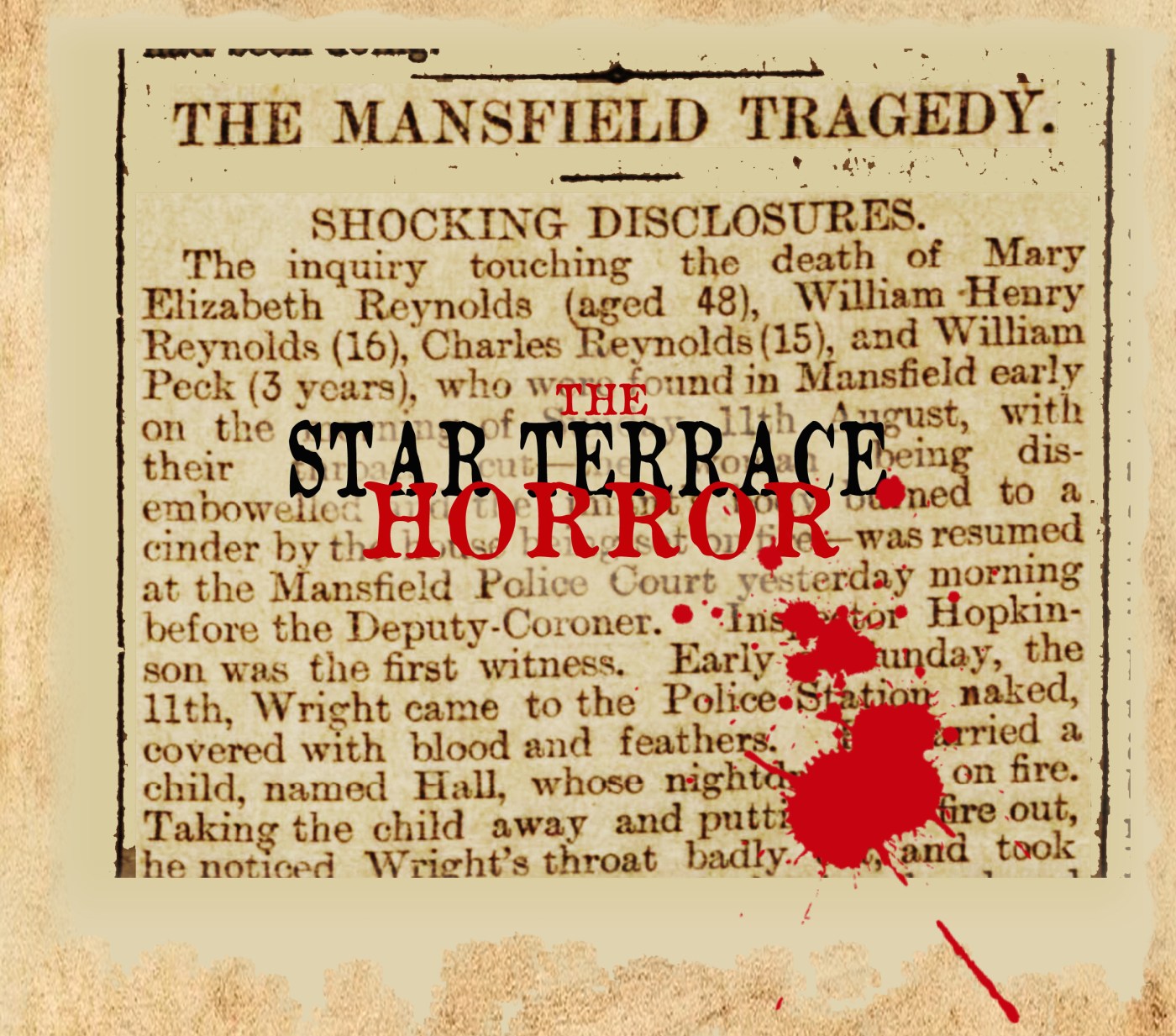
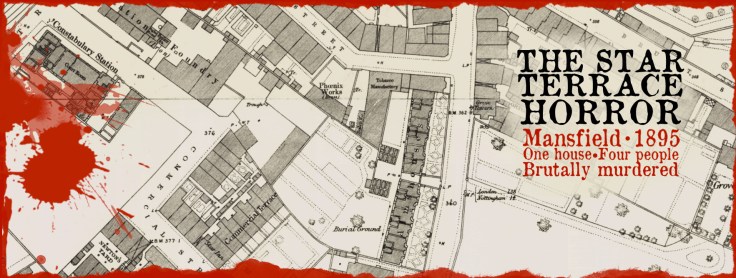
Star Terrace, Mansfield, no longer exists. The houses once sat on Commercial Street, now Commercial Gate, but the road layout is much altered today. There was a pub called The Star Inn, but it – like the terrace named after it – has long since gone. If “old ghosts” could meet, they would certainly be reunited on a bloodstained patch of ground in the middle of Mansfield. On the night of 10th August 1895 Mary Elizabeth Reynolds, her step-children George, William and Charles, grandson William Peck, a two year-old boy named Hall (a relative) went to bed peaceably, unaware that horror was about to be perpetrated before dawn broke the next day. Absent that night was the lodger, a man called Henry Wright. They all lived under the same roof, but only George Reynolds and the boy Hall would live to celebrate Christmas.
Mary Reynolds had lived with William Reynolds, head brewer at the nearby Mansfield Brewery. Although they had never married, she took his name, and when he died on 29th October 1890, although there was a newspaper appeal for claimants on his estate – implying he had died intestate – it seems that he had left her comfortably off, with enough money to rent a house. The bulk of his estate, hoever – nearly £164,000 in today’s money – was left to his daughter, a Mrs Quible. The 1891 census tells us that 1 Star Terrace was occupied as follows:

At the top of Commercial Street, where it joined Station Street, was a police station. Inspector Hopkinson lived there with his wife, and in the early hours of Sunday 11th August, 1895, he was woken up by a commotion outside. Throwing open his bedroom window he looked out and saw a sight which was a bizarre mixture of comedy and horror. Down in the courtyard stood a man, naked except for his socks. He was carrying a child whose nightshirt was on fire. Both the man and the child were covered in blood. Hopkinson knew the man – it was Henry Wright. Sensing that something awful had happened, the police officer put Wright under temporary arrest, applied first aid to man and child, then left them in the charge of his wife. He then ran the fifty yards to Star Terrace where he knew Wright was lodging. He saw fire and smoke billowing from the upper windows of the terraced house. He sent for the fire brigade, but what they discovered when they broke into the house would haunt them for the rest of their days.
IN PART TWO
A SHOCKING DISCOVERY
ARREST AND TRIAL
RETRIBUTION
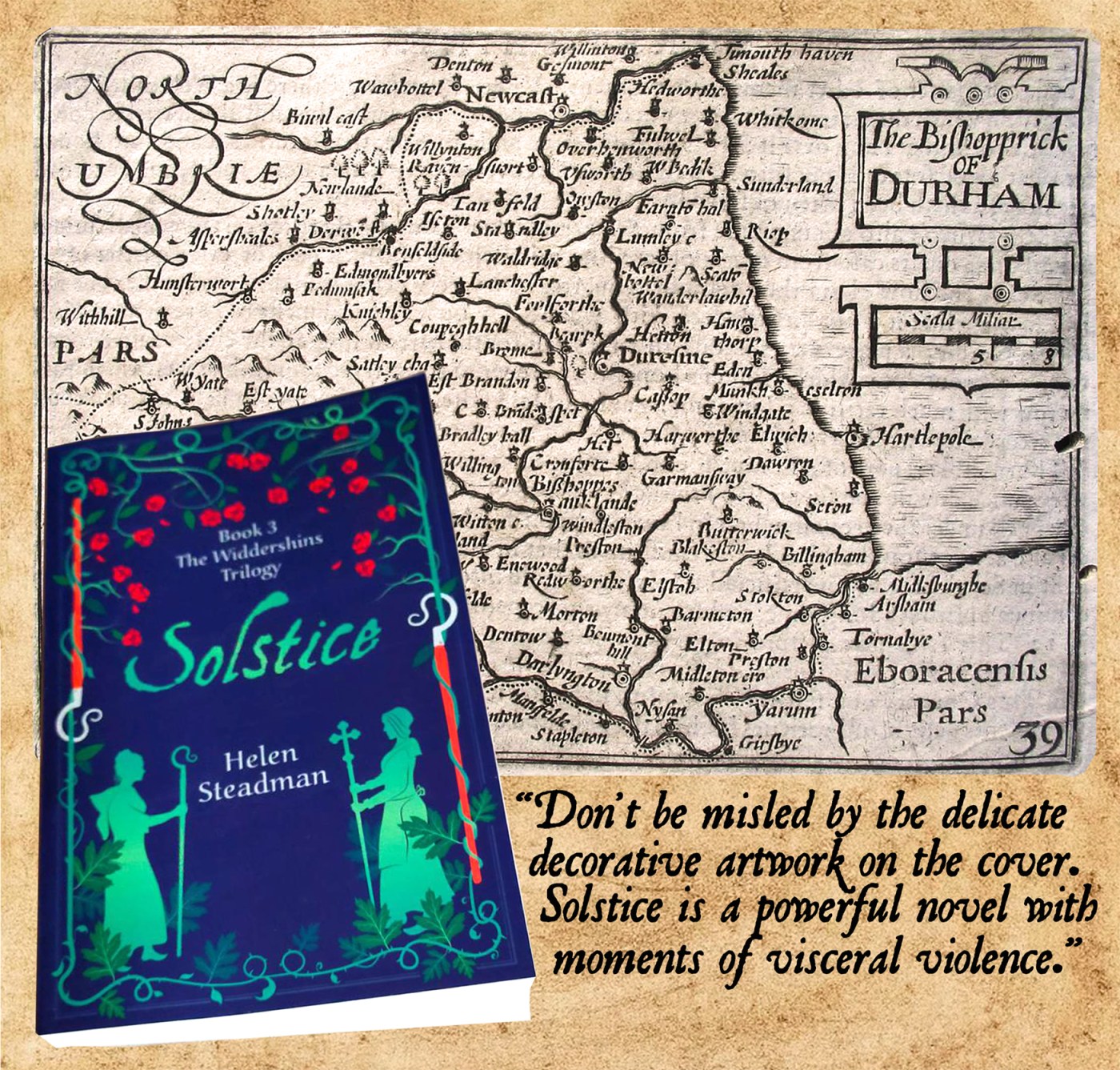

 Widdershins, by the way is a strange word. Some say it was German, others say it originated in Scotland. It translates as


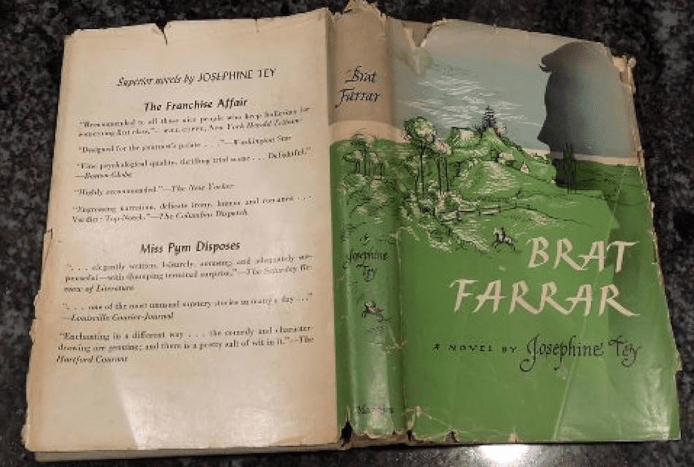
 Brat Farrar is an ingenious invention. He is an orphan, and even his name is the result of administrative errors and poor spelling. He has been around the world trying to earn a living in such exotic locations as New Mexico, but has ended up in London, virtually penniless and becomes an easy mark for a chancer like Alec Loding. He is initially reluctant to take art in the scheme, but with Loding’s meticulous coaching – and his own uncanny resemblance to the late Patrick – he convinces the Ashbys that he is the real thing. But – and it is a very large ‘but’ – Brat senses that Simon Ashby has his doubts, and they soon reach a disturbing kind of equanimity. Each knows the truth about the other, but dare not say. The author’s solution to the conundrum is elegant, and the endgame is both gripping and has a sense of natural justice about it.
 Josephine Tey was one of the pseudonyms of Elizabeth MacKintosh (1896-1952) Her play, Richard of Bordeaux (written as Gordon Daviot) was celebrated in its day, and was produced by – and starred – John Gielgud. She never married, but a dear friend – perhaps an early romantic attachment – was killed on the Somme in 1916. She remained an enigma – even to friends who thought themselves close – throughout her life. Her funeral was reported thus:










 The song, which has many more verses, was written as a sarcastic response to a statement made – allegedly by the MP Nancy Astor – criticising the 8th Army for not being part of the D Day landings in June 1944. Historian and broadcaster James Holland (left) has written an account of the Italian Campaign from the invasion of the mainland in September 1943 until the year’s end and, having read it, I can only think that the bitterness of the 8th Army men was more than justified.



 fullybooked2017