 Mark Edwards writes psychological thrillers in which terrifying things happen to ordinary people. His first solo novel, The Magpies (2013), reached the No.1 spot on Amazon UK as did his third novel Because She Loves Me (2014). He has also co-written various crime novels with Louise Voss such as Killing Cupid (2011) and The Blissfully Dead (2015).
Mark grew up on the south coast of England and starting writing in his twenties while working in a number of dead-end jobs. He lived in Tokyo for a year before returning to the UK and starting a career in marketing. As well as a full-time writer, Mark is a stay at home dad for his three children, his wife and a ginger cat. Mark speaks to Fully Booked about his life and his writing.
As a six word story, explain what The Devil’s Work is about.
Dream job becomes a terrifying nightmare. (My original pitch was ‘The Devil Wears Prada rewritten by Stephen King’ but that’s eight words!)
As opposed to other types of fiction, what do you think is the appeal of psychological thrillers?
Psychological thrillers are hot right now because readers want to connect with stories in which they can imagine themselves. Marriage, relationships with friends and children, co-workers and lovers…Psychological thriller writers take ordinary situations and add a layer of fear and darkness – from the toxic marriage in Gone Girl to the everyday voyeur in Girl on the Train, readers like those familiar situations and characters and thinking about what they would do if it were them. I think it’s a reaction to the Dan Brown years, which were followed by the Stieg Larsson-fuelled Scandinavian noir period – we’ve gone from worldwide conspiracy theories and outlandish situations to what is now called domestic noir. It’s not new but it’s never been more popular.
What made you want to set the majority of this novel in a publishing house?
I used to work in publishing, although we didn’t publish fiction. Like Sophie in The Devil’s Work I was a marketing manager. More importantly, I have been involved in the world of fiction publishing, as a writer, for years, so know that world well. I think it’s a world that readers are interested in too. It’s certainly more interesting than reading or writing about an insurance company. The thing that unites everyone who works in publishing is they loves books. They love to read, and they love books as objects. I’m like that too. If I wasn’t a writer I would want to work on the other side. People who work in publishing are like kids who say they want to work in a candy factory, doing the job they always dreamed of. But, of course, I needed something nasty to be going on in the background of my publishing company.
 What was the most important aspect of The Devil’s Work that you hoped to get right–the characterization/the thrill/the mystery?
I wanted to ensure all of the elements of the book worked, but it was particularly important to get Sophie’s voice right. This is the first novel I’ve written from the point of view of a woman, and I knew the whole book would fall apart if Sophie wasn’t convincing. I read a lot of books by female writers, with female protagonists, and noticed there are a number of differences between male and female narrators. For example, women tend to write more about how they feel physically, especially if they feel discomfort. That’s just a small thing but as most of my readers are women I was determined to ensure nothing about Sophie’s voice jarred.
Which authors inspire you?
I read a lot of my peers’ novels and am constantly inspired by great writing, interesting characters and original ideas. I’m always trying to improve my writing and love reading books that make me feel the need to raise my game. An example would be I Let You Go by Clare Mackintosh; the twist in that book made me feel inspired to come up with a really great twist in The Devil’s Work.
My writing heroes are Stephen King, Ira Levin and Donna Tartt. King for how he puts normal people in scary situations, and because he’s had such a long, prolific career. Levin because he came up with the most fantastic concepts and executed them brilliantly. Tartt because she is so good at creating atmosphere and flawed by likeable characters. The Secret History is my favourite book and it inspired me to start writing again in my twenties.
You’ve written multiple thriller titles–did you approach The Devil’s Work differently?
The Devil’s Work is one of my ‘from hell’ books – I’ve done neighbors from hell, relationships, vacations and now co-workers – so I approached it like those. I always start out with a person or couple in an idyllic situation, full of hope and optimism, and then begin to dismantle that until everything goes horribly wrong. But with each book I put pressure on myself to get better, to create creepier situations and surprise the reader more. This book was the hardest to write because it had the most complex plot and it’s the first one I’ve written with two timelines that interweave. That was challenging. I actually wrote all of the university chapters first, and then started to write the present day story. That meant that by the time I started to write the main narrative I knew Sophie really well.
What type of advice would you give to an aspiring thriller author?
I’d give any aspiring writer the same piece of advice: only do it if you are absolutely driven, if it’s an itch that you have to scratch. Writing is hard. All the stuff that goes with writing – rejection, disappointment, criticism – is even harder. All the writers I know, no matter how successful, are dissatisfied but we can’t help ourselves. If I was unable to put them off, I would advise reading as much as they can. That’s the best way to learn.
 What is the most surreal thing about being a published author?
The most surreal thing about being a writer is how ordinary it is. I used to have this idea that it would be glamorous, but it’s the exact opposite of that! I get up, drive the kids to school, sit in my dining room (I don’t have my own office because it got turned into a nursery) with a view of a derelict building and a busy street, fending off demands from my three-year-old for snacks. Sometimes I go and write in Starbucks, so I at least feel like Carrie in Sex and the City. Having said all that, going to festivals in places like New Orleans, or having lunch with my publisher, the time my agent held a champagne reception for me after I sold my millionth book…that’s when I feel like a proper writer. But most of the time I wonder when I’m going to get the keys to my ivory tower (answer: never!).
You’ve traveled and lived abroad. Do you think aspiring writers should move outside their comfort zone in order to better their writing?
Living through difficult situations definitely helps you write better. It’s harder to write convincingly about emotions, places and relationships without experiencing them in some way. However, you don’t need to be well-traveled to write about the world, and you don’t necessarily need to have suffered to write about pain. The imagination is a wonderful thing. But I think that writers who have stepped outside their comfort zone and felt daunted or scared can draw on those feelings to give their books an air of truth that might otherwise be lacking.
Having said all that, writers can make the mistake of doing something they think was interesting and assuming the rest of the world will be fascinated. I tried to write a book about my year in Japan and it was the worst thing I’d ever done. It read more like a travel diary and was only interesting to me. It’s like showing someone your vacation snaps. Readers want stories they can relate to. You should only write about your true-life experiences if it makes a great story; otherwise, it’s better to take something from it and use that to invent a story around it.
What is one thing you’d love to write but haven’t gotten around to it yet?
I’ve had this idea floating around in my head for years. It’s high concept, a speculative fiction novel, with what I think is a great hook. I just haven’t figured out what to do with it yet, or where it goes. This sometimes happens: an idea can gestate for years. Sometimes they go nowhere. Or maybe I’ll suddenly work out what to do with it. But I have a feeling this particular idea could turn into something epic if I ever have the flash of inspiration that will bring it to life.
 What is the most important element of a story to you that must be in every novel you write?
All of my books are about ordinary people in scary situations, so it’s important that the story is grounded in a reality that readers can identify with. The main character needs to be an everyman or woman, not a chiseled action hero or superstar. The most important element in my books is that I make these identifiable characters confront terrifying situations. It’s also important that, although there are hints of otherworldly goings-on, nothing is supernatural. There is always a rational explanation for everything that happens – otherwise it would feel like cheating. Each of my books describes a nightmare that could happen to anyone. It could happen to you.
Are you secretive about your writing or do you need to share and bounce ideas off of people?
I find it essential to have someone to discuss ideas with – particularly problems. My wife, who studied creative writing and is very well-read, is great for this. She works from home too and quite often, during the working day, I will seek her out and describe how I’m stuck, or run ideas past her. Sometimes the very act of verbalizing the problem helps me solve it. She just has to sit there and listen. But often we will talk it through and she will help me figure it out. Apart from my wife, I don’t let anyone else see what I’m working on until I feel it’s ready, usually after I’ve written two or three drafts. I discuss initial ideas with my editor and agent and then vanish until the book is finished.
The Devil’s Work and Mark’s author page can be found on Amazon.

 Watch Her Disappear, the latest episode in the career of Zigic and Ferreira is expected to be on the shelves in January 2017, and it reminds us that hate crime can involve other issues than the colour of someone’s skin or the language they speak. A wave of sexual assaults has left Peterborough women wary and fretful, but when the next victim – a fatality – is revealed to have been a genetic man, the case becomes something different altogether.


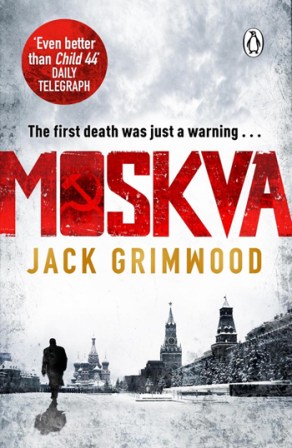 Jack Grimwood’s Moskva sets out to convince us that there is room for one more tale of conflicted lives in a modern Russia full of paradox and uncertainty. The book came out in hardback earlier this year, and is now available in paperback, from Penguin. Does Grimwood, who made his name writing science fiction and fantasy novels, hit the spot?
 The breadth of this novel in terms of time sometimes makes it hard to work out who has done what to whom. Patience – and a spot of back-tracking – will pay dividends, however, and the narrative provides a salutary reminder of the sheer magnitude of the numbers of Russian dead in WWII, and the resultant near-psychosis about The West. To top-and-tail this review and answer the earlier question as to whether Jack Grimwood (right) “hits the spot”, I can give a resounding “Yes!”. Yes, the plot is complex, and yes, you will need your wits about you, but yes, it’s a riveting read; yes, Tom Fox is a flawed but engaging central character, and yes, Grimwood has sharp-elbowed his way into the line-up of novelists who have written convincing crime novels set in the enigma that is Russia.
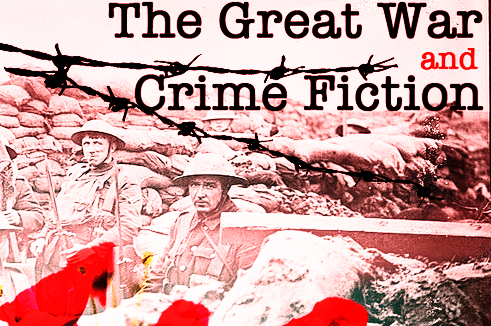

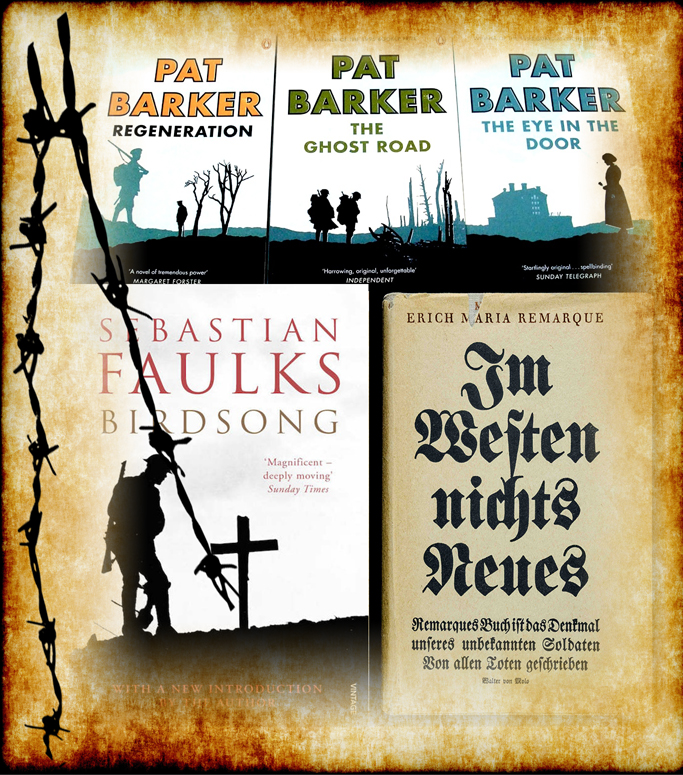
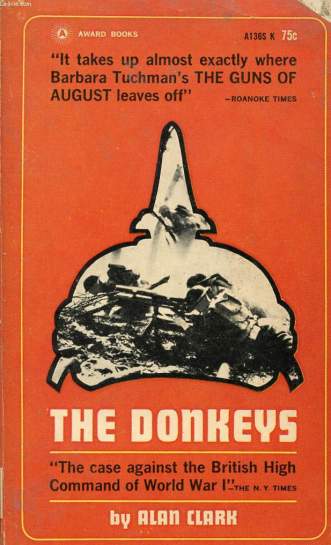 What needs to be held up like a bright lantern in our search for good WWI crime fiction, is the fact that those six years are like no other in British history. They have produced a mythology which is unique in modern memory, and with it a collection of tropes, images, phrases and conventions, all of which find their way into the consciousness of writers and readers. Military historians tell only part of the story: the Alan Clark theory of The Donkeys and the anti-war polemic of the the 1960s and 70s has one version of events; more recent accounts of the war by revisionist historians such as John Terrain and Gary Sheffield tell another tale altogether. In considering books and writers for this feature I have used two criteria. Firstly, there must be crime involved that is distinct from the licensed slaughter of wartime and, secondly, the events of the war must cast their shadows over the narrative either in a contemporary sense or in the form of a social or political legacy.


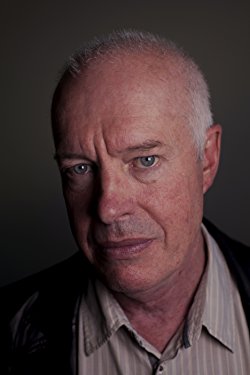 This, then, is the England of Handel and Hogarth (at least he was English) and the looming threat from the Jacobites north of the border. Author Robin Blake, (left) however resists the easy win of setting his story in the bustle of London. Instead, he takes us to the town of Preston, sitting on the banks of the River Ribble in Lancashire.
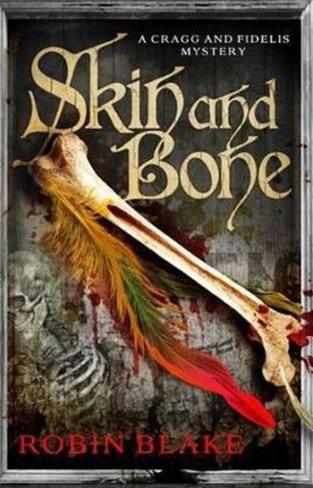 The investigations carried out by Cragg and Fidelis reveal a growing schism between the tanners and the wealthy men of property who run the town’s affairs. The leather workers are an inward looking community. This state is mostly driven by the fact that they live and work alongside the noisome waste materials – mostly faeces and urine – which are essential to the tanning process, and therefore most local people literally turn up their noses at the tanners. The burgesses and council-men of Preston, on the other hand, have their eyes on what they believe to be an acre or so of valuable land – ripe for redevelopment – currently occupied by the tannery.


 Up on the third floor of The Covent Garden pub, however, the crime was purely fictional, in the shape of forthcoming novels from the Michael Joseph stable. Canadian Elan Mastai (pictured above)has already achieved fame as a screenwriter for such films as The F Word (starring Daniel Ratcliffe) and Fury (starring Samuel L Jackson), but his debut novel All Our Wrong Todays is already generating a considerable buzz in the book world. It concerns a young man called Tom who seizes the opportunity to energise his glum present day existence with the help of his father’s time machine. Mastrai gives us the top notes of a contemporary thriller, with the more complex harmonies of the differences between dull but predictable reality, and the altogether more dangerous world of dreams.
 Approximately 190,000 officers have been involved in the case to date, and police have received more than 16,000 pieces of information from the public, yet the killer remains at large. Fifty police officers are still assigned to the case to follow up on any leads. The reward was raised from the initial 3 million yen to 10 million yen for information which leads to the killer or killers’ arrest.
 Ross Armstrong is certainly a talented actor, as anyone familiar with his appearances on British television screens in such favourites as Foyle’s War and Jonathan Creek will testify. His RADA training also equipped him for weightier fare such as Hamlet and A Midsummer Night’s Dream with the Royal Shakespeare Company. But a novelist too? So it seems, as his debut novel The Watcher is due out just after Christmas. The kind people at Harper Collins have just sent me an ARC of the novel, so what’s it all about?
 Gil Hogg, although living in the West London district of Fulham, is a New Zealander. His novel Rendezvous With Death is far from a debut, as Hogg’s first novel A Smell of Fraud was published as long ago as 1976. He returns with a story which begins in the explosive atmosphere of present day Pakistan.
 Simon Kernick has become very much the go-to man for those who like taut thrillers that take no prisoners, and inhabit the landscape between regular police procedurals and the more cut-throat world of the intelligence agencies and counter terrorism. He has written a string of best sellers since his first novel, The Business of Dying, was published by Bantam in 2002. The Bone Field is his latest work, and will not be available until January 2017, but thanks to the good souls at Penguin Random House, my friendly postie dropped off a copy at the end of last week.


 fullybooked2017