
“OVER-PAID, OVER-FED, OVER-SEXED, and OVER HERE!” The phrase is attributed to the comedian and entertainer Tommy Trinder, but for many British people his barbed catchphrase rang all too true. American servicemen had left a country unaffected by German bombing, rationing and austerity, and brought with them an abundance of delights in the way of cigarettes, alcohol, chocolate and nylon stockings. For some women, young and not so young, the brash appeal of these loud and confident young men was irresistible. But things did not always turn out for the best for either the hosts or the visitors. The American men sometimes strayed from the straight and narrow path, and in the most severe cases, justice was swift and terrible. In all, eighteen American servicemen were executed within the forbidding grey walls of Shepton Mallet Prison in Somerset. Two met their death by firing squad, but sixteen were hanged. This is the story of some of them.

 THE MOST HORRIFIC of the crimes occurred not on the British mainland, but in the sleepy countryside of County Tyrone, one of the Six Counties of Northern Ireland, in September 1944. The victim, Patricia Wylie was just seven years old. There is something about a child killing that curdles the blood of even the most hardened observer of criminal misdeeds. Private William Harrison was known to the Wylie family, who lived in a cottage near the remote village of Killclopy, and when he called at the house on 25th September, he found Patricia there on her own. She said she had to go into the village to do some shopping for her mother, and Harrison went with her. Patricia never reached the village, however, and after an extensive search her bloodied body – sexually assaulted – was found in a field, casually covered up with hay.
Harrison was quickly arrested and at his subsequent court martial in Cookstown his defence was that of diminished responsibility due to being drunk, and having had a traumatic childhood in Ohio. It was stated that when he was born, his mother was a mere 14 years old, and that he had his first sexual experience at the age of 15, partly due to being drunk. Prior to his arrest he had been court martialled no fewer than 5 times for being drunk or absent without leave. The submission by his lawyer that he had insufficient moral awareness to realise that the assault on Patricia (which he admitted) was wrong fell on deaf ears, and he was sentenced to death on Saturday 18th November 1944.
He was removed to Shepton Mallet, and was hanged on 7th April 1945, by Thomas Pierrepont and Herbert Morris.

Death is no respecter of persons, but the most high profile victim of American violence during WW2 in Britain was certainly Sir Eric Teichman. He was a distinguished career diplomat, and had written books about his experiences in the far flung corners of what remained of the British Empire. He was no dour and over-cautious emissary, however, and was described as “a flamboyantly enigmatic explorer-cum-special agent.”
 On 3rd December 1944, whilst at home at Honingham Hall, his estate in Norfolk, Teichman (left) heard the sound of gunfire nearby. He went out to confront two poachers (Private George E. Smith of Pittsburgh and Private Leonard S. Wijpacha of Detroit) who were trespassing in the grounds of his estate. Both intruders were American soldiers based at a nearby USAAF airfield and each was armed with an M1 carbine. Sir Eric was killed during the confrontation, receiving a fatal gunshot wound to the head.
Private Smith (army serial number: 33288266) was subsequently court-martialled at RAF Attlebridge, convicted of murder and executed by hanging at Shepton Mallet on 8th May 1945 (i.e. VE day), despite appeals for clemency, including one from Lady Ellen Teichman. His companion, Private Wijpacha was charged with being an accessory to murder, but was not sentenced to death. The hangman on this occasion was, again, Thomas Pierrepoint, assisted by Herbert Morris.

 Perhaps the most dramatic of the murders occurred on a peaceful street in the well-to-do Oxfordshire town of Henley on Thames. Doris Staples was 35 years old, and had been ‘courting’ an American soldier who was currently on active service in North Africa. It seems, however, that Private John H. Waters, a 38-year-old soldier from Perth Amboy, New Jersey, and the old adage “while the cat’s away..” on his mind. Doris worked in a dress shop at 11A Greys Road. The building is still there, but is now a solicitors’ office. On the afternoon of 14th July 1943, locals were disturbed to hear gunshots coming from the premises. The police tried to force an entry to the shop, but it wasn’t until a tear gas grenade was lobbed in through the window, and the local fire brigade called to direct powerful jets of water into the building, that the authorities felt safe enough to enter. Once inside, they found a very dead Doris Staples, and a seriously wounded John Waters. It seems that Waters was driven to madness by his unrequited passion for Doris Staples, and after mortally wounding her, he turned the gun on himself.
Either by accident or design, Waters survived, but his appointment to meet his maker was only postponed, not cancelled. At a court martial in Watford he was found guilty, and sentenced to death. He was removed to Shepton Mallet and on 10th February 1944 he was hanged by Thomas Pierrepoint and his assistant Alex Riley.

Along with other great forested areas in ancient England such as Sherwood, Arden, Epping, and Charnwood, Savernake Forest in Wiltshire owed its development to the love the English royalty and aristocracy had for hunting. In late September 1943, however, the historic woodland was the scene of a different kind of hunting – and the prey was human. It needs to be remembered, not in any sense of expiation for these terrible crimes, but by way of establishing what life was like in wartime Britain, that hundreds of thousands of husbands, boyfriends and other eligible young men were all away at the war, leaving women very much on their own. Someone once unkindly likened the situation to a careless farmer leaving the chicken run unlatched with a hungry fox in the vicinity.
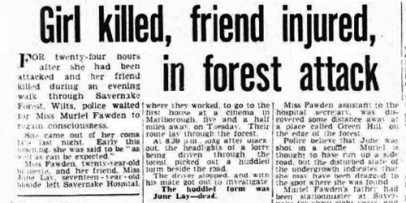
Lee A. Davis was another young G.I. who could not resist the temptation of the hen coop door swinging open. near Marlborough Wilts., as On the night of 28th September, two young women walked back from the cinema near Marlborough Wiltshire. Davis asked the girls what they were doing and one, Muriel Fawden, said she was returning to the hospital where she worked as a nurse. They tried to get away from Davis who shouted after them “Stand still, or I’ll shoot”. He instructed the terrified girls to go into some bushes beside the footpath. Muriel’s companion June Lay decided to make a run for it and Davis shot her dead.
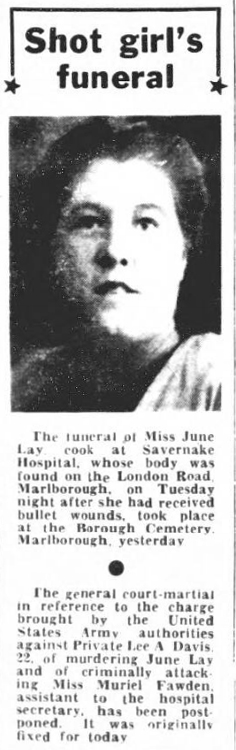 He now forced Muriel into some bushes and raped her but surprisingly did not kill her. When she recovered from her ordeal she was able to give a full statement to the police and as a result all the rifles of the American soldiers stationed nearby were examined. Davis’ was found to have been fired and forensic tests matched it to the shell cases found near June’s body. Davis admitted he had been at the scene of the crime but said he had only meant to fire over the heads of the girls. He was court-martialled at Marlborough on the 6th of October for the murder and the rape, both crimes carrying the death penalty under US Military law. He was hanged on the 14th of December, 1943 by Thomas Pierrepoint, assisted by Alex Riley.
The full list of military executions of American servicemen at Shepton Mallet is as follows:
Pte. David Cobb, a 22 year old G.I. was the first to be hanged. He had shot and killed another soldier and was executed on 12th March, 1943.
Pte. Harold Smith a a 20 year old from LaGrange, Georgia shot and killed Pte. Harry Jenkins He made a full statement admitting his guilt and was duly hanged on the 25th of June, 1943 by Thomas and Albert Pierrepoint.
20 year old Lee A. Davis (see main article) was executed for rape and murder in 1943.
John Waters from Perth Amboy in New Jersey was, at 39, rather older than the rest of these soldiers. He was hanged on the 10th of February 1944 by Tom Pierrepoint, assisted by Alex Riley. (see main article)
J.C. Leatherberry, a 22 year old from Hazelhurst, Mississippi, was executed for the murder of Colchester taxi driver Henry Hailstone on the evening of 5th of December 1943. Leatherberry was sent to Shepton Mallet to be hanged by Thomas and Albert Pierrepoint on the 16th of March 1944.
25 year old Pte. Wiley Harris Jr. from Greenville, Georgia, was another soldier who was stationed in Belfast in Northern Ireland. After a fight broke out in a bar, Harris stabbed a local pimp called Coogan 17 times. The court martial were not prepared to accept self defence in view of the number of stab wounds and so Harris was convicted. He was hanged by Thomas Pierrepoint, assisted by Alex Riley, on the 26th of May 1944.
20 year old Alex F. Miranda from Santa Ana, California, became the first American serviceman to suffer death by musketry as the US Army called shooting by firing squad, at Shepton Mallet. He was executed on Tuesday the 30th of May 1944 for the murder of his sergeant, Sgt. Thomas Evison at Broomhill Camp in Devon.
25 year old Eliga Brinson from Tallahassee Florida and 22 year old Willie Smith from Birmingham Alabama, were hanged by Thomas Pierrepoint on the 11th of August 1944 for the rape of 16 year old Dorothy Holmes after a dance at Bishop’s Cleeve in Gloucestershire.
Madison Thomas, a 23 year old from Arnaudville, Louisiana, was another soldier convicted of rape. His victim was Beatrice Reynolds. He was court martialled at Plymouth on the 21st of August and hanged by Thomas and Albert Pierrepoint on the 12th of October 1944.
35 year old Benjamin Pyegate from Dillon, South Carolina, was the second and last US soldier to face a firing squad at Shepton Mallet. The crime – stabbing a fellow soldier – took place at Tidworth Barracks in Wiltshire on the 15th of July 1944.
24 year old Ernest Lee Clark from Clifton Forge, Virginia and Augustine M. Guerra aged 20 from Cibolo, Texas were jointly convicted of the rape and murder of 15 year old Elizabeth Green at Ashford Kent on 22nd of August 1944. They were hanged side by side on the 8th of January 1945, by Thomas and Albert Pierrepoint.
Robert L. Pearson, a 21 year old from Mayflower, Arkansas and 24 year old Parson (also given as Cubia) Jones from Thompson, Georgia, were convicted by court martial of the rape of Joyce Brown at Chard in Somerset on the 3rd of December 1944. They were tried at Chard on the 16th of December 1944 and hanged side by side on the 17th of March 1945 by Thomas Pierrepoint, assisted by Herbert Morris.
22 year old William Harrison Jr. from Ironton, Ohio sexually assaulted and strangled seven year old Patricia Wylie in Killycolpy Co. Tyrone, Northern Ireland. (see main article)
George E. Smith Jr. aged 28 from Pittsburgh, Pennsylvania, (see main article) was hanged on 8th May, 1945 by Thomas Pierrepoint, assisted by Herbert Morris.
Aniceto Martinez, a 23 year old Mexican American soldier from Vallecitos New Mexico was the last person to be hanged for rape – that of an elderly woman – in the UK, when he went to the gallows on the 15th of June 1945. Thomas Pierrepoint, assisted by his nephew Albert, carried out the execution.

There is a macabre postscript to this story. Initially, the bodies of the executed soldiers were interred in the huge cemetery at Brookwood in Surrey. Later, though, the remains were transferred to Plot E, Oise-Aisne American cemetery near Fère-en-Tardenois, Aisne, Picardy, France.
Plot E is approximately 100 metres away from the main cemetery and is a separate, hidden section which currently contains the remains of 94 American military prisoners, all of whom were executed by hanging or firing squad under military authority for crimes committed during or shortly after World War II. Their victims were 26 fellow American soldiers (all murdered) and 71 British, French, German, Italian, Polish and Algerian civilians (both male and female) who were raped or murdered. No US flag is permitted to fly over the section, and the numbered graves literally lie with their backs turned to the main cemetery on the other side of the road.


 The muster room of hard-nosed female cops and investigators is not exactly a crowded place on Planet CriFi. Victoria Iphigenia Warshawski, Fiona Griffiths, Kate Brannigan, Cordelia Gray, Kay Scarpetta and Jane Marple have already taken their seats, but Temperance Brennan has, temporarily, given up hers for another child of her creator, Kathy Reichs (left). Sunday ‘Sunnie’ Night is a damaged, bitter, edgy and downright misanthropic American cop who has been suspended by her bosses for being trigger happy. She sits brooding, remote – and dangerous – on a barely accessible island off the South Carolina coast.
 Half way through the novel we realise the significance of the title. Sunnie Night is not waging this war alone: her twin brother Augustus ‘Gus’ Night is also on the case and, to use the cliche, he ‘has her back’. Together they are certainly a deadly combination. By this point, though, Reichs has bowled us an unreadable googly – or, for American readers, thrown us a curveball – and it isn’t until the closing pages that we realise that we have been making incorrect assumptions. Which is, of course, exactly what the author planned! Those last few pages make for a terrific finale, as the twins desperately try to prevent an atrocity being carried out at one of America’s most celebrated sporting occasions.

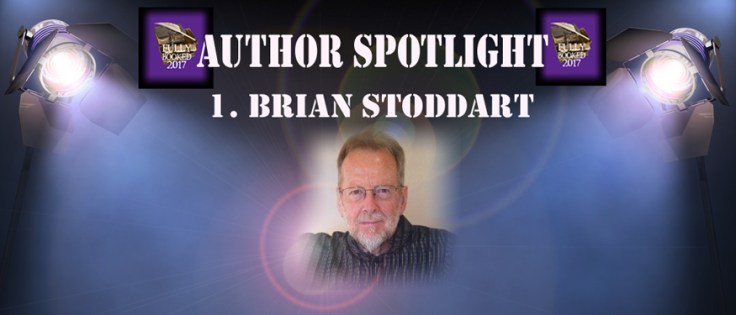

 Stoddart wears his scholarship lightly in the crime novels, but he is a gifted and compelling writer when dealing with the real world. In A House in Damascus – Before the Fall (2012) he examines the tragedy of the Syrian conflict and its effect on ordinary people for whom the complex political issues mean nothing but shattered lives, hardship – and death.
 steel and bullets with nothing but their manly chests. Don Bradman and Bill Woodfull, plucky Australian lads, direct descendants of the ANZACS, faced the barrage of Larwood and Voce with nothing but a small piece of shaped willow wood. Stoddart co-authored, with Ric Sissons, Cricket and Empire, an account of this bitter battle.


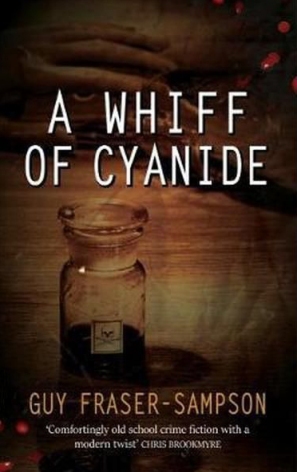 Readers of the two previous books in the Hampstead Murders series, Death In Profile and Miss Christie Regrets, will know what to expect, but for readers new to the novels here is a Bluffers’ Guide. The stories are set in modern day Hampstead, a very select and expensive district of London. The police officers involved are, principally, Detective Superintendent Simon Collison, a civilised and gentlemanly type who, despite his charm and urbanity, is reluctant to climb the promotion ladder which is presented to him. Detective Sergeant Karen Willis is, likewise, of finishing school material, but also a very good copper with – as we are often reminded – legs to die for. She is in love, but not exclusively, with Detective Inspector Bob Metcalfe, a decent sort with a heart of gold. If he were operating back in the Bulldog Drummond era he would certainly have a lantern jaw and blue eyes that could be steely, or twinkle with kindness as circumstances dictate.
 Collison, Metcalfe, Willis and Collins have an ever lengthening list of questions to be answered. Why was Ann Durham brandishing a bottle of cyanide as she presided over one of the convention panels? Who actually wrote her most popular – and best selling – series of novels? Fraser-Sampson (right) spins a beautiful yarn here, with regular nods to The Golden Age during a convincing account of modern police procedure. Not only is the crime eventually solved, but he provides us with a delightful solution to the Willis – Metcalfe – Collins love triangle.


 Now, Thorne becomes involved in another kind of hell on earth, and one where all absent devils have been called home, all leave cancelled, and any recently retired fallen angels pressed back into duty. The fires stoked in this particular hellish pit illuminate the ghastly world inhabited by some British Asian communities who sanction murder in the name of their warped concept of family honour. Among the ghosts which inhabit the darker parts of Thorne’s memory is that of Meena Athwal. She was killed, he is certain, at the behest of her family, but her death remains unavenged in a court of justice.


 Perhaps the world has shrunk, or maybe it is that organised crime, like politics, has gone global, but more recent British mobsters have become bigger and, because we can hardly say “better”, perhaps “more formidable” might be a better choice of words. No-one typifies this new breed of gang boss than John “Goldfinger” Palmer. His name is hardly on the tip of everyone’s tongues, but as this new book from Wensley Clarkson shows, Palmer’s misdeeds were epic and definitely world class.
 Meanwhile, Palmer had not been idle, at least in the sense of criminality. He had set up in the timeshare business, perpetrating what was later proved to be a massive scam. When he was eventually brought to justice, it was alleged that he had swindled 20,000 people out of a staggering £30,000,000. In 2001 he was sentenced to eight years in jail, but his ill-gotten gains were never recovered.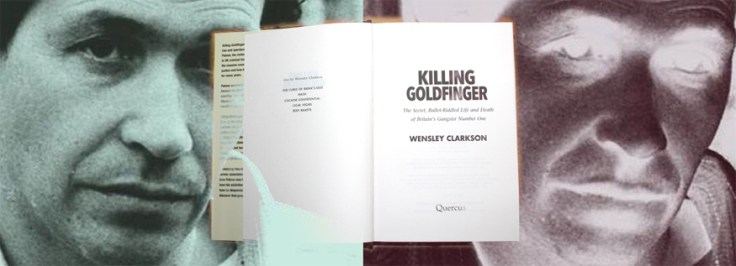
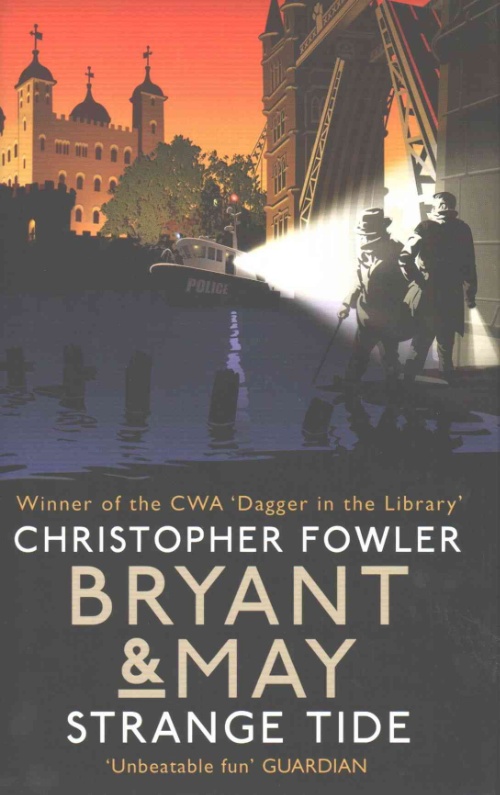

 The Urban Dictionary tells me that a “keeper” is
 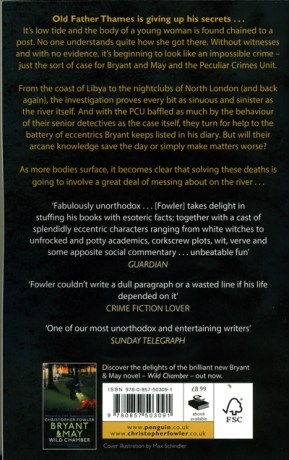 STRANGE TIDE is set, as you may expect, in London, but it’s a London few of us will ever see. It’s a world of forgotten alleyways, strange histories, abandoned amusement arcades, inexplicable legends and murder – always murder. Strange Tide was my book of the year for 2016, and you can read my review of it by following

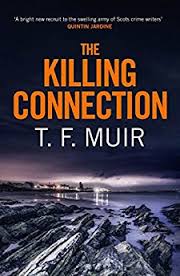
 The woman is eventually identified as Alice Hickson, a journalist, and the woman who provided the ID, a literary editor called Manikandan Lal, is flying home from holiday to give further background to her friend’s disappearance and death. ‘Kandi’ Lal fails to make her appointment with Gilchrist, however, and soon the police team realise that they may be hunting for a second victim of whoever killed Alice Hickson. Gilchrist’s partner, DS Jessie Janes has problems of own, which are become nagging distractions from her professional duties. As if it were not bad enough to learn that her junkie mother has been murdered by a family member, Jessie is faced with the heartbreaking task of explaining to her son that an operation to correct his deafness has been cancelled permanently.
 Detective Inspector characters have become a staple in British crime fiction, mainly because their position gives them a complete overview of what is usually a murder case, while also allowing them to “get their hands dirty” and provide us readers with action and excitement. So, the concept has become a genre within a genre, and there must be enough fictional DCIs and DIs to fill a conference hall. This said, the stories still need to be written well, and Frank Muir (right) has real pedigree. This latest book will disappoint neither Andy Gilchrist’s growing army of fans nor someone for whom reading The Killing Connection is by way of an introduction.


 Jack Reacher. Deadly. Calculating. Fearless. Invincible. Lee Child has probably created the nearest possible thing to James Bond, but has tailored his hero to a modern world and its expectations. Not for Jack Reacher is the lurid appeal of a Monaco casino, or the precision of a beautifully shaken (but not stirred) vodka Martini. Fast cars are not his thing, and his sexual needs seem, for the most part, to be sublimated beneath a rugged desire to mind his own business. As for tailored dinner jackets and Jermyn Street shirts, Jack normally replaces his wardrobe every hundred miles or so for a handful of dollars in a main street store. His only concession to style is a pair of beautifully made English leather brogues – which come in very handy when kicking the bejasus out of bad guys.


 fullybooked2017