Search

fullybooked2017

Category

Uncategorized

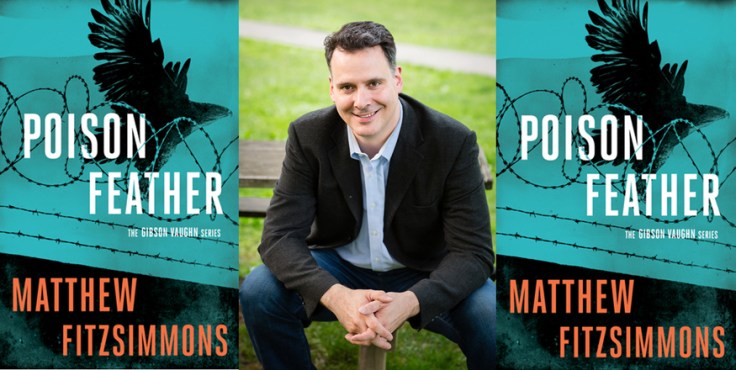
POISONFEATHER … by Matthew Fitzsimmons

poisonfeather

Matthew FitzSimmons is the author of the bestselling first novel in the Gibson Vaughn series, The Short Drop. Born in Illinois and raised in London, England, he now lives in Washington, DC, where he taught English literature and theatre at a private high school for over a decade. Poisonfeather is the sequel to The Short Drop, and we are delighted to present a synopsis and an extract. It is now available in several formats.


POISONFEATHER
Jailed billionaire Charles Merrick hints publicly that he has stashed a fortune in an offshore cache, and a school of sharks converges upon his release from federal prison. The promise of billions has drawn a horde of ruthless treasure hunters, including an edgy ex-con, a female bartender with a mysterious history, a Chinese spy with a passion for fly-fishing, and a veritable army of hardened mercenaries. To stay ahead of the sharks and win justice for his mentor, Gibson will need all his formidable skills. But at the end of the road, he’ll still have to face “Poisonfeather”—a geopolitical secret that just might get Gibson killed…or worse.

EXTRACT
It had been a hard couple of years, and he’d had to scrounge for work. It had cost him his marriage and very nearly the dream house that he’d intended for his family. Bought at the height of the market before the financial collapse, the house had teetered on the edge of foreclosure for several years. It was Gibson’s nightmare, losing that house. He might not ever live there again, but nothing mattered more to him than his daughter growing up there. It was safe. Good schools. Pretty backyard with a canopy of elm trees. Gibson smiled. It was finally within reach. With Lombard no longer in the picture and a job with Spectrum Protection on the table, he could, for the first time since he’d left the Marines, envision a future in which Ellie’s childhood at 53 Mulberry Court was secure. 
Maybe that explained how badly things went from there. 
The polygraph was going smoothly in hour three. Gibson was starting to anticipate the break for lunch at noon. Ms. Gabir’s questions flowed steadily, punctuated by his staccato yeses and nos. His readings fed into a laptop, and she paused periodically to type a note, but otherwise they were making good progress until the knock at the door. Amanda Gabir excused herself and stepped out into the hall. When she returned, Gibson saw a pair of security guards behind her. 
“What’s going on?” he asked.
“I’m sorry. The polygraph has been terminated.” 
“What? By who?” 
She didn’t answer but set to unstrapping him.
“By who?” he said, voice rising.
One of the security guards stepped into the room. “Sir, please lower your voice.” 
He took that as an invitation to yell. “Who?” 
“At the request of Spectrum Protection,” Amanda Gabir said. “I’m sorry. I don’t know why. Please don’t ask me any more questions.” 
Unwilling to sit still and be unstrapped like a child on a fairground ride, Gibson ripped the blood pressure cuff off and threw it to the ground. 
“Easy there, friend,” the guard said. Gibson chose not to be easy, and by the time he was hustled out the back into a service corridor, they weren’t friends anymore either.
“Get the hell off me,” he shouted to the empty corridor as the door slammed shut.
Traffic was a typical Northern Virginia quagmire. It took forty-five minutes to drive the fifteen miles to Nick Finelli’s offices at Spectrum Protection. Security was there waiting for him. Five of them. Solid men in matching blazers. They saw him coming and formed a wall; Gibson didn’t even get through the front door. He made his scene, and they let him rage for a while. He mistook their restraint for timidity and made a lunge for the door. They threw him to the ground and threatened to call the police.
“Go on home,” the oldest of the five said. “You had a bad day. You want to top it off with a night in jail?” 
Gibson dusted himself off and thought about whether or not he did. He knew he wasn’t thinking straight, but he was in one of those states of mind in which knowing better wasn’t the same as doing better.
“What’s it going to be, friend?” the guard asked.
That made Gibson laugh. “I’m everybody’s friend today.” 
“I’m trying, but you need to go home. There’s nothing in there for you.”
That was becoming abundantly clear. Gibson walked back to the street and turned around to stare at the building. Was Nick Finelli staring down at him? Did he feel like a big man hiding up in his office? How many times had Gibson covered his ass? Debugged his elementary-school coding? He tried Nick’s number. It rang until it went to voice mail. Gibson hung up and dialed again. The fourth time, the phone rang once and a prerecorded message told him that the number he was dialing was unavailable. Nick had blocked his number rather than give him an explanation. So that was how it was going to be.
They’d see about that.
Excerpted from POISONFEATHER © Copyright 2016 by Matthew FitzSimmons. Reprinted with permission. All rights reserved.

TOP FIVE VILLAINS IN CRIME FICTION … by Kate Moretti

tvy

We’re delighted to be part of the Blog Tour for Kate Moretti’s The Vanishing Year. Here, she gives us her view on a subject close to her heart!

Top Five Villains in Crime Fiction

Writing a complicated layered antagonist, particularly in crime fiction, is no easy feat. They have to be sympathetic. You have to understand what they want and why and it has to run deep enough that, as a reader, you just know nothing will stand in their way. A flat villain whose desires are hidden or, worse, unrelatable produces someone cartoonish and while it maybe serves the plot, it certainly never evokes fear in a reader. There are some authors, particularly in the past fifty years, who have completely nailed the art of the complicated, and therefore sometimes terrifying, villain.

Mrs. Danvers

Mrs. Danvers is an antagonist so creepy that I paid homage to her in my new novel The Vanishing Year. She was so devoted to Rebecca, the first Mrs. de Winters, that she almost convinces the second Mrs. de Winters to jump out the second story window of Manderley. She’s described as having a “skull face”, severe, dressed in black and is often portrayed by the terrified Mrs. de Winters as lurking in dark staircases and corners. When Mrs. de Winters descends that staircase, wearing the same dress Rebecca wore the year before? Positively evil.

Annie Wilkes

Annie Wilkes is Stephen King’s worst nightmare: an avid fan turned bedside nurse turned psycho in King’s own Misery. Annie Wilkes is so terrifying, only because she’s so innocuous. Kind of homely, a little unrefined, almost pathologically cheery. In the book, she loses her mind at profanity, preferring “cockadoodie”, even as she’s severing Paul Sheldon’s thumb. It’s the off-set of these two traits: this sing-songy voice and this absolute psychosis that make her a villain with admirable depth.

Nurse Ratched

The head nurse at Salem State Hospital in One Flew Over the Cuckoo’s Nest is almost the villainous opposite of Annie Wilkes. She has no sugary coating, no false sweetness. What she does have is pure unadulterated power and she wields it to terrifying results. Anti-psychotic meds, shock therapy, even lobotomies are never off limits. Possibly the only villain in this list to get her just deserts, the end of Cuckoo shows her as impotent and powerless after Randle McMurphy is killed. The inmates no longer fear her.

Patrick Bateman

American Psycho reads like one long (run-on sentence) commentary on eighties yuppie culture. Bateman is the epitome of the eighties yuppie and his own self-hatred for it makes him a terrifyingly real villain. The sheer depth of his insanity is cause alone to fear him, regardless if his crimes actually happened or were mere fabrications, as has been interpreted. There are numerous frightening things about Bateman: his rampant hatred of women, his obviously absent moral compass, his disdain for literally every human being in his life, to the point where he interchanges them all. But what truly brings Bateman into the realm of villain is his obvious unraveling throughout the novel. He goes from self-aggrandizing to narcissistic to erratic to completely unglued. It’s this descent into madness that truly grips a reader.

Tom Ripley

In The Talented Mr. Ripley, Tom Ripley murders two men, simply to serve his needs (in the continuing series, he murders or is responsible for the death of over ten people). He wants Dickie Greenleaf’s lifestyle. He’s a con artist and a sociopath, who uses murder only as last resort. This alone, while frightening, isn’t enough to land him on any great villain list. What really gives Ripley depth is his humanness. He’s so much like a boy next door, so agreeable, so smooth. He’s well read, enjoys gardening. He’s so delightfully bland. Except when something stands in his way. He’ll beat you to death and dump your weighted body in the water, row away and feel no remorse. It’s this nuanced portrayal of Tom Ripley that really makes him truly a fantastic anti-hero. As readers, we wanted him to get away with it.

The Vanishing Year is published by Titan Books

villains

KILLING ME SOFTLY … Frank Westworth

fb-ad-fifthcol1

While waiting for his new quick thriller to be unleashed upon an unsuspecting world, author Frank Westworth considers creative ways to kill people…

Killer thrillers demand thrilling killers, no? I mean … that’s the whole point of them, surely. It is entirely unclear why so many folk are fascinated by creative ways of dying, but we are. Some of us are intrigued enough to write about it, maybe to see how it works, how a murder fits together, how it might feel were the author the killer. Which, usually, is not the case. Usually.

 Most deaths – even the deliberate and premeditated deaths which define an actual murder – are pretty mundane. Most professional killers do it in the usual ways: either long range, the most popular and involving missiles, bombs, artillery and the like; medium range, using guys with guns operable by just the guys with the guns, and only occasionally by professionals involved in one-on-one – actual hand-to-hand combat. The latter is pretty rare, research reveals.

 Research? Yes indeed. It’s not difficult to find a retired (let us pray) killer and ask. I did this, and I assume that other authors of killer thrillers do the same. Look around you; it’s statistically pretty likely that you know ex-military types. Maybe well enough to ask them all about the mechanisms. And maybe not.

 Creative ways of killing apparently make a book more appealing – they certainly make writing the book more entertaining. I’ve recently completed a short story which required a surprise person being killed in a surprising way. In a disguised way; a murder disguised as an accident. And as all parties involved were military or police professionals, that was a fun challenge. Grab a copy of ‘Fifth Columnist’ if you’re interested in the resolution.

Unlike most killings, novels are written to entertain, so maybe the killing ways should also be entertaining. This is plainly a decently bizarre notion, not least because most killings are accidental, for passion or for money – think about it for a second – but I doubt that many killers do it to entertain others. Although…

 So I try to provide variety, and even a little originality – entirely to entertain The Reader. So far, in three novels and a half-dozen short stories, methods of murder have included the usual handguns, sniper rifles, a rocket or two, several knives (usually long, sharp and with black blades – I took advice on that) and a couple of one-on-one slug it out fights, although the best advice with the latter is always to strike first, strike extremely hard and carry on doing that until your own life is safe. Talk to a serving soldier, preferably an infantryman.

 However, I’ve also managed a couple of deaths by bathroom furniture, in the shower – dangerous places, hard surfaces, slippery and easy to clean. And for a little variety in one incident the bad guy used a catapult, while in another a nun used an exploding guitar case. It all made sense at the time. The killing I was most amused by – if it’s OK for an author to be amused by their own copy – was death by industrial strength Viagra. It was appropriate for the situation, trust me. Also titillating? OK. Maybe a little. A not so petite mort, maybe.

 It’s not all violence for its own sake, though. When I working up the characters of the – ah – characters, I wanted to portray a couple of them as decent humans, not stone killers, psychopaths or the deviant fruitcakes so popular in the movies and on the telly. OK, so they’re killers – that is what soldiers do – but they do not revel in that. Let’s take the idea a little further – can you imagine a situation in which death would be a mercy? Of course you can … probably. There’s a great movie called ‘They Shoot Horses, Don’t They?’ which isn’t about contract killers in any sense (but is well worth watching all the same) which suggests the desperation which could lead someone – a very best friend, maybe – to do a deed which is entirely socially unacceptable, but which is actually a kindness, a mercy killing. I’ve told that very tale twice, using different reasons and entirely different characters. It’s not easy to write. Not at all. The exact opposite of the alleged ‘spree’ killers so beloved of so many.

 An unexpected outcome of the killer novelist’s life is the popularity of the anti-hero. Not the villain, everyone has their favourite villains, from Moriarty to Hannibal Lecter, no; the anti-hero. The character whose view of life can become so bleak that he (or indeed she…) finds it increasingly easy to consider that final kill, that kill of the killer – suicide. One or more of my own characters face this, stare it down, consider it anew, find the idea appealing, so appealing that they need to distract themselves from their own final solution. Distractions? How would an increasingly nervous, distressed and unbalanced person distract themselves? It’s not easy, is it? And it’s very easy for a killer to kill themself, no matter the means or the method. And surviving a professional killer’s suicide would surely be the greatest comeback in killer history, no?

I can’t wait to write it…

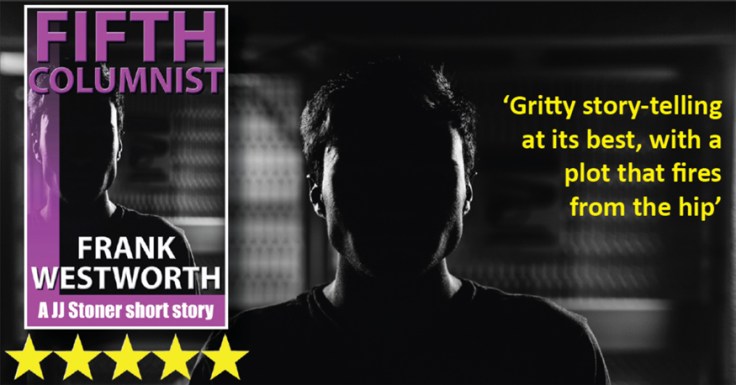
fifthcolFIFTH COLUMNIST comes out on 14 September 2016. This quick thriller features covert operative JJ Stoner, who uses sharp blades and blunt instruments to discreetly solve problems for the British government. A bent copper is compromising national security and needs to be swiftly neutralised, but none of the evidence will stand up in court. That’s exactly why men like Stoner operate in the shadows, ready to terminate the target once an identity is confirmed…

FIFTH COLUMNIST offers an hour’s intrigue and entertainment. It features characters from the JJ Stoner / Killing Sisters series. You don’t need to have read any of the other stories in the series: you can start right here if you like. As well as a complete, stand-alone short story, Fifth Columnist includes an excerpt from The Redemption Of Charm (to be published in March 2017).

Please note that FIFTH COLUMNIST is intended for an adult audience and contains explicit scenes of a sexual and/or violent nature.

GRAB FRANK WESTWORTH’S NEW THRILLER for just 99p/99c

Amazon UK: www.amazon.co.uk/dp/B01L5TEUEG/

Amazon US: www.amazon.com/dp/B01L5TEUEG/

Shelve it on Goodreads: www.goodreads.com/book/show/31699504-fifth-columnist

READER FEEDBACK:

‘A fast-paced, high-powered thriller… Terse and stiletto streamlined and sharp as the blade of a knife.’

‘Imagine an intimate encounter between Jack Reacher and the girl with the dragon tattoo: that’s JJ Stoner and the Killing Sisters.’

‘Gritty story-telling at its best, with graphic (but well-written) sex and a plot that fires from the hip.’

‘I implore lovers of crime/thrillers to get their hands on the JJ Stoner series. Both the short and full length books are just fantastic.’

SONY DSC

ABOUT THE AUTHOR:

Frank Westworth shares several characteristics with his literary anti-hero, JJ Stoner: they both play mean blues guitar and ride Harley-Davidson motorcycles. Unlike Stoner, Frank hasn’t deliberately killed anyone. Frank lives in Cornwall in the UK, with his guitars, motorcycles, partner and cat.

AUTHOR LINKS:

Facebook: www.facebook.com/killingsisters

Website: www.murdermayhemandmore.net

Blog: https://murdermayhemandmore.wordpress.com/category/frankswrite/

Amazon: www.amazon.co.uk/Frank-Westworth/e/B001K89ITA/

Goodreads: www.goodreads.com/author/show/576653.Frank_Westworth

TIMOTHY WINTERS

merge2

This wonderful poem was written by Charles Causley, and it tells the story of a boy from a very poor home. There may not be “boys like him anymore” in the Britain of 2016, but there used to be. I know, because I grew up with several of them.


TIMOTHY WINTERS

THE HOUNDSDITCH MURDERS

hm-header
WHO ARE THESE FIENDS IN HUMAN SHAPE
WHO DO NOT HESITATE TO TURN THEIR WEAPONS
ON INNOCENT LITTLE BOYS AND HARMLESS WOMEN?

Thus thundered the Daily Mirror in the wake of The Tottenham Outrage in January 1909. It was not a rhetorical question then, any more than a modern version might be. Today’s answer would probably be Islamic extremists; in 1909 it would have been anarchists from Eastern Europe. Outside of the two world wars of the twentieth century, London has always been a very open city, liberal in outlook and welcoming to all manner of races and religions, a situation not always to the common good.

The golden twilight of the Edwardian era cast very little of its lustre on the East End of London. Despite glimpses of former opulence, such as the majestic houses built by the Huguenot weavers, themselves seeking refuge from Catholic persecution in France, Whitechapel and Spitalfields boasted some of the meanest streets and hovels in the civilised world. The courtyards and alleys which were the backdrop to the Ripper murders two decades earlier were still unsanitary, crime-ridden hosts to every vice known to man – and a few more besides.

 The East End was a natural magnet for men and women – often, but not always, Jewish – from places such as Latvia and Ukraine, who had fled the savage pogroms inflicted on their homelands by the brutal secret police and political agents of Tsarist Russia. As with the pair of thugs who set out to steal the payroll from Schnurmann’s Rubber factory in Tottenham, the anarchists who met and plotted what came to be known as The Houndsditch Murders were adept at using the latest automatic firearms from mainland Europe. (Below) A Mauser pistol similar to the one used in The Houndsditch killings.

mauser_c96_002

By contrast, the British police were part of another age altogether in terms of meeting fire with fire. The terrorist atrocities of my lifetime – The Munich Massacre in 1972, The Omagh Bombing in 1998, the Bataclan Atrocity of 2015 – have one key factor in common with the events of December 1910, and it is the conviction in the hearts of the perpetrators that they were not committing crime, but engaged in politically justifiable action.

For Fritz Svaars, John Rosen, Yourka Dubov, George Gardstein, Jacob Peters, William Sokoloff, Nina Vassilleva or any of the other seventeen revolutionaries who were involved in this case, there were no discreet bank transfers from Saudi Arabia and no fund raising black-tie dinners within New York’s Irish-American community. They needed money to further their cause, and it was never going to come by honest means. So, they planned a raid on a jewellers’ shop in the ancient London thoroughfare of Houndsditch. The proceeds, they hoped, would help keep them in bullets and slogans for months to come.

Henry Samuel Harris was the owner of the jewellers’ shop at 119 Houndsditch. The anarchists believed that he kept upwards of £20,000 worth of jewels in his safe. At face value, these items would be worth well in excess of £2,000,000 in today’s money. They hatched what they thought was a fool-proof plan. Renting an adjacent property, they intended to break through into Harris’s shop at the dead of night, and escape with the contents of the safe. Just like that, as the late lamented Tommy Cooper would say.

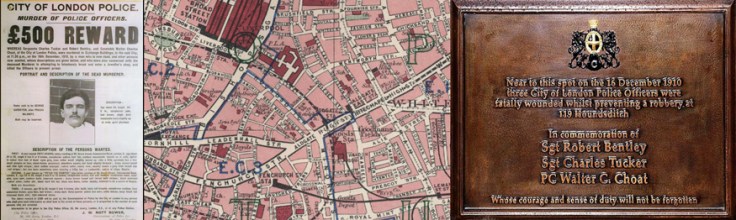
Friday evening, 16th December, 2010. It was bitterly cold, and the streets were deserted, partly because of the weather, and also because it was the eve of the Jewish Sabbath. Shopkeeper Max Weil, whose premises was next to the jewellers, could hear what sounded like workmen drilling and sawing. Weil went into Bishopsgate and found Constable Walter Piper. They returned to the shop, and after knocking on the doors of adjacent properties, Piper came face to face with George Gardstein. Gardstein’s reply to Piper’s enquiry was unconvincing. After the door was closed in his face, Piper went to get help, in the shape of PCs Walter Choate and Ernest Woodham. More police were summoned, but crucially it seems that Piper had omitted to tell his colleagues that he had made contact with the burglars, and that they would already be on full alert.

the-illustrated-police-news-saturday-24-december-1910What followed was chaotic. The police, unwittingly, were walking into a situation where they would be faced with desperate men armed with sophisticated semi-automatic weapons. In the semi-darkness of the shop, there was a murderous burst of gunfire which woke people living in adjacent properties, and brought them from their beds. Three policemen were shot and killed – Sergeant Bentley, Sergeant Tucker and Constable Choat, of the City of London police. Bentley died from wounds to the shoulder and neck; Choat from six bullet wounds; Tucker from gunshots to the heart and stomach. Almost incidentally, George Gardstein was also shot – probably by one of his co-conspirators – and dragged from the scene. He died later at 59 Grove Street (now Goldring Street), off Commercial Road, a house leased to Peter Piatkov, later known as Peter The Painter.

in-memoriamWhile London came to a standstill for the memorial service for the three dead policeman at St Paul’s Cathedral of 23rd December, the colleagues of the three men had not been idle. Tracing the culprits was made no easier by the fact that many of them had a different alias for every day of the week and, in the eyes of the expatriate Russian and Latvian community in the East End, the British Police were no different from the dreaded Okhrana secret police operating in their homelands. Eventually four members of the gang were brought to court in May 1911. Peters, Duboff, Rosen and Vassileva were charged with a variety of offences including murder and conspiracy to commit burglary.
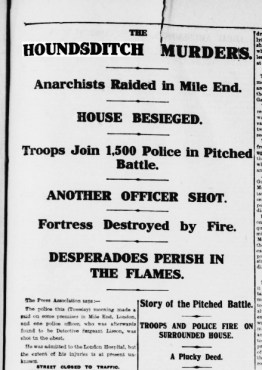

headlineOn 3rd January 1911
, however, an event had occurred which gripped the imagination of the public at the time, and still casts a lurid shadow over a century later. Two of the gang, Svaars and Sokoloff, were believed to be holed up in a dwelling on Sidney Street in Whitechapel. The attempt to capture them featured a detachment of the Scots Guards, the fire brigade – and the Home Secretary, a certain Winston Churchill. Svaars and Sokoloff perished in the ensuing gun battle and fire, but a full account of the happenings of that day – both tragic and farcical – is for another time.

And what of the four defendants in court? Quite improbably, the case fell to pieces for a variety of reasons, including a lack of clarity over identity and conflicting evidence. Let The Daily Mail have the last word.

Not a single one of the assassins has been punished by the law.
It is no pleasant or satisfactory reflection that several of the principals in the crime
and many of their associates have escaped and are still at large.

I DO LIKE TO BE BESIDE THE SEASIDE …Murder!

WBS By Peter Bartram

It’s August Bank Holiday in England and Wales – and we do like to be beside the seaside. So as we huddle under the pier out of the rain – an English bank holiday tradition – let’s take a look at a subject which is never far away at the seaside. I refer, of course, to murder. Fictional murder, I hasten to add.

When it comes to seaside murder mysteries, Graham Greene set the benchmark with Brighton Rock. The story of Pinkie Brown’s killing of Fred Hale and his desperate bid to avoid the consequences is a gritty one – made bleaker for being set against the backdrop of holidaymakers having fun by the sea.

But seaside murder mysteries don’t need to be bleak. So when I was developing the Crampton of the Chronicle series of murder mysteries, I decided I’d go with the flow of the fun – rather than try to use it as a counterpoint for dark deeds. I also wanted to build different seaside elements into the plot.

So in the first book in the series – Headline Murder – a mini-golf course and a peppermint rock shop take centre stage. In the second book – Stop Press Murder – the pier’s amusement arcade and particularly the What the Butler Saw machines play a key role in the plot.

Back in 1963, when the book is set, I remember that the machines on Brighton’s Palace Pier were on their last legs. They’d typically be showing short films of Edwardian beauties in a state of what used to be known in those far-off days as décolletage. By today’s standards they’d be regarded as an innocent entertainment. But it’s an irony that when decimal currency was introduced in Britain in 1971, most of the machines’ owners decided the cost of adapting them to handle the new coins was too great. Instead, many were sold to Denmark where they were re-equipped to show hard-core porn.

When I came to research the book, I found it very difficult to track down any surviving What the Butler Saw machines in this country. I finally discovered one in a museum in Herne Bay, Kent. In the US, where the machines are known buy their inventor’s name of mutoscope, there is a collector who specialises in renovating them and the films they played.

The term What the Butler Saw entered the language in the UK following a sensational divorce case in 1886. Lord Colin Campbell and his wife, the gorgeous Gertrude, were fighting like two pit-bulls over the terms of their divorce. To support his case, Campbell called his butler to give evidence.

The butler claimed to have watched through the keyhole of Campbell’s home at 79 Cadogan Place, London while Gertrude performed with her lover. But the court case turned on how much the butler could see through the keyhole.

I don’t remember whether What the Butler Saw machines turned up in Greene’s Brighton Rock. But in the 1947 film version, which stared Richard Attenborough as Pinkie, there is an exciting finale on Palace Pier – the starting point of Stop Press Murder. So even though we do like to be beside the seaside – a murder mystery will never be far away.

WATCH OUT FOR THE REVIEW OF COLIN CRAMPTON’S LATEST ADVENTURE!

THE SHEPHERD’S BUSH MURDERS

Braybrook_Massacre_Memorial“Harry Roberts is our friend, is our friend, is our friend.
Harry Roberts is our friend, he kills coppers.

Let him out to kill some more, kill some more, kill some more,
let him out to kill some more, Harry Roberts”

(sung to the tune of London Bridge Is Falling Down)

 With that gem of traditional English folk music – football supporter style – the career criminal Harry Roberts has achieved a rather brutish and threadbare immortality. Given that many of the morons singing the song from what used to be the terraces have no idea who Harry Roberts is, my good deed for the week is to educate them.

Roberts was born in Wanstead on 21st July 1936. He was quickly into his criminal stride, and as a teenager was sent to Gaynes Hall Borstal for robbery with violence. There is a circular irony attached to this, which will become clear later. After his release, Roberts joined another institution well known for harbouring young men with a tendency towards violence – the British Army, in particular The Rifle Brigade. For some young contemporaries of Roberts, National Service was spent disagreeably, but fairly close to home. Roberts, however, seemed to take to the life and was made an NCO, seeing activity in Malaya and Kenya.

After the army, Roberts teamed up with two fellow villains, Jack Witney and John Duddy, and mapped out a life of violent crime. Roberts was lucky not to be delivered to the hangman in 1959, when an old man he had savagely beaten with an iron bar, died of his injuries, but two days outside an archaic rule that stated that in order for such deaths to qualify as murder, they must occur within a year and a day of the assault. Instead, Roberts was given seven years in jail. It is a tragic irony that if the old fellow had died just three days earlier, the lives of three police officers might have been spared.

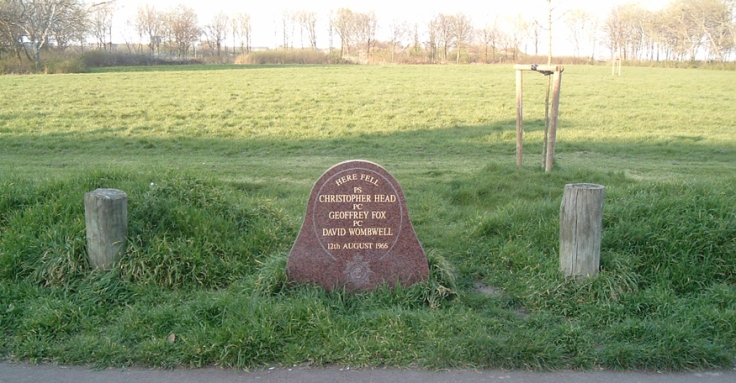
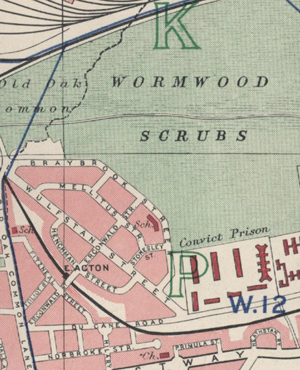
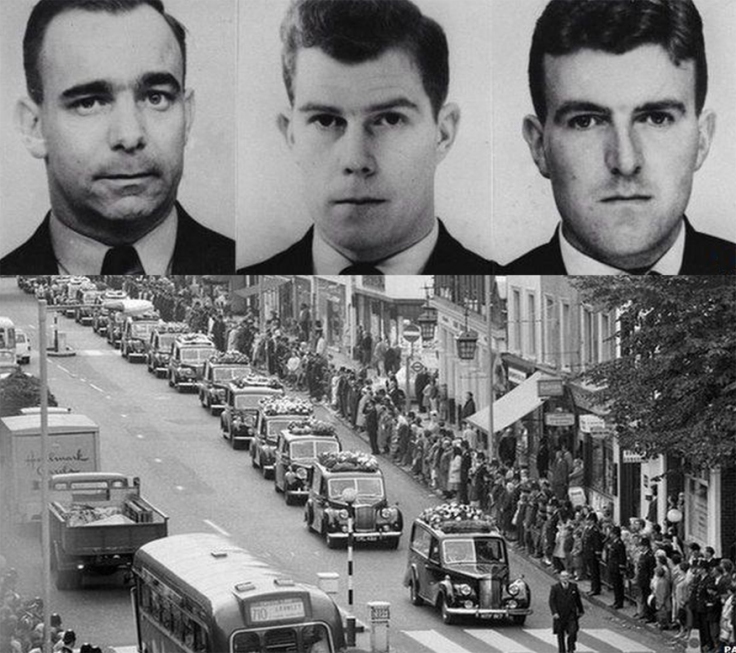
On Friday 12th August 1966, together with Witney and Duddy, Roberts was sitting in a van on Braybrook Street, Acton, within sight of Wormwood Scrubs Prison. Three plain clothes police officers were on patrol in the area. Detective Sergeant Christopher Head, map-acton-6aged 30, and 25-year-old Temporary Detective Constable David Wombwell were both members of the CID based at Shepherd’s Bush police station. Their driver was Police Constable Geoffrey Roger Fox, aged 41. As the unmarked police car pulled up nearby, DS Head and DC Wombwell got out and walked over to check the van. They noticed that it had no tax disc. While the officers were checking Jack Whitney’s documents, Roberts panicked, and shot DC Wombell with a Luger pistol. When DS Head ran back towards the police car, Roberts shot him, too. Duddy sprang from the back of the van, brandishing an old Webley revolver, and joined Roberts by the police car where, together, they shot dead PC Fox. The two killers ran back and got into the van, which Whitney drove away at high speed. (Below) The murdered officers PC Fox, DC Wombwell and DS Head, and their funeral cortege.
Fox Wombwell Head2

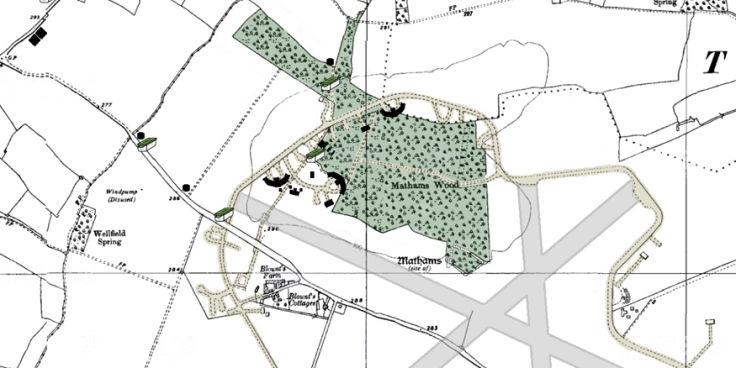
A massive police operation followed. Witney and Duddy were soon found and arrested, but Roberts went on the run. He avoided capture for nearly three months, and ended up living rough in the countryside. He was eventually found and arrested on 15th November in farm buildings near Bishops Stortford. He had been sleeping in nearby Matham’s Wood.

matham's wood

Witney and Duddy had been in custody since August, and the three men were tried together after Roberts had been captured. On 12th December 1966, all three men were given life imprisonment for murder and firearms offences. Mr Justice Hildreth Glyn-Jones recommended that the men serve at least 30 years before being considered for parole.

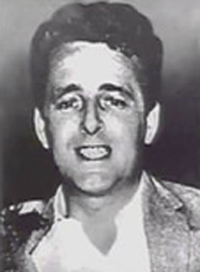
 DuddyWhat became of the Shepherd’s Bush Killers? It should be noted that the murders took place in Acton, but possibly because the dead officers were based at Shepherd’s Bush, that name has stuck. John Duddy (left) died in Parkhurst prison on the Isle of Wight in 1981, at the age of 53, while Witney, possibly because he never fired a shot back in 1966, was released in 1991. He had eight years left to enjoy his freedom before death was to seek him out.
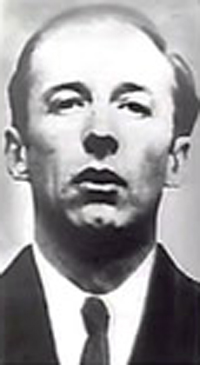
Witney was living on licence on Douglas Road, Horfield, Bristol, and sharing the flat with a man called Nigel Evans, who had a history of petty crime and a serious heroin habit. At first, Evans and Whitney got on well, but Evans’s drug use led to him running up £750 Whitneyof rent arrears. The two rowed over the money and daily household chores like washing up, Bristol Crown Court heard during Evans’ trial. Then, on August 15, 1999, Evans attacked Witney, (right) beating him around the head with a hammer. He grabbed him by the throat and Witney, who by then was quite frail, was throttled to death. Evans, aged 38, was found unanimously guilty, and given a life sentence.
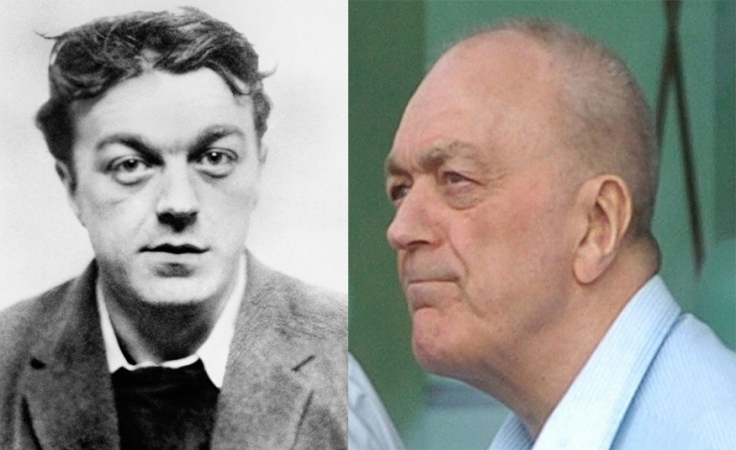
Harry Roberts,  until recently, shared the dubious honour with Ian Brady of being the two longest serving prisoners in Britain. In 2014, Roberts was still in jail, at Littlehey Prison in Cambridgeshire. After much public debate and controversy about Roberts’s continuing anti-social behaviour, he was finally released in November of that year. The irony I mentioned earlier? Littlehey was built on the site of Gaynes Hall Borstal, where Roberts (below) was first kept in custody, so the police killer’s long life of violent crime had come full circle.

Harry


THE BLEAK HOUSE AFFAIR … Martyr or murderer?

Bleak HouseTHE 1999 SHOOTING OF A 16 YEAR-OLD BOY during an attempted burglary at a remote Norfolk farmhouse landed the unfortunate teenager in an early grave, and the farmer who fired the fatal shot  was given a life sentence for murder.

The case divided the nation’s opinion, and still causes controversy to this day. To find out more, listen to the podcast.

THE BLEAK HOUSE AFFAIR

AUSTIN BIDWELL – The fraudster who fooled the Bank of England: part two


AUTHOR NICHOLAS BOOTH continues his amazing tale of a gang of Victorian fraudsters who made the Bank of England look very, very foolish.
Part one of the saga is HERE

ABStill, even under lock and key in Spanish-ruled Havana, Austin Bidwell (right) thought he would get away with it. His absence from London at the most crucial juncture meant, in his estimation, that any evidence against him was hearsay. And, until my research, most of the accounts about the “great forgery” can be classed as the same. All the thieves of Threadneedle Street were inveterate liars and fantasists who shrouded their endeavours in mystery, but even Pinkerton was prone to self-aggrandisement.

For example, in Austin’s later version of events, Willie Pinkerton had suddenly appeared in Cuba, apologised for spoiling a dinner party and announced he had a warrant for the fugitive’s arrest. When offered a glass of wine by the urbane forger, the detective had supposedly agreed, adding: “I never drink anything but Clicquot” and then Austin had pulled a gun, shot a policeman and tried to escape. In Pinkerton’s later recollection, the detective claimed he had “passed the very ship that had Bidwell on board while rounding him into port” and arrested him there and then. But as his own files show, the detective didn’t actually arrive for another two weeks, by which time Austin Bidwell was in custody. Nor was anyone shot. In fact, Pinkerton really got his man by sowing doubts in the mind of his wife.

Jeannie Bidwell had never known what her husband had really been up to. The first she even learned of the great fraud was when American newspapers reported it. (It was to be headline news for weeks on both sides of the Atlantic.) “Who had the audacity to rob the Bank of England!” she exclaimed. “He ought to have a whipping!” Austin wisely said nothing. But when gossipy American expats asked who was behind it all, he smilingly conjectured that it was “some clever young scamp, with plenty of money of his own, who did it for the excitement of the thing and from a wish to take a rise out of John Bull”. Which, from such an incorrigible liar, wasn’t too far from the truth for once.

However, by the time Pinkerton met Jeannie in April 1873, her world had fallen apart – as we can see from hitherto unknown letters to her mother. “One evening we were romping, Austin and I, and a knock came very loudly,” she wrote. After opening the door, “in walked the [local] police”. By the time Pinkerton arrived, and it was left to the detective to explain Austin’s actions – and indeed to embellish them, with tales of bigamy and what Jeannie called “all those other women”.

When Jeannie reproached her husband with this in a letter to his cell, he replied: “Those children of mine and the wife that the detective spoke to you of are my brother’s property. You must allow yourself, dear, that if I was a father at twelve years of age, I began very young.”

Still, Pinkerton became a canny go-between, reading and copying their correspondence – which also revealed beyond any doubt that members of the New York Police Department were involved with the gang. Pinkerton himself promptly arrested a suspected New York “swell thief” who had come as an emissary from the underworld to spring their ally.

What then played out was a game of cat and mouse – and not just in Cuba. George Bidwell George Bidwell0(left)– a baleful influence on his brother – had what he later termed “a series of the most extraordinary adventures” across Ireland and Scotland (“a hell’s chase, and no mistake”) before lapping up the attention at his subsequent trial. Another of the gang, George Macdonnell (“a debonair scoundrel”) made it across the Atlantic where he handed his spoils to corrupt NYPD detectives. “I’m clean,” he taunted Pinkerton’s operatives. “You can’t prove anything on me.”

But Austin was dealing with more than just Pinkerton. As his nemesis – to quote the Bank’s solicitors, Freshfields – an “adversary whom the forgers had least of all suspected had sprung up: that is to say, [his] mother-in-law”.

Though she had reluctantly attended the Bidwells’ wedding, Mrs Devereux actually fainted during the ceremony and was certain that her son-in-law was up to no good. So when the police alerted the London press that Mr Warren/Horton had been “accompanied by a young woman 18 to 20 years, looks younger with golden hair”, Mrs Devereux knew perfectly well who that was and went to the nearest solicitors. Before long, a letter from Jeannie to her mother with a St Thomas stamp arrived, the search zeroed in on the Caribbean, and Pinkerton learned of a glamorous young couple who had recently arrived in Havana. An “all points” bulletin, issued on the evidence of Jeannie’s mother, led to Austin being put under guard. By the time he arrived in Cuba, Pinkerton was certain the authorities had been bribed to look the other way. Austin Bidwell had been allowed to spend the first night of his detention in his luxurious hotel, the Telegrafo. And when the police moved him to barracks, they failed to search him, provided him with gourmet meals and let him receive visitors. Pinkerton knew well what his quarry was capable of. Indeed, over Easter, Austin escaped, and he was only apprehended after crossing swords with a Cuban captain, some 50 miles from Havana.

In Austin Bidwell’s version of the escape, he had made a dramatic leap from a balcony into the crowded street below. As Pinkerton determined, the fall would have killed him, and he had simply bribed his warders. But then, money – and the want of it – was at the heart of Bidwell’s story. And even in what the Lord Chief Justice later described as “the most remarkable trial that ever occurred in the annals of England”, scant attention was paid to the human cost, certainly by the criminals. Both Bidwell brothers were sentenced to life with penal servitude (though they were released in the 1890s). And George later noted they had left behind “no ruined widows and orphans to linger out the remainder of their blighted lives in poverty”. Which was not quite true.

Bidwell Trial

The Bidwell gang stand trial in London

Jeannie endured a terrifying episode on the Bidwells’ return to London in May. (Austin was consigned to Newgate jail; she went back to her mother.) Having become pregnant in Cuba, one evening in September she went into labour. A little girl briefly came into the world and moments later passed away, while Jeannie herself nearly died. The dead infant was wrapped in a night shirt and dispatched by carriage to an undertaker, chosen at random from a directory. This was technically illegal, as she had not obtained a death certificate, and the police soon traced the unfortunate family.

Two weeks later, Jeannie Bidwell was arrested and taken to Bow Street Magistrates Court. Because she was so young and ill, and had already suffered so much, there was a great deal of sympathy. Jeannie’s mother – “a well dressed woman of respectable appearance” in one report – and a servant were also placed in the dock. All three were bailed but at the start of October, their cases were dismissed.

soanebankofengland

Wiser and cooler heads had prevailed. For once, the Victorian legal system was compassionate and realised that the poor girl had suffered enough. While Austin Bidwell found it amusing that he had embarrassed the Old Lady of Threadneedle Street (above)  by holding “up to the laughter of the whole world its red-tape idiotic management”, poor Jeannie Bidwell was sent to a workhouse in nearby St Giles, becoming the one indisputable victim of the greatest ever forgery in history.

The article first appeared in The Independent in 2015,
and is used with the permission of the author

For a closer look at Nicholas Booth’s comprehensive account of this remarkable case,
FOLLOW THIS LINK


Blog at WordPress.com.

Up ↑