
Search

fullybooked2017

Category

Uncategorized

FEAST FOR THE RAVENS . . . Between the covers

I must declare an interest. There are few books that have given me as.much pleasure as those in the Bradecote and Catchpole series by Sarah Hawkwood. I began the latest, Feast for the Ravens, with a great sense of anticipation. For newcomers, we are in 12th century Worcestershire, at the turbulent time of the civil war between King Stephen and the Empress Matilda. Bradecote is the Undersheriff of the county, the gnarled and cynical Catchpole is his Serjeant, while young Walkelin is the Underserjeant..

Near the manor of Ribbesford, up in the woods searching for hazelnuts, two youngsters find a corpse. It is that of a knight, still clutching his sword. There is a local legend that in the woods lives a shapeshfting spirit who can switch between her human persona and that of a raven. Certainly, the real life corvids have dined royally on the dead man’s eyes. Eventually, Bradecote and his men arrive on the scene, and before too long they identify the body as that of Ivo de Mitton, a local man long since estranged from his family due to his alleged fatal arson attack on the decades earlier. It is important to bear in mind that the Norman invasion is less than a century old; the inhabitants of hamlets like Ribbesford are almost entirely of Saxon stock, while those in power-like Bradecote- are Normans. The main anxiety among the villagers is that the powers that be will invoke murdrum fine.

The murdrum fine was  a financial penalty imposed by Norman rulers in England after the Norman Conquest, specifically targeting Anglo-Saxon communities . If a Norman was murdered and the killer wasn’t quickly identified and brought to justice, the local area (often a hundred, encompassing several villages) would be required to pay a substantial fine to the crown. This fine was intended to deter Anglo-Saxons from killing Normans and to generate revenue for the Norman rulers.

The plot revolves around family rivalry, a murderous assault on a manor and its inhabitants, and a brutal attack on a young woman. The violence occurred decades ago and both its perpetrators and victims are all thought to be dead. But one person survived, horrifically mutilated, and now she lives a secret existence in a limestone cave, her only friends being the ravens who inhabit the forests and rugged cliffs that tower above the Severn. The architect of this ancient misery has passed from pubic memory. Perhaps he was killed in knightly battle, or perished in the unforgiving desert on a crusade? Bradecote and his Serjeants slowly pull together the threads of the mystery and, in a terrifying climax, the ravens intervene to ensure that justice, of a kind, is served.

Common sense says that there cannot be much left of the 12th century landscape around Pibbesford. The hills haven’t changed shape, and the majestic Severn still flows where it always did, but nearly nine centuries of enclosures, housing development and transport links have changed the topography for ever. Sarah Hawkswood, however, seems to have walked every track, forded every stream, and supped her pottage in every long since lost manorial hall. It is this astonishing evocation of landscape which makes her books so distinctive. Feast for the Ravens will be published by Allison & Busby on 18th September. If you click on the author image below, it will take you to my reviews of earlier Bradecote and Catchpoll novels.


KISS HER GOODBYE . . . Between the covers

I reviewed a previous Frankie Elkins book, Before She Disappeared, (click the link to read) in 2021, and I made the point there that Frankie is one of the more implausible heroines in modern CriFi. Rather like Jack Reacher she travels with pretty much just the clothes she is standing up in, and a bag containing a few toiletries and ID documents. Her ‘job’? I use the quote marks advisedly, because she hunts for missing people. She doesn’t charge a fee, but usually finds temporary employment in the town of city where her investigations begin. She has taken all kinds of jobs from barkeep to cleaner. but here she appears to land on her feet. Or does she?.

Here, she gets a job as pet-sitter for Bart, a ridiculously rich gamer in Tucson Arizona. The house is huge and futuristic, and the pets? Here comes Frankie first little problem. The main pet is a huge Green Iguana called Petunia, and Frankie has a roomful of exotic snakes to feed with frozen rats and live crickets. And Frankie just hates snakes.

It’s safe to say that Frankie has a disturbing history. Here, she gazes into the eyes of a little Afghan girl.

My name is Frankie,” I murmur. She stares at me. Stares, stares, stares, until I can feel each of my sins. All of my secrets slowly being stripped bare. I let her take my full measure. The losses I have felt, the pain I’ve inflicted, the sad little girl who still lives deep inside me, longing for her father to sober up, wishing for her mother to come home. The damaged woman I’ve become, unable to stay too long or connect too deeply because the sheer anxiety of such intimacy makes me want to drink.’

Her latest crusade? To find Sabera Ahmadi, an Afghan woman who has disappeared from her temporary refugee accommodation in Tucson, leaving her husband and young daughter behind. In her own words, Sabera describes the horrific events of the previous few years. It is a particularly grisly episode in modern history, but just the latest chapter in a sorry tale of foreign powers believing they could impose some kind of external rule on Afghanistan. From the disastrous military adventures of the British in the 19th century, to the futile 1980s attempts by Russia to prevent the rise of Islamic extremism, and concluding with the equally ineffective attempts by the Americans and British to democratise the country, the inexorable resilience of the vile Taliban covers Sabera’s life like a funeral shroud.

Sabera’s husband Isaad also goes missing, but when he is found dead, with evidence that he has been tortured, Frankie feels she is no closer to the core or the case, despite help from a diverse collection of allies, including Daryl (Bart’s chauffeur and minder), Roberta (Daryl’s ballroom dance partner) and Marc, a police detective, and brother to Roberta . Oh, yes, we mustn’t forget Genni, Bart’s six-feet-four transvestite housekeeper.

However, Sabera is far from being a hapless victim of international war games, or an archetypal submissive Muslim woman. It transpires that before the Taliban retook Kabul, Sabera – like her mother before her – was already involved with international intelligence agencies, and she was valued for her mastery of several languages, and a skill with numbers and code that made her a valuable asset.

Frankie (as ever) has bitten off more than she can chew, and finds that the truth behind Sabera’s disappearance is more disturbing – and potentially deadly for all concerned – that she could have ever imagined. Lisa Gardner gives us a book that is impeccably researched and has full-on relentless pace. Kiss Her Goodbye is published by Century and will be available on 14th August.

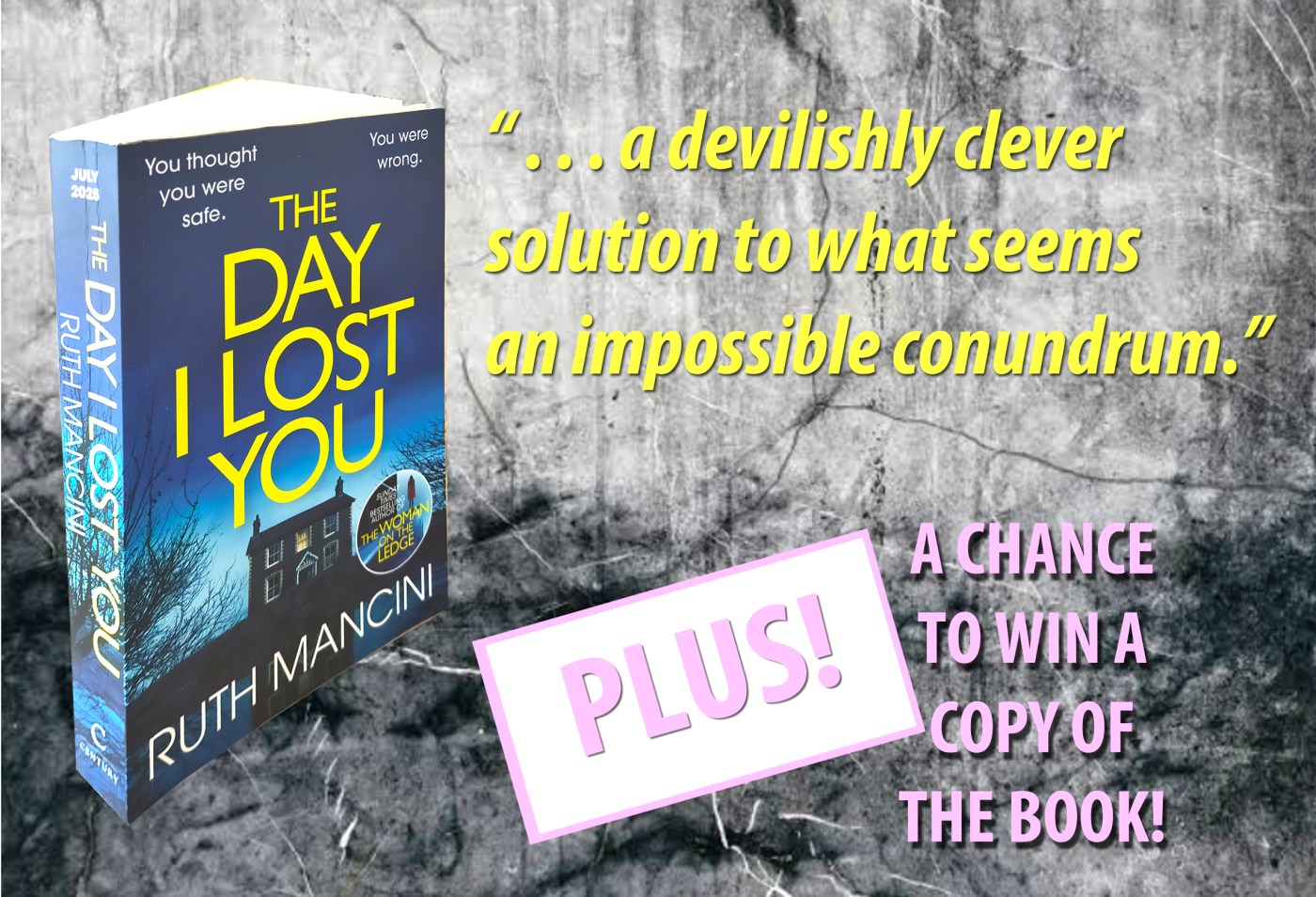
THE DAY I LOST YOU . . . Between the covers

This is one of those books, and I use the italics advisedly. The basic story  that we are led to believe is that a married couple called Hope and Drew have entered into surrogacy arrangement with a woman called Lauren. Presumably, this involved Lauren’s ova and Drew’s sperm, and thanks to the wonders of modern medicine, the two combined in Hope’s womb, and she gave birth to a boy called Sam. Again I use ‘presumably’, because the bulk of the book comprises first person narratives from the three main characters, and we have no way of knowing if they are reliable accounts or not.

The book begins in the present day, and Lauren, having taken Sam from Hope and Drew, is living in a remote fishing village in Spain. Meanwhile, an Interpol warrant has been served on her and she is visited by the Spanish police. Sam is packed off with Lauren’s new boyfriend to stay with his relatives, and Lauren returns to Britain to face the music. So far, so straightforward.

Then the narrative goes into recall/split time frame mode, full of ‘two years earlier’ and ‘six weeks later’ chapter headings. Personally, from an enjoyment point of view, I hate this device, but so many authors seem to use it, so it was a case of ‘grimace and bear it’. It’s almost certainly just a personal thing. Different first person narratives are one thing, and I can think of no better example in literature than William Faulkner’s As I Lay Dying, but there, the time frame didn’t confuse things. It was simply different people observing events in their own way, and the narrators were witnessing the same events  at the same time.

What follows next is a master class in deception from Ruth Mancini. She lures us into one false assumption after another, until we have Lauren, Hope and Drew in a virtual suspects’ line-up, leaving us to look into their eyes trying to decide who is lying and who is telling us the truth. The answer, when it finally comes, is a devilishly clever solution to what seems an impossible conundrum. The Day I Lost You is a very apt title, as it could be argued that it applies equally to the three main adult characters. Each has lost someone and so, in a way, this is three different tragedies woven into one powerful story. I suppose that there is a happy ending, of sorts, but Ruth Mancini shines a bright and revealing light into the lives of women who long to have children, and how they suffer when fate – and biology- seem to conspire against them. This book will be published by Century on 31st July.

I have a mint copy up for grabs in a prize draw, and entry is simple. Follow me on X at @MaliceAfore (I will reciprocate), then DM me the code printed below. You will then be in the digital hat, and I will draw a winner at 10.00pm on Monday 4th August. UK addresses only.

46329

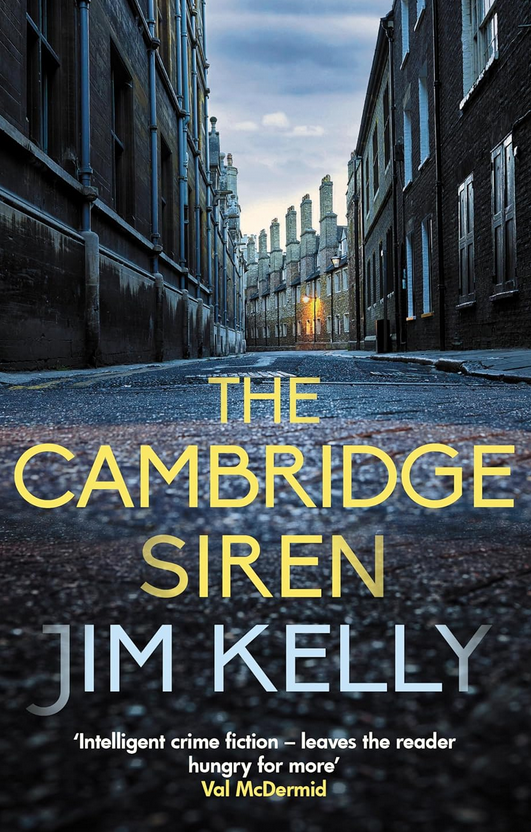
THE CAMBRIDGE SIREN . . . Between the covers

This is the fourth in Jim Kelly’s excellent series set in Cambridge during WW2, featuring senior police detective Eden Brooke. If you click the images below, you will be able to read my reviews of the previous three novels in the sequence.

Brooke served in The Great War, but had the misfortune to fall prisoner to the Turks. The Ottomans, rather like their Japanese brethren twenty years later, were brutal – not to say sadistic – captors, and Brooke’s eyes were permanently damaged. He and his wife Claire are certainly ‘a family at war’, however. Their daughter Joy’s husband is a submariner, while son Luke is away training in Scotland for some ‘hush hush’ activity.

Brooke has plenty on his hands. A dead man is discovered in a city air raid shelter. Cause of death? Wrists neatly slit. Too neatly, according the medical officer; suicides rarely if ever manage to slit the second wrist properly after self-inflicting the first wound. And why does the unidentified man have Brooke’s telephone number inked on his hand? Hundreds of miles away, on board his submarine, Lieutenant Ben Ridding has to examine a faulty periscope, which recently caused two torpedoes to miss their target by a considerable margin. He finds that one of the lenses has been purposely set askew. It was manufactured at the Vulcan works in Cambridge. A coded message to the Admiralty is passed on to Brooke, who begins an investigation.

Kelly has a magnificent eye (and ear) for period detail. Here, Brooke takes a witness to the morgue to investigate a corpse.

“Brooke led Mrs. Brodie to the table: twenty strides, the metal Blakey’s* on his shoes striking the quarry tiles. It was a ceremony with all the subtle horror and indecent haste of an execution.”

*Blakey’s were little metal plates nailed onto the leather soles and  of shoes to preserve them

Another two dead men are discovered, each in the vicinity of a shelter. The dead men found in the shelters have two things in common. Each has minor disability, thus eliminating them from service in the forces, and each had stayed at The Laurels, a rather strange guest house outside the city. Despite posting a police ‘spy’ inside the Vulcan works, the latest batch of periscopes reaches its destination in Barrow-in-Furness. From a shipment of twelve, two have been sabotaged.

Jim Kelly’s other two crime fiction series – The Philip Dryden Ely novels and the Peter Shaw books, set a little to the north in Kings Lynn, are dominated by the pull of the the landscape. Eden Brooke’s world is more intimate, centred on the college gateways and narrow city byways of Cambridge, but he is ever aware that just beyond the city lights (now dimmed by wartime regulations) is the primeval vastness of The Fens, now largely drained, but still desolate and sparsely populated.

“The Fens, as Brooke had been taught by his father in a lecture illustrated by a map which still hung in his old bedroom at Newnham Croft, lay in three levels: North, Middle and South. The north stretched to Lincoln across the silty fields south-west of the Wash.”

Despite the apparent failure to  solve the mystery of the periscopes, Brooke turns his attention to The Mystery of The Laurels. If that sounds like a story from a Sherlock Homes collection, it is appropriate because, using an attention to detail worthy of the great man, Brooke discovers a complex and lucrative conspiracy whereby wealthy young men can pay to avoid being called up into the armed forces. In WW1, it took Britain over two years to resort to conscription, but it was re-introduced  in 1939, almost immediately after war was declared. In solving the murders, however, Brooke has inadvertently trodden on some very important toes. Involved, although rather at a tangent to the call-up conspiracy, is a notable British scientist connected to a major defence project. As in aside, it is worth noting that while Hitler was obsessed with what have been called ‘wonder weapons’ (at the expense of solid and reliable military kit) Churchill was fascinated by rather weird developments. One such features in this novel. If you Google Project Habbakuk you will discover more.

Once again using a potent blend of observation and intuition, Brooke solves the periscope problem, and the book ends with a joyful family reunion, but one tinged with uncertainty. Brooke is an endearing character, a deeply thoughtful and ascetic man in some ways, but with unlimited courage and a steely sense of duty. The Cambridge Siren is published by Allison & Busby, and available now.

CUT AND RUN . . . Between the covers

CAR HEADER

We are in the Essex marshes in the chilly spring of 1916. In the early autumn of the previous year, a British army assault on German lines near the coal mining village of Loos had gone disastrously wrong. Over 20,000 men dead and twice as many again wounded. One such is Frank Champion. Badly wounded in the leg, and with a savagely scarred face, he is no longer considered an asset to the army, and now he ekes out a living on the banks of the River Colne where, based on his boat Nancy, he scavenges duck, oysters and  fish to sell to local pubs.

Before the war, Champion had been in the colonial service in Africa and he is astonished when a former colleague, Irishman Nathanial Kennedy, now with three Captain’s pips on his shoulders, seeks him out in Wivenhoe. It seems that back in Nairobi Champion had successfully investigated a serious criminal matter, and earned the reputation of being a shrewd investigator.

Kennedy is stationed in Béthune, a historic town that is a key railway junction and, just as crucially, sufficiently far away from German artillery positions to have escaped, thus far, with minimal damage. A young prostitute called Marie-Louise Toulon has been found in a town park, her throat cut. There are two brothels in the town, nicknamed The Blue Light and The Red Light. The former is the sole preserve of officers, while the latter is frequented by privates and NCOs (Non Commissioned Officers such as corporals and sergeants).

Kennedy’s problem is that that Marie-Louise was one of the star turns at The Blue Light, and he urgently needs Champion to do two things; first, identify the killer but second – and even more importantly – act with total discretion. Should a senior officer be unmasked as the culprit, the effect on army morale could be disastrous. The High Command is in a very fragile state, as 1915 had proved to be an annus horribilis for British military planning and leadership. In short order, a promising attack at Neuve Chapelle in March had ended in failure. The second Battle of Ypres in April saw British, Commonwealth and French troops routed by the first use of poison gas, the Battle of Aubers Ridge in May had been a costly defeat,  Loos had been an unmitigated disaster, while the final indignity in December was that British, French and Commonwealth forces had been  driven off the Gallipoli peninsula by its Turkish defenders. The last thing Field Marshall Douglas Haig (appointed Commander in Chief in December 1915} needs is a scandal involving one his senior officers.

I have a passionate interest in all things to do with The Great War. We WWI buffs are a pedantic and nerdy bunch, full of arcane knowledge about those five dreadful years and the events that preceded them, and the Europe that lay shattered for many years after. Back in the day, I walked miles in the tracks of the soldiers who fought on the Western Front, and also those who fought in the French areas on the Aisne, Champagne region, and the infernal carnage of Verdun. I have to say that as well as writing a gripping crime thriller, Alec Marsh has done his military homework superbly. Does this matter? Yes, I rather think it does. Here’s an example from the silver screen. Much of the setting of Sam Mendes’ film 1917 was reasonably authentic, except the part where the William Schofield character was battling for his life in the raging torrent of a river, running between towering cliffs. The story was set in the Arras area, and anyone who has ever been there knows that the closest you will come to such turbulent rivers are slow and turbid canals, and the very placid River Scarpe. And rugged cliffs are conspicuous by their absence.

Captain Kennedy lives to regret his decision to take Champion’s discretion as a given. In no time at all, another girl from The Blue Light is killed, a girl from the rival establishment goes missing, the wife of a local butcher is also found hacked to death and, in a nearby room, a certain Captain Bradbury is found, having, apparently, blown his brains out with his own Mark VI Webley service revolver. His hastily penned suicide note seems to suggest, to Kennedy at least, that Champion has flushed out the killer.

One of many clever things Alec Marsh does is to make Champion a free agent. He can, therefore, go anywhere and question anyone, including Béthune’s distinctly shifty Mayor, the boss of the Town’s police, and a very senior French General who seems to have a sinister link to the killings. In this last thread, Alec Marsh takes us (courtesy of Champion, his aide Private Greenlaw and a magnificent Crossley staff car) on a long journey to Verdun where, since February, the ‘mincing machine’ has been working overtime with both France and Germany fighting what many believe to be the most brutal encounter of WWI.

Of course, Champion gets his men and, yes, there is more than one villain in this particular piece. Alec Marsh’s novel fascinated me, for reasons I have already stated. But will Cut and Run work for people who don’t know a Lee Enfield from a Gewehr 98? In my honest opinion it will. It ticks all the CriFi boxes, including sense of time and place, a tight plot, credible dialogue and authentic main characters. Cut and Run is published by Sharpe Books and is available now.

Screen Shot 2024-12-01 at 19.58.18

DOWN IN THE DUNGEON!

Wicked Banner - 2

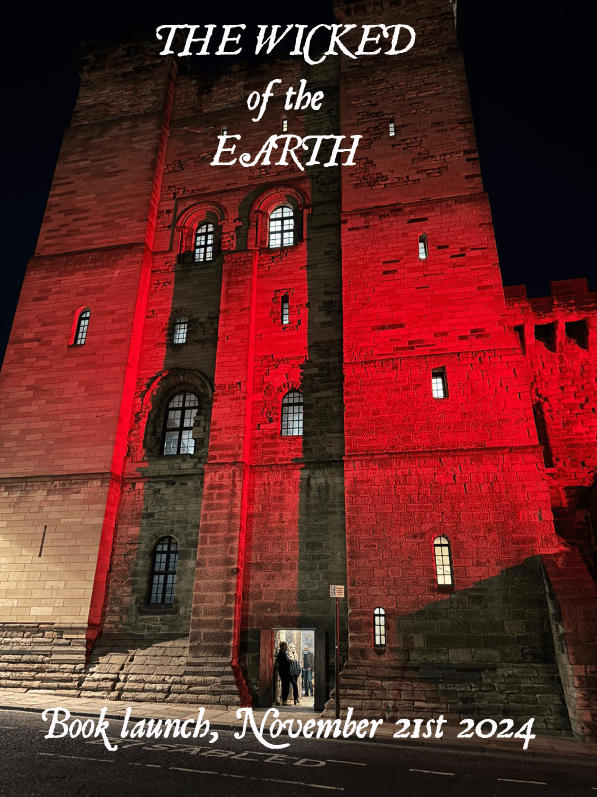
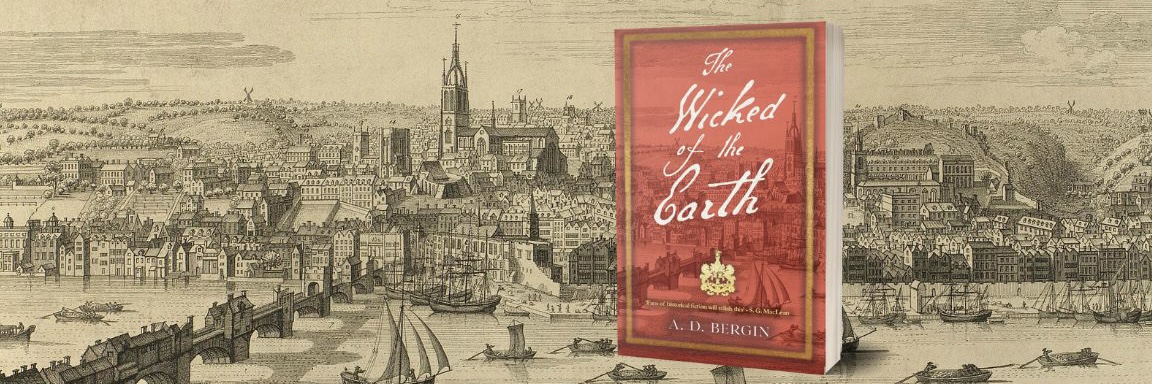
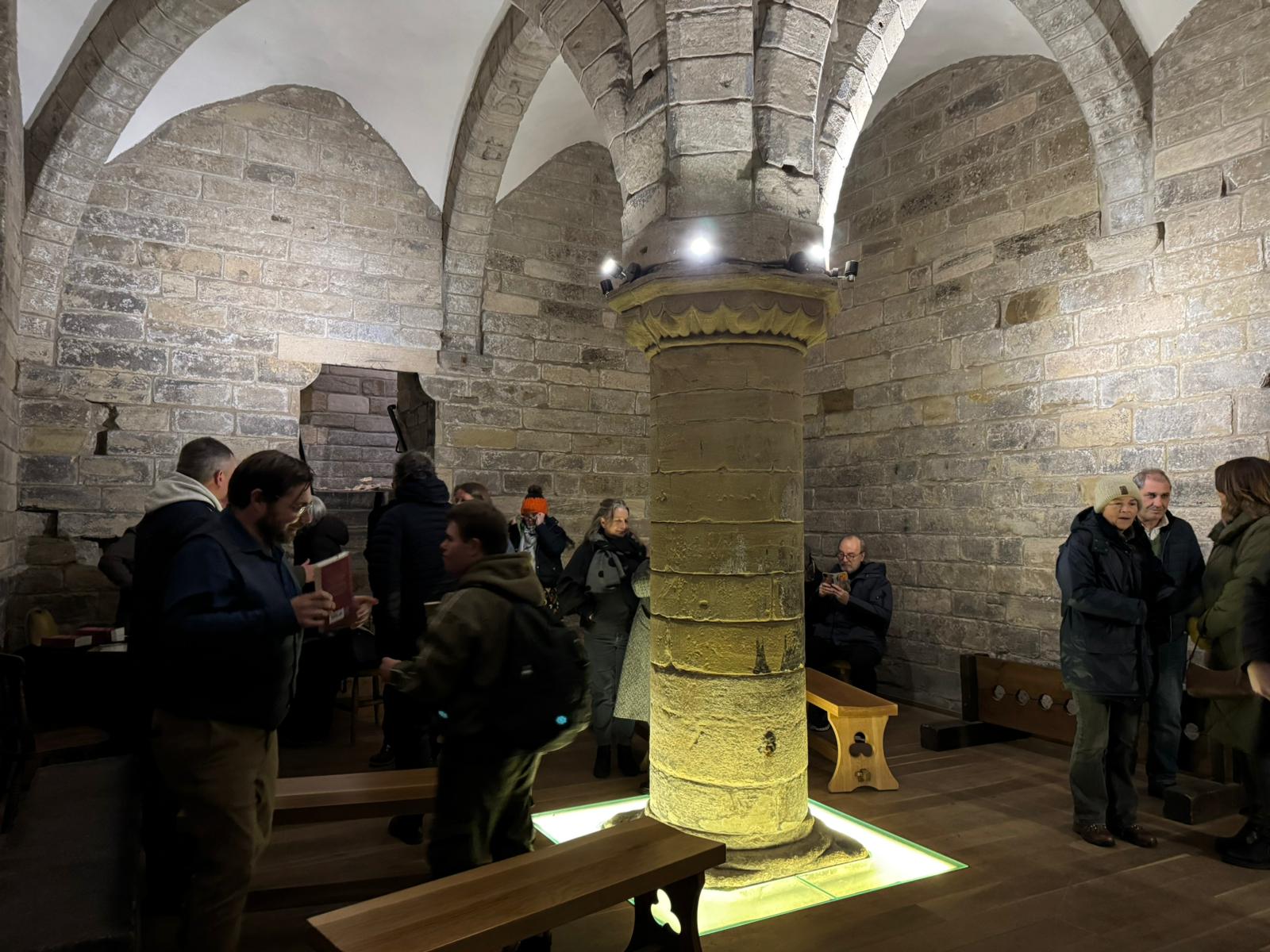
There were exciting times in the dungeon of Newcastle’s castle last night at the launch of AD Bergin’s new novel The Wicked of the Earth. The audience listened to suitably bloodthirsty excerpts read by the audio book narrator, Cliff Chapman.

Dungeon1

Bergin’s novel is set in Newcastle in 1650 and tells of a former Parliament army officer, James Archer and his investigation into the notorious Witchcraft trials, and his search for his sister, who was caught up in the turmoil.

New Dungeon

To read my review of this excellent historical mystery, click the image below.

Screen Shot 2024-11-20 at 16.52.37

THE TORMENTS . . . Between the covers

tt spine081 copy

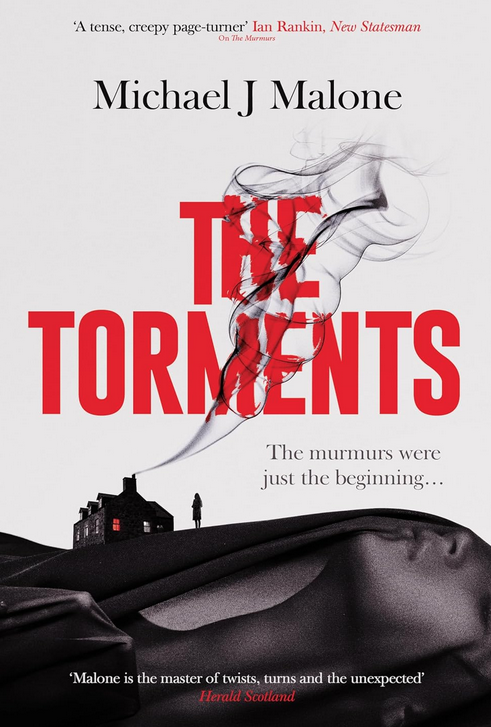
Annie Jackson, to whom we were introduced in The Murmurs (2023), has a frightening gift – she can foretell how people are going to die. She can also visualise the locations of dead bodies. One of the manifestations of her powers is also a curse. When she is inside her tiny cottage beside a Scottish locj, she hears constant murmuring voices. When she steps outside, however, these voices can be screams, or unintelligible chants. Annie has learned that this strange condition has affected women in her family going back generations.

Annie already has a certain amount of public exposure thanks to a recent case, but she is reluctantly accepted in the village near her cottage. She makes ends meet by waitressing in a cafe, and it is here, one afternoon, when the local lifeboat crew are in for their strong tea and bacon rolls that she has one of her moments of premonition. A junior member of the crew, a lad called  Lachlan, drives a car that is something of an ‘old banger’. Annie sees it wrapped round a tree, with the boy dead at the wheel. She says nothing direct by way of a warning, and when her vision turns into horrific reality, she becomes a pariah.

A member of Annie’s wider family turns to her for help. Her son Damien, a former footballer whose career was curtailed by injury, has gone missing, and she asks Annie to try to find him. Reluctantly, Annie agrees, and with the help of her twin brother Lewis, she takes on the case.

There is a parallel plot which begins in the mid 1960s, but we know it will converge with Annie’s present day travails. Two youngsters, Sylvia and Ben, are pupils at a prestigious boarding school, and they fall under the malign influence of Phineas Dance, a sadistic teacher who is also an acoylite of Satanism. Also lurking in the present day background is a sinister spectre known as the Baobhan Sith*.

*The Baobhan Sith is a female fairy in the folklore of the Scottish Highlands, though they also share certain characteristics in common with the succubus. They appear as beautiful women who seduce their victims before attacking them and killing them

As Annie and Lewis chip away at the mystery surrounding Damien’s disappearance their path crosses that of Craig Oldfield, the son of a wealthy and well-connected solicitor. Craig was a one-time friend of Damien, but is his claim that he has no idea of his former friend’s whereabouts to be trusted? We meet a a local police officer, Clare Corrigan who is initially sceptical of Annie’s special powers, and a retired academic called Dr Thomasina Hetherington, who most certainly is not. When Annie goes missing, the story heads for a dramatic conclusion in a cliff-side cave, rumoured to have once been the haunt of the legendary cannibal Sawney Bean. By now, the present day identities of Sylvia and Ben have become clear. The finale put me in mind of the glory days of my youth, reading the the sadly long forgotten novels of Dennis Wheatley  such as The Devil Rides Out (1934) in which the Duke de Richleau and his friends Simon Aron, Richard Eaton and Rex Van Ryn battled Satanic forces.

Novels that mix the paranormal with the more familiar tropes of crime fiction are more common than you might think. In the Aector McAvoy novels by David Mark it is McAvoy’s wife who has the sixth sense, and James Oswald’s DI Tony McLean often has worrying premonitions and glimpses into the ‘other world’. I once asked Phil Rickman if his wonderful diocesan exorcist Rev. Merrily Watkins always believes the people with troubled souls who reach out to her for help. His reply was along the lines of. “Not necessarily, but she believes that they believe.”

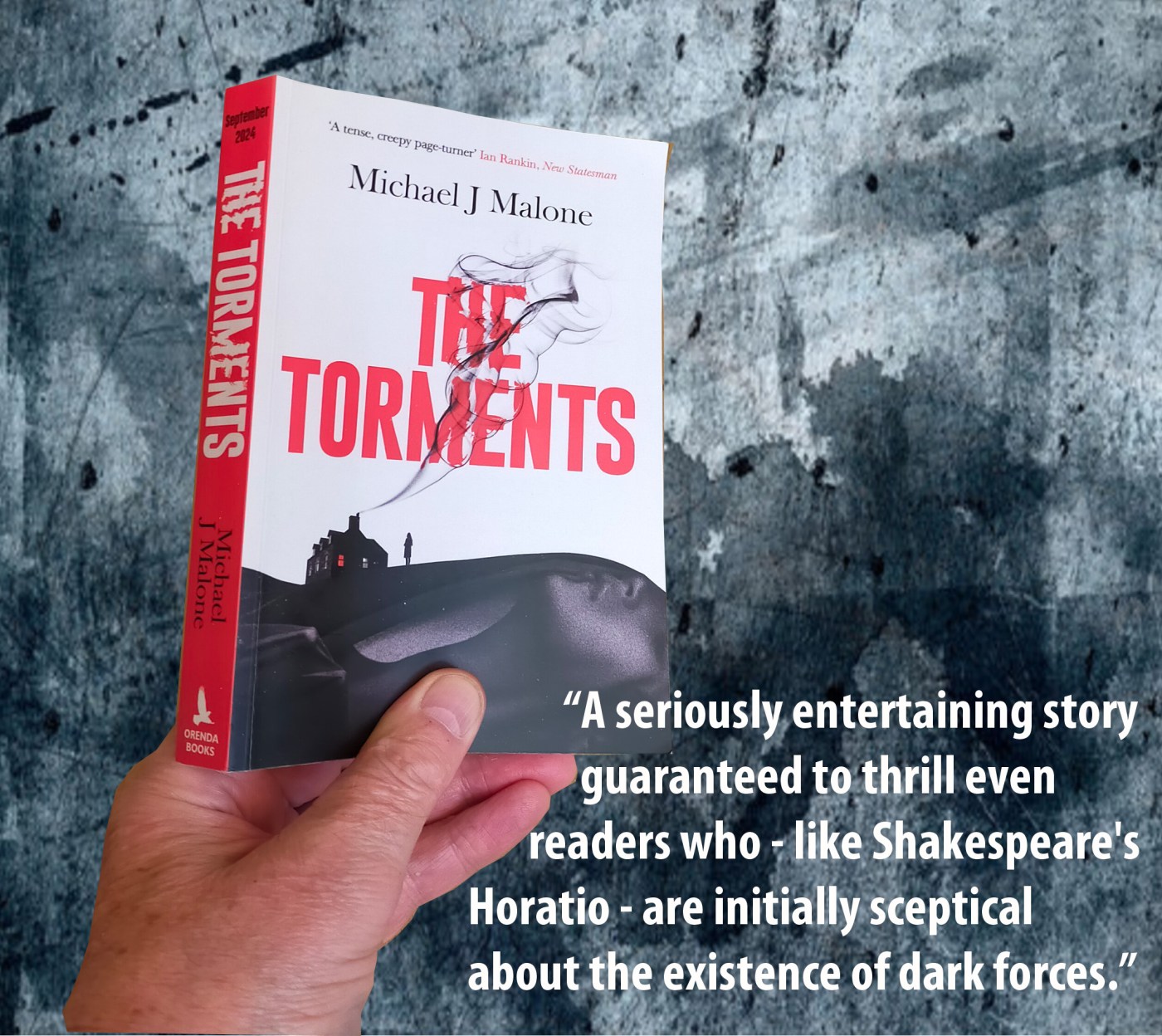
The Torments is a seriously entertaining story guaranteed to thrill even readers who – like Shakespeare’s Horatio – are initially sceptical about the existence of dark forces. It is published by Orenda Books and is available now.

Screen Shot 2024-09-11 at 20.32.54

I DIED AT FALLOW HALL . . . Between the covers

IDAFH spine074

Although set in a beautiful village near Cirencester, with glowing limestone cottages, a jolly white-haired vicar, and the squire’s mansion up on its hill, this is as far away from a ‘Midsomer’ type Cosy Crime as you can get. Instead it is a beautifully written tale, full of poetry, some very dark corners and people who, if not severely damaged, are fighting their own demons. Anna Deerin, a former ballerina who had to quit through ligament damage has moved to the village of Upper Magna. She lives in a grace and favour cottage in the grounds of Fallow Hall. She lives rent free because she has undertaken to work and restore what was once the Hall’s extensive kitchen garden. She keeps chickens and earns a slender living by baking cakes and selling them – and her fruit and vegetables – at the weekly farmers’ market on the village green.

She lives in a kind of self-imposed exile, with no mobile phone and no current close friends. This all changes when, while attacking a long neglected part of the garden with a pick-axe, she finds human remains. Into her life comes Detective Inspector Hitesh Mistry, another London exile. He heads up the search for the identity of the skeleton – subsequently proved to be that of a woman. Like Anna, he is a complex individual. He is deeply immersed, emotionally, in a well of sadness caused by the recent death of his mother. While he respects his elderly father, the way that his mother was treated rankles with him. Although it seems nothing unusual in Indian families, he resents the fact that his mother was just seen as a cook, child-bearer and housemaid, while her obvious intellectual and emotional talents (she was a part-time hospital administrator) seemed to count for nothing in the family home. He has little left of her now, except the fragrance of her skin and cooking – and a treasured red cardigan which he describes, chillingly, as ‘empty’.

Screen Shot 2024-08-20 at 12.36.36

Bonnie Burke-Patel (left) intersperses contemporary events with brief but telling episodes from 1967. We meet a young woman, living locally (almost certainly in Fallow Hall) She has a younger brother, away at university. Her mother is rather inadequate, particularly at household skills, and her father is a domineering and demanding WW2 veteran, hideously disfigured by a facial injury. One morning, she escapes into Cirencester (to buy the ingredients for her own birthday cake) and meets a young Canadian man. There is an instant attraction and, after very little courtship she, belatedly – in the time-honoured phrase – loses her virginity.

This sets up the puzzle to perfection, but the author plays her cards very close to her chest. Mid way through the book there are so many questions. Is the authoritarian father related to Lord Blackwaite, the current Lord of the Manor? Is the body in the garden his daughter? Who tried to batter their way in to Anna’s cottage a couple of nights after she uncovered the remains?

Reviewing crime novels is not particularly difficult when the books are thrillers, police procedurals or basic whodunnits. The reviewer has a few simple tasks: outline the plot, describe the characters and setting, and then describe how well the book works. I am neither a professional writer nor a journalist, and so I tend to read books that I know I will be happy with. Just occasionally, there comes a book which challenges my ability to do it justice. I Died at Fallow Hall is one such.

As I said earlier, despite the familiar rural tropes, this is something rather special. The startling violence near the end, and the emotional intensity with which Anna empathises with – and is determined to identify – the girl whose skull she cradled in her hands on that fateful autumn afternoon, sets this novel aside as something very special. Putting on my reviewer’s hat I can answer the potential readers’ question, “What do I get.” In no particular order you get a murder mystery, a grim account of the cruelties that family members can inflict on each other, a poignant study of loneliness and isolation, a gimlet-eyed look at English class structure and, above all, a testimony to the power of love. From Bedford Square Publishers, this is available now.

Screen Shot 2024-08-20 at 12.34.37

THE MAN THEY COULDN’T HANG . . . The murder of Sybil Hoy (part 2)

Sybil HeaderSO FAR: 10th August, 1954. Just after 11.00 am. In the drive leading up to the former mansion known as Arden Field just outside Grantham, the body of 24 year-old Sybil Hoy was found. She had been brutally murdered. Her body was taken away to the mortuary, and police began searching for the weapon. Just a few hundred yards away, across the Kings School playing fields, was the railway embankment that carried the London to Edinburgh main line. A railway lengthman (an employee responsible for walking a particular stretch of line checking for problems) had just climbed the embankments, and stood back as the London to Edinburgh service known as The Elizabethan Express thundered past.

Elizabethan

What he saw as the train clattered into the distance was utterly shocking. A man sat upright on the track, and just a few yards away, on the sleepers were the man’s severed legs. The man was conscious, and able to talk. An ambulance was summoned, and he was carried down the bank and rushed to hospital. The man was John Docherty, Sybil Hoy’s former fiancée.

Arnoldfiekd Map

Docherty, minus his legs, received further corrective surgery to the amputations delivered by the LNER locomotive, but was charged with murder, by a police office sitting at his bedside. He was conducted into a succession of magistrate hearings and eventually sent to be tried at Lincoln Assizes. It was the briefest of hearings, and he was sentenced to death.

FuneralAfter her body had been probed and prodded by investigators, it was eventually returned to her mother and father. God, or whoever controls the heavens, was not best pleased, because a violent storm rained down on the many mourners at the Victorian Christ Church in Felling

In the long history of newspapers reporting on murders and executions, there can seldom have been a bigger gift to headline writers. The five words ‘Legless Man Sentenced To Hang’ appeared over and over again in newspapers, both regional and national. For the Home Secretary, Gwilym Lloyd-George, himself an MP for Newcastle, the impending execution posed unique practical problems. Docherty literally could not walk to the execution chamber. He would have to be taken there in his wheelchair, and Henry Pierrepoint (or whichever executioner was appointed to the job) would have to oversee the grotesque scene of a man placed on the trapdoor, presumably sitting on his backside, hands pinioned (as was customary) and thus unable to maintain his balance. Almost inevitably, given the bizarre circumstances, the execution was called off. What became of the reprieved killer of Sybil Hoy is unclear. For citizen researchers, access to prison records via genealogy sites ends in 1951, so it is not beyond the bounds of possibility that Docherty, born in 1926, could have been released and reached old age.

Because Docherty pleaded guilty, his state of mind and mental health was never raised in court. These days, we have too many examples of mentally ill people being free in the community to murder and maim. The Nottingham triple killer, Valdo Calocane is just one example. In Docherty’s case, his mindset was so febrile that within the space of sixty minutes or so, he inflicted nineteen ferocious knife wounds on his former fiancée, and then ran a few hundred yards to the main railway line, climbed the embankment and put himself in the path of an express train. I use those two words advisedly. People who commit suicide by train usually put the matter beyond doubt by throwing themselves bodily in front of the oncoming train. Is it possible that Docherty calculated that by just putting his legs on the line he would avoid fatal injury? We have no way of knowing. If it was a gamble, it paid off, because he evaded a date with the hangman. I have to say that if his actions were calculated, then he was an extremely devious individual.

Blog at WordPress.com.

Up ↑