

 Number 13 Oxford Street is a narrow three-story terraced house used these days, I believe, for student accommodation. It was advertised recently as a six bedroom let, a snip (!) at £3,360 pcm. The Bank of England inflation calculator tells me that in 1891, Edward Moore and his family would have been paying just under £26 a month. He had a large family comprising his wife Fanny Adelaide (36) and children Edwin James Moore (16), Fanny A Moore (14), William A Moore (13), Joseph C Moore (11), Rose Hannah Moore (10), Percy E Moore (8), Leonard J Moore (7) and Ernest F Moore (4).
Edward Moore was a cab-driver – horse drawn in those days, of course – and what became of seven of his eight children is a fascinating investigation for another day, but our story focuses on Edwin James Moore and, to a lesser extent, his youngest brother Ernest Moore, known as Bertie. Born in 1875, Edwin Moore appears to have become the black sheep of the family. Court records tell us that he had served time in prison for stealing potatoes, and between 1903 and 1906 had been convicted of minor offences such as drunkenness, using foul language and assault.

It also seems he had found time to join the army, and had served in India, but in the spring of 1907, this prodigal son was back in Leamington. On the evening of Saturday 3nd March, at about 8.00p, Moore returned to the family home, the worse for drink. The only people in the house were his mother and brother Bertie, by then aged eleven. Mrs Moore has been cooking Edwin’s supper – herrings – in the oven, and she put the plate in front of him on the table. He was far from impressed. Complaining that the fish was “stinking the place out”, he first pushed the plate aside and then flung it to the floor, where it shattered. He kicked the broken pieces of pottery and the remains of his dinner across the kitchen, and in his rage, picked up a nearby oil lamp and hurled it at his mother. She fended off the lamp, and it broke against the wall, bursting into flames. Mrs Moore made to escape, but her son snatched a piece of newspaper from the table, twisted it into a spill, lit it from the burning oil lamp and having seized his mother by the arm thrust it like a sword at her body. Her flanelette blouse immediately caught fire, and she rushed into the scullery to try to put out the flames with tap water.
Young Bertie, understandably terrified by what he had seen, ran to the door and screamed “Help! Murder! He’s setting my mother on fire!” Neighbours Henry Beeby and a Mr Phillips rushed into the house, and saw Edwin Moore flapping at the flames that were devouring his mother’s upper body with his bare hands. Beeby managed to put out the flames and, having been cursed at and struck by Edwin Moore, later testified that the younger man ran from the house. Fanny Adelaide Moore was beyond help, however, and was pronounced dead when medical help arrived in the person of Dr Bernard Rice, who later carried out a post-mortem on the poor woman. His findings were reported in The Leamington Spa Courier.

IN PART TWO – ARREST, TRIAL AND SWIFT RETRIBUTION


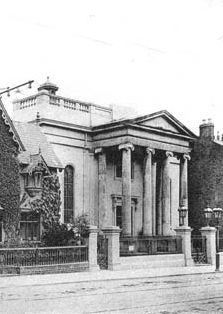
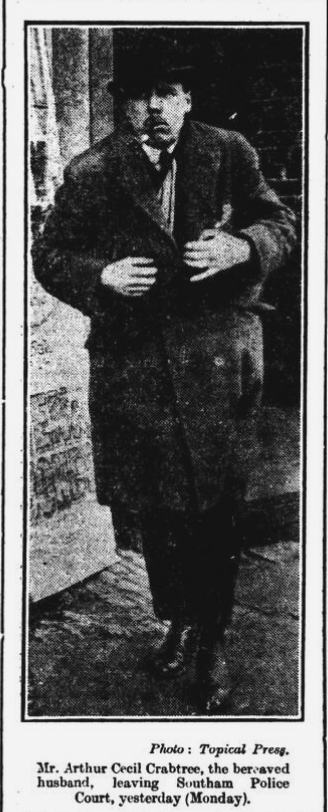 SO FAR – On January 13th 1926, Milly Crabtree, 25 year-old wife of Cecl Crabtree, is found battered to death at their home, Manor Farm in Ladbroke. 19 year-old George Sharpes is arrested for her murder. As is the way with these, things, the wheels of justice turn very slowly, and it was February before Sharpes came to face magistrates in Southam. The courtroom, normally used as a cinema (pictured above), was packed, and the onlookers were spellbound as a confession from George Sharpes was read to the court.
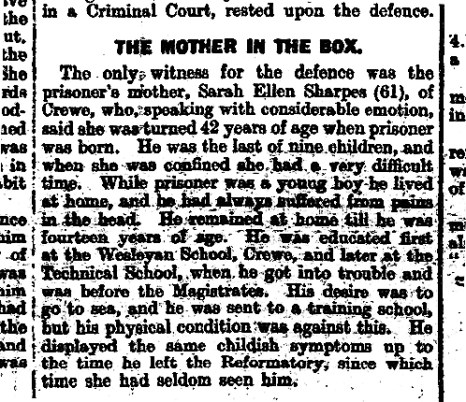 The magistrates wasted little time in stating that George Sharpes had a serious case to answer, and the case was moved on to be examined at the March Assizes in Warwick. The case was presided over by Mr Justice Shearman. The only possible line for the defence to take was that Sharpes was insane at the time at the time he committed the murder, and Sharpes’s mother was produced to state that her son had suffered an unfortunate childhood. Her pleas fell on deaf ears, however. Rejecting the claims that George Sharpes was insane, the judge donned the black cap and sentenced him to death. The execution was fixed for April and, as was almost always the case, a petition was set up to ask for clemency. The case was taken to appeal, in front of Lord Chief Justice Avory, who was perhaps not the most welcome choice for Sharpes’s defence team. Avory, a notorious “hanging judge”, had been memorably described:


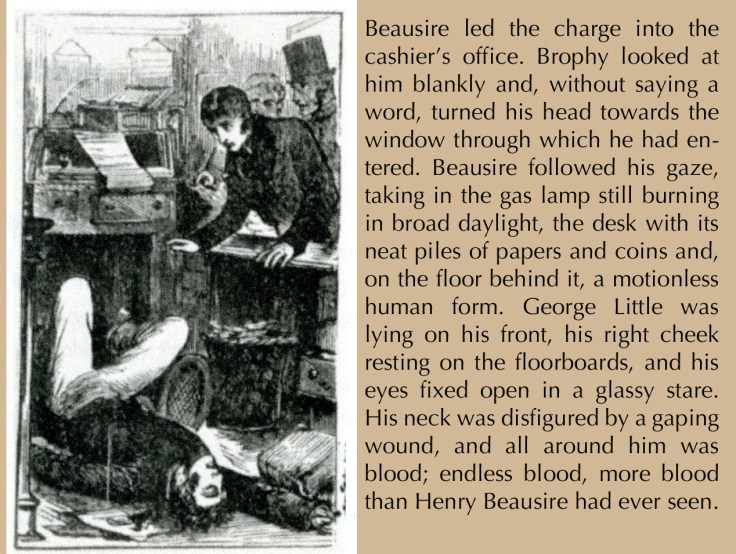


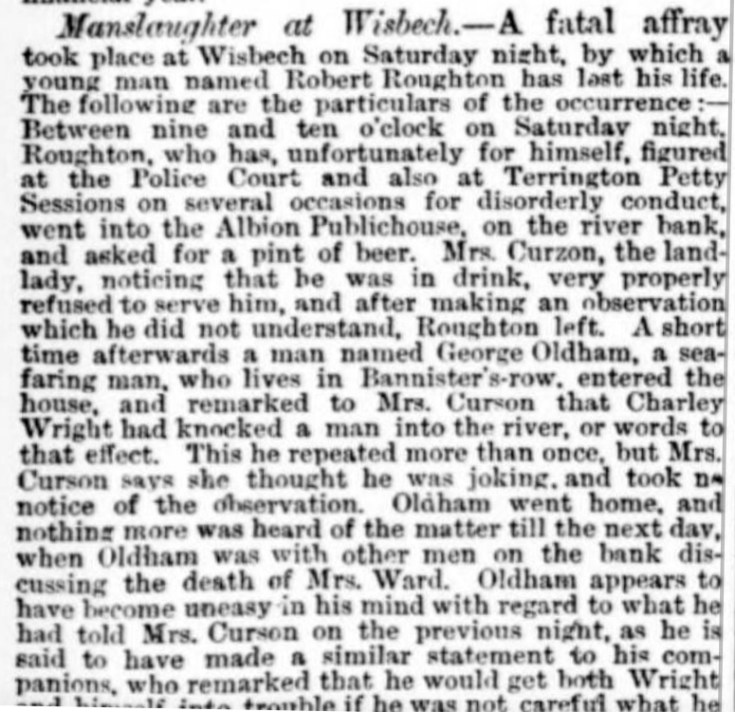
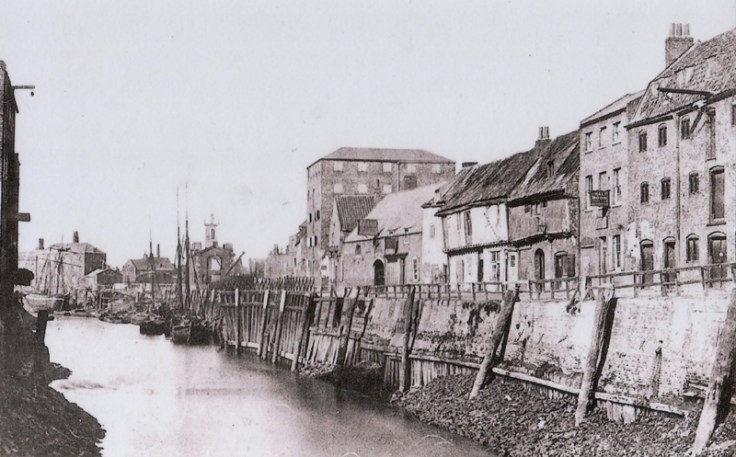
 “Charles Wright and George Oldham, two elderly men, were indicted for the manslaughter of Robert Roughton, at Wisbeach, on the 16th of December last. A bill for murder had been sent up to the Grand Jury, but was thrown out by them. Mr. Naylor appeared for the prosecution ; the prisoner Oldham was defended by Mr. Horace Browne. It appeared that a dispute had arisen between the prisoners and the deceased on the evening in question, and they were seen struggling together on the banks of the river, in which the body of the deceased was afterwards found on the 21st of January. The evidence showed that both the prisoners and the deceased were the worse for drink, and that the deceased, who was a much younger man than either of the prisoners, was the originator of the quarrel. The river bank at the place in question was sloping, and at the place where the cap of the deceased was found there was a gap in the rails by the river-side. Mr. Horace Browne, for the defence, urged that there was nothing in the evidence to show that it was any. thing but an accident. The Jury found the prisoners guilty, and his Lordship (Mr Justice Brett, left) passed a sentence of six months.”




 SO FAR – Thomas and Bessie Lockyer, a young couple originally from Bridport in Dorset, have settled in Leamington Spa, where Thomas is working as a reporter for The Leamington Chronicle. They live in a rented house in Holly Street, and have a six-months old son, Arnold Edward. It is Sunday morning, 1st September 1901. Thomas has gone to sing at the morning service at Spencer Street chapel. Bessie, in a state of extreme distress, has gone to her her next door neighbour, Mrs Wiggins, to tell her that she has harmed her baby. Mrs Wiggins can’t believe that Bessie has hurt Edward, but she goes with Bessie back to No. 17.




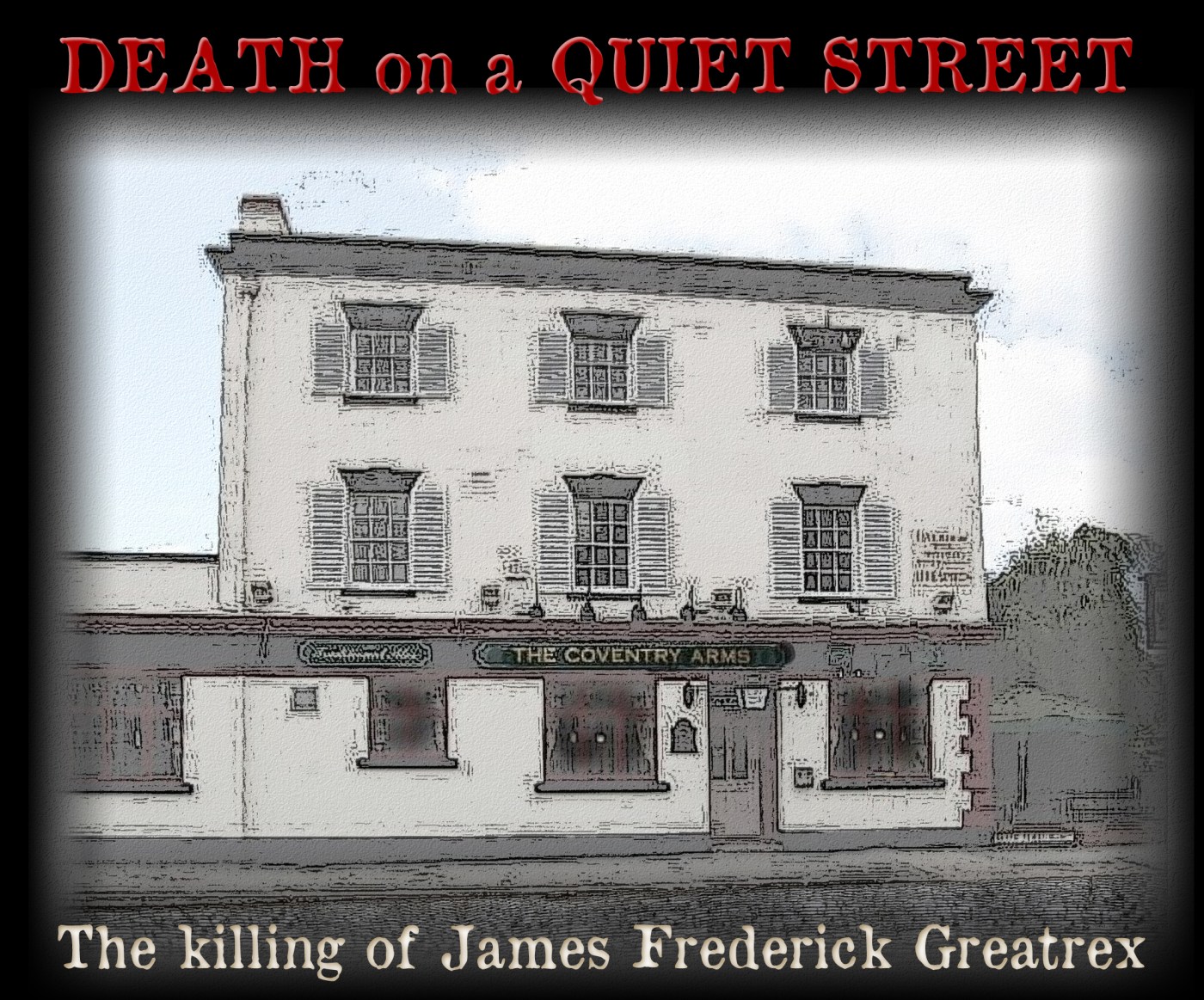
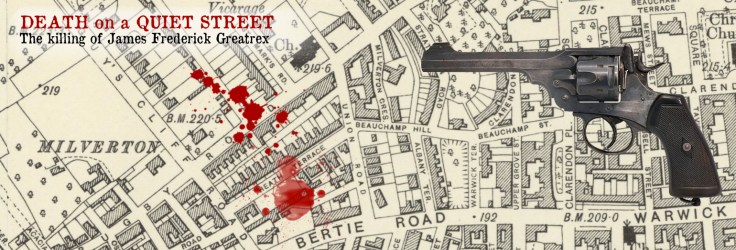
 The stricken man was carried to a nearby house and laid on a sofa. Dr Thomas William Thursfield (left) was a well known local doctor and politician (he later became Mayor) and a bystander attracted to the scene by the sound of gunfire noticed that Dr Thursfield’s carriage was outside an adjacent house. He was quick to attend to Mr Greatrex, but there was nothing to be done. The inquest found that one of the bullets had passed through the victim’s heart.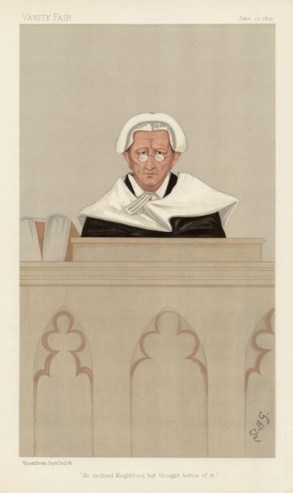
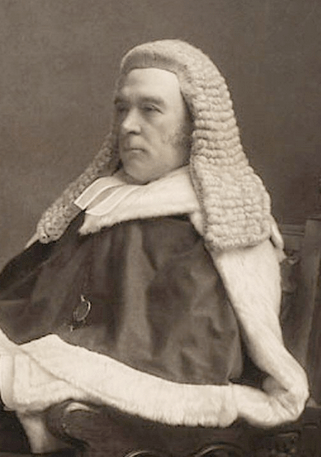
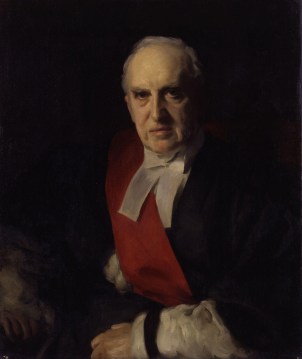 After the formality of the local inquest and magistrates’ court appearances, William Ernest Greatrex appeared before Mr Justice Wright (above) at the August Assizes in Warwick. His legal team, headed by the distinguished QC Charles Arthur Russell (right) had but one job, and that was to establish that William Ernest Greatrex was insane at the time he shot his father dead. Russell did this after his people had conducted ruthless research into the mental stability of the male members of the Greatrex family, and so the barrister was able to make a convincing case, backed up by the medical officers of one or two large lunatic asylums. William Ernest Greatrex was found guilty but insane, and ordered to be detained at Her Majesty’s pleasure, and he was sent to Broadmoor.



 fullybooked2017