
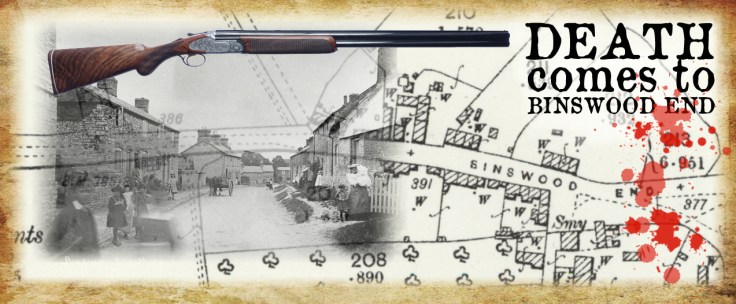
I’ll be quite upfront. I am in my seventies and most people consider me a reactionary. I rant on with the best (or worst) of them about the decline in modern morality and the collapse of traditional family values, but as I research these old murder cases, it becomes increasingly apparent that the ‘good old days’ of sound and stable families may be something of a false recollection. This case involves a terrible murder in the village of Harbury in September 1922. The victim was a 24 year-old woman called Rosilla Patience Borton.
Rosilla was born in 1898, and she first appears on public records in the census of 1901. She is living in Cross Green, Bishop’s Itchington a member of a large household headed by William Freeman, and his wife Rachel. Seven of the ten children have the Freeman surname, while Alice Violet (9) Arthur Henry (7) and Rosilla share the surname Constable. Rosilla is described as ‘daughter of the wife’. William Freeman, like many other men in the village was a stone quarryman. So, already, there is something of a puzzle. It seems that Rachel Freeman had a dalliance with someone called Christopher Constable, long enough to produce three children. Constable, incidentally, died in 1898 at the age of 35. Whatever the truth, we mustn’t ponder too long, because there are more mysteries ahead.

In the summer of 1915, Rosilla married Edward James Borton. He and his family are listed in the 1911 census as living in Binswood End, Harbury (above) He was 18 years senior to Rosilla, and died at the age of 36 in April 1917. Rosilla may have mourned his passing, but she was young, and had cause to hope that her best years were yet to come. In January 1918, Rosilla married William Rider, again a much older man. He was a chimney sweep and window cleaner who lived in Rugby. He was, to put it mildly, a ‘wrong ‘un’. It transpired that he had never divorced his first wife, who was still alive. The home, in Pennington Street, Rugby (below), which Rosilla joined, already had two young women in residence. One was Rider’s daughter by his legal wife, and two were the fruits of Rider’s relationship with yet another woman.

It was not a happy house, at least for Rosilla, as Rider had started knocking her about. To make matters even worse, Rider seems to have tired rather quickly of his new ‘wife’ and instead began making advances to Rosilla’s half-sister Harriet. Harriet was born in 1906, so she was only just ‘of age’ by the time Rosilla was killed, and it seems she had fallen under Rider’s spell some time before this.
Rosilla had, on several occasions fled the house in Rugby to seek refuge with her mother who, by this time was living in Binswood End, Harbury. Was this the same house previously occupied by the Borton family? I can’t answer that question, sadly.
The Gloucester Echo of 11th September 1922 carried this chilling story:
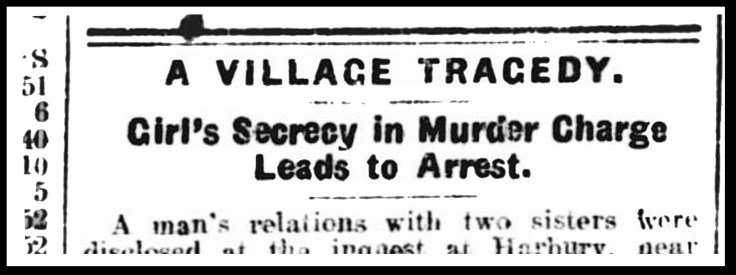
FOLLOWING, IN PART TWO
A murder
Trial and conviction
A job for Mr John Ellis
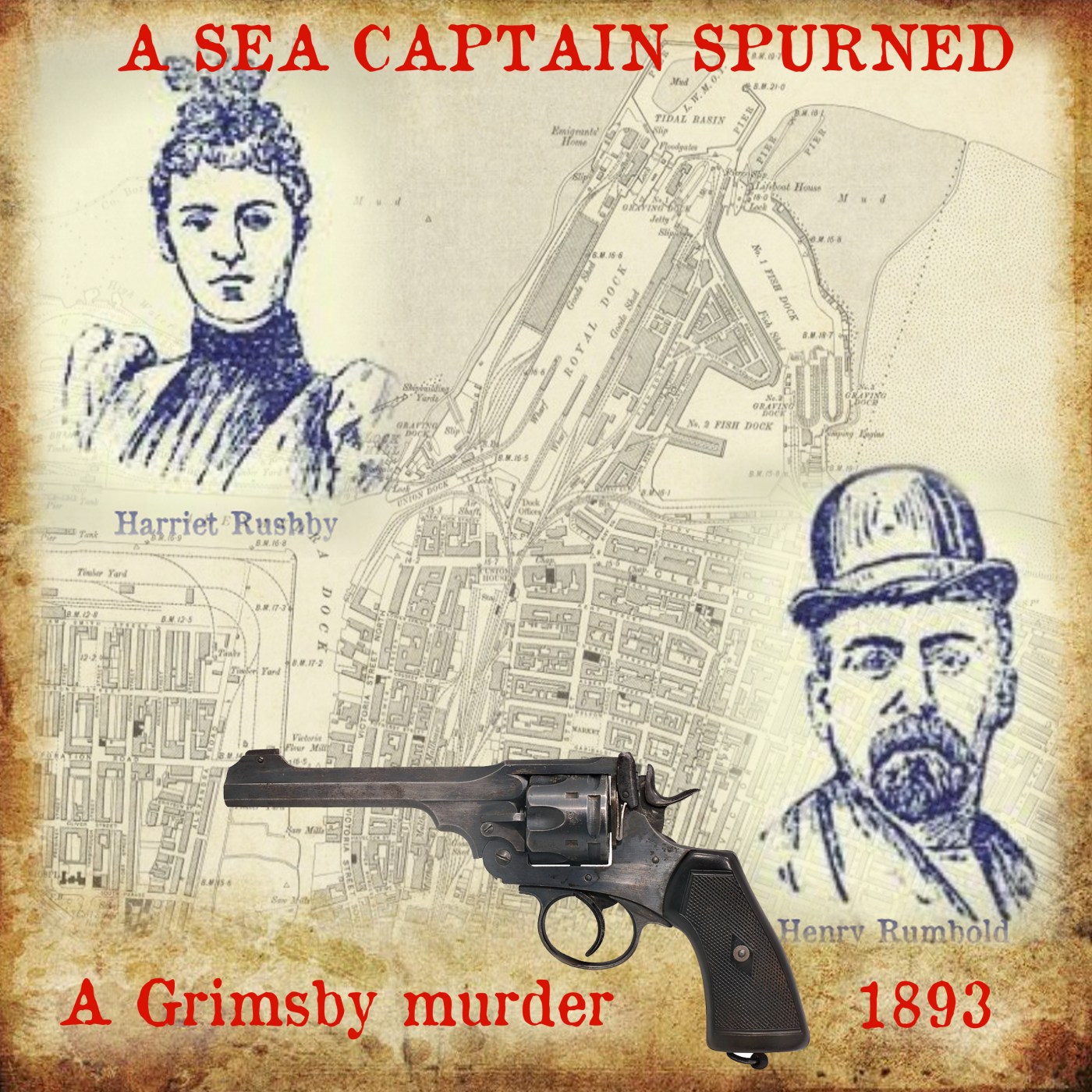


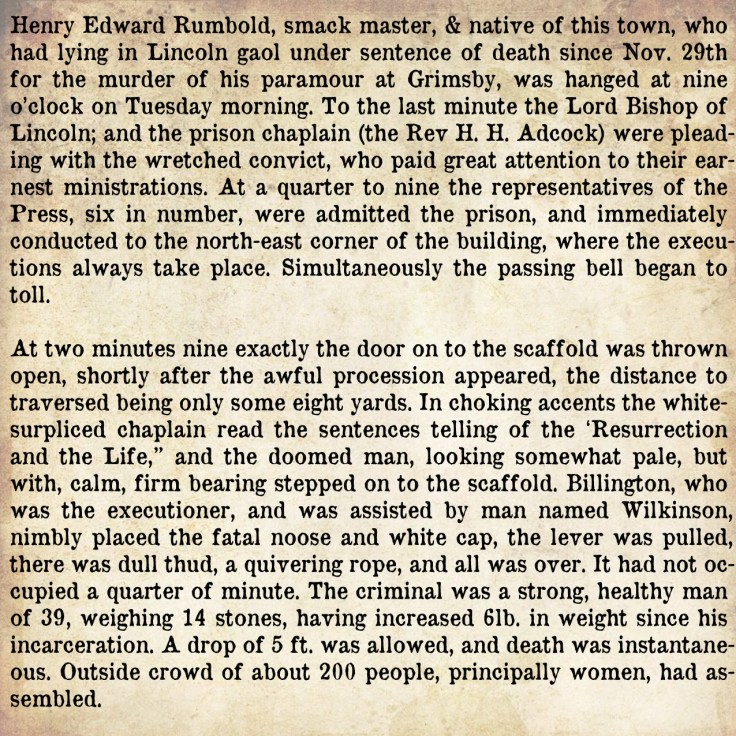
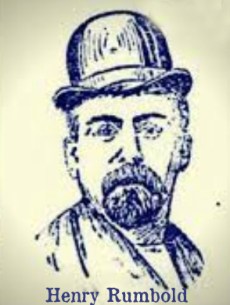
 The early life *(see footnote) of Harriet Rushby has been difficult to trace. One newspaper report says that she was 24 in 1893, while another says she was 20. There is a death record for December 1893, where a Harriet Rushby was buried in Caistor, aged 22, and a census record for 1881 which gives us a Harriet Rushby living in Lower Burgess Street with her grandparents, but she is listed as being born in 1874.
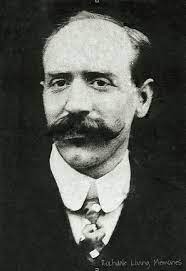
 Henry Rumbold proved just as problematic, until I realised that his actual surname was Rumbell, and that his family were well known seafarers from Yarmouth. On the night of Sunday 3rd April 1881 he was listed in the census as being on board the ship Tempus Fugit, moored off the Suffolk Coast. It looks as though he was described as Master, while his younger brother Walter was Mate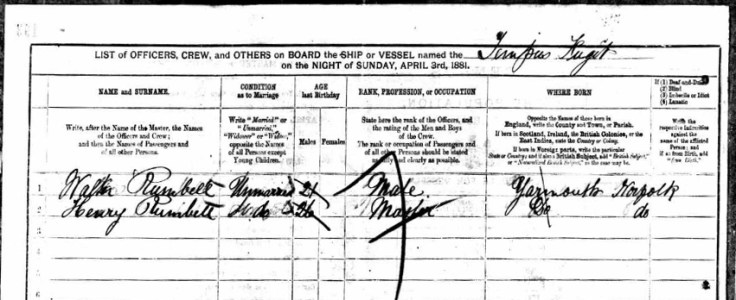
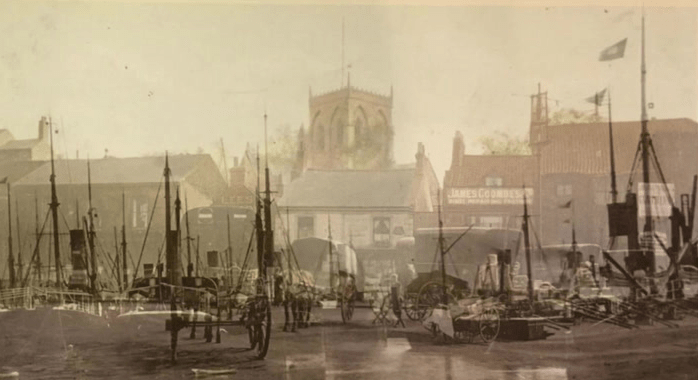

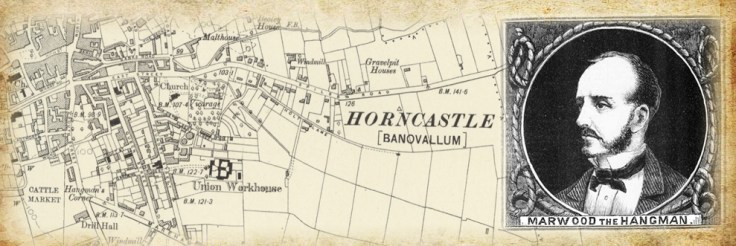

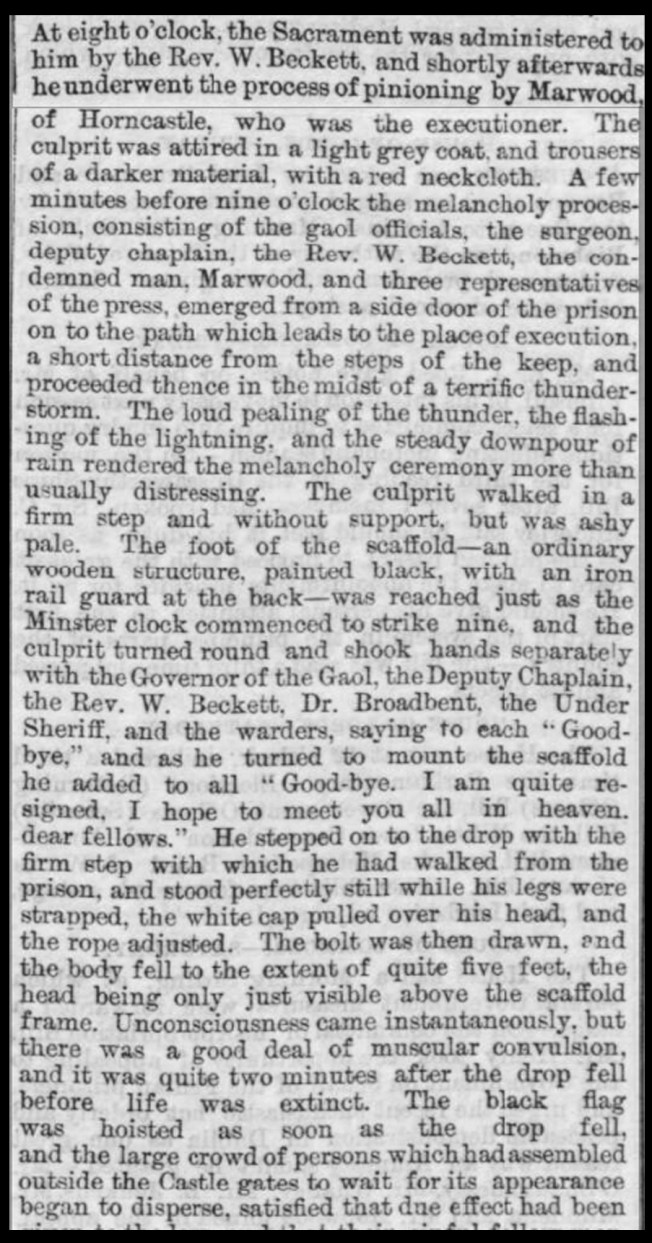

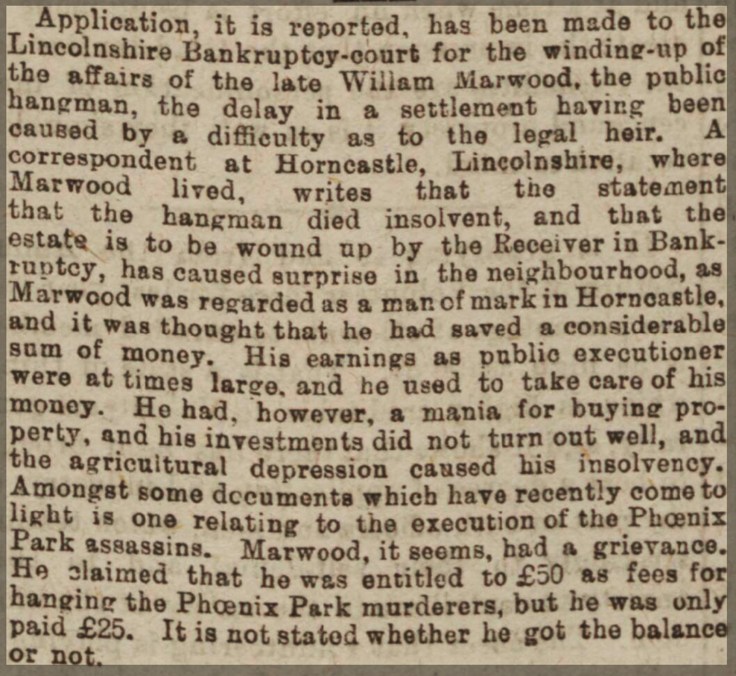


 “During my stay in Horncastle I got to know that Marwood had been doing duty as a hangman some time before his neighbours knew of the circumstance. And it would have been a secret for some time longer, but that a Horncastle man happened to be present at an execution which took place at some distant town, and, on seeing the operator, recognised his fellow-townsman. The news spread like wildfire at Horncastle, and when Marwood arrived home he found himself the object of a few attentions which were more demonstrative than nice. And for some time after, when he started for, or came back from, an execution, he was followed about by people who showed no displeasure by hooting him, and by beating tin kettles, pots, and pans. This grew to be a veritable nuisance, so bad that Marwood was compelled to write to the Home Secretary claiming protection. After he had done this the head of Horncastle police was communicated with, and since that time Marwood has been permitted to depart from, and return to this town without molestation; in fact, he walks about the place without attracting any special attention. I noticed that his fellow townsmen greeted him in an unmarked but friendly manner, and he appeared to be on good terms with everybody. He keeps a shoemaker’s shop, and is comfortably off, owning several houses in Horncastle.”


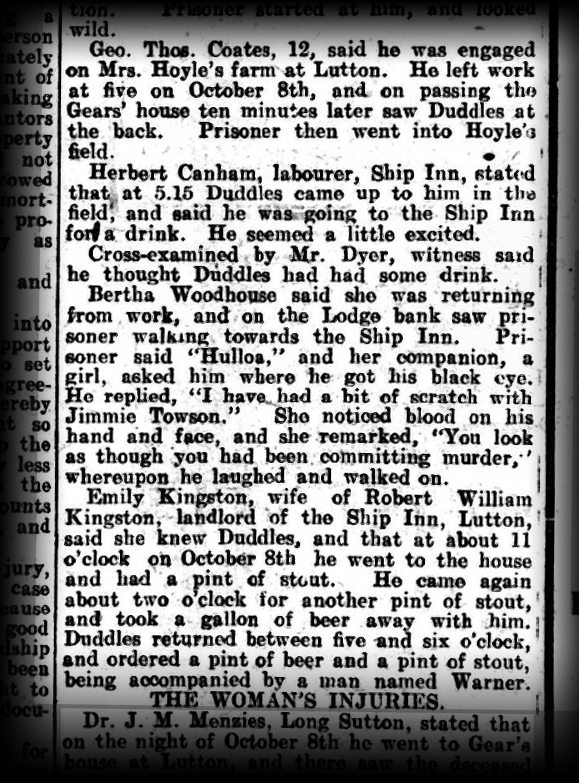
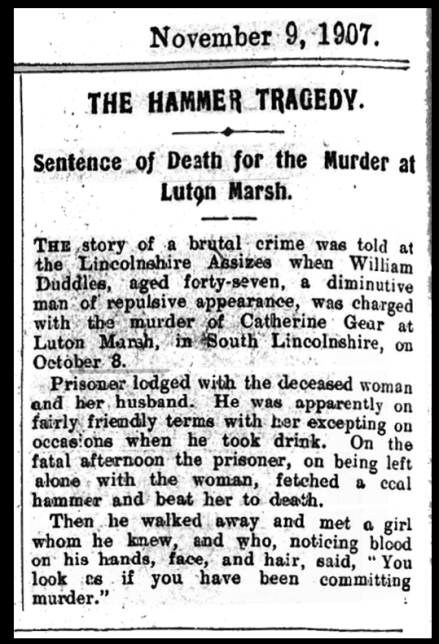 The “diminutive man of repulsive appearance” was found guilty of murder, and sentenced to death by the judge, despite the jury recommending mercy due to the prisoner’s mental state. One of the strange things about this case is that newspapers at the time normally reported verbatim anything said in court, either by the accused or his legal representatives. In this case, I have been able to find absolutely nothing. Defence barristers are known to this day for concocted elaborate excuses when pleading clemency for their clients, but here they either had nothing to say, or it was never reported. The obligatory plea for mercy was sent to the Home Secretary, Herbert Gladstone (son of the great former Prime Minister) but it fell on deaf ears, and William Duddles was executed on 20th November in Lincoln Prison. In charge of proceedings were the Pierrepoint brothers, Henry and Tom – father and uncle to the more celebrated Albert.


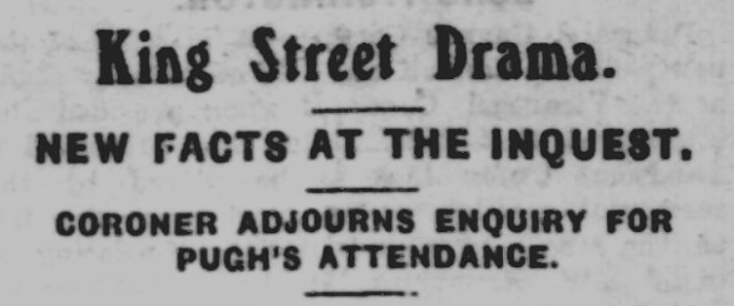


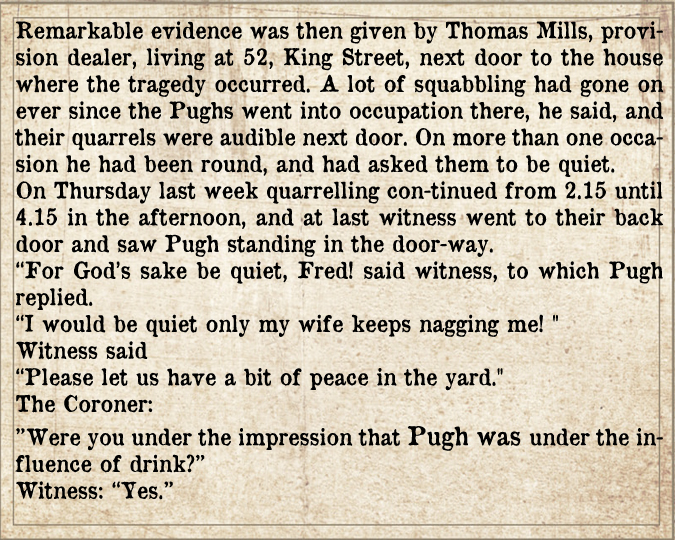
 As with many of these stories, there are always the children who become victims of adult misdeeds. The Pughs had two children. In the census which was held in the summer of 1921, an Arthur Frederick Pugh, born in 1920 and listed as grandson, was living in Leamington in a house, the head of which was Edith Jones, born in Bishops Itchington, and almost certainly Constance Pugh’s mother. Sadly, the next time we hear of Arthur Frederick Pugh it is as a casualty in WWII. His body lies in Madras War Cemetery.



 fullybooked2017