Search

fullybooked2017

Category

True Crime

THE SIBSEY MURDER . . . A brutal killing in 1859 (1)

Sibsey header

In 1859 The Lincolnshire village of Sibsey, just north of Boston, had a population of around 1400. The Sibsey Trader mill had yet to be built, but the railway had arrived in 1848. The 1851 census recorded the names of William Pickett, aged about 13, living with his parents and 9 siblings at Cherry Corner, Sibsey Northlands; Henry Carey, aged 18, lodging with Potter family at Sibsey Fenside, and someone who newspapers later described as ‘a notoriously bad character’, and William Stevenson, aged 57, an agricultural labourer. On the evening of Tuesday 16th March 1859, the lives of these men were to collide, with violent and fatal results for all three.

On the Tuesday morning, Stevenson had left home to go to market, and returned in the evening. He went to *The Ship inn in Sibsey Northlands which, as the name suggests, is a small settlement to the north of Sibsey. Stevenson’s home was in Stickney Westhouses, about a mile away from the pub and, after a convivial evening of drinking and smoking, he left The Ship at about 10.30 pm to walk the mile or so to his home. Westhouses is more or less a single track road these days and, on a winter’s night would still be bleak and forbidding. But this was a warm August night, and Stevenson, no doubt warmed from within by an evening drinking, would have had little fear of being out on his own on a lonely country road. He never reached his home.

Screen Shot 2022-12-09 at 19.41.42

*It is not clear if The Ship was a different pub from The Boat which is marked on old OS maps. The Ship was destroyed by fire in the late 1960s, and was owned by the Soulby, Son & Winch brewery.
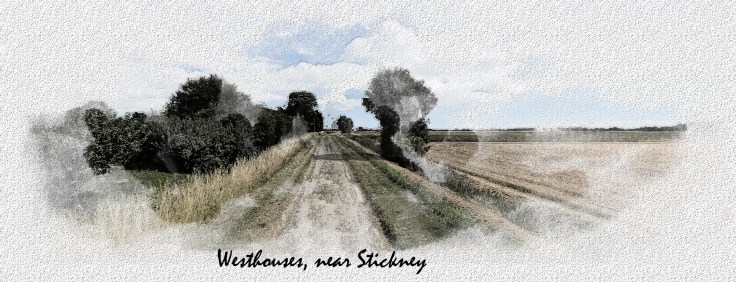
Westhouses

Beside Westhouses Road ran a small drain, described in later court reports as ‘a sewer’. At a coroner’s inquest on Friday 19th August a local woman, Sarah Semper, testified:

Stevensons1

What followed the grim discovery was recorded at the subsequent Coroner’s Inquest.

A messenger was despatched for Dr. Moss, of Stickney, and Dr. Smith, of Sibsey, and another to the police, with information of the occurrence. The deceased’s son then commenced inquiries as to where his father had spent the previous evening, and on ascertaining that he had been at the Ship, proceeded there, and on going into the tap-room about seven o’clock in the morning, saw Carey and Pickett sitting there drinking beer; they had been there about hour: he sat opposite them for a minute or two and noticed spots of blood on their boots; he made no remark, but went and gave information of his suspicions to Sergeant Jones, who apprehended Sands ( a young man who was subsequently absolved from any blame) at half-past ten at his father’s house in bed; Pickett about half-past one, and Carey a little later in the the Ship. Sands stated that he slept in his father’s hovel, and on it being inspected it was ascertained that some one had slept there.

“Pickett stated that he slept in his father’s stable, and Carey came to him at five o’clock in the morning, and they afterward, went to the Ship together. From the evidence of Sergeant Jones, and from inspection of the locality, it appears that the deceased had only gone a short distance after he left the public-house, when some person, crossed the road (which is a silt one, showing footmarks) from the opposite side to that where he was walking, and overtook him, and struck him a violent blow on the head, which felled him to the ground.”

A struggle then ensued, and having been ultimately overpowered, after his pockets were emptied,  the deceased was dragged to the side of the road, and thrown into a deep ditch: out of this he appeared to have scrambled, and got up the bank, and through the hedge, leaving traces of blood upon the bank and hedge, and got into an adjoining field. The murderers seeing their victim recovering, and doubtless fearing that he might identify them if he got away, crossed over the ditch by bridge a little higher up, and overtook the deceased in the field, where with hedge stakes they finished their bloody work, literally battering his skull and dashing out his brains, the ground about showing the following morning strong evidence of the murderous attack, patches of blood, pieces of skull and hair lying about They then carried the murdered man short distance and threw him over a hedge into the ditch where he was found.”

IN PART TWO

Trial, retribution, and a job for the Horncastle cobbler
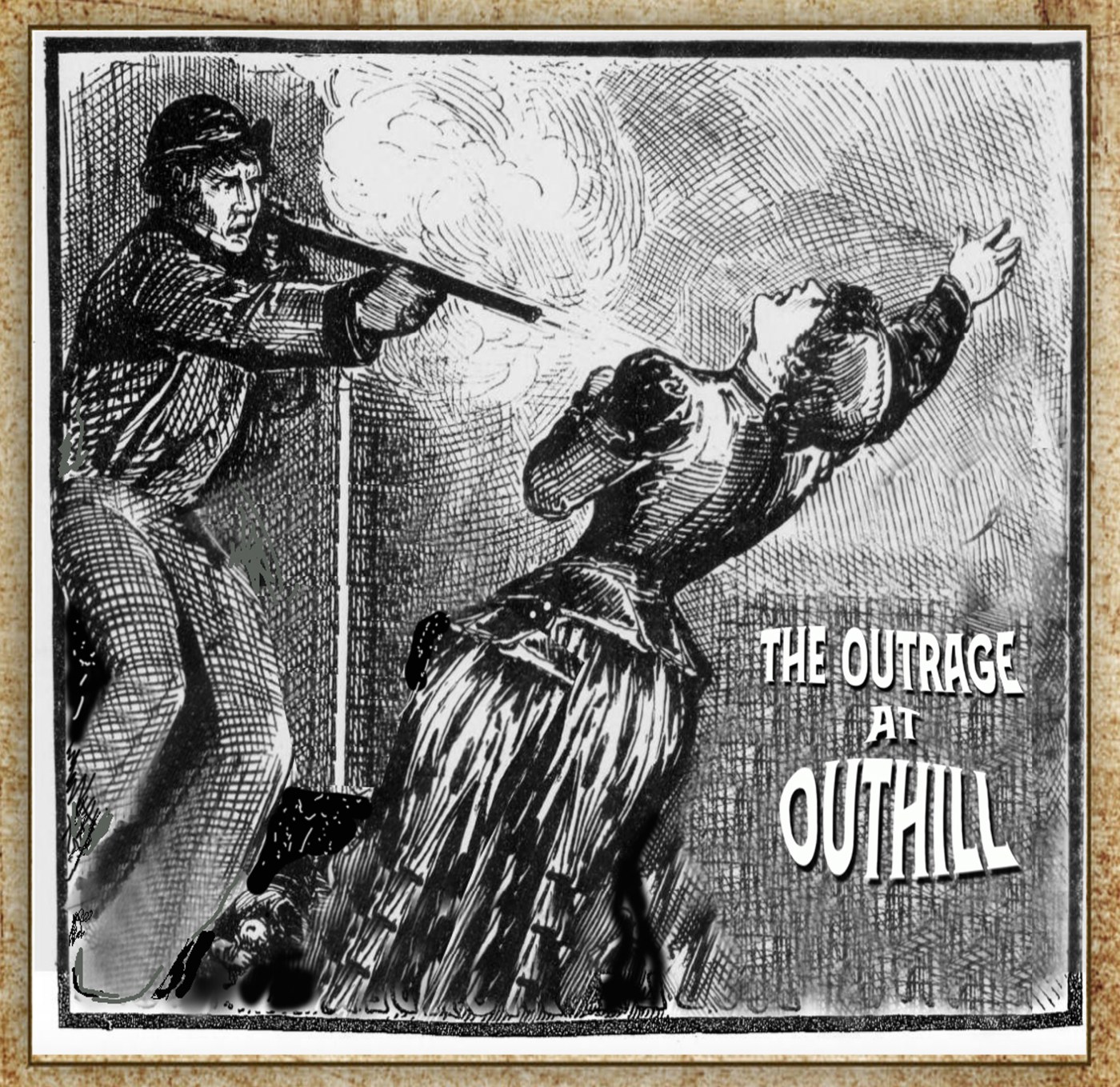
THE OUTRAGE AT OUTHILL . . . A brutal murder in rural Warwickshire (2)

Outhill header

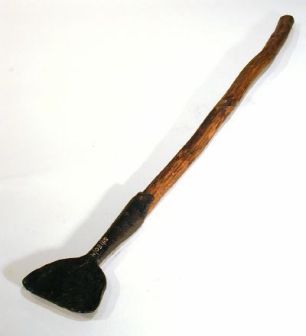
SpudSO FAR: 23rd April, 1862, rural Warwickshire, and a 21 year old ploughman, George Gardner,  employed by farmer Davis Edge at Outhill Farm, near Studley, has shot 24 year-old Sarah Kirby, employed by Edge as a domestic servant. Gardner’s peculiar state of mind before killing Sarah Kirby could almost be described as existential, in that it seemed to recognise neither logic nor the law – just his own obsession. He did, however, seem to have acknowledged the presence of chance. He had been uncertain that morning about killing Sarah Kirby, so he adopted a rural version of tossing a coin. Ploughmen used a hand-tool known as a “spud”. It was basically a flat blade, usually mounted on a wooden handle, (left} and used for clearing earth from the blades of the plough. Gardner decided to toss the tool in the air, and if it landed blade first, then Sarah Kirby would die. It did, and so did the young woman.
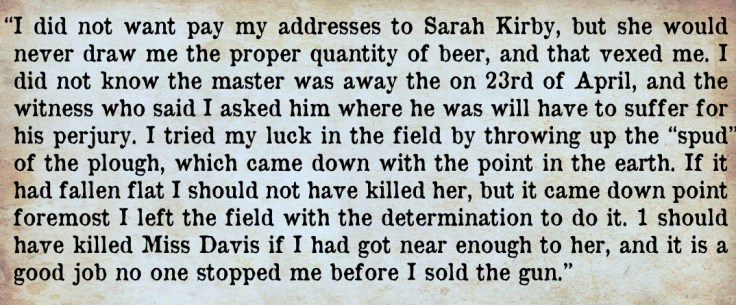
Garner needed to escape, and for that he needed protection from his pursuers – and money. He smashed open Davis Edge’s bureau, but found only small change. He took this, as well as the gun, the powder and the *shot flask.

*This was in the days before shotgun cartridges. There were three elements to a shotgun load. (1) the gunpowder tamped down via the barrel (2) the lead shot, likewise loaded from the muzzle, and (3) a small primer, known as a primer cap. This, when ignited by the gun’s hammer, would set off the powder which would, in turn, expel the shot.

Leaving the scene of his crime, Gardner set off to put distance between himself and the police. He managed to get to Stratford, where he sold the gun, powder and shot. Meanwhile, he was a hunted man:

“The police joined the villagers and gamekeepers, scoured the woods and surrounding country, and got upon the track the fugitive, whom they traced to Wootton, and thence to the Stratford Railway station, and ultimately to the junction of the Stratford branch with the West Midland main line at Honeybourne, where the police captured him.”

Gardner’s brutal nature was only matched by his stupidity. Waiting in Honeybourne to catch the next train to Oxford, he decided he had time for a drink, and went into a nearby inn, where he was later found by the police, almost unable to walk due to the amount of cheap gin he had drunk.

Screen Shot 2022-11-16 at 19.27.31

Gardner’s subsequent trial at Warwick Assizes was something of a formality. His defence barrister made a half hearted attempt to prove that the gun had gone off by accident, but the jury knew a killer when they saw one, and the judge – Baron Pollock – duly donned the Black Cap, and sent Gardner back to the condemned cell. His execution was set for Monday 25th August. A newspaper report described the days leading up to the Gardner’s appointment with the executioner:

“Exactly a fortnight has therefore elapsed before the sentence was enforced. During his incarceration in Warwick Gaol Gardner has learnt to write ; and since receiving sentence has spent good portion of his time in both reading and writing. There is really no condemned cell in the gaol, and the one occupied by Gardner after condemnation differed in no respect from the others except that it was larger, and situated in that portion of the building nearest to the sleeping-rooms of the turnkeys, two of whom attended him day and night.

Since condemnation, he has dined on the usual prison fare, which consists of ½lb. of mutton chop, 1lb. of potatoes, 11b. of bread, and a pint of ale. He has slept well every night, and conducted himself altogether as well as could be expected. Mr. Carles, the chaplain, has afforded him what consolation of spiritual nature his state required, and latterly he appeared to be very penitent, and made a confession to the following effect:”

Confession

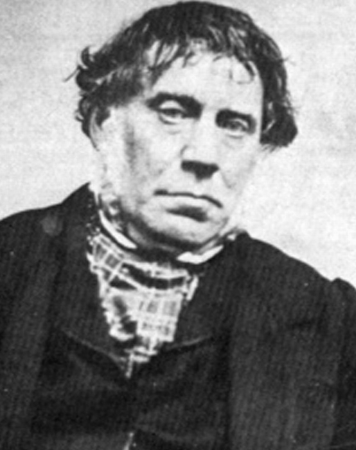
Screen Shot 2022-11-16 at 19.58.53Gardner had one further misfortune. His executioner was none other than George Smith (right), a former criminal and noted drunk, known – with rough humour – as The Dudley Throttler. This was to be a public execution, and a perfectly respectable form of cheap entertainment at the time. A reporter described the scene:
“At precisely eighteen minutes past ten the prisoner appeared upon the drop, attended by four warders, and Smith, the executioner. The clergyman did not, as is customary now, make his appearance upon the scaffold, and this, coupled with the absence of any tolling of the bell, robbed the ceremony of much of its impressiveness. The prisoner was dressed in the same clothes wore the trial—a short white smock and fustian trousers. The executioner also wore long white smock frock. After he had removed the prisoner’s neckerchief, and adjusted the rope upon his neck, Smith shook hands with the wretched man, and left the scaffold to draw the bolt.

A murmur of horror ran through the crowd, it being evident that the hangman had forgotten to place the cap over the culprit’s face in the usual manner. There the poor wretch stood, pinioned, the rope around his neck, facing the crowd. Everyone who saw him expected momentarily see him plunge downwards, and the horror of witnessing the wretched man’s death-agonies depicted in his face, unmasked, caused those who were even accustomed such scenes to turn away. The omission was noticed by one of the warders upon the scaffold, who called the executioner back, and he then produced the cap from his pocket. Altogether the wretched culprit must have stood face to face with the crowd for the space of ten minutes – to him it must have been a century of agony.

The bolt was drawn immediately afterwards, and the prisoner being a heavy man, the body fell with immense force, sufficient, we should imagine, if the rope had been properly adjusted, to have caused dislocation of the neck and a very speedy death. As it was. however, life was not pronounced extinct for at least twelve minutes. The body was afterwards buried within the precincts of the gaol. Owing to the position of the scaffold persons standing in the road can see very little of what takes place, and after the drop nothing but the cap of the culprit was visible. The number of spectators was between twelve and fourteen hundred, of whom least one third were women and children.”

FOR MORE WARWICKSHIRE MURDERS, CLICK THE IMAGE BELOW

Screen Shot 2022-11-16 at 20.02.33


THE OUTRAGE AT OUTHILL . . . A brutal murder in rural Warwickshire (1)

Outhill header

Outhill Farm is a lonely enough place even today, despite being beside the busy A1489 road from Henley-in-Arden to Redditch, but in the spring of 1862, it would have seemed even more remote. The tenant farmer was a Mr Davis Edge. Among his employees were two young people, both in their early 20s. Ploughman George Gardner – a native of Broadway in Worcestershire – was a burly and, apparently, a rather uncouth fellow, while Sarah Kirby, a domestic servant, was described as a very comely young woman, and much respected in the neighbourhood for her modesty and gracious manner. Across the Atlantic, our cousins were in the second year of a brutal and divisive civil war, but in England, at least in the face of it, all was peace and calm. It is 23rd April, a day doubly celebrated these days as being our national saint’s day and also the birthday of our greatest dramatist, born just a dozen or so miles from the scene of this tragedy.

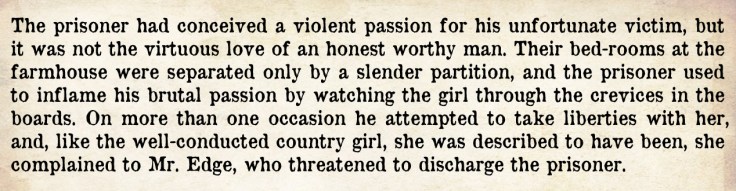
It is clear that Gardner ‘had designs’ on Sarah Kirby, but the attraction was never mutual. A later newspaper report used the circumlocutory language of the day to describe something which we would be more frank about these days.

Brutal passion

The press saw George Gardner, rightly of wrongly, as the Beast to Sarah Kirby’s Beauty:

“Gardner was a remarkably stout-built, firmly knit man, about five feet four inches in height, with a heavy and unintellectual head, set upon a short, thick neck, which only rose a few inches above his muscular and expansive chest. He was of dark complexion, with dark hair and whiskers, and a countenance anything but prepossessing. In this case the man’s appearance was true index to his character. Devoid of education, he allowed his brutish passions to govern him instead of endeavouring to keep them in check.”


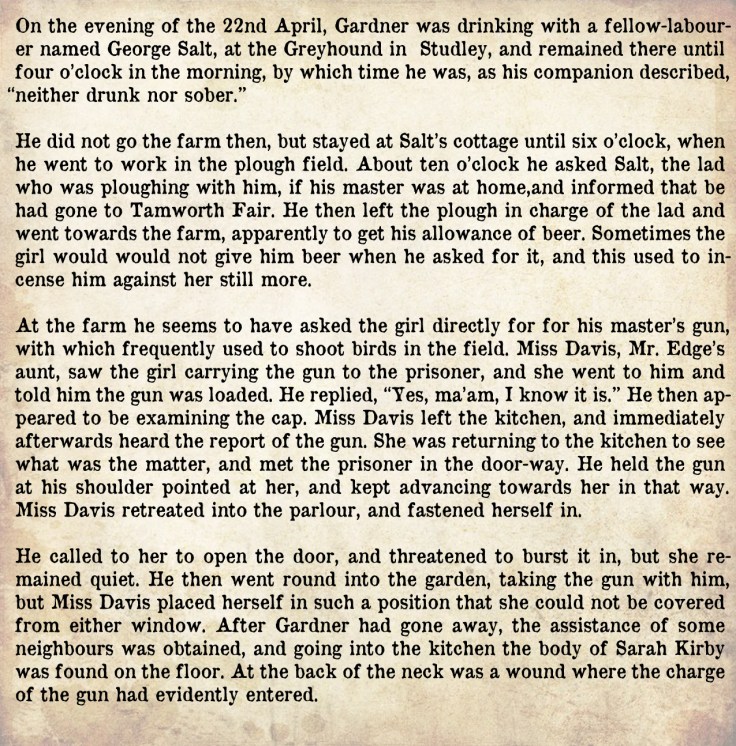
Gardner had, at least in his own mind, another grudge against Sarah Kirby. The farm men used to come back to the house at lunchtime, and be served a meal, accompanied by beer. Gardner was convinced that Sarah, who acted as waitress, ‘served him short’ and would not fill up his tankard when he asked. The question of sanity, in these old murder cases – as in those of more recent times – is always problematic. There is an argument that men like Gardner would have to be insane to think they could get away with the crimes they were about to commit. Insanity is not the same as stupidity, however, and perhaps Garner’s limited knowledge of the world was the cause of  his apparent optimism that he could commit murder and get away with it. What happened in that Outhill farmhouse on 23rd April 1862 was graphically described in a newspaper report:

The shooting

IN PART TWO

An escape
A manhunt
An arrest
A rendezvous with “The Dudley Throttler”


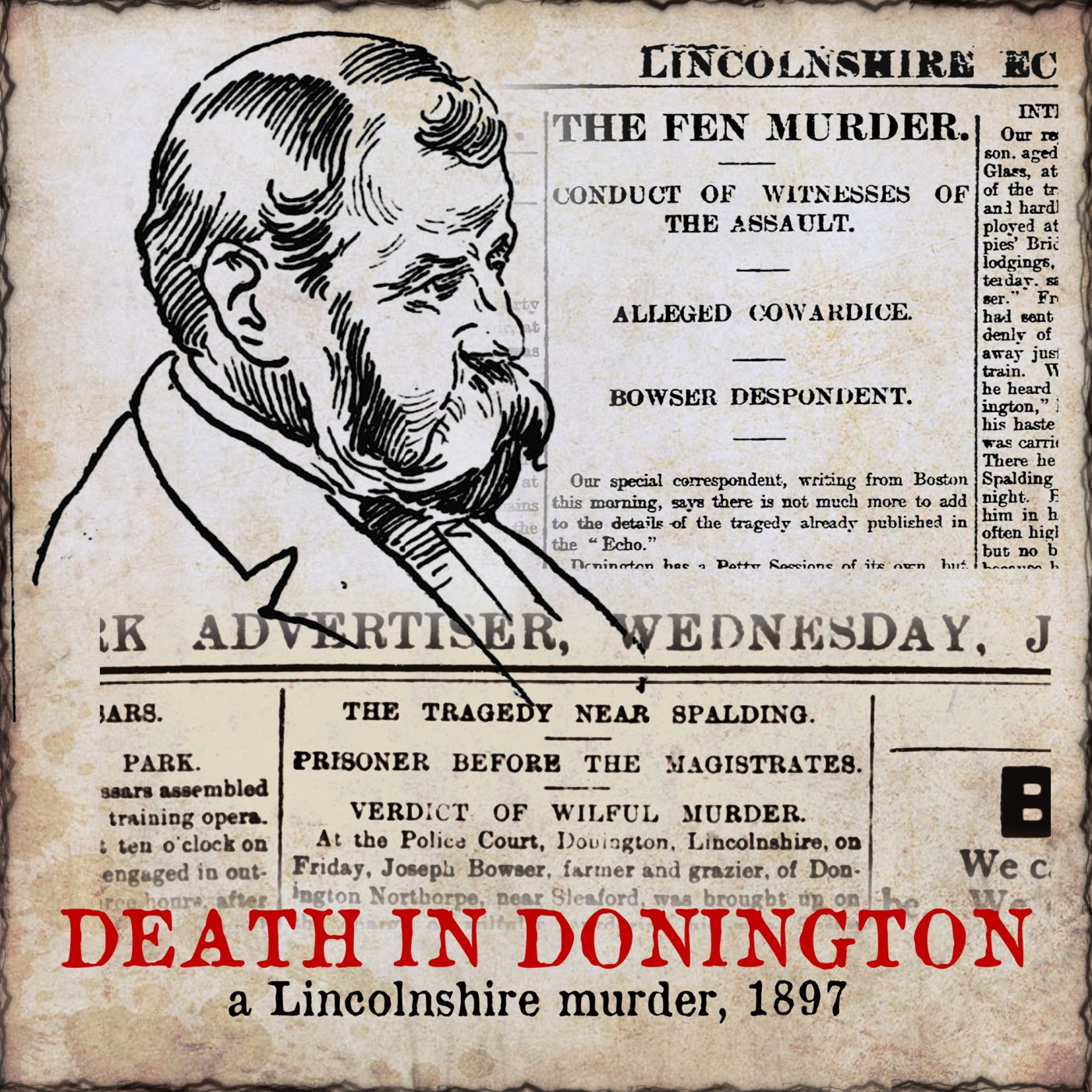
DEATH IN DONINGTON . . . A Lincolnshire murder, 1897 (2)

Bowser Header

SO FAR: It is 25th May, 1897. Donington Farmer Joseph Bowser has been in bed most of the day and has been drinking heavily. Late in the afternoon he staggers downstairs, in a foul mood, and attacks his wife Susan, kicking her brutally. She staggers to her feet and seeks refuge in the doorway of a building used to rear calves. The Bowsers’ servant, Elizabeth Berridge, sketched later (below) by a court reporter, witnessed what happened next.

Elizabeth Berridge

The shooting

Lister, and a young woman called Eliza Drury were distant relatives, and had been staying with the Bowsers. It remained a matter of some controversy that Lister had apparently made no effort to restrain the murderous Bowser, while being fully aware of what he was about to do. The Bowsers’ farmhouse was isolated, there were no telephones, and information only traveled as fast as someone could run, or a horse could gallop. Let The Lincolnshire Echo take up the story:

Dr. E. W. Jollye next gave evidence. He was called between 5.30 and 6 on the evening in question, and was asked to go Bowser’s directly. He, asked what was the matter, and was told Bowser had shot his wife, and that it was thought she was dead, but he was wanted to go and see. On arriving he saw the girl who fetched her master, who came out, to meet him. On witness saying “What is the matter?” Bowser replied, “You’ll see, she is there.” He examined deceased and while doing so Bowser stood close by, and kept saying over and over again “She has tantalised me.” Bowser further said “I have done it, and I am ready to go when they fetch me.”

“The charge had entered the skull just over the right eye and in a mass, that was, the shots had not spread. The charge went downward and to the left, coming out at the nape of the neck on the left side. The socket the eve was completely smashed, the brains scattered on the door, and there was a deal of blood under the head. The bones on the top of the head were all broken, though he would not say the skull was completely shattered. The cause of death was the gun-shot wound. The shots had made a clean way. By Mr. Crawford: He found one recent bruise just on the right buttock, and other smaller ones close to, apparently connected. There was a smaller bruise on the left buttock, but nearer the centre line of the body. There were other discolourations of the skin, but these had accrued after death. He would give no opinion as to the cause the bruises; they might nave been caused by a fall on a hard substance.”

“Bracebridge Seward, labourer, said that on the afternoon of the day question, as he was passing along the road, he saw Bowser kick his wife very badly twice. Bowser then went to the tumbril, and leaned over it for some two or three minutes, and then groaned out. saving the woman. “You –,” and went to the house. Witness heard no report of gun, having gone then. The woman had a difficulty in getting up, and went to the fowl-house in a “staggery” manner, which led him to think she was rather intoxicated.”

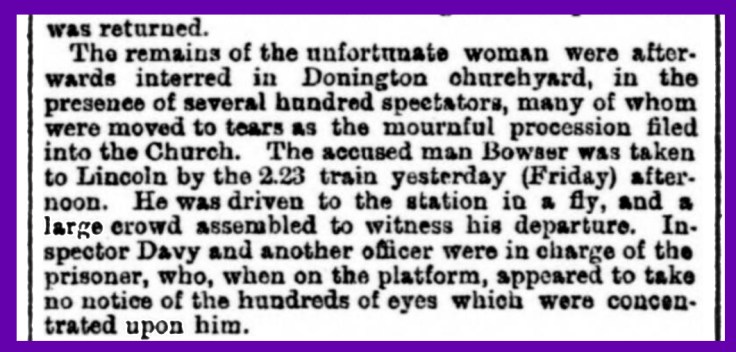
Joseph Bowser was quickly convicted of murder by the local magistrates and packed off to Lincoln to await trial at the next Assizes. Meanwhile Susan Bowser was interred in Donington churchyard.

Funeral

On Wednesday 7th July Joseph Bowser was found guilty at Lincoln Assizes by the judge, Baron Pollock, and sentenced to death. An artist made sketches of some of those present.

Illustrations

Joseph Bowser was executed at Lincoln Prison on Tuesday 27th July 1897.

Execution

Criminal record

TO READ ABOUT OTHER NOTORIOUS LINCOLNSHIRE MURDER
CASES CLICK THE IMAGE BELOW

Donington Church

DEATH IN DONINGTON . . . A Lincolnshire murder, 1897 (1)

Bowser Header

Susan Coates was born in November 1853 in the village of New Bolingbroke. At the age of 18, she gave birth to a son – to be called Henry Coates-Harrison. The double-barreled surname was not a sign of nobility, but rather that the boy’s father was a local farmer called Edward Harrison. Three years later, the couple “did the decent thing” and married on 19th October 1874, in the church of St Andrew, Miningsby. I imagine that it must have been a Victorian church, as it was declared redundant and demolished in 1975. A medieval building would not have suffered that fate.

Screen Shot 2022-11-03 at 18.46.46

The 1881 census has the three of them plus Edward’s elderly father – living in what the document describes as ‘Enderby Allot”. Short for allotment, possibly? No matter. Edward Harrison did not live to complete the next census, as he died in 1884. The farm did not pass on to Susan, which suggests that they were tenants. It seems that in widowhood she took up  a position as housekeeper to another local farmer, Joseph Bowser. She married him in December 1886. Bowser’s history has been difficult to pin down, for one or two reasons. The first is that when the census records were digitised, his name was misread as “Beezer”, which accounts for his near invisibility. Secondly, there is another Joseph Bowser, also a farmer, and also living in the area, but he seems to be a much younger man than “our” Joseph, who was born in 1854, in Sibsey. The 1891 census has him living in Northorpe, a hamlet just north of Donington, and his wife is named as Susanah. He was something of a local dignitary, and was on the *Board of Guardians in Spalding.
*
The 1834 Poor Law Amendment Act put an end to out relief, grouping parishes together into legislative bodies called Poor Law Unions. Each was administered by a board of guardians who would oversee the running of a workhouse.

Bowser was however, a volatile sort of man, as a  newspaper later describes.

“Bowser was a familiar figure market days, and every regular attendant knew him. Many are the stories that are being retailed in illustration of his excitable nature and violent temper. The general opinion would appear be that he was the worse for drink at the time, and was a common thing for him to indulge freely before he left Boston on market days, when he would drive away at break-neck speed down West-street and to Sleaford-road. The use of a gun as argument appears have been a favourite one with Bowser, as it is stated he on one occasion shot a valuable horse that was rather lively in the field, and which he could not capture, and another time a greyhound did not readily obey his commands, and its career was put an end to in equally summary and untimely manner.”

Despite much searching for clues, I have been unable to identify for certain which of Northorpe’s farms was run by Bowser. I do know that he was a tenant of the principal local landowner, Captain Richard Gleed, of Park House. My best guess is that it was one of the farms near Hammond Beck Bridge.

Screen Shot 2022-11-03 at 19.46.36

By 1897, the relationship between Joseph Bowser and his wife has seriously deteriorated. Susan’s son, now 26 had left and was living in Lincoln, and Bowser’s behaviour was frequently affected by drink. The Lincolnshire Echo of Thursday 27th May reported:

“His wife had left him for short time on several occasions owing to his treatment, and had often sought refuge the house of Mrs. Roe*, at the lane end, but Bowser would go there and smash the windows, Mrs. Rowe after a time dare not shelter her.”

*The Roe family are listed next to the Bowsers on the 1891 census return, in the vicinity of Hammond Beck Bridge.

Whatever the demons were that drove him to seek comfort in the bottle, they were particularly vindictive on Tuesday 25th May, 1897. He had risen at the usual time, but thought better of it, and returned to his bed with a bottle of whisky. Later on in the afternoon, in the grip of drink, he staggered from his bed and went downstairs. A newspaper reported  what happened next:

“Towards evening, the only people in the house at the time were Bowser and his wife and a servant girl named Berridge. Two visitors were staying at the place – a Mr. Lister, of Mavis Enderby, near Spilsby, aud Miss Barber of Wyberton – but they had gone out for a walk when the quarrel commenced. From a statement by the servant girl, it appears that Mrs. Bowser had been engaged with her domestic duties more or less during the day. In the afternoon, according to custom, she was preparing some chicken food, and about this time Bowser left the house, and coming up to his wife, said,
“What are you mixing that for?  and she said
“For the chickens.”
Bowser then began call his wife names and otherwise insult her, but she took no notice, and walked round to the front the house. Bowser, however, followed her into the home held, where he kicked her, and she fell to the ground. He again kicked her while in this position. It was clear that Mrs. Bowser was hurt, for she failed to rise. In the meantime her husband had returned to the house. Mrs. Bowser length got up, and walked with difficulty to the calf-house where she supported herself near the door.”

IN PART TWO

GUNSHOTS
A FUNERAL
A TRIAL
A DATE WITH MR BILLINGTON

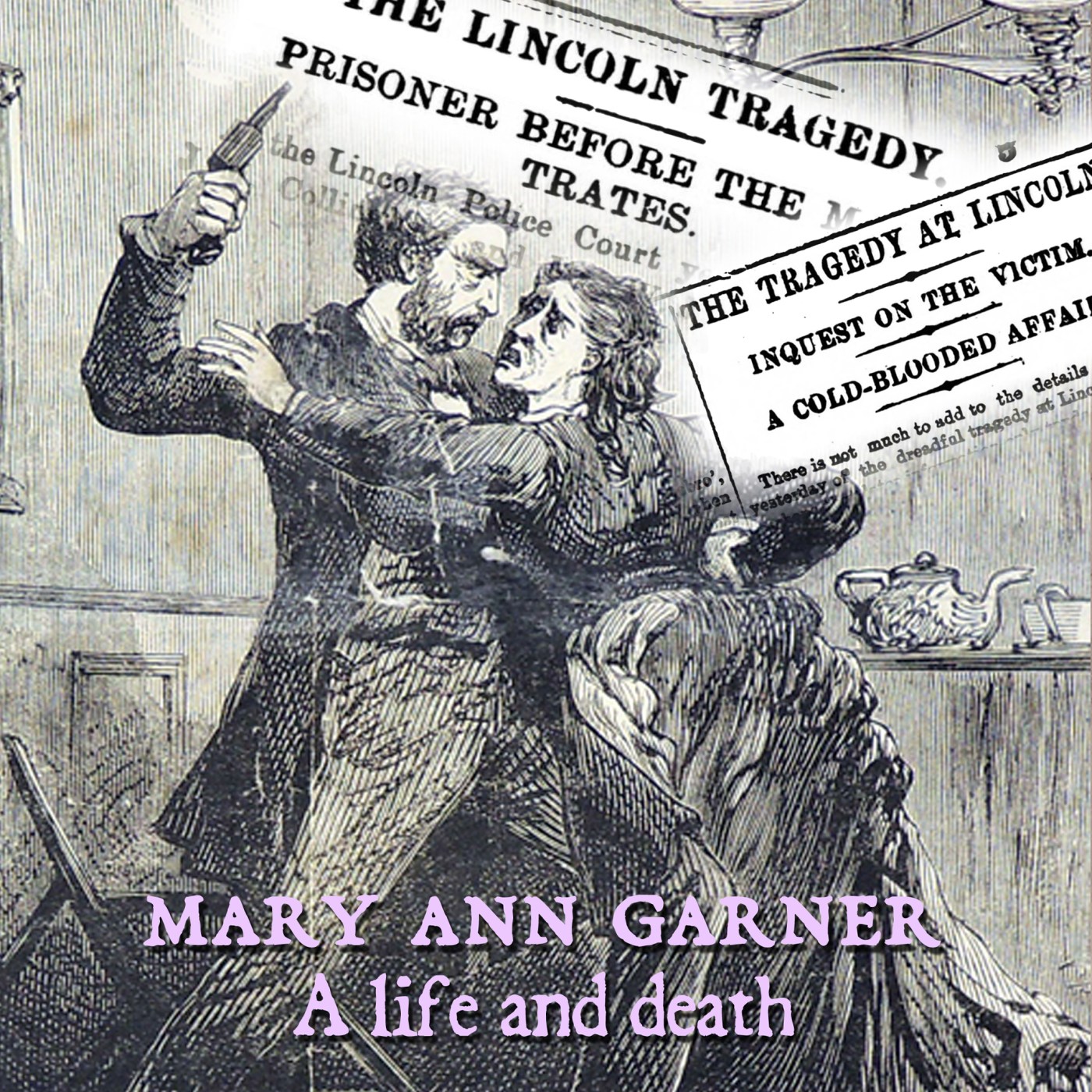
MARY ANN GARNER . . . A life and death (2)

Mary Ann header

SO FAR: March 1891. Mary Ann Garner, a 32 year-old widow, is living with her three children and teenage step son in a tiny end-of-terrace cottage in Stanley Place, Lincoln. She has been in a relationship with Arthur Spencer, a 22 year-old pork butcher. He has asked her to marry him, but she has refused. Spencer has not taken kindly to the snub.

On the evening of Monday 30th March Arthur Spencer arrived at 19 Stanley Place. He knocked at the door, and Mary Ann’s step son, John Henry Garner answered the knock. The subsequent conversation was later reported in court:
Mary Ann said, “Who’s there?”
“It’s me,” answered Spencer. (Earlier, Spencer had threatened to shoot Mary Ann and then himself if she wouldn’t marry him. She had not taken him seriously.)
She called out, “Have you got that pop-gun?”
Spencer replied, “No.”
Mary Ann said, “Let him in, John.”

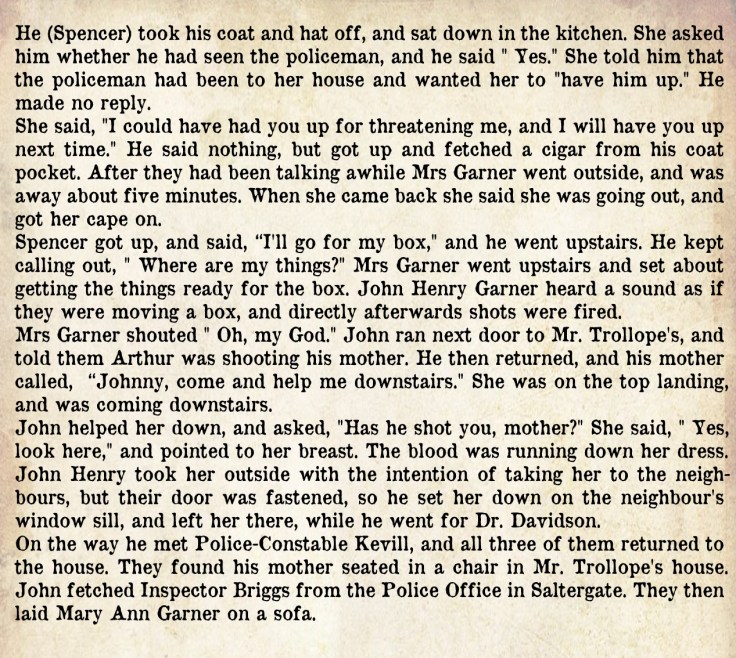
At a court hearing, it was revealed that Mary Ann, despite appearing not to take Spencer’s threat seriously had thought of contacting the police. Spencer had previously lodged at the house, and she assumed that the young man had come back to collect his clothes and belongings. The sequence of events that followed was reported in a newspaper.

The shooting

Mary Ann was, sadly, beyond medical help, and she died in the small hours of the Tuesday morning. Spencer had been true to his word, and turned the gun on himself. It is debatable whether he exhibited the same fatal intent, however, as although he was taken to hospital, he was well enough to appear in court within a few days, charged with the murder of Mary Ann Garner.

At the subsequent coroner’s inquest, the effect of Spencer’s bullets was revealed:

“There is not much to add to the details published yesterday of the dreadful tragedy at Lincoln, except perhaps that later information only tends to intensify the horror which was felt at the cold-blooded premeditation of the murderer, for it was found at the post-mortem examination held on the body of the unfortunate victim that her assailant had fired four shots at her from the revolver. Two of these did no injury beyond causing superficial wounds on the woman’s body, but one fired into her breast and another at her back were both serious wounds. Either of them would have proved fatal.”

The melancholy sequence of events that follows a murder took their course. Mary Ann Garner was buried in Canwick Road cemetery on 3rd April, 1891. Arthur Spencer was brought before a coroner’s inquest, then the magistrates’ court, and finally the Assizes Court at Lincoln in July, where he appeared before Mr Justice Roland Vaughan Williams (below left), an uncle of the celebrated composer. The conclusion was inevitable, and on Tuesday 28th July, Arthur Spencer paid the ultimate price for killing Mary Ann Garner. The hangman was James Berry (below right)

Execution

VW_Berry

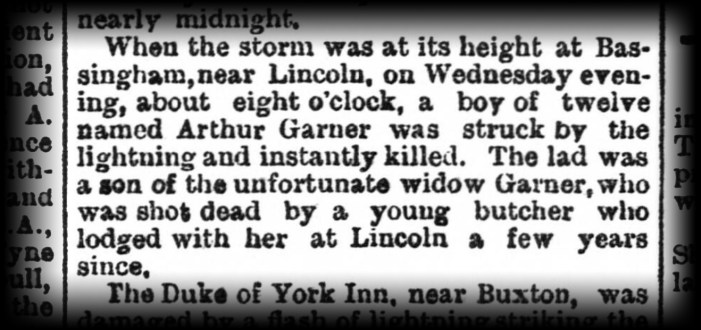
The Gods of Misfortune had not finished their business with Mary Ann’s family, however. On Friday 28th June 1895, a newspaper ran this story:

Lightning

It is a sad reflection on life that most murderers are men, and their victims are frequently women. The women should not be forgotten in Lincolnshire or anywhere else. Click the names below to read the stories of Lincolnshire women who met their deaths at the hands of men. By doing so, you will not bring them back to life, but at least they will not be forgotten. They are in chronological order according to when they were killed.

Louisa Hodgson
Louisa Hay
Mary Ann Garner
Harriet Rushby
Mary Eliza Bell
Ellen Kirk
Lucy Lingard
Sarah Ann Smith
Catherine Gear
Ivy Dora Prentice
Minnie Eleanor Kirby
Janice Holmes

MARY ANN GARNER . . . A life and death (1)

Mary Ann header

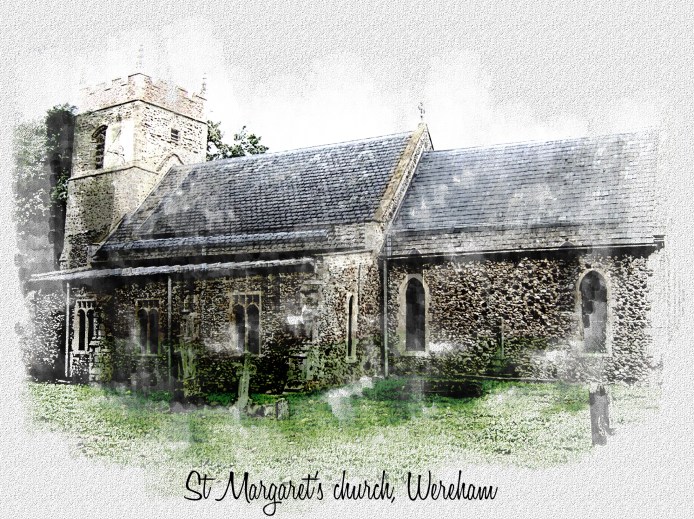
Mary Ann Elizabeth Witrick (or Witterick) was born in Wereham, Norfolk in 1857. Her baptism (above) is recorded in the village church (below) as taking place in 1859. Her parents, John and Ann (née Rust) were poor, hard-working and, like so many other families across the land, produced children on a regular basis. There was no contraception other than abstinence, and child mortality tended to keep a lid on the birth-rate.

St Margarets Wereham

Her life was to end, violently, in a Lincoln terraced house on the evening of 31st March 1891. We know that the family were still in Wereham in 1861, but the remainder of her youth  – and where she spent it – remains something of a mystery. We do know that in 1880, she married a Lincoln widower, Henry Garner. Garner’s wife Charlotte (née Foster) had died in 1879. They had one son, John Henry, who had been born on 23rd April 1875. Mary Ann and Henry went on to have three children, Arthur Garner (b1882) Ernest Witterick Garner (b1883) and Ada Florence Garner (b1886).

Bracebridge

What was to be a run of misfortune for Mary Ann Garner began in 1889, with the death of her husband. He died on 19th August 1889, in Lincoln Lunatic Asylum, Bracebridge (above). ‘Bracebridge’ was a potent word in Lincolnshire, certainly when I was growing up. I spent many hours being looked after by my grandmother in Louth, and when I played her up (which was frequently) she didn’t mince her words. “You’ll have me in Bracebridge, you little bugger!”

Henry Garner had just turned 40.  I can only speculate on his cause of death. One possibility might be, given his age, was what was euphemised as GPI (General Paralysis of the Insane) or Paresis. When researching family history one has to be prepared for unpleasant surprises, as was the case with my great grandfather. He died in an asylum, of Paresis. It is actually the final and fatal stages of syphilis. The disease could be contracted when young, but then the visible symptoms would disappear, only for the disease to return later in life, manifesting itself as delusions of grandeur, erratic behaviour, brain inflammation and, finally, death.

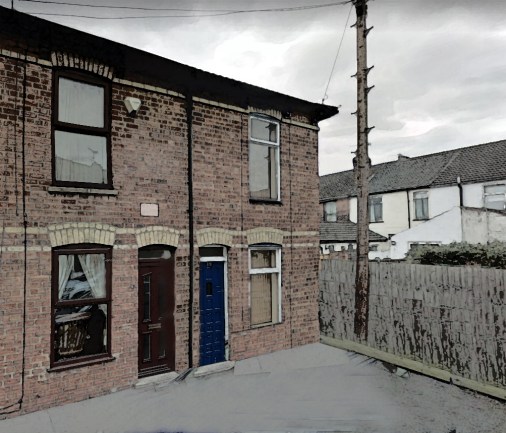
It is unlikely that Henry Garner left his widow very much by way of an inheritance. The early spring of 1891 found her in a tiny end-of-terrace, 19 Stanley Place, pictured below as it is now. To make ends meet, she was taking in washing and, according to a newspaper report, was also taking in lodgers. This is scarcely credible from a modern viewpoint, looking at the size of the house, but that was a very different time in terms of privacy and living space.

Stanley Place

At some point after the death of her husband, Mary Ann met a young man called Arthur Spencer. He was ten years her junior and came originally from Blyth in Nottinghamshire. His trade was pork butcher. For a time, he lodged at 19 Stanley Place, and one must assume that he shared Mary Ann’s bed. He asked her to marry him, but she refused, saying they were better off apart. After this, he left the house, and went back to live over the shop where he worked. Spencer was clearly besotted with Mary Ann, and on the evening of Sunday 29th March, he returned to Stanley Place and told her that if she wouldn’t marry him, he would shoot her and then turn the gun on himself. Mary Ann did not take him seriously, and sent him packing. The following evening, 30th March, Spencer came again to see Mary Ann. A newspaper reported, rather cryptically:

“They appear to have gone upstairs together, leaving the eldest child, a boy of 14, in the kitchen, the other children being in bed.”

What happened next was to send a shudder or revulsion through both the citizens of Lincoln, and cities, towns and villages across the land.

IN PART TWO
Gunshots
Trial and retribution

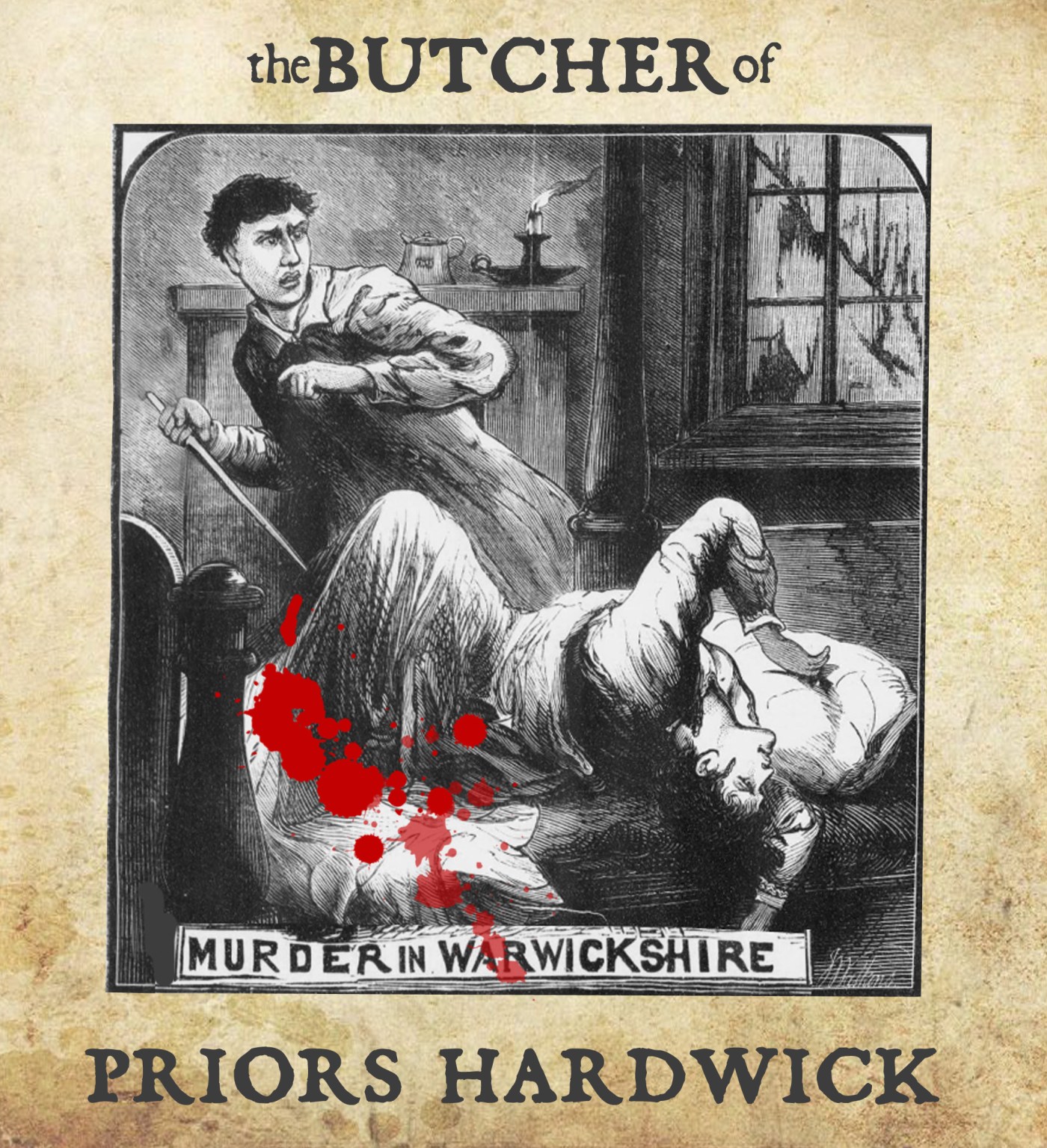
THE BUTCHER OF PRIORS HARDWICK . . . Murder at London End Cottage (2)

Screen Shot 2022-09-26 at 20.07.40

SO FAR: November 1872. Edward Handcock, 58,  a jobbing slaughterman and butcher, lives with his third wife, Betsy, and their children, in a tiny cottage on London End, Priors Hardwick. He is prone to bouts of drunkenness, and is a profoundly jealous man. He is convinced that Betsy, ten years his junior is, to use his own words, “whoring”. On the evening of 13th November, things come to a head. A subsequent newspaper report tells the grim tale.

Report

Edward Handcock was immediately arrested. Betsy Handcock was buried a few days later in the village churchyard.

Laid to rest

The procedure with suspected murder cases was relatively straightforward in concept, but could be lengthy. First came the coroner’s inquest, before a jury, to establish cause of death and a recommendation for the next stage which, if a suspect was believed guilty, was the local magistrate court. Finally, the suspect would be sent for trial at the county assize court, before a senior judge. The inquest on Betsy Handcock was held on 15th November at the village pub, The Butchers Arms – an appropriate venue in a macabre way. The medical evidence makes for grim reading:

Mr. Bragge, surgeon, of Priors Marston, said he saw the deceased woman just before eight o’clock, and found her in a comatose condition, but still partly sensible. He asked her what was the matter, and she pointed to her thigh. Examining the wound he found there was bleeding, and at once ordered her into a warm bed, and administered stimulants. She died in a few minutes after she was placed in the bed. He had made a post-mortem examination, and found the femoral artery in the left thigh bad been severed by a clean-cut wound. The wound was deep, and such as might have been caused by the knife produced. There was also a small punctured wound under the left armpit, and two small cuts on the left arm. The wounds could not have been inflicted by the deceased. Mr. Rice, surgeon, of Southam, gave corroborative evidence. He said the cut the in thigh severed the femoral artery and the vessels.

George Shuckburgh

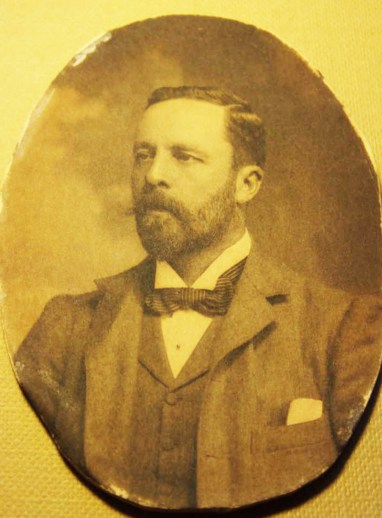
The worst part of these various hearings was that the two principal witnesses to the murder were the children, Walter and Eliza.  It was necessary for them to relive the ordeal three times over; first at the inquest, then in front of the Southam magistrates on 18th November, and then a third and final time in the much more intimidating surroundings of Warwick Assizes. The magistrates court was presided over by Major George Shuckburgh (left). Walter testified:

“My father’s name is Edward Handcock. I returned home from my work at Mr. Mumford’s (Prior’s Marston) Wednesday last about half-past five in the evening. I had my tea by myself as soon I got home. Before I began my tea mother said she would go and fetch a policeman, and she left the house. I did not hear what passed between my father and mother  before she went out. My father remained in the house after mother went away, and was in an adjoining room from where I was. After my mother left the house I heard my father sharpen his knife. I did not see him. but l am quite sure did so. My mother was gone about five-and-twenty minutes. She did not bring a policeman with her. I had finished my tea when she came back. Before my mother came back, my father went upstairs. I did not observe him take anything with him. I remained downstairs. When my mother came back, my father threw the casement of the window down into the court. I did not see him do it, but I heard the wood fall. My mother undressed the children when she came home. The children’s names are Eliza, Peter, and Minnie. After they were undressed, she took them upstairs, and said she expected there would be a “pillilu” when she took them up. I heard my mother say “Walter, Walter, he’s cutting me.” and I ran out of the house to tell the next door neighbour, Edward Prestidge.”

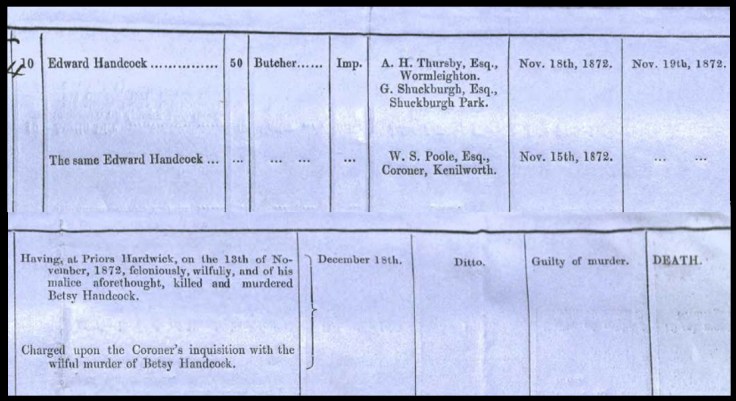
Edward Handcock was duly sent for trial at the December Assizes, in front of Sir George Bramwell Knight, and he was found guilty and sentenced to death on 18th December. What kind of Christmas he had doesn’t bear thinking about, but on Tuesday 7th January 1873, he was led to the scaffold inside Warwick Gaol. The executioner was George Smith, known as “Throttler Smith”. What was known as ‘the long drop’, where the condemned person died almost instantaneously, was some way off, and Handcock’s death was certainly not swift.

Execution

Criminal record

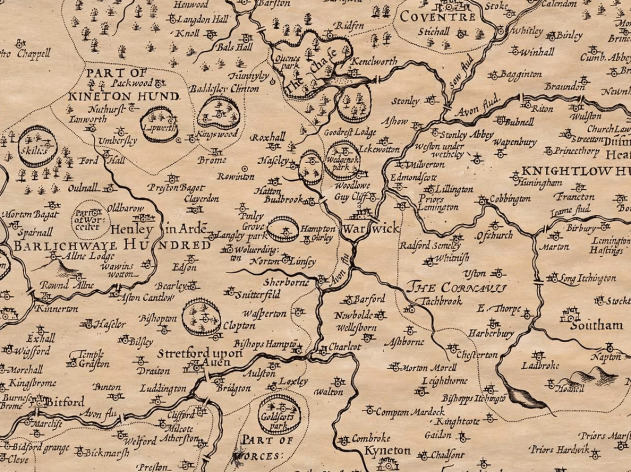
FOR MORE HISTORIC WARWICKSHIRE CRIMES
CLICK THE IMAGE BELOW

Screen Shot 2022-09-28 at 17.06.30

THE BUTCHER OF PRIORS HARDWICK . . . Murder at London End Cottage (1)

Screen Shot 2022-09-26 at 20.07.40

The 1871 census tells us that Edward Handcock and his family lived in London End Cottage, Priors Hardwick and, judging by his neighbours the Sharps, whose cottage was described as ‘near the Vicarage’, London End Cottage was in the same area. Handcock was 48, and was his wife Betsy 38. The children in the house were Walter Edward (11), Harry Mold (6), Eliza (5), Charles (3) and Minnie (2). We know for certain that Walter was not Betsy’s son, as he was the product of one of Edward’s earlier marriages.

1871 census

Edward Handcock’s marriages were, to say the least, interesting. We know that he married Betsy Mold in September 1865, so it is safe to say that Harry and the younger children were blood siblings. An earlier marriage, in 1851, was to Ann Hodgekins or Hodgkins. She died in 1862, and a newspaper report subsequent to the events of this story suggested that Handcock’s first wife was Betsy’s sister Ann, but following that trail takes us away from the narrative to no good purpose.

Edward Handcock was a butcher, but he worked for himself, more than likely dealing with the pigs that were the staple of many cottagers at the time. There is no better description of the trade than in Thomas Hardy’s Jude the Obscure but, unfortunately, Challow the pig-man doesn’t turn up, so Jude and his wife Arabella have to do the job themselves.

“Upon my soul I would sooner have gone without the pig than have had this to do!” said Jude. “A creature I have fed with my own hands.”
“Don’t be such a tender-hearted fool! There’s the sticking-knife — the one with the point. Now whatever you do, don’t stick un too deep.”
“I’ll stick him effectually, so as to make short work of it. That’s the chief thing.”
“You must not!” she cried. “The meat must be well bled, and to do that he must die slow. We shall lose a shilling a score if the meat is red and bloody! Just touch the vein, that’s all. I was brought up to it, and I know. Every good butcher keeps un bleeding long. He ought to be eight or ten minutes dying, at least.”
“He shall not be half a minute if I can help it, however the meat may look,” said Jude determinedly. Scraping the bristles from the pig’s upturned throat, as he had seen the butchers do, he slit the fat; then plunged in the knife with all his might.
“‘Od damn it all!” she cried, “that ever I should say it! You’ve over-stuck un! And I telling you all the time”
“Do be quiet, Arabella, and have a little pity on the creature!”
“Hold up the pail to catch the blood, and don’t talk!”
However unworkmanlike the deed, it had been mercifully done. The blood flowed out in a torrent instead of in the trickling stream she had desired. The dying animal’s cry assumed its third and final tone, the shriek of agony; his glazing eyes riveting themselves on Arabella with the eloquently keen reproach of a creature recognizing at last the treachery of those who had seemed his only friends.
“Make un stop that!” said Arabella. “Such a noise will bring somebody or other up here, and I don’t want people to know we are doing it ourselves.” Picking up the knife from the ground whereon Jude had flung it, she slipped it into the gash, and slit the windpipe. The pig was instantly silent, his dying breath coming through the hole.

Arabella says, “There’s the sticking-knife — the one with the point”, and this phrase will have a chilling resonance as the story of Edward and Betsy Handcock unfolds. It seems that Edward Handcock was convinced that Betsy was being unfaithful to him, although no sound evidence ever emerged that this was true. When combined with his penchant for alcohol, this put him in dangerous and violent moods, as their next door neighbours, the households only separated by a thin wattle and daub wall, were later to testify.

IN PART TWO
The events of 13th November 1872
Two terrible deaths

Blog at WordPress.com.

Up ↑