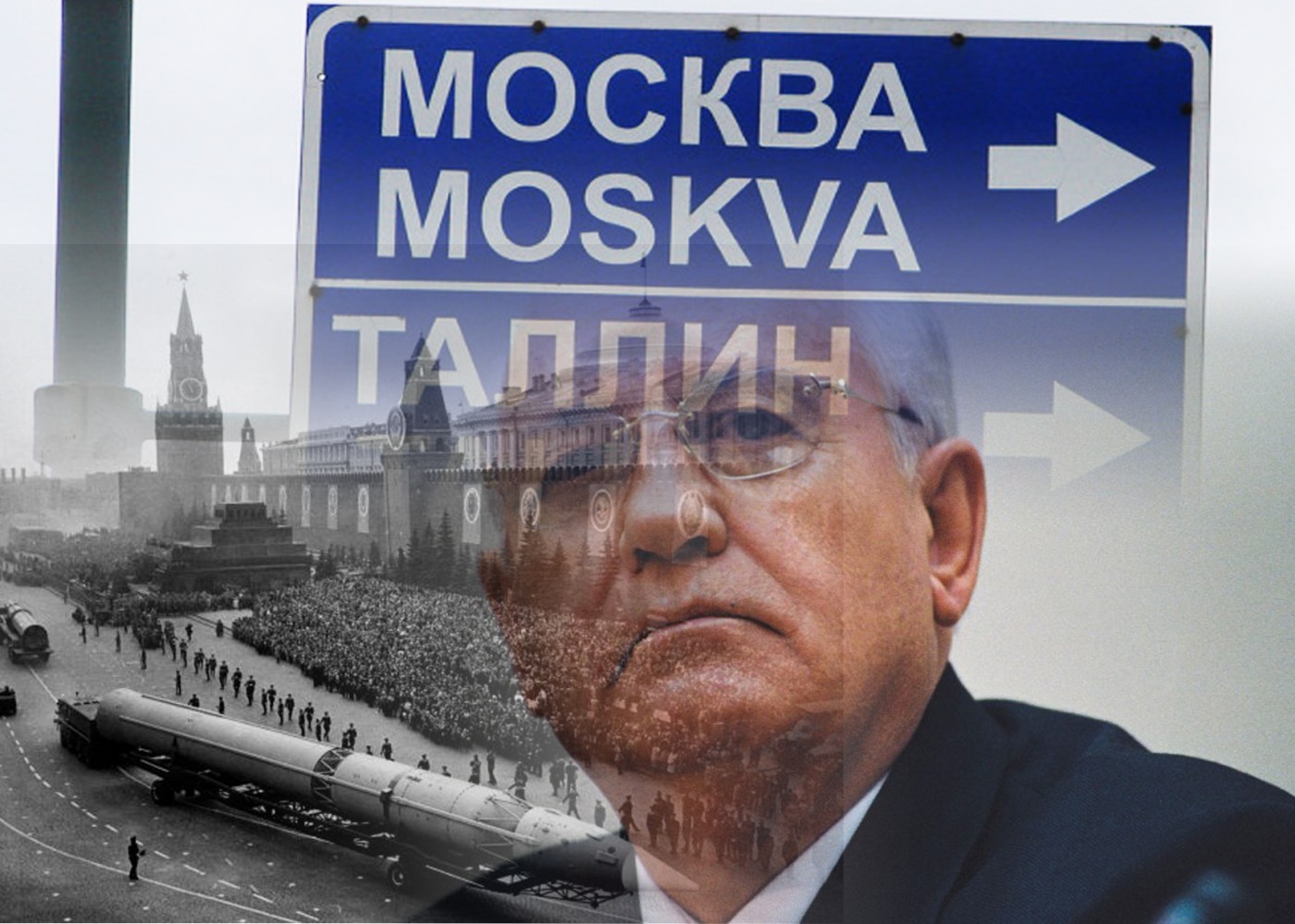

It might be thought that all the books about the problems of law and order in communist and post-glasnost Russia have already been written. Didn’t Martin Cruz Smith corner the market with his accounts of Arcady Renko and his tussles with the authorities? Or what about Boris Starling and Vodka, his tale of gangsters and oligarchs in a Russia struggling to come to terms with the free market?
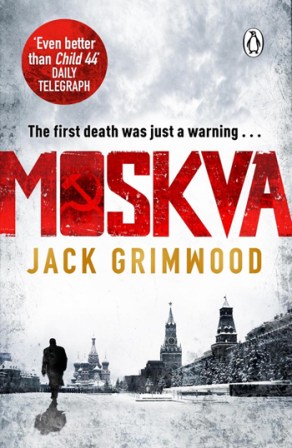 Jack Grimwood’s Moskva sets out to convince us that there is room for one more tale of conflicted lives in a modern Russia full of paradox and uncertainty. The book came out in hardback earlier this year, and is now available in paperback, from Penguin. Does Grimwood, who made his name writing science fiction and fantasy novels, hit the spot?
Tom Fox is one of those rough, tough individuals who is paid by men in suits to go to dangerous places and do unpleasant things for Queen and Country. He has, however, been doubly traumatised: firstly, a tour of duty working undercover in the bitter sectarian war in Northern Ireland has left him psychologically scarred; secondly, his marriage is pretty much over after his teenage daughter drove her Mini into a tree at 80 mph. Suicide? Drugs? No-one knows for sure, but the blame game has been played to its conclusion, and Fox has lost. Now, in the winter of 1986, his instability is such that his paymasters and handlers in London have packed him off to Moscow, ostensibly to write a report on the state of religion in Gorbachev’s Russia but, in reality, he has been sent far away to keep him out of trouble.
As soon as Fox makes the acquaintance of ambassador Sir Edward Marston and his wife, he is left in little doubt that he is as welcome as a man with something vile on the sole of his shoe trampling over the embassy Axminster. At a reception Fox meets Sir Edward’s fifteen year-old step-daughter Alex and, noticing that she has self harm marks on her lower arms, makes a flippant remark which he soon has cause to regret.
“Beneath her cuffs, not quite visible and not quite hidden, raw welts crossed both wrists. A blunt knife would do it.
‘What’s it got to do with you anyway?’
‘Nothing.’
‘Exactly’
‘Wrist to elbow,’ he said.’Wrist to elbow. If you’re serious.’”
Despite their disdain for Fox, Sir Edward and his wife Anna soon have need of his rough talents when Alex goes missing. There is no ransom note, and no apparent motive except a possible link with the body of a dead boy found frozen in the snow near The Kremlin. Fox is an excellent linguist, and his near-perfect Russian enables him to ‘go native’ in the search for Alex.
His investigation takes him to a back street drinking den run by Dennisov – a one-legged veteran of Russia’s Afghanistan war – and his sister Yelena. Their father is a distinguished veteran of that most blood-stained period in modern history which ran from 22nd June 1941 to 9th May 1945, known with reverence by many Russians as The Great Patriotic War. The further Fox digs into the mystery of Alex’s abduction, the more he realises that there is a motive – but one which has deep roots in the days and deeds of April 1945 when the Russians unleashed 20 armies, 6,300 tanks and 8,500 aircraft to crush the defenders of Berlin.
 The breadth of this novel in terms of time sometimes makes it hard to work out who has done what to whom. Patience – and a spot of back-tracking – will pay dividends, however, and the narrative provides a salutary reminder of the sheer magnitude of the numbers of Russian dead in WWII, and the resultant near-psychosis about The West. To top-and-tail this review and answer the earlier question as to whether Jack Grimwood (right) “hits the spot”, I can give a resounding “Yes!”. Yes, the plot is complex, and yes, you will need your wits about you, but yes, it’s a riveting read; yes, Tom Fox is a flawed but engaging central character, and yes, Grimwood has sharp-elbowed his way into the line-up of novelists who have written convincing crime novels set in the enigma that is Russia.
Moskva is available in hardback, paperback and Kindle.


 This, then, is the England of Handel and Hogarth (at least he was English) and the looming threat from the Jacobites north of the border. Author Robin Blake, (left) however resists the easy win of setting his story in the bustle of London. Instead, he takes us to the town of Preston, sitting on the banks of the River Ribble in Lancashire.
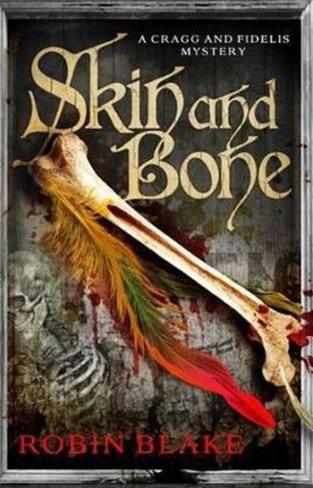 The investigations carried out by Cragg and Fidelis reveal a growing schism between the tanners and the wealthy men of property who run the town’s affairs. The leather workers are an inward looking community. This state is mostly driven by the fact that they live and work alongside the noisome waste materials – mostly faeces and urine – which are essential to the tanning process, and therefore most local people literally turn up their noses at the tanners. The burgesses and council-men of Preston, on the other hand, have their eyes on what they believe to be an acre or so of valuable land – ripe for redevelopment – currently occupied by the tannery.
 Philip Kerr’s Bernie Gunther novels bestride the 20th century, from the rise of the Nazis in 1930s Germany to the post war period when many countries still sheltered mysterious German gentlemen whose collective past has been, of necessity, reinvented. Gunther is a smart talking, smart thinking policeman who has kept his sanity intact – but his conscience rather less so – by dealing with such elemental forces as Reinhardt Heydrich, Joseph Goebbels, Juan and Evita Peron, and Adolf Eichmann.
 A Man Without Breath (2013) sees Gunther is working for an organisation whose very existence may seem improbable, given the historical context, but Die Wehrmacht Untersuchungsstelle (Wehrmacht Bureau of War Crimes) was set up in 1939 and continued its work until 1945. In 1943, on a mission from the Minister for Propaganda, Joseph Goebbels, Gunther is sent to Smolensk and entrusted with proving that the thousands of corpses lying frozen beneath the trees of the nearby Katyn Forest are those of Polish army officers and intellectuals murdered by the Russian NKVD, and not those of Jews murdered by the SS.
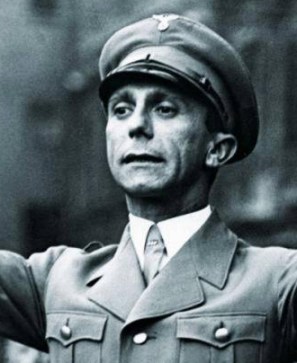 the German military that Hitler is a dangerous upstart who has already damaged the country beyond repair, and must be stopped. Adrift on a sea of violent corruption, Gunther constantly plays the role of the decent man, but in the end, he follows one theology, and one theology only. If he wakes up the next day with his head firmly attached to his shoulders, and has feeling in his extremities, then he has done the right thing. His conscience has not died, but it is far from well; it competes a whole chorale of competing voices in his head, each wishing to be heard. As he is left helpless by the world of spin and disinformation orchestrated by Dr Goebbels, (right) he must resort to his basic copper’s instincts to protect himself and uncover the truth.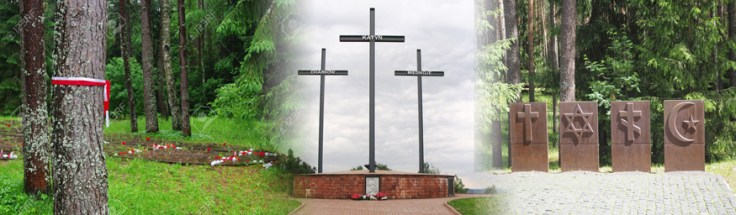
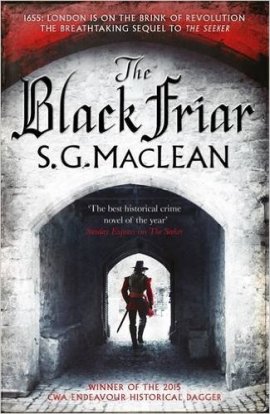 Shona MacLean opens the door of her time machine and takes us to the city of London in the third year of Oliver Cromwell’s Protectorate, 1655. It is almost exactly six years since the severed head of King Charles was shown to the crowd around the scaffold in Whitehall, but Cromwell’s England is still a troubled place. There are still pockets of secret Royalist sympathy up and down the land, and the dead king’s son is in exile, waiting his moment to return.
 MacLean (right) has great fun with prominent real-life characters who would certainly have been involved in affairs of state at the time. We have a nicely imagined Andrew Marvell, the poet best known for his erotic supplication To His Coy Mistress, and a walk on part for Samuel Pepys. The great diarist is merely a clerk at The Exchequer, but his later reputation as a serial seducer of young women is hinted at. We see the spymaster John Thurloe apparently at death’s door with some unspecified illness, but in real life he was to survive the restoration of the monarchy, and died peacefully in his bed in 1668.


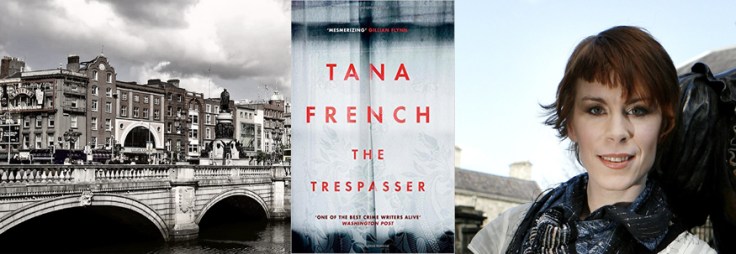
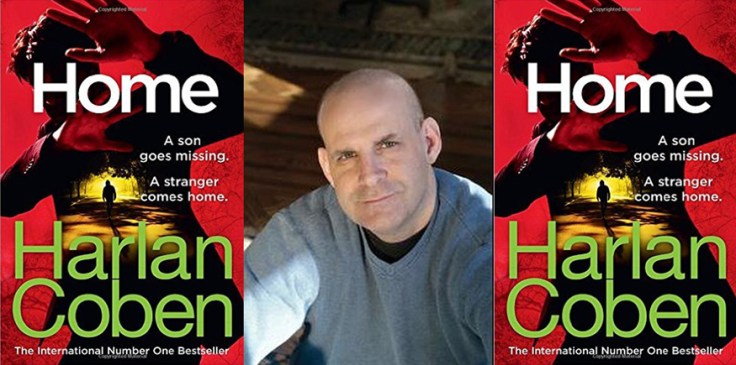
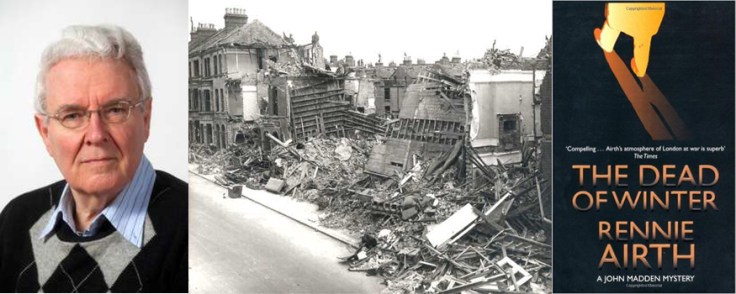
 We are in the weeks leading up to Christmas 1944, deep in what would prove to be the last winter of a war which, thanks to the Luftwaffe, had brought death and destruction to the doorsteps of ordinary people in towns and cities up and down the country. German aircraft no longer drone over the streets of London; instead, the Dorniers and Heinkels have been replaced by an even more demoralising menace – the seemingly random strikes by V1 and V2 rockets. Despite the fact that the rockets need no visible target to aim at, the ubiquitous blackout is still in force. An Air Raid Precaution Warden, whose job has become as redundant as that of those manning anti-aircraft batteries, makes a chilling discovery. He stumbles – literally – on the body of a young woman. Her neck has been broken by someone clearly well-versed in killing, and the only clue is a number of spent matches lying by the body.
 There is more than a touch of The Golden Age about this novel, but it is much more than a pastiche. Although the killing of Rosa Nowak is eventually solved, with a regulation dramatic climax in a snow-bound country house, Rennie Airth allows us to breathe, smell and taste the air of an England almost – but not quite – beaten down by the privations of war. Many of the characters have menfolk away at the war, including Madden himself and his wife Helen. Their son is in the Royal Navy, on the rough winter seas escorting convoys. The contrast between life in the city and in the country is etched deep. In the city, restaurant meals are frequently inedible, the black market thrives unchecked due to depleted police manpower, and even the newsprint bearing cheering propaganda from the government is subject to rationing. Travelling anywhere, unless you are fiddling your petrol coupons, is arduous and unpleasant.
 There are few grander places in Dublin’s fair city than Leinster House, even though its style and grandeur might hark back to the days when the Irish aristocracy – with its links to England – were a power in the land. Whether the current inhabitants of the ducal mansion do its stately rooms and grand corridors proud is not for me to judge, for it houses Oireachtas Éireann, the parliament of the Irish Republic. There must have been a whole lexicon of killing words uttered between political opponents over the decades, but few – if any – actual murders have despoiled the Georgian grandeur. Jo Spain puts this right within the first few pages of Beneath The Surface.


 fullybooked2017