Search

fullybooked2017

Category

REVIEWS

SMOKE CHASE . . . Between the covers

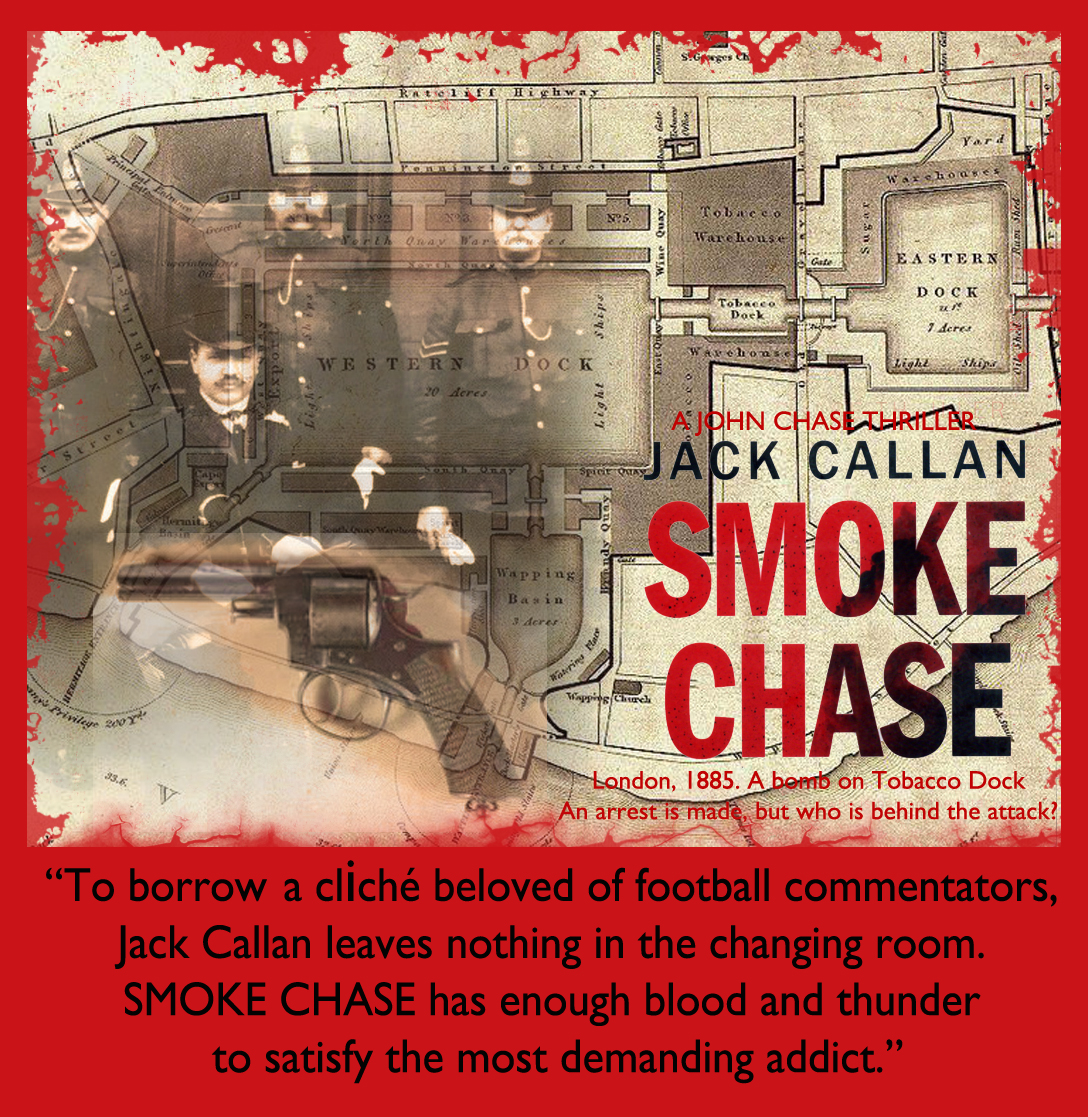
Jack Callan’s debut novel Smoke Chase introduces John Chase, a six foot, sixteen stone army veteran of colonial wars, now working with the embryonic Special Branch, a police department set up to combat the violent threat of Fenian revolutionaries in late 19th century London. It is the winter of 1885 and, as always, Chase is operating very much undercover, dressed as a working man.

smoke001After a long night shift, Chase is having his breakfast in a cafe when he is alerted to a bomb going off in the vicinity of nearby Tobacco Dock. When he arrives on the scene he finds a dead man – or, at least, what remains of him – but in what is clearly a set-up he is pounced on by a number of police officers, and hustled off in manacles to 26 Old Jewry, the HQ of The City of London Police.

Despite providing his warrant card, Chase – and a union official called Burns are taken to a rotting prison hulk moored in the Thames. Chase soon worked out that he and Burns are being targeted because they have come too close to a huge web of corruption involving a gang of bent import-export fraudsters aided and abetted by senior police officers.

Chase overpowers his guards and escapes to the shore where he begins to plot the downfall of Mordecai and Elisha Smithson, the gangsters who are in charge of the smuggling ring. We have pretty much everything served up from this point on including, in no particular order, rape, torture, Russian thugs, suicide, enough stabbings and shootings to fill a morgue, families being kidnapped and depraved assassins. Participants fall like flies, even unto the last paragraph of the last page

John Chase is rather like a modern-day Bulldog Drummond, and the novel, despite the gore, harks back to a more innocent time when characters like Dick Barton overcame even the most beastly assailant – “with one bound he was free!”

Jack Callan has certainly done his homework, however. The topographical background – London’s dockland when it was it was a rough and tumble working environment, the Lea Valley and the sordid nooks and crannies of East London – is enthusiastically painted,and we even have fleeting acquaintance with the music hall singer Bessie Bellwood and the women’s rights campaigners Annie Besant and Elizabeth Garrett Anderson.

women

To borrow a cliché beloved of football commentators, Jack Callan leaves nothing in the changing room. Smoke Chase has enough blood and thunder to satisfy the most demanding addict. Callan’s debut novel is published by Matador and is out now.

For more novels set in Victorian England,
just click on the image of Her Majesty.

editrs571723_2105800-lpr


LOST . . . Between the covers

Lost007

Leona Deakin introduced to Dr Augusta Bloom, her psychologist-turned-PI in Gone, which came out in 2019. Click here to read the review of that and get something of the background to Lost, the second novel in the series.

Augusta and her professional partner Marcus Jameson have had a major professional and personal falling out after their involvement with a manipulative psychopath called Seraphine. Jameson is a former military intelligence analyst, and has a decent pension, so he hasn’t needed the work, but Bloom’s latest case is just too intriguing for him to turn down.

An apparent Islamic terrorist has bombed a social event at the Royal Navy base of Devonport. There have been a handful of fatalities, but one of the injured – a Navy officer called Harry Peterson – has disappeared. He was seemingly taken away by ambulance, but his girlfriend Karene – dazed but uninjured in the bomb blast – has been unable to locate him in any of the local hospitals.

Karene gets no joy from either the Navy or the police, and so she turns to her friend Dr Augusta Bloom for help. Peterson eventually turns up, smuggled into a hospital by person or persons unknown. He has head injuries which were not sustained in the Devonport bombing and, when he wakes, he has suffered a substantial loss of memory.

Someone, somewhere is desperate for Harry Peterson to have no memory of the previous four years. Unfortunately for, those four years saw Peterson’s wife begin an affair which led to the breakup of their marriage and, more crucially, the beginning of Peterson’s romance with Karene. Now, he has literally no idea who Karene is.

As Bloom and Jameson chip away at what seems to be a granite wall of military secrecy, Peterson’s cousin, living a blameless and apparently mundane life in rural France, is found tortured to death. Photographs found in his cottage hint at a link to the goings on in England.The re-appearance of the malevolent Seraphine does nothing to clear the miasma round who is cleverly messing around with Harry Peterson’s mind – and why?

In the last quarter of the book, the pace turns frenetic, the plot ever more knotted and the scenery – from a torture room in a Central African Republic military base to a bank safe deposit vault in Peterborough – diversifies. Leona Deakin has great fun mystifying not only Bloom and Jameson but us the readers. The relationship between the pair of investigators is tested to breaking point with Jameson increasingly believing that he is being played for a fool, and when the case splits wide open to reveal not only political chicanery but links to people trafficking, then all bets on a peaceful and tidy solution are definitely off.

Lost, published by Transworld Digital, first came out in Kindle in the summer of this year. It will be available as a paperback, under the imprint of Black Swan, at the end of October.

PEOPLE OF ABANDONED CHARACTER . . . Between the covers

There can be no historical event – save, perhaps, the assassination of John F Kennedy – which has attracted more theories, speculation and books, both fiction and non-fiction, as the killings attributed to Jack The Ripper in the autumn of 1888. My feature JACK THE RIPPER . . . In fiction, from the early days of this website, looks at just a few novels which have retold the tale.

People001

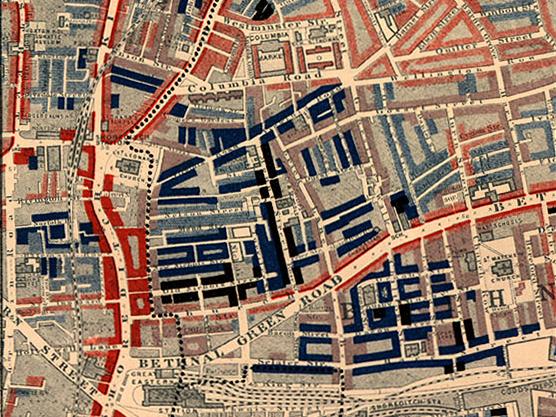
Now, debut novelist Clare Whitfield has her moment on the stage with People Of Abandoned Character. Susannah Chapman is a rather unusual woman, in her early thirties, who has known at first hand the dreadful deprivation of that part of the east End of London known as The Nichol. The contemporary map of the area (below) grades streets with colours according to the level of poverty, with red indicating relatively comfortable residents through blue to black – the depths of squalor.

Poverty_map_old_nichol_18891

Susannah has no recollection of her father, and a memory of her mother so horrifying that she only turns to it in her nightmares. She is eventually rescued by her grandparents who take her to live with them in Reading. She chooses to become a nurse, and is accepted as a trainee at The London Hospital on Whitechapel Road, seen below in a 19thC photograph.

london-hospital-exterior

When Susannah attracts the attention of a young doctor, Thomas Lancaster and, after a whirlwind romance, she leaves The London as Mrs Lancaster to become the mistress of a delightful riverside home in Chelsea. Mistress? Not quite. The first sign that all may not be well is that Thomas Lancaster has a housekeeper named Mrs Wiggs, and the lady is a graduate of the Mrs Danvers school of domestic management. Yes, I know that’s an anachronism, but fans of Judith Anderson and Rebecca will know what I mean.

The early passion and harmony of the marriage soon dissipates, and Susannah begins to be disturbed both by her husband’s violent sexual demands and his frequent nocturnal absences, from which he returns feverish and dishevelled. Soon, the narrative of the novel begins to synchronise with what we know about the actual Ripper murders. Ripperologists can take the roll call of well-known characters safe in the knowledge that The Gang’s All Here. We meet the victims themselves, of course, but also the walk-on parts such as the actor Richard Mansfield, John Pizer, the Police Surgeon Dr Phillips and dear old Fred Abberline put in an appearance.

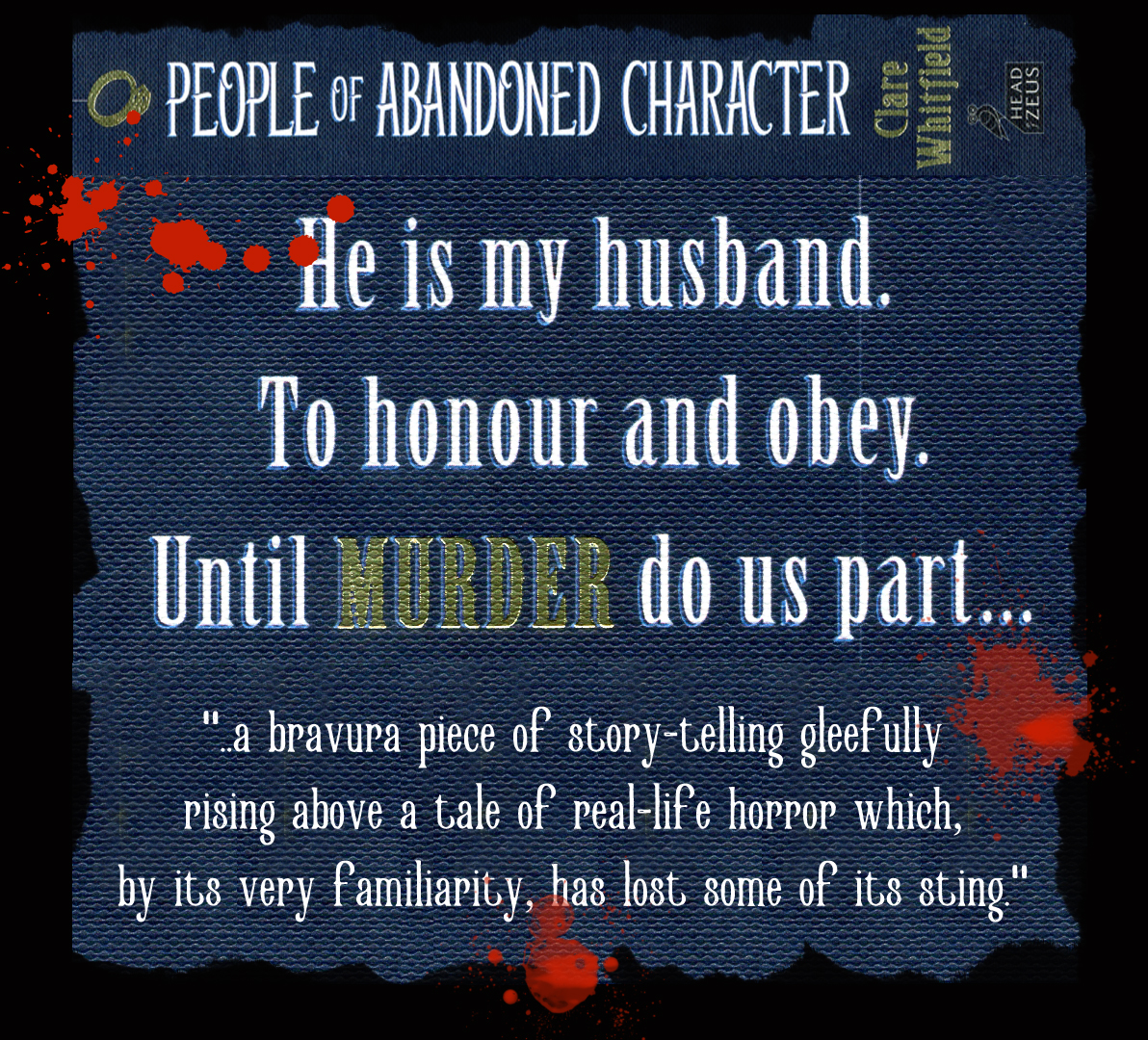
People Of Abandoned Character is a bravura piece of story-telling which gleefully rises above a tale of real-life horror which, by its very familiarity, has lost some of its sting. We eventually learn that Susannah is not quite the put-upon damsel in distress she might want us to believe in. The conclusion of the story is as astonishing and enterprising a solution to the eternal Ripper mystery as I have ever read, and fans of Gothick gore and melodrama will certainly not be disappointed. It is published by Head of Zeus and is out now.

THE DARKEST EVENING . . . Between the covers

Certificate014

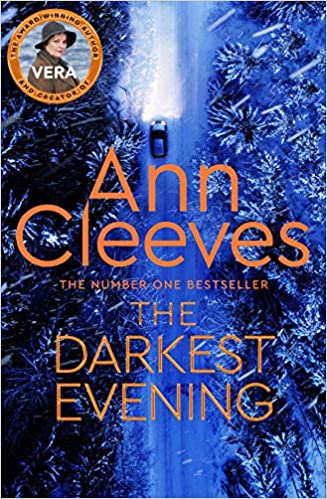
Confession time. Up until recently I may have been the only crime fiction reviewer who had never read a novel by Ann Cleeves (left), nor watched the long running TV adaptations of her Vera Stanhope novels. No particular reason why, except the purely practical one that no publicist had ever sent me an ARC, and possibly because, in my bigoted way, I thought that anything served up as Sunday evening TV must be impossibly cosy.  I was wrong. Mea Culpa. Hair shirt. Ten – no, make that twenty – Hail Marys. I have just finished The Darkest Evening and loved every word of it.

My take on Vera Stanhope first, uncoloured by the reportedly excellent TV personation by Brenda Blethyn. is that Vera is frumpish, rather alone in the world, wedded to her job as a Detective in North East England, totally without vanity and completely indifferent to the figure she cuts. Criminals underestimate her at their peril, however, as she has a sharp intelligence – both as a human being and as an investigating police officer.

TDE coverThe story begins in a blinding December snowstorm, as Vera takes a wrong turning on her way home, and unwittingly steps onto the stage of a murder mystery. For newbugs like myself, this gives Cleeves a chance to flesh out part of Vera’s back story. The early action in The Darkest Evening takes place near a crumbling stately home – Brockburn – to which Vera has familial connections via her father Hector who, we learn, was rather a bad lot. The current residents of Brockburn are Harriet, the widow of Crispin Stanhope, and her daughter Juliet and husband Mark. Mark has thrown a party for the local gentry in order to get them on board with his plan to turn the old house into a vibrant regional theatre. The evening takes a turn for the worse when the body of Lorna Falstone is found outside in the snow. She has been bludgeoned to death.
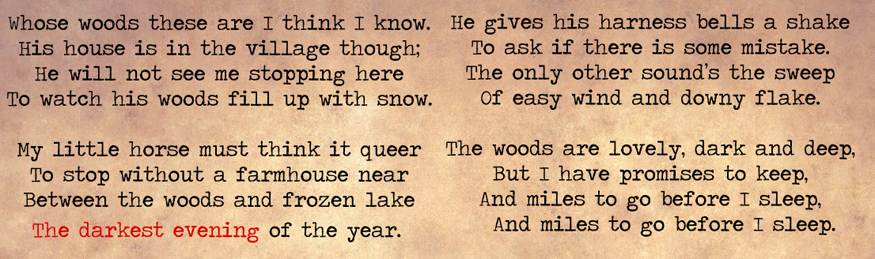
Lorna was the daughter of a local hard-scrabble farmer and his wife, and her short life has been framed by a near fatal eating disorder, and then a mysterious pregnancy, which has left her the lone parent of baby Thomas.

The novel is beautifully plotted and a classic whodunnit. It is more, though – much, much more. Vera Stanhope is a complex and subtle character despite her apparently ramshackle appearance and manner, and the sometimes bleak rural setting is magically described. Fans of the series will, no doubt, be shaking their heads and saying something like, “Tell us something we don’t know – what took you so long?” All I can reply is, “I know, I know – the fault is all mine.” The Darkest Evening is published by Macmillan and is available now in all formats.

A quick quiz question that any CriFi buff worth his or her salt should be able to answer. Which classic (and complex) crime fiction classic also begins in the snow, with the main character’s car in a ditch? DM me the answer on my Twitter feed – @MaliceAfore and I will send you a free novel. I’ll give you a choice of several, but UK postcode only, please.

Frost

BAD TIMING . . . Between the covers

IMG_1893-2-2Nick Oldham (left) is a former copper from Lancashire,and his novels featuring Henry Christie have been delighting readers for many years. I believe that Bad Timing is the 27th in a series dating back to A Time For Justice, which came out in 1996.

Here’s a very quick Henry Christie CV ( or resumé for American readers). He worked his way up through the ranks of Lancashire Police, but never wanted the kind of seniority that meant braid on his ceremonial uniform or role where he spent most of his time behind a desk massaging crime figures for the Home Office or, even worse, managing the force’s diversity targets. He has been shot, beaten up, sacked and re-instated, and has seen the very worst of criminal lowlife in England’s north-west. He has now retired and is running a moorland pub, while still mourning the deaths and various departures of women in his life.

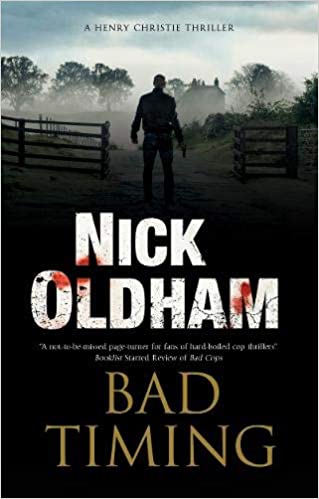
Bad TimingBad Timing is a kind of sequel, or perhaps the final chapter of a story which began in the previous novel, Wildfire. If you click the link you can get the background story. In short, a married couple who made a tidy living out of creative accounting – laundering money for some seriously bad gangsters have been murdered in their luxurious converted farmhouse. The problem is that huge sums of money have gone missing, probably sucked into a Bermuda Triangle of dodgy companies, offshore investments and Swiss bank accounts. And now, the bad guys want the money back.

A word to the wise. Don’t be misled into thinking that the partly rural setting of these novels mean that it you will be reading a cosy Heartbeat-style tale of lovable rogues and amiable coppers on push-bikes. Oldham tells it how it actually is, and Christie’s world is one of ruthless criminal families, vicious thugs, appalling council estates with endemic crime, and toxic traveller sites populated with opportunists who are as violent as they are anti-social.

When the body of the daughter of the murdered accountants is found in a remote lake, the police realise that the case is far from closed and there is still a killer out there. Henry Christie is brought back as a consultant, and although he is ‘chaperoned’ by Detective Diane Daniels, it is his nose for danger that pitches them into a head-on collision with a gangland killer who is as black of heart as anyone Christie has encountered in his long career.

Christie is, to put it mildly, getting on a bit. His body is just about up for the demands of pulling pints, concocting exotic designer coffees and serving full English breakfasts at his pub, The Tawny Owl, but now he is out there challenging a man half his age and twice as malevolent.

Bad Timing is as brutal and unflinching a thriller as you will read all year. It is published by Severn House and is out on 30th September.

feature

Green Hands is the tale of a young woman – Barbara Whitton – who signs up with a chum, Anne, to work with the Women’s Land Army, replacing male farm hands of fighting age who have been called up into the forces. The action sees them first on a bleak and windswept Scottish farm in the hardest of winters, where they do daily battle trying to make mangold wurzels part company with the frozen soil. The accommodation is Spartan, the rations are meagre, and the social life is non-existent. It is all too much for Anne, however, and she departs for the softer life in The Home Counties.

Anne is replaced by Pauline, who Barbara knew – and hated – at school, but Pauline’s eccentric ways and appealing naivity about the world bring a touch of humour to the narrative. Thankfully for their childblains and frozen limbs, Bee (Barbara) and Pauline are transferred to the slightly less brutal world of a farm in Northumberland.

Readers looking for wartime tragedy, sudden death or other moments of high drama will find nothing here to their taste. Instead, there is the steady rhythm of rural life across the changing seasons, and in describing this visceral connection of the the farming people to the land they live and work on, Barbara Whitton echoes such writers as Thomas Hardy, Flora Thompson and Laurie Lee.

51qCNOa5WYL._SX321_BO1,204,203,200_

Green Hands was first published in 1943 and so, unlike most of the other reprints in this IWM series which were published after the war, there was still a war going on, and public morale to be taken into consideration. This accounts for the largely upbeat and positive tone of the story, but should not be taken as a negative criticism.had the book been filmed, it would have been in black and white, but it is to Barbara Whitton’s credit that her landscape is full of colour and nuance.

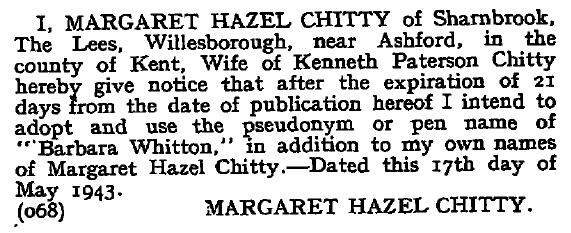
Barbara Whitton (real name Margaret Watson) was born in Newcastle-upon-Tyne in 1921. Due to study Art in Paris, her training was curtailed by the outbreak of the Second World War. Having volunteered for the Women’s Land Army (WLA) in 1939, she worked as a Land Girl for around a year before moving to the First Aid Nursing Yeomanry (FANY) and later joining the Auxiliary Territorial Service (ATS) as a driver, where she remained for the duration of the war. During her time with the ATS she met her husband Pat Chitty and they were married in 1941. After the war, she wrote a number of accounts of her wartime experience and retained an interest in art, literature and horticulture throughout her life. She died in 2016. I found this curiosity on the internet.

Most of the IWM Classics have been stories of men at arms. Plenty Under The Counter by Kathleen Hewitt (click for review) took a quizzical look at some of the less salubrious aspects of life on The Home Front, but Green Hands delivers a tale of hardship, humour and – above all – the humanity of those who kept the country going during the dark years of wartime. It is published by The Imperial War Museums and is out now.

CHAOS . . . Between the covers

Chaos header

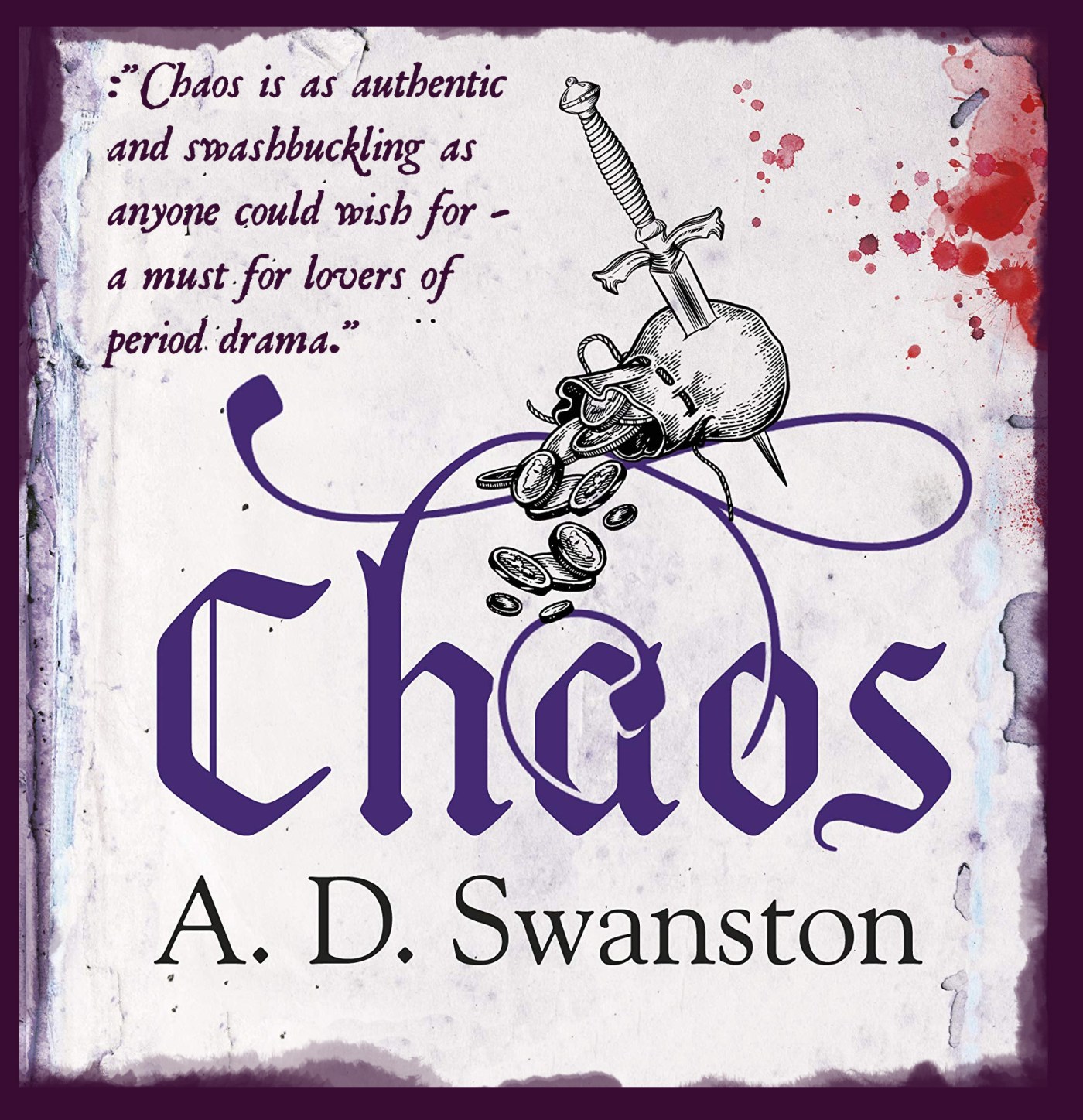
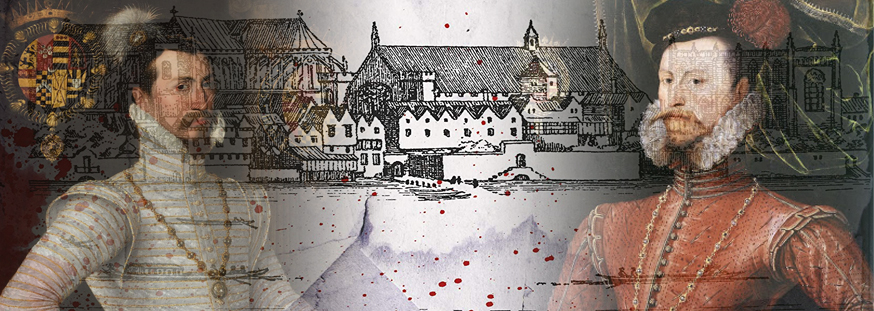
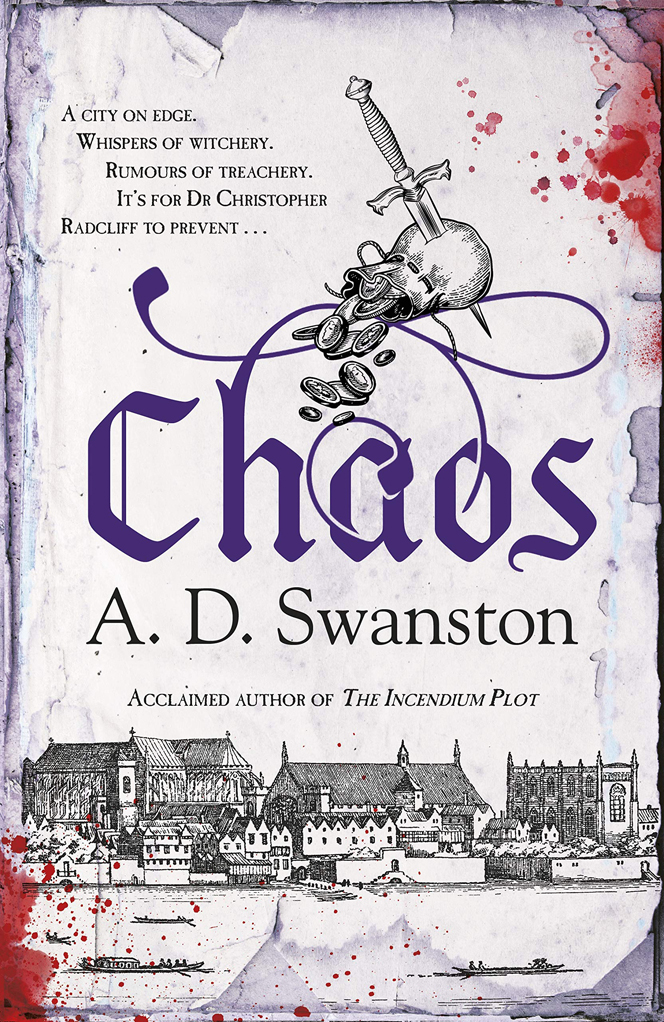
Christopher Radcliff is a Doctor of Law and he is also what  sixteenth century England called an ‘intelligencer’. We might say ‘spy’, ‘secret agent’ or, at a pinch, ‘private eye.’ He is employed by two of the most powerful men in Queen Elizabeth’s service – the brothers Dudley. Robert is the Earl of Leicester and Ambrose the Earl of Warwick.

91c5yMTPQkLRadcliff, the creation of author AD Swanston, made his literary debut in The Incendium Plot (2018). The blurb for that book said that the country was “a powder keg of rumour, fanaticism, treachery and dissent.” Well, a few years on, and things haven’t changed a great deal. The big threat to Good Queen Bess still comes from those devious and malignant Papists, but the adherents of ‘the old religion’ have changed tack. Military conquest by Spain or France has proved ineffectual, so has a more subtle method has been chosen?
Pretty much every one of us is too young to remember a time when our currency was suspect. Yes, there have been periods of inflation (I can remember PM Harold Wilson and ‘The pound in your pocket.”) but we have never doubted that the coins in our pockets or the notes in our wallet were suspect. In February 1574, however, someone has been minting fake testons. They were, in old money, shillings, and the most common coin in circulation for everyday transactions.

BearThe fake testons also bear the image of the bear and ragged staff (right), the emblem of the Earl of Warwick. Clearly, the forgers have a double headed plan. They intend to paralyze normal day to day trade by making shop-keepers wary of accepting coins, but they also seek to diminish the status and power of the Dudley brothers by linking them to worthless coins.

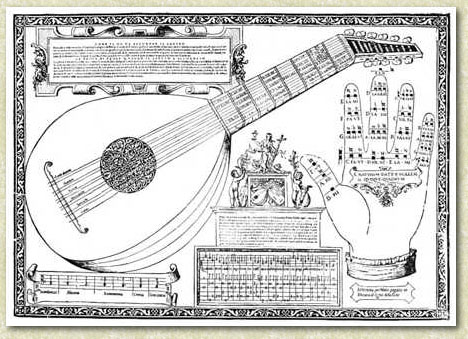
When Radcliff eventually tracks down the person behind the counterfeit coins he discovers not a Papist plot, but a personal search for revenge, fired by a dreadful betrayal and a bitterness so deep that only death can sweeten it. Without giving any more away, I can say that part of this vengeance involves, strange to relate, that most delicate and ethereal of Renaissance instruments, the lute.

Pagano1

Swanston has great fun immersing us in all the contrasting glory and squalor of Elizabethan England. We are led through the magnificent Holbein Gate into the Palace of Whitehall with its tapestries, panelled chambers and priceless paintings, but we also have to tread gingerly amid the horse muck (and worse) as we walk along Cheapside, and try to avoid the grasping hands of its whores and beggars.

Chaos is as authentic and swashbuckling as anyone could wish for – a must for lovers of period drama. It is published by Bantam in hardback, and by Transworld Digital as a Kindle. Both formats are available now.

SQUADRON AIRBORNE . . . Between the covers

Elleston Trevor was born Trevor Dudley Smith in 1920, and became a hugely prolific and successful novelist under many other different pen-names, most notably as Adam Hall, writing the Quiller series of spy novels.

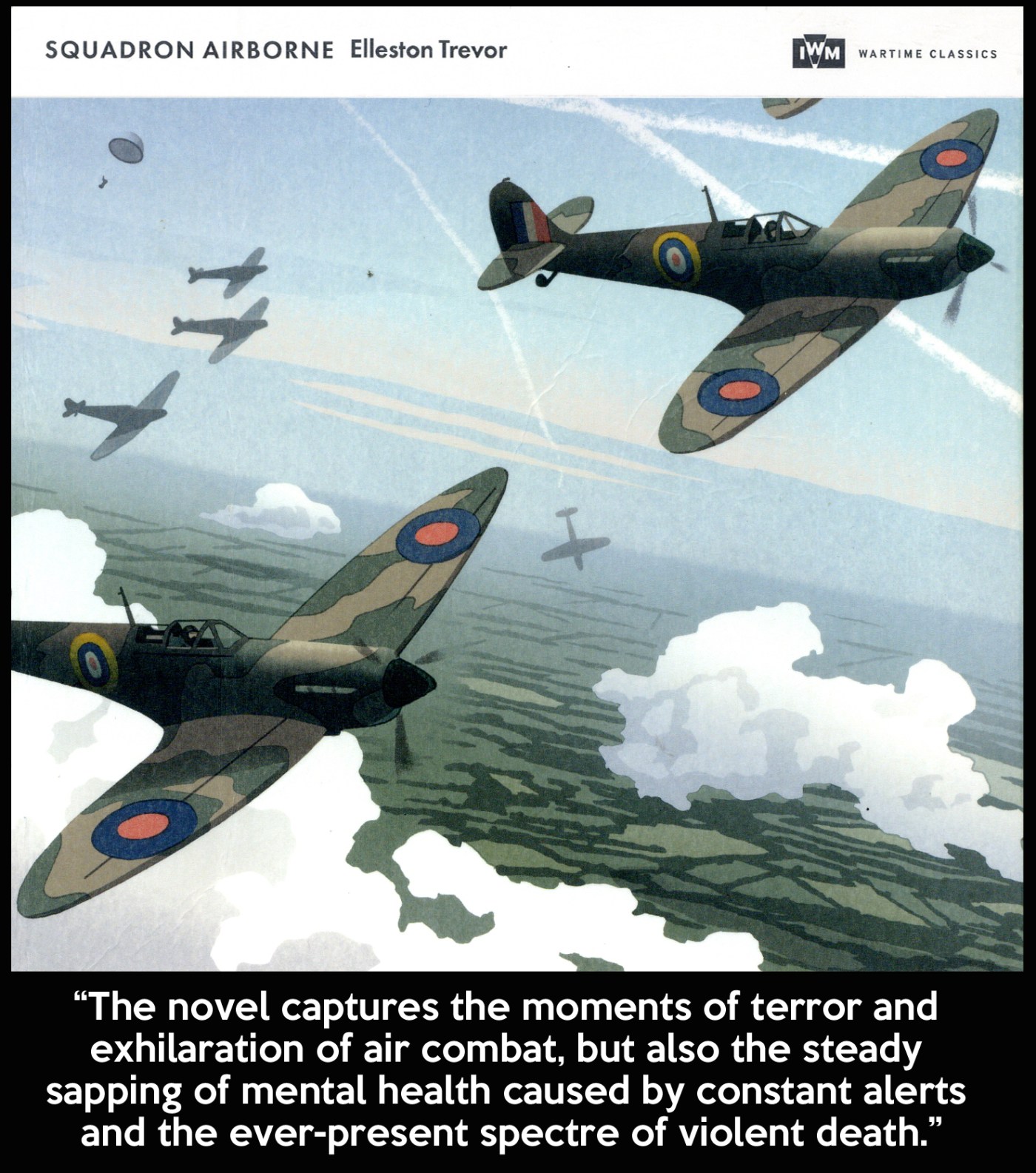
He served throughout WW2 as a Flight Engineer, and it is this experience that he drew on to write Squadron Airborne, first published in 1955. It is an intense and sometimes harrowing account of just a few days in the life of a young RAF pilot, Peter Stuykes, in that unforgettable summer and autumn of 1940 that we now call the Battle of Britain.

We are in high summer, and the nineteen year-old Stuykes arrives at the fictional RAF base of Westhill in southern England. He has been taught how to fly, but has never been in combat. A brief training session in the air under the watchful eyes of Squadron Leader Mason passes without major disaster, but it is only a matter of hours before he is in the air again, and makes his first kill.

There are heart-stopping descriptions of aerial combat, vividly imagined because the author was not a pilot himself. He makes us well aware of the unglamorous but vital work of the ground crews who made sure that the aircraft were as fit and functional as they could be. He also hints at a dark reality – aircraft were much harder to replace than young men in their late teens and early twenties.

Perceptions of the past are ever-changing, and the current wisdom, eighty years after the event, has it that the “gallant few” version of the events of 1940 is misleading. Yes, the defeat of the Luftwaffe contributed to Hitler’s disastrous decision to invade Russia. Yes, the bravery and sacrifice of the young pilots was immense, but the reality was that RAF deployment of resources and its mastery of radar meant that the tactic of massed daylight raids by German aircraft was doomed to failure.

Trevor was writing for readers who would have been totally familiar with technical terms, abbreviations and wartime vernacular. I grew up hearing my father use many of these terms, picked up during his wartime service, but younger readers may be interested in clarification. Here are some unfamiliar terms used in the book:

ERKS: low ranking RAF personnel
FLAP: an emergency of some kind
FRUIT SALAD: Medal ribbons
IRONS: as in ‘eating irons’, cutlery
MAG-DROP: a decrease in engine power due to magneto failure
OLEO: a hydraulic shock absorber used in aircraft landing gear
SIDCOT: a standard RAF flying suit
SP: Service Police. The RAF version of Military Police
TANNOY: Public address system
TROLLEY-ACC: a wheeled device containing batteries, used for jump starting aircraft
U/S: Unservicable, broken
WAD: A cake or a bun

9f52565165950f2ce988576ba2cf1540

The novel captures the moments of terror and exhilaration of air combat, but also the steady sapping of mental health caused by constant alerts and the ever-present spectre of violent death. Trevor doesn’t ignore the fleeting moments of happiness, whether they be the temporary solace of getting drunk in the local pub, or fleeting love affairs, squeezed in between the dreaded bark of the Tannoy, ordering the young men back into the air. Squadron Airborne has been republished by the Imperial War Museums as part of their Wartime Classics series, and is available now.

For reviews of previous novels
in the Wartime Classics series,
click the image below

iwm_black_logo_2_2019_04_18_05_34_09_pm-695x130

GATHERING DARK . . . Between the covers

gd013

indexCandice Fox (left) is an Australian novelist who is perhaps best known for her collaborations with James Patterson, but back in 2019 I reviewed her solo novel Gone By Midnight, and if you click the link you can read the review. That book was set in the Queensland city of Cairns, but in her latest, she goes Stateside to Los Angeles for Gathering Dark.

To borrow a cliché much loved by sports commentators, Candice Fox leaves nothing in the changing room here in the way of characters. The larger-than-life cast includes former top paediatrician jailed for murder and now working in a fast food joint, her kleptomaniac and drug-addicted chum from prison, a fixated female cop whose career seems to be spiralling out of control, and a six-foot black female gangster and strip-club owner.

What brings this formidable quartet together? The search for the missing daughter of Sneak, the aptly named kleptomaniac. After randomly robbing Blair Harbour at her greasy take-out counter, Dayly has disappeared into the nightmare neon slick that is the criminal underbelly of Los Angeles.

gd014We all love a good coincidence, and cop Jessica Sanchez just happens to have been gifted a sumptuous LA property which sits next door to the house where Blair’s son Jamie has been fostered since his mother’s unfortunate spell in jail. And who was one of the cops involved in Blair being put away for ten years? Christian name begins with J and surname starts with S!

Fox has woven a wonderfully complex web of a plot. Blair isn’t sure why the gangster, Ada, is offering to help, but she thinks it might be because she is returning a favour notched up while the two were in jail together. We eventually learn, a little way before Blair does, that Ada doesn’t do gratitude, and has an ulterior motive.

The cop, Jessica, is pretty much loathed by LAPD colleagues, and she is warned that if she accepts the multi-million dollar mansion, she will be drummed out of the force for accepting bribes.

The unholy Trinity of Ada, Blair and Jessica plough a violent and relentless furrow in their search for Dayly, and it all comes to a head in a claustrophobic and bloody shoot-out in a sewer beneath an LA suburb. Fox is a gifted storyteller and this ‘guns and gals’ thriller will guarantee a few hours of excellent entertainment. Gathering Dark is published by Arrow and is out now in paperback.

Blog at WordPress.com.

Up ↑