Search

fullybooked2017

Category

REVIEWS

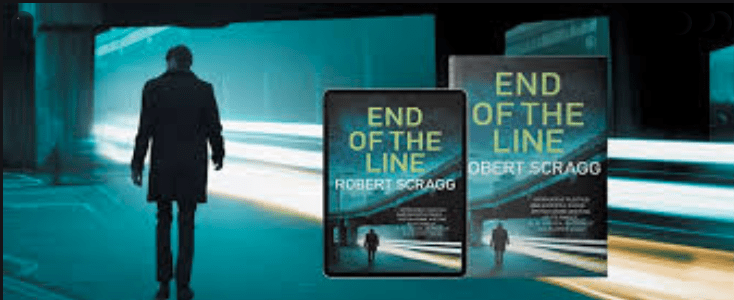
END OF THE LINE . . . Between the covers

Screen Shot 2021-02-01 at 18.30.51

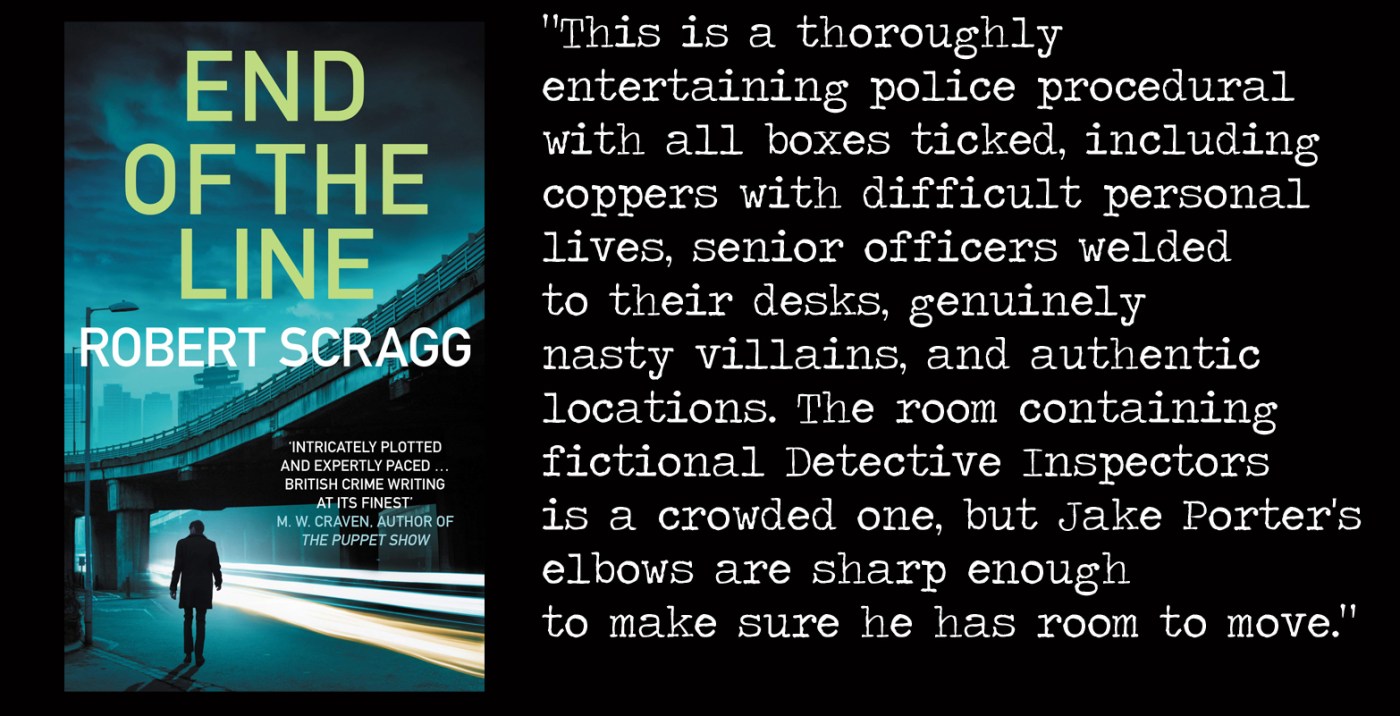
This is the fourth in Robert Scragg’s popular police procedural series featuring London DI Jake Porter and his trusty Sergeant, Nick Styles. The story so far: Porter still grieves for his wife Holly, killed in a hit-and-run incident a few years earlier. The driver remains unidentified, and it preys upon Porter’s mind. He has cautiously begun a new relationship with fellow cop Evie Simmons. Styles is married, with a young child, and is intensely loyal to his boss.
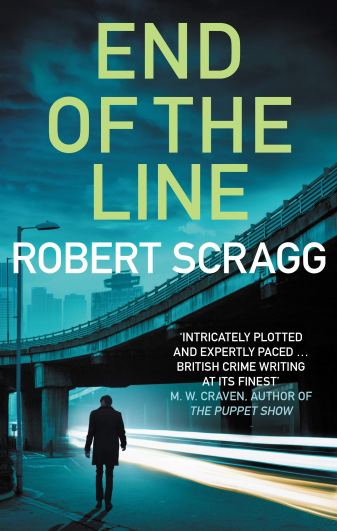
81TTdj6ywMLThe book starts in gory style. Ross Henderson, a young left wing activist, has a YouTube channel on which he posts regular videos denouncing his bête noire, a movement called the English Welfare Party. The EWP are right wing Nationalists vehemently opposed to immigration. As Henderson is setting up his latest live video stream from an abandoned magistrates’ court, proceedings are interrupted by a group who appear to be Islamic extremists. Live and on screen, the young man is killed using the jihadists’ favourite method – decapitation. By the time the police arrive,the killers are long gone, but the shocking video has been seen by millions on social media.

At the same time that Porter and Styles are assigned to the case, Porter hears that there is something of a breakthrough in his personal hunt for the person who killed his wife. Fingerprints from the abandoned vehicle that did the damage have finally been matched to that of a minor criminal, Henry Kaumu. All good then, except that Kaumu is lying in an intensive care unit, comatose and swathed in bandages after being battered around the head with a baseball bat, wielded by an angry homeowner whose house Kaumu was trying to burgle. Porter learns that Kaumu is an employee of Jackson Tyler, a notorious London gangster. Because the case is so personal, Porter is forbidden to take any part in it and so he goes ‘rogue’ to try to find the identity of the person who was driving the fatal car. His clashes with Tyler are painful and unproductive, until he receives information from an unlikely source.

ScraggPorter’s four year search for the person who killed his wife finally ends in a violent encounter on a suburban industrial site, and the hunt for Ross Henderson’s killer takes one or two wrong turns, but eventually Porter gets his man. Or does he? There is a clever twist at the end which I didn’t see coming. Robert Scragg clearly has a strong political stance, but that’s fine – it’s his book, and readers can take it or leave it.

I have to be honest and say that I smelled a rat from the word go. Why would Islamists murder a left wing activist who would have held all the ‘correct’ views on such topics as immigration, Palestine and cultural diversity? It takes Porter & Co. rather a long time to realise they are being played, but maybe that’s just me being a curmudgeon. That caveat aside, this is a thoroughly entertaining police procedural from the author (right) with all boxes ticked, including coppers with difficult personal lives, senior officers welded to their desks, genuinely nasty villains, and authentic locations. The room containing fictional Detective Inspectors is a crowded one, but Jake Porter’s elbows are sharp enough to make sure he has room to move.

End of The Line is published by Allison & Busby, and is out now. To find reviews of the three earlier books in the series, click on the image below.

Scragg link

THE BURNING GIRLS . . . Between the covers

TBG wiki

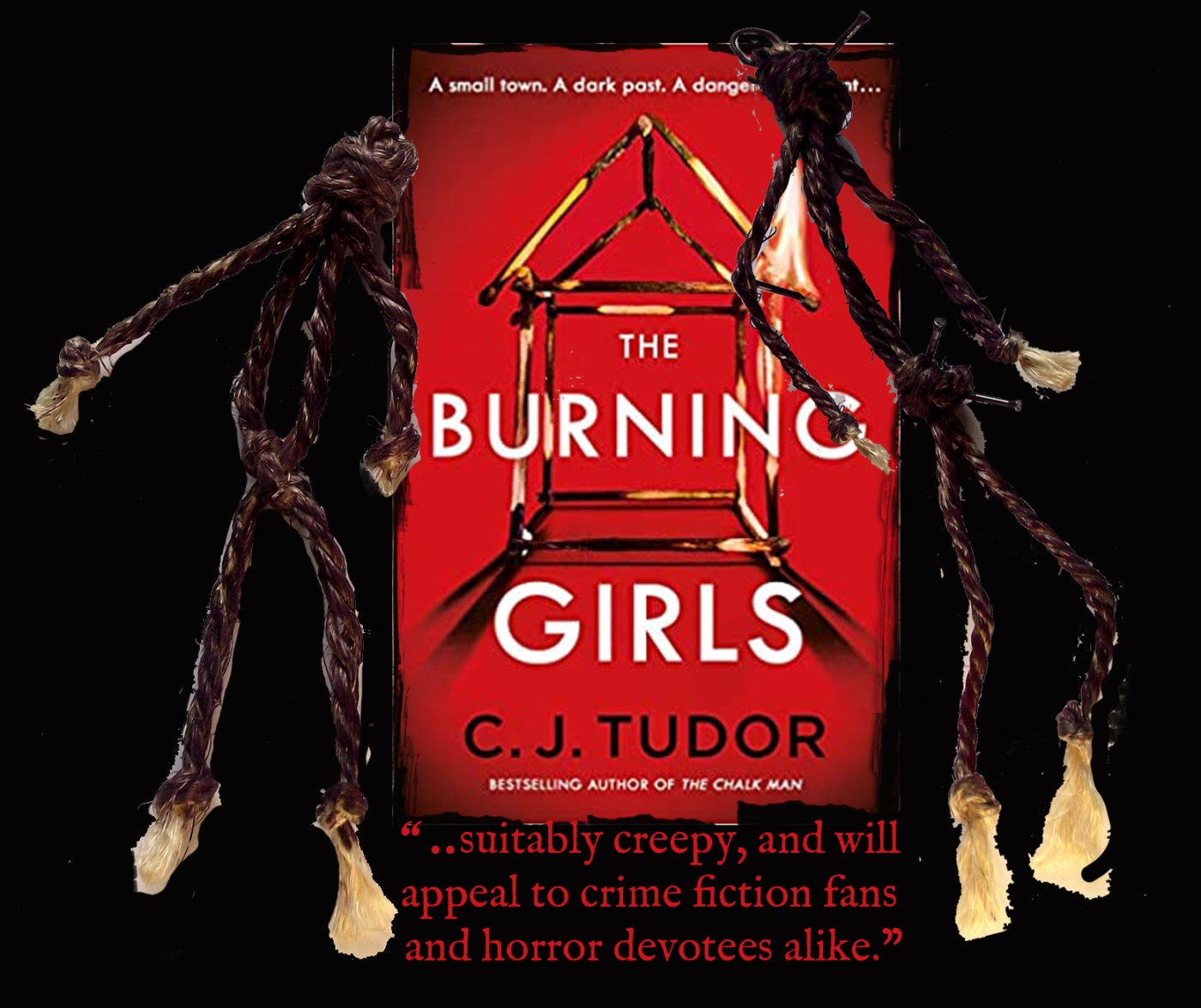
CJ Tudor gets the ball rolling by inventing a rather sinister legend  and an equally disturbing little community in Sussex. Enter, stage left, a priest called Jack (short for Jacqueline) Brooks and her teenage daughter Flo. Jack’s previous ministry was in a run-down but vibrant parish in Nottingham, but after she became involved in one of those tragic social services failures – think Victoria Climbie, Baby P, Lauren Wright – her oleaginous Bishop, more concerned about PR than prayer, moves her down to Sussex.

TBG coverWe also learn fairly early on that Jack has another skeleton in her closet, but more of that – or, more accurately, him – later. Jack’s first encounter with Chapel Croft residents is the appearance of a barefooted bloodstained child wandering towards her outside the little chapel which gives the village its name. This startling apparition, however, is not from hell, but from a nearby farm where the girl came rather too close to a pig being butchered in the farm’s abattoir.

Jack’s sense of unease about the community increases as the pages turn. In no particular order, we have a former vicar who committed suicide, two teenage girls who disappeared from the village a few years earlier, a cadaverous and saturnine churchwarden. daughter Flo’s involvement with a strange young man called Wrigley who once tried to burn down his school and who suffers from a nervous condition which makes him twitch uncontrollably. Oh yes – there is also something rather nasty buried beneath the floor of the chapel.

tbg020

As Jack tries desperately to do her job as a minister, she becomes tangled up in a sticky web which involves previous incumbents and how (and why) they died. The more she struggles, the closer the rather unpleasant spider that created the web comes; what we don’t know, however, is the name of the spider.

Screen Shot 2021-01-26 at 19.19.04One of CJ Tudor’s many talents is to lead her readers up the garden path in terms of what we think is happening. I certainly thought I knew what was what, but rather like Prospero, Tudor has the gift of sorcery, and uses it to telling effect, turning Chapel Croft into an enchanted island which is certainly “full of noises”, not all of them being pleasant. Like all good writers, she saves the biggest surprise until the final pages.

One of my early reactions while reading this was to think that we have already had a female vicar and her teenage daughter interacting with things supernatural in Phil Rickman’s Merrily Watkins series, but by the time you have reached the last page of The Burning Girls, you will be aware that we are talking about two very different beasts. This novel is suitably creepy, will appeal to crime fiction fans and horror devotees alike, and in Jack Brooks, CJ Tudor (right) presents us with a plausible and very human central character. One of the best things about the book is that the legend of the stick figures and the dark history of Chapel Croft makes one want to put it on the list of places to visit once the wretched virus recedes. Sadly, however, Chapel Croft, its haunted little church and disturbing villagers are, to return to Prospero:

“..all spirits and are melted into air, into thin air.”

The Burning Girls is published by Michael Joseph and is out now.

I KNOW WHAT I SAW . . . Between the covers

ikwis021

Imagine having a perfect memory. Being able to replay words, sounds, situations – from years ago. It’s all there, in your head, ready to be recalled. Great for exams when you were younger, but what about when something unpleasant happened to you, and it won’t ever go away? Nicola Walker has Hyperthymesia. She has been the subject of scientific studies and examinations, but her condition is what it is. Now, it’s 2020 and, at the age of 51, she has a humdrum job in London’s British Library. Sher marriage ended half a lifetime ago, and now she lives from day to day with only her cat for company. Until she receives an alarming telephone call.

The call is from a Metropolitan Police detective. Her former husband, Declan, has been arrested on suspicion of murdering his father, years earlier. And his only witness? Nicola and her perfect memory.

We are basically in two time zones. The present day, 2020, and a summer Sunday in June 1985, which is Arty Robbins’s 50th birthday. The event is being celebrated at a pub called The Mary Shelley, and the landlord is Arty’s father, Vincent. Nicola, aged 16, and Declan Robbins, aged 18, son of Arty, are ‘an item’. A list of the other characters is not something I normally compile, but it might be useful in this case.

Craig Walker, Nicola’s father
Susan Walker, Nicola’s mother
Dave Crane, friend of the Walkers. He married Susan after Craig’s death from cancer.
Kat Clarke, Nicola’s contemporary, and best friend. Her father Daniel, Arty Robbins’s brother, walked out on them years earlier.
Chloe Clarke, Kat’s mother
Gary Barclay, Kat’s boyfriend. They later marry.
Anne Robbins, wife of Arty, mother of Declan

ikwis022Arthur Robbins is a pillar of the community. Successful estate agent, all-round diamond geezer and school governor. But then, he just disappears. He was last seen in the small hours on the night of his birthday party. Lost for 35 years – until his remains turn up in the foundations of a building being demolished to make way for a new development.

We have, in one sense, a traditional whodunnit, but it is unconventional insofar as  the usual police work, while still taking place, is secondary to the agonising replays going on inside Nicky’s head. What did she see? Who did she see? Where were they? How do these memories stack up against the ticking clock on that warm summer night 35 years ago? Has she mis-remembered? What if she is shutting out some memories in order to protect someone she loves? There’s no shortage of suspects, as the real Arty Robbins is far from the jovial character he pretends to be.

The killer of Arty Robbins is eventually unmasked, and SK Sharp leads us down many a blind alley as the narrative unfolds, and Nicola finally completes the jigsaw of her memories. It’s clever stuff, and gripping – I read it in two enjoyable sessions – but for me, the strength of the novel is the relationship between Declan and Nicola, both then and now. I don’t remember a more sensitive and perceptive account of teenagers falling in love with each other, but the most moving and effective counterpoint to this is how it all plays out, decades later, with so much water under the bridge, so much hurt, so many mistakes and so much misunderstanding.

This is a fine novel, a thriller, yes, but full of compassion and telling insights into what people do to each other, and how secrets corrode trust. I Know What I Saw was first published in October 2020 by Cornerstone Digital. This paperback edition is from Arrow, and is out now.

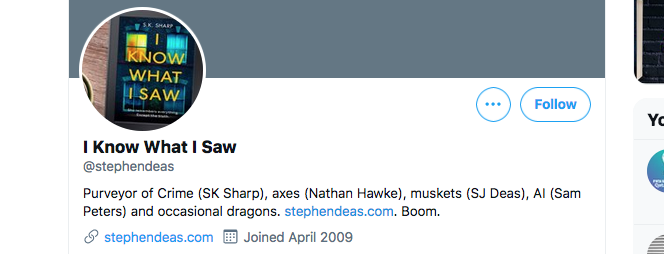
SK Sharp (aka Stephen Deas) is on Twitter

Screen Shot 2021-01-29 at 19.12.18

CROW COURT . . . Between the covers

CC FOOTER

We begin in the peaceful Dorset town of Wimborne in the spring of 1840. Just a few months earlier, in the Chapel Royal of St. James’s Palace, London, Queen Victoria had marred Prince Albert of Saxe-Coburg. Louisa Chilcott and Samuel Portman are also due to be married, in the equally beautiful Wimborne Minster, but the joy of their day is short-lived.

CC cover015Just days earlier, Samuel had approached his best man, Charles Ellis, with a request for help. Louisa’s young cousin, Henry Cuff, is a member of the Minster choir, but it has been reported that he is desperately unhappy, is absenting himself from school, and refusing to sing in the choir. So how can Charles help? His half brother, Matthew Ellis is the Choirmaster. Could Charles please intercede, and try to find out what is the matter with young Henry?

Charles agrees, but with a heavy heart. He and his half brother are barely on speaking terms. Charles is gentle, urbane and conciliatory, while Matthew – a brute of a man – is bad tempered, censorious, and has an evil reputation. Charles speaks to Matthew, but gets nowhere. A visit to Henry Cuff and his parents is equally fruitless. The boy is clearly terrified, and Mr and Mrs Cuff are unhelpful.

Louisa and Samuel’s wedding goes off as planned, but Henry Cuff – who was due to sing a solo – is nowhere to be found. As the happy couple are basking in the love of well-wishers after the ceremony, a townsman interrupts the festivities with the terrible news that Henry Cuff’s body has been found in the river.

Resentment and anger at Matthew Ellis begins to seethe in the town. Things worsen when it becomes clear that Ellis has not only been cruel and bad-tempered with his boys, but has been abusing them in the vilest manner imaginable. When a  group of men decide to take things into their own hands, and Ellis disappears, the consequences are far reaching.

CC header014

The structure of this fascinating novel is worth examining. It is, in effect, fourteen short stories, cleverly written so that they stand alone – indeed, three of the episodes have been published separately – but are linked to a central event, in this case the disappearance of Matthew Ellis. I am struggling for a suitable metaphor; ripples in water spreading out from a central disturbance, maybe? The trouble with that one is that literal ripples weaken the further they spread, and in this case, with the time span being twenty years or more, the ‘ripples’ don’t weaken – they become stronger and more deadly.

I suspect that the author knows and loves his Thomas Hardy. There are tragic outcomes for many of the characters in this novel, not because they are bad people (the only malignant person is Matthew Ellis) but because they have made errors of judgment, or pursued a wrong option. The words that are singing in my ears come from the last page of Tess of the d’Urbervilles:

“Justice” was done, and the President of the Immortals (in Aeschylean phrase) had ended his sport with Tess.”

This book operates on so many levels. At its simplest it is a murder mystery, a whodunnit, almost, (and yes, we do learn the identity of the killer in the final pages) but it is also brilliant history reflecting, as it does, on the hardships inflicted on the rural poor by increased mechanisation. I won’t call it a comedy of manners, because there is very little to laugh about, but we are treated to intriguing glimpses of social conventions and the sensitive hierarchies of the mid nineteenth century. Finally, the book is shot through with beautifully imagined descriptions of the Dorset countryside across the seasons. Crow Court is Andy Charman’s first full length novel. It is published by Unbound, a crowdfunding publisher, and is available here.

CC explanation

BEFORE SHE DISAPPEARED . . . Between the covers

BSD012

It was around this time last year when I reviewed Lisa Gardner’s When You See Me, and in January 2018 Look For Me came under the Fully Booked microscope. These both featured the ‘odd couple’ Flora Dane and DD Warren, but this January the New Hampshire author has produced a standalone thriller – Before She Disappeared.

BSD coverCentre stage is a woman called Frankie Elkins. She is middle-aged and a recovering alcoholic. Her purpose in life is to find missing people. People who have been taken. People who have just walked away into oblivion. People who the police have made an effort to find, but have given up. This mission may remind British readers of the David Raker books by Tim Weaver (click the link to read more), but Frankie is rather different in that she doesn’t work for a fee. She follows cases on internet message boards and then just ups sticks, and with all her belongings in a suitcase heads of to where the trail went cold. I have to say that this was, initially, a fairly improbable premise. Frankie seems to have no money, little other than the clothes she stands up in, so why would she do this? Stay with it, though, like I did, and there will be an explanation. She carries the burden of a terrible trauma, and Lisa Gardner teases us about its actual nature until quite late in the story, and when we learn what happened, the past has a terrible resonance with the present.

In Before She Disappeared, Frankie goes to Boston, but this isn’t the upper crust Boston of the Kennedy dynasty, Leonard Bernstein or Harvard. She heads for Mattapan, a hard-scrabble and tumbledown district home to thousands of Haitians and other refugees from strife, poverty and natural disasters. Her mission? To find out what happened to Angelique Badeau, The Haitian teenager had been living with her aunt, sent to America after an earthquake devastated her home. One day she set of for school as normal, and nothing has been seen or heard of her since.

As a white woman in Mattapan Frankie is something of a curiosity, but she takes a job in a bar and slowly makes friends. The downside is that as her probing into Angelique’s disappearance starts to uncover some dark secrets, she also makes some serious – and deadly – enemies.

Frankie gains the begrudging trust of a local cop, Detective Lotham, and the pair begin to generate a certain electricity between them. This is, of course, a very handy – but perfectly plausible – plot device,as it enable Frankie to have access to all kinds of information, such as CCTV footage which, as a civilian she would otherwise not have.

The problem for Frankie is that Angelique was almost too good to be true. Studious, punctual, respectful, no boyfriend interest and certainly no connection to the local gangs, there seems to neither rhyme nor reason behind her disappearance. Then, after a more thorough search of the Badeau’s apartment Frankie makes a shocking discovery. She finds a huge stash of cash hidden in the hollow base of a standard lamp. When most of these bills are found to be rather good forgeries, the case swerves in a totally different direction.

I had in the back of my mind the comment, “a typical American thriller.” This is in no way derogatory. In the best of these books there is a slickness, a tight control over the flow of events, a sense of darkness that gives an edge without being too disturbing, and a cinematic quality. Before She Disappeared certainly fits into this slot. It is taut, sharply original and very, very readable. It is published by Century/Penguin Random House and is out now.

NO GOOD DEED . . . Between the covers

ngd header009

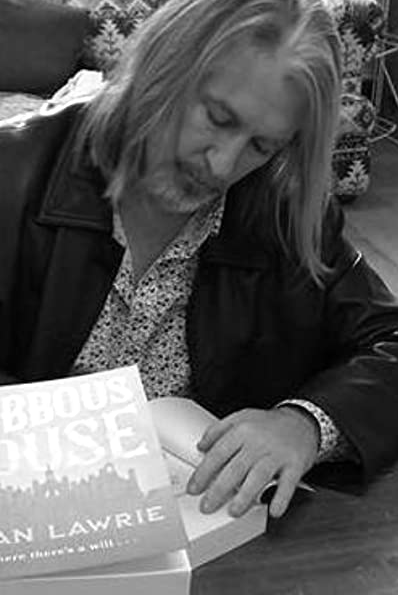
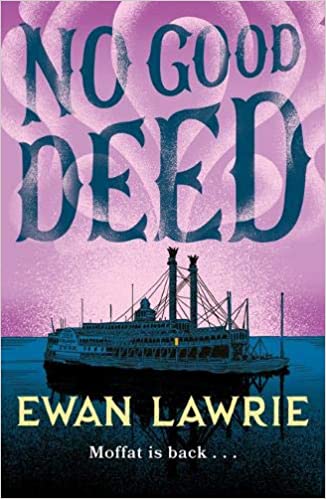
Screen Shot 2021-01-13 at 19.14.13First, a word about the author, Ewan Lawrie (left). He comes to the book world by a rather different route than many of his fellow writers. There cannot be many authors who served for nigh on a quarter of a century in the armed forces – in this case, the RAF – and then turned to writing. His first novel, Gibbous House, (2017) introduced us to a gentleman called Alasdair Moffat, who rejoices in the appellation Moffat the Magniloquent. In that novel he was a prosperous and successful criminal in Victorian London, but now, a decade later, he  – having fallen on hard times – has relocated to America, along with countless other folk of the “huddled masses”, the “wretched refuse” and the “tempest-tossed”. Unlike them, however, he is not seeking the “lamp beside the golden door”, but a rather better place in which to exercise his criminal talents.

It is 1861, and America is on the verge of the disastrous conflict which will shape the nation’s future for decades to come. Moffat has fetched up in St Louis, pretty much stony broke. With an unerring talent for sniffing out trouble, he murders a man named Anson Northrup, assumes his identity and, in order to pay off a brothel bill he cannot afford, accepts the task of delivering a mysterious package further down the Mississippi River. He boards the steam-driven riverboat The Grand Turk. The package he is carrying contains operational details of what was known as The Underground Railroad – a network of secret routes and safe houses established in America used by slaves to escape into freedom. Moffat, of course, being British, takes the metaphor literally, and it is some time before he realises that he is not carrying a conventional railway timetable, and that the late Anson Northrup is a key figure in a plot to steal silver bullion from the Mint in New Orleans – the major city in the state of Louisiana, which had just seceded from the United States.

NGD1In his guise as Northrup (although not everyone is fooled) Moffat meets several larger-than-life and almost grotesque fictional characters, and lurches from one crisis to the next, but one of the most spectacular parts of the novel is when he meets Marie Laveau, a real life New Orleans character renowned for her mystical qualities, as well as her expertise in the black arts of voodoo.

Lawrie is an entertaining writer who has clearly done his historical homework, but also adds a heady combination of whimsy, smart jokes and improbable situations to make for an entertaining read. The rather old fashioned literary term picaresque came into my mind as I was reading this, but I needed to check what it meant. The ever-present Google says that it is:

“relating to an episodic style of fiction dealing with the adventures of a rough and dishonest but appealing hero.”

I think that pretty much sums up No Good Deed. The novel succeeds not through the particular integrity of the plot, but more through the relentlessly entertaining episodes, and the grim allure of Moffat himself. There is more than a touch of George MacDonald Fraser and his likeable coward Harry Flashman about this book, and I can thoroughly recommend it to anyone who enjoyed that series of novels. No Good Deed is published by Unbound Digital, and is out now.

THE ART OF DYING … Between the covers

TAOD header

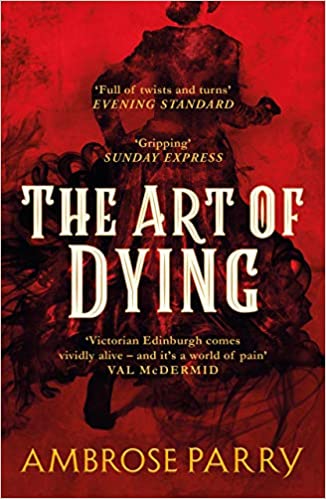
Ambrose Parry is a pseudonym for a collaboration between Chris Brookmyre and Marisa Haetzman (pictured below). They  live in Glasgow,  slightly less genteel – at least in popular image – than Edinburgh, where this novel is set. It novel weaves together two stories, both of which have have factual origins. One strand deals with an horrific serial killer and her victims, while the other story is seen through the eyes of a young doctor in the middle years of the 19th century. The novel is a follow-up to the 2018 publication, The Way of All Flesh.

71tHql951uL._SX800_

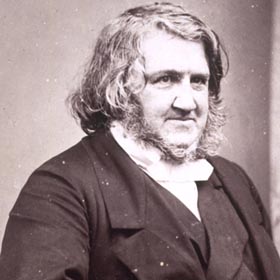
SimpsonThis is not a book for those squeamish about medical details – especially those common in the 19th century. There are tumours, painful deaths both lingering and sudden, surgical procedures that involve much guesswork and hopeful blundering about the human body – externally and internally. If you are still with me, then the story is this. It is 1849, and we first meet young Dr Will Raven when he is involved in a street brawl in Berlin, where he has been studying. He survives the encounter, and returns to Edinburgh, where he is reunited with his former mentor, Dr James Simpson. Simpson – a real-life character, pictured –  is highly regarded, but also the object of much jealousy from less gifted physicians, and is facing charges of malpractice brought about by his envious peers.

Raven had hoped to find an earlier object of his affections – a young woman called Sarah, who also worked with Dr Simpson – available for further dalliance, but in the interim, she has married another doctor, Archie Fisher. He is terminally ill, and as both Will and Sarah are aware of this, the sad fact adds a certain piquancy to the relationship.

TAOD cover2Away from the relative gentility of the Simpson household, we have a young woman who moves in very different circles. She has suffered a brutal and traumatic childhood. This has either directed her on a devilish pathway, or kindles a spark which was already there but, either way, she has become a murderer. The writers employ an obvious – but effective – counterpoint here, in that Sarah Fisher desires to become a doctor, while Mary Dempster seeks to hone her skills as a killer. Contemporary society believes that a woman cannot possibly be a success in either occupation.

It takes a while for Will and Sarah to come round to thinking the unthinkable – that Mary Dempster is a clever and a successful killer. Because we, as readers, have had the advantage of reading first-person-viewpoint chapters, we know that she is a devious and malevolent individual. Yes, she has had a terrible upbringing, involving degradation and abuse, but not all orphans who suffered at the hands of Victorian institutions turned out to be serial killers.

As I said earlier, if you are the kind or reader who would shudder at the thought of reading a cut-by-cut account of an early surgical attempt to save a woman from an ectopic pregnancy, then this may not be the book for you. Bolder souls will enjoy a gripping and twisty murder mystery shot through plenty of gore and passion. The Art of Dying came out in hardback in August 2019. This paperback edition is published by Black Thorn and is out now.

House With No Doors . . . Between the covers

HWND header007

HWND cover008This has the most seriously sinister beginning of any crime novel I have read in years. DI Henry Hobbes (of whom more presently) is summoned by his Sergeant to Bridlemere, a rambling Edwardian house in suburban London, where an elderly man has apparently committed suicide. Corpse – tick. Nearly empty bottle of vodka – tick. Sleeping pills on the nearby table – tick. Hobbes is not best pleased at his time being wasted, but the observant Meg Latimer has a couple of rabbits in her hat. One rabbit rolls up the dead man’s shirt to reveal some rather nasty knife cuts, and the other leads Hobbes on a tour round the house, where he discovers identical sets of women’s clothing, all laid out formally, and each with gashes in the midriff area, stained red. Sometimes the stains are actual blood, but others are as banal as paint and tomato sauce.

Hobbes makes a more thorough investigation of the strange house, and finds a cellar in which he discovers something even more disturbing. Author Jeff Noon introduced us to Hobbes in Slow Motion Ghosts (2019 – click for the review) and, like that earlier novel, this one is set in the 1980s. Hobbes is a bit of a misfit. He is certainly not ‘one of the lads’ back at the station. He is quiet, cerebral and single, his marriage to Glenda being certainly on the rocks and close to being sunk. As he tries to work out what secrets lie within the walls of Bridlemere, he has personal problems, the chief of which being the fact that his 17 year-old son has left home to live in a squat, where both his health and sanity are threatened.

Hobbes believes that although Leonard Graves did probably take his own life, an enigmatic note he left suggests that there is a body concealed somewhere in the house.. While an intensive search produces no human remains, what Hobbes calls The Case of The Thirteen Dresses becomes a genuine murder enquiry when the body of the old man’s son is found, battered to death in Richmond Park.

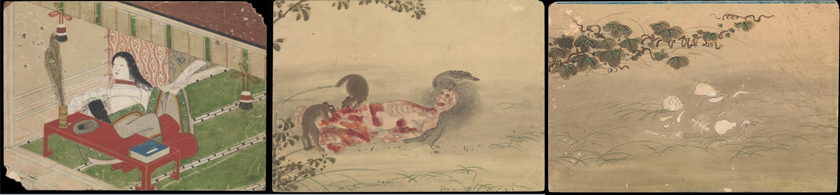
Kusozu

The more Hobbes learns about the Graves family, the more he feels drawn into their sinister world. Mary Estelle, Leonard’s wife, a former actress of renown, is living out her days in an old folk’s home, absorbed in her glittering memories, but was she responsible for corrupting her three children Rosamund, Camilla and Nicholas? Was there a fourth child, Adeline, mentioned in Leonard’s suicide not? And what of the grandson, David, and his obsession with Kusozu, the macabre Japanese art form that depicts the very corruption of death?

Jeff NoonMy verdict on House With No Doors? In a nutshell, brilliant – a tour de force. Jeff Noon (right) has taken the humble police procedural, blended in a genuinely frightening psychological element, added a layer of human corruption and, finally, seasoned the dish with a piquant dash of insanity. On a purely narrative level, he also includes one of the most daring and astonishing final plot twists I have read in many a long year.


Jeff Noon takes us to places unvisited since the days of the late, great Derek Raymond. This novel is crime fiction, yes, but also a journey into the darkest corners of the human soul. Raymond’s nameless copper also walked the bleaker streets of London, and he had a passion verging on obsession for avenging the victims of crime by finding the people who killed them. Henry Hobbes shares this single mindedness. House With No Doors is a chronicle of madness wearing a mask of normality. It is deeply moving and as Hobbes mines deeper and deeper into history of the Graves family, he shows us that it is not only the dead who are victims. The book is published by Doubleday and is out on 14th January.

TO THE DARK . . . Between the covers

TTD header

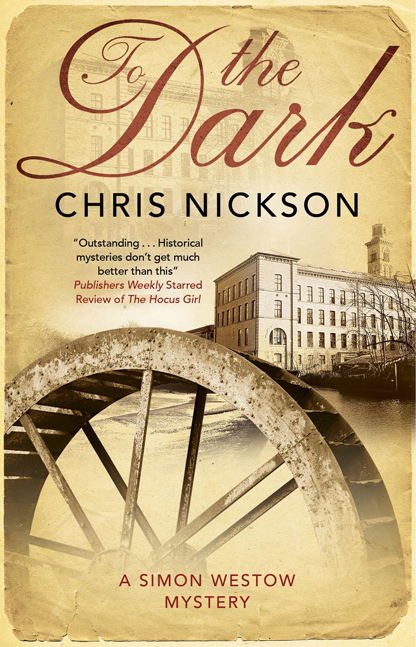
Screen Shot 2021-01-03 at 21.02.58I am delighted to say that my first review for 2021 is a new book by the reliably excellent story-teller, Chris Nickson. For those new to his books, he is a widely travelled former music journalist, who has rubbed shoulders with some of the big names in rock, but now pursues a rather more sedentary lifestyle in the Yorkshire city of Leeds. When he is not tending his treasured allotment, he writes historical novels, based around crime-solvers across the  centuries, most of them based in Leeds.

You can click the link to check out his late 19th century novels featuring the Leeds copper Tom Harper, but his latest book takes us back a little further, to Georgian times. Leeds is undergoing a violent transformation from being a bustling, but still largely bucolic centre of the wool trade, to a smoky, clattering child of the Industrial Revolution.

There are fortunes to be made in Leeds, but crime is still crime, and Simon Westow is known as a thief-taker. Remember, this is before the emergence of a regular police force, and what law there is is enforced by (usually incompetent) town constables, and men like Westow who will recover stolen property – for a fee.

the-darkWestow is a man who has survived a brutal upbringing as an institutionalised orphan, and there is not a Leeds back alley, courtyard or row of shoddily-built cottages that he doesn’t know. He doesn’t work alone. He has an unusual ally. We know her only as Jane. Like Westow, this young woman has survived an abusive childhood, but unlike Westow – who isn’t afraid to use his fists, but is largely peaceable – Jane is a killer. She carries a razor sharp knife, and uses it completely without conscience if she is threatened by men who remind her of the degradation she suffered when younger.

When a petty criminal is found dead in a drift of frozen snow, Westow frets that he will be linked with the murder as, only a week or so earlier, he had completed a lucrative assignment that involved returning to their owner stolen goods that had come into the hands of the dead man. Instead of being harassed by the lazy and vindictive town constable, Westow is asked to try to solve the crime. It seems that two aristocratic officers from the town’s cavalry barracks might be involved with the killing, and this sets Westow a formidable challenge, as the soldiers are very much a law unto themselves. Meanwhile a notebook has been found which is connected to one of murdered criminal’s associates, but it reveals little, as it is mostly in code. Someone cracks the cipher for Westow, but he is little the wiser, especially when the text contains the enigmatic phrase ‘To The Dark.’

Douville-Hours

The discovery of a stolen handwritten Book of Hours, potentially worth thousands of gold sovereigns, further complicates the issue for Westow, and when the seemingly invincible Jane suffers a crippling injury, his eyes and ears on the Leeds streets are severely diminished. Still, the significance of ‘To The Dark’ escapes him, and when his life and those of his wife and children are threatened he is forced to face the fact that this seemingly intractable mystery may be beyond his powers to solve.

As ever with Chris Nickson’s novels we smell the streets and ginnels of Leeds and breathe in its heady mixture of soot, sweat and violence. In one ear is the deafening and relentless collision of iron and steel in the factories, but in the other is the still, small voice of the countryside, just a short walk from the bustle of the town. Nickson is a saner version of The Ancient Mariner. He has a tale to tell, and he will not let go of your sleeve until it is told. To The Dark is published by Severn House and is out now.

Blog at WordPress.com.

Up ↑