
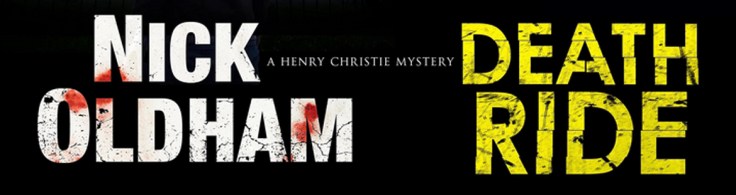
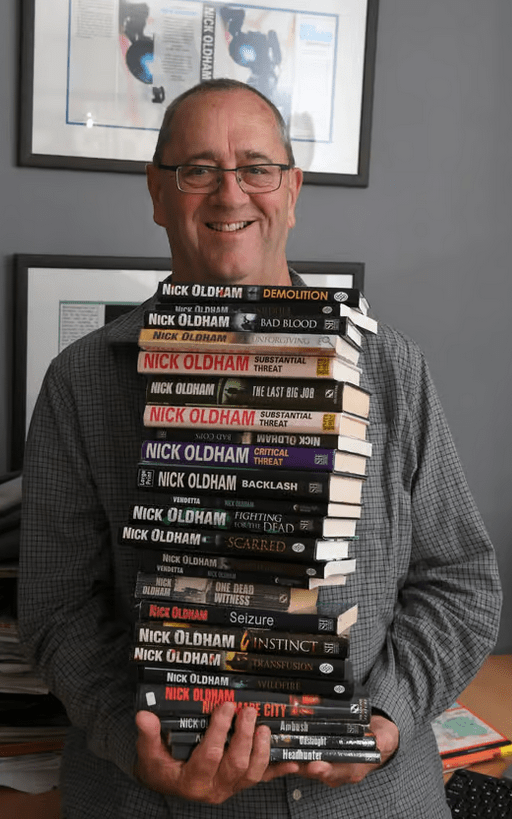
I can’t think of another modern crime writer who does truly despicable villains quite like Nick Oldham. His years policing the semi-derelict housing estates behind the candy-floss, donkey rides and silly hat persona of Blackpool’s seafront taught him that the feral inhabitants thrown up by these estates are not victims of social injustice or poverty; neither are they the product of years of exploitation by cruel capitalists. No. In short, they are absolute bastards, and no amount of hugging by wet-behind-the-ears social workers will make them anything else. In Death Ride, Oldham introduces us to as vile a group of criminals as he has ever created. Led by Lenny Lennox, they are ruthless predators; pickpocketing, catalytic converters, dog-napping, abduction, sexual assault – and murder – frame their lives.
We meet them at a country fair in retired copper Henry Christie’s home village, Kendleton – high on the Lancashire moors – where he runs the local pub. While Lenny Lennox serves burgers from his catering van, his son and three other youngsters pick pockets, steal cameras and strip high end vehicles of their valuable exhaust systems. Ernest Lennox, however has gone a bit further, and abducted a teenage girl who resisted his advances, and to cover up his son’s stupidity Lennox senior has to take drastic action.
Christie has recently been used as a civilian consultant by his former employers, and his last case ended with him being brutally stabbed and left for dead. When the hunt for the missing girl – Charlotte Kirkham – becomes a race against time, Christie, partly crippled by his knife wounds, is drawn into the hunt. I am reminded of the words of Tennyson in his magnificent poem Ulysses:
“Tho’ much is taken, much abides; and tho’
We are not now that strength which in old days
Moved earth and heaven, that which we are, we are;
One equal temper of heroic hearts,
Made weak by time and fate, but strong in will
To strive, to seek, to find, and not to yield.”
In rather blunter terms, Oldham writes:
“If Henry was honest with himself, he felt the urge to drag Lennox out of the burger van and smash his face again, just for old times’ sake, even though he knew he didn’t have the physicality to put that desire into action.
The Lennox gang create carnage in Christie’s life – and the lives of those he loves – but about three quarters of the way through the book, there is an abrupt change of scene, and we are reunited with two characters from Christie’s past – FBI agent Karl Donaldson and ex special forces maverick, Steve Flynn. They say that revenge is both sweet and best served cold. Suffice it to say that Henry Christie enjoys his gelato.
The Henry Christie books have always had plenty of action and their fair share of grit and gore, but on this occasion, be warned. Nick Oldham goes into Derek Raymond territory here, with a dark and terrifying novel which explores the depths of human malice and depravity. Death Ride is published by Severn House and will be available from 7th March. For more about Nick Oldham and the Henry Christie books, click the image below.






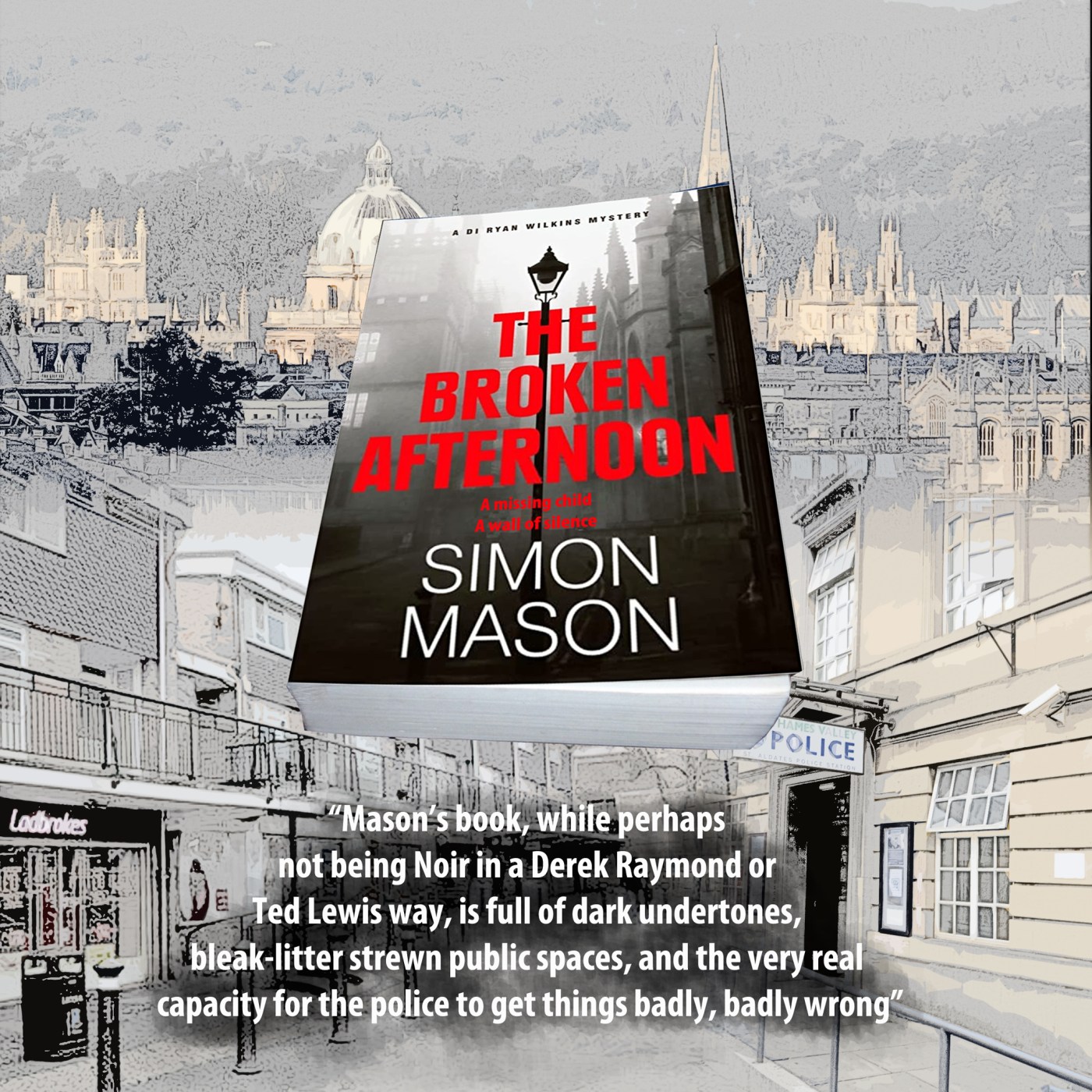

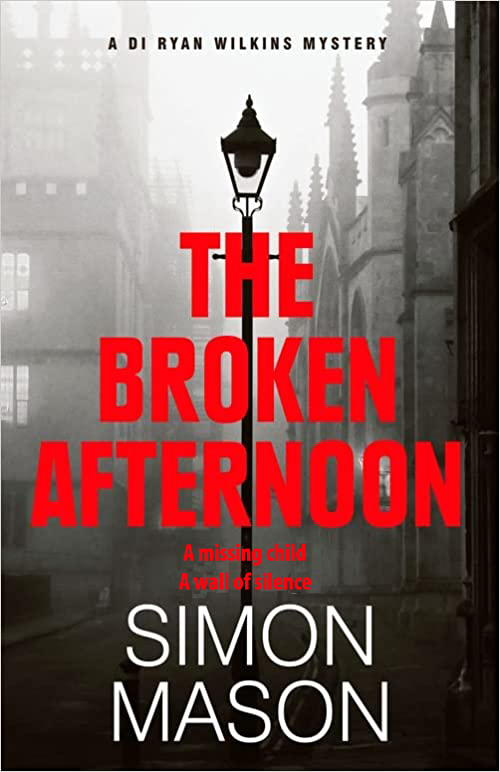 In Simon Mason’s A Killing In November we met Oxford DI Ryan Wilkins, and the book ended with his dismissal from the force for disciplinary reasons. In this book he is still in Oxford, but working as a security guard/general dogsbody at a van hire firm. His former partner, also named Wilkins, but Ray of that ilk, is now heading up the team that was once Ryan’s responsibility, and it is they who are tasked with investigating the abduction of a little girl from her nursery school.
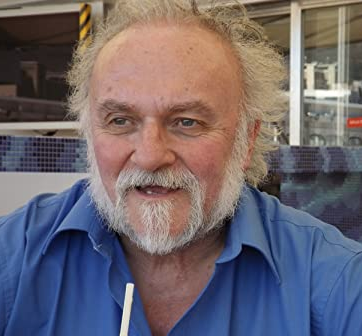
 I am sorry, but that is not how I see this book. Yes, it is set in and around Oxford, but apart from The Broken Afternoon being every bit as good a read as, say, The Silence of Nicholas Quinn or The Remorseful Day, that’s where the resemblance ends. Mason’s book, while perhaps not being Noir in a Derek Raymond or Ted Lewis way, is full of dark undertones, bleak litter strewn public spaces, and the very real capacity for the police to get things badly, badly wrong. Simon Mason (right) has created coppers who certainly don’t spend melancholy evenings gazing into pints of real ale and then sit home alone listening to Mozart while sipping a decent single malt.

 Dr Augusta Bloom is a psychologist who specialises in the criminal mind. Her business partner is Marcus Jameson, a former British intelligence agent. Bloom is often employed by the police as a consultant when a particular case demands her particular skill-set. The killers Bloom is requested to track down have struck twice, leaving only burnt matches as a clue. I use the plural ‘killers’ advisedly, as we know they are a team, but Bloom and the police have yet to discover this.
 Augusta Bloom is an interesting creation. She is a loner, and not someone who finds personal relationships easy, not with Marcus Jameson nor with her notional boss, DCI Mirza, who is deeply sceptical about Bloom’s insights. When the police finally join all the dots, they realise that rather than two killings, there have probably been as many as eleven, which ramps up the pressure on Bloom and Jameson. Leona Deakin, (right) as one might expect from a professional psychologist, has constructed an complex relationship between Bloom, Walker and Jameson. As readers, we are not spoon-fed any moral certainties about the trio. Rather, we infer that their boundaries are, perhaps, elastic. As John Huston (as Noah Cross) said in Chinatown:



 Tim Yates’s life

 In far-off Norfolk, men repairing flood defences near Denver Sluice have discovered what appears to be the remains of a child inside the rotted skeleton of a boat. Hunt, accompanied by Colonel Michael Field, a grizzled veteran of Cromwell’s army, and Hooke’s niece, Grace. When the trio arrive in Norfolk, Hunt soon determines that the remains are not those of a child, but the mortal remains of Jeffrey Hudson, who was known as the Queen’s Dwarf – the Queen in question being the late Henrietta Maria (left), wife of Charles I. The situation becomes more bizarre when Hunt learns that Hudson is not dead, but living in the town of Oakham, 60 miles west across the Fens. Hunt and his companions’ journey only delivers up more mystery when they find that ‘Jeffrey Hudson’ has left the town. Hunt knows that the jolly boat* which contained the skeleton belonged to a French trader, Incasble, which worked out of King’s Lynn.
 Hunt’s odyssey continues. In King’s Lynn, Hunt and his companions are summoned to the presence of the Duchesse de Mazarin. Hortense Mancini is one of the most beautiful women in Europe. She is highly connected, but also notorious as one of Charles II’s (several) mistresses. She reveals that the mysterious dwarf – or his impersonator – may be in possession of a a legendary gemstone – the Sancy – a diamond of legendary worth, and the cause of centuries of intrigue and villainy. The Duchesse bids Harry to travel to Paris, but once there, his fortunes take a turn for the worse.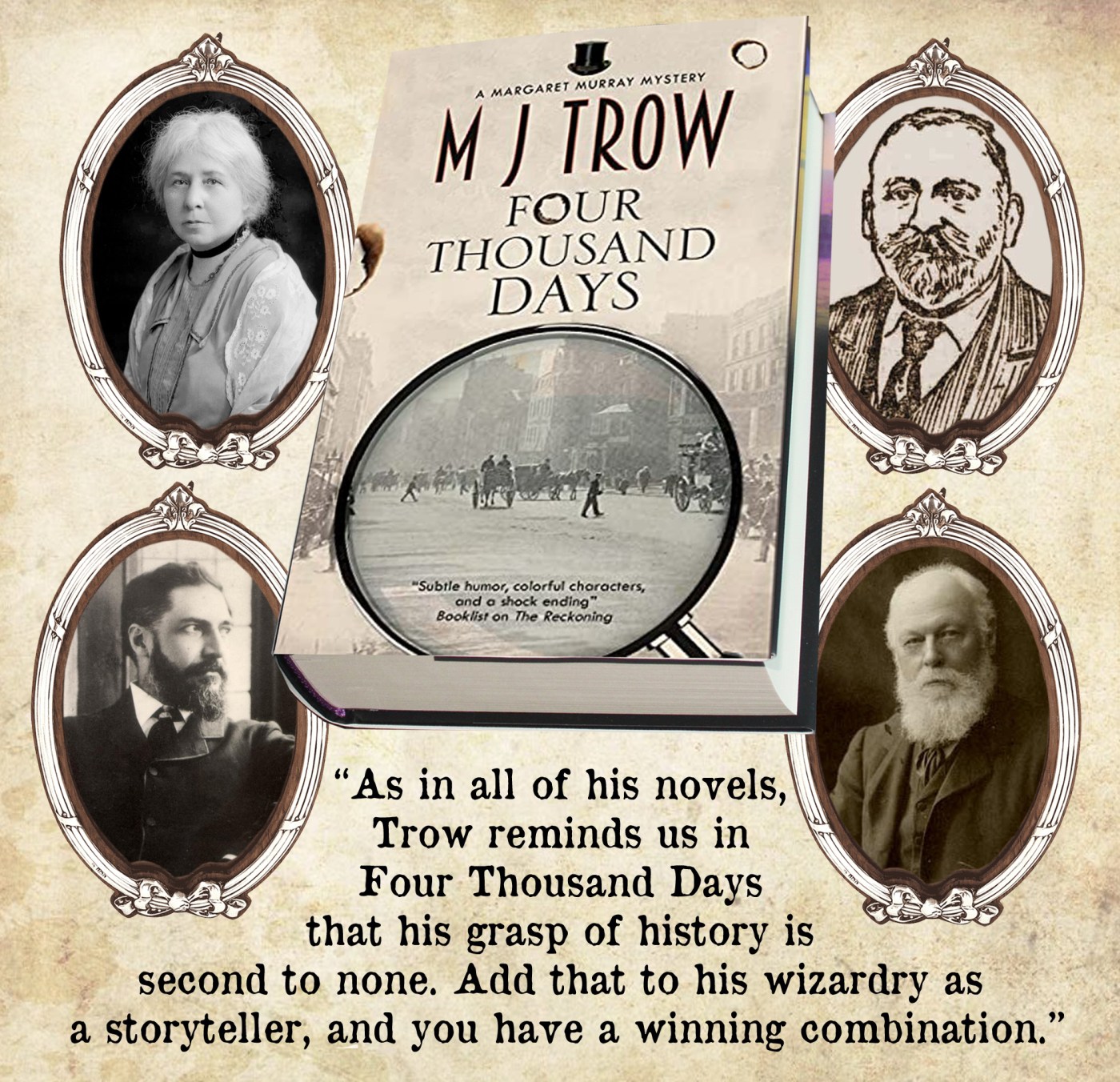



 fullybooked2017