Search

fullybooked2017

Category

REVIEWS

CLASSICS REVISITED . . . The Mask of Dimitrios

MOD header

The opening part of this book, in geo-political terms, is gloriously old fashioned. Istambul, with its reputation as being the place where east meets west, home of mysterious Levantine traders and treacherous stateless misfits has long since been pensioned off, at least in the world of crime and espionage fiction. It is worth remembering, though, that it was the starting point for Bond’s adventures in From Russia With Love when it was published in 1957, and was still thought to have a suitable ambience when the film was released in 1963.

Charles Latimer is an English academic who has found that writing thrillers is much more to his liking (and that of his bank manager) than lengthy tracts on political and economic trends in nineteenth century Europe. While in Istanbul he is invited to a house party where he meets Colonel Haki, an officer in some un-named sinister police force. Improbably, Haki is a fan of Latimer’s novels and, when they become better acquainted, Haki reveals a current real-life mystery he is investigating. The corpse of a man known only as Dimitrios – once a big player in the espionage world of the Levant and The Balkans –  is fished out of the sea. Having attended the post mortem, Latimer decides to investigate just who Dimitrios was, and how he came to end up as he did.

Published on the eve of world war two, when previous atrocities would be dwarfed in scale, the novel reminds us of the horrors which took place in the region after the Armistice. The brutal civil war between Turkey and Greece, with the destruction of Smyrna in 1922, the Armenian genocide, and a succession of coups d’états in Bulgaria had left the region rife with intrigue and foreign meddling. By the late 1930s, Europe was desperately ill at ease with itself. Latimer observes:

“So many years. Europe in labour had through its pain seen for an instant a new glory, and then had collapsed to welter again in the agonies of war and fear. Governments had risen and fallen: men and women had worked, had starved, had made speeches, had thought, had been tortured and died. Hope had come and gone, a fugitive in the scented bosom of illusion.”

As he criss-crosses Europe via Athens, Sofia, Geneva, Paris – by train, naturally – Latimer is drawn into the world of a mysterious man known only as Mr Peters, memorably described thus:

“Then Latimer saw his face and forgot about the trousers. There was the sort of sallow shapelessness about it that derives from simultaneous overeating and under sleeping. From above two heavy satchels of flesh peered a pair of blue, bloodshot eyes that seemed to the permanently weeping. The nose was rubbery and indeterminate. It was the mouth that gave the face expression. The lips were pallid and undefined, seeming  thicker than they really were. Pressed together over unnaturally white and regular false teeth, they were set permanently in a saccharine smile.”

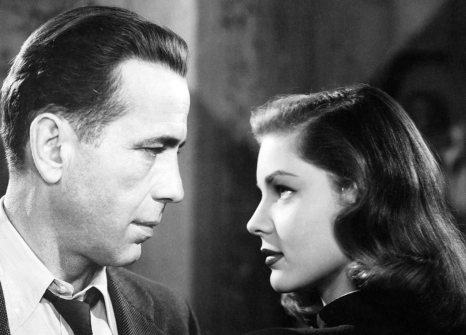
The 1944 film of the book took many liberties with the story and, bizarrely, changed the clean-living, rather prim Charles Latimer into a Dutch novelist named Cornelius Leyden, and then compounded the felony by casting Peter Lorre in the role. What they didn’t get wrong, however, was in re-imagining Mr Peters. Check the quote above, and if it isn’t Sydney Greenstreet to the proverbial ‘T’, then I will change my will and donate my worldly wealth to The Jeremy Corbyn Appreciation Society. In his travels, Latimer also meets a rather down-at-heel nightclub manager called La Prevesa:

“The mouth was firm and good-humoured in the loose, raddled flesh about it, but the eyes were humid with sleep and the carelessness of sleep. They made you think of things you had forgotten, of clumsy gilt hotel chairs strewn with discarded clothes and of grey dawn light slanting through closed shutters, of attar of roses and of the musty smell of heavy curtains on brass rings, of the sound of the warm, slow breathing of a sleeper against the ticking of a clock in the darkness”

Quite near the end of the book, Ambler drops a plot bombshell which not only damages Latimer’s own sense of being able to spot a lie when he sees one, but puts him next in line for a drug-dealer’s bullet. He is in Paris, but this is not the city as envisaged by, apparently, Victor Hugo:

“Breathe Paris in. It nourishes the soul.”

Latimer sees a rather different city:

“As his taxi crossed the bridge back to Île de la Cité,
he saw for a moment a panorama of low, black clouds moving quickly in the chill, dusty wind. The long facade of the houses on the Quai de Corse was still and secretive. It was as if each window concealed a watcher. There seemed to be few people about. Paris, in the late autumn afternoon, had the macabre formality of a steel engraving.”

With this book, Ambler created the anvil on which the great spy novels of the final decades of the Twentieth Century were beaten out. As good as they were, neither Le Carré nor Deighton bettered his use of language, and in this relatively short novel, just 264 pages, Ambler set the Gold Standard. This latest edition of the novel is published by Penguin and is available now.

THE DEVIL STONE . . . Between the covers

TDS spine019 copy

Detective Inspectors – and their bosses the DCIs – are hardly a dying breed in crime fiction, so what is distinctive about Christine Caplan, the central figure in Caro Ramsay’s latest book? For starters, she has been demoted from DCI because her previous case involved some evidence mysteriously going ‘walkies’. Her run of bad continues when, after a night out the ballet in Glasgow (she used to be a dancer) she inadvertently becomes involved in a mugging, and the drug-frazzled perpetrator  subsequently dies from falling from his bike. Family-wise, things are not much better. Her husband, Aklan, formerly something of a creative high flyer, has a serious case of depression and rarely leaves his bed. When he does, it’s only to stagger to the sofa where, wrapped in a blanket, he binges on daytime TV. Son Kenny is a ne’er-do-well drug user, flunking college and a bit too handy with mum’s credit card. Daughter Emma is the only glimmer of light. She seems relatively healthy, bright and has something of a future once she finishes her degree.

Things don’t improve for Caplan when she is sent off to the Scottish west coast where, near the village of Cronchie, a multiple murder has taken place. Two teenage boys – “neds”, to use the Scottish slang, have broken into Otterburn House, a mansion belonging to the McGregor family. The intruders get more than they bargained for:

“…jerking the phone, causing the beam to drop suddenly where it caught the ghostly white face staring at the ceiling with nacreous clouded eyes. Unable to stop himself, he looked along. Another face. Then another. Five of them in a row, cheek to cheek. Dried white skin clinging to thin cheekbones, mouths open, teeth bared.”

The lads – one of whom is a devotee of Satanism –  have burgled the house looking for a legendary artifact known as The Devil Stone which, according to the ancient lore, is able to predict impending tragedy. They leg it away from the house as if Old Nick himself is chasing them. They are hospitalised suffering from shock, the police are summoned and a major investigation is triggered.

In charge of the investigation is Detective Chief Inspector Bob Oswald, a highly respected officer just weeks away from retirement. When he goes missing, Caplan finds herself put in charge of the case, rather to her own discomfort and the resentment of the local team. One member of the McGregor family – Adam, a New Age hippy and something of a black sheep – is missing from the gruesome line of corpses, and thus he becomes the main suspect.

When Bob Oswald is finally located dead – in mysterious circumstances – Caplan realises that whatever happened at Otterburn House is part of a much bigger conspiracy, involving the distribution of a dangerous new narcotic known as Snapdragon. While she suspects that a nearby New Age community living on the nearby island of Skone may be involved, another discomforting thought is nagging away at her, and it is the suspicion that someone in the police team is batting for the other side. How far can she trust DC Toni Mackie, a larger-than-life woman, with a slightly cartoonish air about her? And what is to be made of the bumbling DC Craigo, with his strange slow blink, and his lack of social graces?

Already facing a twin-pronged attack on her career, Caplan realises that her relentless determination to solve the Otterburn House mystery has brought her head-to-head with some people who are determined to take her life if she gets in their way.

This edition of The Devil Stone is published by Canongate and is out now.

RUSTED SOULS . . . Between the covers

RS HEADER

First sixLeeds, March 1920. Tom Harper is Chief Constable of the City force and, with just six weeks until his retirement, he is dearly hoping for a quiet ride home for the final furlong of what has been a long and distinguished career. His hopes are dashed, however, when he is summoned to the office of Alderman Ernest Thompson, the combative, blustering – but very powerful – leader of the City Council. Thompson has one last task for Harper, and it is a very delicate one. The politician has fallen a trap that is all too familiar to many elderly men of influence down the years. He has, shall we say, been indiscreet with a beautiful but much younger woman, Charlotte Radcliffe. Letters that he foolishly wrote to her have “gone missing” and now he has an anonymous note demanding money – or else his reputation will be ruined. He wants Harper to solve the case, but keep everything completely off the record. Grim-faced, Harper has little choice but to agree. It is due to Thompson’s support and encouragement that he is ending his career as Chief Constable, with a comfortable pension and an untarnished reputation. He chooses a small group of trusted colleagues, swears them to secrecy, and sets about the investigation.

He soon has other things to worry about. A quartet of young armed men robs a city centre jewellers, terrifying the staff by firing a shot into the ceiling. They strike again, but this time with fatal consequences. A bystander tries to intervene, and is shot dead for his pains. Many readers will have been following this excellent series for some time, and will know that tragedy has struck the Harper family. Tom’s wife Annabelle has what we know now as dementia, and requires constant care. Their daughter Mary is a widow. Her husband Len is one of the 72000 men who fought and died on the Somme, but have no known grave, and no memorial excep tfor a name on the Thiepval Memorial to The Missing.. Unlike many widows, however, she has been able to rebuild her life, and now runs a successful secretarial agency. Leeds, however, like so many  communities, is no place fit for heroes:

“‘Times are hard.’
“I know,” Harper agreed.
It was there in the bleak faces of the men, the worn-down looks of their wives, the hunger that kept the children thin. The wounded ex-servicemen reduced to begging on the streets. Things hadn’t changed much from when he was young. Britain had won the war but forgotten its own people.”

Last five

Nickson’s descriptions of his beloved Leeds are always powerful, but here he describes a city – like many others – reeling from a double blow. As if the carnage of the Great War were not enough, the Gods had another spiteful trick up their sleeves in the shape of Spanish Influenza, which killed 228000 people across the country. Many people are still wearing gauze masks in an attempt to ward off infection.

The hunt for the jewel robbers and Ernest Jackson’s letters continues almost to the end of the book and, as ever, Nickson tells a damn good crime story; for me however, the focus had long since shifted elsewhere. This book is all about Tom and Annabelle Harper. Weather-wise, spring is definitely in the air, as bushes and trees come back to life after the bareness of winter, but there is a distinctly autumnal air about what is happening on the page. Harper is, like Tennyson’s Ulysses, not the man he was.

We are not now that strength which in old days
Moved earth and heaven, that which we are, we are;
One equal temper of heroic hearts,
Made weak by time and fate, but strong in will.

As he tries to help at the scene of a crime, he reflects:

There was nothing he could do to help here; he was just another old man cluttering up the pavement and stopping the inspector from doing his job.”

As for Annabelle, the lovely, brave and vibrant woman of the earlier books, little is left:

The memories would remain. She’d have them too, but they were tucked away in pockets that were gradually being sewn up. All her past was being stolen from her. And he couldn’t stop the theft.”

This is a magnificent and poignant end to the finest series of historical crime fiction I have ever read. It is published by Severn House and will be available on 5th September. For more about the Tom Harper novels, click this link.


THE RAGING STORM . . . Between the covers

RS spine

Ann Cleeves introduced us to Detective Matthew Venn in The Long Call (2019). Police officers in crime fiction are ten-a-penny, so writers strive to make their creations a bit different, or to have what marketing people call a USP. Venn is married to a creative arts chap called Jonathan. This is, to say the least, an unusual circumstance in the rugged North Devon fishing village of Greystone, where he goes to investigate the mysterious death of a media-savvy – and much televised –  adventurer and sailor called Jem Rosco. Venn is, however, no stranger to Greystone. It is where he was brought up as a member of an exclusive group of evangelical Christians called The Barum Brethren.

Rosco has turned up in Greystone, more or less out of nowhere, although the villagers have seen him often enough on their TV screens. After a few weeks of holding court in the village pub – The Maiden’s Prayer –  Rosco disappears, but is then found dead in a little boat anchored just off-shore, in a violent storm. The local RNLI bring his body back, and then his demise becomes a case for Matthew Venn, based in Barnstaple, the largest town in the area.

This is certainly not one of those ‘murder comes to seaside idyll’ stories. Greystone is a grim little village which is frequently battered by the weather. For Its residents life is something of a struggle; there are few amenities, and employment is hard to come by. With all the skill she displays in her other  novels set by the sea, Ann Cleeves allows the village to develop a rather forbidding character all of its own.

There are several well-drawn local characters, all of whom Venn is forced to consider as he tries to answer the age old question about a mysterious death – “Cui Bono?“. Pub landlord Harry Carter may be every bit of the jovial ‘mine host’ he appears to be, but do shady financial dealings in his past bring him into the web of suspects? Mary Ford is the first woman to be skipper of the local lifeboat, but her life is shot through with anxiety over the future of her son who suffers from a degenerative disease. As a teenager, she had an unrequited passion for Jem Rosco, so has his re-emergence in the village triggered an act of revenge for past slights? Barty Lawson, alcoholic Commodore of the nearby Morrisham Yacht Club,  has bitter memories of the days when Rosco – irreverent, mocking and disrespectful – used his celebrity to belittle him. The hint of an old romance between Rosco and Lawson’s wife Eleanor has further soured the man’s mind but, in a rare sober moment, was he capable of engineering the complex piece of theatre which appears to have framed the discovery of the sailor’s body?

When Lawson’s body is later found shattered at the foot of a towering cliff, Venn wonders if this was the final act of a guilty man, but Ann Cleeve provides a solution to the mystery that is much more elegant – and unexpected.  The Raging Storm is, on one level, a standard whodunnit, and sticks to the standard framework of a police procedural novel, but it is shot through with subtle characterisations, clever plot twists and an abiding sense of deep unease. Published by MacMillan, the book is available now.

THE FINE ART OF UNCANNY PREDICTION . . . Between the covers

Fine Art Spine020 copy

I must confess to not having read anything by Robert Goddard (left) for a few years. Back in the day I enjoyed his James Maxted trilogy, which comprised The Ways of the World (2013), The Corners of the Globe (2014) and The Ends of The Earth (2015), which focused on a young former RAF pilot and his involvement in the political fallout in Europe after the Versailles Conference ended in 1920. I reviewed his standalone novel Panic Room in 2018 (click the link to read what I thought), and I quickly became immersed in his latest novel The Fine Art of Uncanny Prediction. Goddard introduced his unusual Tokyo private detective Umiko Wada in The Fine Art of Invisible Detection (2021). She returns in this novel, which is intricately plotted and rather complex at times. A widow, (her husband died as a result of the 1995 Tokyo Sarin Gas attack) she was once assistant to PI Kozuto Kodaka, but since his death she has shaped the business in her own way.

The strange title refers to a Japanese urban legend, which states that an unknown woman known as the Kobe Sensitive –  predicted both the Kobe earthquake in 1995 and the tsunami which caused the Fukushima nuclear disaster 1n 2011. On both occasions she phoned the authorities, and on both occasions she was ignored, or so the story goes. The book spans over 70 years, but in three time frames – the immediate aftermath of Japan’s defeat in WW2, the 1990s and the present day. In the wreckage of 1945 Tokyo we meet Goro Rinzaki, the teenage factotum to the owner of an orphanage. After an accident in the ruins, Rinzaki allows his boss to die, but escapes with the a steel box which was locked in  the orphanage’s safe, and it is Rinzaki who sits at the centre of Goddard’s narrative web like a malevolent spider. What the box contains is integral to the story.

We then switch to the present day where Wada is engaged by businessman Fumito Nagata who wants her to make contact with his estranged son Manjiro. The 1995 time frame begins with the late Kozuto Kodaka being hired by  Terruki Jinno, millionaire chairman of Jinno Construction, to investigate the financial dealings of his recently deceased father – and founder of the company – Arinobu Jinno. If this all sounds complicated, that’s because it most certainly is, but it’s how Goddard pulls the disparate threads together that makes this such an intriguing read.

There is, almost inevitably, an American connection. Clyde Braxton was an American Army officer who was very much a ‘Mr Big’ during the post war occupation, and one of his remits was to monitor a reviving Japanese film industry. By ‘monitor’, I mean that exercised an absolute veto on the subject matter of new films. After leaving the army, he used his (probably ill-gotten) wealth to start a Californian winery, but when his family died in a catastrophic earthquake of he dedicated his time and money to the  possibility of predicting  future disasters, which is where his Japanese connections came good. One of the film-makers who prospered under his authority was none other than Goro Rinzaki. And Rinzaki believes he can offer Bryant the Kobe Sensitive.

As Wado searches for Manjiro Nagata she uncovers a conspiracy that puts her life in danger, as well as the lives of her friends and family. At every turn, both in Tokyo and California – where she goes to try to unravel the mystery – it seems that Goro Rinzaki has strings to pull and people on the inside of all major institutions – the press, the government and industry. We eventually learn what was in the steel box rescued from the ruins in 1945, but along the way Goddard entertains us with an intricate and elegant plot, with Wada – calm, resourceful and courageous – at its very centre. The book is published by Bantam and is available now.
https://www.amazon.co.uk/Fine-Art-Uncanny-Prediction-Between/dp/1787635104/ref=tmm_hrd_swatch_0?_encoding=UTF8&qid=1693469403&sr=8-1


THE MISPER . . . Between the covers

misper spine014 copy

Central to this powerful novel is one of the great social scourges of modern Britain – the County Lines illegal drug distribution structure. It is horribly simple. The big drug barons, most probably masquerading as genuine businessmen, use a complex hierarchy to deliver the product – weed, crack, whatever is in vogue – to their customers. The criminal equivalent of the cheerful Eastern European Amazon man who delivers your parcel on time is, typically, a teenage boy, perhaps still of school age (but he rarely attends) possessed of nothing more sinister than a bicycle, a hooded sweat shirt and a bandana to cover his lower face. The youngsters have a huge advantage over the police, glued as they are these days to the seats of their patrol cars. These lads can pedal down one-way streets, navigate the narrowest town alleys and passageways, be here one moment and gone the next. Their immediate bosses provide them with cheap burner ‘phones, which are as expendable as the people carrying them.

On this depressing armature Kate London sculpts her story. Ryan Kennedy is  a teenager hooked into one of these criminal gangs, and one of his handlers has given him a handgun. When he is cornered in a Metropolitan Police operation, he shoots dead Detective Inspector Kieron Shaw,  who was trying to persuade him to throw away the weapon. When Ryan is tried for murder, clever lawyers manage to hoodwink the jury, and he is given a relatively lenient jail sentence. Once inside, of course, he is lauded by fellow inmates as someone who “killed a Fed”, and the big wheels in his organisation make sure his prison term is comfortable.

Kate London then introduces the other people whose lives are radically changed by Shaw’s murder. There is DC Lizzie Griffiths who has had an affair with Shaw and now looks after Connor, the result of that liason. DC Steve Bradshaw was the undercover cop who became close to Ryan Kennedy and, in one way, created the fatal showdown.  Detective Sarah Collins was deeply involved in the case, but has now been transferred to another force in the north.

Ryan Kennedy may be many things, but he is not stupid, and he pulls the wool over the eyes of his probation officer and is relocated to the country town of Middleton and given a job in a bike shop. He wastes no time in resurrecting his criminal career and is soon known as NK (apparently a Game of Thrones character) and continues to exert his malign influence.

The “misper” of the title is a fifteen year-old called Lief, who has fallen into the clutches of one of the gangs. He goes missing, and  his mother – Asha – eventually alerts the police. The police tie in Lief’s disappearance with the re-emergence of Ryan Kennedy as local boss of drugs distribution in Middleton. No spoilers from me, but what happens next is a tense and vivid narrative that is crying out for a screenplay.

On one level, Kate London has written an an intense and gripping police procedural thriller, but she also poses many questions. Perhaps it is unfair to expect that novelists should provide us with answers to real-life social problems, but the questions still need to be asked. Readers of this novel can infer what they like but, for what it’s worth, my conclusions are: (1) One of the greatest calamities to befall British society is the absence of traditional fathers in the bringing up of male children in certain communities. Ryan Kennedy has no father. Lief has no father. A cynic might say that Connor has no father, because he was shot dead by a criminal drug runner. (2) The British police are being overwhelmed by a tide of budget cuts, aggressive criminal defence lawyers, strident social justice warriors and a cataclysm of civil liberties activists.

Kate London is a former police officer and has written a grimly convincing story of a part of British society that is broken, and a criminal justice system barely fit for purpose. The Misper is published by Corvus and is available now.

THE BONE HACKER . . . Between the covers

BH spine012 copy

Kathy Reichs introduced us to Montréal forensic anthropologist Temperance “Tempe” Brennan in Déjà Dead (1997). The latest episode of this long running series begins with Tempe – as ever – investigating a particularly revolting partial corpse – ‘partial’ due to an encounter with a boat propeller – in the Bickerdike Basin. A geography lesson about Montréal and the St Lawrence River can wait for another time, as most of the action takes place elsewhere.

The remains are that of a young man who was a very long way from home – fifteen hundred miles across the ocean in the Turks and Caicos Islands. He didn’t drown. He didn’t die from the swirling blades of a propeller. He had been shot. Straight through the chest.  Perhaps now is the time for a little geography. TCI is a tiny chain of islands in the Atlantic. To the south is Haiti and The Dominican Republic; sail south-east and you hit Cuba; north-west lie The Bahamas and the Florida; sail north east for half a lifetime and you may end up in Bantry Bay.

When Brennan makes contact with the TCI police she speaks to Detective Tiersa Musgrove. Not only is Musgrove interested in the death of her young countryman, she surprises Brennan by insisting on flying straightway to Montréal. The demise of the young man – a gang member called Deniz Been – is not the reason Musgrove is anxious to be face-to-face with Tempe Brennan. Her motivation is to persuade Brennan to fly to TCI and cast her eye over a series of unexplained deaths which have completely baffled the TCI authorities. I’m not entirely sure why Brennan would drop everything and fly off into the unknown, but this is, after all, crime fiction, and pretty much anything can happen.

Brennan arrives in TCIcapital city Providenciales, known as Provo – and finds a luxury holiday paradise, complete with the corpses of a handful of young male tourists – each minus a hand. When Musgrove is found dead in her apartment, Brennan realises that she is neck-deep in a criminal swamp that threatens to drag her under and choke out her life. There are enough conundrums to satisfy the most demanding Sherlock Holmes buffs. Why was a state-of-the-art luxury boat found drifting off-shore? Why has an FBI agent ‘gone rogue’ on the island? Was Musgrove killed by her vengeful ex, or the same person who killed the young men?

After the demise of Detective Musgrove, enigmatic local copper Monck (who has been in the wars –  he has a titanium hand) reluctantly brings Brennan into the investigation. When she eventually gets access to a sufficiently powerful microscope she discovers that the blade which separated the young men from from their hands bears the stamp of discernible writing, and it is in Hebrew. A local shochet (kosher slaughterman) looks a shoo-in for the one-handed corpses, in that he has all the right kit, but why? He does himself no favours when he goes on the run, and it is not until the arrival on the island of two suitably tight-lipped and sharp-suited FBI men, in search of their errant colleague, that it dawns on Brennan and Monck that there is a deeper criminal conspiracy at work here, and one that involves ransom demands and an international conspiracy.

The Bone Hacker has qualities which one finds in so many American thrillers – it is slick, pacy and immensely readable. Tempe Brennan is quick-tongued and even quicker of thought, and the gory medical details bear witness to the author’s distinguished career as an academic and as one of her country’s foremost forensic anthropologists. The book is published by Simon and Schuster, and is available now.

THE TRAP . . . Between the covers

trap spine012 copy

The story centres around Lucy O’Sullivan whose sister Nikki is one of three young women abducted from the night time Irish streets. No trace of any of them has been found. Lucy has devised a very risky ploy in order to try and track down her sisters abductor. She has purposely put herself in harms way on lonely country roads at night, hoping to be picked up by the same person who took her sister. So far, she has been unsuccessful.

“The slip road didn’t just take them off the motorway, but all the way back to 2008, the year the Celtic Tiger choked and died, to what was surely supposed to have been just the first phase of an entirely new community full of hopes and dreams and overstretched mortgage payers, but which, in the economic carnage that followed never made it past that. Enormous apartment blocks, apparently inspired by the Soviet era,towered behind rows of tiny boxy houses, glued together in never ending rows, without so much as a grassy verge between their driveways, on a bleak desolate landscape of burnt grass, weeds and bare soil. To get to them you had to pass a U-shaped retail park that at first glance looked completely empty but, on second at least had an Aldi. A huge flag like sign lied that the other units represented a prime retail opportunity as it flapped in the wind, its end ripped and fraying.”

We are introduced fairly early in the piece to the supposed abductor. He seems to be an amenable sort of chap; he and his wife Amy spend their evenings on the sofa. He has one eye on a book, usually historical non fiction, while his other eye is on the TV screen, which is usually showing some kind of true crime drama, a genre much loved by his wife.

Screen Shot 2023-08-04 at 10.19.02Catherine Ryan Howard shines an unforgiving light on the way in which the media treats the parents and family of women or children who have been abducted or murdered. Jennifer Gold was the youngest of the three missing women. She was conventionally beautiful, a scholar, high achiever and photogenic. Likewise her mother Margaret is polished, well groomed and an assured media performer. By contrast, Tana Meehan – the first woman to be abducted – was overweight and something of a wreck of a person, having left her husband to go home to live with her elderly and ill parents. Nicki O’Sullivan, or so it was reported, had been last seen staggering around on the pavement after drinking too much at a party.

Heading up the investigation – Operation Tide –  into the three missing women is Garda Síochána detective Denise Pope. She has an unlikely – and highly unofficial assistant in the shape of civilian employee, Angela Murphy. Angela wants to be a proper copper, but is not in the best of shape physically, and she failed the fitness test which all would-be trainees have to pass. She has to settle for being little more than a secretary, handling calls and paperwork involving missing persons. Fate gives her a helping hand, however, when a member of the public, frustrated at not being taken seriously by the officers, hands her a potential clue. The woman works in a charity shop, and brings Angela  a handbag, the contents of which have the potential to turn the case on its head.

The Trap has a complex plot, with many a twist and turn on the way. The novel ends rather enigmatically, in my view, but it is another fine thriller by a writer who knows exactly how to make her readers’ spines tingle. It is published by Bantam and is out now in Kindle and will be on sale from 17th August as a hardback.

DIG TW0 GRAVES . . . Between the covers

DTG spine007 copy

I thoroughly enjoyed an earlier book in the series, and you can click the image below for the link.

Temenos

I mention this, because Dig Two Graves begins literally as the final scene of The Temenos Remains fades out. We are in Norfolk and crime fiction buffs will know that this is no rural idyll; readers of Jim Kelly’s Peter Shaw series – and the excellent Ruth Galloway novels by Elly Griffiths – will be well aware that away from the “Chelsea-On-Sea” second homes of North Norfolk and the gentle downlands beyond Sandringham, Norwich and Great Yarmouth provide, to adapt the immortal words of Ben Obi-Wan Kenobi, as wretched a hive of scum and villainy as one could wish to experience.

The “scum and villainy” in this case are provided by the brutal Lithuanian gangsters Constantin Gabrys and his psychopathic son Mica. As a local, Heather Peck will be only too cogniscant of the fact that Freedom of Movement in the dark days of EU membership brought tens of thousands of Eastern Europeans to the area to pick and process the food crops on which we all rely; like many others, she will also know that with the decent folk came gangsters, drug barons and people-traffickers, and this is the background to this novel.

DCI Greg Geldard and his team have found a Romanian woman – Madame Trieste, real name Adrianne Laurientiu – brutally murdered. The killers, in no particular order, have crucified the nail-bar owner, cut her throat, and made her swallow her own eyeballs The first police officer on the scene, DI Sarah Laurence has been abducted by the killers. The search for Sarah Laurence and the determination to bring her captors to justice drives the police on, and provides us with an excellent read.

I finished this excellent novel in just two sessions, and that should tell you that it is a genuine page-turner. My rather weather-beaten maxim for judging crime novels is in the shape of a question – do we care about the principal characters in the novel? Here, I can deliver a resounding ‘Yes!”. Geldard is thoroughly human and believable, and it doesn’t hurt that he his “significant other” is colleague DS Chris Matthews. Heather Peck doesn’t make a meal of this relationship, but she makes us aware that the police top brass are not entirely in favour. Peck resolves the problem, rather delightfully, in the last few paragraphs.

Dig Two Graves is a superior police procedural that rattles on at a breathtaking pace, and features genuinely vile criminals pursued by well-observed and authentic coppers. It was published by Ormesby Publishing on 28th June.

Blog at WordPress.com.

Up ↑