
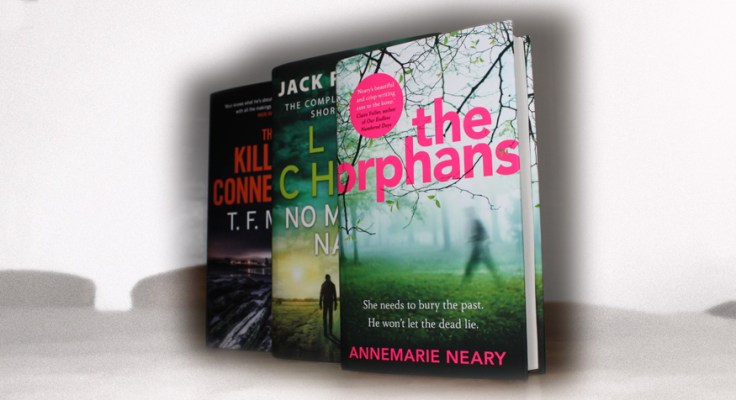
 Annemarie Neary (left) is an Irish-born novelist and short story writer. She studied literature at Trinity College Dublin before qualifying as a lawyer and moving to London. Her two previous full length novels are A Parachute In The Lime Tree (2012) and Siren (2016). The Orphans tells the tale of two children, Jess and Ro, brother and sister, whose parents mysteriously disappear while the family are staying on the island of Goa. Years later, the two children have gone in different directions. Jess has become a successful lawyer, and is married with
 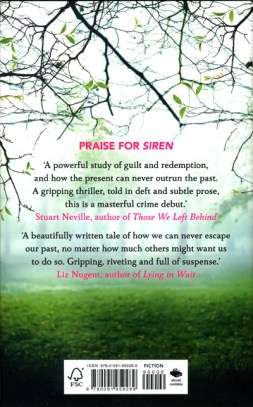 children of her own. Her brother Ro (short for his nickname Sparrow) has spent his adult life searching for his missing mother, and this obsession has taken him all over Europe, including their old home town in Ireland. The last thing Jess needs is for Ro to reappear in her life, armed with a renewed conviction that their mother is still alive out there somewhere. But this is precisely what he does, and it triggers a dramatic and dangerous downturn in their lives – and the lives and well being of those around them. The Orphans is published by Hutchinson, and will be out in July.
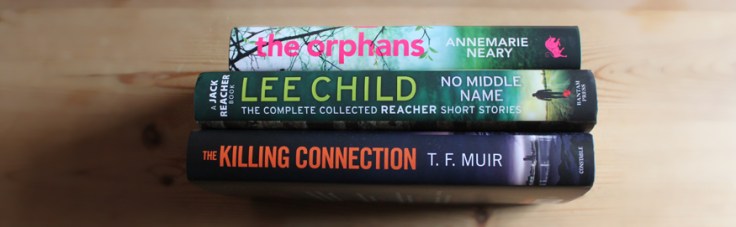
Scottish police procedurals are many and varied these days, and they tend to be fiercely local affairs. John Rebus patrols Edinburgh and Fife, as do James Oswald’s Tony McLean and Quintin Jardine’s Bob Skinner. The Granite City of Aberdeen is home to Stuart MacBride’s Logan McRae,  while Alex Gray’s Bill Lorimer has the Glasgow beat. Not to be outdone, TF Muir (left) has put the university town of St Andrews firmly on the crime fiction map with his series featuring DCI Andy Gilchrist. The Killing Connection is the seventh of these, and Gilchrist is investigating the death of an unknown woman washed up on the rocks near the castle ruins. When another woman comes forward with information about the death, Gilchrist breathes a sigh of relief. His sense of well-being is short lived, however. His would be informant disappears, and then she, too, turns up dead. The Killing Connection is published by Constable and will be available early in June.
Fans of the invincible former military policeman will want to get their mitts on this new piece of Reacherabilia, which is the complete collection of short stories featuring the big guy. The stories range in length and location, but two in particular stood out for me. High Heat is set in a steamy New York City on the night Wednesday July 13th, 1977. Why so precise? That night in the real world, a lightning induced power outage affected over 9 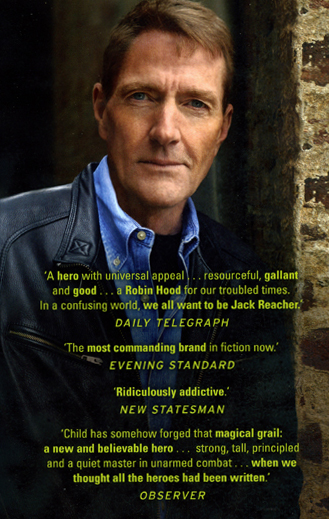 million New Yorkers, and was the backdrop – or maybe blackdrop – to over 26 hours of looting. Returning to the story, we have an extremely young Jack Reacher, just a few weeks short of his seventeenth birthday, out on the town. In addition to helping a suspended FBI agent take out a top mafioso, the young man also manages to point the authorities in the direction of David Berkowitz, the infamous Son of Sam killer.
In Maybe They Have A Tradition our man, now much older, dates a KLM air stewardess and blags a free flight to Amsterdam, but instead gets diverted to England because of snow. It is Christmas Eve, and in the closest Reacher will ever come to a Golden Age mystery, he invites himself to an isolated country mansion, helps deliver a baby, and solves an apparent jewel heist.
The full provenance of the twelve stories is as follows. Everyone Talks appeared in Esquire magazine in 2012, Maybe They Have A Tradition was published in Country Life in 2016. No Room At The Motel appeared in Stylist in 2014, while The Picture Of The Lonely Diner was part of a 2016 collection called Manhattan Mayhem. Second Son (2011), High Heat (2013), Deep Down (2012, Small Wars (2015) and Not A Drill (2014) were all exclusive eBooks. Too Much Time is published here for the first time. No Middle Name is published by Bantam on 18th May. Full details available here.
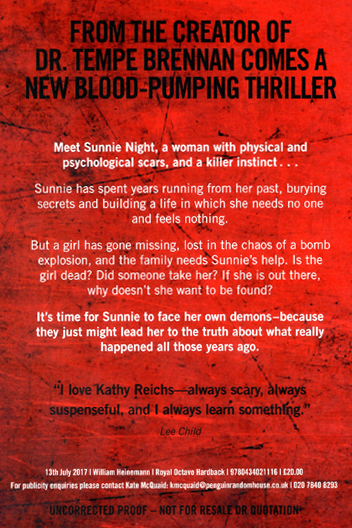
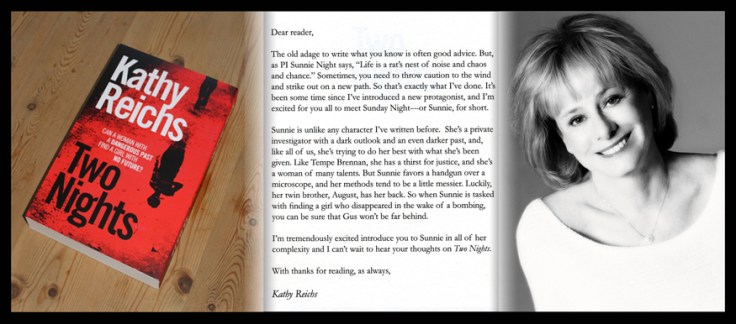
 Fans of Kathy Reichs and Dr Tempe Brennan will be relieved that Dr Brennan is merely resting, and will be intrigued by the new girl on the block, PI Sunnie Night. Sunnie – which is short for Sunday, by the way – has a seriously traumatic back story which includes physical and mental scars inflicted while in the military.
 This is the second outing for Clive Allan’s Detective Inspector Neil Strachan and, as in the first book in the series, The Drumbeater, past and present collide. Glenruthven, a tiny community in the Scottish Highlands, is dominated by its distillery. When the owner, Hugh Fraser is murdered alongside his wife, the village is shattered at the thought of there being a killer in their midst.
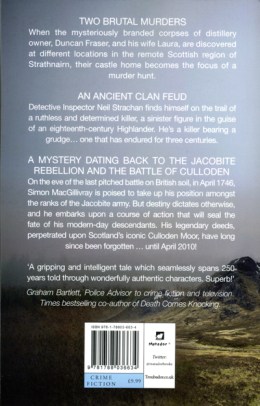 As Strachan and his police partner DS Holly Anderson set about finding the killer, they discover that the man they suspect of the double murder is obsessed with his own ancestry, and believes that he is related to a Jacobite soldier who, like so many of his fellow rebels, was slain on the bloody battlefield of Culloden on 16th April 1746.
 Clive Allan (right) is a former police officer of thirty years’ service, and is also a keen aficionado of his country’s military history. This mixture of experience and passion combines to create a novel which will blend the lure of momentous events of the past with the gritty reality of modern policing.


 SKELETON GOD by ELIOT PATTISON
 FATAL PURSUIT by MARTIN WALKER
 AMNESIA by MICHAEL RIDPATH
 DEFECTORS by JOSEPH KANON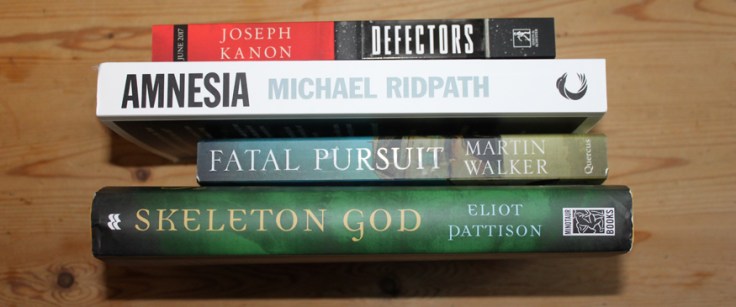

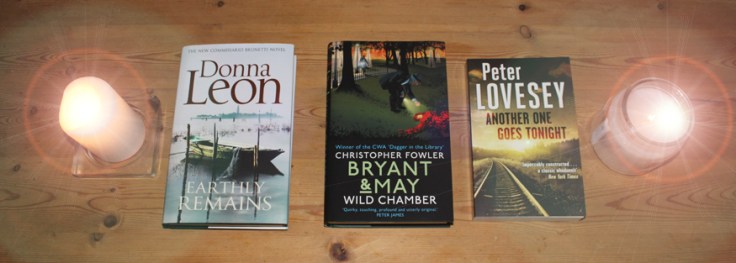
 To London, and most elderly pair of investigators currently still working. Existing fans of Arthur Bryant and John May have come to expect quirky humour, clever wordplay, an unrivaled knowledge of the topography and history of London, and a Betjeman-esque poetry of description which sometimes appears humdrum, but is often very profound. Christopher Fowler loves jokes that involve popular culture and brand names, and readers of a certain age will know that even the naming of the two elderly investigators is a little gem of a joke. The cobwebby pair work for the Peculiar Crimes Unit, an esoteric (and purely fictional) branch of the Metropolitan Police. They are constantly under threat of being pensioned off, but their investigations always take them to mysterious parts of London (usually entirely factual). Arthur Bryant – as usual – baffles and exasperates his colleagues, but in this tale his arcane knowledge of London helps the Unit solve the open air version of The Locked Room Mystery. The title? This is from Fowler’s erudite and entertaining website.
 This week’s award for the most menacing title must go to Peter Lovesey (right) and his Somerset and Avon copper, Peter Diamond. More used to solving high profile murder cases, Diamond is not best pleased when he is called in to investigate an apparent motoring accident. Tragically, a police vehicle, speeding late at night to a possible crime scene, spins off the road, killing one of the officers. Hours later, Diamond discovers that the officer is not the only victim. On an adjacent embankment, undiscovered by the emergency teams, is the rider of a motorised trike. The man is close to death, but Diamond administers CPR successfully enough for the victim to be taken to hospital, where he remains in a critical condition. Diamond, however, is not able to sit back and bask in the warm knowledge that he has carried out a valuable public service. His bosses are desperate that the whole RTA is not blamed on the police force, but what causes Diamond the most anxiety is the emerging likelihood that the man whose life he saved is almost certainly a serial killer.
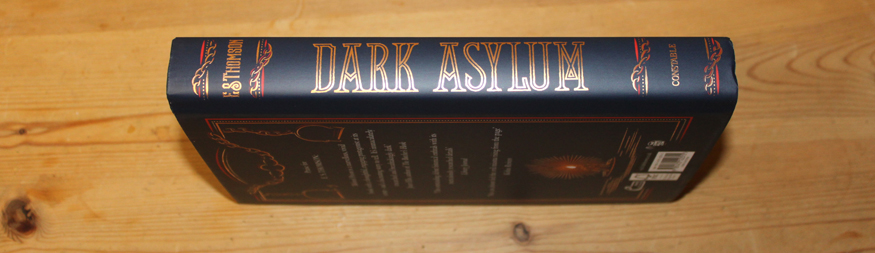

 The main character of ES Thomson’s Dark Asylum – the second in a series of Victorian crime novels – is Jem Flockhart. Jem is not who he seems to be. In fact, he isn’t ‘he’ at all. Jem is actually a young lady who is forced to transform herself into a man in order to be accepted in the medical profession. She first made an appearance in Beloved Poison (2016) and now she returns to investigate the murder of the principal physician at an insane asylum. Among all the usual tropes of Victorian London, including grim slum ‘rookeries’, brothels, violent convicts and brothels that cater for every depravity, Jem and her partner in solving crime, Will Quartermain search for the person who killed Dr Rutherford – after cutting off his ears and sewing his eyes and lips tight shut.
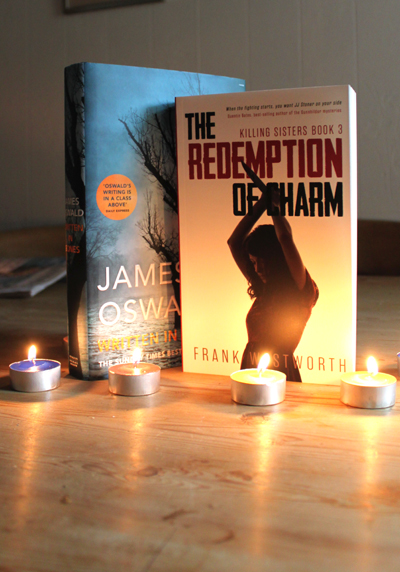

 First out of its protective wrapper was the latest from one of my favourite British writers, Frank Westworth. He has created a noirish world of grimy London music venues, peopled with frequently freakish characters and misfits, all of whom live out the heartbreaking three-chord trick of the Blues in their real lives. Presiding over the mayhem is a moody and reclusive investigator, cum killer, cum doer-of-dirty-deeds for the British establishment. His name is JJ Stoner, and as well as bending his guitar strings into shivering blue notes, he has an uneasy and unique relationship with three weird sisters. Note the absence of capitals, as these ladies are not the cauldron-stirring crones of The Scottish Play, but three violent and devious sexual predators. We have met Charity and Chastity in the first two books of the trilogy, but as Westworth wraps the series up, he introduces us to Charm.
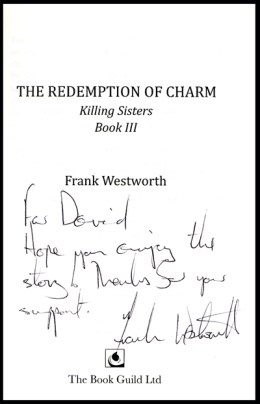 What happens in the book? I can do no better than to quote a line from the best motorbike song ever written. Like the biker outlaw James in Richard Thompson’s awesome Vincent Black Lightning 1952, JJ is “running out of road …running out of breath,” Stoner is surrounded by brutal enemies on all sides, and all the old acquaintances from whom he might expect a favour or three are walking by on the other side. This is one book which will certainly not end up in a charity shop or casually passed on to friends, because mine came with a personal touch. You folks are definitely not going to lay hands on my copy, and I’m afraid you will have to wait until the end of next month for yours. In the meantime, you can check out a mischievous and beautifully written piece by Frank Westworth
 and demanding) day jobs of current authors, Oswald has achieved what might have seemed to be an impossible task. He has created a engaging and totally believable Scottish copper who, over the space of six previous novels, has sharp-elbowed his way in the room crowded with such characters as John Rebus and Logan McRea.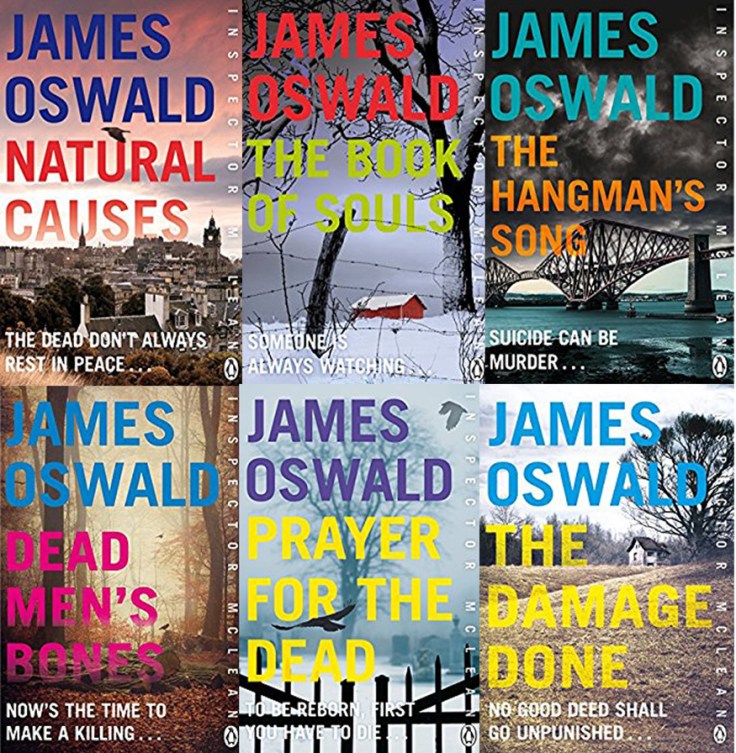

 The random murder of an innocent man? Not exactly. Mahmud Irani was part of a gang of men who groomed, raped and abused a number of white teenage girls. He served a jail term which many believe was too short, considering his crimes.
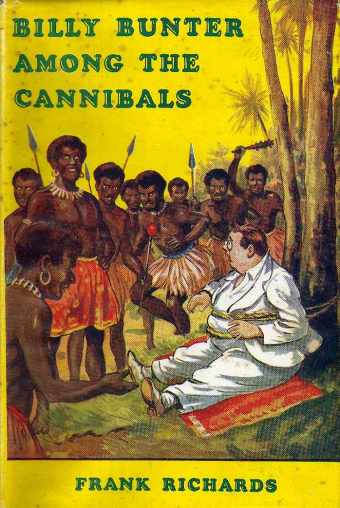 Hamilton. The tales were strewn with classical and biblical references which, in those days, most of us understood. One of my favourites was used whenever Bunter was at low point in life, but then, miraculously, found a forgotten toffee in his pocket, or perhaps an unguarded slice of chocolate cake in the common room. Richards would say, “but for Bunter, there was Balm in Gilead.” This meant, of course, that the woes of the world inhabited by The Fat Owl of The Remove were, temporarily, eased. Gilead is a hilly region in modern day Jordan, and the balm was a herbal medicine known to the inhabitants in biblical times.
 David R Ewens (right) lives and works in Kent, and Fifth Column is the fourth book featuring PI Frank Sterling. We are in the world of international skullduggery, but it isn’t all first class lounges and dangerous blondes. Sterling says:
 one of the best things about it is that I can pretty much do as I damn well please, and that wasn’t the case when I was on the job and had a sergeant or inspector breathing down my neck. One thing is certain. I was never a team player so how I currently earn my living suits me just fine…”
 “April, come she will,
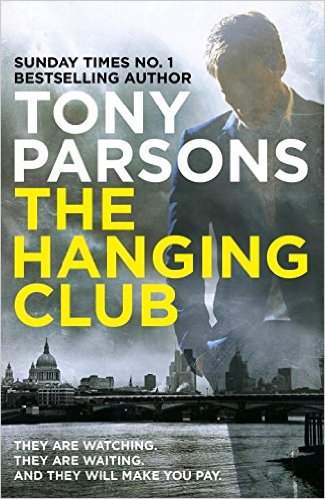
 DC Max Wolfe has become established in the crime fiction firmament, thanks to his creator, Tony Parsons (left). Of the previous book in the series, The Hanging Club, I wrote:
 abomination that we thought we had seen the back of in the nineteenth century – slavery. Parsons doesn’t flinch from portraying evil for what it is, but neither does he preach. Wolfe’s latest case starts when a refrigerated lorry is found abandoned in London’s Chinatown. Inside are twelve women. Twelve corpses – frozen to death. But in the cab of the lorry are thirteen passports. Where is the missing woman? Max Wolfe’s determination to solve this conundrum takes him to darker places than even his world-weary soul could ever have imagined. Die Last is published by Century,


 fullybooked2017