

It’s 7.00pm on a Thursday in September 1964 and a goodly proportion of the British population are settling down in front of their television sets to watch one of the most popular shows of the time.
The programme, Double Your Money, starts with a catchy tune that ends with lyrics – “double your money and try to get rich” – that leave no doubt what the show is about. The credit titles fade and a thin man with a cheesy grin, popping eyes, and a faintly transatlantic accent, steps in front of the cameras.
Hughie Green was one of a group of 1960s TV presenters who made their names as game show hosts. By today’s standards, most of the shows seem corny. In Double Your Money, the contestant would answer a question on the subject of their choice – sport and spelling were two favourites – to win £1. If they got it right, they’d move on to a £2, then £4 question all the way up to £32. If they answered that correctly, some had an opportunity to move on to the “Treasure Trail” where they could win up to £1,000 – equivalent to £18,600 in today’s money.
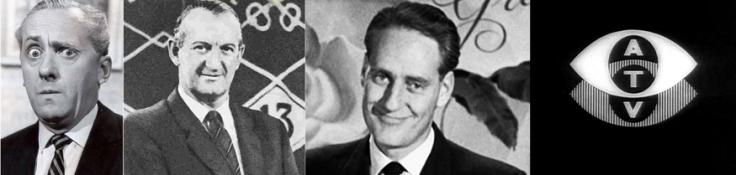
Most of these shows turned up on ITV – commercial television started broadcasting in Britain in 1955 – because the publically-funded BBC didn’t think it right to give away licence-payers’ money in cash prizes. The BBC stuck to more cerebral game shows, like University Challenge, which first broadcast in 1962 and was based on a US television show called College Bowl.
One thing is certain, Colin Crampton, crime reporter on the Brighton Evening Chronicle, and his girlfriend Shirley Goldsmith would not have been among the 15 million people tuning into Double Your Money. They were too busy chasing the killers in The Tango School Mystery.
It meant they would also have missed other top game shows of the time, such as Take Your Pick, hosted by Michael Miles, a character with all the on-screen charm of a second-hand car salesman. A car – definitely not second-hand – would sometimes be the star prize on the show.
To get a shot at winning a prize, contestants had to answer three out of four general knowledge questions. They would then pick the key to one of 10 boxes. Seven contained good prizes, such as a TV set or holiday, while three held booby prizes. Before they got to open the box, Miles would try to buy the key back off the contestant in a kind of reverse Dutch auction. Most players resisted and ended up with whatever the box had to offer.
As the 1960s progressed, TV companies sought more and more inventive formulae for their game shows. Criss Cross Quiz was based on the US show Tic Tac Dough. It was presented first by Jeremy Hawk and then by Barbara Kelly. Two contestants played a game of nought and crosses. Each took turns to answer a question to get a nought or a cross in a square. They won £20 for every square they filled or £40 for the centre square. The winner – the first to get three noughts or crosses in a row – became the champion and took on another challenger.
The Golden Shot involved contestants, either at home on the telephone or an isolation booth in the studio, directing a blindfolded cameraman with a crossbow bolted to his camera. The contestant could see the target on the TV screen and directed the cameraman with instructions like “left a bit”, or “down then stop” et until they’d lined up the target and gave the order to fire.
On one occasion, a contestant took part from a telephone box. He was watching the screen on a television in a shop window. Half way through his directions to the cameraman the shop TV was turned off.
But it wasn’t only big-prize game shows that pulled in viewers during the Swinging Sixties. Panel games, such as What’s My Line and Call My Bluff, were popular, especially with older viewers. But other game shows, such as Concentration, Jokers Wild and Password, are long forgotten. Which only goes to prove that even among game shows there were winners and losers.
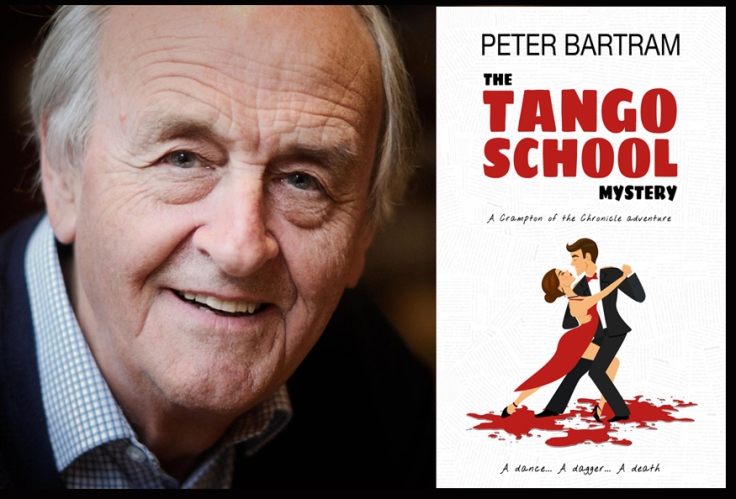
Peter Bartram’s new Colin Crampton mystery is out now, and a full review of the book will be on here very shortly!




 Six Strings is a quick thriller, an hour’s intrigue and entertainment. It features characters from the JJ Stoner / Killing Sisters series. You don’t need to have read any of the other stories in the series: you can start right here if you like.
 The rider wears a helmet – great head protection, that’s why the law compels them. He wears a face mask, great precaution against suicidal 100mph wasps, and a perfect disguise. He wears leather, and body armour tough enough to slow a small calibre handgun round to the point where it hurts, but is unlikely to be fatal. All of that in full view of anyone who might be looking.
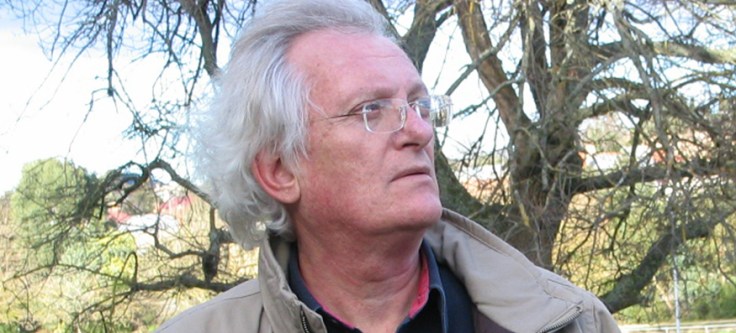
 When it comes to creating a sense of place in their novels, there are two living British writers who tower above their contemporaries. Phil Rickman, (left) in his Merrily Watkins books, has recreated an English – Welsh borderland which is, by turn, magical, mysterious – and menacing. The past – usually the darker aspects of recent history – seeps like a pervasive damp from every beam of the region’s black and white cottages, and from every weathered stone of its derelict Methodist chapels. Jim Kelly’s world is different altogether. Kelly was born in what we used to call The Home Counties, north of London, and after studying in Sheffield and spending his working life between London and York, he settled in the Cambridgeshire cathedral city of Ely.
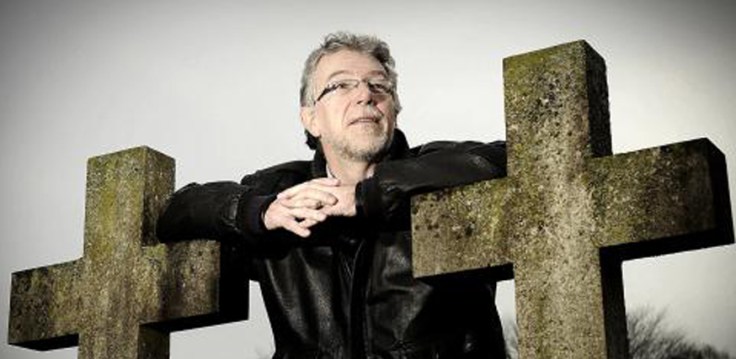 It is there that we became acquainted with Philip Dryden, a newspaperman like his creator but someone who frequently finds murder on his doorstep (except he lives on a houseboat, which may not have doorsteps). While modern Ely has made the most of its wonderful architecture (and relative proximity to London) and is now a very chic place to live, visit, or work in, very little of the Dryden novels takes place in Ely itself. Instead, Kelly, has shone his torch on the bleak and vast former fens surrounding the city. Visitors will be well aware that much of Ely sits on a rare hill overlooking fenland in every direction. Those who like a metaphor might well say that, as well as in terms of height and space, Ely looks down on the fens in a haughty fashion, probably accompanying its haughty glance with a disdainful sniff. Kelly (above) is much more interested in the hard-scrabble fenland settlements, sometimes – literally – dust blown, and its reclusive, suspicious criminal types with hearts as black as the soil they used to work on. Dryden usually finds that the murder cases he becomes involved with are usually the result of old grievances gone bad, but as a resident in the area I can reassure you that in the fens, grudges and family feuds very rarely last more than ninety years
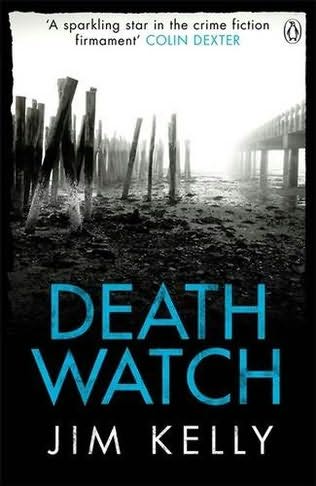 In the Peter Shaw novels, Kelly moved north. Very often in non-literal speech, going north can mean a move to darker, colder and less forgiving climates of both the spiritual and geographical kind, but the reverse is true here. Shaw is a police officer in King’s Lynn, but he lives up the coast near the resort town of Hunstanton. Either by accident or design, Kelly turns the Philip Dryden template on its head. King’s Lynn is a hard town, full of tough men, some of whom are descendants of the old fishing families. There is a smattering of gentility in the town centre, but the rough-as-boots housing estates that surround the town to the west and the south provide plenty of work for Shaw and his gruff sergeant George Valentine. By contrast, it is in the rural areas to the north-east of Lynn where Shaw’s patch includes expensive retirement homes, holiday-rental flint cottages, bird reserves for the twitchers to twitch in, and second homes bought by Londoners which have earned places like Brancaster the epithet “Chelsea-on-Sea.”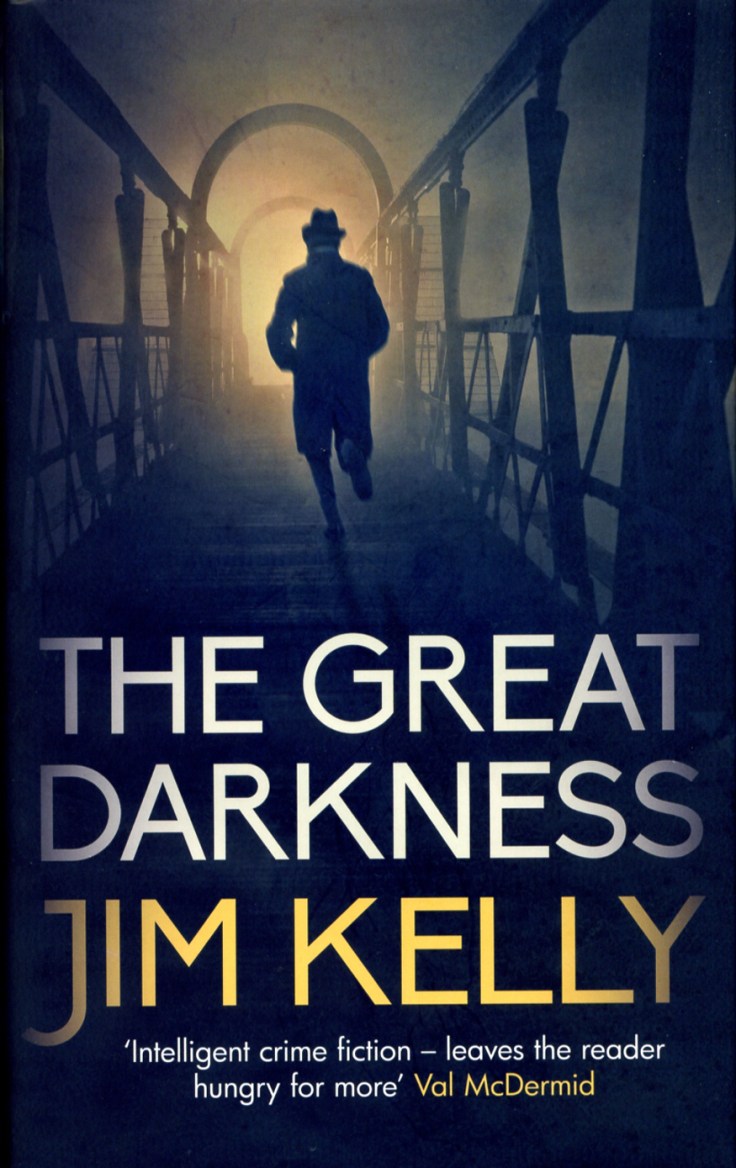

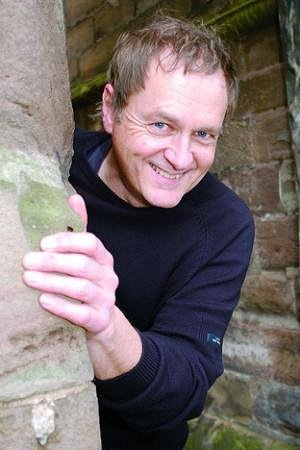 There are no honourable mentions here, because, (if you’ve been good) you will have seen them all in the previous four posts. Regular readers of this blog, and those who read my interviews, reviews and features on Crime Fiction Lover, will know that I am a massive fan of Phil Rickman’s books and, in particular, the series featuring the thoroughly modern, but often conflicted, parish priest, Merrily Watkins. She is one of the most intriguing and best written characters in modern fiction, but Rickman (left) doesn’t stop there. He has created a whole repertory company of supporting characters who range in style and substance from the wizened sage Gomer Parry – he of the roll-up fags and uncanny perception (often revealed as he digs holes for septic tanks) – to the twin-set and pearls imperturbability of the Bishop’s secretary, Sophie. In between we have the fragile genius of Merrily’s boyfriend, musician Lol Robinson, the maverick Scouse policeman Frannie Bliss and, of course, Merrily’s adventurous daughter Jane, for whom the soubriquet ‘Calamity” would fit nicely, such is her propensity to go where both angels – and her anxious mother – fear to tread.
 In All Of a Winter’s Night a young man has been killed in a mysterious car crash, and his funeral attracts bitterly opposed members of the same family. Merrily tries to preside over potential chaos, and her efforts to ensure that Aidan Lloyd rest in peace are not helped when his body is disinterred, dressed in his Morris Man costume, and then clumsily reburied. Rickman adds to the mix the very real and solid presence of the ancient church at Kilpeck, with its pagan – and downright vulgar (in some eyes) carvings. The climax of the novel comes when Merrily tries to conduct a service of remembrance in the tiny church. What happens next is, literally, breathtaking – and one of the most terrifying and disturbing chapters of any novel you will read this year or next. With its memorable mix of crime fiction, menacing landscape, human jealousy, sinister tradition and pure menace, All Of a Winter’s Night is my book of 2017.


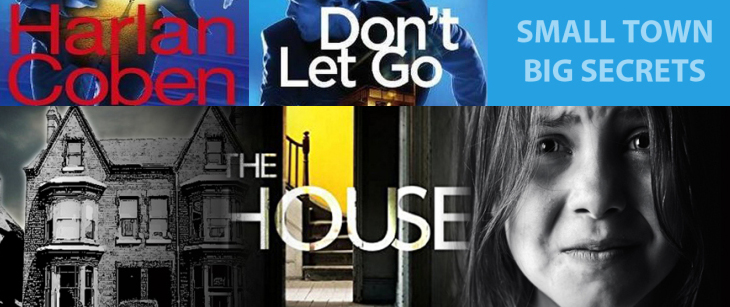

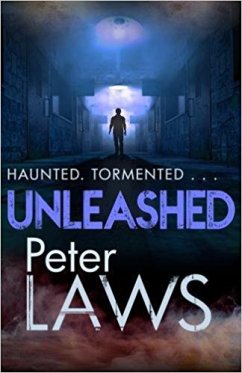 So, who thrilled me the most? First across the line by a nose, in a very competitive field, was


 Every book I’ve mentioned won admirers from different sections of the reading public but, for me, the die was cast when a rather shy young man read the opening paragraphs of his soon-to-be-published novel at a book promotion evening in a smart Fitzrovia Hotel. Joseph Knox (left) may still have work to do to become a Richard Burton in the making, but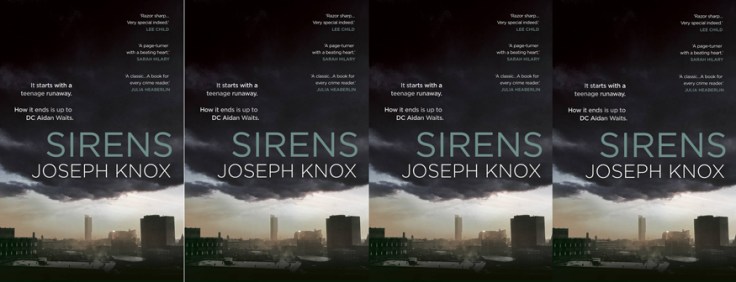


 fullybooked2017