I’ll kick off (before it all kicks off) and say that for no other reasons than style and simplicity, I am going to use the word black to describe characters in crime novels who other people may wish to call Afro-American or People of Colour. If that decision offends anyone, then so be it.
 he racial element in South-set crime fiction over the last half century is peculiar in the sense that there have been few, if any, memorable black villains. There are plenty of bad black people in Walter Mosley’s novels, but then most of the characters in them are black, and they are not set in what are, for the purposes of this feature, our southern heartlands.
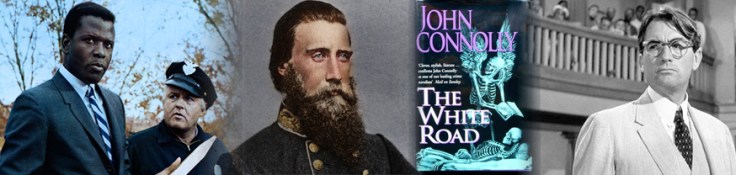
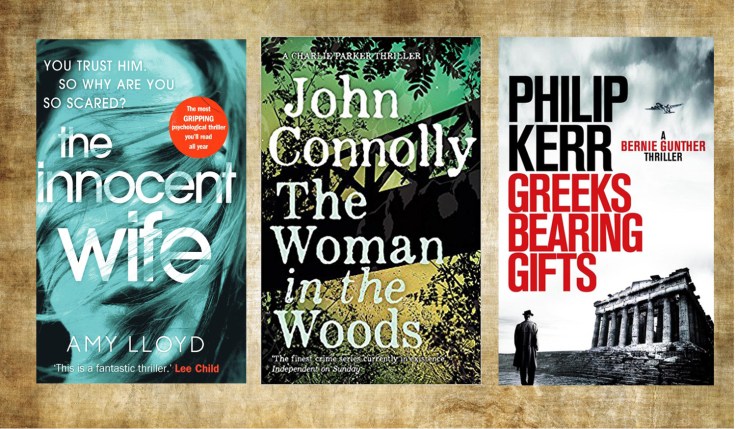
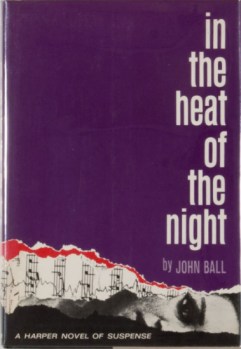 Black characters are almost always good cops or PIs themselves, like Virgil Tibbs in John Ball’s In The Heat of The Night (1965), or they are victims of white oppression. In the latter case there is often a white person, educated and liberal in outlook, (prototype Atticus Finch, obviously) who will go to war on their behalf. Sometimes the black character is on the side of the good guys, but intimidating enough not to need help from their white associate. John Connolly’s Charlie Parker books are mostly set in the northern states, but Parker’s dangerous black buddy Louis is at his devastating best in The White Road (2002) where Parker, Louis and Angel are in South Carolina working on the case of a young black man accused of raping and killing his white girlfriend.
 hosts, either imagined or real, are never far from Charlie Parker, but another fictional cop has more than his fair share of phantoms. James Lee Burke’s Dave Robicheaux frequently goes out to bat for black people in and around New Iberia, Louisiana. Robicheaux’s ghosts are, even when he is sober, usually that of Confederate soldiers who haunt his neighbourhood swamps and bayous. I find this an interesting slant because where John Connolly’s Louis will wreak havoc on a person who happens to have the temerity to sport a Confederate pennant on his car aerial, Robicheaux’s relationship with his CSA spectres is much more subtle.
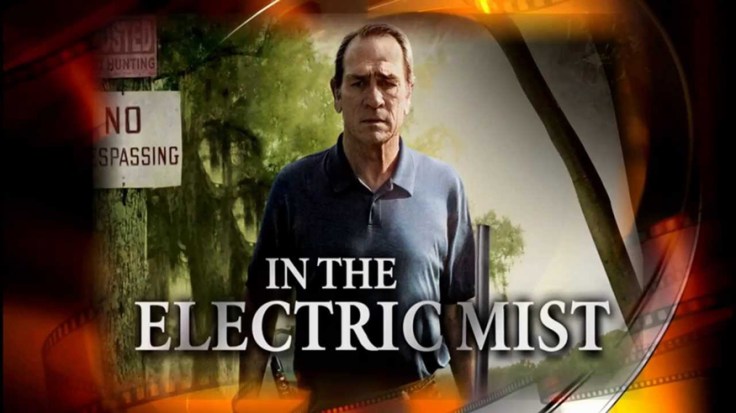
As a Vietnam veteran, he recognises the wordless bond between fighting men everywhere, irrespective of the justice of their causes. One of the magnificent series, which started in 1987 with The Neon Rain was actually called In the Electric Mist with Confederate Dead (1993). When it was filmed as In The Electric Mist (2009) Tommy Lee Jones made a very good fist of Dave Robicheaux, but the director’s take on Dave’s interaction with the long-dead soldiers was treated rather literally by the director Bertrand Tavernier, particularly in the final few moments. Incidentally, I have a poser: name me the link between The Basement Tapes and this movie, and I will buy you a pint.
 urke’s Louisiana is both intensely poetic and deeply political. In Robicheaux: You Know My Name he writes:
“That weekend, southern Louisiana was sweltering, thunder cracking as loud as cannons in the night sky; at sunrise, the storm drains clogged with dead beetles that had shells as hard as pecans. It was the kind of weather we associated with hurricanes and tidal surges and winds that ripped tin roofs off houses and bounced them across sugarcane fields like crushed beer cans; it was the kind of weather that gave the lie to the sleepy Southern culture whose normalcy we so fiercely nursed and protected from generation to generation.”
 Elsewhere his rage at his own government’s insipid reaction to the devastation of Hurricane Katrina rivals his fury at generations of white people who have bled the life and soul out of the black and Creole population of the Louisian/Texas coastal regions. Sometimes the music he hears is literal, like in Jolie Blon’s Bounce (2002), but at other times it is sombre requiem that only he can hear:
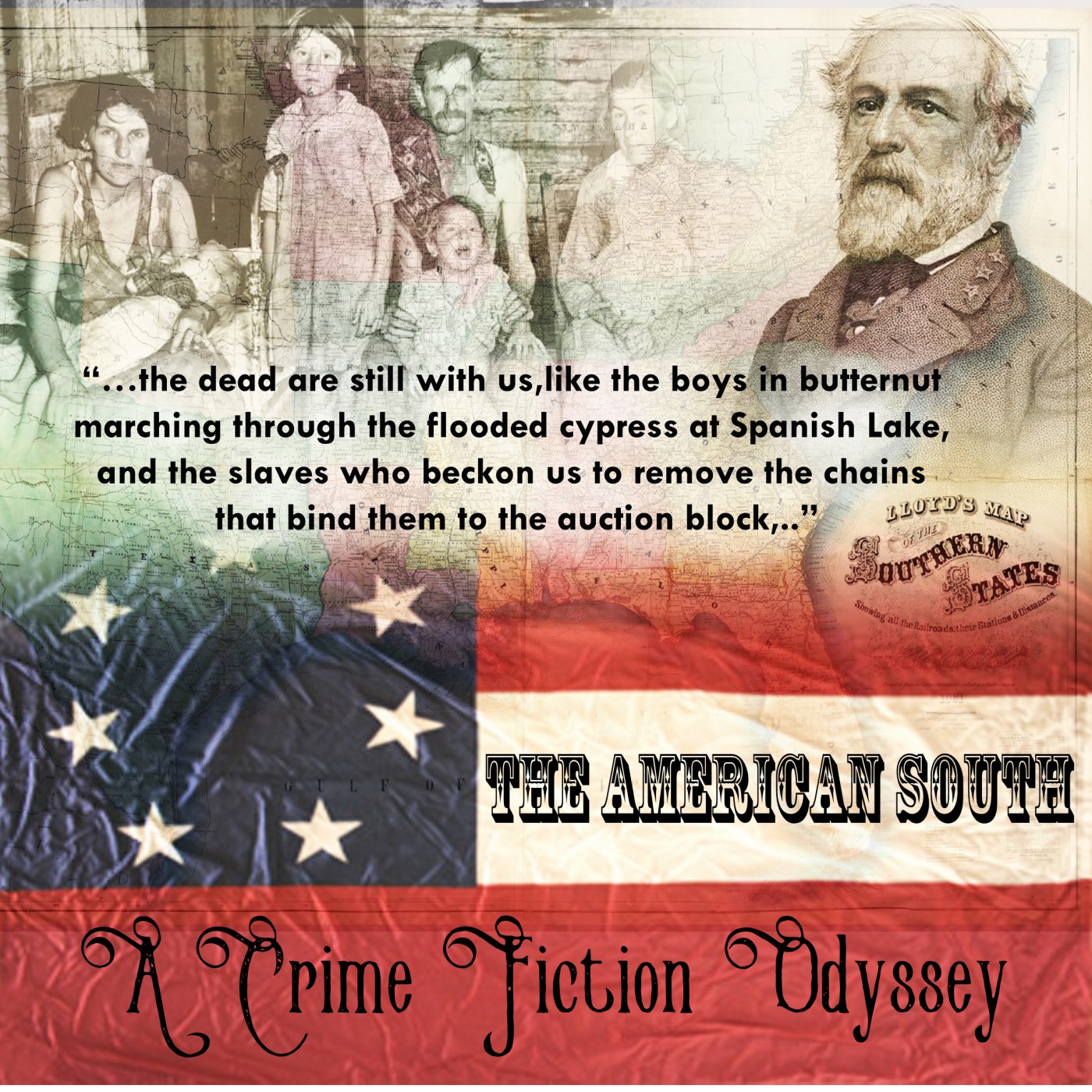
“…the dead are still with us, like the boys in butternut marching through the flooded cypress at Spanish Lake, and the slaves who beckon us to remove the chains that bind them to the auction block, and all the wandering souls who want to scratch their names on a plaster wall so someone will remember their sacrifice, the struggle that began with the midwife’s slap of life, and their long day’s journey into the grave.”
In the final part of this series, I will look at a trilogy of novels which, for me, are the apotheosis of the way in which crime fiction has characterised the often grim but never less than fascinating persona of The Southern States.
 n opening word or three about the taxonomy of some of the crime fiction genres I am investigating in these features. Noir has an urban and cinematic origin – shadows, stark contrasts, neon lights blinking above shadowy streets and, in people terms, the darker reaches of the human psyche. Authors and film makers have always believed that grim thoughts, words and deeds can also lurk beneath quaint thatched roofs, so we then have Rural Noir, but this must exclude the kind of cruelty carried out by a couple of bad apples amid a generally benign village atmosphere. So, no Cosy Crime, even if it is set in the Southern states, such as
  eal-life rural poverty in the South was by no means confined to former slaves and their descendants. In historical fact, poor white farmers in the Carolinas, for example, were often caught up in a vicious spiral of borrowing from traders and banks against the outcome of their crop; when time came for payback, they were often simply back to zero, or
  thrown off the land due to debt. The rich seam of dirt poor and embittered whites who turn to crime in their anger and resentment has been very successfully mined by novelists. Add a touch of fundamentalist Christianity into the pot and we have a truly toxic stew, such as in Wiley Cash’s brilliant
  Her best known novel,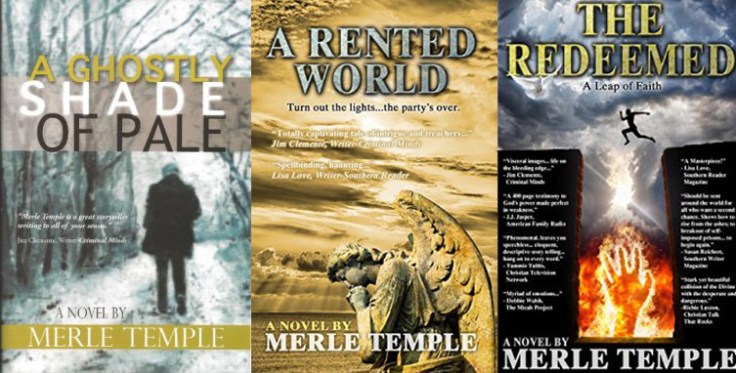
 t is starkly obvious to anyone with even a passing knowledge of international history that the most brutal and bitterly fought wars tend to be between factions that have, at least in the eyes of someone looking in from the outside, much in common. No such war anywhere has cast such a long shadow as the American Civil War. That enduring shadow is long, and it is wide. In its breadth it encompasses politics, music, literature, intellectual thought, film and – the purpose of this feature – crime fiction.
 There have been many commentators, critics and writers who have explored the US North-South divide in more depth and with greater erudition than I am able to bring to the table, but I only seek to share personal experience and views. One of my sons lives in Charlotte, North Carolina. It is a very modern city. In the 20th century it was a bustling hive of the cotton milling industry, but as the century wore on it declined in importance. Its revival is due to the fact that at some point in the last thirty years, someone realised that the rents were cheap, transport was good, and that it would be a great place to become a regional centre of the banking and finance industry. Now, the skyscrapers twinkle at night with their implicit message that money is good and life is easy.
 rive out of Charlotte a few miles and you can visit beautifully preserved plantation houses. Some have the imposing classical facades of Gone With The Wind fame, but others, while substantial and sturdy, are more modest. What they have in common today is that your tour guide will, most likely, be an earnest and eloquent young post-grad woman who will be dismissive about the white folk who lived in the big house, but will have much to say the black folk who suffered under the tyranny of the master and mistress.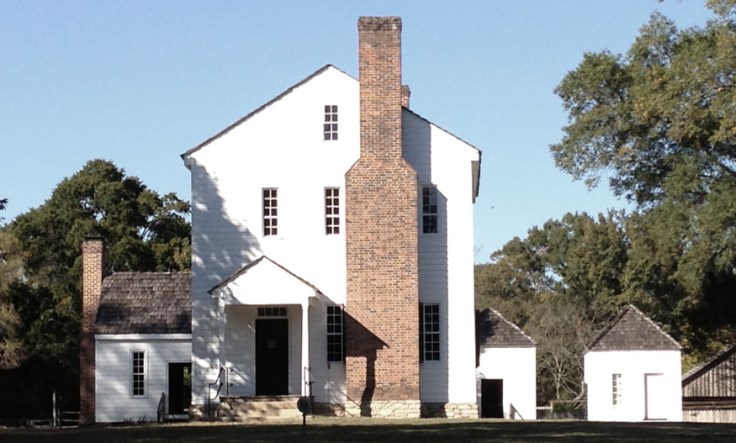
 By contrast, a day’s drive south will find you in Charleston, South Carolina. Charleston is energetically preserved in architectural aspic, and if you are seeking people to share penance with you for the misdeeds of the Confederate States, you may struggle. In contrast to the spacious and well-funded Levine Museum in Charlotte, one of Charleston’s big draws is The Confederate Museum. Housed in an elevated brick copy of a Greek temple, it is administered by the Charleston Chapter of The United Daughters of The Confederacy. Pay your entrance fee and you will shuffle past a series of displays that would be the despair of any thoroughly modern museum curator. You definitely mustn’t touch anything, there are no flashing lights, dioramas, or interactive immersions into The Slave Experience. What you do have is a fascinating and random collection of documents, uniforms, weapons and portraits of extravagantly moustached soldiers, all proudly wearing the grey or butternut of the Confederate armies. The ladies who take your dollars for admission all look as if they have just returned from taking tea with Robert E Lee and his family.
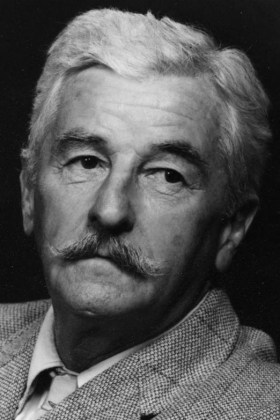 Six hundred words in and what, I can hear you say, has this to do with crime fiction? In part two, I will look at crime writing – in particular the work of James Lee Burke and Greg Iles (but with many other references) – and how it deals with the very real and present physical, political and social peculiarities of the South. A memorable quote to round off this introduction is taken from William Faulkner’s Intruders In The Dust (1948). He refers to what became known as The High Point of The Confederacy – that moment on the third and fateful day of the Battle of Gettysburg, when Lee had victory within his grasp.


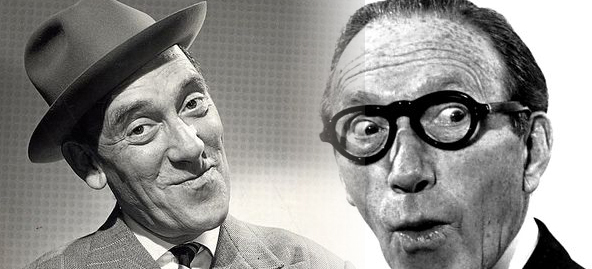
 Then there was the female comic, in the 1960s often from the north of England, like Hylda Baker. In fact, I’ve made my version – Jessie O’Mara – younger and more overtly feminist than Baker. The feminist movement was stirring in the 1960s. I’ve made O’Mara a Liverpool lass with a strong line in scouse chat.
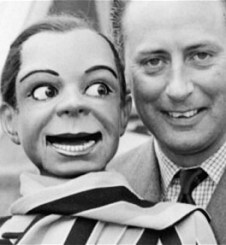 A special kind of comic in the days of variety theatre was the ventriloquist. The most famous was Peter Brough whose dummy was Archie Andrews. The pair featured in a long-running radio show. (I could never see the point of doing a vent act any more than a juggling act on the radio.) So I’ve created Teddy Hooper and his dummy Percival Plonker who do what used to be called a cross-talk act of quick-fire gags.








 fullybooked2017