

Fred Majdalany was born in Manchester in 1913. During the war he fought in North Africa, Sicily and Italy, was wounded and was awarded the M.C. In addition to his novels, he also wrote accounts of the battles for Cassino in the Italian campaign, and the pivotal Battle of El Alamein. Patrol was first published in 1953, and has been reprinted many times, selling hundreds of thousands of copies.
Patrol follows the fortunes of a young army officer, Major Tim Sheldon, in the 1943 North Africa campaign. Sheldon is posted with his battalion in a forward outpost somewhere in the vast desert. The disconnect between these soldiers and the planners and analysts hundreds of miles away, is obvious from the start.

Although the Germans are not far away, the biggest enemy of Sheldon and his men is the ever-present desire of those in comfortable far-off HQs to be seen to be “doing something”. Endless – and pointless – patrols have worn the men down; nerves are shredded; morale is sapped. Sheldon knows the true nature of bravery:

When it is decided that a patrol is required to investigate White Farm, which may – or may not – be in enemy hands, Sheldon has to gather a patrol together, but he is all too well aware of the futility of what they are being asked to do.

The novel is beautifully structured. The beginning and end of the story deal with the genesis and outcome of the patrol, while the central section recounts Sheldon’s experiences while being treated for a wound sustained earlier in the campaign. He experiences the complex and often cumbersome machine that clanks away in the background. He reflects on the contrasts between the world of fighting men and that ‘somewhere else’ that seems so distant and unattainable.

This is almost a novella at just 143 pages, but it is brutal, and shot through with a bitter poetry. Majdalany was no stranger to battle, nor to the concept of unavoidable sacrifice, but the last words of the book make uncomfortable reading:
“In a club in St James’s Street, London, an old man opened his newspaper and querulously read the communique from Algiers. It said, simply,
‘Nothing to report. Patrol activity.’ “
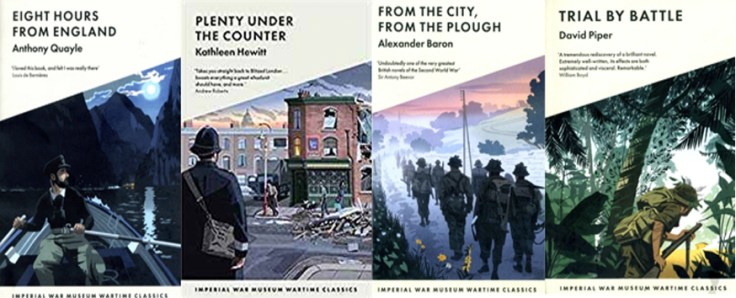
For reviews of the other books in this excellent series, click the image below



 came late to the party regarding Angela Marsons and her Kim Stone series of police procedurals set in England’s West Midlands, but I thoroughly enjoyed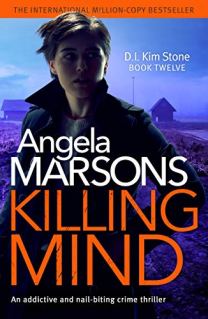
 eanwhile, Stone’s assistant, DS Bryant, has his own fixation to deal with. He was involved in the capture, trial and conviction of a notorious killer, Peter Drake, and has become involved with Richard Harrison, father of one of Drake’s victims. A previously unrepentant Drake has, suspiciously, turned over a new leaf in jail and has become a model prisoner, thus transforming his application for parole from a forlorn hope into a distinct probability. Both Harrison and Bryant are powerless to prevent Drake’s release. Both have a sense of foreboding about what may follow.
 hen Stone makes the decision to send one of her younger officers into Unity Farm, posing as a distressed and unhappy young woman, things do not turn out according to plan and Marsons orchestrates a tense and nerve-shredding finale to the book. When the murderer is unmasked, it came as a cleverly constructed surprise. Killing Mind is published by Bookouture, and






 Adam Nunn is a decent enough fellow, but like all of us, he has made his mistakes. He lives with Zara, a struggling restaurant owner, but has a child of his own, Tilly, who lives with Grace, her mother. Adam has discovered that he is adopted, and has employed a fairly seedy private investigator to try to trace his birth parents.
 Along the way, Mark (right) introduces us to some loathsome individuals who have all played their part in Adam Nunn’s terrible back story. There’s local politician Leo Riley, for example:


 fullybooked2017